
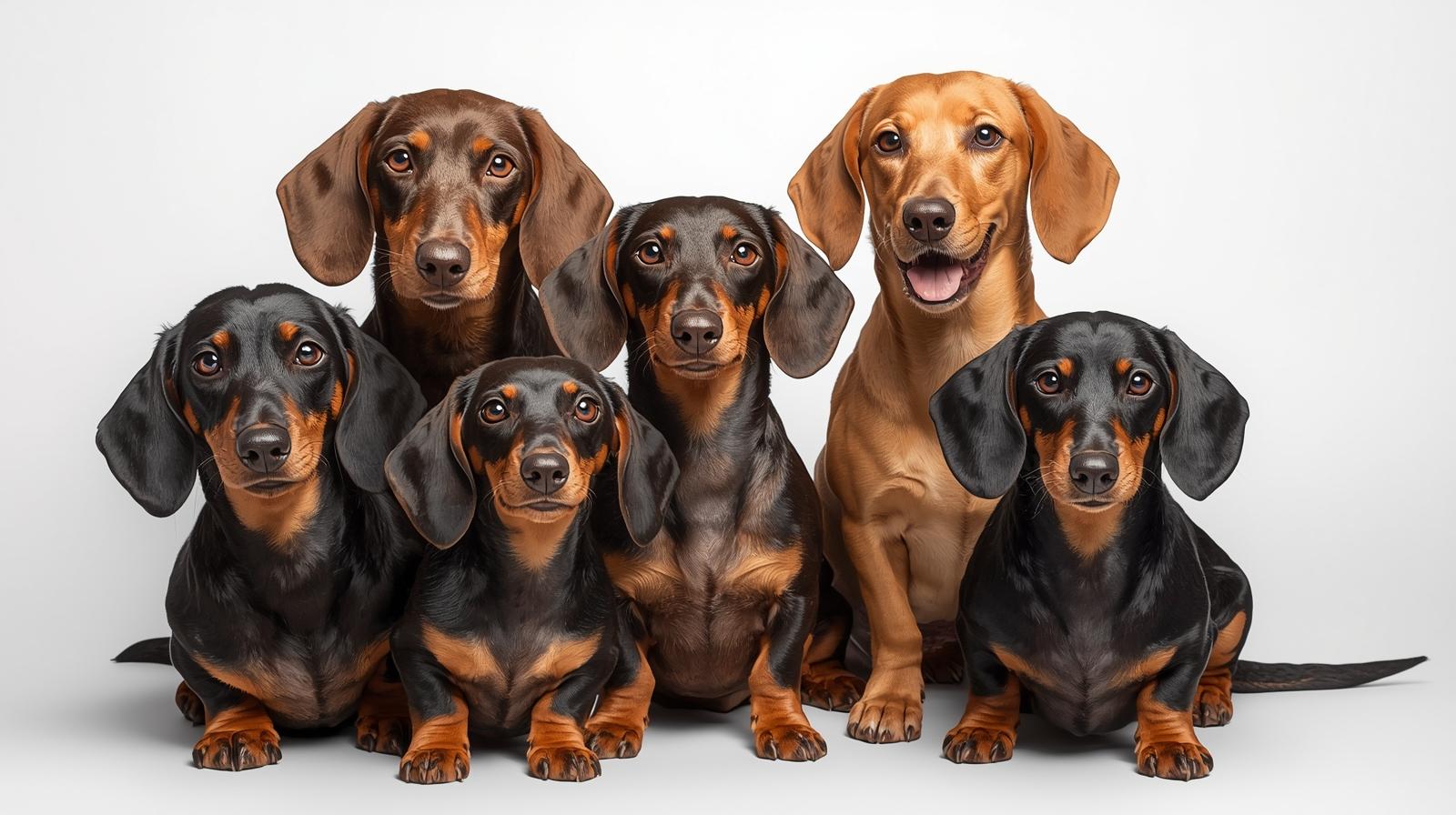
A Friendly, Real-World Guide for East Cornwall Owners
Yes, many Dachshunds good with other dogs, and plenty love having canine mates. The catch is that it depends on socialization, training, and safe introductions.
Dachshunds, as descendants of hunting dogs, have a bold streak from their history, and it still shows up on walks today.
A confident Dachshund can be sweet as anything, then suddenly act like they’re ten feet tall when seeing other animals, thanks to their prey drive.
If you’re in East Cornwall and you use local dog walking routes around Looe, Polperro, or the quieter lanes, you’ve likely seen it: a Dachshund that wants to say hello, but says it a bit loudly.
Add in their long backs and short legs, and especially for the popular miniature dachshund, you’ve also got a safety angle that many owners miss.
This guide covers the signs of a social Dachshund, the best dog-to-dog matches, simple intro steps, and when it’s time to get help (including support from local dog walking or a reliable dog walker).
Are Dachshunds good with other dogs?
The honest answer and what affects it


Photo by Andreas Schnabl
Most Dachshunds can get on well with other dogs. Many enjoy a buddy to sniff with, trot alongside, and swap “messages” at every lamppost.
Still, the breed can be stubborn, vocal, and a bit possessive, especially on lead or at home.
What changes the outcome most is the set-up around them. Think of your Dachshund as a small car with a big engine.
If you guide that engine well, you get a fun, friendly dog. If you let it rev at every trigger, you’ll get barking, lunging, and the occasional grumpy snap.
Here are the main factors that shape how a Dachshund does with other dogs:
- Early socialization: Puppies that meet calm, friendly dogs (and have good experiences) often grow into adults who cope well.
- Past experiences: One nasty scare on a footpath can make some dogs defensive for months.
- Energy match: A steady dog often helps a Dachshund relax. A frantic dog can wind them up fast.
- Age and stage of life: Teen dogs can be pushier. Seniors may be less tolerant, especially if stiff or sore.
- Home routines: Dogs that practise calm greetings at home usually do better outside.
A common issue is that Dachshunds will sometimes challenge bigger dogs. It doesn’t always mean true aggression.
It can be confidence, frustration from the lead, or a habit of “I’ll shout first.”
That can spark scuffles, especially if the other dog is reactive or rude.
If you want a deeper breed-specific view, this overview on whether Dachshunds are good with other dogs is a useful extra read.
Dachshund personality basics: brave, curious, and sometimes bossy
Dachshunds were bred to go into tunnels after badgers. That job rewards bold choices, not polite hesitation, fueling their hunting instincts.
Today, that reflects the breed’s unique temperament, which can look like fast greetings, loud opinions, and guarding a favourite sunny spot at the pub garden.
While they may chase cats or smaller animals, this same drive allows many to interact confidently with other dogs when guided properly.
A confident Dachshund may rush in, stand tall, and bark. To another dog, that confidence can look like rudeness.
Your job is to shape it into good manners.
Calm structure, clear boundaries, and rewards for checking in with you can make a huge difference.
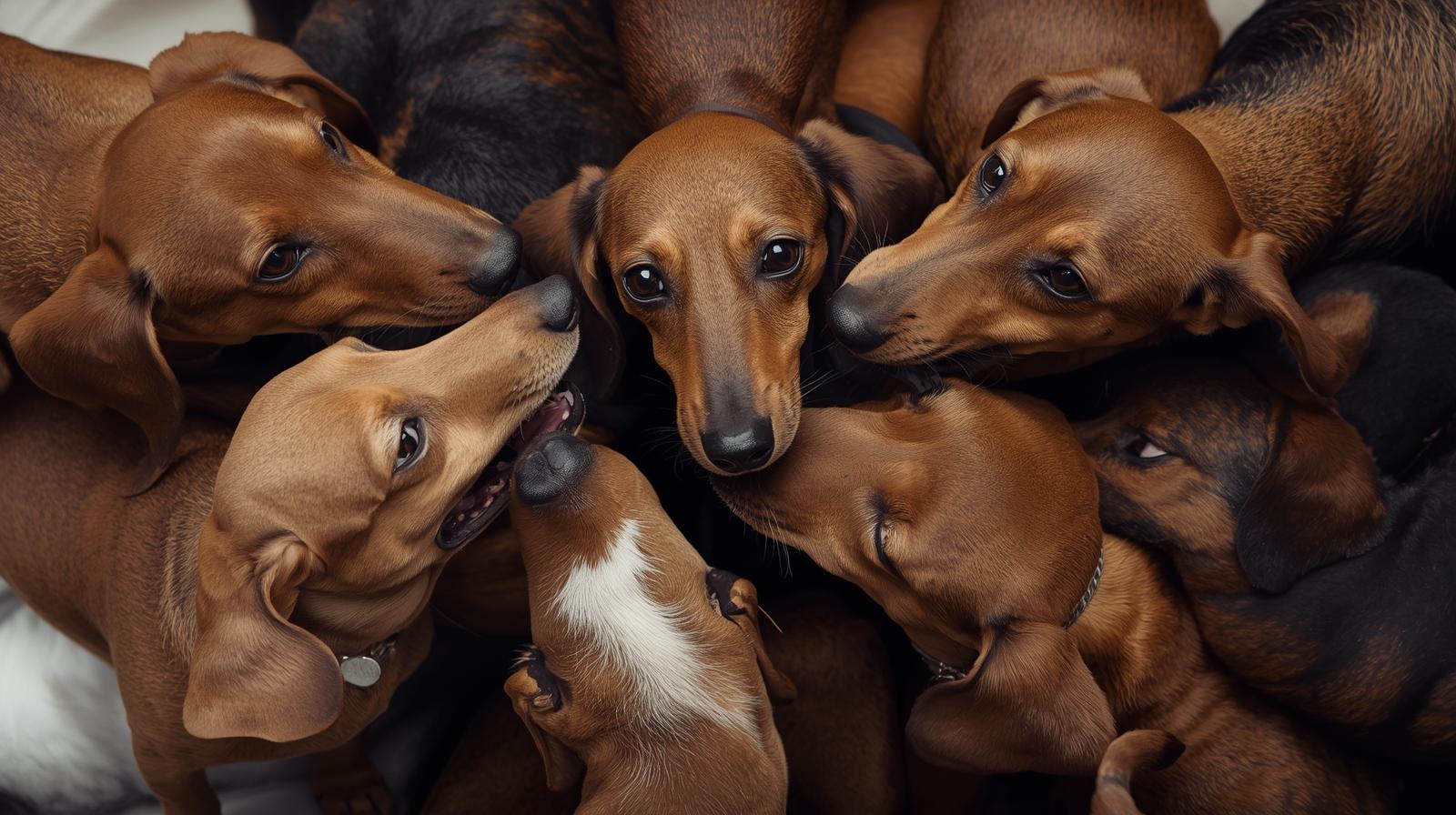

Size, play style, and back safety: the hidden reason some pairings fail
Even when everyone means well, some pairings fail because the play is too rough. Dachshunds are low to the ground, and their backs are vulnerable.
Body slams, neck grabbing, and “wrestle-mania” can go wrong quickly.
Safer play often looks quieter, especially through supervised interaction:
- Chase games on flat ground
- Sniffy walks with short bursts of running
- Gentle fetch with soft turns
- Short play bursts, then calm breaks
Watch for these risky moments:
- A bigger dog repeatedly pouncing onto your Dachshund’s shoulders
- Pinning (holding them down), even “playfully”
- Neck grabbing or shaking during play
If you see that pattern, interrupt early and reset. You’re not being fussy. You’re being sensible.
Best and worst matches:
What kinds of dogs do Dachshunds usually get on with?
Dachshunds don’t read breed labels; they read behaviour.
The best matches are other dogs with polite social skills and a play style that won’t flatten a long back.
If you use daily dog walks to build confidence, think of it like choosing a hiking partner.
You want someone who walks at your pace, not someone who sprints off and drags you up a cliff.
Traits that often work well:
- Calm, social dogs who offer soft body language
- Dogs who can pause and reset when asked
- Dogs with steady recall and decent lead manners
- Dogs who enjoy sniffing more than wrestling
Traits that often cause problems:
- Pushy dogs who rush faces and ignore signals
- Intense wrestlers who body slam
- Dogs who guard toys, food, or even their owners
- Dogs that are easily frustrated on a lead
In multi-pet households, management matters. Feeding separately, picking up high-value chews, and giving each dog a safe resting spot can prevent aggressive behaviour.
The UK charity site Dachshund Health UK has a thoughtful piece on teaching your Dachshund to live politely with other pets.
For busy households, help can be practical, not fancy. A professional dog walker can pick suitable buddies, keep greetings brief, and reduce stress in group dog walks.
Good dog exercise services are often about good match-making, not just miles.
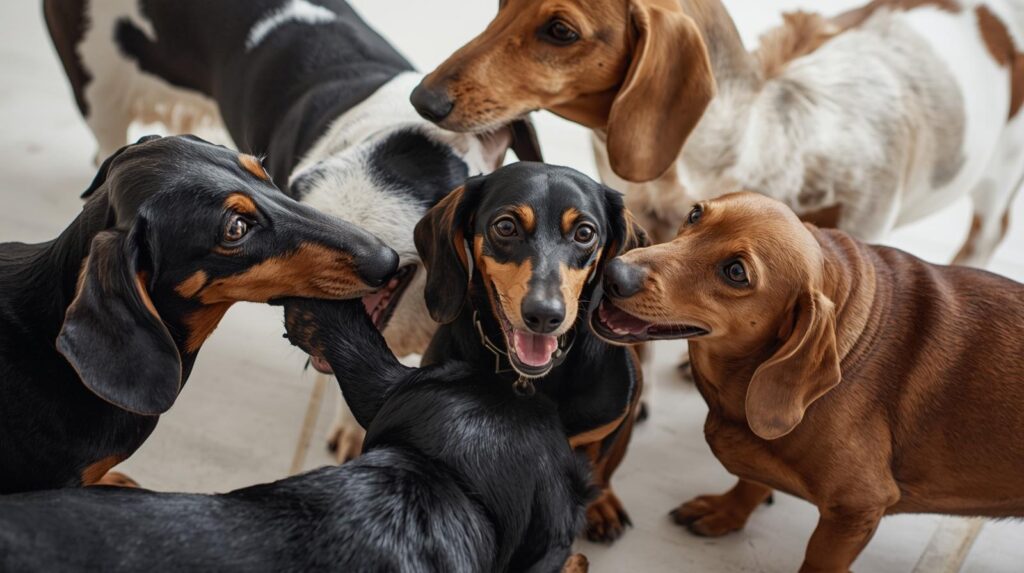

Good matches: calm, polite dogs with similar energy
Picture a good match like this: both dogs approach in a curve, sniff, then wander off together like old friends.
There’s no chest bump, no hard stare, and no one gets “stuck” under a big paw.
Green-flag behaviours include:
- Loose, wiggly bodies
- Taking turns chasing, not one dog always chasing
- Pausing naturally, then restarting play
- Choosing sniffing and exploring over wrestling
Smaller dogs are not always safer. A small dog that’s snappy or frantic can stress a Dachshund just as much as a big bruiser.
Quick local tip: in community walking circles, choose other dogs who can walk politely past others.
Those dogs tend to cope best in real-life dog walking services settings.
This guide on helping your dog get along with other pets also fits dog-to-dog friendships well.
Trickier matches: dominant dogs, same sex tension, and rough players
Some pairings are harder. Same-sex tension can happen, especially between two confident male Dachshunds or two confident females.
Hormones can add fuel, but it can also happen in neutered dogs if both like to assert dominance.
Common triggers include jealousy around owners, crowding in doorways, and guarding the sofa like it’s a throne.
Red flags to take seriously:
- Hard staring and a closed mouth
- Stiff posture and slow, deliberate movement
- Blocking doorways or hovering over beds
- Snapping when touched near toys or food
If you see these, don’t try to “let them sort it out.” Speak to a qualified trainer or behaviourist for professional training early.
How to introduce a Dachshund to other dogs safely (step by step)
Introductions are where most friendships are made or broken. Proper introductions keep arousal low and choices high.
No rush, no crowding, no forced face-to-face greeting.
If you’re searching pet walking near me because you want your Dachshund puppy to socialise safely and meet its early walking needs, ask how meet-and-greets are handled.
New puppy owners should ensure puppy vaccines are complete before group puppy walking services start. Good puppy walking services and adult walks build calm skills first.
It’s also fair to ask about dog walking rates if you want gradual, one-to-one support at the start.
First meeting on lead: neutral space, parallel walks, and calm rewards
Use this simple plan:
- Pick a neutral territory with space, not your front garden.
- Start far apart, both dogs leashed, moving in the same direction.
- Reward your Dachshund for looking at the other dog, then looking back to you.
- Slowly close the gap while walking, not standing still.
- Avoid face-to-face greetings at first; those can feel tense.
- Keep leads loose; tight leads can create frustration.
- If both dogs stay relaxed, allow a quick sniff, then walk on.
- End after a good moment, before anyone gets tired or snappy.
A well-fitted harness helps you guide without neck pressure.
If you’re reviewing gear, this post on the best dog harness for large dogs has fitting tips that still apply to many smaller dogs (the key points are shape and control, not size).
It also helps to learn basic signals. This page on dog body language gives a clear starting point on body language.
For a Dachshund-focused walkthrough, this guide on how to introduce a Dachshund to other dogs is handy.
Meeting unknown dogs on East Cornwall footpaths is its own challenge. If a dog is charging up, step off the path if you can, keep your Dachshund behind you, and use a calm, firm voice to ask the other owner for recall.
Wet weather can make tight paths trickier too, so this guide on walking your dog in the rain is worth a look.
Choose neutral spaces for these first meetings to reduce tension.
Off lead play and group walks: how to keep it safe and friendly
Off-leash is only a good idea after positive leashed introductions and some supervised interaction:
- Secure area, away from roads and cliffs
- Both dogs show relaxed body language
- Both have decent recall, or you have a long line
- No history of bullying, pinning, or panic
Keep playing fair with simple rules:
- Encourage frequent breaks, every 20 to 30 seconds.
- Stop if one dog keeps chasing and the other can’t escape.
- Interrupt if a big dog jumps onto your Dachshund’s back.
- End early if your Dachshund starts barking nonstop or stiffens up.
A tracker can add peace of mind on bigger adventures, especially with scent-driven dogs.
This review of the Tractive GPS dog tracker explains what it does well and what to consider.
Group settings can be brilliant when managed well. A reliable, experienced walker will choose compatible dogs, space them out, and stop rough play before it escalates.
If you’re weighing the pros and cons, this article on is dog walking dangerous gives a grounded view of real risks and how good handling reduces them.
Loose dogs do happen on rural routes. It helps to have a plan. This guide on dealing with loose aggressive dogs on walks shares sensible steps without panic.
Fixing common problems:
barking, snapping, and jealousy around other dogs
If your Dachshund barks, growls, or snaps at other dogs, you’re not alone. Barking often stems from territorial instincts, mixed with excitement, worry, or frustration.
Snapping is usually a distance-increasing behaviour, the dog’s way of saying “too close.”
Jealousy can show up when a second dog gets attention, or when greetings are chaotic.
Start with two basics: management and calm practice. Use distance, choose quieter routes, and keep greetings short.
Many owners find that structured daily dog walks reduce stress because the dog knows what to expect.
Consistent dog walking services can also help, especially if your schedule is packed and your dog needs steady practice.
A calm routine through local dog walking can turn a shouty dog into a more settled walker over time.
Also, do a quick health check. Pain can make a dog grumpy.
If your Dachshund suddenly changes around other dogs, speak to your vet. Back pain, dental pain, and sore joints can all lower tolerance.
In our apparel store NOW!
Simple training that works: focus cues, calm greetings, and rewarding quiet
Keep it simple and repeatable:
- Teach a name response or “look” cue at home first, then outside.
- Reward calm behaviour early with positive reinforcement, before the barking starts.
- Practise at a distance where your dog can still think.
- Swap shouting for space. Distance is your friend.
- Use food scatters on the ground to lower tension and slow breathing.
- Keep sessions short. Consistency beats intensity.
If you want a fun, controlled way to burn energy at home, use tug toys with clear rules (start cue, stop cue, and a treat swap).
It can help some dogs settle before they meet friends outside.
When to get help and how to stay safe on walks
Get help from a canine behaviorist if you see bites, repeated fights, panic-level fear, or serious guarding.
Don’t wait for it to “blow over.” Early support is cheaper, kinder, and safer.
Safety tips that help in real life:
- Avoid tight pinch points on paths, step into a gateway and let others pass.
- Choose quieter times for practise walks.
- Carry high-value treats so you can redirect quickly.
- If off-lead dogs are common, stick to routes with clear sight lines.
Some dogs improve fast when their walk routine is predictable.
If your dog struggles, this guide on managing canine anxiety with routines and support may help you spot stress patterns that look like “bad behaviour.”
Conclusion
Many Dachshunds can be brilliant when the match is right, and introductions stay calm.
Their bold nature isn’t a flaw; it just needs friendly guidance.
Focus on early efforts to socialize, safe play styles, and protecting that long back from rough collisions.
Choose walking buddies who are polite, not pushy, and build good experiences one step at a time.
If you’re local and you’d like extra support, steady routines through dog walking services can help your Dachshund practise calm greetings and better social skills without you having to juggle everything alone.
Start small, keep sessions short, and celebrate the quiet wins.
With the right plan, Dachshunds can go from “tiny bouncer” to trusted walking mate with other dogs, embracing their playful nature.