

A Clear Look at Korean Jindo Temperament
If you’re wondering are Jindo dogs aggressive, the honest answer is usually no, not toward people.
The Korean Jindo dog, a spitz breed hailing from Jindo Island in South Korea where it is revered as a national treasure, is often calm with their family and can be polite at home when well-bred and well-raised.
That said, they can be protective, wary with strangers, and intense around other dogs. They also tend to have a strong prey drive, which can look “aggressive” when it’s really chasing instinct.
This post clears up what aggression actually means, which Jindo traits are normal, what raises risk, and what you can do to keep everyone safe.
It’s written for novice dog owners and local dog walkers around East Cornwall, where narrow lanes, busy coastal paths, and surprise off-lead encounters can turn a normal walk into a stressful one.
Are Korean Jindo dogs aggressive, or just protective and wary?
“Aggressive” is a big word, and it often gets used for lots of different behaviours. Real aggression is about intent to increase distance or control something, sometimes with teeth involved.
Many dogs show warning signs first, and those signs are meant to stop trouble, not start it.
Here are the most common types of behaviour people mix up with aggressive behaviour:
- Fear-based aggression: the dog feels unsafe, so they bark, growl, or snap to make the scary thing go away.
- Territorial aggression: guarding the home, garden, car, or even the owner on lead.
- Resource guarding: protecting food, toys, beds, or attention.
- Predatory behaviour: chasing and grabbing moving animals, driven by instinct rather than anger.
The Korean Jindo dog is loyal, watchful, independent, and discerning. Those traits can look sharp from the outside.
A Jindo might stand tall, stare, and “mark” a boundary around their person. To a visitor, that can feel like a threat.
To the dog, it’s often caution and control.
Breed info sources also describe the Jindo as reserved and discerning with strangers, rather than automatically friendly.
The AKC Korean Jindo breed overview matches what many owners see day to day: an intelligent dog that bonds deeply and doesn’t hand out trust quickly.
Research on Jindo behaviour problems also points to an important pattern: aggression toward people is not the headline issue for most Jindos, but dog-to-dog problems and management challenges can be.
If you like reading the source material, you can find it via PubMed’s record for the Jindo relinquishment study and the full paper at the Journal of Veterinary Science article page.
So what’s “normal” for the breed? Often it’s:
- Aloofness with strangers (no fussing, no cuddles, no instant friendship).
- Protective behaviour at the home boundary, acting like a guard dog.
- High focus on movement outdoors, especially wildlife.
Barking, staring, and a stiff stance are not the same as biting.
Think of it like a weather forecast. Dark clouds don’t guarantee a storm, but they tell you to bring a coat.
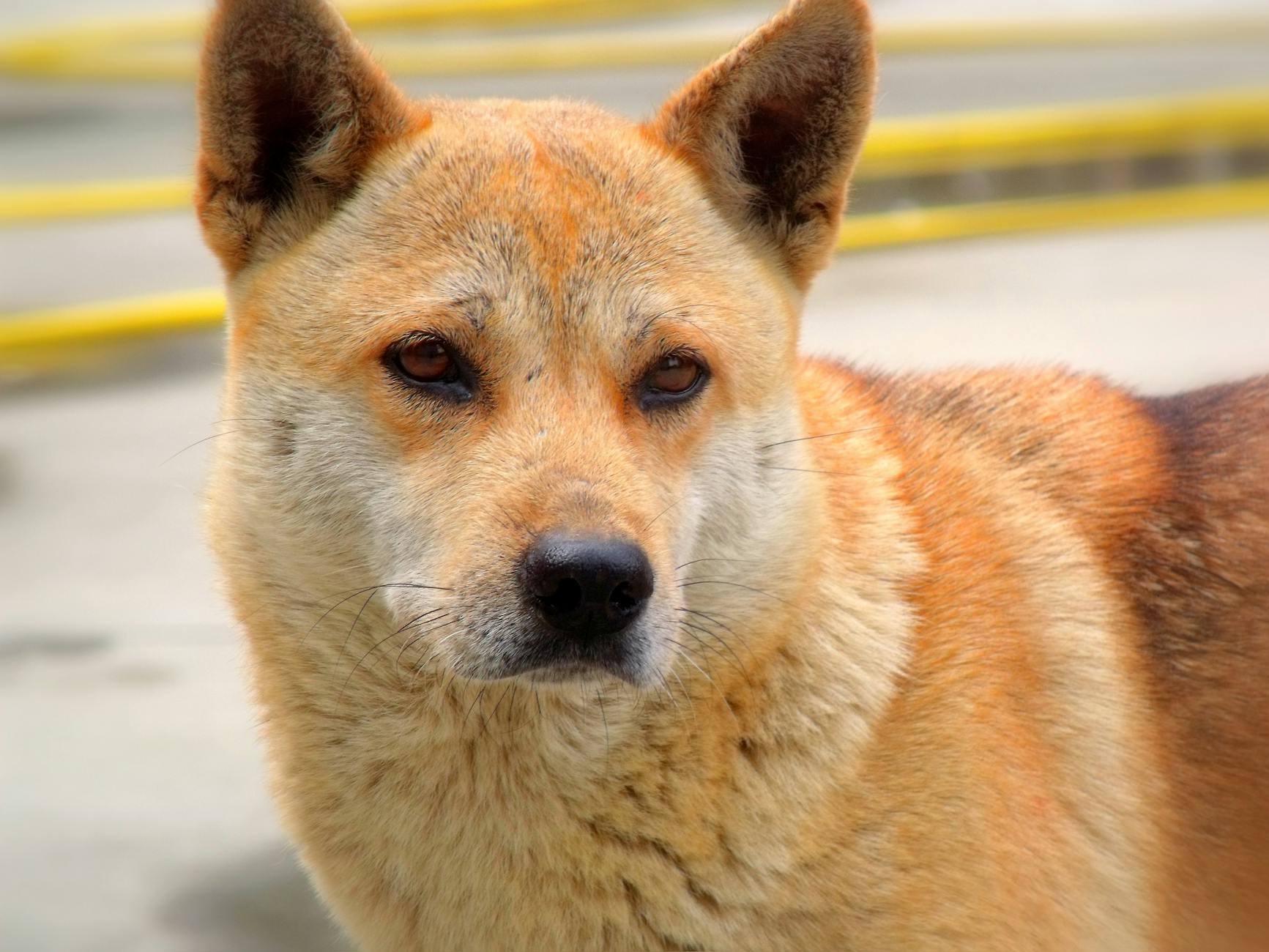

Common Jindo behaviours that people misread as aggression
Some Jindo habits can make people nervous, even when the dog is staying in control.
Standing between you and a stranger
This can be protective. It can also be uncertainty. Your dog is choosing distance, not conflict.
Not wanting to be petted
Many Jindos don’t enjoy hands reaching over their head, especially from strangers. That’s not “bad”, it’s a preference.
Teach people to ask first, and reward your dog for calm choices.
Quiet watching
A Jindo may “freeze” and watch instead of bouncing around. Some breeds wag and wiggle; some observe. Calm doesn’t always look friendly.
Quick chase of a squirrel
This is classic prey drive, and it can happen fast. One second, the dog is sniffing, the next, they’re a missile.
Simple body language cues help you judge the moment:
- Tucked tail and whale eye (white of the eye showing): fear or worry.
- Hard stare and stiff posture: rising tension, give space.
- Loose body and soft eyes: relaxed, able to learn.
If you’re new to the breed, it also helps to read a quick background summary like the Wikipedia page on the Korean Jindo.
When a Jindo’s high prey drive can become a safety issue
Prey drive is the urge to chase moving things. For a Korean Jindo dog, it can be high, because the breed developed as a hunting dog.
On East Cornwall walks, that can mean rabbits in hedgerows, pheasants bursting from cover, and cats cutting across a quiet lane.
The risk is highest when:
- A small animal runs close.
- The lead is loose and the dog can build speed.
- The dog slips a collar or backs out of a harness.
- A small dog yaps and darts, which can trigger chase.
A few practical habits reduce problems quickly:
- Use a secure, well-fitted harness (this guide on the best dog harness for large dogs is a helpful starting point).
- Train recall on a long line in safe fields, not near roads.
- Avoid off-lead areas until recall is solid under distractions.
- Add a GPS tracker if your dog is an escape risk, the Tractive GPS dog tracker guide explains what to look for.
Prey drive doesn’t make a dog “mean”. It means you plan your walks like you’ve got a sporty car under the bonnet.
Why do some Jindos show aggression and behavior problems?
What are the main triggers and real-life risk factors
Even though many Jindos are steady with people, any dog can bite if they feel trapped, scared, or hurt. When aggression happens, there’s usually a reason, and often more than one.
Common risk factors include:
Poor early socialisation
Dogs need gentle exposure to people, dogs, places, and handling.
A study comparing early-socialised and non-socialised Jindos found clear differences in reactivity and higher relinquishment rates due to behavior problems, which supports what trainers see in practice.
You can read the paper here: Jindo reactivity and early socialisation study.
Fear and uncertainty
A Jindo that looks confident can still feel unsafe, especially with sudden touch, loud voices, or crowded footpaths, which may trigger fear aggression like snapping.
Pain or illness
Sore hips, hypothyroidism, ear infections, dental pain, and skin issues can shorten a dog’s lifespan or cause personality changes.
If behaviour changes quickly, a vet check comes first.
Resource guarding
Guarding food or a sofa can look like “out of nowhere aggression”, but it’s often been building quietly.
Lead frustration
On lead, a dog can’t use normal social spacing. They may show aggressive behavior, barking and lunging because they feel stuck.
Tight leads also add tension to the body, which can increase reactions.
Hormones and maturity
Many dogs become more selective with other dogs as they grow up.
Some Jindos also show sex-based behaviour differences, which is discussed in research like behavioural differences based on sex in Jindo dogs.
A key point for owners in Cornwall: summer tourism changes the walking environment. More dogs, more kids running, more bikes, more narrow passing places.
If your Jindo is already cautious, that extra pressure can tip them over the threshold.

Dog to dog aggression and same-sex aggression, what owners should watch for
Dog-to-dog issues are one of the more realistic challenges with the breed. Same-sex aggression can show up even in dogs that were fine as pups.
Early warning signs are often small:
- Freezing mid-walk, then a fixed stare.
- Head over shoulders posture, leaning forward.
- Raised hackles (not always aggression, but it’s arousal).
- Lip lift or a tight mouth.
- Sudden silence, then a lunge.
- Trying hard to reach the other dog, ignoring food and voice.
Management that works on real walks:
Calm distance: cross the road, step into a driveway, or duck behind a hedge gap.
Turn away early: don’t wait for the stare to “lock on”.
Reward check-ins: treat when your dog looks back at you.
Avoid tight greetings: no nose-to-nose on short leads.
Choose walking buddies: pick steady, social dogs, and skip pushy greeters.
If you’re worried about uncontrolled off-lead dogs rushing up and showing aggressive behavior, this local-focused guide on dealing with loose aggressive dogs on walks is well worth a read.
It’s practical, and it matches what we see on coastal paths and common land.
Resource guarding, territorial behaviour, and stress, the hidden drivers
Guarding isn’t always obvious. Many dogs give tiny signs first, like hovering over a chew, blocking access to a sofa, or stiffening when someone walks by.
Common guarded “treasures” include:
- Food bowls and high-value chews
- Toys and stolen socks
- Beds, sofas, and doorways
- Owner attention, especially in multi-dog homes
Stress also stacks up. Think of it like a backpack that gets heavier all day. Visitors, noisy streets, fireworks, rough handling, and skipped naps can all add weight.
When the backpack is full, one small thing can trigger a big response.
Helpful next steps:
- Book a vet check if behaviour has changed or pain is possible.
- Use a qualified reward-based trainer for a clear plan.
- Manage the home setup, gates, calm zones, and predictable routines.
And if you’ve ever wondered about risk on walks in general, this post on is dog walking dangerous is a sensible read. It doesn’t scare-monger, it just helps you plan like a grown-up.
How to prevent aggression in a Korean Jindo, training and socialisation that actually works
Prevention is mostly about two things: good learning and good management.
Training changes your dog’s skills, management prevents rehearsal of unwanted behaviour while those skills grow.
For Jindos, the big wins come from calm repetition. Harsh corrections can backfire with an independent breed.
They may shut down, or they may push back. Unlike outdated ideas of dominance or becoming the pack leader, positive reinforcement keeps trust intact and makes the dog want to stay connected.
A simple step-by-step approach that works for both pups and adult rescues:
1) Reward calm and curiosity
Treat the dog for looking at something new, then looking away. That “look and disengage” skill is gold.
2) Teach a settle
Practise a mat settle at home first, then in the garden, then on quiet walks.
3) Build recall foundations
Start indoors. Move to the garden. Then to long line sessions in low-distraction spots.
4) Plan safe introductions
Parallel walks are better than face-to-face greetings. Let dogs sniff the same ground, not each other’s noses.
5) Add management tools early
A basket muzzle can be a kind tool when trained properly. It helps you relax, which helps your dog relax.
Secure fencing also matters, because many Jindos make talented watchdogs and are skilled at “finding the exit”.
6) Provide healthy outlets
Sniffing, tracking games, and short training sessions offer daily exercise without over-arousal.
If you play tug toys, keep the rules calm, and practise a clean “drop” cue.
For East Cornwall walks, plan for real-life obstacles:
- Narrow lanes: teach a “side” cue to step in close.
- Coastal paths: use a long line only where it won’t tangle.
- Livestock: keep dogs on lead, even if they “love sheep”.
- Busy summer routes: choose quieter times, early mornings help.
If you’d like help setting up safer walks or steady routines, you can use the Contact Paw-tastic Walks page to ask about options and suitability.
A simple socialization plan for puppies and newly adopted adults
Socialization isn’t about letting everyone pet your dog. It’s about teaching your dog that the world is safe, predictable, and worth checking in with you.
For puppies (8 to 16 weeks, ideally from a reputable breeder): short, daily “micro sessions.”
Aim for 5 to 10 minutes. Stop while it’s going well.
Checklist of calm exposures:
- People in hats, hoods, and hi-vis
- Umbrellas and walkers with sticks
- Bikes and scooters at a distance
- Friendly dogs seen from far away
- Car rides and calm crate time
- Gentle grooming and light handling
- Vet-style touches (ears, paws, collar hold), paired with treats
For newly adopted adults (first 2 to 4 weeks): go slow and build safety
Keep the world small at first.
Choose quiet routes. Let the dog watch from distance, then reward calm.
A good rule: if your dog can take treats and sniff the ground, they’re still thinking. If they can’t, you’re too close.
Safer walking routines that reduce reactivity
Daily habits shape behaviour more than big training sessions. Small tweaks can change the whole feel of a walk.
Do
- Keep a loose lead where possible, and avoid constant tension.
- Add sniff breaks, sniffing lowers stress for many dogs.
- Step off the path to let others pass, especially in narrow places.
- Practise “find it” (scatter treats) when something stressful appears.
- Use a comfortable harness rather than a collar for control.
Don’t
- Force greetings, especially with unknown dogs.
- Use retractable leads in tight, high-risk areas.
- Let strangers reach over your dog’s head.
- March straight into a busy pinch point.
Cornwall weather also matters. Wind and rain can make dogs jumpy, because smells and sounds change.
If you’re weighing up whether to skip a walk or adapt it, this guide on can I walk my dog in the rain has sensible options.
Frequently Asked Questions About Korean Jindo Dogs
What’s a Korean Jindo Dog like to live with?
A Korean Jindo is loyal, bright, and independent. Many bond strongly with one person, but they’ll still love the whole household.
They’re often calm indoors, and they don’t tend to bark for no reason. Outside, they can switch into hunting mode fast, so you’ll need steady training, clear rules, and safe boundaries.
If you want help building a routine, a professional dog walker can support with structured outings.
That’s useful if you’re juggling work or planning daily dog walks that stay consistent.
How much exercise does a Jindo need each day?
Most Jindos need 1 to 2 hours of active exercise daily, plus a bit of brain work. Think brisk lead walks, safe running, and problem-solving games.
They’re agile and can jump well, so secure fencing matters. On walks, their prey drive can kick in, so practise calm focus and reward check-ins.
If you’re searching for pet walking near me in East Cornwall, look for dog exercise services that understand high-drive breeds.
A plan that mixes solo walks and group dog walks (only if your Jindo enjoys dogs) can work well.
Are Korean Jindos good off-lead, and are they safe around other dogs?
Many Jindos can be trained for off-lead, but it’s not a quick win. Their prey drive and independence mean recall must be solid before you risk it.
Dog-to-dog manners vary. Some Jindos are fine with polite dogs, others can be tense, and same-sex issues can show up.
Start slow, keep greetings calm, and don’t force “social” situations.
For real-world safety tips, see dealing with loose aggressive dogs on walks and is dog walking dangerous.
These are handy reads if you’re choosing a reliable dog walker or comparing local dog walking options.
What grooming do Jindos need, and do they shed a lot?
They have a double coat and usually stay pretty clean. Weekly brushing is often enough most of the year.
Twice a year, many “blow coat” and shed heavily. During those weeks, brush more often, and expect fur on socks, sofas, and your tea towel.
Baths can be occasional, unless they find something smelly on a walk.
A well-fitted harness helps keep control without rubbing the coat. This guide on the best dog harness for large dogs can still be useful for sturdy, athletic breeds like the Jindo (just check sizing carefully).
What health issues are Korean Jindos prone to, and how can I keep mine safe on walks?
Jindos are often healthy, but some lines can be prone to hip dysplasia, kneecap issues (luxating patella), thyroid problems, and some eye conditions.
Ask breeders about health testing, and keep your dog at a lean, fit weight.
On walks, their fast chase instinct is the bigger day-to-day risk. Use a secure harness, practise recall in safe areas, and consider a tracker if your dog is an escape artist.
Here’s a useful look at the Tractive GPS dog tracker.
Bad weather doesn’t have to stop your routine either. If you’re debating it, can I walk my dog in the rain covers simple ways to stay comfortable and safe.
For enrichment at home, short games help a smart breed switch off.
A quick round with tug toys can burn energy and build your bond.
If you’d like a bit of breed background, Wikipedia has a solid overview of the Korean Jindo.
Available on our Paw Tastic Store


Conclusion
Most Korean Jindo dogs aren’t aggressive toward people, but their loyalty makes them protective, cautious with strangers, and intense with other dogs.
Prey drive can also create risky moments around cats, rabbits, and small dogs.
None of this makes the breed “bad”; it just means they need clear training, smart management, and secure fencing since Korean Jindo dogs are notorious escape artists.
Judge the individual dog, not the myth. Start socialisation early, reward calm choices, and set up walks so your Jindo can succeed.
If you spot warning signs like freezing, hard staring, repeated lunging, or separation anxiety, get help quickly from a vet and a reward-based trainer.
Your goal is a dog that feels safe, because safety is what lowers conflict in the first place.