
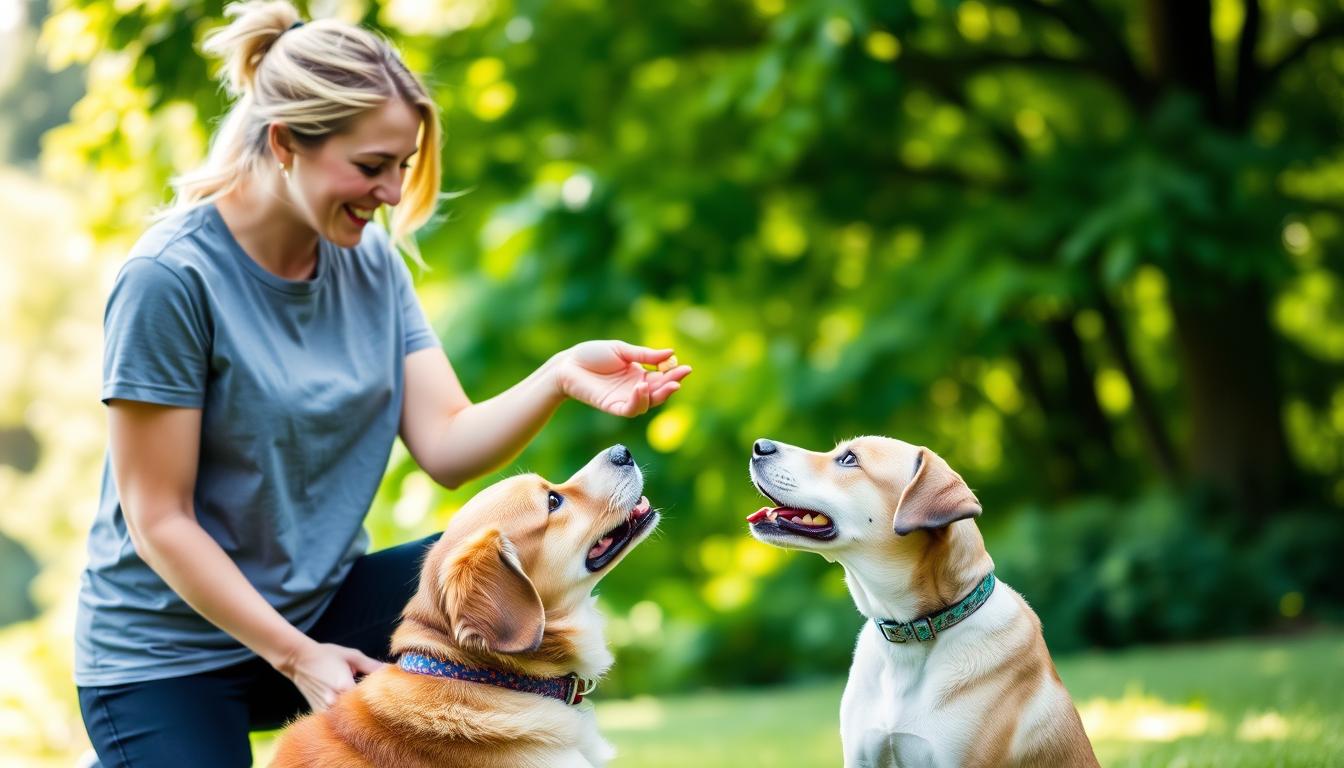
Did you know that 85% of dog owners see better behavior in their pets with positive reinforcement?
This method rewards good actions, not bad ones. It makes your relationship with your dog more loving and peaceful.
Positive reinforcement dog training is kind and works well. It helps you build a strong, trusting bond with your pet.
By using reward-based training for dogs, you can make your dog’s life better.
Key Takeaways
- Positive reinforcement training improves dog behavior and strengthens the bond between dog and owner.
- Rewarding desired behaviors encourages their repetition.
- A positive training environment fosters a happy and well-behaved pet.
- Consistency and patience are key to successful positive reinforcement training.
- Positive reinforcement is a compassionate approach to dog training.

Understanding Positive Reinforcement in Dog Training
Positive reinforcement in dog training means encouraging good behavior with rewards.
This method is popular because it’s effective and kind.
What is Positive Reinforcement?
Definition and Core Principles
Positive reinforcement is about making good behavior more likely by adding a reward.
In dog training, this means giving treats or praise for good actions.
The key is to reward only when the behavior is correct, so your dog knows what to do.
A famous dog trainer says, “Positive reinforcement makes learning fun and rewarding for your dog.”
“The right reward can significantly enhance the learning process, making it more enjoyable for both the dog and the trainer.”
The main ideas of positive reinforcement are:
- Immediate reward: Give a treat right after the good behavior.
- Consistency: Always reward the good behavior.
- Clear communication: Tell your dog clearly what action you’re rewarding.
Differences from Other Training Methods
Positive reinforcement is different from methods that punish bad behavior.
It’s more fun and builds a stronger bond with your dog.
| Training Method | Focus | Outcome |
|---|---|---|
| Positive Reinforcement | Rewarding desired behaviors | Encourages good behavior |
| Punishment-Based | Correcting undesired behaviors | Can lead to fear and anxiety |
Learning about positive reinforcement helps you create a positive training space for your dog.
Essential Tools for Positive Reinforcement Training
To train your dog well, you need the right tools. Positive reinforcement focuses on rewarding good behavior, not punishing bad ones.
The right tools make training fun for you and your dog.
Selecting the Right Treats and Rewards
Treats are key in positive reinforcement training, but they’re not the only thing. Toys, praise, and play work great too.
A third-party source says, “Treats are a key part of positive reinforcement training, but they’re not the only reward.
Toys, praise, and play can also be effective reinforcers.”
High-Value vs. Low-Value Rewards
Knowing the difference between high-value and low-value rewards is important.
High-value rewards are great for starting or for hard behaviors. For example, small cooked chicken or cheese really motivates many dogs.
Non-Food Reinforcers
Non-food rewards like praise or play are also very effective. They add variety and help avoid overfeeding.
It’s key to know what motivates your dog to pick the best rewards.
| Reward Type | Examples | Best Used For |
|---|---|---|
| High-Value Treats | Cooked chicken, cheese | Initial training, difficult behaviors |
| Low-Value Treats | Kibble, carrots | Simple behaviors, maintenance |
| Non-Food Reinforcers | Praise, playtime | Variety, reducing overfeeding |
By picking the right tools and rewards, you can make training fun and effective.
Preparing for Successful Training Sessions
To get the most out of dog training, you need to prepare well for each session.
This means setting up a space that’s perfect for learning and keeps distractions away.
Creating the Ideal Training Environment
For the first few sessions, keep the area distraction-free. As your dog gets better, you can slowly add more things to distract them.
This makes them learn to behave in different places.
Minimizing Distractions for Beginners
At the start, it’s key to keep distractions low. Train in a quiet spot with as few interruptions as possible.
Gradually Increasing Environmental Challenges
As you move forward, add more challenges to the environment. This keeps your dog sharp and ready, even in tough spots.
Here’s a table showing how to set up the perfect training space and increase challenges:
| Training Stage | Environment | Distractions |
|---|---|---|
| Beginner | Quiet area | Few |
| Intermediate | Moderate noise | Some |
| Advanced | Busy area | Many |
By following these steps and adding more challenges, your dog will learn to behave well in many situations.

Basic Commands Using Positive Reinforcement
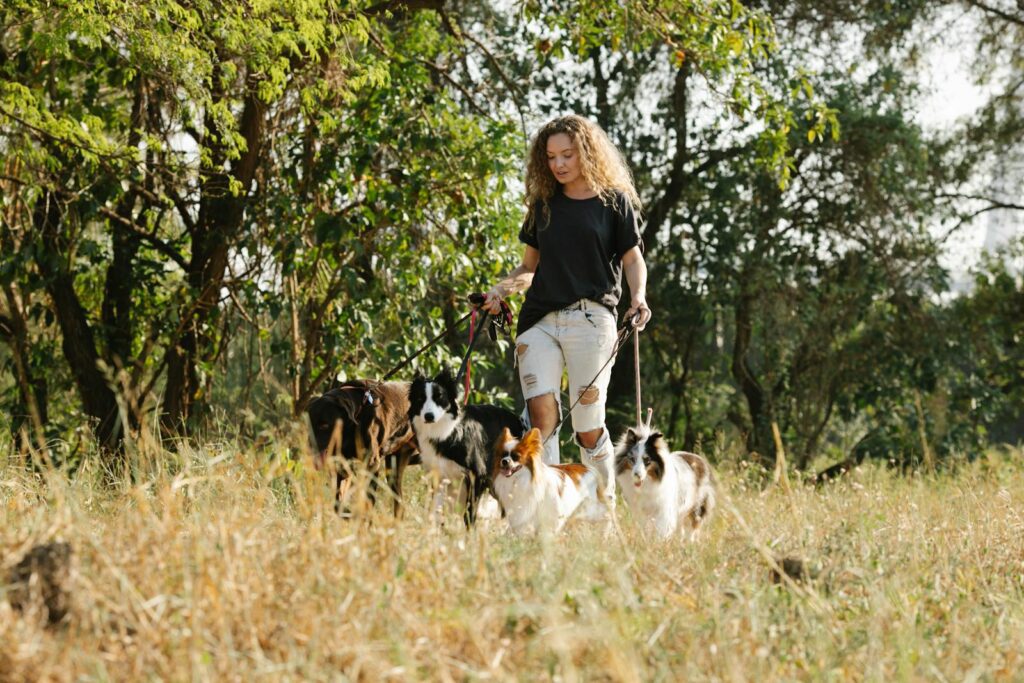
Teaching your dog basic commands like ‘sit,’ ‘stay,’ and ‘come’ is key to a well-behaved pet.
Positive reinforcement makes learning these commands fun for your dog.
Rewards and praise help your dog learn and respond well to these important commands.
Teaching Essential Commands
The commands ‘sit,’ ‘stay,’ and ‘come’ are basic to dog training. Each command has a specific purpose.
When learned right, they greatly improve your dog’s behavior.
Step-by-Step Sit Training Process
To teach ‘sit,’ hold a treat near your dog’s nose. Move your hand up and back, towards their tail.
This makes them sit. Say “Sit” and give them the treat when they do. Do this many times until they learn the command.
Consistency is key in training. Make sure everyone uses the same command and hand signal.
This avoids confusing your dog.
Building Duration in Stay Commands
Teaching ‘stay’ starts with having them sit, then step back while saying “Stay.”
Increase how far and long you’re away. Reward them for staying. This command helps with discipline and safety.
“The key to successful dog training is patience and positive reinforcement.”
Creating a Reliable Recall
The ‘come’ command is vital for off-leash walks and emergencies. Start with your dog on a leash or in a safe area.
Say “Come” and use treats and praise to encourage them. As they get better, you can stop using treats.
By following these steps and consistently reinforcing ‘sit,’ ‘stay,’ and ‘come,’ you’ll have a well-behaved dog.
Remember, patience and positive reinforcement are essential for successful dog training.
How to Train Your Dog with Positive Reinforcement Only: Advanced Techniques
When your dog knows the basics, it’s time for more. You’ll use advanced positive reinforcement techniques.
This is key for making your dog smarter and for a stronger bond between you.
Shaping Complex Behaviors
Shaping complex behaviors means slowly building up to the action you want. It’s great for teaching hard actions or sequences.
Breaking Skills into Achievable Steps
To shape complex behaviors, break them down into smaller steps.
This helps your dog learn bit by bit, without feeling too much pressure.
- Identify the final behavior you want to achieve.
- Break down the behavior into smaller, achievable steps.
- Reinforce each step until your dog masters it.
Using a Shaping Plan
A shaping plan outlines the steps to get to the desired behavior. It keeps you and your dog on track.
It makes training clear and effective.
Key elements of a shaping plan include:
- Defining the desired behavior.
- Listing the intermediate steps.
- Determining the reinforcement schedule.
By using these advanced techniques and being patient, you can see amazing results.
Remember, the secret to great dog training is being consistent, patient, and using positive reinforcement.


Addressing Problem Behaviors Positively
Positive reinforcement is a great way to change your dog’s bad habits. Issues like jumping, barking, and chewing are common.
By teaching new behaviors, you can fix these problems.
Managing Common Issues
Many dogs jump up, bark too much, and chew on things they shouldn’t.
You can teach them better ways to act.
Replacement Behaviors for Jumping
Teach your dog to sit calmly when asked. Give them treats and praise for staying seated.
This reinforces the desired behavior and cuts down on jumping.
Teaching Quiet Commands
For too much barking, teach a “quiet” command. When they stop barking, give them a treat and praise.
This shows them being quiet is good.
Appropriate Chew Toy Training
Give your dog chew toys to chew on. Reward them when they choose these toys.
This teaches them to chew the right things.
Positive reinforcement helps change your dog’s bad habits.
It not only fixes the problem but also makes your bond stronger.
House Training Through Positive Methods
Positive methods for house training not only train your dog but also strengthen your bond.
House training is key for dog owners. It makes your pet well-behaved and well-adjusted.
Establishing a Potty Routine
A consistent potty routine is vital for house training success. Take your dog to the same spot at the same time every day.
Creating a Consistent Schedule
To keep a consistent schedule, take your dog outside:
- First thing in the morning
- After meals
- After playtime
- Before bedtime
Recognizing Pre-Elimination Signals
It’s important to recognize pre-elimination signals. These include sniffing or circling, which means your dog is about to go.
Quick action helps guide your dog to the right spot.
Key signals to watch for include:
- Sniffing the ground
- Circling
- Whining or restlessness
By mixing a consistent schedule with positive reinforcement, you can house train your dog well.
Always reward your dog with treats and praise when they go outside.
Socialization Using Positive Reinforcement
Dog socialization is key, and positive reinforcement makes it easy. It helps your dog meet new people and places.
Socialization makes your dog confident and calm in new situations.
Introducing Your Dog to New People
Introducing your dog to new people should be done carefully. This way, your dog won’t get overwhelmed.
It lets them get used to new people at their own speed.
Controlled Greetings Protocol
Using a controlled greeting protocol makes your dog feel more comfortable. Here’s how:
- Start with visual introductions from a distance
- Slowly increase interaction in a controlled way
- Give treats and praise for calm behavior
Rewarding Calm Behavior Around Visitors
Rewarding calm behavior is key when visitors come. Giving treats and praise for calmness encourages it.
This helps your dog stay calm around others.
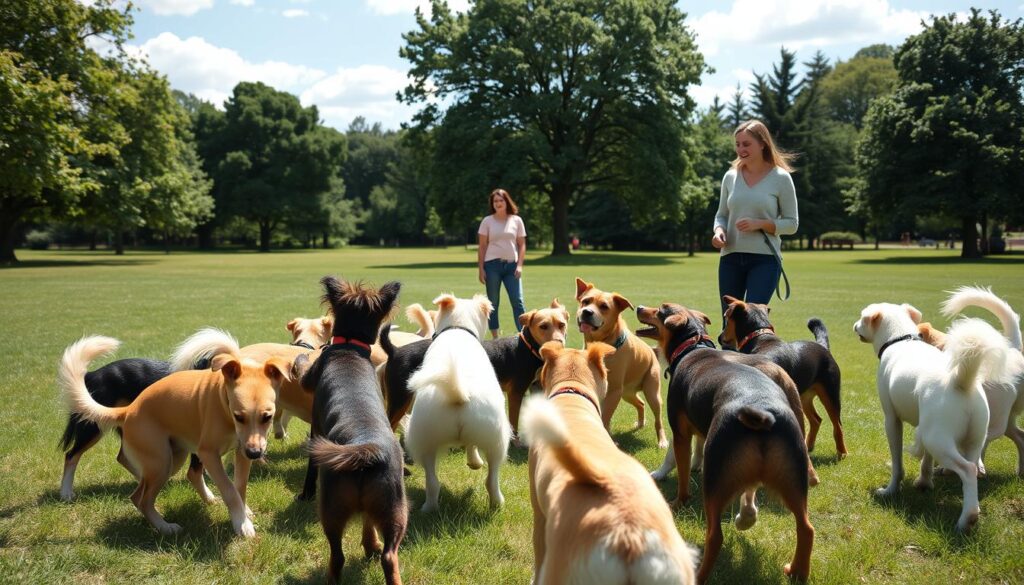

Studies show socialization is vital for dogs. Positive reinforcement helps introduce them to new people and places.
By following these steps, your dog will become more confident and calm in social situations.
Transitioning from Constant Treats to Lifelong Habits
As you train your dog, it’s key to move away from constant treats. This change is vital for building lifelong dog training habits.
These habits should not need constant rewards.
Implementing Variable Reward Schedules
A variable reward schedule means changing the rewards’ frequency and type.
This keeps your dog interested and obedient.
It’s a great way to keep your dog focused on commands.
Gradually Reducing Treat Frequency
Start by reducing treat frequency as your dog gets better. First, reward every other correct action.
Then, increase the time between rewards.
Maintaining Reliability Without Constant Rewards
The aim is to keep your dog reliable without constant rewards. A variable reward schedule helps.
It makes rewards unpredictable, keeping your dog motivated and engaged.
By following these steps and staying consistent, you’ll build a strong bond with your dog.
This bond is not based on treats. It makes your relationship better and more enjoyable for both of you.

FAQ
What is positive reinforcement in dog training?
Positive reinforcement is a training method. It rewards a desired behavior with something good. This makes the behavior more likely to happen again.
What are the best treats to use for positive reinforcement training?
Choose treats that your dog loves and finds motivating. You can also use praise or play as rewards. This adds variety and helps avoid overfeeding.
How do I create an ideal training environment for my dog?
Start in a quiet place with few distractions. As your dog learns, add more challenges. This helps them learn in different situations.
How can I teach my dog basic commands like “sit,” “stay,” and “come” using positive reinforcement?
Begin with simple steps, like luring your dog into a sit. Then, add more complex behaviors. Reward each step to help them learn and respond well.
What is shaping in dog training, and how can I use it to teach complex behaviors?
Shaping is about building up to a behavior through rewards. Break down the behavior into steps. Reward each step to teach complex behaviors.
How can positive reinforcement help with problem behaviors like jumping, barking, and chewing?
Positive reinforcement teaches better behaviors. For example, teach your dog to sit calmly instead of jumping up.
What is the best way to house train my dog using positive reinforcement?
Create a consistent potty routine. Use rewards to teach your dog to go outside. Watch for signs they need to go to prevent accidents.
How can I socialize my dog using positive reinforcement?
Introduce your dog to new people and places. Teach them to stay calm. Reward calm behavior to help them feel comfortable.
How do I transition from constant treats to a more variable reward schedule?
Slowly give treats less often but keep the behavior. This helps your dog learn to do the behavior even without treats.
What are the benefits of using positive reinforcement training for my dog?
Positive reinforcement builds a strong bond with your dog. It’s based on trust, respect, and understanding.
It makes learning positive and improves your relationship.
Can I use clicker training as part of positive reinforcement?
Yes, clicker training is a positive reinforcement method. It uses a sound to mark good behaviors. This helps communicate with your dog and speeds up learning.
How long does it take to see results from positive reinforcement training?
Results vary based on the dog, the behavior, and training consistency. Regular practice and positive reinforcement lead to improvements over time.
Conclusion: Building a Lifelong Bond Through Positive Training
Training your dog with positive reinforcement is rewarding. It builds a strong bond between you and your dog.
By rewarding good behavior, you create a positive learning space. This space is filled with trust, respect, and understanding.
Positive dog training does more than teach new tricks. It also makes your bond stronger.
Remember, positive reinforcement makes your pet happy and well-behaved. It goes beyond just following commands, bringing you closer together.
Choosing positive reinforcement means investing in a lifelong bond with your dog.
This method lays a solid foundation for a happy, healthy relationship. It’s a great way to ensure your dog’s well-being and deepen your connection.