Even With Squirrels!
A reliable recall keeps dogs safe and gives them freedom.
If your dog sprints after wildlife or other dogs, calling them back can feel hopeless.
This guide shows you how to build a fast, happy recall that works in real life.
You will learn the exact steps, from food games to leash and e-collar support, to get your dog moving back to you on cue.
This is perfect for families in East Cornwall who want safer daily dog walks and fewer worries by the road or on coastal paths.
Let’s make Teaching Your Dog Recall simple and dependable.
Understanding the Challenge of Recall in Prey Drive
When a dog hits prey drive, your voice often fades into the background. The chase becomes all that matters.
Picture a chicken darting from a garden, a cat bolting across a lane, or a squirrel tree-hopping in Kilminorth Woods.
Without solid training, your dog will lock on and go.
This is when recall matters most. You want your dog to turn on a dime and run straight back, even when another dog is bouncing around or a rabbit dashes from a hedge.
The goal is simple. You say your recall cue, your dog powers back with enthusiasm, and you reward. In time, your voice alone brings them home.
Why Basic Calls Fail in High-Distraction Situations
An 80-pound dog in full sprint has momentum. Words alone rarely stop that at first.
We build recall by pairing your voice with clear payment, then reliable tools, then practice around the things your dog loves to chase.
Common recall tests to plan for:
- Food or toys scattering.
- Wildlife like squirrels, pheasants, or rabbits.
- Other dogs or people.
First Steps: Charging Up Your Dog’s Recall with Food and Name Recognition
Start in a safe, enclosed space. Use a garden or a quiet green with a long line.
Begin by showing your dog that coming back to you pays better than going away.
Try this simple routine:
- Touch your dog’s nose with food, then say free. Toss one piece a short distance so your dog moves away.
- As your dog finishes the food and turns, say your cue, for example, “Thor, here.”
- Mark the instant they commit to you with a clicker or a happy “yes.”
- Walk backward as they drive into you and feed them 4 to 6 small pieces.
Repeat several rounds. The pattern matters. One piece out, big payment back.
Your dog learns that returning is the jackpot. This works even better if your dog starts a bit hungry.
Why it clicks: Dogs repeat what gets reinforced.
You are shifting the value. Going out earns a snack.
Coming back earns a feast. When Teaching Your Dog Recall, your timing, tone, and movement sell the fun.
If you like marker training, a quick read on clicker training helps explain why this is so effective.
Setting Up Safe Training Sessions
Stay safe and keep sessions short. You want happy reps, not a worn-out dog.
- Keep it brief to prevent fatigue, 30 seconds up to 2 or 3 minutes.
- Use high-value food to build excitement.
- Condition the name so it equals “amazing rewards await.”
- Work in a fenced area or use a long line until your dog is solid.
If you’re in East Cornwall, weather can change fast. For damp days, these tips on walking your dog in the rain will keep sessions comfortable.

A Word of Caution on Realistic Expectations
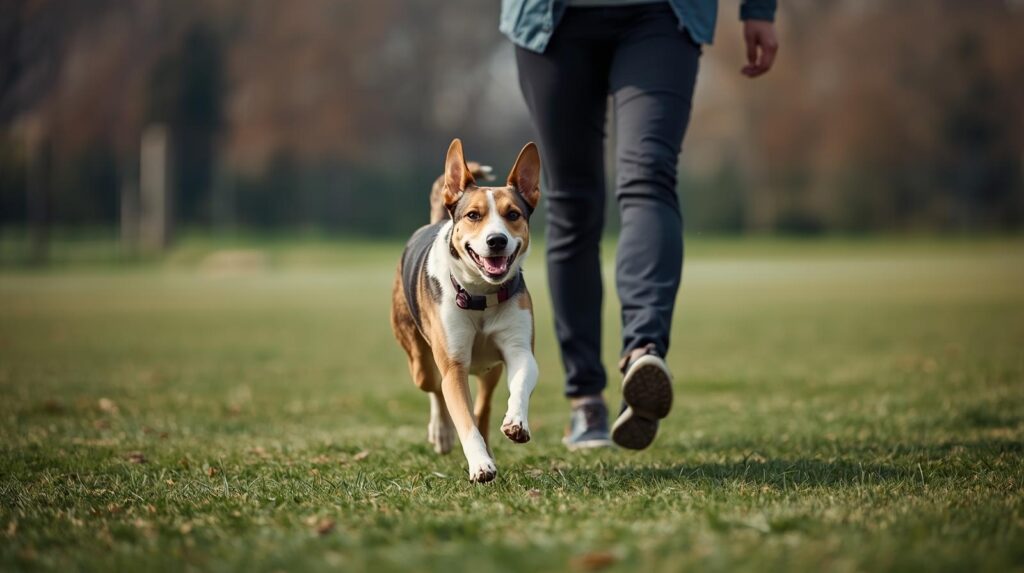
You won’t get a perfect recall in one afternoon. Expect many short sessions over days and weeks.
Be patient, be consistent, and keep it fun.
Want structured help from start to finish? Explore the full Unleashed course on DIY K9 training courses.
Use coupon code RECALL30 at checkout for 30% off for the first 30 people.
Building Drive with the Restrained Recall Exercise
Now build speed and desire.
The restrained recall teaches your dog to explode toward the caller when they hear their name.
Here’s the setup:
- Have your dog in heel position by your side.
- A helper stands 3 to 10 meters away.
- Your helper calls, “Thor, here.”
- You gently hold your dog back like a slingshot for a beat, then release only as your dog drives forward with intent.
- Reward generously when they arrive.
Repeat several times. Keep it snappy. You’re conditioning the meaning of the cue.
When that name drops, your dog should “haul tail” to the person who called. You can increase the distance as your dog grows confident.
Tips for Effective Restrained Recall Practice
- Use two people to start, the caller and holder, for clean reps.
- Pay big for speed and focus. Make arrivals a party.
- Vary distances to build momentum and reliability.
- Keep sessions upbeat and short to protect enthusiasm.
Fun Games to Enhance Recall: The Triangle of Death
The name is playful, the game is clever. You’ll use three people placed in a triangle. Your dog learns to listen, not guess.
They must respond to the person who calls, not just run between two predictable points.
How to play:
- Person A calls, rewards, and then Person B calls.
- Now add Person C. Your dog must spot who called and run to them.
- Mix it up and call from different angles.
- Halfway through a run, another person can call to turn your dog back. Reward well for change of direction.
This game builds attention, fast turns, and cleaner responses. Your dog learns to switch from north to south on cue.
Paying generously for mid-run turns is key.
Variations to Keep It Engaging
- Add a fourth or fifth person once your dog is ready.
- Keep rules simple:
- Start with a food toss to set motion.
- Call mid-way to redirect direction.
- Reward only at the location of the caller.
If your dog enjoys chase play, add safe, controlled tug games for motivation.
For quality tug toys, we recommend options that are durable and exciting.
Adding Reliability: Leash and E-Collar Integration
Your voice needs backup in the early stages. A leash gives you 100% physical reliability.
Think of it as a safety line for learning, not punishment.
Start with this pattern:
- Toss one piece of food away. Let your dog eat.
- Give a light, quick pop on the leash as they finish. This means “come back to me for more.”
- Pair your voice with the leash pop. For example, “Thor, here,” pop, “yes,” reward.
- Make the return the big payday.
Next, shorten the leash and toss food slightly farther. Call first. If your dog processes slowly or ignores the cue, the leash backs up your voice. Your dog learns the rule that matters: your voice has power.
If they don’t recall, the leash will guide them anyway, so coming back is the only way to get paid.
This approach builds a clean chain. Toss, call, return, pay. Keep your tone cheerful, and your rewards generous.
If you walk a large breed, a comfortable harness helps.
Our guide to the best dog harness for large dogs covers secure, low-friction fits that protect shoulders and necks during training.
Introducing the E-Collar as a Digital Leash
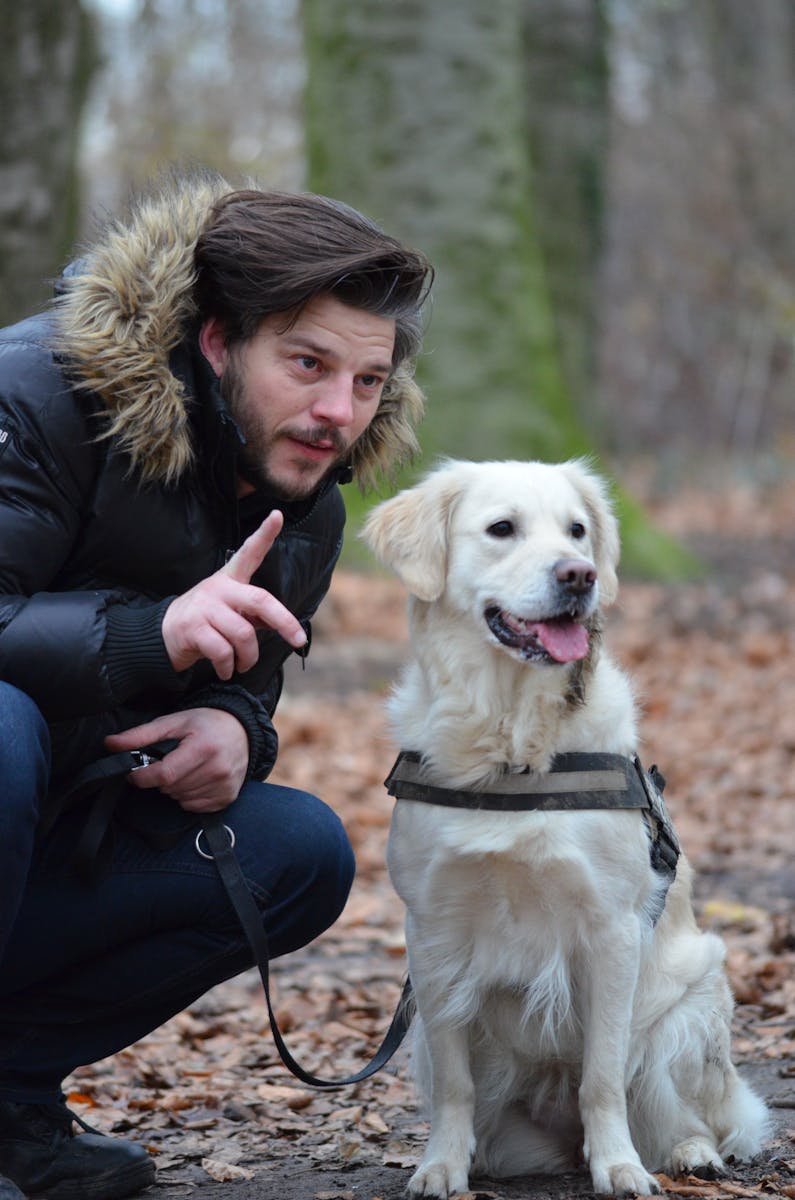
Once your dog understands the recall with a leash, you can layer in an e-collar as a digital version of the same thing. Proper conditioning is essential.
- While your dog eats the tossed food, apply a low, consistent stimulation or tone. Then call them back and celebrate on arrival.
- You may see a small head turn as they notice it. Keep it light and positive.
- The message is simple. Feeling the collar means, “come back and get paid.”
This is an advanced step. It takes many sessions to do it right.
If you want step-by-step guidance, explore the Unleashed program in the DIY K9 training courses, or start with the free Decoded dog training course.

Why Tools Like Leash and E-Collar Matter
The leash physically stops a sprinting dog. The e-collar mimics that clarity at a distance when off lead.
In time, these tools give you an empowered voice backed by consistent training.
Your dog learns that the recall cue always matters, even around birds, balls, and busy paths.
For safety on bigger adventures, consider a tracker.
Our review of the Tractive GPS dog tracker covers how to add extra peace of mind.
Proofing Recall: Testing in High-Distraction Scenarios (D10 Level)
A D10 is a top-level distraction. For some dogs, that’s wildlife on the trail. For others, it’s another dog playing close by.
The test is clear. Can you call your dog off peak excitement and get a fast return?
Here’s how to proof safely:
- Start in a controlled area with known distractions.
- Let your dog engage with a low-level distraction first.
- Call once, upbeat and clear. “Thor, here.”
- If they hesitate, support with the leash or, if fully conditioned, the e-collar at a low level.
- Pay big when they commit and arrive.
As your dog succeeds, increase difficulty. Try recalls away from friendly dogs during play.
Try recalls as a bird lands nearby. Always set up for success. Avoid unsafe setups with traffic or loose, unknown dogs.
Worried about off-lead encounters?
Our guide to dealing with loose aggressive dogs on walks offers calm, practical steps.

Real-World Application for Off-Leash Freedom
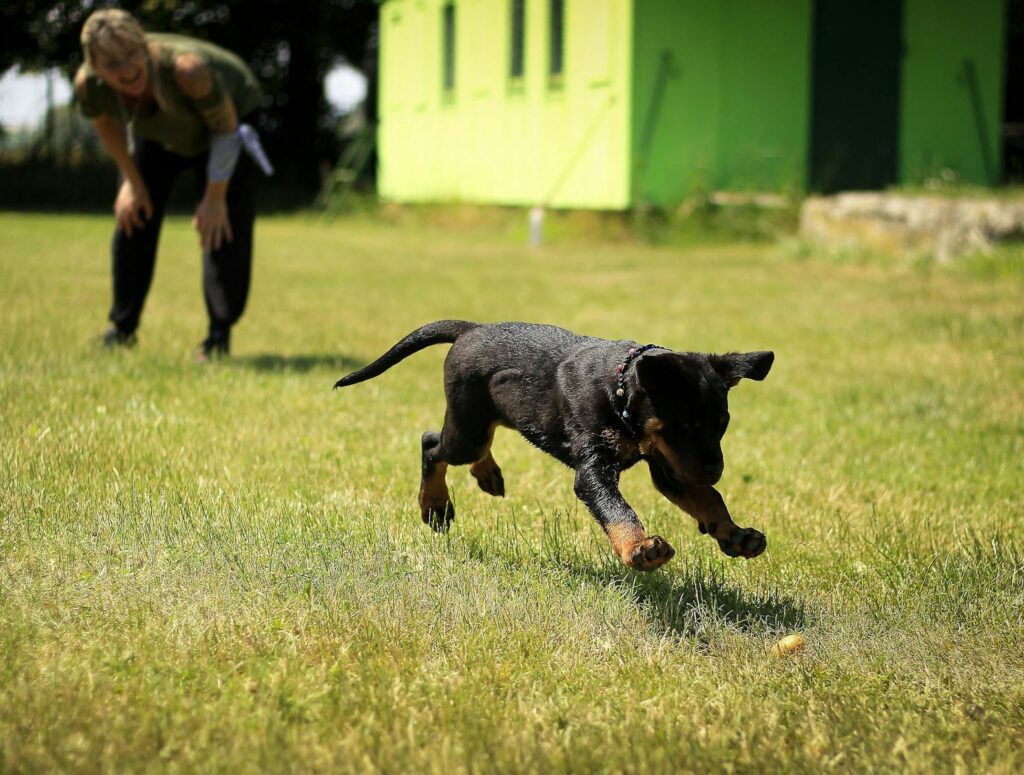
A strong recall unlocks safe freedom. You can enjoy coastal paths, moorland edges, and woods around Looe and Polperro with less stress.
If a deer bolts across a field or a rabbit pops out, your dog understands the cue and returns.
You get peace of mind. Your dog gets more sniffing and play.
If you are exploring new areas or busy lanes, stay mindful.
Read about is dog walking dangerous and how to manage risk while keeping walks fun.
Local Support: Walking, Training, and Daily Care in East Cornwall
Great recall makes daily dog walks smoother. It also helps during group outings and playdates.
If you are searching for “pet walking near me,” consider how a professional dog walker can support your goals.
At Paw-tastic Walks, we focus on:
- Safe, enjoyable daily dog walks that fit your dog’s pace.
- Group dog walks that build social skills with care.
- Puppy walking services that support early training foundations.
- Advice on dog exercise services and dog walking rates that match your needs.
If you’re improving recall at home, these dog training secrets for better recall can help: dog training secrets for better recall.
Mastering Recall: Next Steps and Resources
Let’s bring it together:
- Build value first. One piece out, big payment back.
- Keep sessions short and cheerful.
- Add restrained recalls to boost drive and speed.
- Use the leash to back up your voice.
- Layer the e-collar only after careful conditioning.
- Proof around real distractions.
Ready for a step-by-step plan? Dive into the full Unleashed program on DIY K9 training courses, or start with the free Decoded dog training course.
If you’d like local help with local dog walking or a reliable dog walker who respects your training goals, you can reach out anytime.
For bookings, questions, or East Cornwall dog walking services, Contact Paw-tastic Walks through our contact page.
Available on our apparel store…
Frequently Asked Questions About Training Reliable Dog Recall (That Works on Real Walks)
1) When should I start recall training?
Start right away, even with an adult rescue. Puppies can begin as soon as they’re home and settled, using simple games indoors.
Keep it easy at first, a few short calls per day in the kitchen counts.
Recall is a safety skill, so early practice pays off on daily dog walks, especially in East Cornwall where paths, wildlife, and open spaces can tempt dogs to wander.
2) What’s the best recall cue, “come” or something else?
Pick one cue you’ll stick with, such as “come”, “here”, or a whistle. The word matters less than the history behind it.
If “come” has become “the fun ends” in your dog’s mind, choose a fresh cue and build it up with great rewards.
Say it once, reward fast, then let your dog go back to sniffing sometimes, so the cue doesn’t feel like a trap.
3) Why does my dog come at home but ignore me outside?
Distractions outside are stronger, scents, dogs, people, and moving things.
Most dogs also don’t generalise well, so “come” in the lounge doesn’t automatically mean “come” on the coast path.
Train in steps:
- Indoors first, then the garden.
- Then quiet spots on local dog walking routes.
- Then busier places, using a long line for safety.
If you’re booking dog walking services or puppy walking services, ask your professional dog walker to keep recall practice consistent with your cues.
4) Should I use a long line, and how long should it be?
Yes, a long line is one of the safest ways to build recall without giving your dog the chance to rehearse ignoring you.
Many trainers use around 30 feet when moving training outdoors.
Pair the long line with a comfortable harness so you don’t risk neck strain.
This guide can help you choose gear that suits your dog: best dog harness for large dogs.
5) What rewards work best for recall?
Use rewards that beat the environment. For many dogs, that’s soft, smelly treats.
For others, it’s a quick game with a favourite toy.
A simple rule: the harder the situation, the better the pay. Save your “jackpot” reward for recalls that happen near big distractions.
If your dog loves play, a short tug game can be perfect, just keep it brief and upbeat (and if you’re using tug toys, make them a special recall-only treat).
6) What are the most common recall mistakes?
A few patterns cause most recall problems:
Calling to end the fun: If recall always means lead on and home, your dog will hesitate. Reward, then release them again when it’s safe.
Repeating the cue: Saying “come, come, come” teaches your dog the first few don’t matter.
Say it once, then help them succeed with movement, encouragement, and the long line.
Asking for extra stuff first: Don’t turn every recall into “come, sit, stay, paw”. Pay them for arriving, then add extras later.
Skipping safe practice: If your dog’s not ready, off-lead time becomes a gamble. For real-world risks on walks, this is worth a read: is dog walking dangerous.
7) How long does it take to train a solid recall, and when is off-lead safe?
There’s no fixed timeline. Progress depends on your dog, the distractions you train around, and how often you practise.
Short sessions work best, a few minutes, a handful of reps, then stop while your dog still wants more.
Off-lead is safest when your dog can recall on a long line around distractions you actually meet on your routes.
If you want extra peace of mind while you build skills, a tracker can help you recover your dog fast if they slip away.
Here’s a practical overview: Tractive GPS dog tracker.
If you’re searching “pet walking near me” and want help building manners on walks, a reliable dog walker can keep training steady across weeks, which often beats stop-start practice at home.
You can reach out here: Contact Paw-tastic Walks to discuss local dog walking and recall support.
For extra background on the science behind rewards and learning, this Wikipedia page is a useful primer: Operant conditioning.
Conclusion
A fast, happy recall protects your dog and opens up more freedom. Start simple, keep it fun, and add structure as you go.
Back your voice with tools until your dog understands that coming when called always pays.
For deeper guidance, consider the courses and keep practicing short, upbeat sessions.
Strong recall and kind handling make every walk safer and more enjoyable for you both.