The Cool Science Behind Their Color
Why Chocolate Labs Are Actually Brown comes down to genes and pigment; learn how coat color works, plus care tips for happy, well-exercised dogs.
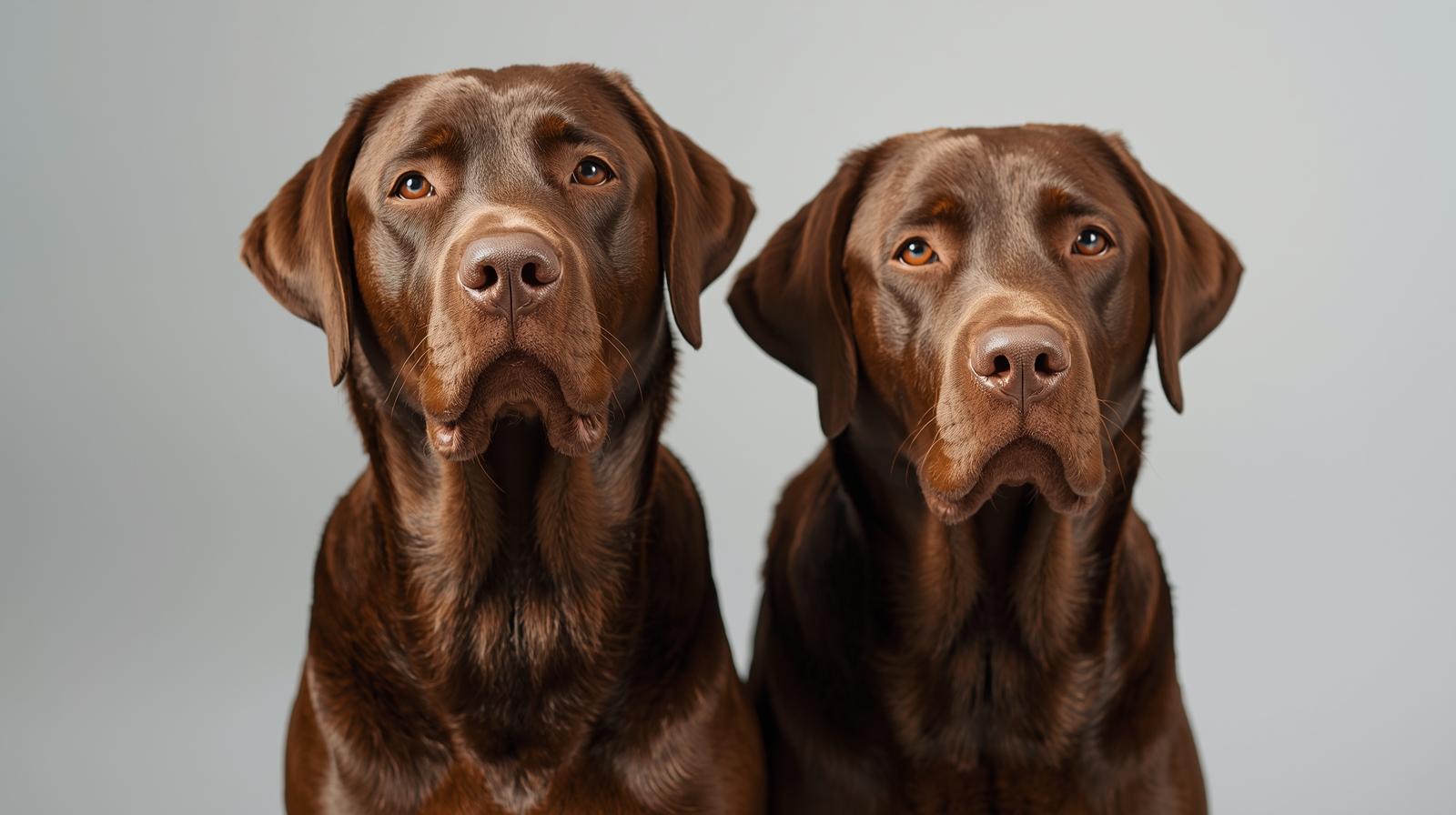
People call them chocolate, but they’re really brown. So, what determines coat color in Chocolate Labs?
Short answer: genetics.
The coat shows brown when a Lab inherits two recessive b genes, plus at least one E gene that lets the color show.
If you want the science, see Labrador Retriever coat colour genetics.
This post breaks down Why Chocolate Labs Are Actually Brown: The Cool Science Behind Their Color in plain English. We will keep it simple and useful for daily life with your Lab.
You will learn how genes affect shade, nose color, and even sun fade. You will also see how this helps with care on your walks.
Genetics control the colors of all Labrador Retrievers, from the classic Black Labrador to the sunny Yellow Labrador and the rich brown shades.
Labs are a favorite in East Cornwall, UK. Understanding their color helps you manage skin and coat in our mixed weather.
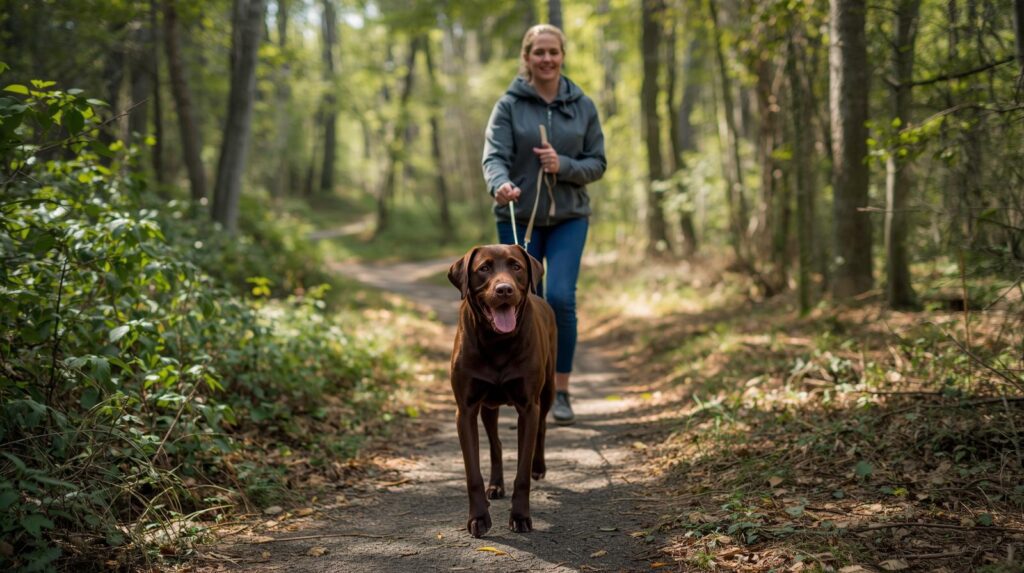
Brown coats can warm up in summer sun, so plan shady routes and carry water. In winter rain, a quick towel dry keeps that rich coat healthy.
If you search pet walking near me or need daily dog walks, a professional dog walker can help your Lab thrive.
A reliable dog walker who knows coat care will time routes, choose shaded paths, and watch for heat stress. For local dog walking services and dog walking rates, check our dog walking price list.
We also arrange group dog walks and puppy walking services for young Labs that need gentle mileage.

Understanding Labrador Coat Colors Basics
Labrador Retrievers come in a small set of classic shades, yet each one has a story when it comes to coat color.
Here is the quick guide you need to spot color, predict patterns in a litter, and care for your dog on daily walks in East Cornwall.
We will keep it simple so you can use this with your vet, breeder, or your professional dog walker.


The Three Recognized Colors in Labs
The American Kennel Club and other organizations recognize three Labrador colors.
All three are beautiful, and all three are easy to spot once you know what to look for.
- Black: Deep, inky coats with a glossy shine in the sun. Noses and eye rims are black. Eyes are usually brown to dark brown. Example: the classic Black Labrador you see sprinting across a Cornish beach.
- Yellow: Ranges from near-white to rich fox-red. Noses and eye rims are usually black, though some lines fade a bit with age—a trait sometimes seen in the Dudley Labrador, where non-pigmented areas like pink noses appear. Example: that cheerful cream Yellow Labrador waiting outside the village shop, or a vibrant fox-red Yellow Labrador bounding through the fields.
- Chocolate: Often called chocolate, but Chocolate Labs are truly brown. The TYRP1 gene sets the brown coat, and it pairs with brown noses and brown eyes, which match the coat in these Chocolate Labs. Example: a warm, milk-chocolate dog that looks extra glossy after a towel dry.
Quick walking tip for our weather: darker coats can warm up faster in summer sun.
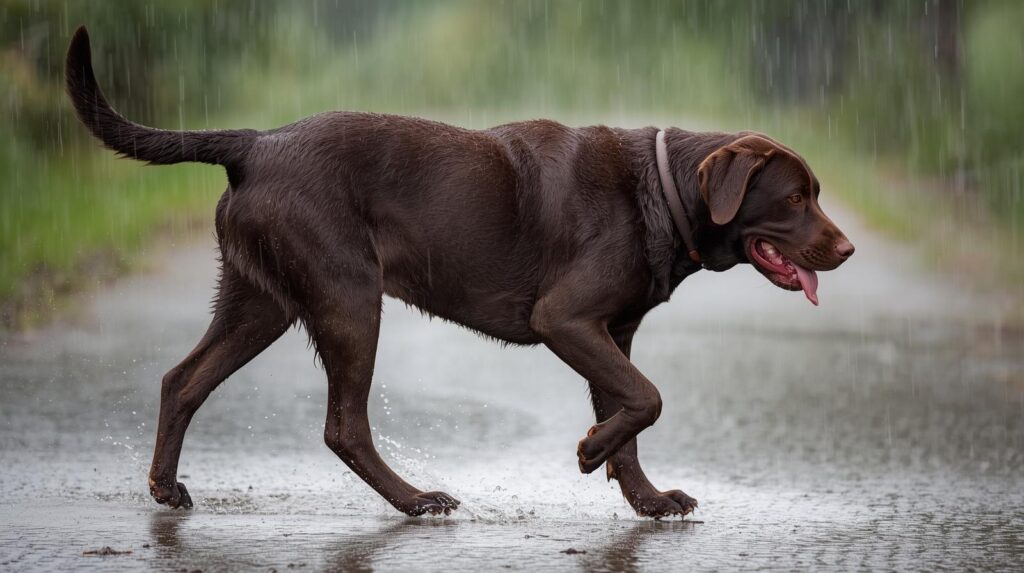
Plan shady paths on mid-day daily dog walks, carry water, and use rests. In winter rain, a fast towel rub keeps the coat comfy and reduces chill.
If your Lab pulls on lead, a well-fitted harness helps.
See our guide to the best dog harness for large dogs to keep walks safe and smooth.

How Genes Decide If Your Lab Is Brown
Here is the simple science that answers, “Why Chocolate Labs Are Actually Brown: The Cool Science Behind Their Color.”
Think of coat color genes as a friendly tug of war. Black is a bit bossy. Brown needs two wins to show.
- The brown gene uses the letters
Bandb.Bis black and is dominant.bis brown and is recessive.
- For a Lab to be chocolate (brown), it must be
bb. That means it gets abfrom mum and abfrom dad. If even oneBshows up, black takes over the coat. - The color also needs a “color switch” gene, written as
E. The E locus is an example of recessive epistasis, which determines whether the black coat color or chocolate coat color can be expressed. At least oneElets color show in the coat. If a dog inheritsee, the coat looks yellow, even if it also carriesbbunderneath.
Put it all together like this:
- Black is bossy and covers brown unless brown wins twice.
- “Brown wins twice” means your pup is
bb. - To show any dark pigment at all, your dog needs at least one
E.
Here are simple family examples that match what breeders see:
- Two black parents can still have chocolate pups if both carry a hidden
b. - A chocolate parent (
bb) and a black parent that carriesbcan have both black and chocolate pups. - Two chocolates (
bbxbb) only have chocolate pups.
Want a deeper, easy-to-read breakdown of TYRP1 and how labs inherit color? The UC Davis Veterinary Genetics team explains it clearly in Coat Color Inheritance in the Labrador Retriever.
Walk-friendly advice for East Cornwall:
- Brown coats can fade a touch in bright summer sun. Choose early morning or evening group dog walks on warmer days.
- Keep leads and tags secure around busy lanes and coastal paths. For extra peace of mind, a GPS tracker is handy. See our guide to the Tractive GPS Dog Tracker.
- If you ever google “pet walking near me,” look for a reliable dog walker who watches heat and terrain, and adjusts dog walking rates to your dog’s needs. This helps your Lab stay happy and safe on every route.
Color genetics may sound complex, but with this simple framework, you can predict likely shades in a litter.
It also helps you plan care on wet, windy, or sunny days. That way, your brown beauty stays comfortable, from seaside sprints to calm village strolls.
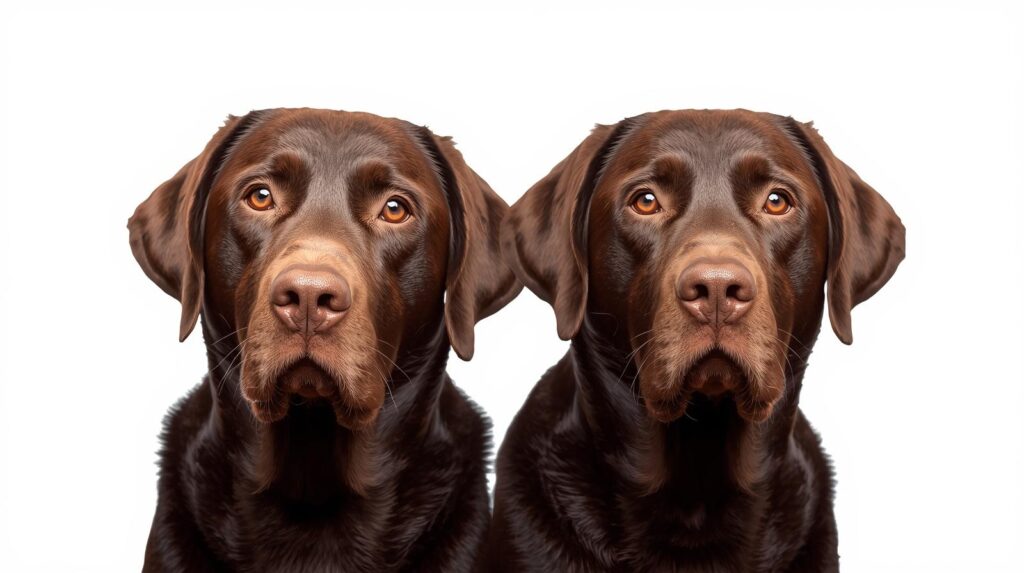
The Genetics Science Making Chocolate Labs Brown
Here is the simple truth behind Why Chocolate Labs Are Actually Brown: The Cool Science Behind Their Color.
It comes down to the inheritance of how a few genes control pigment. One set decides black or brown, another lets that color show in the coat.
Once you know which letters your Lab carries, the outcome makes sense.
This matters in real life too. Color can hint at nose shade, eye tone, and how your Lab handles sun on summer walks.
It will not change personality, but it can help you plan care on daily dog walks and group dog walks in East Cornwall.
What Are Dominant and Recessive Genes?
Think of genes like a mini tug of war. A dominant gene usually wins with just one copy.
A recessive gene needs two copies to show. For coat color, we use capital letters for dominant and lowercase for recessive. Simple and tidy.
A Labrador’s black or brown base color sits at the B locus:
Bis the dominant allele and codes for black.bis the recessive allele and codes for brown.
How does this play out with puppies?
- If a pup has at least one
Bdominant allele, the coat is black. - A pup is chocolate only if it gets two recessive alleles, so
bb.
Here is a clear example that fits real litters. Two black parents can have chocolate puppies if both parents quietly carry b. Each pup then has a 25 percent chance of inheriting b from both parents. That offspring will be bb and look brown.
In breeding scenarios, this means two Black Labradors carrying the recessive allele can produce chocolate offspring, even if the parents appear black.
This beginner-friendly rule of thumb is backed by practical guides, like the Notre Dame STEM “Curious Case of Puppies”, which shows how dominant and recessive alleles shape coat color.
When considering breeding Labrador puppies, understanding this allele inheritance helps predict outcomes for the offspring.
Quick tip for owners:
- If you are searching pet walking near me, tell your professional dog walker your Lab’s coat color and age. It helps plan shade, pace, and water stops.
- Chocolate pups can be curious chewers. Bring a toy on daily dog walks to keep focus, or use short training breaks for calm, happy miles.
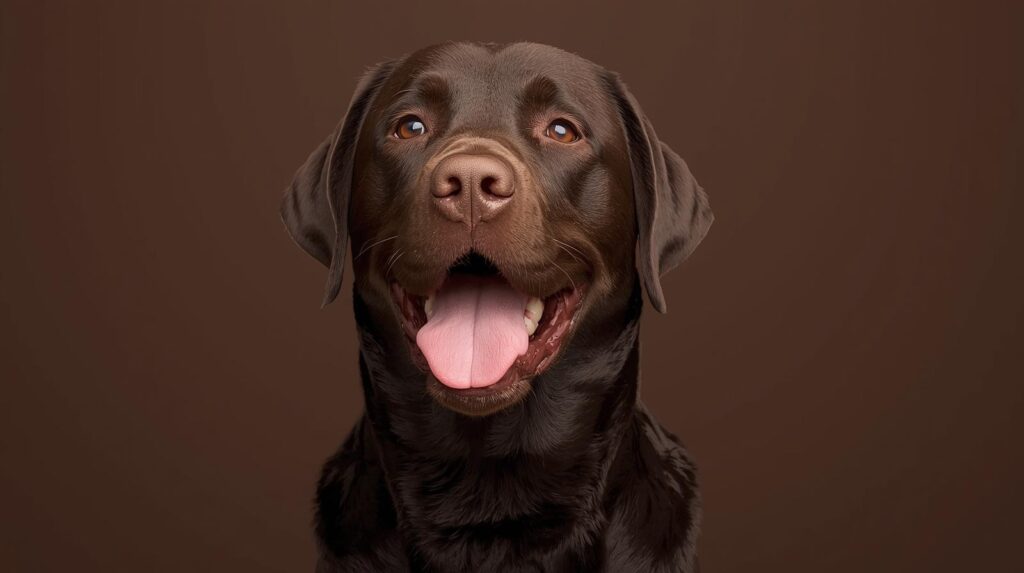
The TYRP1 Gene’s Role in Brown Coats
The TYRP1 gene is the key behind brown. It helps build eumelanin, the dark pigment that makes fur, noses, and eye rims look black or brown.
When the TYRP1 gene works as normal, black pigment is produced. When both TYRP1 copies carry brown variants, pigment shifts from black to brown.
This ties into coat color determination alongside the MC1R gene, which influences overall pigmentation.
- Genotypes at the B locus map to TYRP1 function:
B_means TYRP1 can make black eumelanin.bbmeans TYRP1 changes that pigment to brown.
- This gene is autosomal, not sex-linked. Males and females inherit it the same way from both parents.
Scientists have mapped this in dogs. In a classic study, all brown dogs tested had TYRP1 variants that disrupt black pigment, while black dogs did not.
You can read the summary in the research by Schmutz and colleagues on PubMed: TYRP1 and MC1R genotypes and their effects on coat.
For a practical owner guide on how the B locus works in testing, see Animal Genetics on the B-Locus.
Two more points make the picture complete:
- You still need at least one working E allele to show dark pigment at all. Dogs with
eelook yellow coat look, even if they carrybbunderneath, like a Yellow Labrador that hides a chocolate genotype. - TYRP1 can influence more than fur. Noses and eye rims often match the brown tone, giving chocolate Labs that warm, cocoa look. In breeding, a Black Labrador with
eewill produce Yellow Labrador offspring regardless of the B locus, while a Black Labrador withB_andE_shows the dark coat color.
Walking and care tips tied to color:
- Brown pigment can look lighter after long sunny days. Pick early routes or shaded trails on hot afternoons, especially for longer dog exercise services.
- Keep ID tags and recall solid near busy roads and coastal paths. A reliable dog walker will plan routes that match your dog’s age and fitness.
- For young dogs, mix in short training stops and scent games. It keeps the brain busy and improves focus during puppy walking services. Yellow Labradors, for instance, may need extra sun protection if their hidden genotype includes brown traits.
With TYRP1 in mind, the mystery of chocolate coats becomes everyday science. Two recessive copies make brown, and it is not linked to sex.
That simple rule answers the big question and helps you plan smarter, safer walks across East Cornwall.
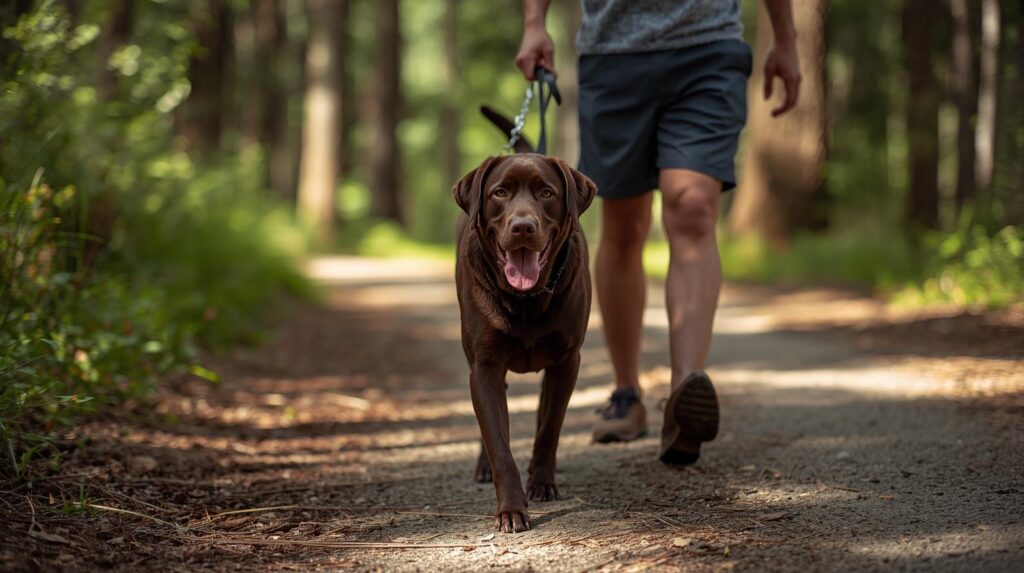
Fun Facts and Care Tips for Your Chocolate Lab
 Photo by Blue Bird
Chocolate Labs are loyal, bright, and full of fun as a beloved variety of Labrador Retrievers.
Their brown coats are a big part of their charm. This quick guide shares why the shade can shift, plus simple care steps that keep your dog looking glossy.
It supports the main idea behind Why Chocolate Labs Are Actually Brown: The Cool Science Behind Their Color, and it ties into daily life on local paths in East Cornwall.
Why Does My Chocolate Lab’s Color Change?
You might notice your Lab’s coat looking lighter in summer. That is common, and it usually comes down to sun exposure. UV light can bleach the pigment in hair shafts.
The rich brown can fade to lighter cocoa, liver, or a dusty look. This is sun fade, not a health issue.
For context, Yellow Labradors often show more dramatic lightening from sun exposure compared to Black Labradors, whose darker coats resist fading better, though Chocolate Labs fall somewhere in between.
- Photobleaching, not dilution: Many owners worry about “dilution.” True dilution is rare and is a separate genetic effect, often linked to Color Dilution Alopecia (CDA), which changes how pigment is made throughout the coat and can lead to hair loss. This is not standard for Labradors. Most chocolate Labs that lighten are simply sun kissed, not genetically diluted. Breeders also note that sunlight can bleach chocolate coats, adding lighter patches or an overall faded tone—similar to how Yellow Labradors might turn pale golden after extended sun time. See a breeder’s tip on sun bleaching in Ashland Labrador Retrievers on coat colors.
- Why it happens: Brown color comes from eumelanin pigment. UV light breaks down that pigment over time. If you enjoy the science behind pigment, melanin explains the basics of how hair gets its color.
- Normal and seasonal: Expect more fading after long, bright days, much like the subtle shifts seen in Black Labradors. Many coats deepen again as new hairs grow in cooler months.
- Other minor factors: Age and grooming habits can play a role. Diet imbalances are less common, but are sometimes noted in coat quality. For general background on fading causes, here is a guide on fading dog fur color.
If your Lab’s coat changes very fast or the skin looks sore, contact your vet.
Sudden changes can point to skin issues unrelated to sun.
For tidy walking habits that also protect the coat, see tips on avoiding common dog walking mistakes in Common Walking Mistakes and How to Fix Them.
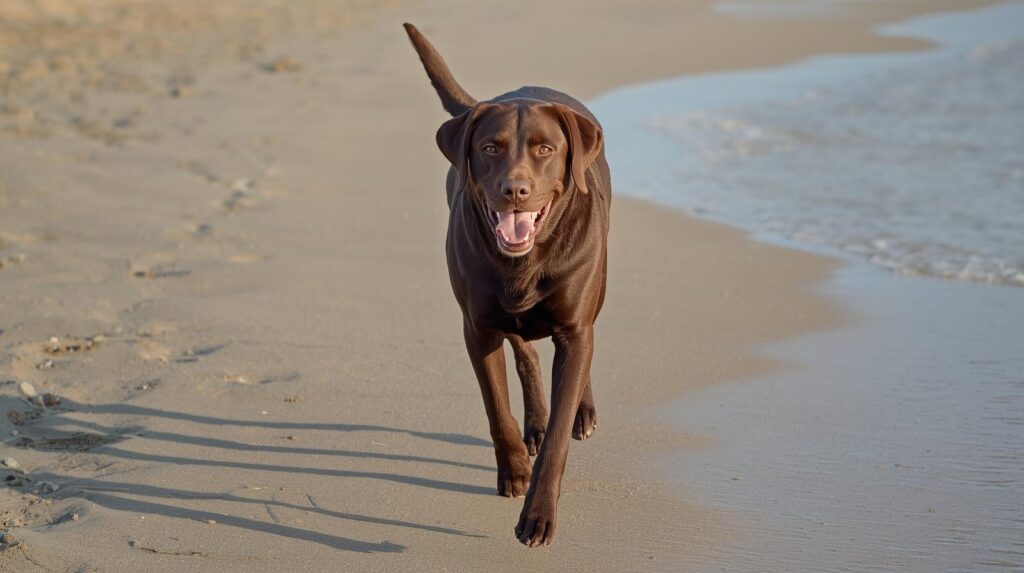
Best Ways to Care for Your Brown Lab’s Coat
A simple routine keeps the coat glossy and comfortable on daily dog walks and group dog walks. Use these steps year-round.
- Regular brushing: Use a rubber curry or slicker 3 to 4 times weekly. This lifts dead hair and spreads natural oils for shine.
- Bath smart: Bathe only when needed, using dog-safe shampoo. Overbathing can dull the coat.
- Shade and timing: Walk early or late on bright days. Choose shady lanes, woods, or riverside paths for cooler air.
- Sun protection: For pink noses or thin-coated spots, use a dog-safe sunscreen. Many vets and care guides back this step for high UV days, especially to prevent the excessive fading that Yellow Labradors experience. Here is a short explainer on protecting coats from sun exposure and sunscreen use.
- Dry well after rain: A quick towel rub after wet walks helps prevent odor and keeps that brown shine.
- Hydration and shade breaks: Pack water and plan short rest stops, especially for longer dog exercise services.
Want a safety refresh before your next trek on the coast path or town lanes? Read about ensuring safe adventures on walks in Is Dog Walking Dangerous?.
It covers hazards and how a professional dog walker monitors heat, route choice, and recovery.
When life gets busy, a reliable dog walker can keep your routine steady. Look for local dog walking support that offers daily dog walks and puppy walking services.
Ask about dog walking rates, shade-friendly routes, and coat checks after each outing.
Your Lab will thank you with a happy tail and a healthy, rich brown glow.
Conclusion
Why Chocolate Labs Are Actually Brown: The Cool Science Behind Their Color has a clear answer. Two recessive b genes at the B locus, plus at least one E gene, shift the coat color from black to brown.
This changes eumelanin production, giving that warm cocoa coat with its distinctive pigment, brown nose, and softer eye tone.
If you enjoy a tiny extra, see how eumelanin works in hair and skin on Wikipedia.
Own that knowledge on your next walk. Plan shade on bright days, brush often for gloss, and time water breaks.
If life gets busy, a professional dog walker can keep daily dog walks steady and safe. Choose dog walking services that fit your dog’s age and energy, from puppy walking services to group dog walks.
Ask about dog walking rates, route options, and updates that support stronger dog exercise services.
If you are in East Cornwall and type pet walking near me, look for a reliable dog walker who knows local paths and heat management.
Celebrate your Lab’s beautiful brown, and use smart care to protect it.
Science explains the color, your routine brings out the shine.
Thanks for reading, and give your chocolate star an extra ear rub today.