If you own an Alaskan Malamute, keeping them healthy is a top priority. Hip dysplasia is a common issue in this breed.
Knowing the signs is key to acting fast and keeping your pet comfortable.
Hip dysplasia can cause a lot of pain and make it hard for your dog to move. Spotting the symptoms early helps you and your vet create a plan.
This plan can make your dog’s life better.
Key Takeaways
- Recognizing the signs of hip dysplasia is important for Alaskan Malamute owners.
- Hip dysplasia can cause serious health problems in this breed.
- Finding the problem early helps manage it better.
- Working with a vet is essential for handling hip dysplasia.
- Knowing the symptoms can greatly improve your dog’s life.
Understanding Hip Dysplasia in Alaskan Malamutes
As a dog owner, it’s key to know about hip dysplasia in Alaskan Malamutes.
This condition affects the hip joint, causing pain and mobility problems in dogs.
What Is Canine Hip Dysplasia?
Canine hip dysplasia is a genetic condition that affects the hip joint. It makes the ball and socket not fit right.
This leads to arthritis, pain, and mobility issues in dogs. Knowing about this condition is important for managing its effects on your Alaskan Malamute.
Why Alaskan Malamutes Are Predisposed
Alaskan Malamutes are prone to hip dysplasia because of their genetic makeup and physical traits.
Their big size and active nature can make the condition worse. It’s important for owners to know the signs and symptoms.
Prevalence in the Breed
Hip dysplasia is a big health issue in Alaskan Malamutes. A lot of the breed gets affected.
Studies show large breeds, like Alaskan Malamutes, are more likely to have hip dysplasia.
This highlights the need for hip dysplasia prevention strategies.
By understanding hip dysplasia’s causes and how common it is, you can take steps to manage your Alaskan Malamute’s health.
This ensures they can live comfortably.
Alaskan Malamute Hip Dysplasia Signs
Spotting hip dysplasia in your Alaskan Malamute early is very important. This condition can show different symptoms in different dogs.
Knowing the signs early can help a lot with treatment.
Early Warning Signs
It’s vital to catch hip dysplasia early. Look out for these signs:
- Stiffness or hesitance when getting up or climbing stairs
- Bunny-hopping gait
- Reduced activity level
- Swollen or painful hips
Advanced Symptoms
As hip dysplasia gets worse, symptoms get more obvious. Look out for these signs:
- Significant difficulty rising from a lying down position
- Limping or favoring one leg over the other
- Noticeable pain when moving
- Reduced range of motion
Subtle Indicators Often Missed
Some signs of hip dysplasia are easy to miss. These include:
- Slight changes in gait
- Less enthusiasm for activities they once enjoyed
- Minor stiffness after rest
Knowing these signs can help you spot hip dysplasia in your Alaskan Malamute.
Regular vet visits are key for early detection and treatment.
| Signs | Description |
|---|---|
| Stiffness | Noticeable stiffness, usually after rest or exercise |
| Limping | Favoring one leg or having an abnormal gait |
| Pain | Visible pain responses when moving or being touched |
Behavioral Changes That Indicate Hip Problems
Watching your Alaskan Malamute’s behavior is key. Hip dysplasia can cause small but big changes.
Spotting these early can help fix hip issues before they get worse.

Activity Level Reduction
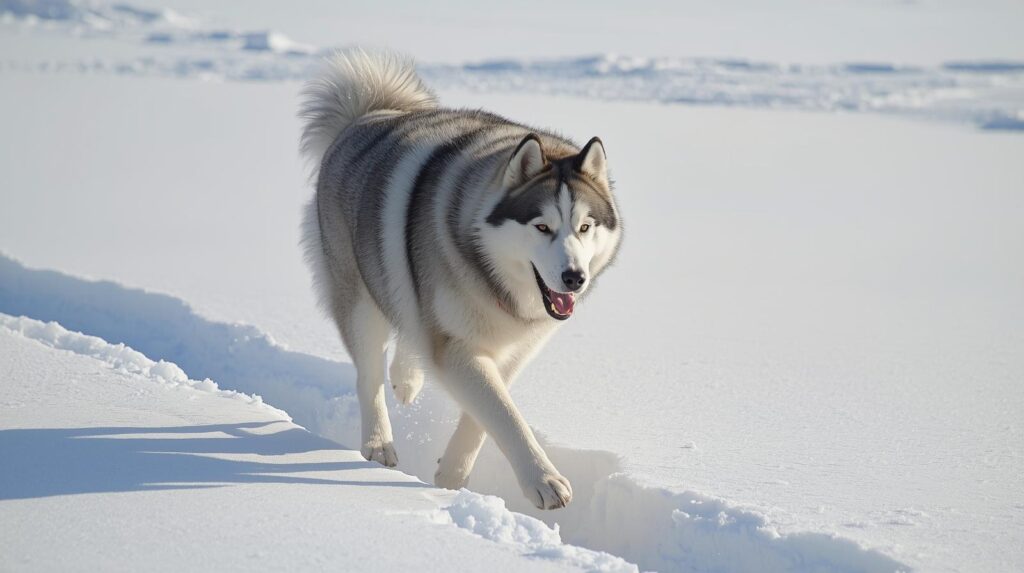
One early sign of hip dysplasia is a drop in activity. Your dog might not want to walk or play fetch anymore.
This could mean they’re feeling pain or discomfort from hip dysplasia symptoms.
Changes in Temperament
Hip dysplasia can also change your dog’s mood. Dogs in pain might get grumpy or pull away.
If your friendly dog starts acting aggressively or avoiding you, it could mean they have orthopedic issues.
Reluctance to Perform Certain Movements
Dogs with hip dysplasia might not want to jump or climb stairs. This is because of the pain from hip dysplasia.
As it gets worse, they might not want to do things they used to love.
Vets say catching hip dysplasia early is key. It helps manage the condition and improve your dog’s life.
Knowing these signs can help you act fast to help your Alaskan Malamute.
Physical Manifestations of Hip Dysplasia
You might see changes in your Alaskan Malamute if it has hip dysplasia. These signs are important for spotting the problem early.
They help you and your vet figure out what to do next.
Gait Abnormalities
A common sign is a change in how your dog walks. You might see a limp, a bunny-hopping gait, or a dog that doesn’t want to move much.
Posture Changes
Dogs with hip dysplasia might stand differently to avoid pain. They might spread their legs more or have a hunched back.
Muscle Mass Alterations
Pain and less movement can make the hip muscles smaller.
This is easy to see by comparing the muscles on both sides of the spine or in the back legs.

Visible Pain Responses
Dogs with hip dysplasia often show pain. They might whine, growl, or seem uncomfortable when their hips are touched or moved.
| Physical Manifestation | Description |
|---|---|
| Gait Abnormalities | Limping, bunny-hopping, or reluctance to walk/run |
| Posture Changes | Standing with legs farther apart, hunched back |
| Muscle Mass Alterations | Reduced muscle tone around the hips and hind legs |
| Visible Pain Responses | Whining, growling, or discomfort when hips are touched |
Age-Related Progression of Hip Dysplasia Symptoms
Knowing how hip dysplasia symptoms change with age is key to caring for your Alaskan Malamute.
This condition can start at any age, from puppyhood to old age. Spotting these changes early is important.
Puppy Stage Signs
Puppies with hip dysplasia might seem stiff or not want to play or climb stairs.
They might struggle to stand up after resting or show pain when their hips are moved.
Adult Malamute Symptoms
Adult Alaskan Malamutes may have gait abnormalities or move less than before.
They might also change how they stand or not want to do things they used to enjoy.
Senior Dog Manifestations
Senior Alaskan Malamutes often get stiffer, mainly after resting, and move less.
They might also feel more pain or get upset by weather changes.
“Finding and treating hip dysplasia early is vital for a dog’s quality of life,” says Dr. Jane Smith, a vet who specializes in dog bones.
“Regular vet visits and watching for age-related signs can really help treatment work better.”
By knowing these age-related changes, you and your vet can create a care plan for your Alaskan Malamute.
This plan will include hip dysplasia prevention strategies and care tips for their age and health.
Diagnosing Hip Dysplasia in Alaskan Malamutes
To find out if your Alaskan Malamute has hip dysplasia, a detailed process is needed.
This includes a vet check, imaging, and checking the joints.
Veterinary Examination Process
The first step is a vet visit. Your vet will look at your dog’s past health, do a physical check, and look for signs of hip problems like pain or stiffness.
Imaging Techniques
Imaging is key in spotting hip dysplasia. The main methods are:
X-rays and Radiographs
X-rays are the main tool for checking hip dysplasia.
They show the hip joint’s shape and any dysplasia signs.
Advanced Imaging Options
For a closer look, CT scans or MRI might be suggested. They give detailed views of the hip joint.
Orthopedic Evaluation Methods
Checking the joints is part of the orthopedic evaluation.
This includes looking at how well the joints move, checking for pain, and evaluating joint health.
| Diagnostic Method | Description |
|---|---|
| Veterinary Examination | Assesses medical history and physical condition |
| X-rays/Radiographs | Primary tool for assessing hip joint structure |
| Advanced Imaging | Provides detailed views of the hip joint |
Differentiating Hip Dysplasia From Other Conditions
Hip dysplasia symptoms can look like other health issues, making it hard to diagnose.
If you own an Alaskan Malamute, knowing these similarities is key. It helps your dog get the right treatment.
Similar Orthopedic Issues
Hip dysplasia can be confused with conditions like osteoarthritis. Dogs with these issues may show pain responses and gait abnormalities.
A detailed check-up and imaging might be needed for a correct diagnosis.
Neurological Conditions With Similar Symptoms
Neurological problems like degenerative myelopathy can mimic hip dysplasia.
They might cause weakness in the hind legs and reluctance to move. A thorough neurological exam is vital to tell them apart.
Diagnostic Challenges
Figuring out hip dysplasia can be tough because of similar symptoms.
Vets use physical checks, X-rays, or MRI, and sometimes rule out other conditions to diagnose it right.
Knowing these challenges helps you and your vet work together. This ensures your Alaskan Malamute gets the right diagnosis and treatment.
Treatment Options for Alaskan Malamute Hip Dysplasia
Treating hip dysplasia in Alaskan Malamutes requires a mix of methods. You can choose from conservative, medical, and surgical options.
The right choice depends on how severe the condition is and your dog’s health.
Conservative Management Approaches
Conservative management is often the first step. It aims to reduce pain and improve movement.
Keeping your dog at a healthy weight is key, as extra pounds can make things worse.
You can also try low-impact activities like swimming or short walks.
Medication Options
Medicines are important for managing pain and swelling. Non-steroidal anti-inflammatory drugs (NSAIDs) like carprofen or meloxicam are common.
Sometimes, corticosteroids are used for short-term relief during bad flare-ups.
Surgical Interventions
If other methods don’t work, surgery might be needed. Surgery can help reduce pain and improve your dog’s life quality.
Total Hip Replacement
Total hip replacement is a big surgery. It replaces the damaged hip with an artificial one.
This is usually for dogs with very bad hip dysplasia.
Femoral Head Ostectomy
Femoral head ostectomy (FHO) removes the femur’s head. This stops the painful bone-on-bone contact.
It’s for dogs with severe hip dysplasia that can’t have total hip replacement.
| Surgical Procedure | Description | Recovery Time |
|---|---|---|
| Total Hip Replacement | Replaces the damaged hip joint with an artificial one | Several months |
| Femoral Head Ostectomy | Removes the head of the femur to eliminate pain | 6-8 weeks |
Alternative Therapies
Other treatments like acupuncture, physical therapy, and laser therapy can also help.
They can be used along with other treatments to make them work better.
Preventing Hip Dysplasia in Alaskan Malamutes
To prevent hip dysplasia in Alaskan Malamutes, you need to focus on breeding, diet, weight, and exercise.
Understanding and using these strategies can greatly lower the risk of hip dysplasia in your pet.
Genetic Considerations for Breeding
Good breeding practices are key to preventing hip dysplasia.
Breeders should check their dogs for hip dysplasia using the Orthopedic Foundation for Animals (OFA) or PennHIP.
Choosing dogs with good hip scores can help lower the risk in future generations.
Nutrition and Weight Management
Feeding your Alaskan Malamute the right food is important for their joint health.
A balanced diet that supports growth without overfeeding is essential. Keeping your dog at a healthy weight also helps reduce joint stress and lower the risk of hip dysplasia.
Appropriate Exercise Regimens
Exercise is important for your Alaskan Malamute’s health, but it must be right for their age and development.
Young dogs should avoid high-impact activities that can harm their growing joints.
Instead, choose low-impact exercises like swimming or short walks.
Supplements for Joint Health
Some supplements, like glucosamine and chondroitin, can help with joint health.
While their effects can vary, many owners find them helpful. Always talk to your vet before adding any supplements to your dog’s diet.
By following these preventive steps, you can help your Alaskan Malamute stay healthy and active, reducing the risk of hip dysplasia.
Living With an Alaskan Malamute With Hip Dysplasia
Caring for an Alaskan Malamute with hip dysplasia needs a detailed plan. This ensures they stay comfortable and happy.
As a caring owner, you’ll need to make some changes to help them.
Home Modifications
Changing your home can help a lot. Use non-slip flooring and ramps or stairs for easy movement.
An orthopedic bed can also help with pain.
Activity Adaptations
Changing your dog’s exercise is key.
Choose low-impact activities like swimming or short walks. Stay away from jumping or hard landings.
Pain Management Strategies
Managing pain is very important. Talk to your vet about the best medication or alternative therapies.
Options include acupuncture or physical therapy.
Quality of Life Considerations
Keep an eye on your dog’s happiness and ability to do daily things. Change things as needed to keep them comfortable.
With these steps, you can greatly improve your Alaskan Malamute’s life with hip dysplasia.

FAQ
What are the early signs of hip dysplasia in Alaskan Malamutes?
Early signs include a reluctance to exercise and stiffness. Your dog might also have trouble getting up.
You might see a decrease in activity and a change in how they walk.
How is hip dysplasia diagnosed in Alaskan Malamutes?
Vets use a combination of exams, X-rays, and orthopedic checks to diagnose hip dysplasia.
They’ll look at your dog’s health, check for pain, and examine the hip joint.
What are the treatment options for Alaskan Malamutes with hip dysplasia?
Treatments include managing weight and exercise, pain meds, surgery, and therapies like physical therapy and acupuncture.
Each option aims to improve your dog’s quality of life.
Can hip dysplasia be prevented in Alaskan Malamutes?
While you can’t prevent it completely, you can lower the risk. Focus on genetics, nutrition, exercise, and joint supplements.
These steps help keep your dog’s joints healthy.
How can I manage my Alaskan Malamute’s hip dysplasia at home?
Make your home easier for your dog by reducing strain on their joints. Adapt their activities and use pain management strategies.
Always consider their quality of life and work with your vet for a care plan.
What are the signs of advanced hip dysplasia in Alaskan Malamutes?
Advanced signs include significant changes in gait and stiffness. Your dog may show visible pain, lose muscle, and struggle with daily activities.
Are there any alternative therapies that can help manage hip dysplasia in Alaskan Malamutes?
Yes, therapies like physical therapy, acupuncture, and laser therapy can help.
They reduce pain, improve mobility, and enhance quality of life.
How does age affect the progression of hip dysplasia symptoms in Alaskan Malamutes?
Symptoms can start at any age, from puppyhood to old age.
Puppies may show signs early, while adults and seniors may see symptoms worsen over time.
Can I stil exercise my Alaskan Malamute if they have hip dysplasia?
Yes, but adjust their exercise to avoid making it worse. Choose low-impact activities like walking or swimming.
Avoid high-impact activities like running or jumping.
Available on our apparel store
Conclusion
It’s important to know the signs of hip dysplasia in Alaskan Malamutes. This condition can show up in different ways, like changes in behavior or how they walk.
You can help your dog feel better by spotting these signs early.
There are many ways to manage hip dysplasia, like using medicine or surgery.
You can also prevent it by choosing the right parents for your dog and feeding them well. Exercise is also key to keeping your dog healthy.
Knowing about hip dysplasia and acting on it can make a big difference. Your dog can stay happy and active.
Make sure to take your dog to the vet regularly and take care of their health.