

Lifespan and Care
The average Labrador Retriever lifespan is about 10 to 12 years. If you’re wondering how long do labrador retrievers live, that’s the short answer, but their daily routine plays a big part in the longer one.
Labs are one of the most popular dog breeds, recognized by the American Kennel Club.
Descendants of the St. John’s Water Dog, they’re friendly, eager, and usually happiest when they’re with their people, whether that means family time at home or long walks outdoors.
Because they’re active dogs, steady movement, a healthy weight, and simple habits matter a lot.
Helpful routines like dog walking tips for Labrador Retrievers can support fitness and joint health.
The biggest things that shape a Lab’s lifespan are genetics, weight, exercise, health care, and everyday habits.
So next, let’s look at what helps a Labrador live a longer, healthier life, and what can quietly shorten those precious years. Watch a quick Labrador lifespan video
Key Takeaways
- The average Labrador Retriever lifespan is 10 to 12 years, with many healthy Labs reaching 12 or even 13-14 through good care, though chocolate Labs average about 10.7 years due to breeding patterns.
- Genetics provide a strong start from health-tested parents, but daily habits like maintaining a lean weight, regular exercise, and routine vet checkups have the biggest impact on lifespan.
- Common health issues like joint problems, obesity, and cancer can shorten life if ignored, but early detection and steady routines (measured meals, daily walks, senior adjustments) help Labs age happier and longer.
- Owners can boost longevity with simple steps: portion control, mental stimulation, watching for subtle changes, and home tweaks like ramps for seniors—consistency in ordinary days adds up to extraordinary years.
The average Labrador lifespan at a glance
If you want the short answer to how long do labrador retrievers live, the life expectancy is typically 10 to 12 years.
That’s the range most owners can expect, and it’s a solid rule of thumb for a healthy Lab.
Still, averages only tell part of the story. Some Labradors slow down earlier, while many healthy dogs make it to around 12 and stay happy, active, and full of charm along the way.
Most Labradors live about 10 to 12 years
For most families, the typical Labrador life expectancy is 10 to 12 years. That’s the clear answer, and it’s worth repeating because many readers just want the headline first.

Many healthy Labs live to around 12 years old, especially when they stay lean, active, and get regular vet care.
Some also reach 13 or 14 years, particularly if they have strong genetics and steady day-to-day care.
A few exceptional dogs live even longer, but those cases are not the norm.
A simple way to think about it is this: a Labrador’s lifespan is a bit like a long road trip. Good maintenance doesn’t promise a perfect journey, but it gives the dog a much better shot at going the distance.
Breed overviews from PetMD’s Labrador Retriever guide line up with that common range.
Most Labradors have a life expectancy of 10 to 12 years, many reach 12, and some make it to 13 or 14 with excellent care.
Why do some Labs live longer than others?
Not all Labs age at the same pace, even within the same family line. That’s because lifespan is shaped by many small choices over time, not just luck.
Food, body weight, daily movement, sleep, stress, dental care, and routine vet visits all add up. One skipped walk won’t change a life, of course.
But months or years of extra weight, too little exercise, or missed health checks can quietly take a toll.
Research has also shown that body condition matters a lot; Labs maintained at an ideal weight often exceed the median age at death reported in breed studies.
That’s one reason owners who stick to good habits often see better outcomes.
So while genes matter, daily care still has real power.
In the next sections, it helps to think of lifespan as the result of a thousand ordinary days, each one nudging your Lab toward better health or away from it.

What affects how long Labrador Retrievers live the most
If you’re asking how long do labrador retrievers live, the biggest influences are usually pretty simple.
A Lab’s genes matter, but so do the things you control every day, like weight, exercise, and routine health care.
Think of lifespan as a long chain of small choices. Good breeding gives a strong first link. After that, steady habits often make the biggest difference.
Genetics and breeding can give a Labrador a better start
A Labrador’s family line matters more than many people think. Dogs from health-tested parents often get a better start through responsible breeding, because breeders can screen for problems that may shorten comfort, mobility, or overall lifespan later on.
Some inherited concerns seen in Labs include hip or elbow issues, eye conditions like progressive retinal atrophy, and other issues. These do not mean a dog will have a short life, but they can affect how well a Labrador ages.
Better breeding choices can reduce the odds of serious inherited trouble, and that matters over the course of a decade or more.
Research on aging in Labradors also points to the value of careful long-term management and healthy baseline traits.
If you’d like a deeper look at Labrador aging research, this published Labrador longevity study is a useful reference.

That said, genes are the opening chapter, not the whole book. Even a well-bred Lab still needs smart daily care to reach its best lifespan.
A healthy weight may be one of the biggest lifespan boosters
For many Labradors, weight is the biggest day-to-day factor. Labs usually love food, act hungry, and can persuade almost anyone to hand over an extra snack.
Charming? Yes. Helpful for lifespan? Not really.
Extra weight puts more strain on the joints, heart, and whole body. It can make arthritis worse, reduce stamina, and chip away at quality of life.
In a breed already prone to joint trouble, those extra pounds add up fast.

Here are a few changes that can help right away:
- Measure meals instead of guessing.
- Keep treats small and count them as part of the daily food total.
- Use part of your dog’s kibble for training rewards.
- Check body shape often, not just the number on the scale.
- Ask your vet for a target weight and feeding plan.
A lean Lab should have a visible waist and a tucked-up shape from the side. You should also be able to feel the ribs without pressing hard.
If your dog feels more like a padded sofa cushion than an athlete, it’s time to tighten the routine a bit.
Keeping a Labrador lean is one of the clearest, most practical ways to support a longer life.
This is one area where owners can make a real change quickly. You can’t rewrite your dog’s genes, but you can control the food bowl.
Daily exercise and mental activity help Labradors age better
Labradors are built to move, explore, and stay busy. Regular activity helps manage weight, supports joints, keeps muscles strong, and may even help brain function as dogs age.
In short, movement is medicine, as long as it fits the dog’s age and health.
A good routine does more than burn energy. Walks, play, training, sniffing, and enrichment give a Lab a job to do.
That matters because bored Labradors often invent their own projects, and those projects rarely improve the furniture.

Useful daily ideas include:
- A steady morning walk with time to sniff
- Puppy training or short sessions with sits, stays, and recall
- Fetch in moderation, especially for younger adult dogs
- Food puzzles or scent games at home
- Gentle swimming or low-impact play for some seniors
Not every owner can do every walk themselves, every single day. That’s where dog walking services, daily dog walks, or a reliable dog walker can help keep routines steady.
For busy families in East Cornwall, support like group dog walks, puppy walking services, or a trusted professional dog walker can make it easier to give a Lab the exercise and mental work they need without turning the week into a juggling act.
If you want breed-specific walking ideas from Paw-Tastic Walks, walking a German Shepherd offers some practical tips on structure, leash habits, and keeping active dogs engaged.
The breed is different, of course, but the routine mindset carries over well to Labs.
Routine vet care helps catch problems earlier
Routine veterinary care helps Labradors live better, and often longer, because problems are easier to manage when found early.
For most adult Labs, yearly checkups are a smart baseline. Once they move into their senior years, often around age seven, twice-yearly visits make even more sense.
These visits are not just for vaccines.
They help track weight, teeth, mobility, heart health, lumps, skin changes, and subtle shifts in behavior that owners may miss because they happen slowly.
A solid care plan usually includes:
- Dental checks and regular teeth cleaning advice
- Vaccines, based on your vet’s guidance and risk level
- Parasite prevention for fleas, ticks, and worms
- Bloodwork or other screening as your dog ages
- Joint and pain checks if movement starts to change
Early action can improve both lifespan and quality of life. A small issue caught early may stay manageable for years.
The same issue ignored for months can become much harder to treat.
For broad breed background, including Labrador history and general traits, the Labrador Retriever on Wikipedia is a handy overview.
The bottom line is simple: regular vet care gives you more chances to spot trouble before it steals comfort, time, or both.
Common Labrador health problems that can shorten life
If you’re asking how long do labrador retrievers live, health problems are a big part of the answer.
Many Labs stay happy and active for years, but some common issues can chip away at comfort, mobility, and lifespan if they aren’t caught early.
The good news is that owners often spot the first clues at home.
A dog that moves less, gains weight, or just seems “not quite right” may be telling you more than you think.
Joint problems, obesity, and mobility decline
Joint trouble is one of the most common problems in Labradors. Hip dysplasia and elbow dysplasia happen when the joints do not form as they should.
Over time, that poor fit causes wear, pain, and a stiff way of moving. Later on, many Labs also develop arthritis, especially if they already have joint changes.
Obesity makes all of this worse. Think of it like carrying a heavy backpack on sore knees every hour of the day.
Those added pounds put more force through already stressed joints, so an overweight Lab may slow down much sooner than a lean one.
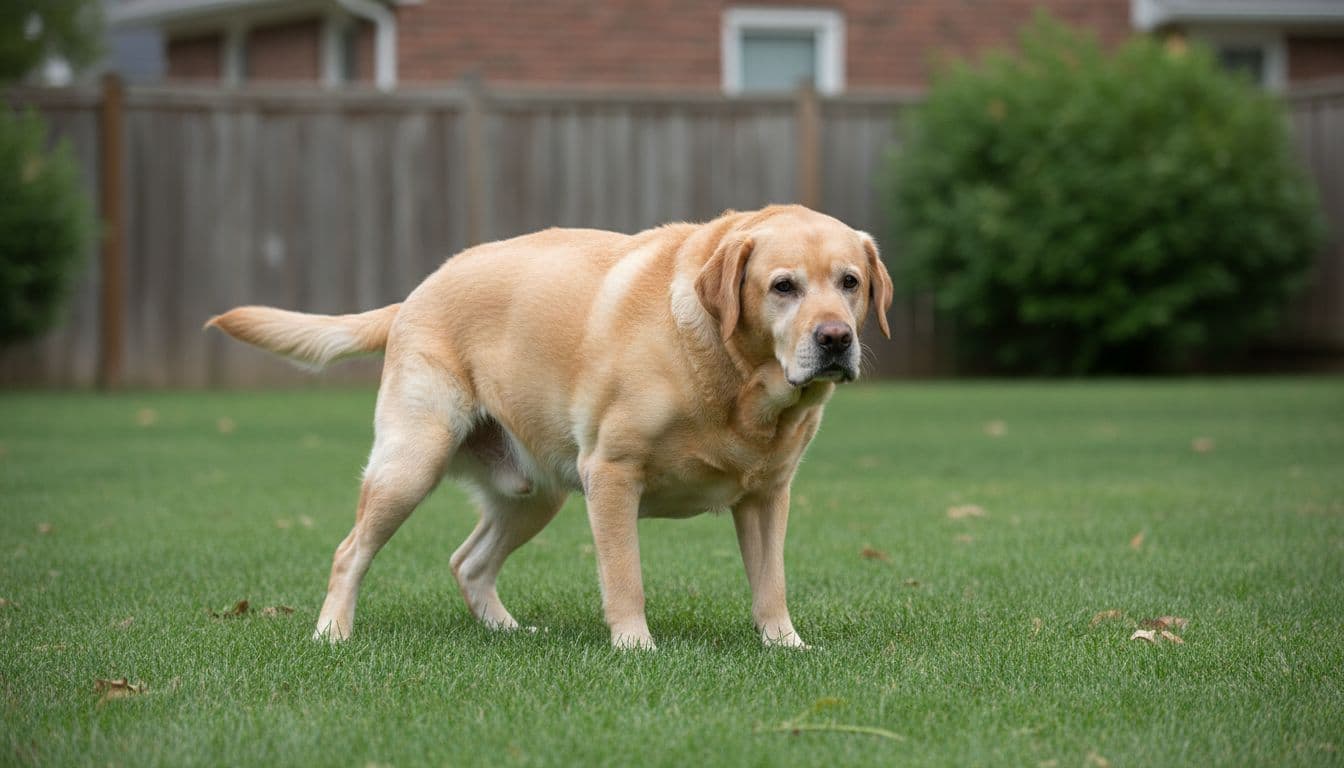
Some signs are easy to miss because they creep in slowly. You may notice your Lab:
- getting stiff after naps
- slowing down on walks
- lagging behind where they used to trot ahead
- hesitating before stairs, jumps, or the car
- taking longer to stand up
- bunny-hopping or limping after play
These changes are often brushed off as “just getting older.” Sometimes age is part of it, but pain is often part of it too.
That’s why early action matters. If your dog has started moving less, this guide to early signs your dog needs more exercise can also help you spot the difference between simple deconditioning and a bigger mobility problem.
A steady routine helps, but the right kind of movement matters. Gentle, regular walks usually help more than weekend bursts of hard exercise. For some dogs, short daily dog walks are kinder on sore joints than one long outing.
Active Labs can also face risks like exercise-induced collapse, so consistent, moderate activity is key. If life gets busy, a reliable dog walker or professional dog walker can help keep movement consistent without overdoing it.
The aim is simple: keep muscles working, keep weight down, and avoid the boom-and-bust pattern that older joints hate.
If your Lab seems stiff, sore, or reluctant to move, book a vet visit sooner rather than later. Catching joint disease early can protect both quality of life and the years ahead.
Cancer and other serious illnesses seen in older Labs
Sadly, cancer is one of the leading causes of death in Labradors. That does not mean every older Lab will develop it, but it does mean owners should take new lumps, tiredness, weight loss, or changes in appetite seriously.
Some cancers are aggressive and move fast, while others can be managed better when caught early.
You do not need to memorize a long medical list. What matters most is noticing change. A Lab that suddenly seems flat, stops enjoying food, has swollen areas, coughs more, or tires quickly needs attention.
In older dogs, “I’ll wait and see” can sometimes cost precious time.
Other serious problems can also affect aging Labs. These include heart disease, gastric dilatation volvulus (bloat), seizures, ear infections, ongoing skin disease, and exercise-induced collapse in active dogs.
Gastric dilatation volvulus (bloat) is an emergency because the stomach can twist and cut off blood flow. Seizures can look dramatic and frightening, even if they last only a short time. Routine cleaning with a safe ear cleaner can help prevent ear infections.
Skin disease may sound minor by comparison, yet chronic itching, infections, and inflamed skin can wear a dog down and point to deeper health issues.
For a plain-language overview of breed risks, common Labrador health problems is a useful reference.
If your older Lab seems off in a way you can’t quite explain, trust that feeling and get them checked.
That instinct matters. You know your dog’s normal walk, appetite, and spark better than anyone.
Fast action does not always change the diagnosis, but it often gives you more options, better pain control, and a better chance of more good days.
Do chocolate Labradors really have a shorter lifespan?
The short answer is yes, on average, chocolate Labradors may have a shorter lifespan. Research has found that chocolate Labs live about 10.7 years on average, compared with about 12 years for black and yellow Labs.
The best-known data comes from the Royal Veterinary College’s VetCompass report on chocolate Labradors.

Why might that happen? The coat color itself is not thought to be the direct problem. The bigger issue is likely breeding patterns linked to coat color.
When breeders focus heavily on producing chocolate coats, the gene pool can narrow into a restricted gene pool that concentrates certain genetic mutations.
That can increase the chance of inherited health problems showing up more often. The same research also found higher rates of ear and skin disease in chocolate Labs.
Still, this is an average, not a rule. Plenty of chocolate Labs live long, healthy lives.
Good breeding, a lean body condition, routine vet care, and sensible exercise still matter more for your individual dog than coat color alone.
If you want broad breed background while reading up on these differences, the Labrador Retriever breed overview is a handy reference.
So yes, the lifespan gap is real in studies, but it should be taken as a population trend, not a prediction stamped on your dog’s future.
Simple ways to help your Labrador live a longer, happier life
If you want the practical answer to how long do labrador retrievers live, it often comes down to steady care.
Big results usually grow from small daily habits. A Lab does best when life feels predictable, comfortable, and active in the right ways.
Build a routine around food, walks, sleep, and checkups
Labradors thrive on rhythm. When meals, walks, rest, and vet care happen on a steady schedule, your dog’s body has an easier time staying balanced.
It’s a bit like keeping a car well serviced. Small tune-ups help avoid bigger problems later.
Start with food. Measure each meal instead of guessing, and keep treats within the daily total. Labs can act hungry even when they’ve had enough, so portion control matters more than those hopeful eyes.
A simple routine might include:
- Meals at the same times each day
- Quality food matched to age, weight, and activity
- Daily walks and a little play
- Quiet time for solid sleep
- Regular weigh-ins, at home or at the vet
- Annual checkups, then more often in senior years
Monthly weigh-ins can catch shifts in lean body mass early. A small loss of lean body mass or gain in fat may not seem like much, but on a Labrador, it adds strain fast.
Research has long supported keeping dogs lean, and one summary of that work notes lean dogs may live longer than heavier ones, with disease delayed too, as explained by Muller Veterinary Hospital’s review of the lean-dog study.
It also helps to keep a simple health log. Write down weight, appetite, energy, poop changes, new lumps, or stiffness after walks.
You do not need anything fancy. A few notes on your phone can show patterns you might miss day to day.

### Watch for small changes as your Lab gets older
Aging rarely arrives with a trumpet blast.
More often, it slips in quietly. Your Lab may sleep a little more, hesitate on the stairs, or seem less eager for a long walk.
Those changes can be easy to brush off, especially in a dog that still wags, eats, and wants to be near you.
Pay attention to signs like these:
- Less energy than usual
- New lumps or bumps
- More panting at rest
- Accidents in the house
- Changes in appetite or thirst
- Trouble jumping, climbing, or getting up
None of these signs automatically means something serious. Still, they all deserve notice.
A small shift in behavior can be the first clue to pain, arthritis, hormone trouble, or another health issue. Veterinary care plays a key role in catching these age-related shifts early.

Trust your gut here. You know your dog’s normal spark, pace, and habits better than anyone else.
If something feels off, call your vet sooner rather than later. Waiting to “see if it passes” can waste time, while early treatment often gives you more options and more good days.
For broad breed background and aging context, the Labrador Retriever breed overview on Wikipedia is a helpful starting point, but your own notes and your vet’s advice will matter most.
If your Lab seems subtly different for more than a few days, treat that as useful information, not overreacting.
Support senior Labradors with kinder exercise and home changes
Older Labs still need movement, but they often need a gentler version of it. Think shorter, steadier walks instead of one big outing.
A couple of easy walks can feel much better on aging joints than a long push that leaves your dog stiff for the rest of the day.
At home, a few simple changes can make life easier fast. Softer bedding cushions sore hips and elbows.
Non-slip rugs help on hard floors. Ramps can save your dog from painful jumps into the car or up a few steps. These are small fixes, but for a senior Lab, they can feel like someone turned the volume down on discomfort.

Play should change too. Gentler fetch, sniff walks, and light training games are often better than wild twisting or repeated jumping.
Joint supplements and physical therapy offer proactive ways for senior dogs to manage mobility decline, but only use what your vet recommends. What helps one dog may not suit another.
The goal is not to stop your senior Lab from acting old. It’s to help them age with comfort, dignity, and joy.
Slower does not mean lesser. It just means adjusting the pace so your dog can keep enjoying life.
Questions Labrador owners often ask about lifespan
If you’re still wondering how long do labrador retrievers live, these are some of the questions owners ask most.
The short answer stays the same: the average Labrador Retriever lifespan is about 10 to 12 years, but real life is a little messier than a neat number.
Some dogs outlive the average; some do not, and a lot depends on health, weight, and day-to-day care.
What is the oldest age a Labrador can reach?
A Labrador can, in very rare cases, reach an exceptional old age. The oldest verified Labrador often cited is 27 years and 3 months, which is far beyond the normal range. That’s a remarkable outlier, not a realistic benchmark for the average family pet.

Most owners should keep expectations grounded. A Lab living to 13, 14, or even 15 is already doing very well.
Stories of dogs reaching their late teens, or far beyond, are more like lightning strikes than weather forecasts.
That said, these rare cases do remind us of something hopeful.
Good genes, a lean body, regular vet care, steady exercise, and grooming suited to their double coat and water-repellent coat can all help a Labrador age better.
Research on long-lived Labs has also suggested that keeping them lean matters a lot, which fits with what many vets see in practice.
If you’d like extra breed background, the Labrador Retriever page on Wikipedia gives a useful overview.
Think of those record-breaking ages as exceptions that inspire, not numbers to expect.
Do male or female Labradors live longer?
In general, male and female Labradors have a very similar lifespan, whether black and yellow labs or chocolate Labradors.
There is not strong evidence showing a major gap between them. So if you’re choosing between a male or female Lab, lifespan alone should not drive the decision.

Some data and veterinary guidance suggest spayed females may live a bit longer on average in some cases.
Still, that doesn’t mean every female Lab will outlive every male. Individual factors usually matter more, including:
- body weight
- breeding and family health history
- joint health
- cancer risk
- quality of routine care
So, while sex may play a small role, it is not a firm rule. A fit, well-cared-for male can outlive a female from a weaker health background, and the reverse is also true.
For most owners, the better question is not “male or female?” but “what habits help my own dog stay healthy for longer?”
That’s where daily dog walks, smart feeding, and a good vet relationship make a bigger difference.
If you’re trying to keep exercise steady without overdoing it, this guide to the best dog harness for large dogs can help make walks safer and more comfortable.
Is 12 old for a Labrador Retriever?
Yes, 12 is old for a Labrador Retriever. It’s a true senior age, and it often sits near the average upper end of the average Labrador Retriever lifespan.
If your Lab reaches 12, they’ve already made it to a meaningful milestone.

Old, however, does not mean finished. Many 12-year-old Labs still enjoy walks, sniffing, car rides, gentle play, and family time.
They may move more slowly and need more rest, but they can still have a very good quality of life.
At this age, support matters more than speed. A 12-year-old Lab often does best with:
- shorter, regular walks instead of long, hard outings
- close attention to weight
- softer bedding and easier access at home
- more frequent vet checks
- quick action if appetite, stiffness, or energy changes
In other words, a senior Lab is a bit like a favorite old pair of boots. They may show some wear, but with care, they still have plenty of good miles left.
If you need help spotting when movement is dropping off too much, early signs your dog needs more exercise offers a helpful next read.
For owners asking how long do labrador retrievers live, this is often the most comforting point: reaching 12 means your dog is old, yes, but not automatically frail, unhappy, or at the end.
With the right support, many senior Labs still enjoy life in all the ways that matter most.
Conclusion
How long do Labrador Retrievers live? The average Labrador Retriever lifespan is about 10 to 12 years, with some reaching 14 or more when health and luck line up well.
The strongest takeaway is simple, daily care matters, and a lean, active Lab often has a better shot at more good years.
You can’t control every part of your dog’s future. Still, healthy weight, daily exercise, mental stimulation, regular vet care, and quick action when something seems off can make a real difference.
Those small habits add up, one ordinary day at a time.
If your schedule gets tight, steady help from dog walking services or a reliable dog walker in East Cornwall can keep your Lab moving and on routine with daily dog walks or group dog walks.
Give your Labrador the best chance at a long, happy life, because consistency is often where those extra good years begin.
Get this wonderful guide today and learn much more about this wonderful breed!