
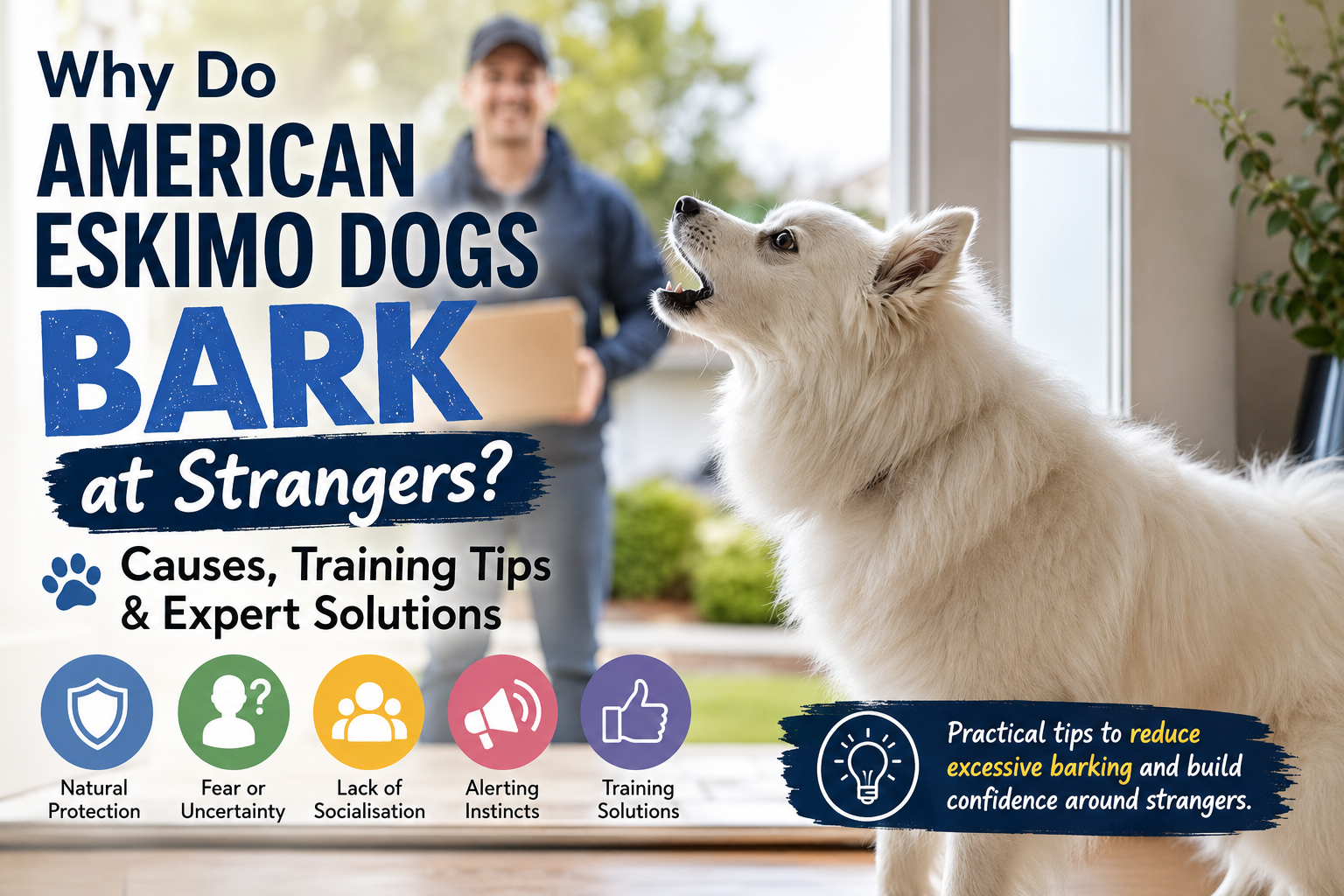
Causes, Training Tips & Expert Solutions
Why Do American Eskimo Dogs Bark at Strangers?
🐾 Has your American Eskimo Dog ever started barking the moment someone walked past your house or knocked at the front door?
If so, you’re certainly not alone.
American Eskimo Dogs are renowned for their intelligence, loyalty and exceptional awareness of their surroundings. These beautiful white companions were originally bred to be alert watchdogs as well as affectionate family pets.
Their instinct to notify their owners whenever something unusual happens is deeply rooted in their personality.
While this makes them excellent protectors, it can also mean they bark enthusiastically whenever they encounter unfamiliar people.
Fortunately, excessive barking isn’t simply something owners have to live with.
By understanding why your American Eskimo Dog reacts this way and using kind, consistent training methods, you can help them become calmer and more confident without suppressing the protective instincts that make the breed so special.
In this guide you’ll discover the most common reasons American Eskimo Dogs bark at strangers, how to recognise different types of barking, and practical training techniques that really work.
📌 Quick Answer
American Eskimo Dogs bark at strangers because they are naturally alert, protective and strongly bonded to their families. Barking is their way of warning you that someone unfamiliar is nearby.
Fear, excitement, territorial behaviour and insufficient socialisation can also contribute. Fortunately, positive reinforcement training and early socialisation can significantly reduce unnecessary barking.
At a Glance
| Trait | Rating |
|---|---|
| Watchdog Ability | ⭐⭐⭐⭐⭐ |
| Friendliness with Strangers | ⭐⭐⭐☆☆ |
| Intelligence | ⭐⭐⭐⭐⭐ |
| Trainability | ⭐⭐⭐⭐⭐ |
| Barking Tendency | ⭐⭐⭐⭐☆ |
| Protective Nature | ⭐⭐⭐⭐☆ |
Understanding the American Eskimo Dog
Before trying to reduce barking, it helps to understand why your Eskie behaves this way in the first place.
Their behaviour isn’t stubbornness or aggression.
It’s instinct.
A Breed Developed to Stay Alert
Despite their name, American Eskimo Dogs actually descend from European Spitz breeds that arrived in the United States with German immigrants.
For generations they worked as:
✔ Farm watchdogs
✔ Family companions
✔ Circus performers
✔ Property guardians
Because of these roles, they developed an incredible awareness of everything happening around them.
Even today, many owners joke that their Eskie notices visitors before the doorbell rings!
Loyal Beyond Measure
One of the breed’s greatest qualities is its loyalty.
American Eskimo Dogs form incredibly close bonds with their families and genuinely enjoy being involved in daily life.
That devotion naturally makes them protective.
When someone unfamiliar approaches the house, your dog isn’t necessarily being aggressive—they’re often simply thinking:
“Someone new is here. I’d better let my family know.”
This protective instinct is perfectly normal.
The challenge comes when your dog struggles to switch off after the perceived threat has passed.
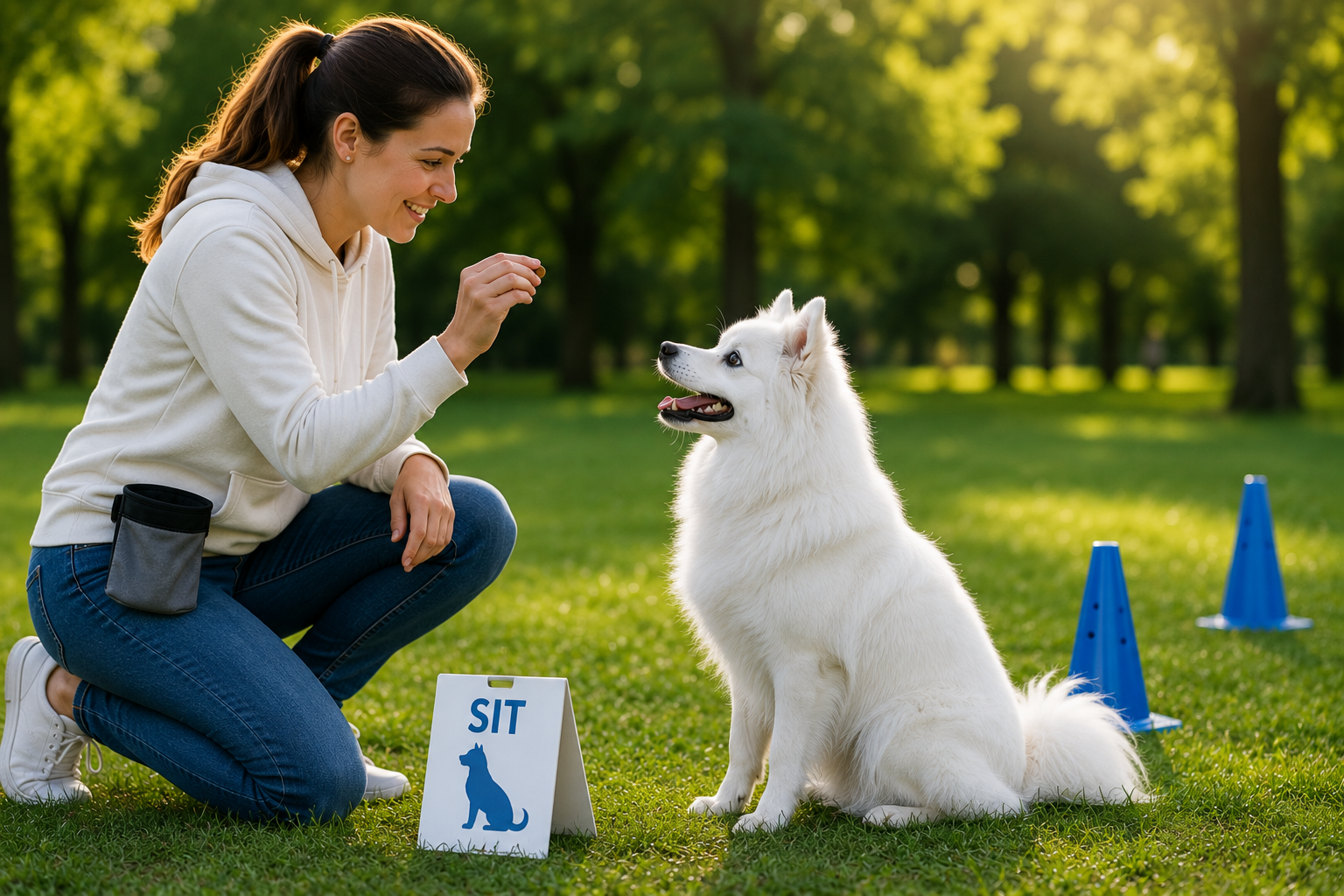
Highly Intelligent Dogs Need a Job
American Eskimo Dogs consistently rank among the most intelligent companion breeds.
They learn commands quickly.
They notice patterns.
They observe routines.
Unfortunately, that intelligence also means they quickly learn that:
“Every time someone walks past the house, I bark… and they eventually disappear.”
From your dog’s perspective:
“I barked.”
“The stranger left.”
“My barking worked.”
Without training, this unintentionally reinforces the behaviour.
🐾 Why American Eskimo Dogs Bark at Strangers
There isn’t just one reason.
Most barking falls into one of five categories.
1. Territorial Protection
This is by far the most common reason.
American Eskimo Dogs naturally believe your home belongs to their family.
When someone enters what they consider their territory, they feel responsible for announcing the visitor.
Typical triggers include:
- 🚪 Doorbells
- 📦 Delivery drivers
- 🚶 People walking past windows
- 🚗 Cars stopping outside
- 👥 Unexpected visitors
This behaviour isn’t usually aggression.
It’s communication.
2. Alert Barking
Many owners mistake alert barking for bad behaviour.
In reality, it’s simply your dog saying:
“Something has changed!”
An alert bark is usually:
✔ Sharp
✔ Loud
✔ Short bursts
✔ Directed towards the trigger
Many Eskies stop barking once you acknowledge the situation.
Sometimes simply walking to the door and calmly saying:
“Thank you, I’ve got it.”
can reassure your dog.
3. Fear of the Unknown
Not every barking dog is confident.
Some bark because they’re uncertain.
Signs of fear-based barking include:
- Tail tucked
- Leaning backwards
- Barking while retreating
- Avoiding eye contact
- Trembling
These dogs aren’t trying to scare strangers.
They’re trying to create distance.
Punishing this type of barking often increases anxiety, making the behaviour worse over time.
4. Excitement
Some American Eskimo Dogs simply become overwhelmed when new people arrive.
Rather than fear or protection, they’re thinking:
“Someone’s here! This is exciting!”
These dogs often display:
🐾 Jumping
🐾 Spinning
🐾 Tail wagging
🐾 High-pitched barking
🐾 Zoomies
Teaching calm greetings is usually the best solution.
5. Lack of Socialisation
Dogs that rarely meet unfamiliar people are naturally more likely to react when strangers appear.
A puppy that regularly experiences:
- Visitors
- Children
- Men with hats
- Elderly people
- Cyclists
- Delivery drivers
- Busy parks
is far more likely to remain calm as an adult.
Positive experiences build confidence.
Limited experiences often create uncertainty.
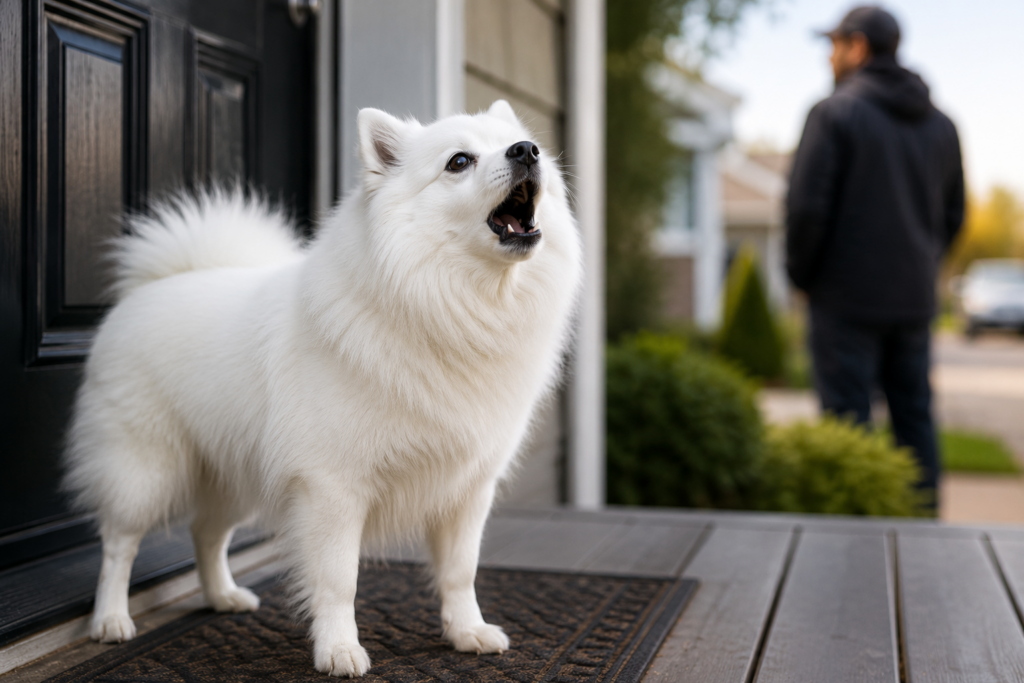
💡 Expert Tip
The goal isn’t to stop your American Eskimo Dog barking altogether.
A couple of alert barks are perfectly natural—and often desirable.
Instead, teach your dog when to stop barking once you’ve acknowledged the situation.
This approach respects their natural instincts while preventing excessive barking.
Common Stranger Triggers
Use this checklist to identify what sets your own dog off.
✔ Doorbell
✔ Knock at the door
✔ Visitors entering your home
✔ Delivery drivers
✔ Neighbours walking past
✔ Dogs passing outside
✔ Children playing nearby
✔ People wearing hats or uniforms
✔ Cyclists
✔ Cars arriving outside
The more specific you can be, the easier it becomes to create an effective training plan.
How to Recognise Different Types of Barking
Not every bark means the same thing.
One of the biggest mistakes owners make is assuming every bark is aggressive.
In reality, your American Eskimo Dog may simply be trying to communicate something important.
Learning to recognise why your dog is barking is one of the most valuable skills you can develop as an owner.
🐾 Alert Barking vs Aggressive Barking
Although they can sound similar, these two behaviours are very different.
| Alert Barking | Aggressive Barking |
|---|---|
| Short bursts | Continuous barking |
| Dog remains confident | Dog appears tense |
| Tail held naturally | Tail stiff or tucked |
| Stops once owner responds | Continues escalating |
| Curious posture | Defensive posture |
| Normal watchdog behaviour | Needs behaviour training |
Most American Eskimo Dogs are alert barkers rather than aggressive dogs.
Their goal is usually to tell you something—not to attack someone.
Reading Your Dog’s Body Language
Dogs communicate far more through body language than through barking.
By observing your Eskie’s posture, ears, tail and facial expression, you’ll quickly learn what they’re really trying to tell you.
😊 Relaxed and Curious
Your dog is likely just being inquisitive if you notice:
✔ Loose muscles
✔ Tail gently wagging
✔ Soft eyes
✔ Ears forward but relaxed
✔ Stops barking when reassured
These dogs simply want confirmation that everything is under control.
😟 Nervous or Fearful
Fear-based barking looks very different.
Signs include:
⚠ Tail tucked underneath
⚠ Weight shifted backwards
⚠ Lip licking
⚠ Yawning
⚠ Avoiding eye contact
⚠ Barking while retreating
These dogs aren’t being “naughty.”
They’re feeling uncertain.
Helping them gain confidence should always be the priority.
🚨 Genuine Defensive Behaviour
Although uncommon, some dogs become genuinely defensive.
Typical signs include:
- Raised hackles
- Hard stare
- Growling
- Showing teeth
- Leaning forwards
- Refusing to disengage
If your dog regularly displays these behaviours, professional guidance from a qualified trainer or behaviourist is recommended.
💡 Expert Tip
Many owners accidentally reward barking by rushing to the window every time their dog makes a noise.
Instead, calmly acknowledge the situation, ask for a different behaviour such as “Sit” or “Quiet,” and reward your dog only once they become calm.
This teaches them that calmness earns attention—not barking.
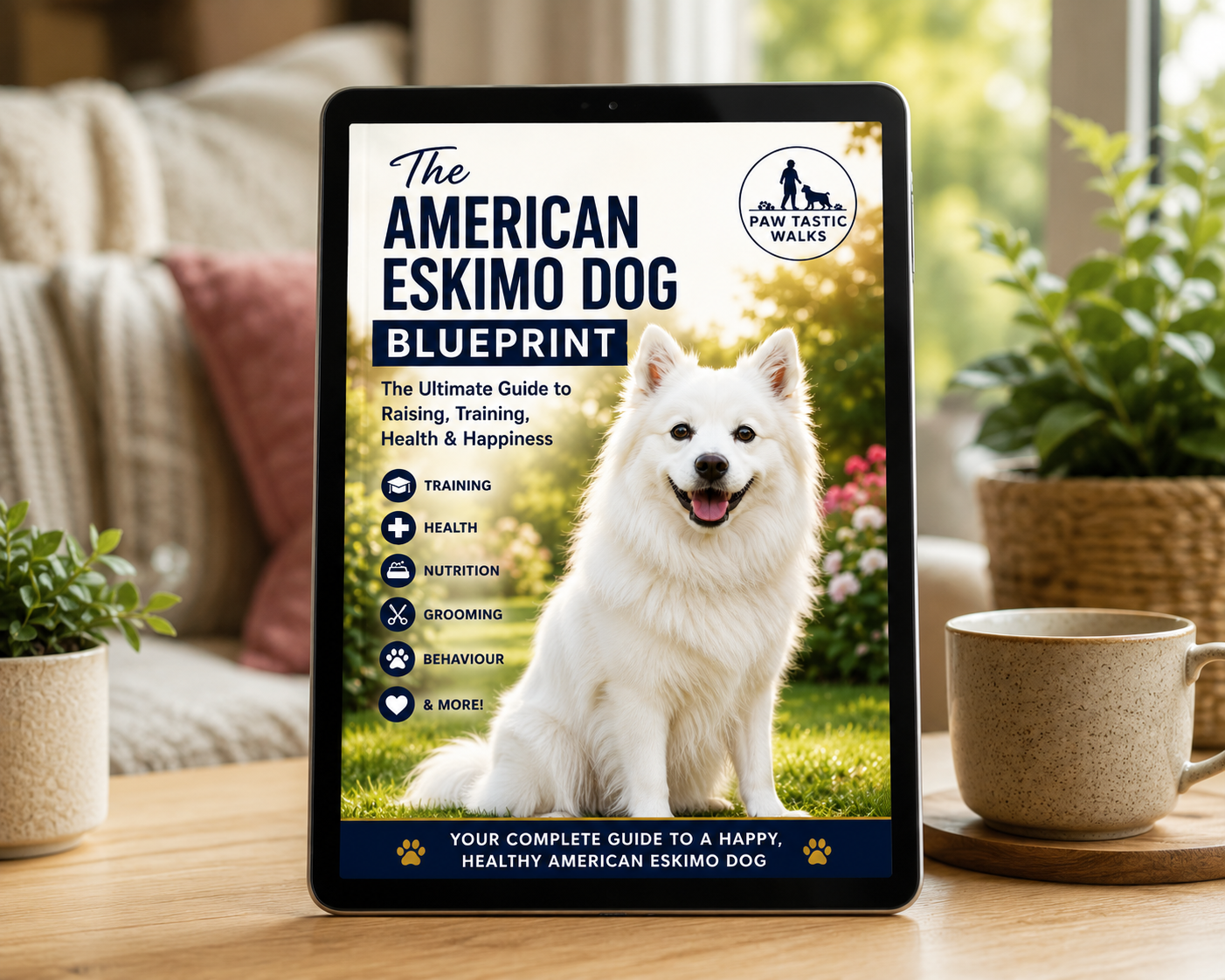
Why Early Socialisation Makes Such a Difference
One of the greatest gifts you can give an American Eskimo Dog is confidence.
Confident dogs rarely feel the need to bark excessively.
Socialisation isn’t simply about meeting lots of people.
It’s about creating positive experiences with lots of different situations.
Puppies Learn From Everything
Between roughly 8 and 16 weeks of age, puppies absorb new experiences incredibly quickly.
This is the perfect opportunity to introduce them to:
👨 Men
👩 Women
👧 Children
👴 Elderly people
🧢 People wearing hats
🚴 Cyclists
🛴 Scooters
🦽 Wheelchairs
📮 Postal workers
🚚 Delivery drivers
🐕 Friendly dogs
Each pleasant experience teaches your puppy:
“New people aren’t something to worry about.”
Adult Dogs Can Still Learn
Missed the puppy stage?
Don’t worry.
Adult American Eskimo Dogs can absolutely become calmer around strangers.
It simply requires a little more patience and consistency.
Progress is usually slower, but it’s every bit as achievable.
How to Socialise Safely
Never overwhelm your dog.
Instead, build confidence gradually.
A simple progression might look like this:
Week 1
Observe strangers from a distance.
Reward calm behaviour.
Week 2
Allow your dog to watch people walking nearby.
Reward every calm glance.
Week 3
Invite one calm visitor into the garden.
No pressure.
No touching.
Just quiet observation.
Week 4
Introduce friendly greetings indoors.
Keep sessions short.
Reward calm behaviour generously.
🐾 Socialisation Checklist
Try exposing your dog to:
☐ Garden visitors
☐ Family friends
☐ Dog-friendly cafés
☐ Busy parks
☐ Town centres
☐ Children playing
☐ Cyclists
☐ People carrying umbrellas
☐ Delivery drivers
☐ Veterinary reception areas
Aim for lots of short, positive experiences rather than one long, overwhelming outing.

Positive Reinforcement Always Wins
American Eskimo Dogs are incredibly intelligent.
They learn remarkably quickly.
But they’re also sensitive.
Harsh corrections can damage trust and actually increase anxiety.
Instead, reward the behaviour you want to see.
Examples include:
🥩 Small treats
🎾 Favourite toy
😊 Calm praise
🐾 Gentle fuss
🎉 Playtime
Every reward reinforces one simple lesson:
“Staying calm around strangers is worthwhile.”
Common Training Mistakes
Even experienced owners sometimes accidentally encourage barking.
Avoid these common pitfalls.
| ❌ Mistake | ✅ Better Alternative |
|---|---|
| Shouting “Quiet!” repeatedly | Calmly teach a dedicated “Quiet” cue |
| Punishing barking | Reward silence instead |
| Inconsistent family rules | Everyone follows the same commands |
| Introducing too many strangers at once | Gradual exposure |
| Ignoring fear | Build confidence first |
| Expecting instant results | Celebrate small improvements |
Did You Know?
🐾 American Eskimo Dogs were once famous circus performers because of their exceptional intelligence and eagerness to learn.
That same intelligence means they quickly understand positive training—but they also quickly learn bad habits if those behaviours are accidentally rewarded!
Basic Training Commands That Really Work
One of the biggest misconceptions about barking is that owners try to stop it altogether.
That’s neither realistic nor desirable.
Remember, your American Eskimo Dog was bred to be alert. A couple of warning barks are perfectly normal.
The goal is to teach your dog:
“Thank you for letting me know…now you can relax.”
Teaching the “Quiet” Command
This is one of the most valuable commands your dog will ever learn.
The secret?
Never begin teaching it when your dog is already in a frenzy.
Instead, practise during calm moments.
Step 1
Allow your dog to bark once or twice after hearing a knock or another trigger.
Step 2
Calmly say:
“Quiet.”
Use a calm, confident voice.
Avoid shouting.
Step 3
The instant your dog pauses—even for one second—reward them.
Offer:
🥩 A small treat
😊 Calm praise
🐾 Gentle fuss
Step 4
Gradually increase the amount of quiet time before rewarding.
Eventually your dog learns:
Quiet = Reward
Rather than:
Barking = Attention
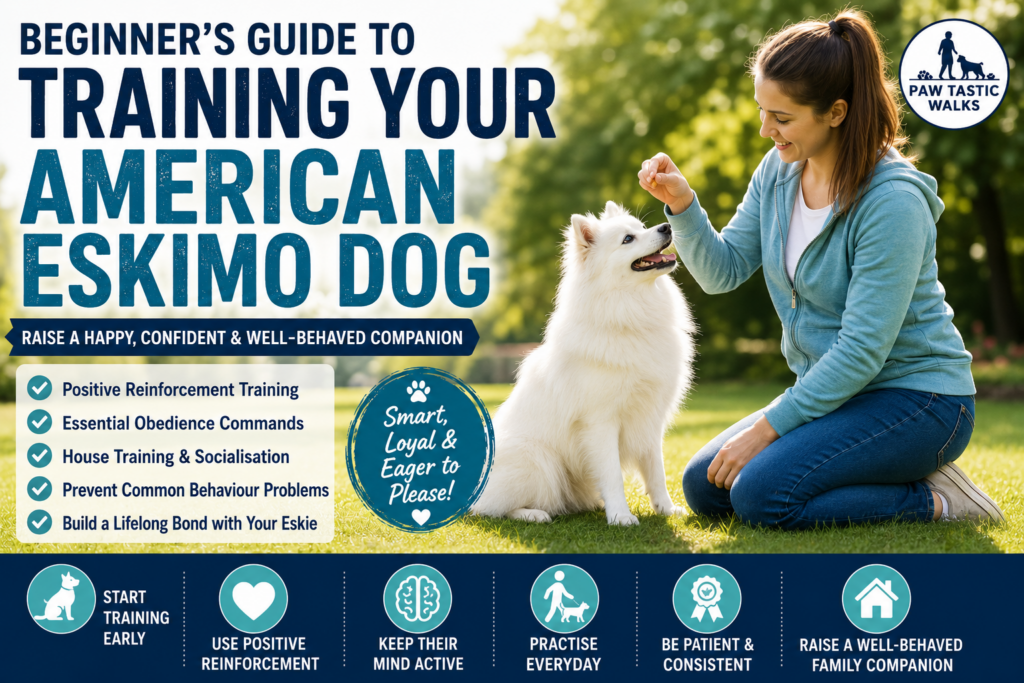
Training Timeline
| Week | Goal |
|---|---|
| Week 1 | Learn the “Quiet” cue |
| Week 2 | Reward 3–5 seconds of silence |
| Week 3 | Practise with family visitors |
| Week 4 | Introduce unfamiliar visitors |
| Week 5 | Practise outdoors |
| Week 6 | Reinforce calm greetings |
Remember…
Progress isn’t measured by perfection.
It’s measured by improvement.
Teaching “Go To Your Place”
Another fantastic command is:
Go To Your Place
Instead of rushing towards the front door barking, your dog learns to move to their bed or favourite mat.
This creates a completely different routine.
Instead of excitement…
they learn calmness.
How to Teach It
1️⃣ Choose a comfortable bed or mat.
2️⃣ Encourage your dog onto it using treats.
3️⃣ Say:
“Place.”
4️⃣ Reward generously.
5️⃣ Repeat until it becomes automatic.
Once learned, this command is invaluable whenever visitors arrive.
💡 Expert Tip
Many professional trainers teach “Place” before “Quiet.”
Why?
Because a relaxed dog naturally barks less.
You’re changing their emotional state—not simply trying to silence them.

Desensitisation: Helping Your Dog Stay Calm
Desensitisation sounds complicated…
It isn’t.
It simply means exposing your dog to something that normally triggers barking—but at a level they can comfortably cope with.
For example…
Instead of waiting until someone knocks loudly at the door…
start by having someone quietly walk past the garden.
Reward calm behaviour.
Gradually make each situation slightly more challenging.
Small successes build enormous confidence.
Counter-Conditioning
This works brilliantly with American Eskimo Dogs.
The idea is simple.
Instead of thinking:
Stranger = Something to bark at
your dog learns:
Stranger = Wonderful things happen!
Every time a visitor appears:
✔ Treats appear.
✔ Praise appears.
✔ Calmness is rewarded.
Over time, your dog’s emotional response changes naturally.
Practical Exercises You Can Start Today
Exercise 1 – Window Watching
Sit with your dog near the front window.
Whenever someone walks past without your dog barking, immediately reward them.
Soon your dog begins looking to you rather than reacting automatically.
Exercise 2 – Calm Visitor Practice
Invite a friend who understands dogs.
Ask them to ignore your dog completely.
No eye contact.
No touching.
No excitement.
Reward calm behaviour throughout the visit.
Exercise 3 – The Doorbell Game
Have someone ring your doorbell.
Before opening the door:
✔ Ask for “Sit.”
✔ Ask for “Quiet.”
✔ Reward.
Repeat several times.
Soon the doorbell becomes another training opportunity.
🐾 Blueprint Owner Tip
Many barking issues aren’t caused by stubbornness.
They’re caused by understanding the breed’s natural instincts.
That’s exactly why I created The American Eskimo Dog Blueprint.
Inside you’ll discover practical, easy-to-follow guidance covering:
✅ Puppy training
✅ Socialisation
✅ House training
✅ Barking and behaviour
✅ Exercise routines
✅ Nutrition
✅ Grooming
✅ Health care
✅ Senior dog care
✅ Daily routines
…and much more.
Whether you’re bringing home your first American Eskimo Dog or already share your life with one, the Blueprint is designed to help you raise a confident, happy companion using kind, positive methods.

Managing Your Home Environment
Sometimes training alone isn’t enough.
The environment itself can unintentionally encourage barking.
Fortunately, a few simple changes can make a remarkable difference.
Reduce Window Patrols
Many American Eskimo Dogs become “window security guards.”
Every passing dog…
Every neighbour…
Every delivery van…
becomes something worth barking at.
Consider:
🪟 Frosted window film
🪟 Net curtains
🪟 Moving furniture away from front windows
Reducing visual triggers often reduces barking dramatically.
Create a Safe Retreat
Every dog benefits from having somewhere peaceful to relax.
This might be:
🛏 A cosy bed
🧺 A quiet corner
🏡 A crate (if crate trained)
When visitors arrive, encourage your dog to settle there instead of charging towards the front door.
The calmer your dog’s environment, the calmer their reactions are likely to become.
Helpful Training Tools (and Which Ones to Avoid)
Training always works best when it combines patience, consistency and positive reinforcement. However, a few carefully chosen tools can support your progress.
Recommended Training Aids
🦴 High-Value Training Treats
The quicker you reward calm behaviour, the quicker your American Eskimo Dog understands what you’re asking.
Use tiny, irresistible treats during training sessions to keep your dog motivated without overfeeding.
🪢 Long Training Lead
A long lead is ideal for practising calm behaviour around people in parks or open spaces while keeping your dog safely under control.
🛏️ Settle Mat
A dedicated training mat can become your dog’s “safe place.”
With regular practice, your dog will naturally choose to settle there whenever visitors arrive.
🧸 Interactive Puzzle Toys
American Eskimo Dogs thrive on mental stimulation.
Keeping their minds occupied often reduces boredom-related barking.
Great options include:
✔ Snuffle mats
✔ Treat puzzles
✔ Stuffed enrichment toys
✔ Slow feeders

Products That May Help
Some dogs benefit from additional calming support.
These aren’t miracle cures, but they can help anxious dogs alongside proper training.
Useful Products
✔ Calming pheromone diffusers
✔ Anxiety wraps
✔ Licki mats
✔ White noise machines
✔ Orthopaedic calming beds
Always speak with your veterinarian before introducing supplements or calming products.
⚠ Avoid Quick-Fix Solutions
Unfortunately, there are many products marketed as “instant barking cures.”
Most simply suppress behaviour rather than addressing the underlying cause.
Avoid relying on:
❌ Shock collars
❌ Harsh punishment
❌ Yelling
❌ Spray bottles
❌ Physical corrections
These methods often increase fear and anxiety, making barking worse over time while damaging the trust between you and your dog.
Positive reinforcement builds confidence—and confident dogs bark less.
When Should You Seek Professional Help?
Most barking problems improve with consistent training.
However, some situations benefit from expert guidance.
Consider speaking to a qualified dog trainer or behaviourist if your American Eskimo Dog:
- Continues barking despite several weeks of consistent training.
- Shows signs of fear or aggression towards visitors.
- Lunges, snaps or attempts to bite.
- Cannot settle once visitors have entered your home.
- Seems unusually anxious or stressed.
There’s absolutely no shame in asking for help. Professional guidance can often identify small adjustments that make a big difference.
Common Mistakes Owners Make
Even experienced owners can accidentally reinforce barking without realising it.
Avoid these common pitfalls.
| ❌ Common Mistake | ✅ Better Approach |
|---|---|
| Shouting “Quiet!” repeatedly | Teach a calm “Quiet” cue |
| Punishing barking | Reward calm behaviour |
| Inconsistent household rules | Ensure everyone uses the same commands |
| Expecting instant results | Celebrate gradual progress |
| Skipping socialisation | Introduce new experiences regularly |
| Ignoring mental stimulation | Provide daily enrichment and exercise |
⭐ Top Tips for a Quieter American Eskimo Dog
Before we finish, here’s a quick recap.
✔ Start socialisation early.
✔ Reward calm behaviour immediately.
✔ Keep training sessions short and enjoyable.
✔ Provide plenty of physical exercise.
✔ Don’t forget daily mental stimulation.
✔ Teach “Quiet” and “Place.”
✔ Avoid punishment.
✔ Be patient and consistent.
✔ Remember that some barking is completely normal.
Frequently Asked Questions
Do American Eskimo Dogs bark more than other breeds?
Yes. American Eskimo Dogs are naturally vocal and were bred to be alert watchdogs. While they tend to bark more than many companion breeds, proper training can help ensure barking remains appropriate rather than excessive.
Can barking at strangers be completely stopped?
Probably not—and that’s perfectly normal.
A few alert barks are part of the breed’s natural personality.
The aim is to teach your dog to stop barking once you’ve acknowledged the situation.
At what age should barking training begin?
Training should begin as soon as your puppy arrives home.
Early socialisation and positive reinforcement are the easiest ways to prevent excessive barking later in life.
Why does my American Eskimo Dog bark at some people but not others?
Dogs notice subtle differences that humans often miss.
Different clothing, hats, walking styles, scents or even body language can trigger different reactions.
Will neutering or spaying stop barking?
Not usually.
Barking is primarily influenced by genetics, training and environment rather than reproductive hormones.
How much exercise does an American Eskimo Dog need?
Most adult American Eskimo Dogs benefit from 60–90 minutes of daily exercise, combined with mental stimulation such as training games and puzzle toys. A tired mind and body are far less likely to spend the day barking at every passing distraction.
Final Thoughts
American Eskimo Dogs are intelligent, loyal and wonderfully expressive companions. Their instinct to bark at strangers isn’t a flaw—it’s a reflection of the qualities that have made the breed such a trusted family guardian for generations.
With patient training, early socialisation and positive reinforcement, you can teach your Eskie to distinguish between genuine concerns and everyday visitors. The result is a calmer, more confident dog that still retains its wonderful alert nature without barking unnecessarily.
Remember, success won’t happen overnight. Every calm interaction, every rewarded moment of silence and every positive experience helps build the confident, well-mannered companion you want by your side.
📘 Take Your Training Even Further with The American Eskimo Dog Blueprint
If you’ve found this guide helpful, imagine having an entire owner’s handbook dedicated to raising a happy, healthy and well-behaved American Eskimo Dog.
The American Eskimo Dog Blueprint has been created especially for owners who want practical, easy-to-follow advice they can use every day.
Inside you’ll discover:
🐾 Puppy preparation and your first weeks together
🐾 House training made simple
🐾 Socialisation and confidence building
🐾 Positive training techniques
🐾 Managing barking and other common behaviour challenges
🐾 Nutrition and feeding advice
🐾 Exercise routines for every life stage
🐾 Grooming and coat care
🐾 Health and preventative care
🐾 Senior American Eskimo Dog care
🐾 Daily routines and enrichment ideas
🐾 Plus dozens of expert tips to help your dog thrive.
Whether you’re welcoming your first Eskie or simply want to deepen your understanding of this remarkable breed, The American Eskimo Dog Blueprint is packed with practical guidance to help you enjoy many happy years together.
👉 Discover The American Eskimo Dog Blueprint today and give your faithful companion the very best start in life.