
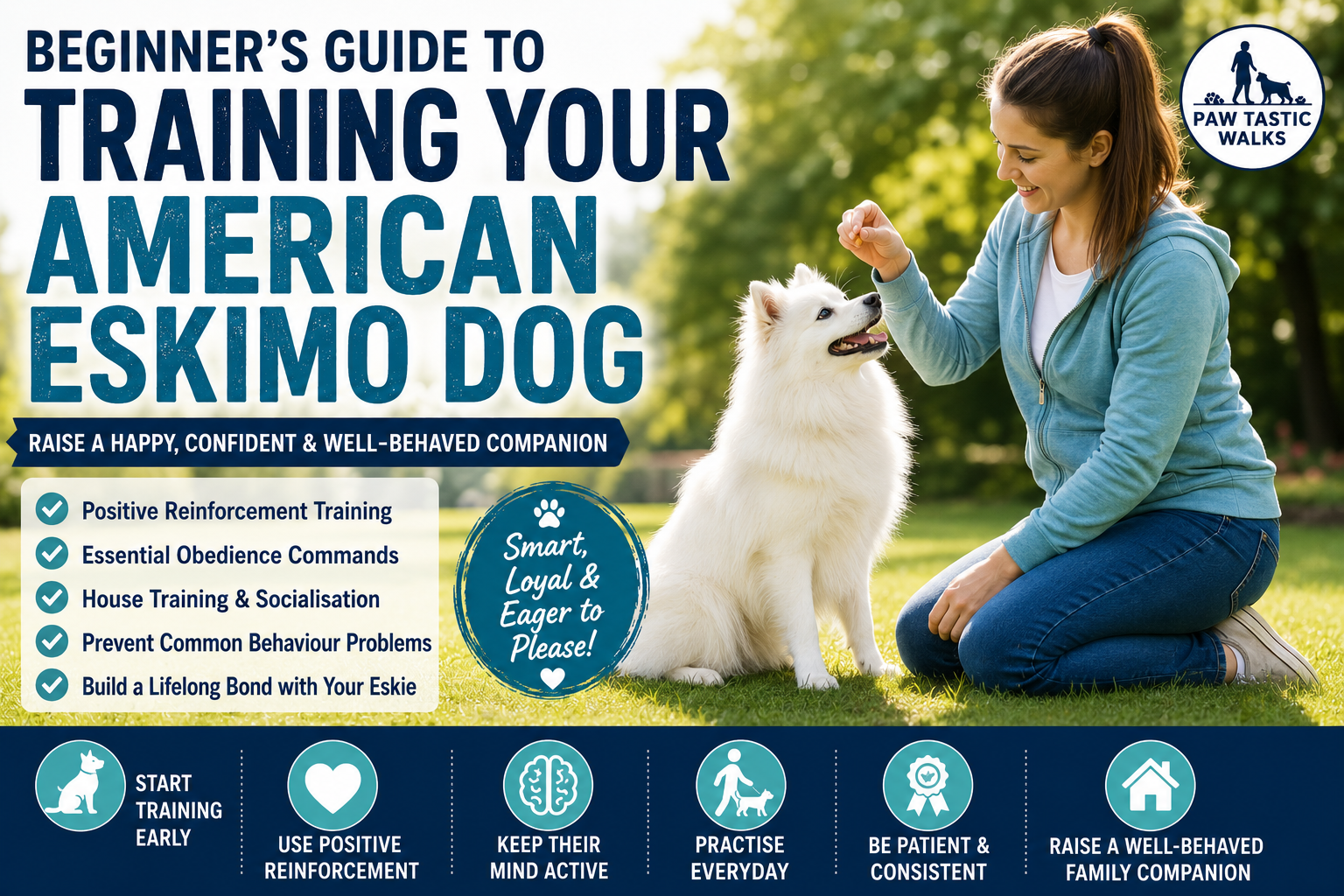
The Complete Beginner’s Guide
Training an American Eskimo Dog: A Rewarding Journey
If you’ve recently welcomed an American Eskimo Dog into your home, congratulations—you’ve chosen one of the most intelligent, loyal and entertaining companion breeds around.
Known for their dazzling white coat, sharp minds and affectionate personalities, American Eskimo Dogs (often affectionately called “Eskies”) love spending time with their families.
They enjoy learning new skills, solving problems and being included in everyday life.
However, their intelligence can be both a blessing and a challenge.
An American Eskimo Dog that receives consistent training becomes an obedient, confident and delightful companion.
On the other hand, one that lacks guidance can quickly invent its own ways to stay entertained—whether that’s barking at every passing squirrel, digging in the garden or deciding your favourite slippers make excellent chew toys!
The good news is that training an Eskie doesn’t have to be complicated.
With patience, consistency and plenty of positive reinforcement, even first-time owners can raise a well-mannered dog that enjoys learning and responds reliably to commands.
In this guide, we’ll cover everything you need to know, from your puppy’s first lessons through to advanced obedience, socialisation and lifelong training success.
Why American Eskimo Dogs Are Easier to Train Than Many Other Breeds
One of the reasons the American Eskimo Dog has become such a popular companion is its remarkable intelligence.
Originally descended from European Spitz breeds, these dogs were bred to work closely alongside people.
Over time, they also became famous as circus performers, thanks to their incredible ability to learn tricks and respond to commands with speed and enthusiasm.
That intelligence remains one of their greatest strengths today.
American Eskimo Dogs are naturally:
- 🧠 Highly intelligent
- ❤️ Eager to please
- 🐾 Loyal to their owners
- 🎓 Fast learners
- 😊 Enthusiastic during training
- 👀 Naturally observant
- 🏆 Excellent at obedience and agility
Unlike some stubborn breeds that prefer making their own decisions, most Eskies genuinely enjoy working with their owners.
That makes training not only easier—but also a wonderful opportunity to strengthen your bond.
Breed Overview
| Characteristic | Rating |
|---|---|
| Intelligence | ⭐⭐⭐⭐⭐ |
| Trainability | ⭐⭐⭐⭐⭐ |
| Energy Level | ⭐⭐⭐⭐☆ |
| Affection | ⭐⭐⭐⭐⭐ |
| Good for First-Time Owners | ⭐⭐⭐⭐☆ |
| Exercise Needs | Moderate to High |
| Mental Stimulation | Very Important |
Understanding Your American Eskimo Dog’s Personality
Before teaching your dog to sit, stay or come when called, it’s important to understand why they behave the way they do.
Every breed has its own unique personality, and successful training always starts by working with those natural instincts rather than against them.
They Love Their Family
American Eskimo Dogs thrive on companionship.
They’re happiest when they’re included in daily activities, whether that’s joining you on a countryside walk, playing in the garden or relaxing beside you in the evening.
Because they enjoy being close to their owners, they usually respond extremely well to praise and encouragement during training.
They’re Exceptionally Clever
One thing many new owners quickly discover is just how quickly an Eskie learns.
Sometimes that’s wonderful…
Sometimes it’s slightly terrifying!
They don’t just learn the behaviours you want them to learn—they also remember the habits you’d rather they forgot.
If opening the kitchen cupboard once resulted in a dropped biscuit, don’t be surprised if your American Eskimo Dog checks that cupboard every day for the next six months.
That’s why consistency matters so much.
They Need Mental Exercise as Well as Physical Exercise
Many owners make the mistake of believing a long walk is enough.
It isn’t.
American Eskimo Dogs need opportunities to think.
Without mental stimulation they may become bored, which often leads to unwanted behaviours such as:
- Excessive barking
- Chewing furniture
- Digging
- Chasing wildlife
- Jumping up at visitors
- Restlessness around the home
A short 10-minute training session can often tire an Eskie out more effectively than another lap around the park.
Essential Equipment for Training Success
Fortunately, you don’t need expensive equipment to raise a well-trained American Eskimo Dog.
A few quality essentials will make training easier for both you and your dog.
Recommended Training Kit
| Item | Why It’s Useful |
|---|---|
| Comfortable harness | Reduces strain during walks |
| Standard lead | Ideal for everyday training |
| Long training line | Perfect for practising recall safely |
| Treat pouch | Keeps rewards close at hand |
| High-value treats | Encourages faster learning |
| Clicker (optional) | Marks correct behaviour clearly |
| Interactive puzzle toys | Provides mental stimulation |
| Snuffle mat | Encourages natural scent work |
Choose rewards your dog genuinely enjoys. Tiny pieces of chicken, cheese or commercial training treats often work much better than ordinary dry kibble when teaching new behaviours.
The Golden Rules of American Eskimo Dog Training
Before introducing your first command, it’s worth remembering a few simple principles that can make all the difference.
✔ Keep Sessions Short
Aim for 5–10 minutes at a time, especially with puppies.
Short, enjoyable sessions keep your dog’s attention and leave them wanting more.
✔ End on a Success
Always try to finish with something your dog can do confidently.
Ending on a positive note builds confidence and enthusiasm for the next session.
✔ Reward Good Behaviour Immediately
Dogs learn through timing.
Reward the behaviour within a second or two so your Eskie clearly understands what they’ve done correctly.
✔ Be Consistent
Everyone in the household should use the same commands.
For example:
- “Sit” — not “Sit down.”
- “Come” — not “Come here, buddy.”
Consistency helps your dog learn faster and avoids confusion.
📘 Blueprint Tip
One of the biggest mistakes new owners make is only training during dedicated sessions. In reality, every interaction is a learning opportunity.
Asking your American Eskimo Dog to sit before meals, wait at doorways or come when called in the garden reinforces good habits throughout the day and speeds up their progress.
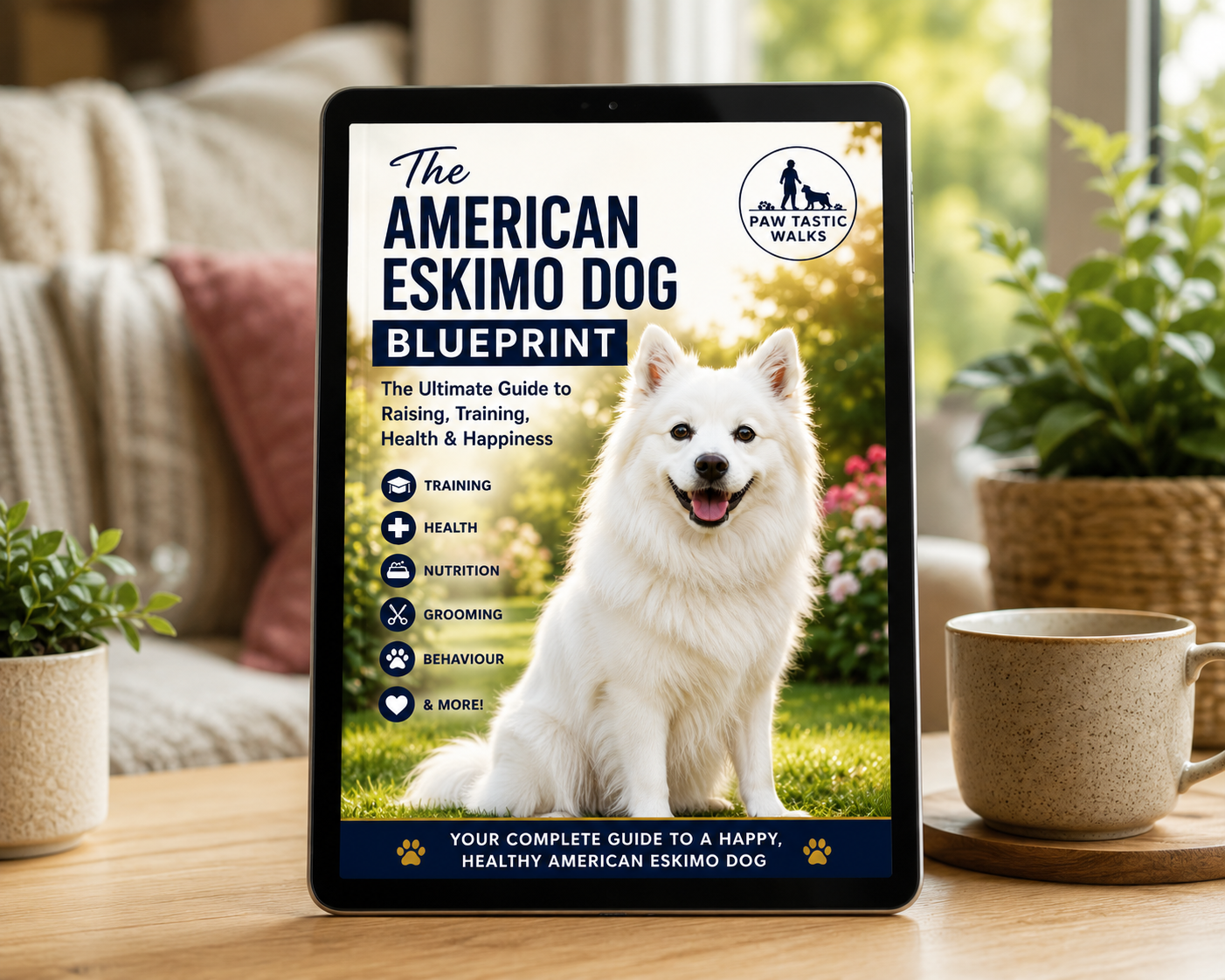
📘 Want a Step-by-Step Training Plan?
The American Eskimo Dog Blueprint takes the guesswork out of training with easy-to-follow puppy schedules, obedience exercises, behaviour solutions and practical advice for every stage of your dog’s life.

Start Training From Day One
One of the biggest misconceptions new owners have is that training should begin once their puppy reaches six months of age.
In reality, training starts the moment your American Eskimo Dog arrives home.
Every interaction teaches your puppy something.
For example:
- Are they allowed on the sofa?
- Should they jump up to greet people?
- Is barking rewarded with attention?
- Can they pull on the lead?
Whether you realise it or not, your Eskie is constantly learning.
The earlier you establish clear routines and expectations, the easier life will become for both of you.
The First Commands Every American Eskimo Dog Should Learn
Before moving on to tricks or advanced obedience, focus on building a solid foundation.
These commands can make everyday life safer, easier and far more enjoyable.
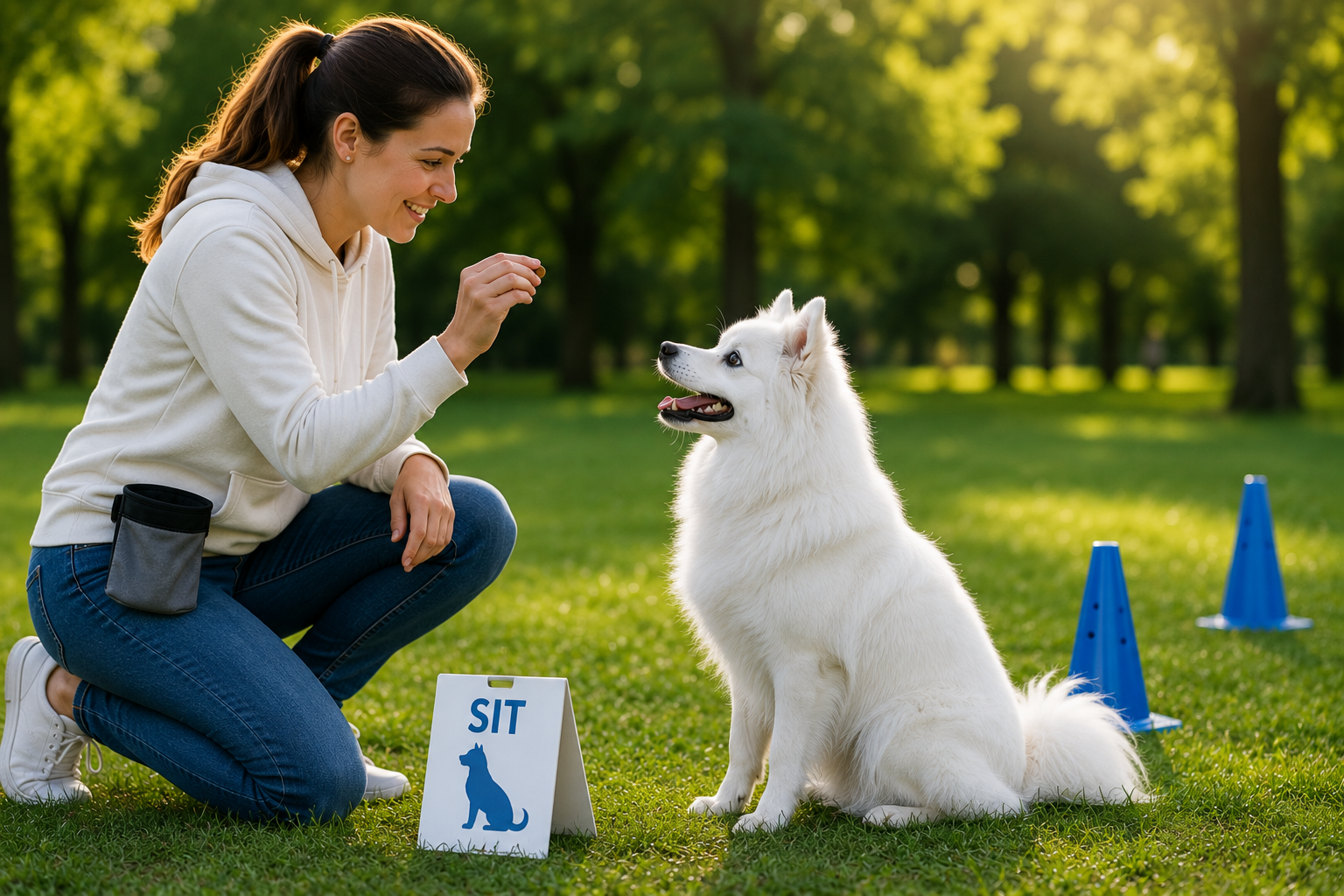
1. Sit
“Sit” is usually the easiest command to teach and forms the basis of many other exercises.
How to teach it
- Hold a treat close to your dog’s nose.
- Slowly lift it upwards.
- As your dog follows the treat, their bottom naturally lowers.
- The moment they sit, say “Sit” and reward immediately.
- Repeat several times before practising in different locations.
Keep sessions short and fun.
Most American Eskimo Dogs understand this command surprisingly quickly.
2. Stay
A reliable “Stay” can prevent accidents and gives you greater control in everyday situations.
Begin with just a few seconds.
Ask your dog to sit.
Raise your hand and calmly say:
“Stay.”
Take one step backwards.
If your dog remains still:
✔ Praise
✔ Reward
✔ Release them with a cue such as “OK.”
Gradually increase:
- Distance
- Time
- Distractions
Avoid rushing this command.
Patience always beats speed.
3. Come
Many experienced trainers consider recall the most important command your dog will ever learn.
A reliable recall could one day save your dog’s life.
Never use “Come” to punish your dog.
Instead, make it the best word they’ll ever hear.
Every successful recall should result in:
🎉 Praise
🍗 High-value treats
⚽ A favourite toy
❤️ Plenty of enthusiasm
Your dog should believe wonderful things happen whenever they come back to you.
4. Leave It
Curious Eskies often investigate absolutely everything.
Teaching “Leave It” helps prevent them picking up dangerous items during walks.
Start indoors using a treat.
Place it on the floor.
Cover it with your hand.
The moment your dog looks away—even briefly—reward them with a better treat from your other hand.
Soon they’ll realise ignoring tempting objects earns greater rewards.
5. Wait
Unlike “Stay,” which usually involves remaining in one place for longer periods, “Wait” is perfect for everyday situations.
Teach it before:
- Opening doors
- Crossing roads
- Getting out of the car
- Receiving meals
It’s a simple habit that dramatically improves safety.
Sample Training Schedule for New Owners
Consistency matters more than lengthy sessions.
Here’s a simple routine many new owners find successful.
| Time | Activity |
|---|---|
| Morning | 10-minute obedience session |
| Midday | Short recall game in the garden |
| Afternoon Walk | Loose lead practice |
| Evening | Trick training or puzzle toy |
| Before Bed | Calm “Sit” and “Wait” practice |
Several short sessions are far more productive than one long lesson.

House Training Your American Eskimo Puppy
Fortunately, American Eskimo Dogs are generally quick learners when it comes to toilet training.
Success depends on routine.
Create a Bathroom Schedule
Take your puppy outside:
✅ First thing in the morning
✅ After meals
✅ After naps
✅ After playtime
✅ Before bedtime
Always use the same toilet area if possible.
Your puppy will quickly begin associating that location with going to the toilet.
Reward Success Immediately
The mistake many owners make is waiting until they return indoors before rewarding their puppy.
Instead…
The instant your puppy finishes outside:
🎉 Praise enthusiastically.
🍗 Offer a small treat.
This creates a powerful association between toileting outdoors and receiving something enjoyable.
What If Accidents Happen?
They will.
Every puppy has accidents.
Don’t punish your American Eskimo Dog.
Instead:
- Stay calm.
- Clean thoroughly using an enzyme-based cleaner.
- Continue following your routine.
Punishment usually teaches puppies to hide accidents rather than preventing them.
Crate Training: Helpful or Harmful?
When introduced correctly, crate training can be an excellent tool.
A crate should never be used as punishment.
Instead, think of it as your dog’s bedroom.
It provides:
🏡 A safe place to relax
😴 Better sleep routines
🚽 Easier toilet training
🚗 Safe travel
Many American Eskimo Dogs grow to love their crate because it becomes their own secure retreat.
Socialisation Is Just As Important As Obedience
You can teach every command perfectly…
…but without proper socialisation, your dog may still become nervous or reactive.
The goal isn’t simply meeting lots of people.
It’s creating positive experiences.
Introduce your puppy gradually to:
👨 Adults
👶 Children
🐶 Friendly dogs
🚴 Cyclists
🚗 Traffic
🚌 Public transport
🌳 Parks
🏖 Beaches
🏡 Visitors at home
Keep every experience calm and enjoyable.
Never force interactions.
Allow your puppy to investigate at their own pace while rewarding confident behaviour.
Building Confidence
American Eskimo Dogs naturally notice everything happening around them.
Use this curiosity to your advantage.
Encourage exploration of:
- Different walking surfaces
- Woodland trails
- Town centres
- Garden equipment
- Umbrellas
- Vacuum cleaners
- Household noises
Every positive experience builds confidence for later life.
📘 Blueprint Tip
Many owners concentrate on teaching commands but overlook confidence building. A confident American Eskimo Dog is often far easier to train because they’re relaxed, curious and willing to learn rather than anxious about unfamiliar situations.
📘 Take Your Training Further
The American Eskimo Dog Blueprint includes age-specific puppy training plans, socialisation checklists, confidence-building exercises and step-by-step obedience lessons designed to help you raise a calm, happy and responsive companion.
Loose Lead Walking: Enjoy Stress-Free Walks
There’s nothing more frustrating than being dragged down the pavement by an overexcited dog.
Fortunately, American Eskimo Dogs are intelligent enough to learn excellent lead manners when training starts early.
Why Do American Eskimo Dogs Pull?
Usually, it’s quite simple.
Walking quickly gets them where they want to go.
Every time pulling works, it’s rewarded.
To change this habit, you need to teach them that walking beside you is actually the fastest and most rewarding option.
Simple Loose Lead Training
Whenever your dog pulls:
✔ Stop walking.
✔ Stand still.
✔ Wait for your dog to look back or return to your side.
The moment the lead becomes loose:
🎉 Praise.
🍗 Reward.
🚶 Continue walking.
It requires patience, but consistency pays off.
Within a few weeks, most American Eskimo Dogs begin checking in with their owners far more frequently.
Preventing Common Behaviour Problems
One advantage of the American Eskimo Dog’s intelligence is that they learn good habits quickly.
Unfortunately…
They also learn bad habits just as fast.
Let’s look at the most common issues.
Excessive Barking
Eskies are naturally alert.
They often bark because they:
- Hear unusual sounds
- Notice visitors
- Become bored
- Want attention
- Feel lonely
How to Reduce Barking
✔ Give enough exercise.
✔ Increase mental stimulation.
✔ Teach a reliable “Quiet” command.
✔ Avoid rewarding barking with attention.
Remember…
A tired American Eskimo Dog is usually a quieter American Eskimo Dog.
Jumping Up
Your puppy doesn’t see jumping as bad behaviour.
They’re simply trying to greet you.
Instead of pushing them away:
Ask for a “Sit.”
Reward calm greetings.
Ignore jumping completely.
Consistency from every family member is essential.
Chewing Household Items
Puppies explore the world with their mouths.
Provide plenty of:
- Safe chew toys
- Frozen enrichment toys
- Rubber toys
- Food puzzles
Rotate toys every few days to keep them interesting.
Separation Anxiety
Because American Eskimo Dogs adore their families, some struggle when left alone.
Signs include:
- Barking
- Whining
- Destructive behaviour
- Scratching doors
- Pacing
The solution isn’t to avoid leaving them altogether.
Instead, gradually teach independence.
Start Small
Leave the room for:
30 seconds.
Then one minute.
Then three minutes.
Then five minutes.
Gradually increase the duration without making arrivals and departures overly emotional.
Confidence grows with practice.
Keep Their Brilliant Mind Busy
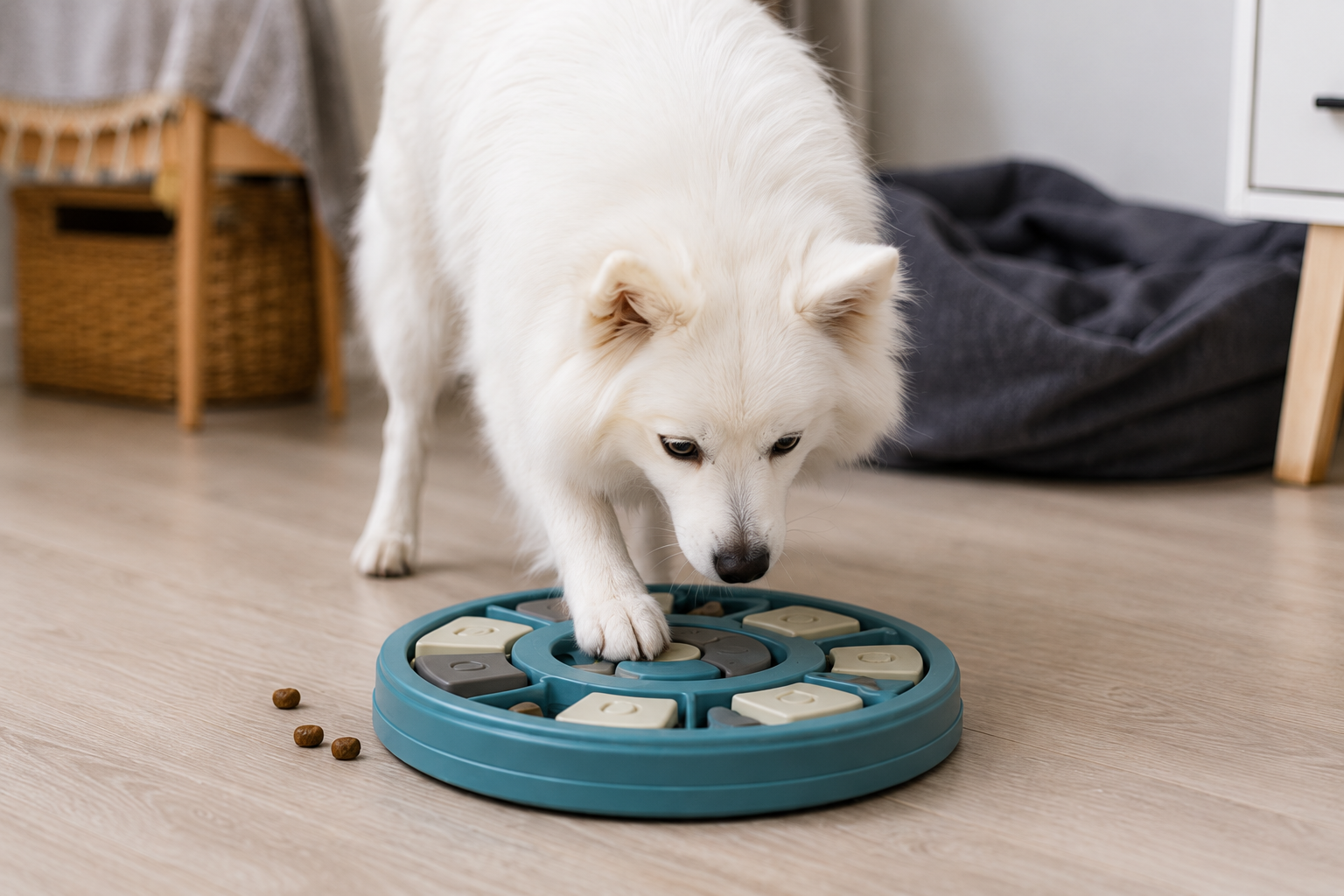
An American Eskimo Dog’s brain needs daily exercise too.
Try including:
🧩 Puzzle feeders
👃 Scent games
🎾 Hide-and-seek
🎓 Learning a new trick every week
🦴 Stuffed enrichment toys
🏆 Beginner agility
These activities help reduce boredom while strengthening your relationship.
Advanced Training Ideas
Once your dog has mastered the basics, the fun really begins.
American Eskimo Dogs often excel at:
Agility
Their speed and athleticism make them natural competitors.
Trick Training
Popular tricks include:
- Roll over
- Spin
- Wave
- Bow
- High five
- Fetch named toys
Because they’re eager learners, many Eskies can build an impressive trick repertoire.
Scent Work
Hide treats around the house or garden.
Your dog will love using their remarkable nose to find them.
This type of mental exercise is surprisingly tiring.
Canine Sports
Many owners also enjoy:
- Rally obedience
- Hoopers
- Flyball
- Competitive obedience
- Canicross
- Trick Dog titles
These activities provide wonderful opportunities to challenge your dog while building an even stronger partnership.
The Biggest Training Mistakes New Owners Make
Even experienced owners occasionally fall into these traps.
Avoiding them will speed up your dog’s progress.
❌ Being Inconsistent
If jumping is allowed one day but discouraged the next, your dog becomes confused.
Agree on household rules and stick to them.
❌ Sessions That Are Too Long
American Eskimo Dogs love learning…
…but they also lose concentration.
Several short sessions each day are far more effective than one long lesson.
❌ Repeating Commands
Instead of saying:
“Come… Come… Come…”
Give the command once.
Then encourage success.
Repeated commands teach dogs they don’t need to respond immediately.
❌ Forgetting to Reward Good Behaviour
Owners often notice mistakes while overlooking success.
Whenever your Eskie makes a good choice:
Praise them.
Reward them.
Reinforce it.
Dogs repeat behaviours that are rewarded.
Lifelong Training Success
Training doesn’t end after puppyhood.
In fact, the best-trained American Eskimo Dogs continue learning throughout their lives.
Older dogs still enjoy:
- New tricks
- Puzzle toys
- Recall games
- Gentle agility
- Scent work
- Interactive walks
Continuous learning keeps both body and mind healthy.
Many senior Eskies remain enthusiastic students well into their teenage years.
Frequently Asked Questions
Are American Eskimo Dogs easy to train?
Yes. They’re among the most intelligent companion breeds and usually respond extremely well to positive reinforcement and consistent training.
At what age should I start training my American Eskimo puppy?
Training should begin as soon as your puppy comes home, usually around eight weeks of age. Early socialisation and simple routines help build good habits from the very beginning.
Why does my American Eskimo Dog bark so much?
Eskies are naturally alert and often bark to communicate or warn their family about unusual sounds. Plenty of exercise, mental stimulation and positive training can help reduce excessive barking.
How long does it take to train an American Eskimo Dog?
Basic obedience can often be established within a few weeks of consistent practice. More advanced skills develop over several months, and training should continue throughout your dog’s life.
Are American Eskimo Dogs stubborn?
They can occasionally have an independent streak, but they’re generally eager to please and highly trainable. Positive reinforcement and patience usually produce excellent results.
Can older American Eskimo Dogs still learn new tricks?
Absolutely! Adult and senior Eskies often enjoy learning new commands and games, making lifelong training an excellent way to keep them mentally active.
Final Thoughts
Training an American Eskimo Dog is about much more than teaching commands—it’s about building trust, confidence and a lifelong partnership.
These intelligent, affectionate dogs genuinely enjoy learning and thrive when given clear guidance, consistent routines and plenty of positive reinforcement.
With patience and daily practice, you’ll be rewarded with a loyal companion that’s a pleasure to live with and eager to share every adventure.
Whether you’re teaching your puppy to sit, improving recall or introducing advanced agility, remember that every training session strengthens the bond between you and your dog.
📘 Take Your Training to the Next Level
If you’re serious about raising a confident, obedient and happy American Eskimo Dog, The American Eskimo Dog Blueprint is the perfect companion.
Inside you’ll discover over 70 pages of expert advice covering:
🐶 Puppy training from day one
🎓 Step-by-step obedience lessons
🦴 Nutrition and feeding
❤️ Health and preventative care
✂️ Grooming schedules
🐕 Behaviour solutions
👨👩👧👦 Living with children and other pets
📋 Essential checklists and practical tips
Whether you’re a first-time owner or already have years of experience, this comprehensive guide will help you get the very best from your American Eskimo Dog.
Download your copy today and start building an incredible partnership with your Eskie!