Afghan Hounds are known for being independent and having a strong prey drive. This can impact how well they get along with other dogs.
It’s important to understand their temperament and behavior to see if they’ll be good with other dogs.
Thinking about getting an Afghan Hound? Or maybe you already have dogs at home? It’s key to think about their unique traits and how they might act around other dogs.
Afghan Hounds can be great pets, but how they get along with other dogs depends on a few things.
Proper training and introducing them to other dogs can really help them live together peacefully.
Key Takeaways
- Understanding Afghan Hound temperament is key for getting along with other dogs.
- Good socialization and training can help them be friends with other dogs.
- Their strong prey drive can change how they interact with other dogs.
- Because they’re independent, introducing them to other dogs needs careful thought.
- With patience and the right training, Afghan Hounds can live with other dogs.
Understanding the Afghan Hound Temperament
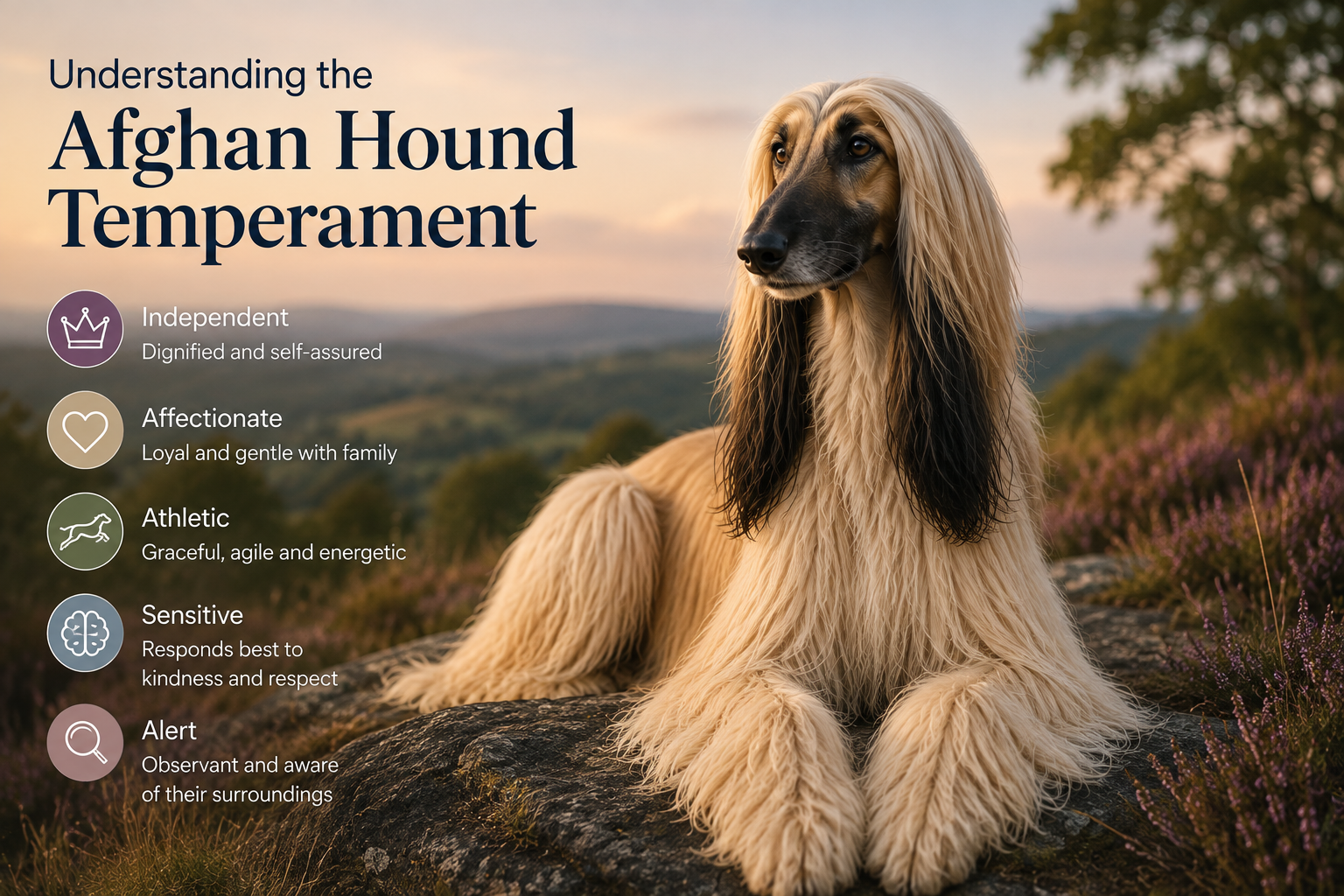
Afghan Hounds are known for their calm and dignified nature. They have an independent nature that shapes how they act around other dogs.
Natural Personality Traits
Afghan Hounds are calm and serene. But, they can be reserved and aloof around strangers, including other dogs. This is part of their breed’s heritage.
Independent Nature and Pack Mentality
Despite being independent, Afghan Hounds have a pack mentality. They bond strongly with their family pack, which can include other dogs.
But their loyalty is tested by their strong prey drive and hunting instincts.
Sighthound Instincts and Their Impact
As sighthounds, Afghan Hounds have a strong prey drive. This can affect their behavior around other dogs, like smaller ones.
Their hunting instincts can cause them to chase, making socialization and training key for living with other dogs.
The History Behind Afghan Hound Social Behavior
Afghan Hounds have a rich history that shapes how they act around other dogs. They were bred to hunt in Afghanistan’s tough terrains.
This background has made them unique in their social behavior.
Original Breeding Purpose
Afghan Hounds were made for speed, agility, and a strong chase instinct. They were meant to hunt big game like deer and wild boar.
Knowing this helps us understand their independent and instinctive nature.
Independent Hunting Style: Unlike some breeds, Afghan Hounds hunted alone. This solo hunting has made them seem aloof to other dogs.
How History Shapes Modern Behavior
The role of Afghan Hounds as hunting dogs has shaped their modern behavior. Their strong chase instinct and independence can make socializing hard.
Prey Drive: Their chase instinct means they might go after smaller animals. This can be a problem with other pets in the home.
Evolution as Companion Animals
Over time, Afghan Hounds have changed from hunting dogs to family pets. This change has made them more suited to living with families.
Even though they’ve changed, they keep some of their old traits. Knowing these traits helps manage how they interact with other dogs.
| Historical Trait | Modern Impact |
|---|---|
| Independent Hunting | Aloofness around other dogs |
| Strong Prey Drive | Chases smaller animals |
| Companion Animal Evolution | More adaptable to family environments |
Understanding Afghan Hounds’ history and original purpose helps manage their social interactions. This way, you can create a peaceful home for everyone.
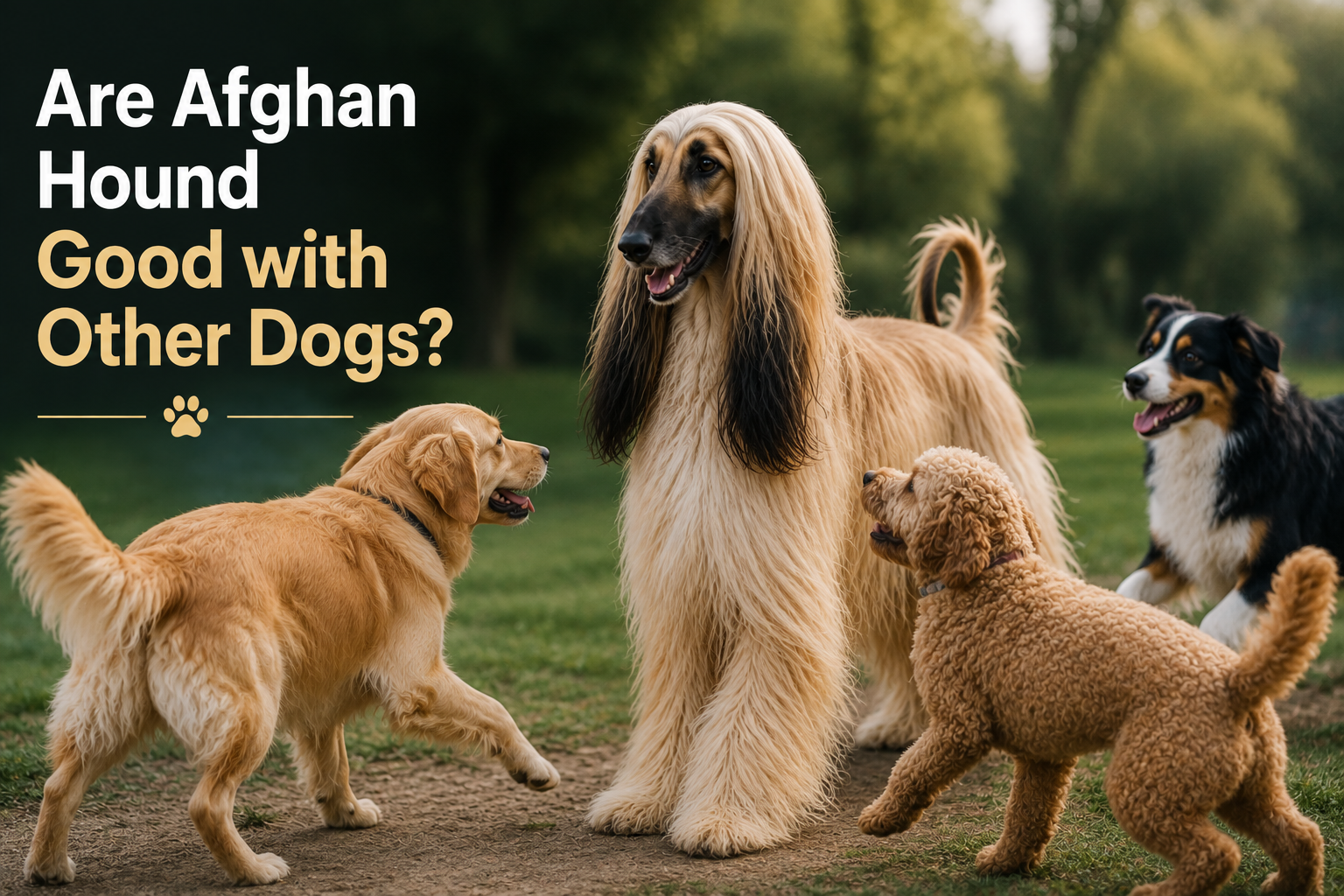
Are Afghan Hounds Good With Other Dogs?
Afghan Hounds can get along with other dogs, but it depends on a few things. Their temperament, how they’re socialized, and their personality play big roles.
These factors help figure out if they’ll get along with other dogs.
General Compatibility Assessment
Afghan Hounds can be friendly with other dogs if they’re socialized early. Their hunting instinct and independent streak might make things tricky.
But, with the right introduction and training, they can live peacefully with others.
Key factors to consider:
- Early socialization
- Proper training
- Individual temperament
Factors That Influence Their Behavior
Many things shape an Afghan Hound’s behavior around other dogs. Their breeding, socialization, and training are key.
Knowing these can help guess how they’ll act with other dogs.
Individual Personality Variations
Afghan Hounds, like people, have their own unique personalities. Some are very friendly, while others might be more shy or distant. It’s important to know your Afghan Hound’s personality to manage their interactions with others.
Understanding these points can help make a peaceful home for multiple pets. Remember, every dog is different. What works for one Afghan Hound might not work for another.
Afghan Hound Behavior With Other Dogs in the Same Household
Introducing an Afghan Hound to a home with other dogs is key. They can get along well if they’re socialized right and introduced slowly.
Living With Multiple Afghan Hounds
Having more than one Afghan Hound can be great. But, it needs careful handling. They seem aloof because they’re independent.
Yet, with the right training, they can form strong bonds.
Afghan Hounds With Different Dog Breeds
Bringing an Afghan Hound to a home with other breeds needs patience. Success comes from slow introductions and watching how each dog acts.
Establishing Hierarchy in Multi-Dog Homes
In homes with many dogs, setting a clear order is vital. This is done through consistent training, setting rules, and making sure all dogs know their place.
| Dog Breed | Compatibility with Afghan Hound | Training Requirements |
|---|---|---|
| Afghan Hound | High | Consistent, patient training |
| Other Sighthounds | High | Socialization, exercise |
| Small Breeds | Moderate | Careful introduction, supervision |
Afghan Hound Interaction With Dogs Outside the Home
It’s important to know how Afghan Hounds act around other dogs in different places. This includes dog parks, walks on a leash, and visits to friends with dogs.
Knowing your Afghan Hound’s behavior can prevent bad interactions.
Dog Park Behavior
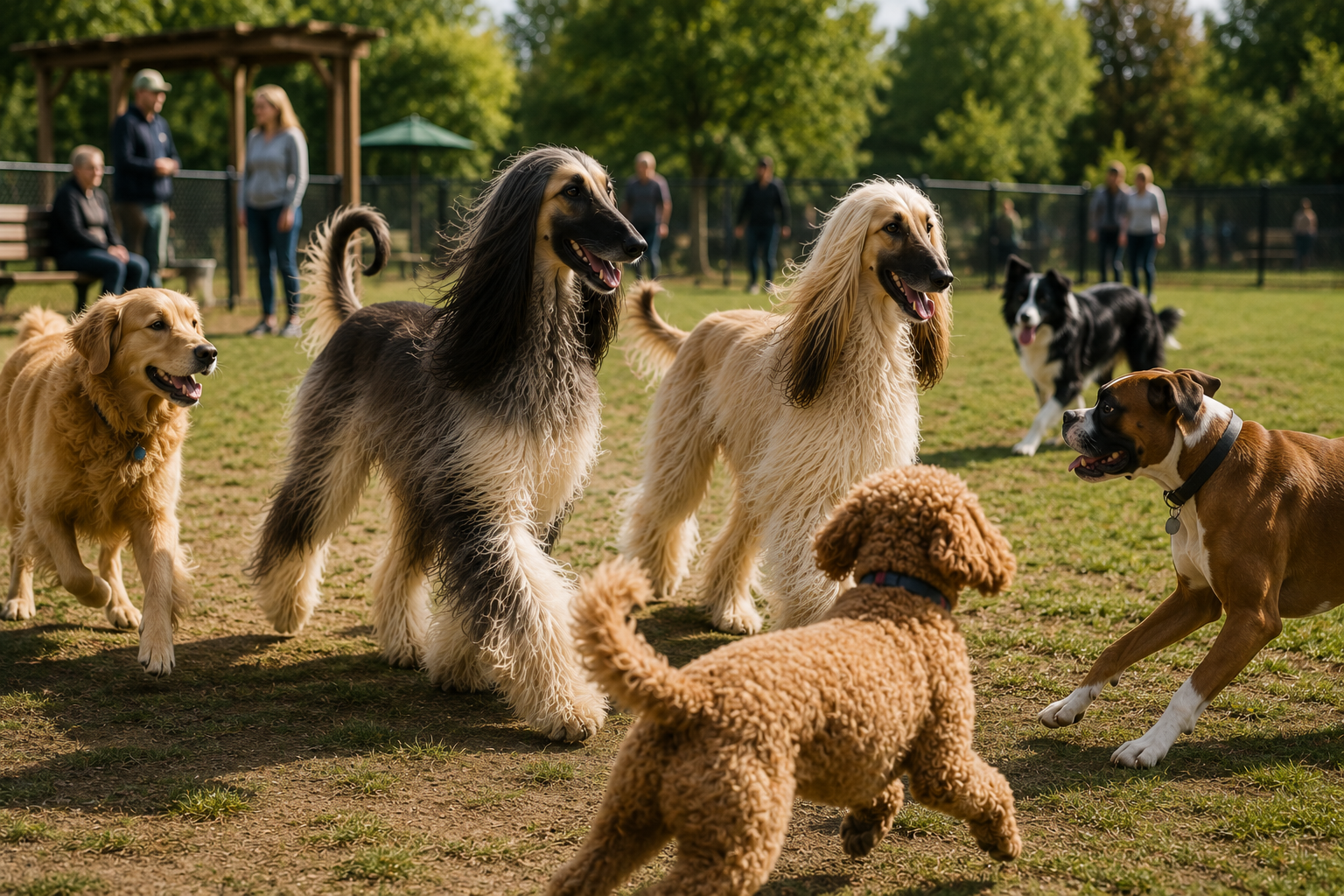
Afghan Hounds can be picky about who they play with, even in dog parks. Some enjoy the freedom and socializing, while others might feel too stressed or defensive.
Watch your dog’s body language and actions at dog parks. If they look stressed or don’t want to play, it’s best to limit their time there.
Make sure they have a way to leave if needed.
On-Leash Encounters
Walking your Afghan Hound on a leash can be tricky because of their independent nature. They might be wary of other dogs. Keep your dog on a short leash and be ready for any reactions.
“The key to successful on-leash encounters is being in control and aware of your dog’s reactions. Training your Afghan Hound to respond to basic commands can make a significant difference.”
Visiting Friends With Dogs
When you visit friends with dogs, introduce them slowly and in a safe place. This helps avoid fights. Make sure both dogs are comfortable and in a neutral area for a good meeting.
| Interaction Setting | Tips for Success |
|---|---|
| Dog Park | Observe body language, ensure safe exit |
| On-Leash | Keep on short leash, be prepared for reactions |
| Visiting Friends | Introduce slowly, ensure neutral ground |
By understanding and managing your Afghan Hound’s interactions with other dogs outside, you can ensure they have good experiences. This is good for your dog and the dogs they meet.
The Importance of Early Socialization for Afghan Hounds
Afghan Hound puppies need early socialization to grow into confident dogs. This is key for good social skills and avoiding behavioral problems.
By introducing them to different places, people, and animals, they become friendly and well-adjusted.
Puppy Socialization Timeline
The socialization period for puppies is between 8 and 11 weeks. But, it’s good to keep socializing them after that. Schedule regular outings and interactions to help them feel confident in new places.
Socialization Techniques for Afghan Hound Puppies
Good socialization is more than just new experiences. It’s about making those experiences positive.
Use positive reinforcement techniques like treats and praise. Also, introduce them to parks, pet stores, and various people and dogs.
Creating Positive First Impressions
The first time your Afghan Hound puppy meets others is very important. Make sure these first meetings are positive.
Monitor their interactions closely and step in if needed. This helps your puppy grow into a sociable adult dog.
Introducing Your Afghan Hound to New Dogs
Introducing your Afghan Hound to new dogs needs a careful plan. This helps avoid fights and keeps everyone happy at home.
Step-by-Step Introduction Process
First, keep the dogs apart and let them get used to each other’s smells and sounds. When they seem okay, it’s time for a supervised meeting in a neutral spot.
- Keep the first meeting short.
- Watch their body language closely.
- Give treats for calm behavior.
Reading Canine Body Language
It’s important to understand dog body language during introductions. Look out for signs of stress or aggression like growling, raised hackles, or avoiding eye contact.
When to Intervene in Interactions
If you see any aggression or fear, step in right away. Separate the dogs and start again from the start if needed.
Key signs to watch for:
- Growling or snapping.
- Stiffening or raised hackles.
- Avoidance or hiding.
Common Challenges in Afghan Hound Dog-to-Dog Interactions
It’s important to know the common challenges in Afghan Hound dog-to-dog interactions. Afghan Hounds have unique traits that can cause problems when they meet other dogs.
Prey Drive Issues
Afghan Hounds are sighthounds, bred to chase prey over long distances. They have a strong prey drive, which can make them chase smaller dogs or pets. Managing this instinct is key to avoid unwanted chases or harm to other pets.
Dominance and Territory Concerns
Afghan Hounds can be aloof and independent. This can show up as dominance or territorial behavior around other dogs. Setting clear boundaries and training can help solve these problems.
Sensitivity and Reactivity
Afghan Hounds are very sensitive. They can react to the presence, noise, or energy of other dogs, which can be a problem if they’re not socialized well. Gradual and positive socialization is essential to reduce reactivity.
Managing Chase Behaviors
Managing chase behaviors in Afghan Hounds needs a mix of training, socialization, and environmental management. Here are some strategies:
- Training recall commands to ensure your Afghan Hound returns to you promptly.
- Using positive reinforcement to reward calm behavior around other dogs.
- Avoiding situations that trigger chase instincts, such as encounters with small, fast-moving pets.
Dog trainers say, “Early socialization and consistent training are vital in managing the prey drive and other challenging behaviors in Afghan Hounds.”
“The key to successful dog-to-dog interactions lies in understanding the breed’s specific needs and characteristics.”
| Challenge | Management Strategy |
|---|---|
| Prey Drive | Training recall, avoiding trigger situations |
| Dominance/Territoriality | Establishing clear boundaries, training |
| Sensitivity/Reactivity | Gradual socialization, positive reinforcement |
Afghan Hound Compatibility With Different Dog Breeds
Thinking of adding another dog to your home with an Afghan Hound? It’s key to know how they get along. Their compatibility depends on things like temperament, energy, and size.
Best Companion Breeds for Afghan Hounds
Afghan Hounds usually get along with breeds that match their energy and calmness. Greyhounds and Borzoi are good matches because they’re calm and gentle.
Potentially Challenging Breed Combinations
Some breeds might not be the best fit for Afghan Hounds. This is because of their high energy or strong chase instinct. For instance, Terriers or hunting dogs might not be the best choice.
Size Considerations in Compatibility
Size is also important when considering Afghan Hounds with other breeds. They usually get along with dogs of similar or bigger size. But, smaller dogs might trigger their chase instinct.
| Breed | Compatibility Level | Reason |
|---|---|---|
| Greyhound | High | Similar calm nature |
| Terrier | Low | High energy, possible conflict |
| Borzoi | High | Gentle and calm |
Training Techniques to Improve Afghan Hound Social Skills
To improve your Afghan Hound’s social skills, use the right training methods and practice often. Good training helps them get along with other dogs and strengthens your bond.
Positive Reinforcement Methods
Positive reinforcement works well for Afghan Hounds. Rewarding them with treats, praise, or play encourages them to be friendly and calm around other dogs.
- Use treats and praise to reward calm behavior
- Gradually increase exposure to other dogs
- Be consistent in your reinforcement
Professional Training Options
Some owners find professional training helpful for their Afghan Hound’s social skills. Trainers offer personalized advice and help with specific issues.
Consider enrolling your Afghan Hound in obedience classes or socialization groups.
Consistency and Patience in Training
Training an Afghan Hound needs consistency and patience. Set realistic goals and don’t rush the process.
Remember, every dog learns at their own pace.
Specific Commands for Social Situations
Teaching specific commands helps manage your Afghan Hound’s interactions. Commands like “sit,” “stay,” and “leave it” are useful in social situations.
- Practice “sit” and “stay” commands in various environments
- Use “leave it” to prevent unwanted interactions
- Reward compliance with treats and praise
Managing and Preventing Conflicts Between Your Afghan Hound and Other Dogs
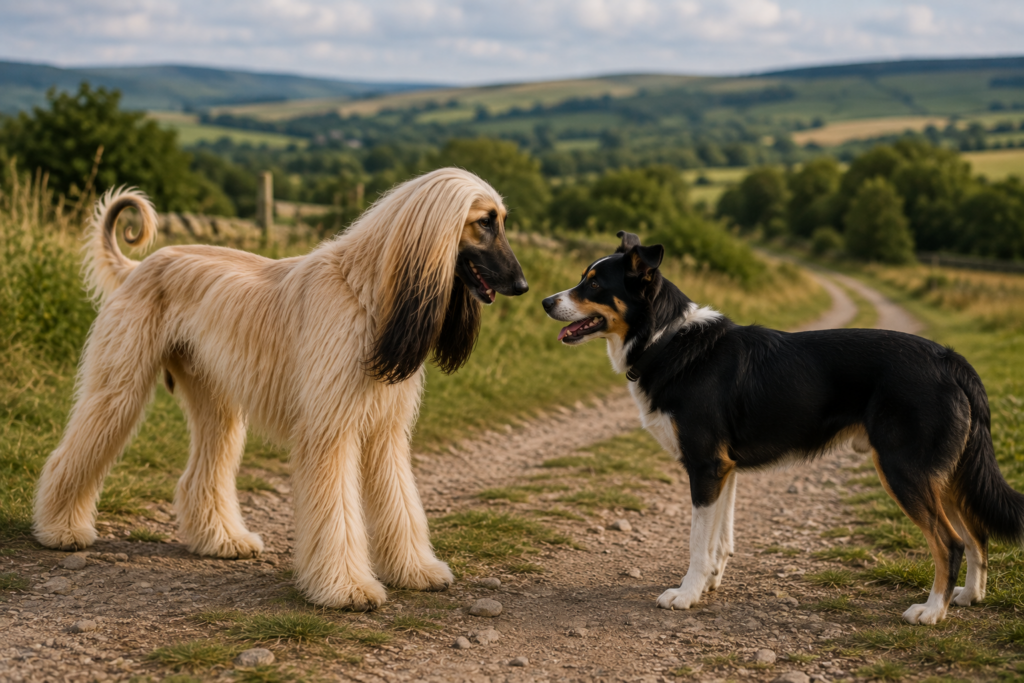
Dealing with conflicts between Afghan Hounds and other dogs can be tough. But, there are ways to handle and stop them. Knowing how your Afghan Hound acts around other dogs is key to a peaceful home.
Recognizing Warning Signs
Spotting warning signs is the first step. These signs include:
- Growling or snarling: Shows discomfort or anger.
- Stiffening: A tense body language.
- Avoidance behaviors: Dogs may stay away if they’re stressed.
De-escalation Techniques
Act calmly when you see warning signs. Here are some ways to calm things down:
- Separating the dogs: Pull them apart to stop things from getting worse.
- Redirecting attention: Use treats or toys to take their mind off things.
- Positive reinforcement training: Reward them for staying calm.
Creating Safe Spaces
Safe spaces can help reduce fights. Here’s how to create them:
- Designating areas: Give each dog its own spot for eating, sleeping, and relaxing.
- Providing multiple resources: Make sure each dog has its own food, water, beds, and toys.
Resource Guarding Prevention
Resource guarding can cause fights. Here’s how to avoid it:
- Feed dogs separately: This reduces competition at meal times.
- Provide plenty of resources: Give all dogs enough toys and treats.
- Train “leave it” and “drop it” commands: Teach them to share and give up items easily.
Conclusion:
Creating Harmony Between Your Afghan Hound and Other Dogs
To make your Afghan Hound and other dogs get along, you need to understand them well. This includes knowing their temperament, socializing them right, and training them effectively.
By doing this, you can help them live peacefully together.
We’ve talked about how Afghan Hounds behave and how they get along with other dogs. We also stressed the importance of socializing them early. This helps them learn to interact well with others and avoid fights.
To help your Afghan Hound and other dogs live together, be patient and consistent. Use positive training methods.
This way, your home can become a place where all dogs can be happy and peaceful together.
FAQ
Are Afghan Hounds generally good with other dogs?
Afghan Hounds can get along with other dogs if they’re socialized right. But, their independent nature and strong prey drive might cause problems sometimes.
How do Afghan Hounds interact with other dogs in the same household?
Afghan Hounds can live with other dogs at home. But, it’s important to set a clear order and give them their own space to avoid fights.
What factors influence an Afghan Hound’s behavior around other dogs?
Things like how they’re socialized, their personality, and their breeding history really affect how they act around other dogs.
To socialize your Afghan Hound puppy, introduce them to different places, people, and dogs early on. This helps them learn to interact well with others.
What are some common challenges in Afghan Hound dog-to-dog interactions?
Issues like chasing prey, dominance, and being sensitive can happen. But, training and socializing them right can help solve these problems.
How do I introduce my Afghan Hound to a new dog?
When introducing your Afghan Hound to a new dog, do it slowly. Start with just seeing each other, then gradually let them meet face-to-face in a controlled setting.
Yes, Afghan Hounds can learn to get along better with other dogs through positive training, professional help, and consistent, patient practice.
What dog breeds are compatible with Afghan Hounds?
Breeds that are calm, gentle, and not too energetic or aggressive usually work well with Afghan Hounds. But, every dog is different, so it depends on their personality too.
How can I manage conflicts between my Afghan Hound and other dogs?
To handle fights, watch for signs of trouble, use calm-down methods, and make sure they have their own safe areas to prevent fights over things.
Are Afghan Hounds suitable for dog parks or on-leash encounters?
Afghan Hounds might not be the best for dog parks or walking on a leash because of their strong chase instinct. They need careful handling in these situations.
How important is size when considering compatibility between Afghan Hounds and other breeds?
Size matters, but it’s not everything. The real key is their temperament and energy level, as these can affect how well they get along.