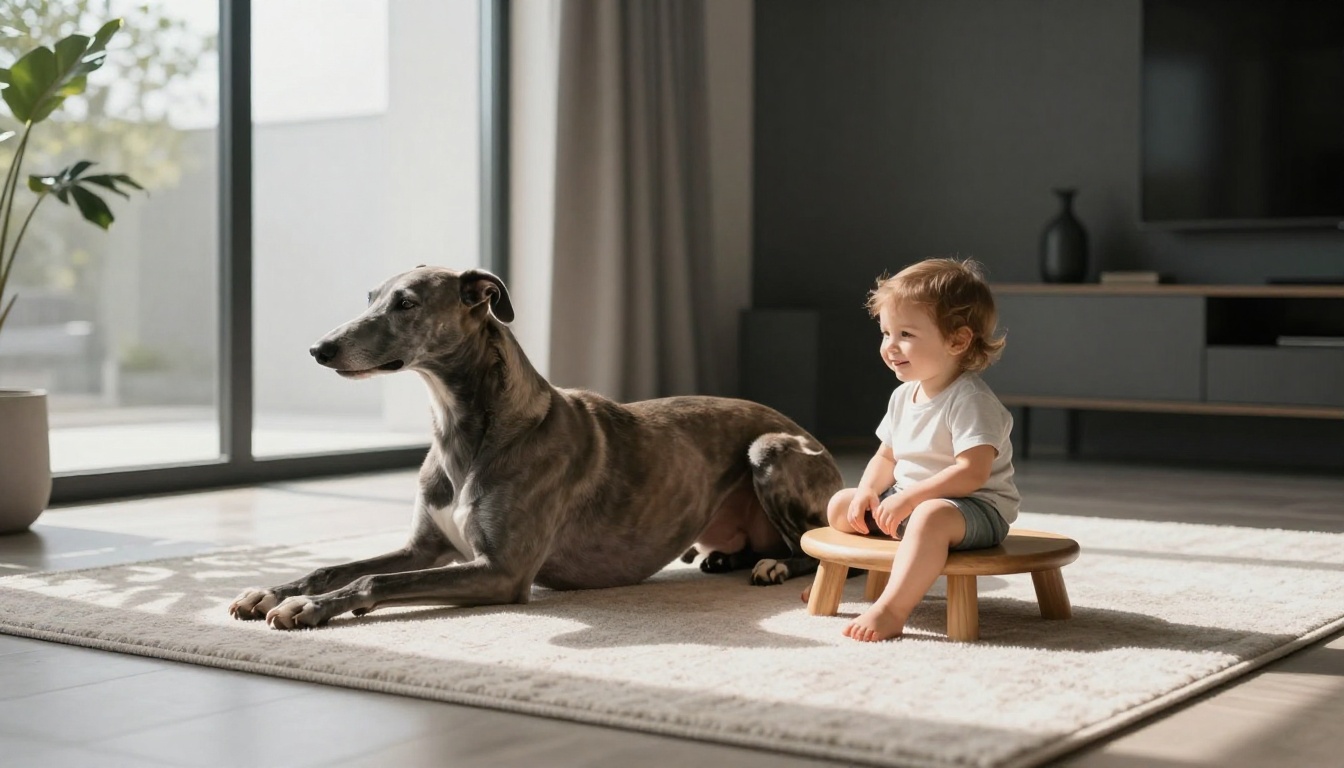
What Families Should Know
Greyhounds can be good with children, but the fit depends on the dog, the child, and the home. They’re often calm, gentle, and quiet, which sounds ideal for family life, but they still need respectful handling and a bit of common sense.
If you’re wondering whether this breed suits your household, you’re in the right place. A greyhound can be a lovely family dog, yet their size, sensitivity, and racing background can shape how they react around kids.
This post looks at greyhound temperament, safety, child-dog boundaries, and a few real-life tips that make life easier for everyone.
If you like practical dog care advice, you can also check out our great guides on Payhip and ebook guides on Etsy.
What Greyhound Temperament Means for Family Life
Greyhounds often fit family life better than people expect. They are usually calm at home, low-key with their people, and far less chaotic than many larger breeds.
That can be a real plus in a house with children, especially if you want a dog that settles instead of bouncing off the walls.
Their temperament is usually more “quiet companion” than “constant entertainer.” Many greyhounds enjoy short play sessions, a gentle fuss, and then a long nap in the warmest spot they can find.
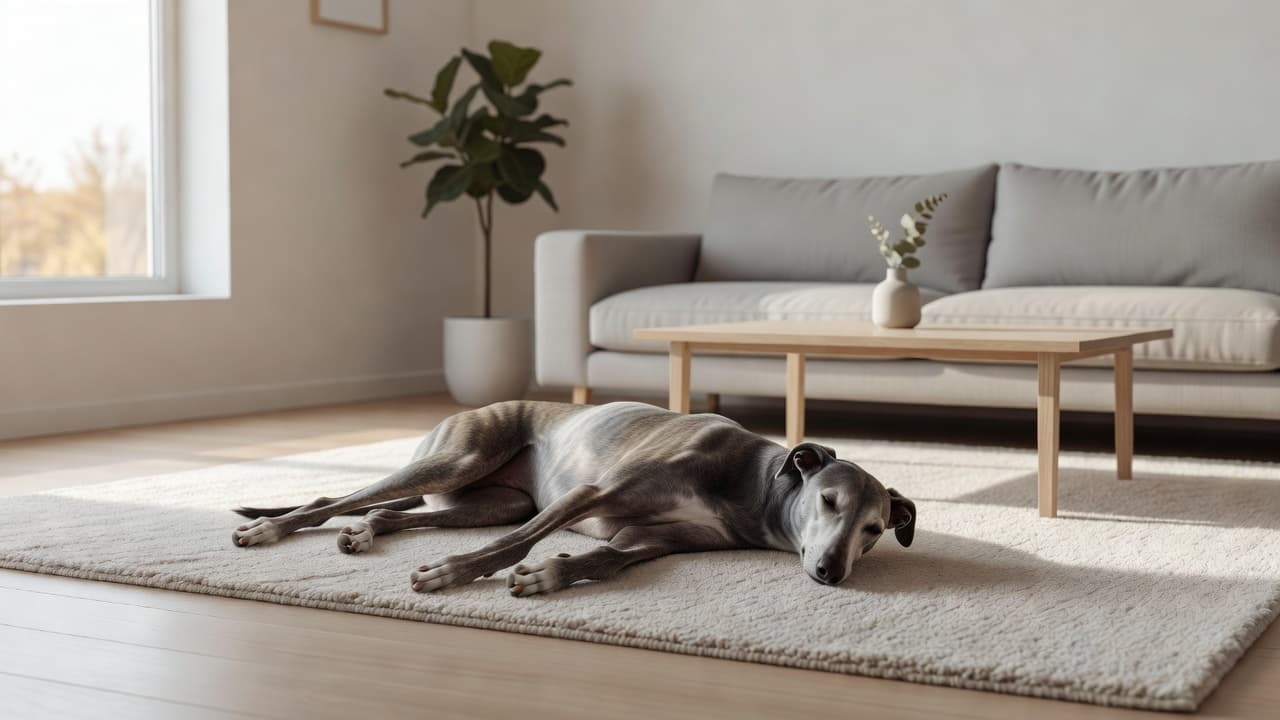
Why their calm nature can work well around kids
A laid-back dog can make a home feel easier to manage. With a greyhound, you may get less jumping, less rushing around, and fewer overexcited greetings at the front door. That matters when children are already bringing plenty of movement and noise into the room.
This breed often likes simple company. A greyhound may lie near the sofa while the kids read, watch TV, or do homework. Then, when it is time to play, many enjoy a few lively minutes rather than hours of nonstop action. That rhythm can suit family life well.
If you want a better sense of how much movement these dogs usually need, our guide on how long to walk a greyhound gives a good starting point. For many homes, the answer is less about marathon exercise and more about steady, sensible routines.
A calm dog does not mean a boring dog. It often means a dog that knows how to switch off.
For families who like practical dog-care advice, you can also Check out our great guides on Payhip and Check out our ebook guides on Etsy.
When a greyhound may need extra time and space
Not every greyhound walks into family life with confidence. Some are shy, nervous, or easily startled by noise and fast movement.
A child running past, loud laughter, or sudden grabbing can feel like too much for a sensitive dog.
That is why a slow introduction matters. A greyhound may need quiet time, predictable routines, and a calm corner where nobody bothers them. Once they feel safe, they often relax into the home at their own pace.
Think of it like this: some greyhounds are ready for family life on day one, while others need a few weeks to watch, listen, and settle.
Rushing that process only makes things harder. A calm approach gives the dog room to trust the people around them.
For families with very young children, the safest match is usually a greyhound that already shows steady, easygoing behavior.
Age of the child matters more than many people think
A greyhound and a child can be a great match, but the child’s age changes the picture a lot. A calm, dog-savvy older child may fit in easily, while a toddler can create problems without meaning to.
That’s the real answer to Are Greyhounds good with children? It depends less on the dog’s sweetness and more on how much self-control the child has.
If you want more practical dog care advice, Check out our great guides on Payhip and Check out our ebook guides on Etsy.
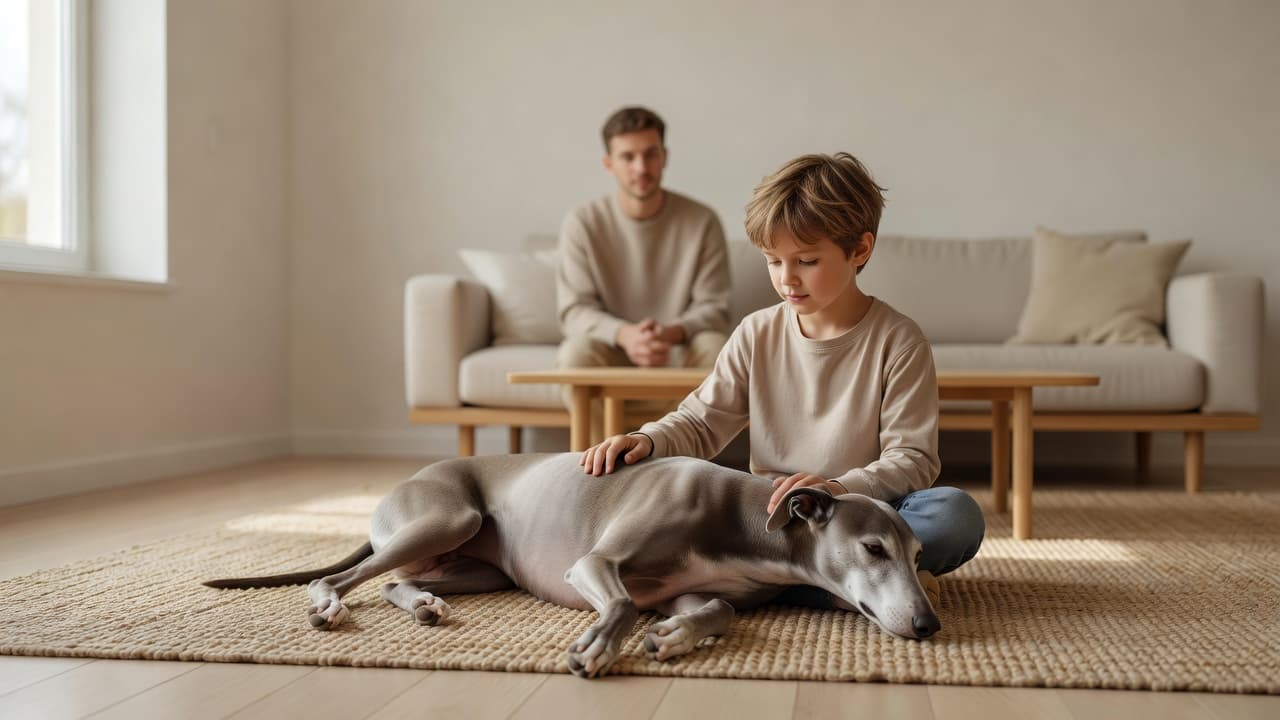
Why toddlers and greyhounds can be a tricky mix
Toddlers move like popcorn in a hot pan. They lunge, squeal, grab, and wobble into a dog’s space without warning. For a sensitive greyhound, that can feel confusing or threatening.
Even a very sweet dog can react badly if it feels startled or cornered. A hug that looks loving to a child can feel like restraint to a dog.
The same goes for tail pulling, ear grabbing, climbing, or sudden face-to-face contact.
Greyhounds often have a gentle nature, but they’re still dogs, not stuffed animals. A child who trips over them, wakes them suddenly, or blocks their escape route can trigger a snap, a growl, or a frightened move away.
That’s why toddler and greyhound time needs close adult supervision every single time.
A good rule is simple, if the child cannot follow directions reliably, the dog should not be left to manage the situation alone.
Why school-age kids often do better
School-age children usually understand boundaries better. They can listen, move more calmly, and learn that dogs need space too. That makes them far better partners for a greyhound.
Children this age can help build trust in small, safe ways. They can sit beside the dog, toss toys gently, and ask an adult before petting.
Those habits keep the dog relaxed and give the child a better chance to read the dog’s body language.
You’ll often see the bond grow faster when the child treats the dog like a teammate, not a toy. A greyhound that knows what to expect tends to settle more easily around older kids, especially if the home stays calm and consistent.
A little respect goes a long way here, and it usually pays off in a safer, happier friendship.
How to help greyhounds and children get along safely
A good greyhound-kid relationship starts with structure, not luck. Clear rules, calm meetings, and a safe place to retreat can turn a shaky introduction into an easy routine.
Greyhounds are usually gentle and polite, but they still need the same boundaries as any other dog. Children do too.
When both sides know the rules, the house feels calmer for everyone.
For a little breed background, the Greyhound breed page on Wikipedia gives a useful overview of where these dogs come from and why they often have such a soft, quiet way about them.
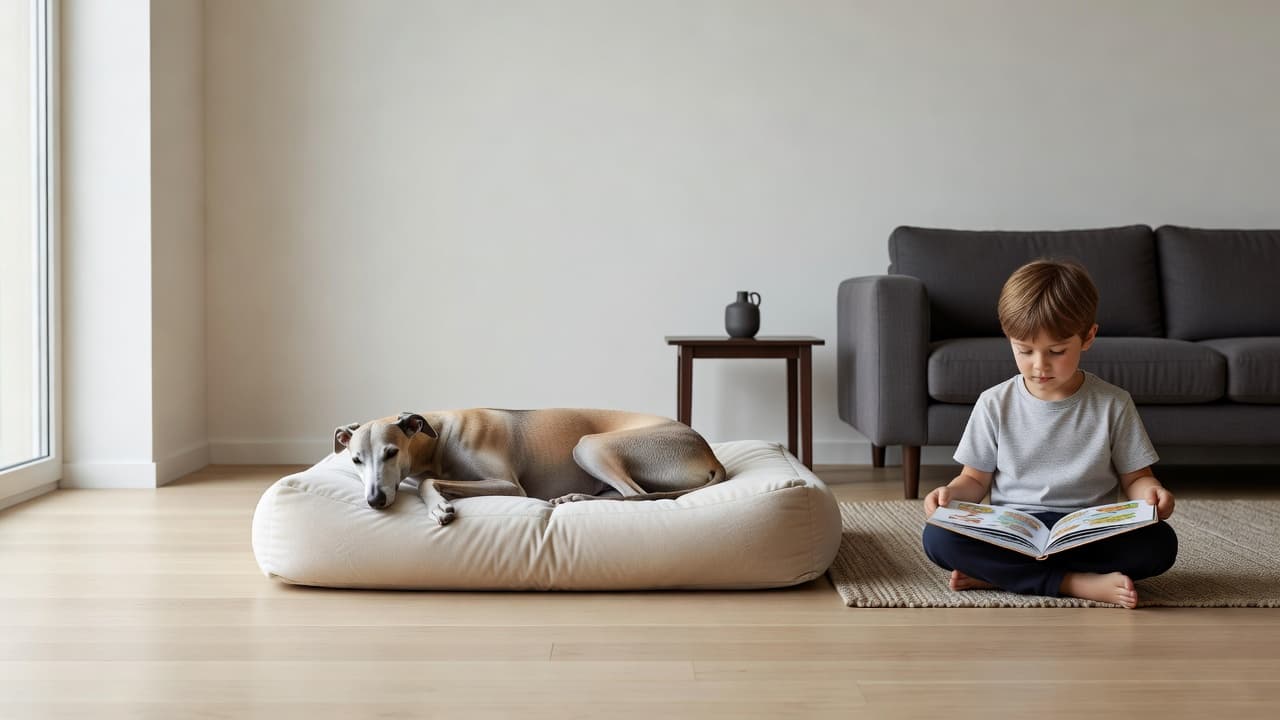
Set simple house rules for both kids and dogs
Keep the rules short and easy to repeat. Children remember what they hear often, so say the same thing every time.
A few good rules are:
- No chasing the dog
- No rough hugs or climbing
- No touching the dog while it eats or sleeps
- No grabbing ears, tail, or paws
- No calling the dog over just to bother it
You can make these age-appropriate, too. A young child may only need one rule at a time, while an older child can handle more detail.
The goal is not to turn the house into a classroom. The goal is to make respect feel normal.
If a child can’t follow the rule, the dog should not be put in that situation.
When children know what not to do, they usually do better than adults expect. It also helps to praise the right behavior, like sitting still, using a gentle hand, and letting the dog walk away.
Watch early meetings closely
First introductions should be slow and boring in the best way. Keep the dog on leash if needed, use quiet voices, and keep the first session short.
Think five minutes, not an afternoon event.
Adults need to stay in charge the whole time. If the greyhound looks tense, stiff, or ready to move off, give them space. If the child gets loud, bouncy, or too eager, end the meeting before it turns into a mess.
A calm first impression matters. A greyhound that feels safe is more likely to come back for another hello. A child who learns to stay gentle from the start is more likely to build trust instead of breaking it.
If you want more practical dog-care ideas for family life, Check out our great guides on Payhip and Check out our ebook guides on Etsy.
They’re full of useful, affordable ideas that fit real homes, not perfect ones.
Make sure the dog always has a safe retreat spot
Every greyhound needs a place where nobody follows, pokes, or calls them back. That might be a bed in a quiet corner, a crate, or a separate room.
This space should be off-limits to children. No sitting beside the dog there, no “just one more pat,” and no climbing in after them. If the dog goes to that spot, the message is simple, leave me alone.
That boundary matters more than people think. A dog that knows it can step away is less likely to feel trapped, and a child who learns to respect that space learns something important about dogs in general.
A little freedom makes a big difference. For a sensitive greyhound, a safe retreat spot is like a pressure valve.
It gives them a way to reset before stress builds up.
Signs a greyhound is comfortable, stressed, or overstimulated
Greyhounds are usually easy to read once you know what to look for. Around children, the small signals matter most. A dog that feels safe will look soft and settled.
A dog that feels pushed will start showing little cracks in the picture, and those cracks can turn into a bigger problem fast.
If you’re still asking, “Are Greyhounds good with children?” body language gives you the answer in real time. The trick is to watch the whole dog, not just one wag or one glance.
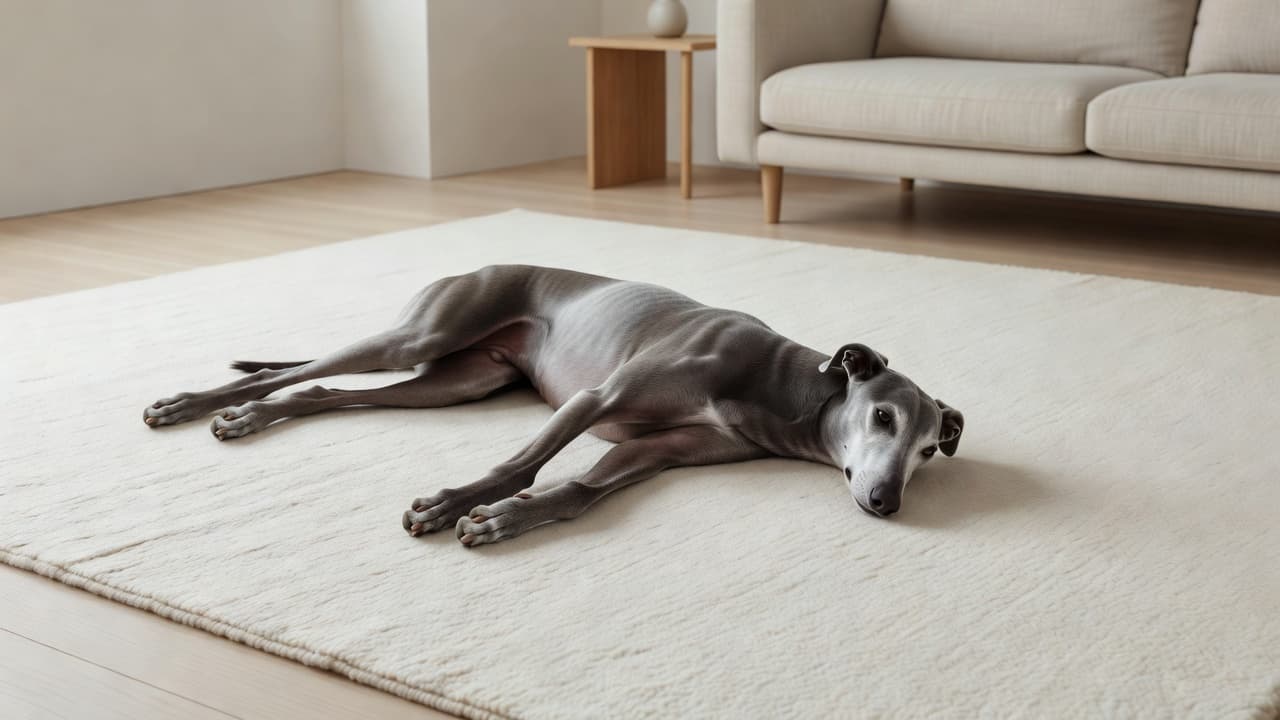
Comfortable body language to look for
A comfortable greyhound looks loose, soft, and unhurried. Their muscles stay relaxed, their eyes look gentle, and their tail may rest low and easy instead of going stiff or tight. You might also see them lean in for a slow pet or choose to stay near the child without being called.
These are good signs.
They show trust, and trust is the real foundation of any child-dog relationship.
A few other green flags include:
- Soft eyes that look calm, not hard or fixed
- Loose muscles through the neck, back, and legs
- A relaxed tail that moves freely or hangs naturally
- Gentle leaning toward the child or adult
- Voluntary closeness, like lying nearby or following at a calm pace
A greyhound that chooses to stay near a child is giving a pretty clear message. They are not just tolerating the moment, they are comfortable in it. For a sensitive breed, that matters a lot.
If you want a wider look at canine behavior, the ASPCA’s guide on dogs and babies has useful safety basics that also apply to older children in busy homes.
Warning signs that mean it is time to step in
Stress does not always look dramatic. Sometimes it starts with tiny habits that are easy to miss if you are not watching closely.
Lip licking, yawning when the dog is not tired, turning away, freezing, whale eye, a tucked tail, hiding, or moving away all say the same thing, “I need space.”
That is the point where an adult should step in right away. Separate the dog and child, lower the energy in the room, and give the greyhound a break.
If a dog keeps showing those signs, don’t wait to see what happens next. Remove the pressure before the dog feels trapped.
A worried greyhound is not being difficult, it’s trying to cope.
Common red flags include:
- Lip licking with no food around
- Yawning during play or interaction
- Turning away from the child
- Freezing instead of moving normally
- Whale eye, where the whites of the eyes show
- A tucked tail or a tail held tightly
- Hiding behind furniture or people
- Backing away or actively leaving the space
If you want a closer look at these warning signals, our guide on signs your dog is feeling stressed goes into more detail. Knowing the difference between comfort and stress can save you a lot of guesswork.
When a greyhound asks for space, the safest reply is simple, give it.
A dog that feels overloaded can go from quiet to shut down in a hurry. That is why adults need to watch the early signals, not the big ones.
Catch the small signs, and you protect both the dog and the child.
What makes greyhounds different from other family dogs
Greyhounds can be lovely family dogs, but they are not built like the average rough-and-tumble pet. Their bodies, energy levels, and sensitivity all shape how they fit into a home with children.
That is why the answer to “Are Greyhounds good with children?” is usually yes, with the right setup and a bit of common sense.
They tend to be calm, polite, and easy to live with. At the same time, they need gentler handling than many sturdier breeds, and they often prefer short bursts of activity followed by long stretches of rest.
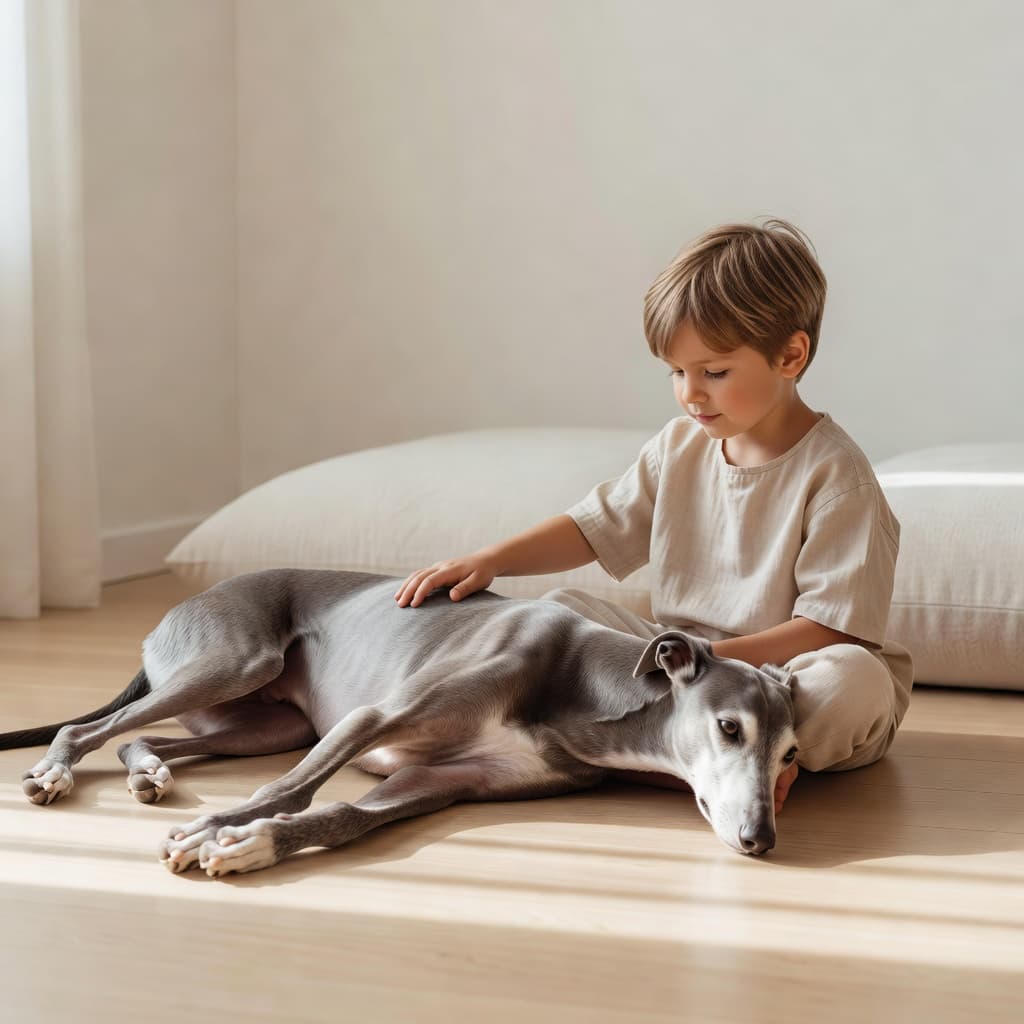
Their slim build needs gentle handling
Greyhounds are lean, light-framed dogs with thin skin and very little padding over their bones. That means they are not the best match for rough wrestling, tight hugs, or heavy-handed play. A strong squeeze or a clumsy grab can feel uncomfortable fast.
Gentle petting is a much better fit. Think slow strokes on the chest, shoulders, or back, not grabbing, flopping over them, or treating them like a cushion.
They often enjoy affection, but they usually like it on their terms.
This is where children need clear guidance. A greyhound can be affectionate without being a chew toy, and a calm hand goes much further than excitement.
If you are choosing walking gear too, best harnesses for greyhounds can also help protect that delicate build.
For families who want extra practical help, Check out our great guides on Payhip and Check out our ebook guides on Etsy. Both are packed with simple, affordable ideas that fit real homes.
With greyhounds, softness works better than pressure. A light touch usually gets a better response than a big hug.
Exercise needs are real, but they are not endless
Greyhounds do need daily walks and a bit of play, just like any healthy dog. The twist is that many of them are happiest with a short burst of action, then a long nap. They are sprinters, not marathon dogs.
That can be a real bonus for families who want a calmer house. A greyhound may enjoy a walk, a few minutes of zoomies, and then settle down like nothing happened.
Compare that with breeds that seem to run on batteries forever, and the difference is obvious.
A simple routine usually works best:
- A steady daily walk.
- A short play session or quick run if safe.
- Plenty of rest afterward.
This kind of rhythm can suit children well, too. The dog gets movement without turning the home into a circus, and the kids get a companion that knows how to switch off.
If you want a wider look at the breed’s background, All About Greyhounds gives a useful general overview.
A calmer dog can mean a calmer home
Greyhounds often bring a quiet, settled feel to the house. They are usually not the sort of dog that barrels through rooms, bounces off furniture, or pesters people for constant attention. For many families, that is exactly the point.
They still need training, space, and supervision around children, but they often fit better into a peaceful home than a high-drama breed.
If your ideal dog is more sofa buddy than whirlwind, a greyhound may feel refreshingly straightforward.
That calm style is part of what makes them different from many other family dogs. They can be affectionate, but they rarely demand the spotlight. For the right home, that is a very good thing.
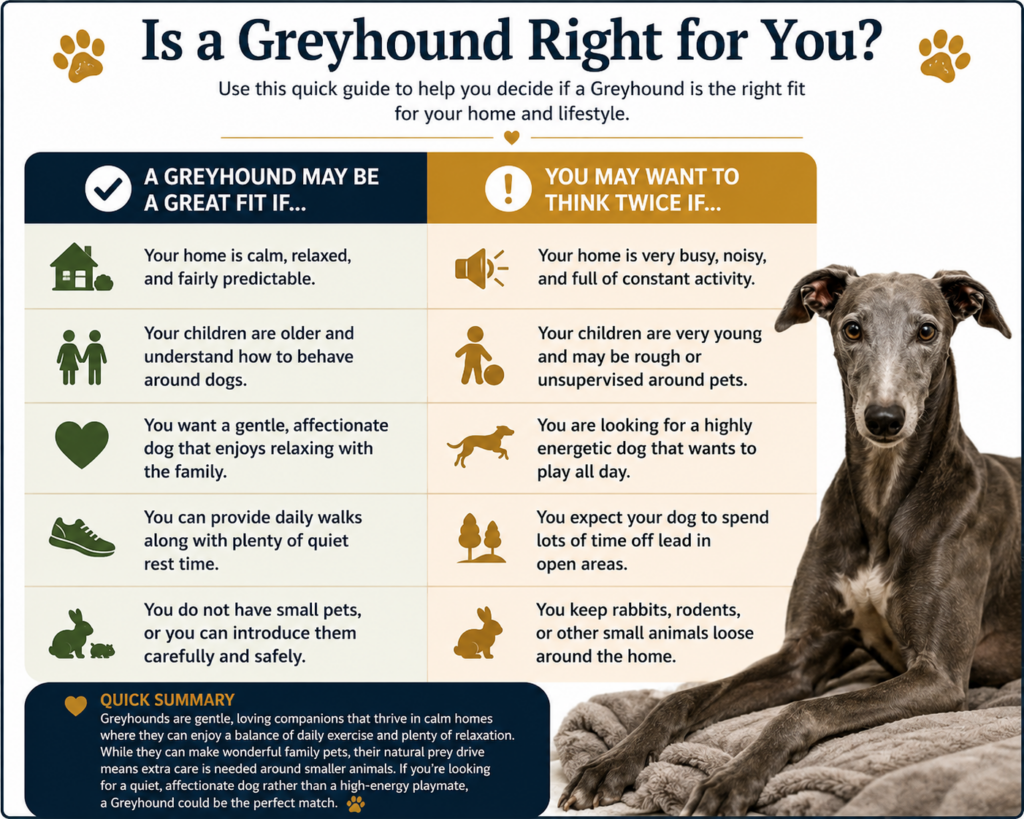
Is a greyhound the right fit for your family right now?
A greyhound can be a wonderful family dog, but timing matters. If your home is busy, noisy, and full of small children who move fast, the fit needs a careful look.
If your family can offer calm handling, adult supervision, and regular quiet time, the answer may be yes.
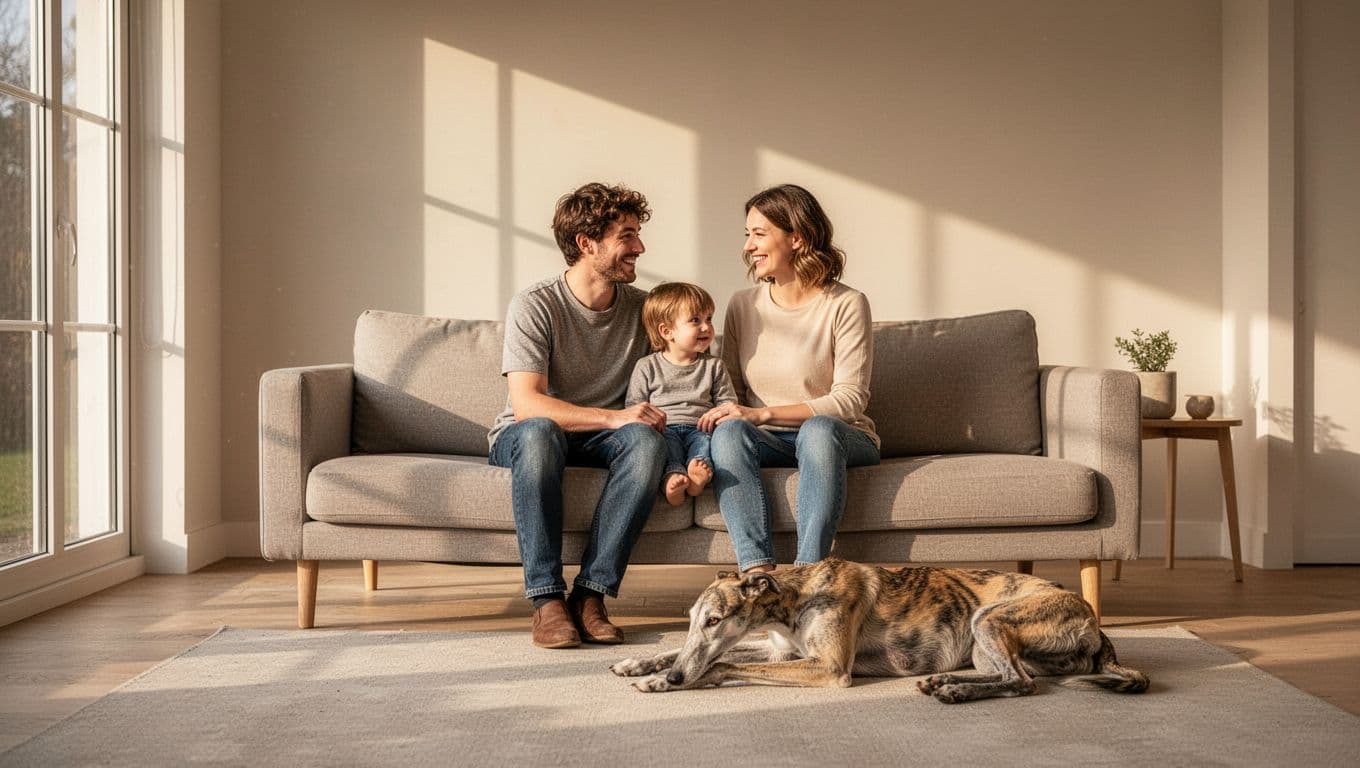
Questions to ask before bringing one home
Before you say yes, ask the boring questions. They matter more than the cute ones.
- Can the children follow simple rules every time?
- Will adults be around to supervise real interactions?
- Can the dog have a quiet space each day?
- Is your home calm enough for a sensitive dog?
- Are you ready for slow introductions, not instant cuddles?
If the honest answer to any of those is “not yet,” that does not mean a greyhound is off the table forever.
It just means the timing may be wrong right now. A good match starts with a home that can support the dog, not just adore the dog.
A greyhound that gets regular rest, gentle handling, and predictable routines usually settles well. One that lives in constant noise and chaos may struggle, even if everyone means well.
For families still building the right setup, the guide to adopting a Spanish Galgo is a useful place to start.
When to get help from a rescue or behavior pro
If you’re unsure, ask for help before you bring the dog home. Rescue groups, trainers, and behaviorists can help match the right greyhound to the right family. That can save a lot of stress later.
Ask direct questions about the dog’s history with children, household noise, handling, and busy homes.
Has the dog lived with kids before?
Do they startle easily?
How do they cope with visitors, movement, and being touched all over?
Those answers tell you far more than a cute photo ever will.
If you want extra practical support after adoption, Check out our great guides on Payhip and Check out our ebook guides on Etsy. Both are full of simple, real-world dog care advice that fits family life.
A good rescue match feels steady, not rushed. If the dog seems calm in the environment and the adults are confident about the rules, you may be looking at the right fit.
If not, keep asking questions until the picture is clear.
Conclusion
Greyhounds can be wonderful family dogs, but the best match comes down to the individual dog and the child in the home. When children are calm, kind, and respectful, and adults keep a close eye on early interactions, this breed often settles in beautifully.
The main thing to remember is simple, supervision matters. Give the greyhound space, teach clear boundaries, and watch body language closely so small worries do not turn into bigger problems.
If you are still deciding whether a greyhound suits your family, take your time and ask the right questions. A thoughtful match is usually the one that lasts. If you want more practical dog care advice, Check out our great guides on Payhip and Check out our ebook guides on Etsy.
This post may contain affiliate links. If you make a purchase through these links, I may earn a small commission at no extra cost to you.
Get our great Greyhound Blueprint Guide TODAY and learn much more about this beautiful breed!