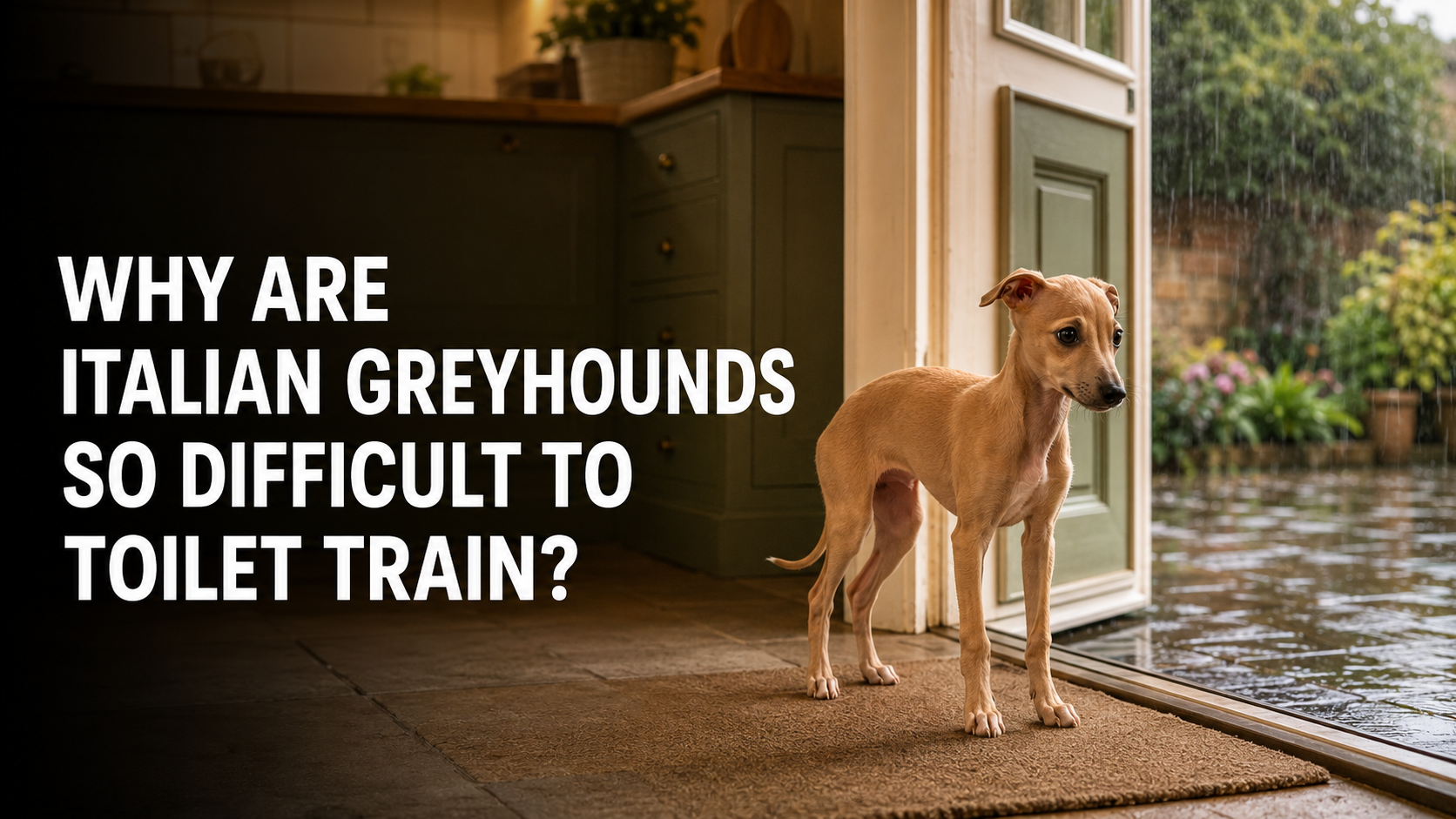
Why Are Italian Greyhounds So Hard to Toilet Train?
8 Reasons and a Practical Plan
There is rarely one single cause. Most owners are dealing with several breed characteristics and management problems at the same time.
1. Italian Greyhound Puppies Need Very Frequent Toilet Opportunities
Young puppies have limited bladder and bowel control. They cannot reliably wait through long gaps simply because it is inconvenient for the household to take them outside.
Italian Greyhound puppies are particularly small and need regular opportunities to empty themselves. If an owner waits for a clear request at the door, the puppy may already be seconds away from an accident.
Take a young puppy outside:
- Immediately after waking
- After eating
- After drinking
- After energetic play
- After training
- After excitement or visitors
- After leaving a crate or sleeping area
- Before bedtime
- Whenever it begins sniffing, circling or wandering away
During the early stages, trips may need to be extremely frequent while the puppy is awake.
A toilet-training schedule should be based on the individual puppy’s success rate rather than a rigid claim that a puppy of a certain age must be capable of waiting for a particular number of hours.
If accidents are occurring, shorten the interval.
2. Cold and Wet Weather Can Be a Major Obstacle
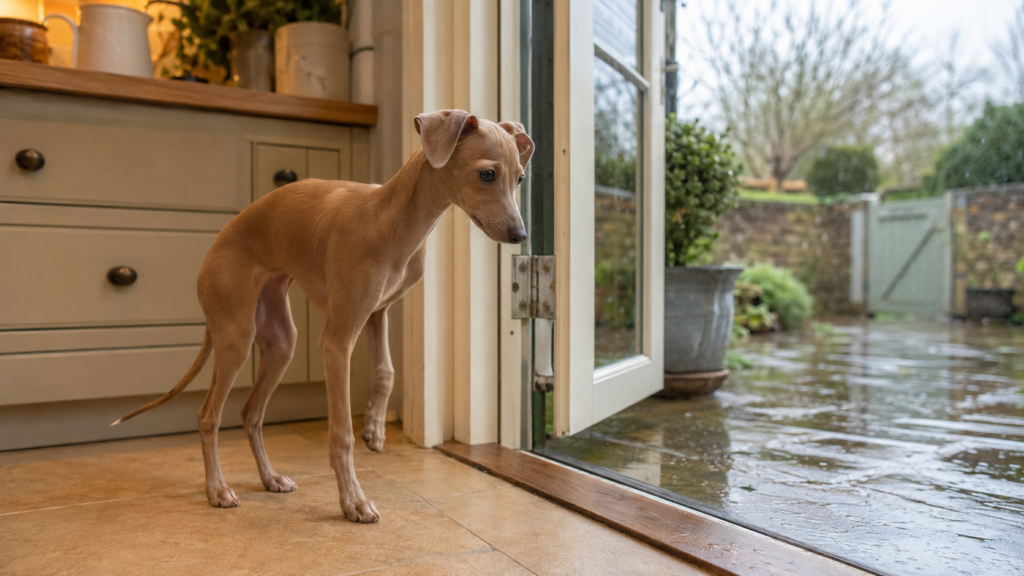
Italian Greyhounds have fine coats, relatively little natural insulation and a strong preference for warmth. Cold rain, wet grass and biting wind can make going outside genuinely uncomfortable.
This creates a familiar sequence:
- The owner opens the door.
- The Italian Greyhound sees the rain and refuses to move.
- The owner waits briefly and then gives up.
- The dog returns to the warm house.
- An accident occurs a few minutes later.
From the dog’s perspective, waiting successfully resulted in access to a more comfortable indoor toilet location.
The solution is not to become angry. It is to make outdoor toileting quick, predictable and worthwhile.
During poor weather:
- Accompany your dog rather than putting it outside alone
- Use a properly fitted waterproof coat when conditions require it
- Keep the trip calm and businesslike
- Visit the same sheltered toilet area
- Use an umbrella if it helps keep the immediate area drier
- Reward the dog immediately after it finishes
- Return indoors promptly once the job is complete
Do not turn every toilet trip into a long, cold walk. Your Italian Greyhound should learn that eliminating promptly is the fastest route back to warmth and comfort.
3. Their Toilet Signals Can Be Extremely Subtle
Some dogs bark, scratch at the door or pace obviously when they need to go outside. An Italian Greyhound may simply stop playing, glance towards another room or briefly sniff the floor.
Common signals include:
- Suddenly leaving the room
- Sniffing along walls or furniture
- Circling
- Becoming restless
- Pausing during play
- Walking towards a previously soiled area
- Moving behind a sofa or table
- Standing silently near a door
- Looking at the owner and then walking away
- Becoming distracted shortly after eating
These signals are easily missed, especially in a busy household.
Do not rely exclusively on your puppy to notify you. Scheduled toilet visits are much more reliable until the behaviour is firmly established.
4. Accidents Are Small and Easily Missed
An Italian Greyhound puppy produces a relatively small amount of urine. An accident behind furniture, on a rug or beside a curtain may not be discovered immediately.
If the area is not cleaned thoroughly, remaining odours can encourage the dog to return. A floor that smells clean to a person may still carry a meaningful scent to a dog.
Use a pet-safe enzymatic cleaner designed to break down urine residue. Avoid relying solely on ordinary household spray, perfume or disinfectant.
Check likely hiding places carefully, including:
- Behind curtains
- Beside sofas
- Under tables
- On bathmats
- Near external doors
- In spare rooms
- On soft rugs
- Around previously soiled areas
Preventing access to these locations temporarily can help break an established habit.
5. Too Much Freedom Is Often Given Too Soon
A newly arrived puppy should not immediately have unrestricted access to the entire home.
Every additional room creates more opportunities to wander away unnoticed. If the puppy repeatedly toilets indoors without interruption, the behaviour becomes easier to repeat.
Begin with a manageable area where the puppy can be supervised. Use doors, stair gates or a suitable puppy pen to prevent unsupervised roaming.
Freedom should be earned gradually through reliability.
A useful principle is:
If you cannot actively supervise your Italian Greyhound, manage the environment so an unnoticed accident is less likely.
Management is not punishment. It prevents mistakes while the dog is learning.

6. Italian Greyhounds Can Be Emotionally Sensitive
Italian Greyhounds generally respond best to gentle, reward-based training. Shouting, punishment or physically taking a dog to an accident can create fear without explaining what the dog should do instead.
A punished puppy may learn:
- Toileting near people is dangerous
- It should hide before eliminating
- Its owner becomes unpredictable around accidents
- Going to the toilet while watched is unsafe
This can produce a puppy that refuses to eliminate outdoors in front of its owner but sneaks away indoors as soon as supervision relaxes.
The PDSA’s toilet-training guidance advises rewarding puppies for toileting outside and never punishing indoor accidents.
If you discover an accident after it has happened, say nothing. Clean the area and adjust your supervision or schedule.
7. Outdoor Distractions Can Interrupt the Process
Italian Greyhounds are curious and visually alert. A moving leaf, bird, neighbour or distant noise may completely interrupt the reason they were taken outside.
An owner may assume the puppy does not need to go, return indoors and then discover an accident moments later.
For toilet-only trips:
- Use a lead if necessary
- Visit one consistent area
- Stand quietly
- Avoid starting a game
- Keep talking to a minimum
- Allow enough time to settle
- Introduce the toilet cue calmly
- Reward immediately after completion
Play can follow as an additional reward, but it should not begin before the puppy has had a proper opportunity to eliminate.
8. Mixed Indoor and Outdoor Rules Can Cause Confusion
Puppy pads can be helpful in certain circumstances, particularly for owners living in high-rise accommodation or dogs temporarily unable to access an outdoor space.
However, pads can also teach a dog that toileting on an absorbent surface indoors is acceptable. Rugs, mats, blankets and carpets may then feel similar.
If your long-term goal is outdoor toileting, decide how pads will be used and how they will eventually be phased out.
Avoid scattering pads throughout the home. This may communicate that several indoor toilet locations are acceptable.
Where practical, establish one clear toilet system and keep everyone in the household consistent.
A Step-by-Step Italian Greyhound Toilet-Training Plan
Step 1: Choose One Toilet Area
Select a safe, accessible and relatively sheltered part of the garden.
Taking your Italian Greyhound to the same area helps familiar scents and surroundings become part of the routine.
Keep the area reasonably clean, but avoid changing location continually.
Step 2: Create a Written Schedule
For several days, record:
- Mealtimes
- Drinking
- Sleeping
- Play sessions
- Successful outdoor toileting
- Indoor accidents
- Weather conditions
- Any unusual excitement or anxiety
Patterns will quickly become visible.
You may discover that accidents regularly occur 15 minutes after breakfast, immediately after energetic play or at a particular time in the evening.
The schedule can then anticipate the puppy’s needs instead of reacting after the event.
Step 3: Accompany Your Dog Outside
Do not simply open the door and hope for the best.
Go outside with your Italian Greyhound so you know whether it has actually eliminated. This also allows you to deliver the reward at precisely the right moment.
If you wait until returning to the kitchen, your puppy may associate the treat with entering the house rather than toileting outdoors.
Step 4: Introduce a Simple Toilet Cue
Choose a short phrase such as:
- “Go toilet”
- “Be quick”
- “Do your business”
Say the phrase quietly as the puppy begins to eliminate—not repeatedly while it is wandering around.
With consistent pairing, the phrase can eventually help prompt the behaviour during poor weather, travel or bedtime outings.
Step 5: Reward Immediately
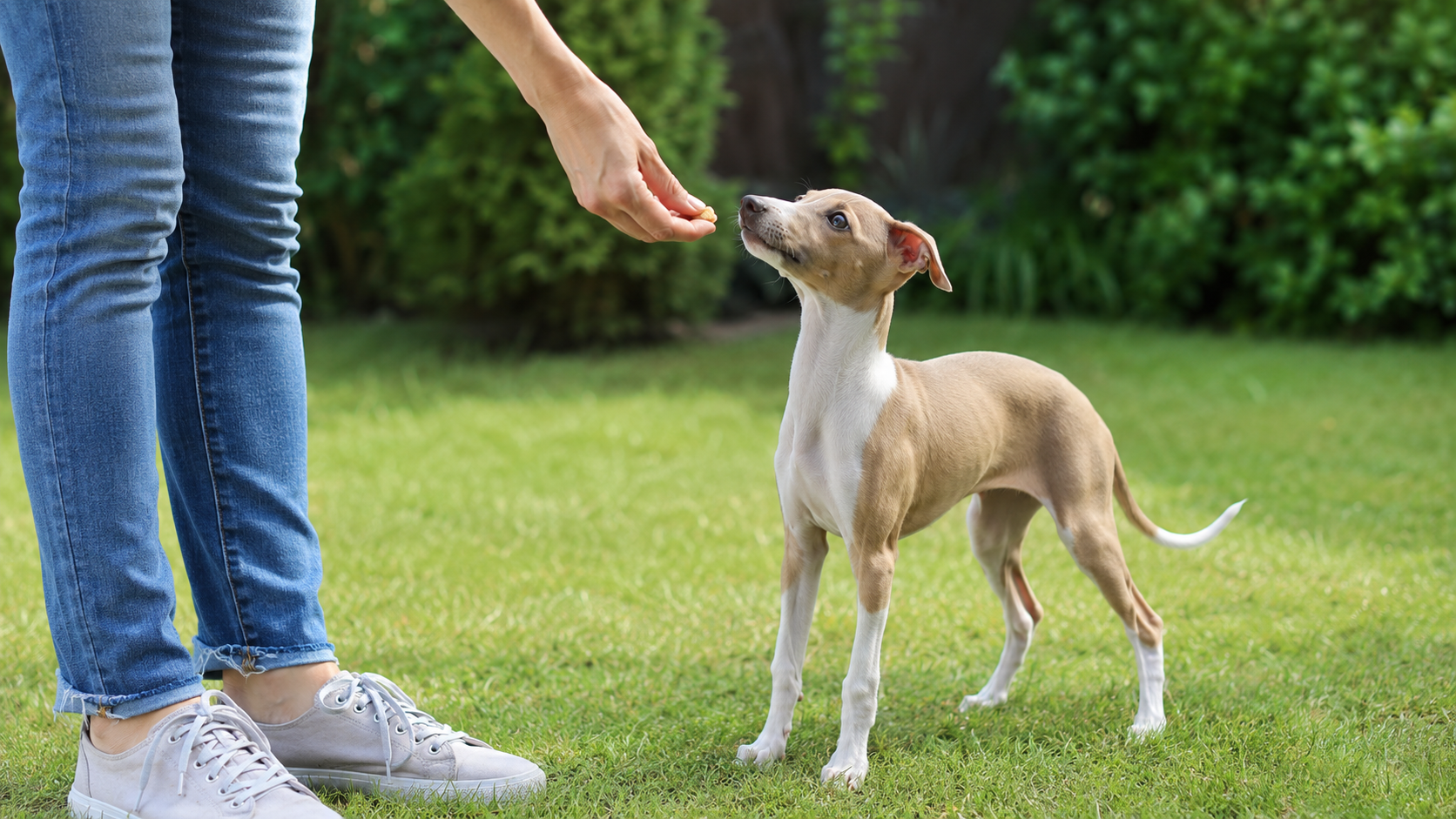
As soon as your Italian Greyhound finishes, offer calm praise and a small, high-value treat.
The timing matters. The reward should arrive within a second or two so the dog can connect it directly with the correct action.
Successful toileting may also be followed by:
- A short game
- Sniffing time
- A brief walk
- Returning to the warm house
- Affection, if the puppy enjoys it
Different dogs value different rewards. Find what genuinely motivates yours.
Step 6: Supervise Closely Indoors
After an unsuccessful toilet trip, do not give the puppy unrestricted freedom.
Keep it close to you, supervise carefully and try again after a short interval. A lightweight house line can sometimes assist supervision, but it must only be used while an adult is actively watching to prevent entanglement.
If the puppy begins sniffing, circling or leaving the room, calmly take it outside.
Step 7: Handle Accidents Without Drama
If you catch your dog beginning to toilet indoors, calmly interrupt without frightening it and take it to the correct area.
If it finishes outside, reward it.
If you find the accident later:
- Do not call the dog over
- Do not scold it
- Do not point at the mess
- Do not assume it understands your frustration
- Clean the area thoroughly
- Review why the opportunity was missed
An accident is information. It tells you that the schedule, supervision or environment needs adjusting.
Step 8: Increase Freedom Gradually
Once your Italian Greyhound has remained reliable in one area for a meaningful period, introduce access to another room under supervision.
If accidents return, reduce freedom temporarily and strengthen the routine.
Progress is rarely perfectly linear. Teething, adolescence, visitors, moving home, poor weather and changes in working hours can all produce setbacks.
Should You Use a Crate for Toilet Training?
A crate can support toilet training when introduced positively, but it is not a substitute for frequent outdoor opportunities.
Dogs generally prefer not to soil their sleeping area, but a puppy left for longer than it can physically cope with may have no choice. Repeatedly forcing a puppy to eliminate in its crate can create distress and weaken its natural preference for keeping the sleeping area clean.
A suitable crate should:
- Allow the dog to stand comfortably
- Provide room to turn around
- Permit natural sleeping positions
- Be associated with safety and rest
- Never be used as punishment
- Never be used to avoid meeting the puppy’s needs
Some Italian Greyhounds find confinement stressful. Introduce the crate gradually and do not assume vocal distress is simply attention-seeking.
How Long Does It Take to Toilet Train an Italian Greyhound?
There is no universal deadline.
Some Italian Greyhounds become largely reliable within a few months. Others need continued management through adolescence, particularly during cold or wet weather.
Reliable toilet training means more than a few accident-free days. A puppy that succeeds only because someone opens the door every 20 minutes has made progress, but it has not yet developed mature control or a dependable method of asking to go out.
Factors affecting the timeline include:
- Age
- Previous living conditions
- Daily supervision
- Work schedules
- Access to a garden
- Weather
- Training consistency
- Anxiety
- Medical health
- Whether indoor pads were previously used
Measure improvement over weeks rather than judging one difficult day.
Toilet Training an Adult or Rescue Italian Greyhound
An adult Italian Greyhound may arrive with an incomplete or unknown training history.
Even a previously reliable dog can have accidents after adoption because everything has changed: the home, smells, doors, garden, routine and people.
Begin as though the dog is not yet trained:
- Provide frequent opportunities
- Use one consistent exit
- Accompany the dog outdoors
- Reward every success
- Supervise indoors
- Limit freedom initially
- Keep meals and walks predictable
- Avoid punishment
- Expect an adjustment period
A rescue dog may also be reluctant to toilet while watched. Give the dog space, remain quiet and avoid staring directly at it.
Why Has My Previously Trained Italian Greyhound Started Having Accidents?
A sudden loss of toilet training should not automatically be treated as a behavioural problem.
Possible medical causes include:
- Urinary tract infection
- Bladder inflammation
- Urinary stones
- Kidney disease
- Diabetes
- Digestive illness
- Parasites
- Pain or reduced mobility
- Medication side effects
- Age-related cognitive changes
Arrange veterinary advice if accidents begin suddenly, become unusually frequent or occur alongside:
- Straining
- Blood in urine
- Increased thirst
- Excessive urination
- Diarrhoea
- Vomiting
- Weight loss
- Signs of pain
- Lethargy
- Urinating while asleep
A dog cannot be trained out of a physical condition that makes normal control difficult.
Common Italian Greyhound Toilet-Training Mistakes
Waiting for the Puppy to Ask
Young puppies may not recognise the sensation early enough to give a useful warning. Follow a schedule instead.
Rewarding Too Late
A treat delivered after returning indoors may reward coming through the door rather than toileting in the garden.
Ending Every Successful Trip Immediately
Some dogs learn that toileting causes outdoor time to end. Occasionally follow success with a short sniff or gentle play session.
Staying Outside for Too Long
Lengthy, cold trips can make an Italian Greyhound even more reluctant. Keep toilet visits focused and rewarding.
Punishing Accidents
Punishment creates anxiety and hidden toileting. It does not build bladder control.
Assuming the Dog Is Being Spiteful
Dogs do not urinate indoors to take revenge. Look for problems involving timing, stress, supervision, learning or health.
Changing the Rules
If one person rewards outdoor toileting while another permits regular indoor pad use, progress may become inconsistent.
A Simple Daily Toilet-Training Checklist
✅ Take your Italian Greyhound outside immediately after waking
✅ Offer another opportunity after food, water, play and excitement
✅ Use the same toilet area
✅ Accompany the dog outside
✅ Watch rather than assuming it has gone
✅ Reward immediately after success
✅ Supervise closely indoors
✅ Clean accidents with an enzymatic product
✅ Keep everyone’s rules consistent
✅ Adjust the schedule whenever accidents occur
✅ Never punish or frighten the dog
✅ Contact your vet if toileting changes suddenly
Frequently Asked Questions
Are Italian Greyhounds ever fully toilet trained?
Yes. Italian Greyhounds can become reliably toilet trained, but some continue to need reminders and sensible management during poor weather or disruptions to their routine.
Why does my Italian Greyhound wee inside after being outdoors?
The dog may have become distracted, felt uncomfortable outside or not remained outdoors long enough. After an unsuccessful trip, supervise closely and try again after a short interval.
Should I carry my Italian Greyhound outside?
Carrying a very young puppy can prevent an accident on the way to the garden. However, the puppy should gradually learn to walk to the exit and participate in the routine independently.
Do Italian Greyhounds need puppy pads?
Not necessarily. Pads may be useful in particular living arrangements, but they can complicate the transition to outdoor-only toileting. Decide on a clear long-term plan before introducing them.
Why will my Italian Greyhound only toilet on dry ground?
Italian Greyhounds can develop strong surface and weather preferences. Gradually introduce slightly damp conditions, use a sheltered location and reward generously rather than forcing or frightening the dog.
How often should an Italian Greyhound puppy go outside?
Very frequently while awake, especially after sleeping, food, drinking, play and excitement. If accidents continue, the current interval is too long for that individual puppy.
Should I wake my puppy during the night?
Very young puppies may need a quiet overnight toilet trip. Keep it calm, provide an opportunity to eliminate, reward gently and return to bed without beginning an exciting play session.
Why does my Italian Greyhound hide before toileting?
Hidden toileting can develop when signals have been missed or the dog has previously been punished. Rebuild trust through supervision, frequent opportunities and calm rewards for outdoor success.
Final Thoughts
Italian Greyhounds are not difficult to toilet train because they lack intelligence. They are challenging because successful training must account for their small size, sensitivity, limited puppy control, dislike of poor weather and often understated communication.
The winning approach is simple, even if it requires commitment:
- Prevent avoidable accidents
- Offer frequent opportunities
- Supervise carefully
- Reward immediately
- Remain consistent
- Never punish mistakes
- Investigate sudden changes medically
With patience and a routine tailored to the breed, an Italian Greyhound can become a clean and dependable household companion.
Progress may take longer than expected, particularly through a wet British winter, but every successful outdoor trip strengthens the habit you want.
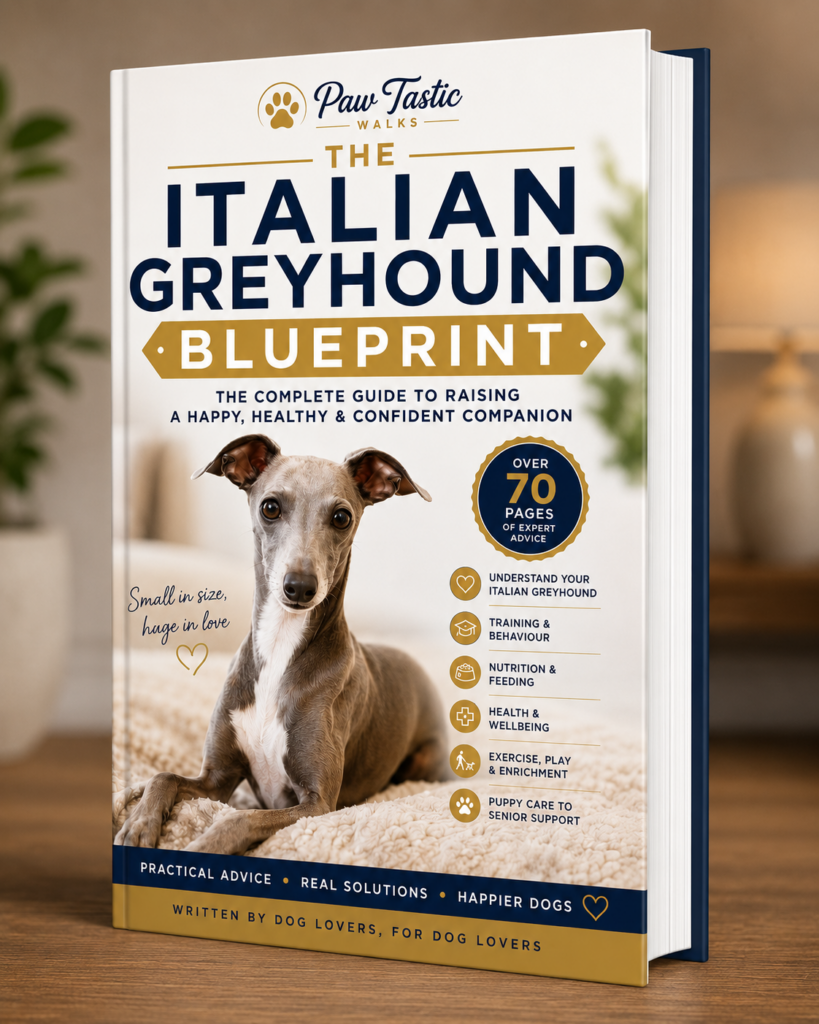
Give Your Italian Greyhound the Best Possible Start
Toilet training is only one part of raising this affectionate, sensitive and wonderfully distinctive breed.
The Italian Greyhound Blueprint is a comprehensive 71-page digital guide covering training, health, nutrition, grooming, behaviour, socialisation, exercise and everyday care.
Whether you are preparing for a puppy, adopting an adult or looking to understand your current companion more deeply, the Blueprint brings essential breed guidance together in one convenient resource.
DISCOVER THE ITALIAN GREYHOUND BLUEPRINT