

If your Weimaraner follows me everywhere, you’re usually seeing a loyal, people-focused hunting dog doing what comes naturally.
Weimaraners were bred to work closely with humans, so staying near you often means your dog feels bonded, safe, and interested in whatever you’re doing.
This behavior is usually normal, but sudden or extreme clinginess can point to boredom, too little exercise, poor alone-time skills, separation anxiety, a medical issue, pain, or illness.
Whining, pacing, destruction, panic when you leave, changes in appetite, or unusual tiredness deserve closer attention, along with a check from your veterinarian.
The good news is that understanding the reason makes the next step clearer. We’ll look at the difference between healthy attachment and anxiety, then share practical ways to provide exercise, mental stimulation, and calm independence, including these canine enrichment activities.
For more helpful dog-care resources, Check out our great guides on Payhip or Check out our ebook guides on Etsy.
You can also watch this video about helping dogs cope when alone for extra background.
This post may contain affiliate links. If you make a purchase through these links, I may earn a small commission at no extra cost to you.
Key Takeaways
- Breed tendencies can make a Weimaraner a loyal “velcro dog” without indicating a problem.
- Following is usually healthy attachment, but separation anxiety can signal a need for support.
- Boredom, pain, illness, or other behavioral issues may increase clinginess.
- Build independence with enrichment, calm routines, and gradual alone-time practice. Read more about Weimaraner temperament and attachment, especially if the behavior appears suddenly or keeps worsening.
Why Does My Weimaraner Follow Me Everywhere?
A Weimaraner’s breed tendencies help explain their constant companionship. Their working history made close cooperation with people rewarding, and many still enjoy staying near their trusted humans.
Dogs are social animals. Although people sometimes call them pack animals, that label doesn’t explain every behavior, and individual personalities still matter.
Positive interaction and bonding may influence oxytocin levels in dogs and people, but oxytocin alone doesn’t cause following.
Your Weimaraner Was Bred to Work Closely With People
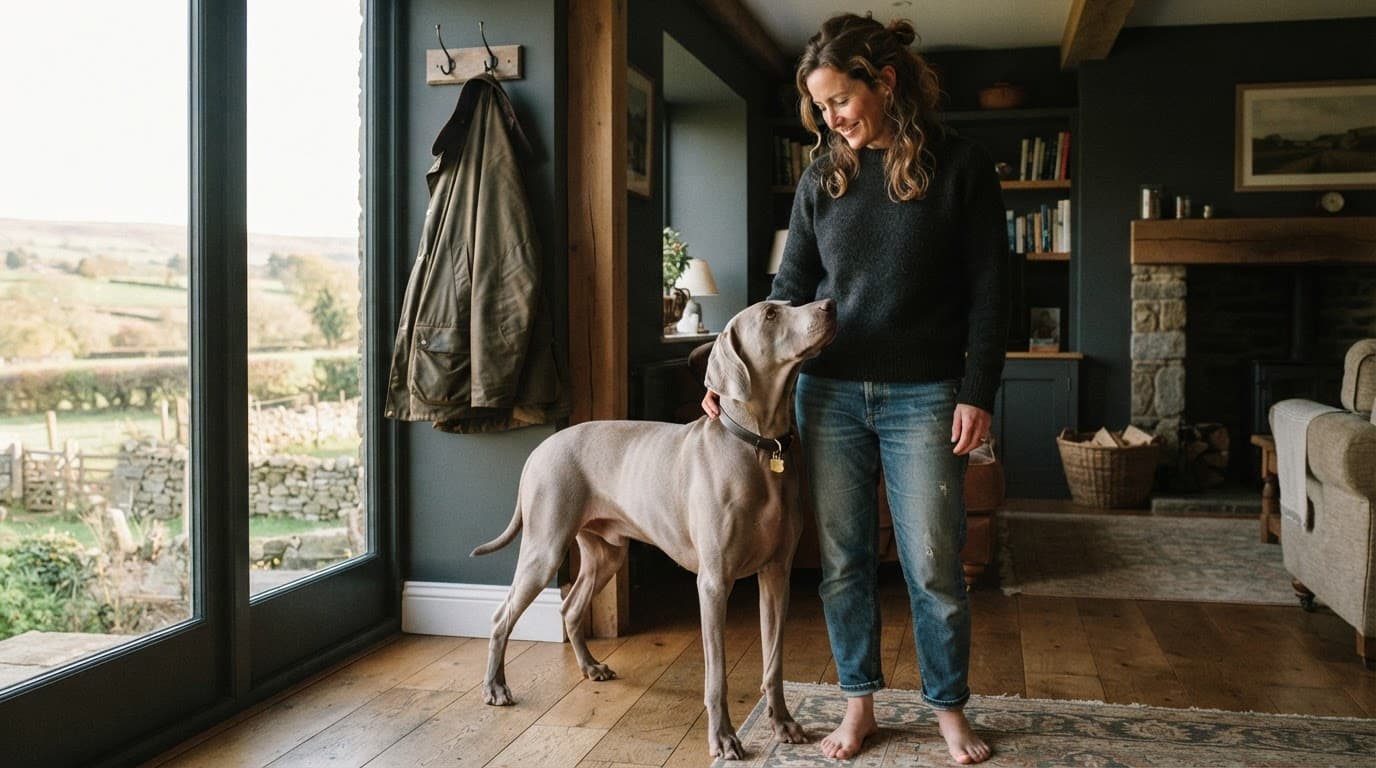
Weimaraners were developed as hunting dogs in Germany. They worked alongside a handler, stayed alert to their surroundings, and relied on human direction during the hunt. This close partnership helps explain why many still check in with their people at home.
Your Weimaraner may follow you because you are their trusted guide. They want to know where you are, what you’re doing, and whether something interesting is about to happen. A trip to the kitchen could mean dinner.
Picking up your shoes might mean a walk. Even opening a cupboard can look like breaking news to a curious dog.
The breed is also known for forming strong attachments to its family. The American Kennel Club’s Weimaraner information describes a dog that enjoys plenty of quality time with its humans. For your dog, being close may feel rewarding, familiar, and safe.
Your Weimaraner isn’t always asking for something. Sometimes, being near you is the reward.
This people-focused nature is one reason the breed may seem like a four-legged escort. Still, every dog has a different personality. Some Weimaraners are more independent, while others stay close almost constantly.
You can find more detail about Weimaraner exercise ideas if your dog’s need to follow seems linked to restlessness.
Attention, Routine, and Boredom Can Reinforce Following
Dogs repeat behaviors that lead to good things. If following you results in attention, play, food, walks, or access to an exciting activity, your Weimaraner quickly learns that staying close pays off.
A predictable household schedule can make you the center of your dog’s day. You provide meals, open doors, start walks, offer affection, and introduce new experiences.
Your dog may experience a canine version of fear of missing out when you move toward something exciting.
Following may become more intense when your Weimaraner lacks enough exercise or mental stimulation. PDSA recommends at least two hours of daily exercise for the breed, along with play and training.
Young, active dogs may shadow you simply because they still have energy to burn.
Scent games, short training sessions, puzzle toys, and enrichment activities that prevent boredom can help. A busy mind is more likely to settle than one searching the house for its next adventure.
How to Tell Normal Attachment From Separation Anxiety
A Weimaraner can follow you everywhere and still have a healthy attachment. Dogs are social pack animals, so many naturally prefer human company.
Your dog may also relax on a bed, stay with another trusted person, and remain calm when you leave.
Separation anxiety is about distress during your absence, not simply walking from room to room with you. The AKC describes a “velcro dog” as highly attached, but attachment alone isn’t a diagnosis.
Separation anxiety involves panic when the owner leaves or the dog expects to be left alone. PDSA and the Weimaraner Club of America offer similar guidance.
Signs Your Dog Is Struggling When You Leave
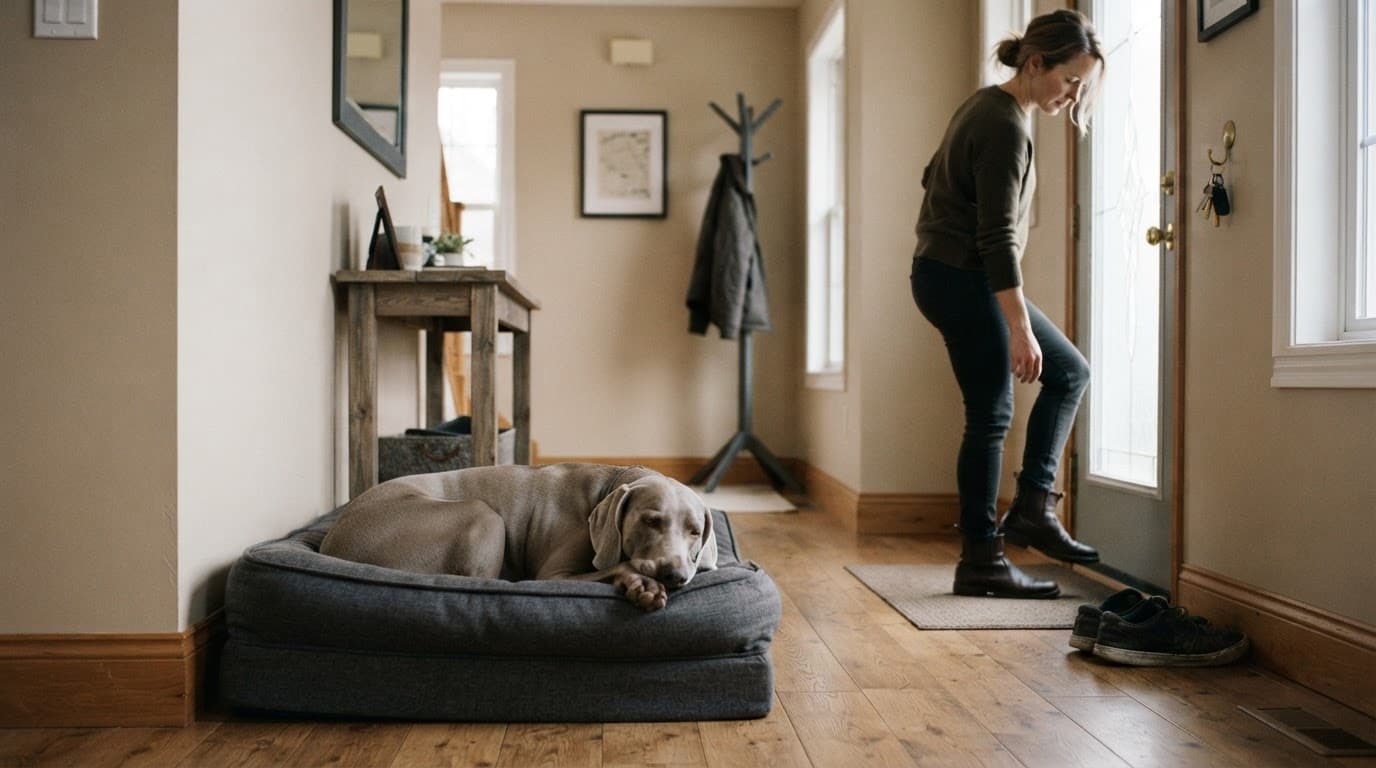
Look for a pattern around departures, rather than one isolated behavior. Your Weimaraner may show signs before you even reach the door:
- They react anxiously when you pick up your keys, put on shoes, grab a coat, or move toward the exit.
- They pace, follow you more urgently, watch the door, whine, bark, or try to block your path.
- They may show excessive whining, struggle to settle on their bed, or remain restless after exercise and a toilet break.
Once alone, the behavior may become more obvious. A dog with alone-time distress might bark or howl repeatedly, pace from room to room, drool, tremble, or display destructive behavior near exits.
Digging at doors, escape attempts, and house-soiling can also happen. Some dogs refuse food toys, stuffed toys, or other enrichment because their anxiety is stronger than their appetite.
These behavioral issues can have other causes, so context and timing matter.
A camera can help you see what happens after you leave. This is especially useful when checking for separation anxiety in dogs, since many appear calm while their owner is home.
They may become distressed within minutes of being alone. The American Kennel Club’s separation anxiety guidance and veterinary information from VCA on separation anxiety signs both emphasize watching behavior during alone time.
When you return, frantic greetings can include jumping, whining, pacing, licking, or an inability to settle. A happy greeting alone doesn’t prove anxiety, but a frantic response combined with panic, destruction, or vocalizing while you were gone deserves attention.
If these patterns continue, breed-specific support for Weimaraner separation anxiety may help clarify the next steps.
Why a Sudden Change in Clinginess Deserves Attention
If your Weimaraner suddenly follows you more than usual, don’t assume separation anxiety straight away.
A change in routine, visitors, construction noise, a frightening experience, stress, pain, or illness can all affect behavior.
Arrange an appointment with your veterinarian if clinginess appears with reduced appetite, lethargy, stiffness, limping, panting at rest, restlessness, new vocalization, vomiting, or reluctance to move.
These signs don’t identify one particular condition, but they can point to a medical issue. Sudden changes involving appetite, mobility, energy, or breathing deserve medical evaluation before behavior modification.
Medical causes should be ruled out before you focus on training. You can also read about veterinary guidance for dog anxiety if your dog struggles when left alone.
Once your Weimaraner has been checked, you can work on calm routines and gradual independence with a clearer plan.
Meeting a Weimaraner’s Exercise and Enrichment Needs
A Weimaraner is more likely to seek constant company when their body and brain have unused energy.
Physical stimulation matters, but exercise alone won’t always solve clingy behavior. Your dog also needs chances to sniff, learn, search, play, and rest.
Combine Physical Exercise With Brain Work
PDSA recommends at least two hours of daily exercise for many adult Weimaraners. This may include long walks, running, and play in a secure area.
Treat that as a baseline, not a fixed rule. Your dog’s age, health, fitness, the weather, and individual needs all matter.
A short potty walk may not meet this athletic breed’s needs. Try brisk walks, hiking, retrieving, swimming, and running when your dog is mature and fit. Add slower sniffing walks too.
Letting your Weimaraner investigate scents can be surprisingly tiring, like giving their nose a fascinating newspaper to read.
Brain work should also be part of the daily plan. You could include:
- Five to ten minutes of obedience practice after a walk.
- Nose work, such as finding treats hidden around one room.
- Search games with a favorite toy or safe household object.
- Shaping exercises, where your dog works out how to offer a behavior.
- A puzzle toy for one meal instead of using a regular bowl.
- A supervised game with tug toys, followed by a calm settle.
This post may contain affiliate links. If you make a purchase through these links, I may earn a small commission at no extra cost to you.
Supervise toys and enrichment activities, especially if your dog chews, tears, or swallows pieces.
Choose options that match your Weimaraner’s size, chewing style, and play habits. For more ideas, explore mental stimulation for calmer dogs.
Puppies need a different, puppy-friendly plan. Keep activity short and gentle, and avoid forced running, long hikes, jumping, and sharp twists.
Allow plenty of rest, and ask your veterinarian about suitable exercise limits while your puppy grows.
Give Your Dog a Calm Place to Settle
Exercise should lead to relaxation, not an endless search for the next activity.
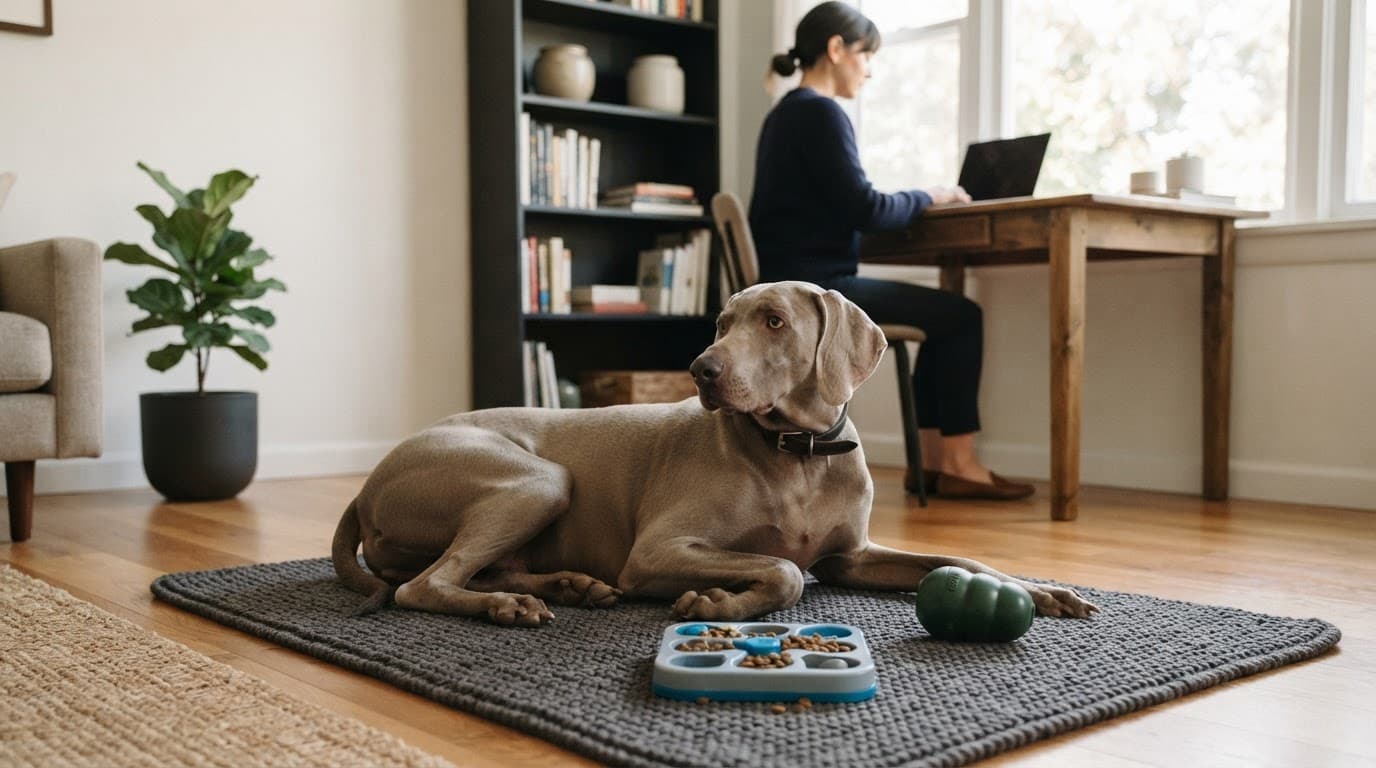
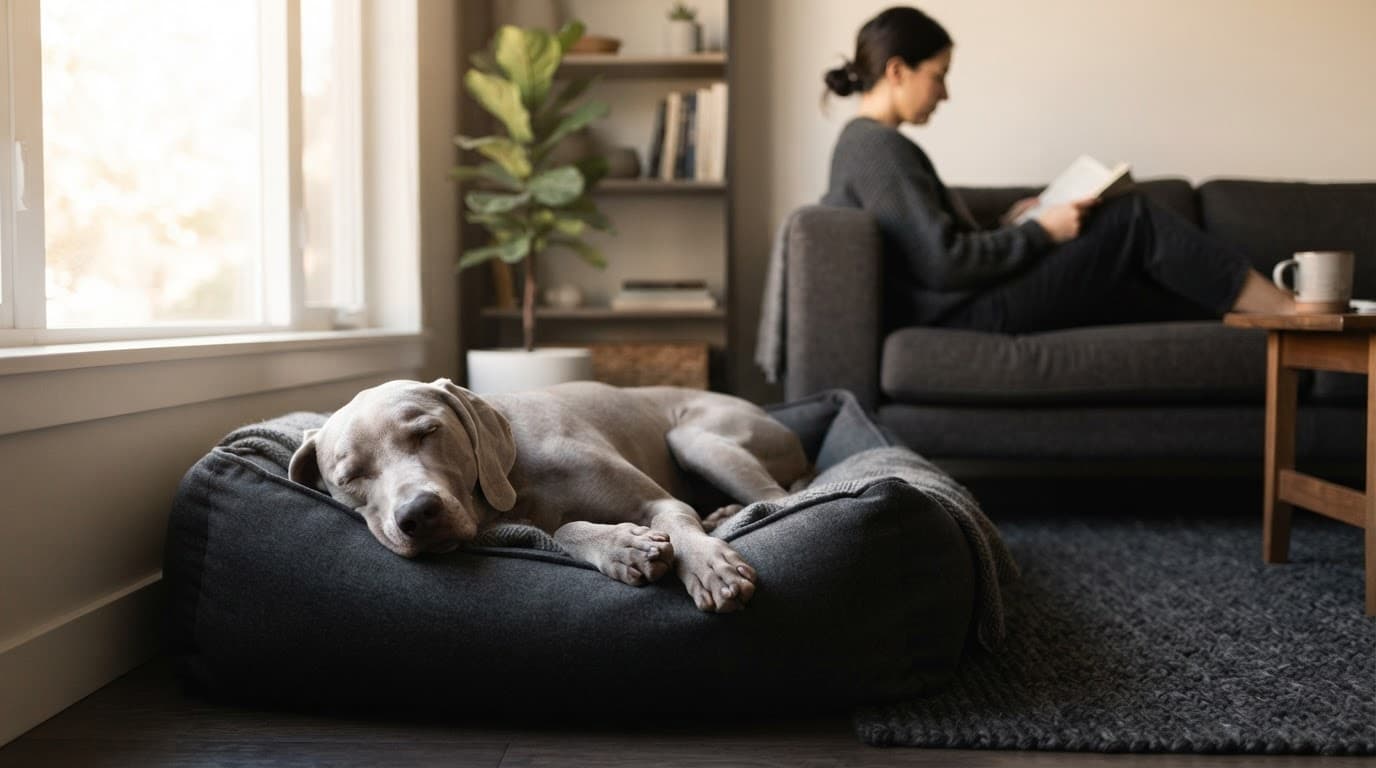
Teach your Weimaraner that a mat, bed, or crate is a safe space for resting while you sit, cook, work, or move briefly around the home.
Start when your dog is already calm. Use positive reinforcement when they lie on the mat, rest their head, or stay there while you take a few steps away. Slowly increase the time and distance, then return before they become worried. Calm behavior can earn quiet praise, a treat, or a suitable chew.
Calming dog treats may be an optional reward for settling, but they aren’t a substitute for exercise, training, or veterinary advice.
Product quality and effectiveness can vary, so choose carefully and monitor your dog.
Crate training should never involve punishment. Introduce the crate gradually, keep the door open at first, and make it comfortable with bedding and appropriate enrichment. The goal isn’t sudden isolation.
You are teaching your Weimaraner to relax nearby, even when you aren’t providing constant attention.
For extra dog-care ideas, you can Check out our great guides on Payhip or Check out our ebook guides on Etsy.
How to Teach Your Weimaraner to Be More Independent
Teaching independence doesn’t make your Weimaraner less loving. It helps them feel secure when you move around the house or leave briefly.
This dog training approach can reduce separation anxiety while building confidence through positive reinforcement.
Start with easy successes, practice several times daily, and increase the challenge only while your dog stays relaxed. Small, comfortable exercises work better than one exhausting session.
Punishment, dramatic goodbyes, and forcing your dog to panic won’t build confidence. Think of independence like a muscle. Gentle practice helps it grow stronger.
This post may contain affiliate links. If you make a purchase through these links, I may earn a small commission at no extra cost to you.

Reward Calm Distance Inside the Home
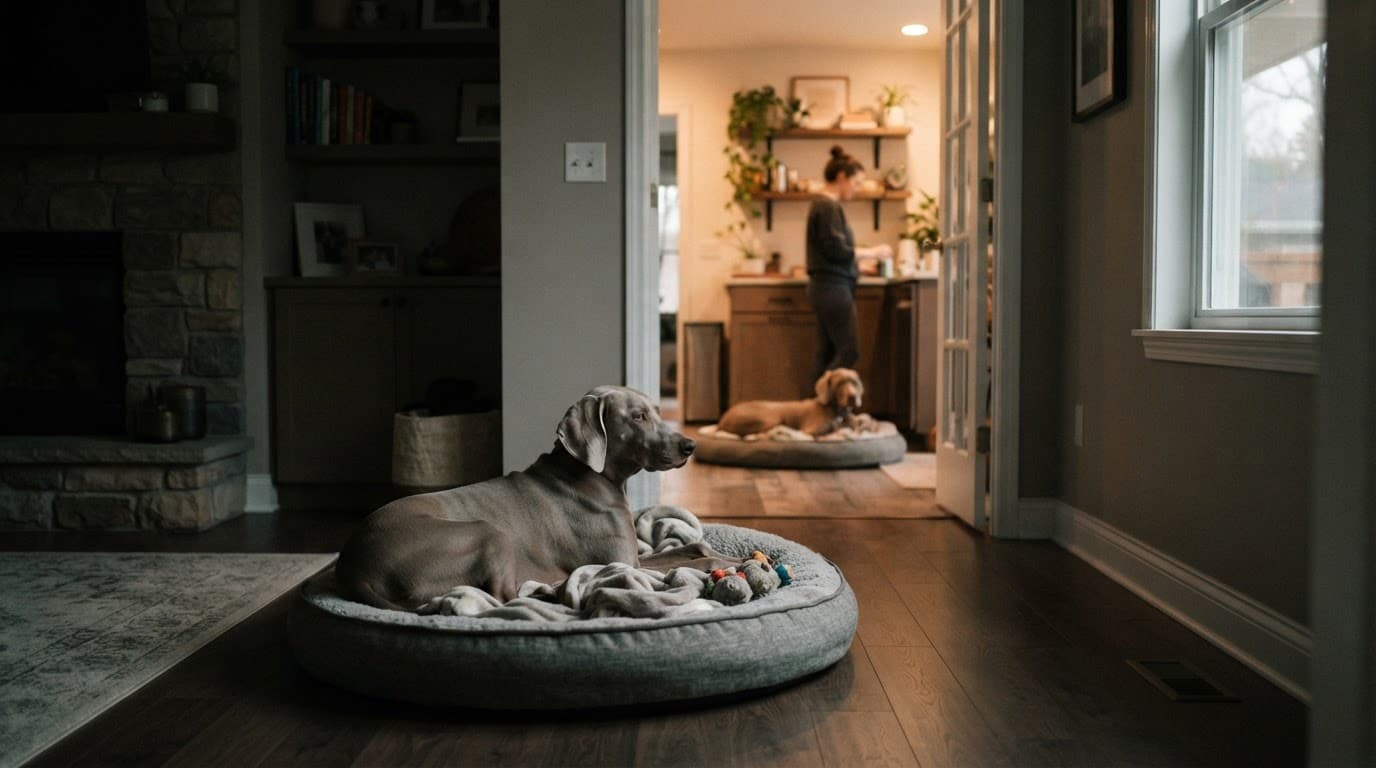
Choose a comfortable bed, mat, baby gate, or quiet room. Ask your Weimaraner to settle there, then reward calm behavior as you take one or two steps away. Use a small treat, gentle praise, attention, or access to a favorite activity.
Begin with tiny intervals, such as 5 seconds, 10 seconds, and 30 seconds. Return before your dog becomes worried.
If they get up, whine, or rush toward you, make the next attempt easier.
Vary the practice. Walk into the kitchen, stand behind a baby gate, or step into another room. Your dog should learn, “I can relax while my person moves away,” instead of memorizing one exact routine.
Desensitization means gradually exposing your dog to departure cues and brief absences without pushing them into panic. Keep sessions easy enough for your Weimaraner to stay relaxed.
Practice after your dog’s exercise needs are met, but don’t wait until they’re exhausted. Calm independence should become a normal part of the day.
Short sessions while you cook, fold laundry, or work can be more useful than one long lesson.
For more reward-based ideas, explore this gradual alone-time training guide, which uses the same careful approach for another people-focused breed.
Practice Short, Boring Departures
Departure cues can trigger separation anxiety before you even leave. Pick up your keys, put on your shoes, or open the door, then sit back down.
Repeat these steps until they stop causing a worried reaction.
Next, leave for only a few seconds. Return calmly, without a huge greeting, and wait for your dog to settle before offering attention. Add time in small steps, perhaps 5 seconds, 10 seconds, then 20 seconds.
If your Weimaraner shows distress, return to the last easy stage.
A safe food toy can help, but only if your dog will eat while alone. If they ignore it, don’t assume they’re being stubborn. Alone-time distress can remove their appetite.
Research on canine separation anxiety treatment supports gradual desensitization and positive associations instead of pushing a dog past panic.
You can find more practical training resources through Check out our great guides on Payhip and Check out our ebook guides on Etsy.
Know When to Involve a Trainer or Veterinarian
Contact a qualified trainer, animal behaviorist, or veterinary behaviorist if your dog panics, injures themselves, damages doors or windows, or can’t tolerate brief absences.
Professional help is also sensible when careful practice brings no improvement.
Your veterinarian can check for a medical issue and discuss a treatment plan. In severe cases, prescribed medication may reduce distress enough for behavior work to succeed.
Medication should support training, not replace it.
Record short videos of your dog’s behavior when alone. Keep a simple log of departures, duration, stress signals, exercise, meals, and sleep.
Take these details to your appointment so the professional can see the full picture.
A Simple Daily Plan for a Happier, More Confident Weimaraner
A predictable daily routine can help your Weimaraner feel secure while building useful independence.
The goal isn’t to keep your dog busy every minute. Balance exercise, enrichment, affection, and proper rest.
Avoid Common Mistakes That Make Shadowing Stronger
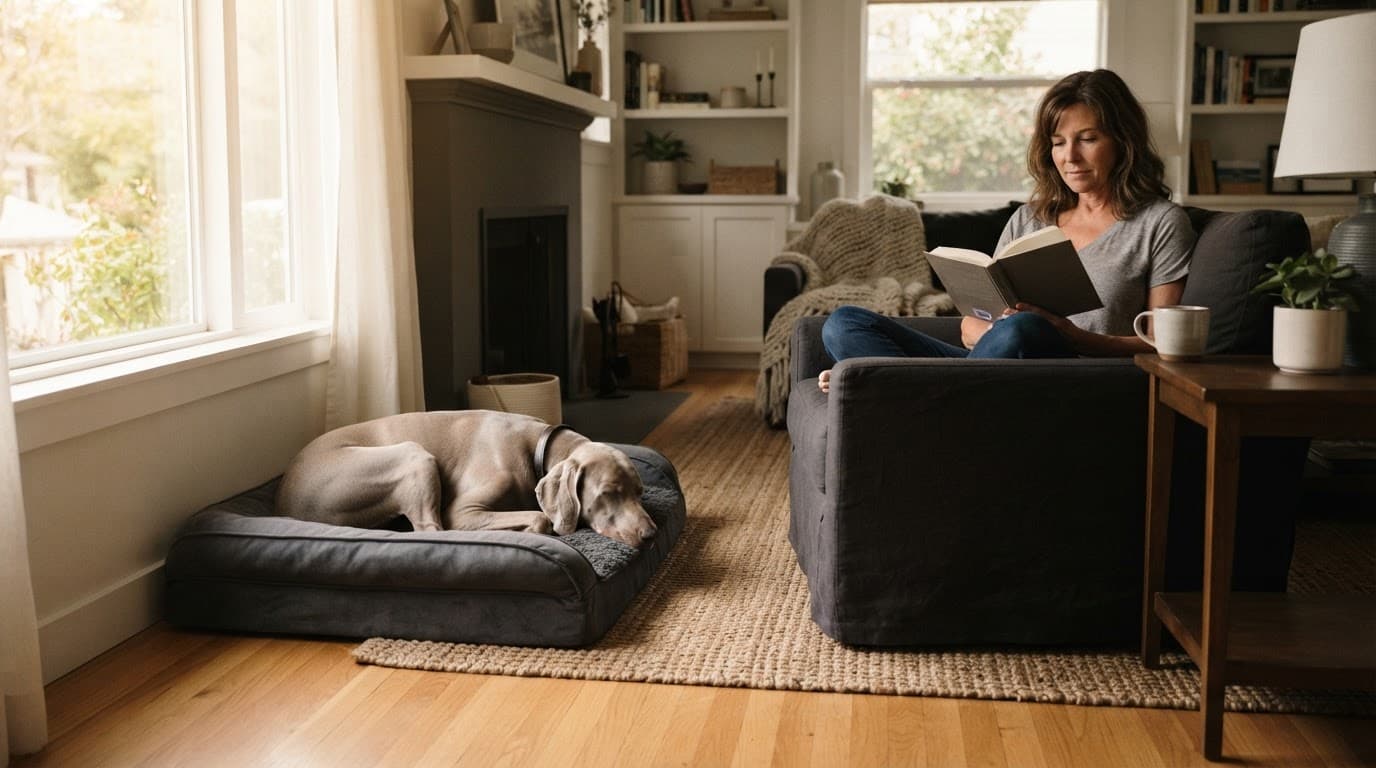
Small daily habits can teach your Weimaraner that following always earns attention. If your dog nudges you, wait for four paws on the floor or a calm sit.
Then respond and reward the behavior you want.
Plan exercise before unwanted behavior begins, rather than waiting for pacing, barking, or mischief. A morning walk, puzzle feeder, or sniffing game gives your dog a better outlet.
Keep goodbyes and greetings calm. Emotional farewells can make leaving feel like a major event. Start with brief absences, then increase the time slowly.
Leaving for several hours too soon can push an anxious dog past their comfort level.
Never punish shadowing, destruction, whining, or panic. Punishment doesn’t teach your dog to feel safe alone. It can also increase fear. The ASPCA’s separation anxiety guidance warns that a crate won’t fix anxiety by itself.
Use one only if your Weimaraner already relaxes there. Otherwise, try a comfortable bed behind a baby gate and gradual training.
For more routine ideas, see this daily routine for easing dog anxiety.
Use Consistent Rules Without Rejecting Your Dog
Encouraging independence doesn’t mean ignoring your Weimaraner. Keep affection, cuddles, play, and companionship in the day. Also schedule calm rest away from your feet.
A simple routine might include a morning walk, breakfast in a puzzle feeder, five minutes of training, planned rest, an afternoon sniffing walk or play session, and two minutes of independence practice. Finish with a quiet evening wind-down.
Every family member should respond the same way when your dog follows. Invite your Weimaraner to settle, reward calm behavior, and avoid attention during persistent nudging.
Adjust exercise for heat, puppies, older dogs, and health concerns. When in doubt, ask your veterinarian about safe activity limits.

Frequently Asked Questions
A Weimaraner that follows you everywhere is often showing normal attachment. These questions can help you decide whether your dog’s behavior is simply affectionate or needs extra support.
Why does my dog follow me everywhere?
Bathroom-following is usually caused by curiosity, routine, or your dog’s wish to stay close. A Weimaraner may also see a closed door as an invitation to investigate.
You don’t need to stop this behavior unless it becomes frantic or prevents your dog from settling alone. Practice a calm “go to bed” cue and reward your dog for waiting nearby.
Should my Weimaraner sleep in the same room as me?
Sleeping nearby is usually fine if your dog can also rest comfortably in another safe place. Many Weimaraners prefer close companionship because their breed history encourages strong partnerships with people.
Provide a comfortable bed and reward your dog for choosing it. The Wikipedia background on the Weimaraner breed offers more information about this breed’s working history and development.
Why does my Weimaraner follow me but ignore other family members?
Your dog may associate you with walks, meals, training, or the most exciting parts of the household schedule. Weimaraners often choose one favorite person, but that doesn’t mean they dislike everyone else.
Ask other family members to handle enjoyable activities, such as feeding, sniffing games, and short training sessions. This can spread the bond more evenly without forcing interaction.
Can my Weimaraner become clingier as they get older?
Yes, a senior dog may become more dependent because of pain, reduced hearing or vision, or age-related confusion. A sudden change may signal a medical issue rather than simple aging.
Book an appointment with your veterinarian if new clinginess appears with stiffness, accidents, appetite changes, disorientation, or unusual vocalizing. PetMD’s guidance on separation anxiety also lists clinginess alongside other signs that deserve attention.
Should I ignore my Weimaraner when they follow me?
Ignoring your dog completely can create frustration and won’t teach independence. Instead, give attention when your Weimaraner is calm, then reward them for resting away from you.
If following comes with stealing, barking, chewing, or constant pestering, boredom may be part of the problem.
These signs your dog may be bored can help you choose better exercise and enrichment.
Learn more about these fabulous dogs by getting our Blueprint!