
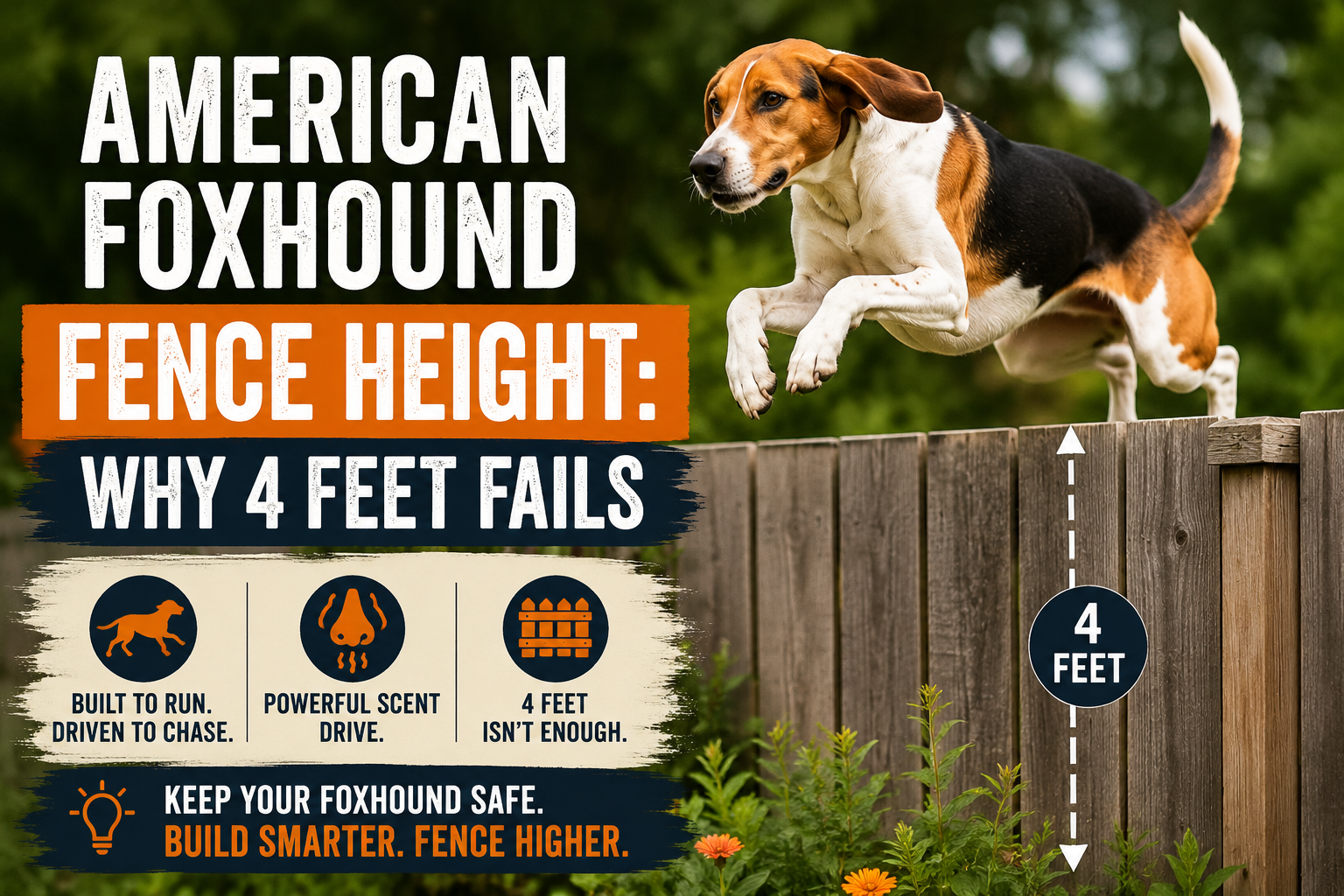
A standard 4-foot fence often fails to contain an American Foxhound because its high energy level supports jumping, climbing, digging, and following scents beyond your yard.
Athletic ability, stamina, and powerful tracking instincts can override recall, especially when a rabbit or other wildlife leaves an interesting trail.
For safe containment, plan on a 6-foot physical fence with strong materials, a dig-resistant base, and gates that latch securely. An enclosed kennel run can provide another reliable option, especially for dogs with a history of escaping.
Check the fence regularly for loose boards, damaged mesh, gaps, and weak gate hardware. A secure harness, such as those described in this guide to escape-resistant harnesses for large dogs, and a GPS tracker can support recovery, but neither replaces secure physical containment.
You can also watch this fence safety video, then Check out our great guides on Payhip or Check out our ebook guides on Etsy for more dog-care resources. Next, we’ll look at why four feet falls short and which fence features make an enclosure safer.
This post may contain affiliate links. If you make a purchase through these links, I may earn a small commission at no extra cost to you.
Key Takeaways
- A 4-foot fence often fails because an American Foxhound can jump, dig, climb, and follow scents beyond the yard.
- Plan for a 6-foot fence with secure gates, strong materials, and a dig-resistant base. The American Kennel Club’s breed guidance also recommends secure fencing.
- Provide daily physical activity and mental stimulation, while using a tracker as backup. Learn more about American Foxhound exercise and space needs and American Foxhound history.
- Find practical resources in Check out our great guides on Payhip and Check out our ebook guides on Etsy.
Fencing for Foxhounds: Why a Standard 4-Foot Fence Fails
A 4-foot fence can look secure until an American Foxhound finds one weak point. Height matters, but the full design must also prevent jumping, climbing, digging, squeezing through gaps, and pushing through gates.
Why Height Alone Does Not Stop a Determined Hound
As a scent hound, this dog breed was developed to work over distance. Its history in fox hunting shaped its long-distance tracking abilities. George Washington was associated with American Foxhounds and fox hunting.
The American Kennel Club also notes traits that help explain this breed’s behavior.
A strong sense of smell, hunting instinct, independent streak, and physical stamina can outweigh an owner’s call. For general breed background, see the American Foxhound history.
Withers height matters, but it doesn’t fully predict jumping ability or escape motivation. A dog may use a patio chair, woodpile, low branch, or storage box as a launch point.
Loose soil creates another route, especially when the fence has no buried mesh or solid footing. Wide mesh openings can let a Foxhound push its head through, climb the panels, or squeeze through a gap that looked too small during installation.
Gates deserve the same attention. A loose latch, sagging hinge, or small gap beneath the gate can turn a secure yard into an exit. Check the entire boundary often, including:
- Soil that has been scraped away along the fence line.
- Boards that have loosened, cracked, or developed chew marks.
- Branches and furniture that sit close enough to help a dog gain height.
- Gate latches that a clever dog can nose open.
- Mesh openings large enough for a paw, muzzle, or shoulder to pass through.
A taller fence with a weak bottom still fails. Prevention works better than punishment, so block escape routes, remove launch points, and use positive reinforcement to reward calm boundary behavior and returning to you instead of scolding after an escape attempt.
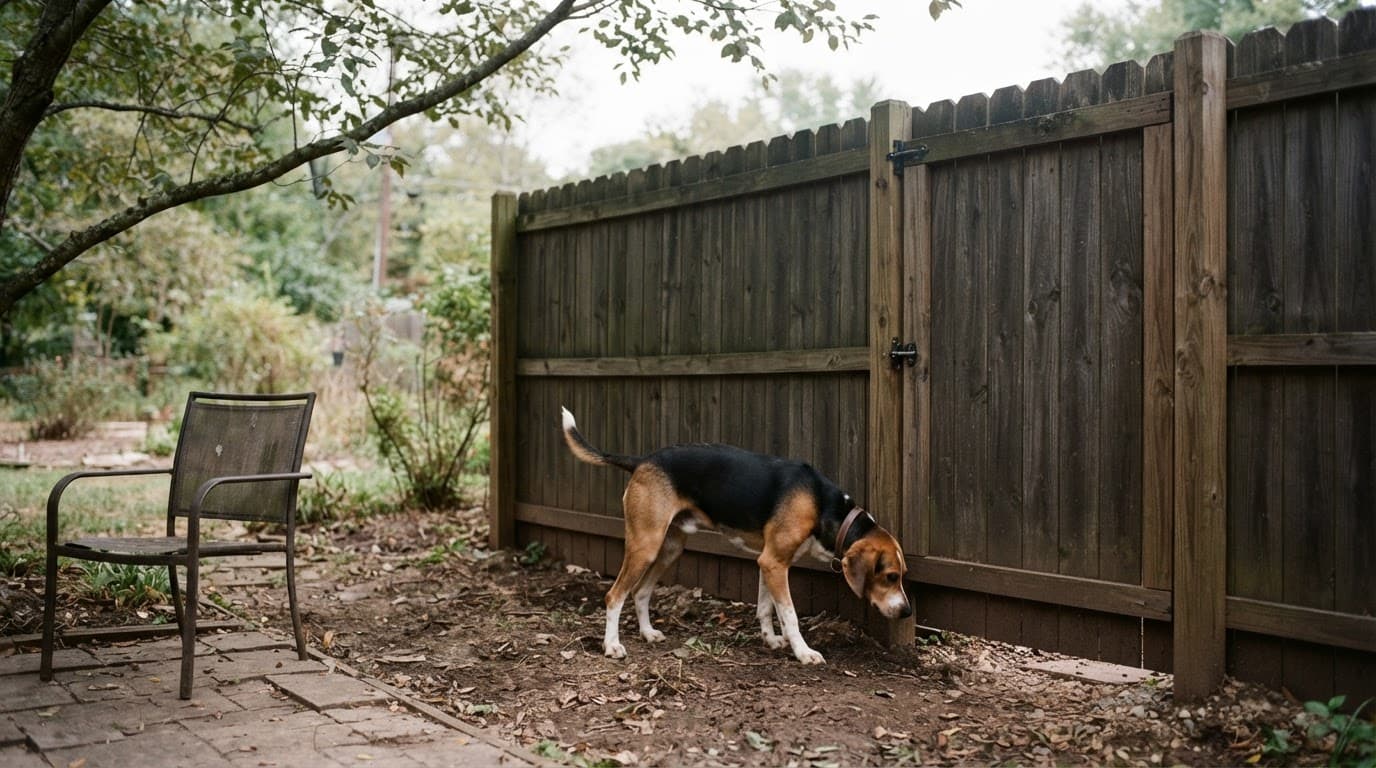
The Hidden Risks of a Foxhound Getting Loose
Once outside, an American Foxhound may follow a scent, wandering off across streets or property lines. Traffic creates immediate danger, and a roaming dog may threaten livestock or family pets.
Wildlife chasing can reveal a strong prey drive and lead your dog into wooded areas, steep ground, or unfamiliar roads.
A loose hound may meet an anxious dog, a frightened child, or someone who doesn’t know how to approach dogs. Even a friendly hound can become difficult to catch when excitement takes over.
Secure fencing supports responsible ownership, but it doesn’t replace supervision, recall training, identification, or a reliable way to locate your dog.
A well-fitted harness and a GPS tracker with virtual fence alerts can add backup protection during walks and yard time. For more practical ownership resources, visit Check out our great guides on Payhip and Check out our ebook guides on Etsy.
American Foxhound Fence Height: How Tall Should the Barrier Be?
For most adult American Foxhounds, a 6-foot fence is the safest starting point. General guidance often places large, athletic dogs between 5 and 6 feet, but four feet should suit only a calm, supervised dog with a secure full-yard design.
Check local building codes, property rules, and setback requirements before ordering materials.
Choose Fence Height Based on Your Dog, Yard, and Escape History
An American Foxhound puppy may not jump a short fence today, but its strength and confidence will change quickly. For this dog breed, plan for the mature dog rather than the current puppy size.
Older Foxhounds may need less jumping height, yet they can still dig under weak fencing or follow an interesting scent through an open gate.
Your American Foxhound’s history matters most. A known jumper, persistent digger, or dog that has escaped before needs more than a standard panel. Consider adding height or using an inward-angled fence extension.
These extensions must be firmly attached, stable in wind, and free from sharp edges or loose parts.
Measure withers height from the ground to the top of the shoulder blades. This measurement can help you compare your dog’s size with potential fence panels, but it isn’t a complete escape-risk assessment.
The fence’s effective height can also shrink around the yard. A slope, retaining wall, raised bed, or nearby object may give your dog extra lift. Remove chairs, benches, woodpiles, and storage boxes from the boundary.
Pay close attention to corners, where dogs may brace their paws and climb more easily.
Withers height offers only a rough reference, not a complete containment formula. Athletic ability, scent drive, training, and nearby launch points matter more than one measurement.
The American Kennel Club’s fence guidance also supports choosing fencing based on your dog’s behavior and escape habits.
Plan the Gate Before You Order the Fence
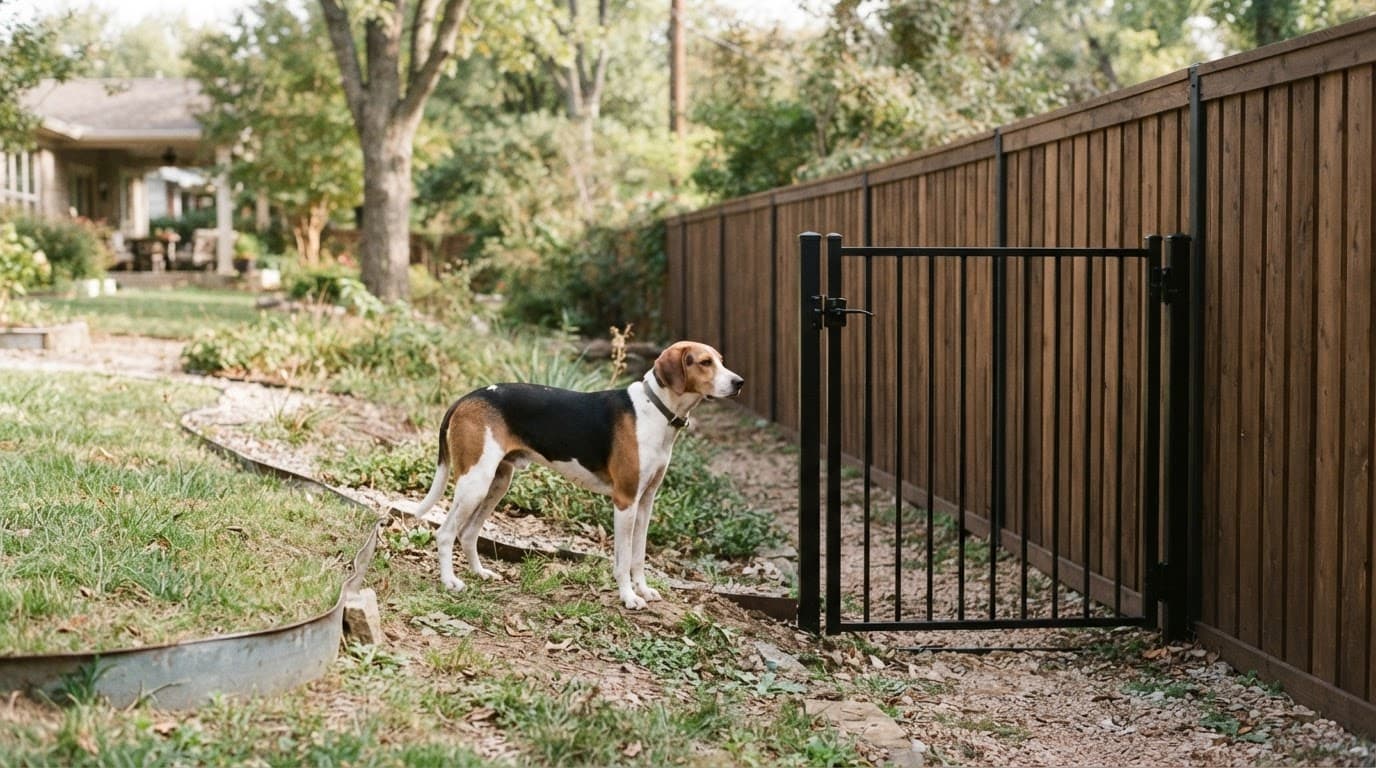
Gates are common failure points because they move, sag, and get used several times each day. Match the gate height to the rest of the fence, then choose strong hinges and self-closing hardware.
A dog-proof latch should sit high enough that your Foxhound can’t reach it with its nose or paw.
Keep ground clearance small, but allow enough room for the gate to open without dragging. A double-gate entry adds another layer of protection when space allows. It creates a small holding area, so your dog cannot rush through when someone enters.
Inspect the gate after storms, landscaping work, and heavy rain. Soil movement can create a gap beneath the frame, while wind can loosen hinges or shift the latch.
For additional walking security, review this escape-resistant dog harness before relying on backup equipment.
You can also find practical dog-care resources through Check out our great guides on Payhip and Check out our ebook guides on Etsy.
What to Install Instead of a Basic 4-Foot Fence
A safer six-foot barrier starts with a strong fence, but height alone won’t solve every escape problem. Add a buried or surface-mounted dig barrier, then inspect gates and corners often.
The right option depends on your dog’s habits, your budget, and how much of the yard you need to secure.
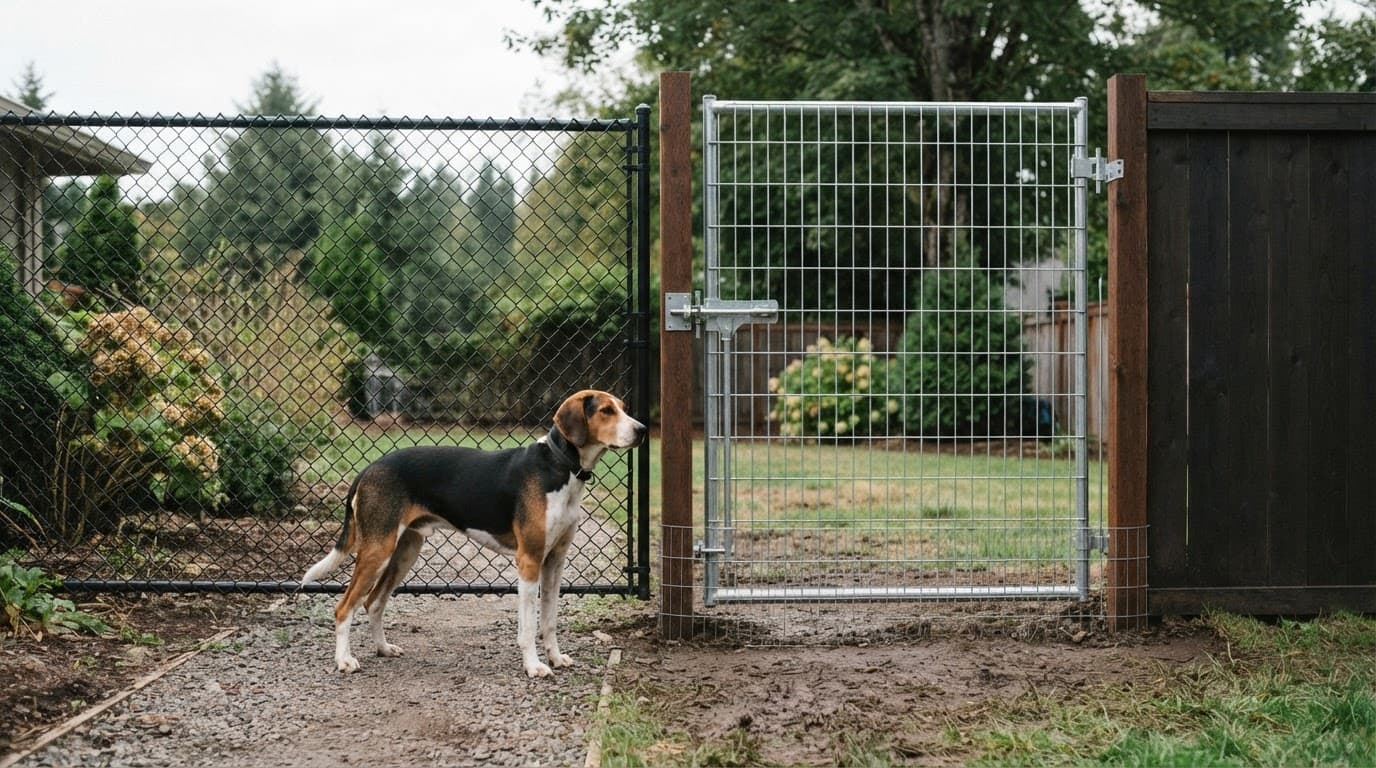
Chain Link and Welded Wire Offer Strong, Practical Containment
Coated chain link is a reliable choice for many owners. For an American Foxhound, choose a 6-foot fence, sturdy terminal posts, and close post spacing. This limits panel flex when your dog leans against the fence.
Heavy-gauge welded wire can offer smaller openings at a lower material cost. Select rigid livestock or kennel-grade panels rather than thin garden wire.
Narrow openings reduce the chance of a dog pushing its muzzle or paw through the fence. Strong welds also limit bending and chewing damage.
However, no wire fence is completely escape-proof if your dog finds a weak connection or starts digging.
Attach welded wire to solid wood, metal, or manufactured kennel posts with heavy-duty staples, bolts, or fencing clips. Place fasteners at regular intervals along every post, then secure panel joints so your dog cannot pull them apart.
A buried wire skirt, concrete edge, or outward-facing surface apron can block the space beneath the fence. Check that the barrier has no sharp ends that could injure your dog.
Privacy Fencing Can Reduce Chasing Triggers, With Tradeoffs
A solid privacy fence can reduce barking and fence running because your American Foxhound can’t watch every passing dog, pedestrian, squirrel, or deer. That visual break may help a dog settle, especially when the yard borders a sidewalk or busy neighboring property.
Wood, vinyl, or composite fencing costs more than basic wire in many installations. It also creates greater wind load, so use strong posts, suitable foundations, and secure horizontal rails.
Damaged boards can hide behind the solid surface, allowing digging or chewing to continue unnoticed.
Walk the entire perimeter during routine checks. Look for loose boards, shifted soil, bent panels, and gaps beneath gates.
A privacy fence can improve calm behavior, but it still needs a dig barrier and a dependable latch.
When a Secure Kennel Run Makes More Sense
A roofed or partly roofed kennel run suits supervised outdoor time, temporary containment, renters, or an outdoor dog that needs a smaller secure zone. Choose dimensions based on your dog’s mature withers height, while providing enough room to walk, turn, stretch, and rest comfortably.
A durable, washable floor with good drainage helps prevent muddy escape routes and standing water.
Use secure latches, shade, weather protection, and a roof that prevents climbing or jumping out. Guide Dogs for the Blind describes kennel runs of at least 6 feet wide, 12 feet long, and 6 feet high, preferably with a cover, as a useful planning reference for safe kennel-run dimensions.
These measurements aren’t a guarantee of safety for every dog.
Modular panels work well when you need flexibility, but inspect every connector before releasing your dog. Lightweight plastic mesh suits calm, non-chewing dogs better and shouldn’t be the primary barrier for a determined Foxhound.
A kennel run supports management, yet daily walks, recall practice, sniffing, and canine enrichment ideas still matter. For breed-focused planning, readers can view the American Foxhound Blueprint.
Make the Fence Dig-Proof, Escape-Resistant, and Easy to Maintain
A six-foot fence still needs a secure base, strong posts, narrow openings, and regular inspections. For an American Foxhound, the best enclosure blocks digging, jumping, climbing, and access to tempting scents beyond the yard.
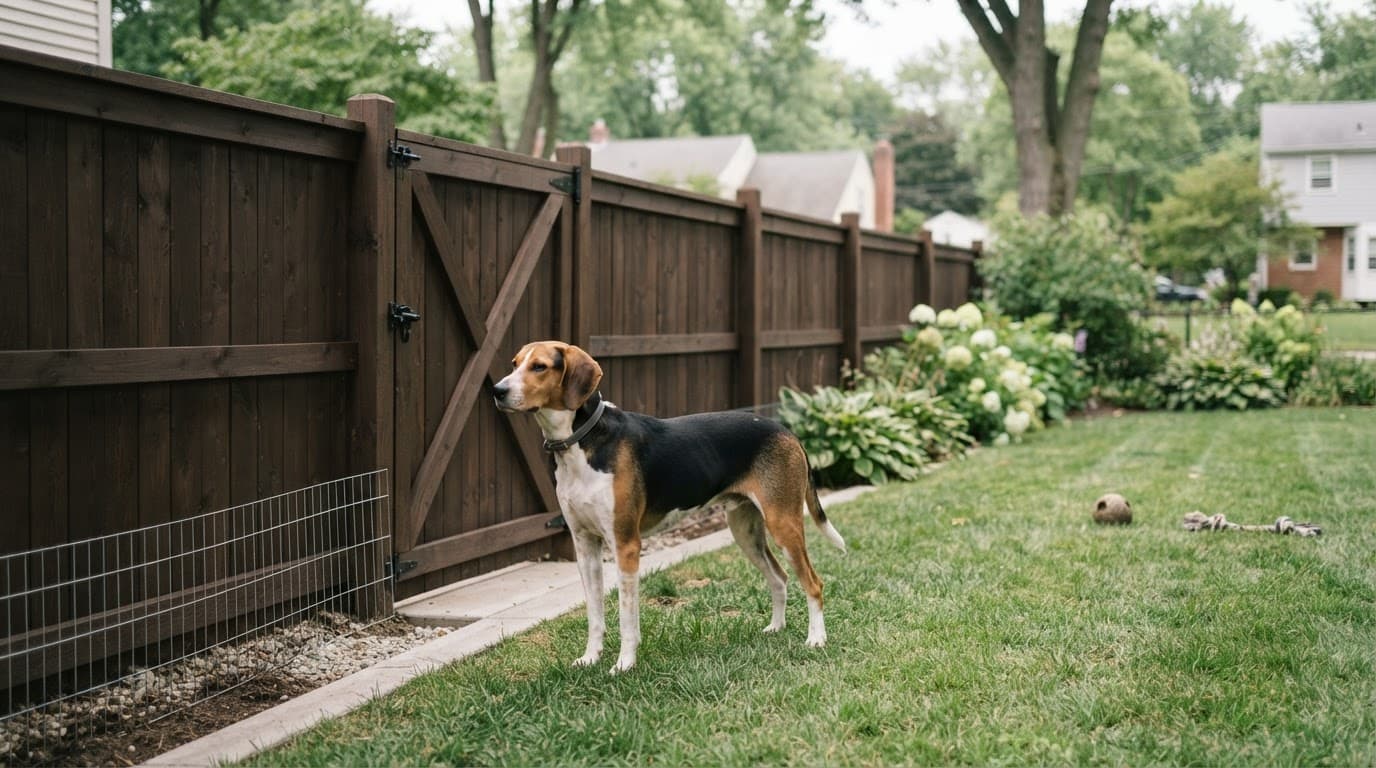
Stop Digging at the Fence Line Without Creating New Hazards
Buried welded wire works well in loose soil. Extend it below the fence and attach it securely to the panels or posts.
An outward-facing L-footer can stop a dog from digging directly beneath the fence, while an inward-facing version keeps the barrier hidden under the yard surface.
Gravel strips, pavers, and concrete edging can also close gaps along the bottom. Use compacted, stable materials that won’t shift after rain or freeze-thaw cycles. Properly installed concrete edging offers a durable choice, but it needs drainage and a smooth finish.
Avoid exposed wire ends, loose rocks, unstable pavers, and gaps that could trap a paw or muzzle. Check plants near the boundary as well. Toxic shrubs or thorny growth can create another safety problem while your dog investigates the fence line.
Choose the method according to your soil, drainage, local weather, and your dog’s digging style. A casual scratcher may need less reinforcement than a Foxhound that repeatedly targets one corner.

Use Training and Enrichment Alongside Physical Barriers
A fence is a safety tool, not a replacement for exercise or companionship. An American Foxhound often needs about 60 to 90 minutes of daily exercise, although age, fitness, joint health, and individual temperament affect that amount.
Dogs with hip dysplasia or other health concerns may need a veterinary-guided routine.
Structured walks, scent-focused outings, and supervised play provide physical activity without relying on exercise alone. Scent games and tracking-style activities also make useful outlets for an American Foxhound’s strong sense of smell.
Practice obedience training and recall commands on a long line in a secure area. Use positive reinforcement, rewards, gradual distraction increases, and consistent practice before allowing more freedom.
Interactive play can strengthen your relationship too. Carefully managed games with tug toys provide physical activity and mental engagement, but stop if your dog becomes overexcited or guards the toy. For more ideas, see these safe off-lead exercise tips for scent hounds.
An invisible fence isn’t a physical barrier and can’t block roads, wildlife, unfamiliar dogs, or people from entering the yard.
A motivated American Foxhound may also cross the boundary after a scent and fail to return. Veterinary guidance on invisible fence risks explains why a physical fence remains the safer primary barrier.
Inspect the Yard Before Every Unsupervised Session
Before an American Foxhound gets unsupervised access, walk the boundary. Any outdoor dog needs this quick check to reveal failures before an escape occurs:
- Test every gate, latch, hinge, and self-closing mechanism.
- Check corners, the bottom edge, buried mesh, and visible wire.
- Look for loose posts, bent panels, damaged boards, or new gaps.
- Move chairs, bins, branches, soil piles, and other climbable objects.
- Check for landscaping changes after rain, digging, or garden work.
A GPS tracker adds a useful recovery layer, but it can’t stop an escape. Review this dog GPS tracker guide before choosing one, and keep your fence, gates, recall training, and supervision in place.
For additional practical resources, visit Check out our great guides on Payhip or Check out our ebook guides on Etsy.
Compare Costs, Materials, and Installation Choices
The safest setup for an American Foxhound usually starts with six feet, but material and installation also affect security.
A well-built, smaller enclosure often protects your dog better than a large yard with weak panels, loose gates, or open gaps.
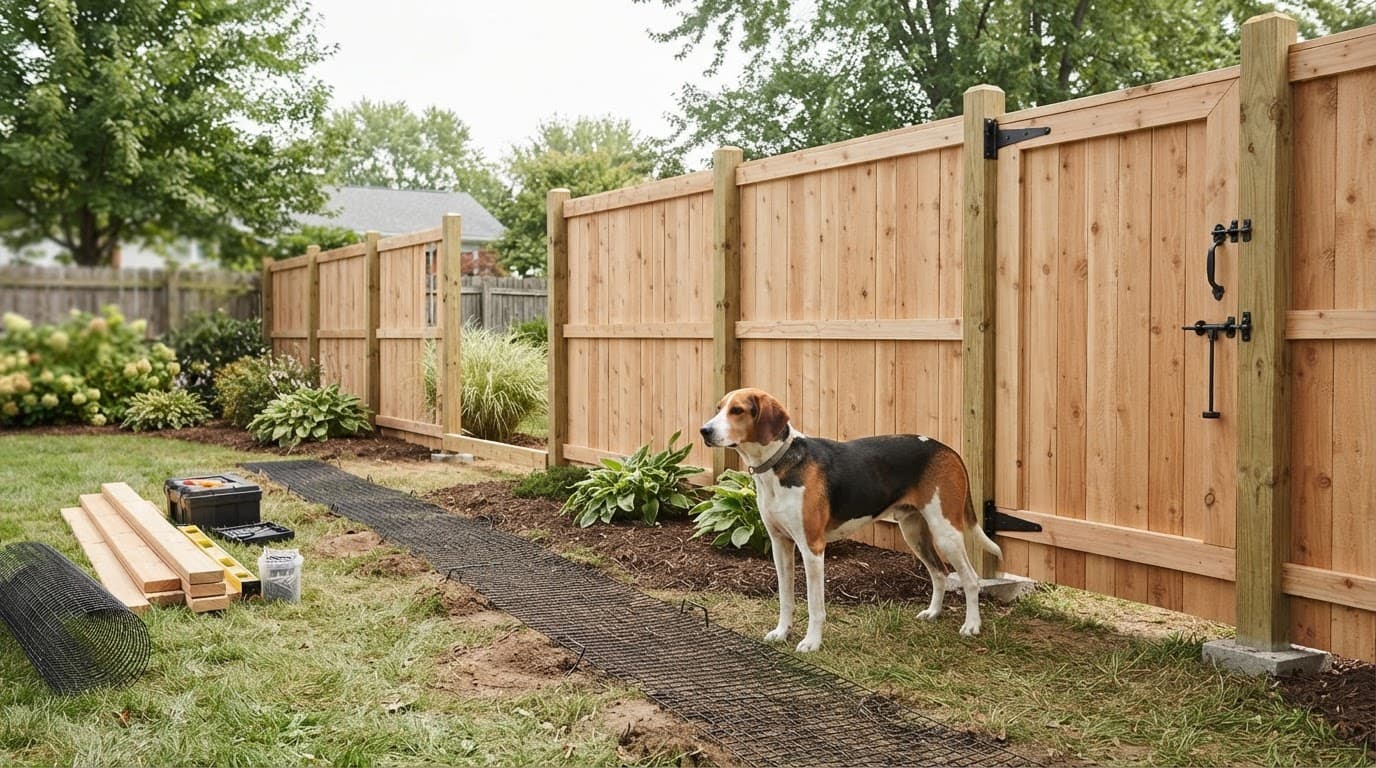
Build a Better Fence in Stages When the Budget Is Tight
A complete six-foot fence may cost roughly $1,800 to $3,500 for many standard yards. Securing a large property can cost about $3,000 to $6,500, especially with difficult terrain, multiple gates, permits, or old-fence removal.
These are rough estimates that vary by region, materials, labor, and site conditions. Smaller DIY runs may cost much less, but a lower price should never mean weaker containment.
Start with the section your American Foxhound uses most. Put your first dollars toward:
- A secure six-foot barrier with properly set posts.
- Strong gate hinges, a self-closing mechanism, and a dog-proof latch.
- Buried mesh, an L-footer, concrete edging, or another dig-resistant base.
Decorative caps, upgraded finishes, and landscaping can wait. A smaller safe exercise area gives your dog useful outdoor freedom, while a larger weak enclosure may only provide more space to escape.
Material choice also changes the balance between cost and durability. Chain link is durable and budget-friendly, while welded wire offers economical containment when attached to sturdy posts.
Wood and vinyl provide more privacy, but they often cost more and require stronger foundations. Modular panels are flexible, although they need firm installation before you trust them for unsupervised use.
DIY work carries risks beyond measuring mistakes. Call 811 before digging, since buried utilities can make post installation dangerous. Poorly set posts may lean or pull loose, and exposed wire ends can cut paws or noses.
Local rules may also restrict fence height, placement, materials, or property-line setbacks. For example, Chicago’s fence permit guidance shows how requirements vary by location.
Ask contractors for written estimates that list the planned height, wire gauge, post spacing, gate hardware, bottom protection, permits, removal, and warranty coverage.
For an American Foxhound, confirm that the estimate supports the six-foot recommendation and secure installation. If you want help organizing the project, Check out our great guides on Payhip and Check out our ebook guides on Etsy.
Frequently Asked Questions
Choosing the right fence requires more than measuring the panels. Your dog’s athletic ability, prey drive, digging habits, gate security, and supervision routine all affect containment.
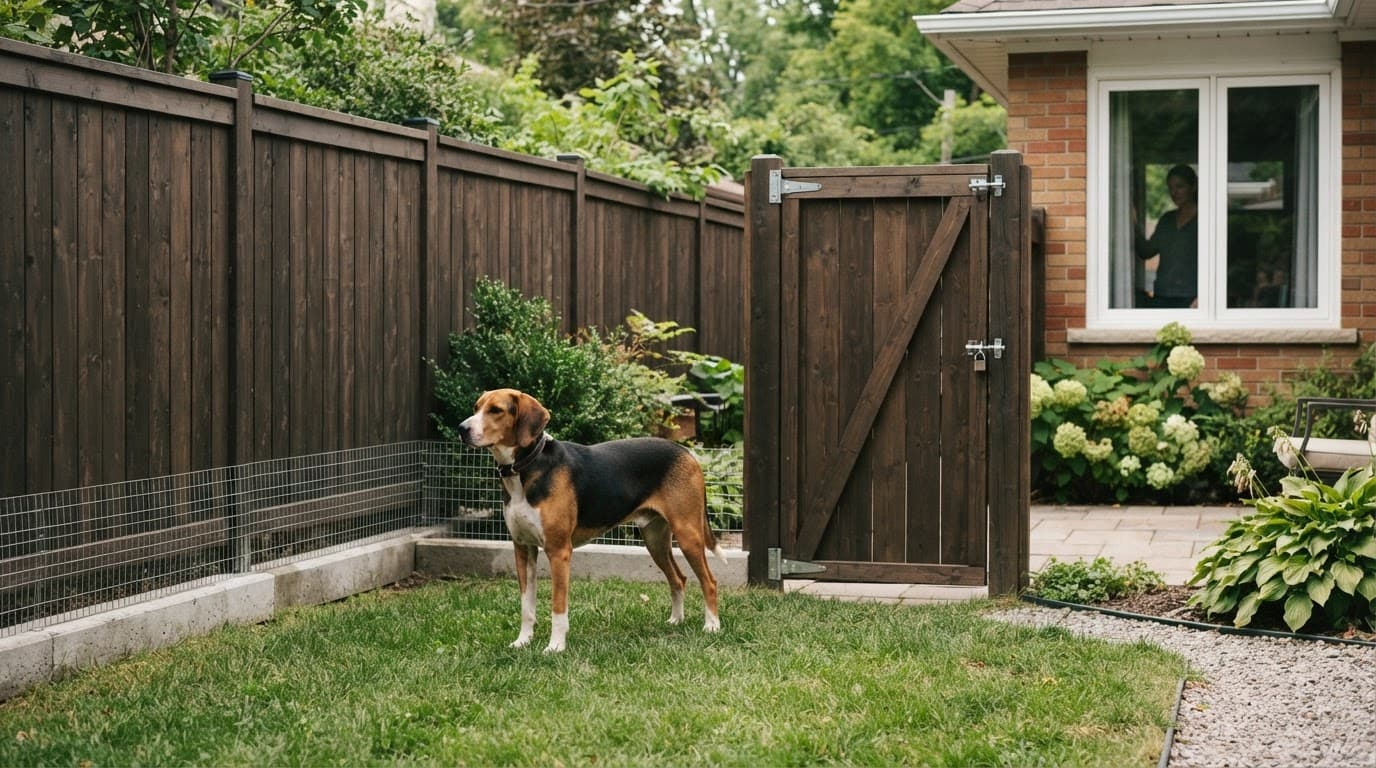
Can an American Foxhound live safely with a 4-foot fence?
Some American Foxhounds may remain behind a 4-foot fence, especially when calm, supervised, and away from launch points.
However, the height gives an athletic or motivated dog little margin for error.
Use a 4-foot fence only with close supervision and frequent inspections. Pair physical containment with positive reinforcement and reward-based training, rather than punishment or reliance on aversive corrections.
Is a 6-foot fence guaranteed to contain every Foxhound?
No ordinary residential fence guarantees containment for every dog. A six-foot fence is a safer starting point, but it can still fail if the dog digs underneath, climbs nearby objects, pushes through weak panels, or slips through an unsecured gate.
Every American Foxhound has individual abilities and habits. Withers height can inform planning, but it can’t account for jumping skill, digging, motivation, or nearby launch points.
Reliable containment depends on the complete design. Include strong posts, secure latches, dig protection, small gaps, regular maintenance, and supervision.
Should I use an invisible fence for an American Foxhound?
An invisible fence creates no physical barrier, so it cannot stop wildlife, unfamiliar dogs, people, or other hazards from entering the yard. A Foxhound may also cross the boundary when prey drive, fear, or excitement outweighs its concern about the collar correction.
For these reasons, favor a properly built physical fence for reliable containment. If you are considering an electronic or aversive system, discuss it with a qualified trainer or veterinary behavior professional first.
PetMD’s invisible fence guidance explains several safety and behavior concerns owners should consider.
What is the best fence for a Foxhound that digs?
A strong physical fence paired with buried mesh, an L-footer, or suitable hard edging is usually safest.
Attach the barrier securely to the fence, and avoid exposed wire ends or loose materials that could injure paws and noses.
An American Foxhound may also chew or jump, so a dig-resistant base alone won’t stop every escape attempt. The best setup depends on your soil, drainage, weather, and construction quality.
How can I keep a Foxhound safe while the fence is being installed?
An American Foxhound that normally stays outdoors must remain indoors, leashed, or in a fully checked temporary run while gates and panels are unfinished. Keep your dog inside whenever workers leave gates open or sections remain incomplete.
For outdoor time, use secure temporary panels, a properly fastened kennel run, supervised leash time, or a trusted dog sitter. Keep gates closed and provide direct supervision until the permanent fence is complete.
Loose temporary mesh, open gates, stacked materials, and unfinished corners are unsafe for a scent-driven hound. Check every connection before allowing your Foxhound into a temporary enclosure.
Where can I buy the American Foxhound Blueprint?
You can purchase the American Foxhound Blueprint from its direct product page. It helps owners organize breed care, exercise, training, and containment plans in one place.
The blueprint complements professional advice and a properly built fence. For more dog-care planning resources, visit Check out our great guides on Payhip or Check out our ebook guides on Etsy.

Conclusion
For an American Foxhound, a basic 4-foot fence may provide too little protection. Height, athletic ability, digging habits, and a strong scent drive can turn small weaknesses into escape routes.
A well-built 5- to 6-foot physical fence is a strong starting point, with secure gates, sturdy materials, and dig-resistant protection along the base.
The right fence height still depends on your dog’s behavior and your yard. A persistent jumper may need extra height or reinforcement, while a determined digger needs stronger protection below the fence.
Remove nearby launch points, inspect the boundary often, and don’t rely on fencing alone.
Daily exercise, scent-based enrichment, training, identification, and supervision all support safer containment.
Inspect every gate, corner, panel, and fence-line gap before your American Foxhound tests the barrier. Then plan the safest upgrade for your American Foxhound, your property, and the escape habits you need to manage.