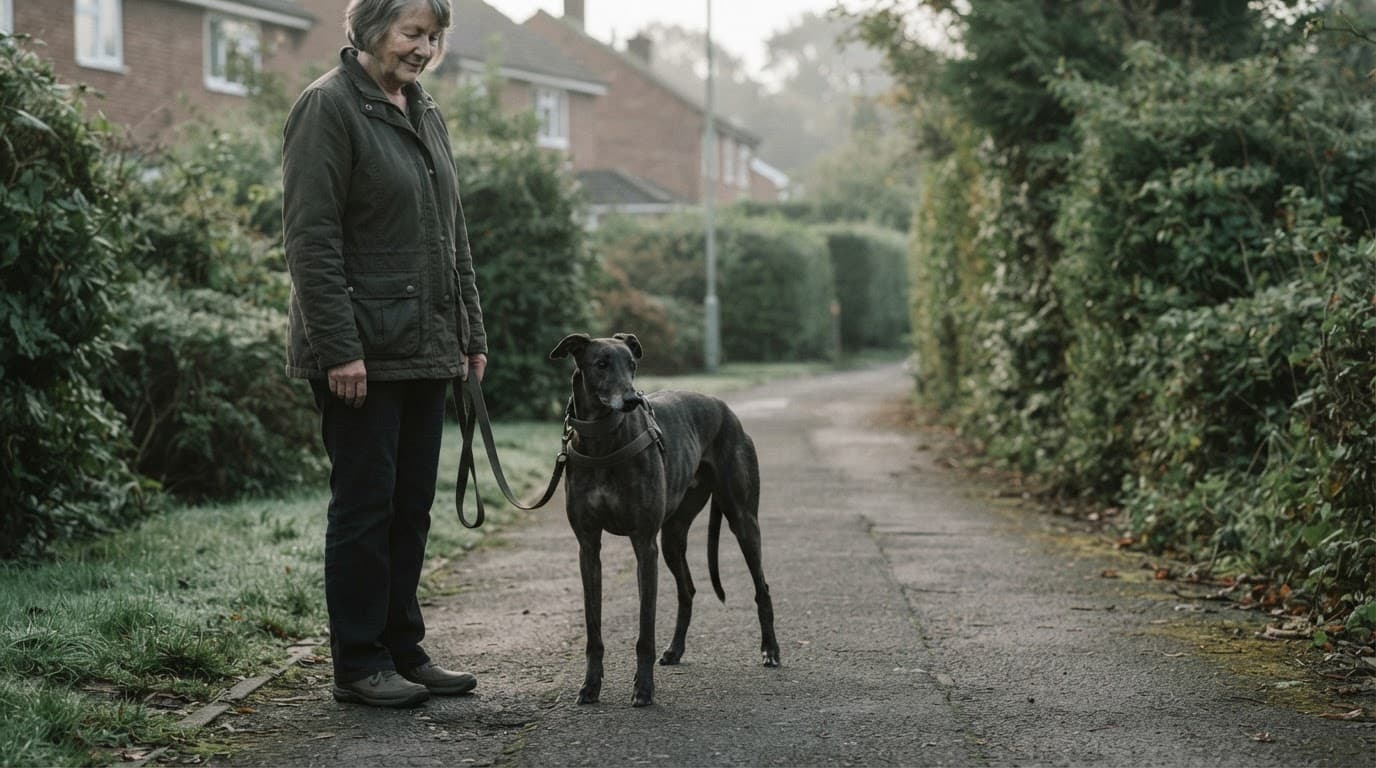
When a Greyhound freezes on walks, it may be scared, stressed, overwhelmed, cold, uncomfortable, or unsure, rather than stubborn.
This Greyhound statue behavior is common, especially in newly adopted greyhounds and sensitive dogs still learning that the outside world is safe.
Look at the whole picture before asking your dog to move. A busy road, strange noise, unfamiliar surface, poor-fitting harness, tired legs, or pain can all cause freezing. Checking out comfortable harnesses for greyhound walks may help.
You’ll learn how to read the freeze, what to do in the moment, how to prevent repeat episodes, and when to contact your veterinarian. You can also Check out our great guides on Payhip or Check out our ebook guides on Etsy for more practical dog-care advice.
Watch this helpful example of a greyhound freezing on walks, then let’s look at what your dog may be trying to tell you.
This post may contain affiliate links. If you make a purchase through these links, I may earn a small commission at no extra cost to you.
Key Takeaways
- Freezing during a walk usually signals fear, overwhelm, cold, discomfort, or pain, not stubbornness.
- Stop, keep the leash loose, and never drag, punish, or force your dog forward.
- Check for limping, stiffness, paw problems, trembling, or a tucked body posture. Contact your veterinarian if freezing is sudden or persistent.
- Choose quieter routes, shorter walks, warm clothing, and gentle rewards while rebuilding confidence. See winter walking safety for Greyhounds for cold-weather guidance.
- Older dogs with new anxiety or behavior changes may need veterinary support, as explained in the ASPCA’s advice for older dogs. Find more help in our Payhip guides and Etsy ebook guides.
Why Your Greyhound Freezes on Walks Instead of Moving Forward
Planting is usually a stress response linked to fear and anxiety, not stubbornness or bad behavior. It can be part of a flight or fight response, though sensitive Greyhounds may become still instead of immediately fleeing.
Greyhounds can be sensitive dogs. This common sighthound behavior may reflect racing history, limited early exposure, a gentle temperament, or adoption-related changes.
A newly adopted dog may still be in a settling in period while adjusting to a new environment. You can learn more about the breed’s background on the Greyhound Wikipedia page.
What Your Greyhound’s Body Language Is Telling You
A full freeze often follows smaller behavioral signs of stress. Watch for:
- Lip licking or yawning when your dog isn’t hungry or tired.
- Scanning the area, darting their eyes, or staring toward a trigger.
- Pinned-back ears, a lowered body, or a tucked tail.
- Leaning away, avoiding eye contact, or trying to retreat.
- Sudden stillness, trembling, or refusing treats they usually enjoy.
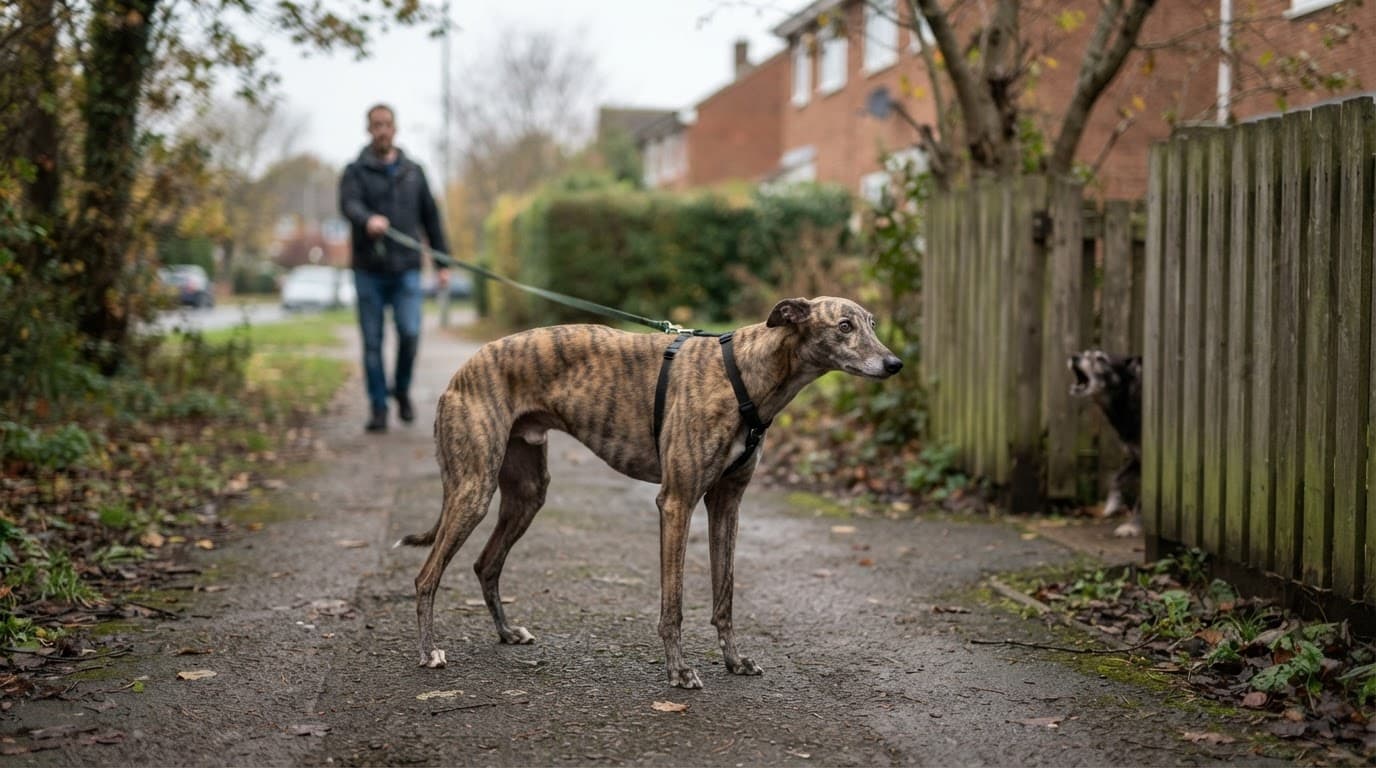
A relaxed Greyhound may pause to sniff, look around, or choose where to walk next. Their body still looks loose and connected to you. A stressed dog often looks tense, distant, and focused on escaping the situation.
Look at your dog’s whole body, not just the leash. Notice possible environmental triggers, including barking dogs, traffic, strangers, loud noise, or unfamiliar surfaces.
Recognizing stress signals in Greyhounds can help you spot discomfort before your dog becomes a statue.
Why the Same Spot Can Trigger a Greyhound Statue
A single frightening event can make a repeated walking spot feel unsafe. Perhaps a truck roared past, a dog barked from behind a gate, construction started nearby, or your Greyhound slipped on wet pavement.
An unfamiliar person or sudden movement can have the same effect.
Repeated freezing in one location suggests that place now predicts something worrying. A one-time pause may simply reflect surprise, tiredness, or an interesting smell. Patterns tell you more than one isolated moment.
Some Greyhounds even freeze when asked to turn toward home. If walking back repeats the worry, try a looped route instead.
Before each freeze, note the location, time, weather, sounds, surface, and nearby events. These details can reveal the trigger and help you choose calmer walking routes.
The Most Common Reasons a Greyhound Stops and Plants on a Walk
When a Greyhound stops and plants, more than one cause may be involved. Physical discomfort, fear, cold, fatigue, equipment problems, and pain can look similar, so don’t decide what happened from one incident alone.
Fear, New Places, and Too Much Stimulation
Busy roads, traffic, crowds, barking dogs, and noisy environments can feel like too much for a sensitive Greyhound.
Unfamiliar routes may also bring strange smells, slippery surfaces, metal grates, gravel, puddles, or uneven ground. Why keep walking when every step feels uncertain?
Weather changes can add to the problem. Wind, heavy rain, sudden thunder, or rustling branches may make your dog stop and look for safety.
A new home, new routine, or unfamiliar neighborhood can cause more freezing during the adjustment period, too.
Quiet, predictable walks help your Greyhound learn that outside is safe. Choose a familiar walking route at a calm time, keep the leash loose, and give your dog time to look around.
Short walks that end successfully are more useful than long outings that become overwhelming.
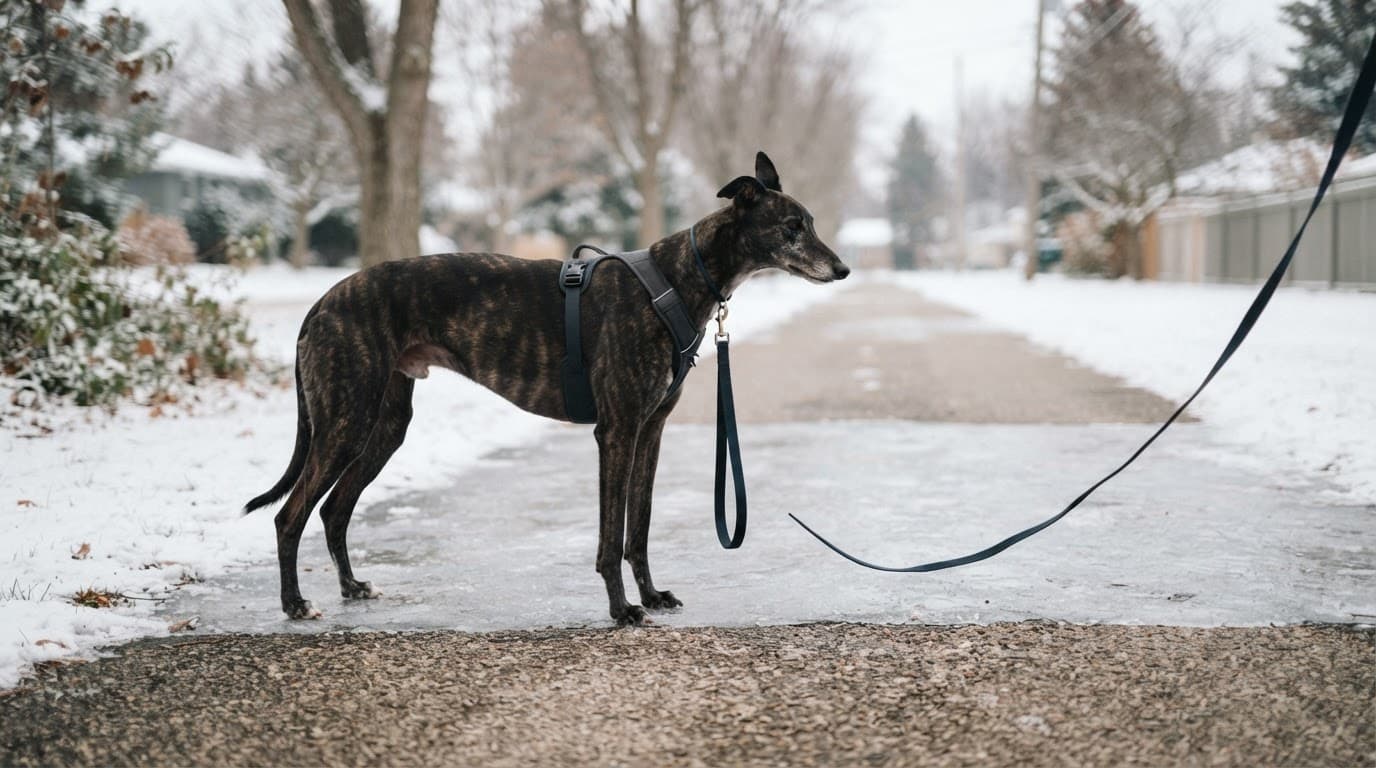
Cold Weather Can Make Greyhounds Slow Down or Stop
Greyhounds have thin coats and little body fat. Cold air, wind, rain, and icy ground can make them uncomfortable much faster than a thick-coated dog.
A cold Greyhound may shiver, lift their paws, seek warmth, slow down, stop, or appear anxious.
A well-fitting coat can help protect the chest and back. Keep outings shorter during cold snaps, choose dry routes where possible, and warm your dog gradually indoors after the walk.
Don’t rush them straight beside a heater if they’re very cold.
The Greyhound Board of Great Britain advises limiting time on icy paths to 15 minutes without boots in really frosty conditions. Individual dogs may need less time, especially if they already show discomfort.
You can also follow these rainy-day dog walking safety tips when wet weather makes paws and surfaces uncomfortable.
Pain, Harness Problems, and Other Medical Causes
Sudden or worsening freezing can point to sore paws, muscle or joint pain, stiffness, an injury, illness, or rubbing from walking equipment.
Check your Greyhound’s paws after the walk, including between the toes, but don’t try to diagnose the cause at home.
Look for limping, weakness, reluctance to rise, a changed gait, or discomfort when touched. A properly fitted harness should feel snug and stable, without rubbing behind the legs, pressing on the throat, or restricting shoulder movement.
An escape resistant harness can help prevent accidental backing out during a fearful episode, but secure equipment doesn’t replace gentle handling or veterinary assessment.
A poor fit can make every step unpleasant, and a harness won’t resolve pain-related freezing. If your dog freezes repeatedly, seems painful, or struggles to stand or walk, contact your veterinarian.
Stopping the walk is safer than pulling forward and turning a health problem into a bigger one.
What to Do When Your Greyhound Freezes During a Walk
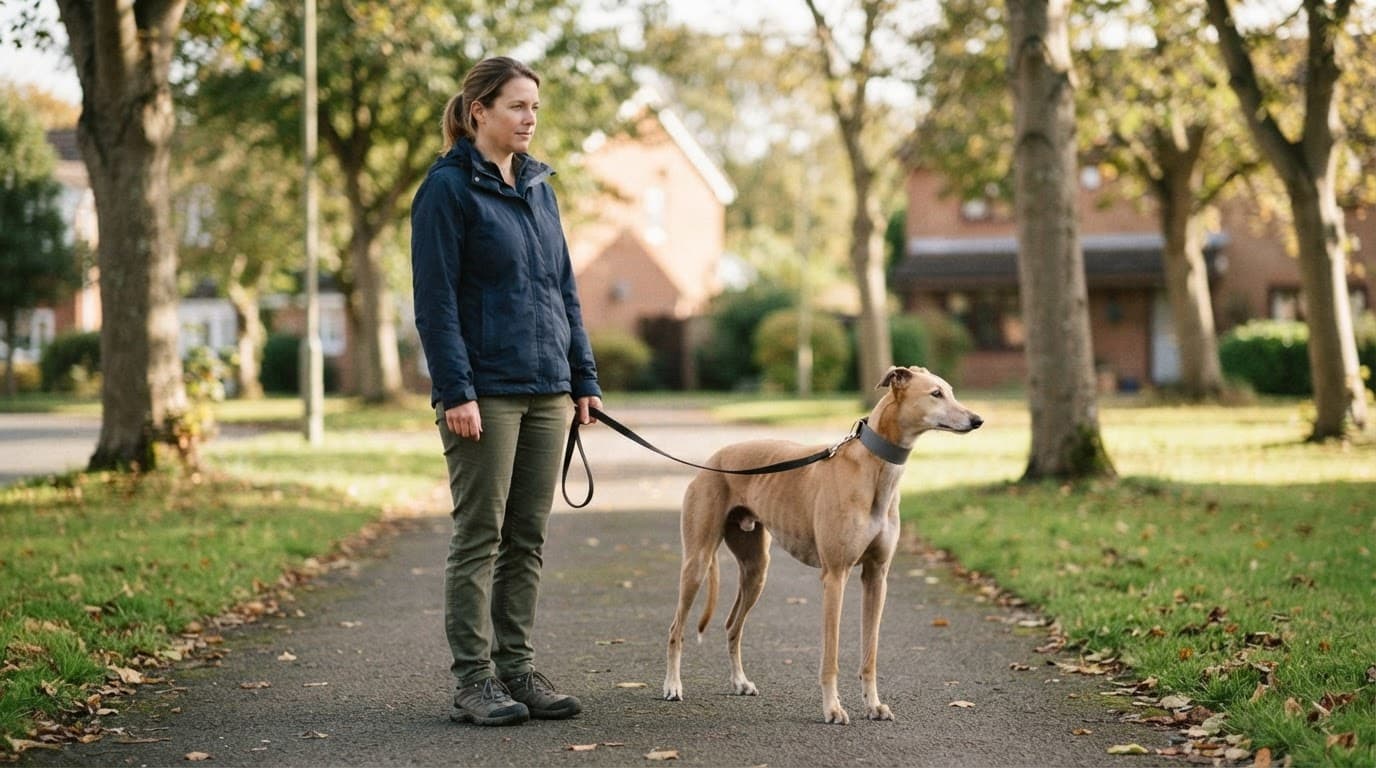
When your Greyhound plants during a walk, stop and give them a moment. Your first job is safety and lowering the stress response, not forcing forward movement. Check the road, traffic, other dogs, and nearby hazards before deciding what to do next.
A Simple Reset Plan for the First Few Minutes
Follow this calm sequence when your Greyhound plants:
- Stop walking and keep your body relaxed. Hold the leash securely without tightening it.
- Identify the trigger. Look for traffic, barking dogs, strangers, loud machinery, slippery ground, or anything unusual.
- Increase distance by stepping away, crossing the street, or turning toward a quieter route. Practice an emergency u turn so leaving an overwhelming situation feels familiar.
- Invite your dog to turn or follow you. Use a soft voice and gentle movement instead of repeated commands.
- Reward voluntary responses with positive reinforcement. A head turn, glance back, step toward you, or relaxed body posture can earn a high-value treat.
- End the walk or choose a quiet alternative if your Greyhound cannot settle.
You can use your body as a gentle screen between your dog and the trigger. This type of body blocking should shield your Greyhound, never push, corner, or physically force them.
Veterinary guidance from PDSA’s advice on dog phobias also supports staying calm, reducing exposure, and rewarding relaxed behavior.
If your dog cannot engage with you or accept food, the trigger is probably too close.
Calmly head home, or take your Greyhound somewhere quiet in the car if that is safe and practical. A shorter walk is far better than leaving your dog frightened.
Why Pulling a Frozen Greyhound Usually Makes Things Worse
Pulling can make a worried pause feel like a trap. Your Greyhound may feel pressure around their body while the scary sight or sound remains in front of them.
A flight or fight response can intensify when a dog feels trapped, leading to backing up, twisting against the harness, or attempting to escape.
Dragging, pushing, scolding, or repeatedly luring with food can add more pressure. It may also create a stronger fear memory, because your dog learns that the trigger comes with discomfort and no safe way out.
The goal isn’t to win a battle or force your Greyhound past the trigger. The goal is to restore a sense of safety.
Keep the leash secure in case your dog bolts, but allow as much slack as the situation permits. This supports safe loose leash walking without adding unnecessary pressure. Once your Greyhound feels safe again, calm movement can return naturally.
If freezing happens often, consider planning healthy walks for Greyhounds around quieter routes, suitable weather, and your dog’s comfort level.
How to Help a Greyhound Walk With More Confidence
Confidence grows through small, safe experiences. A predictable walk routine supports confidence building through manageable steps.
A newly adopted dog may need days or weeks to adjust to unfamiliar places.
Build a Walk Routine That Feels Safe and Predictable
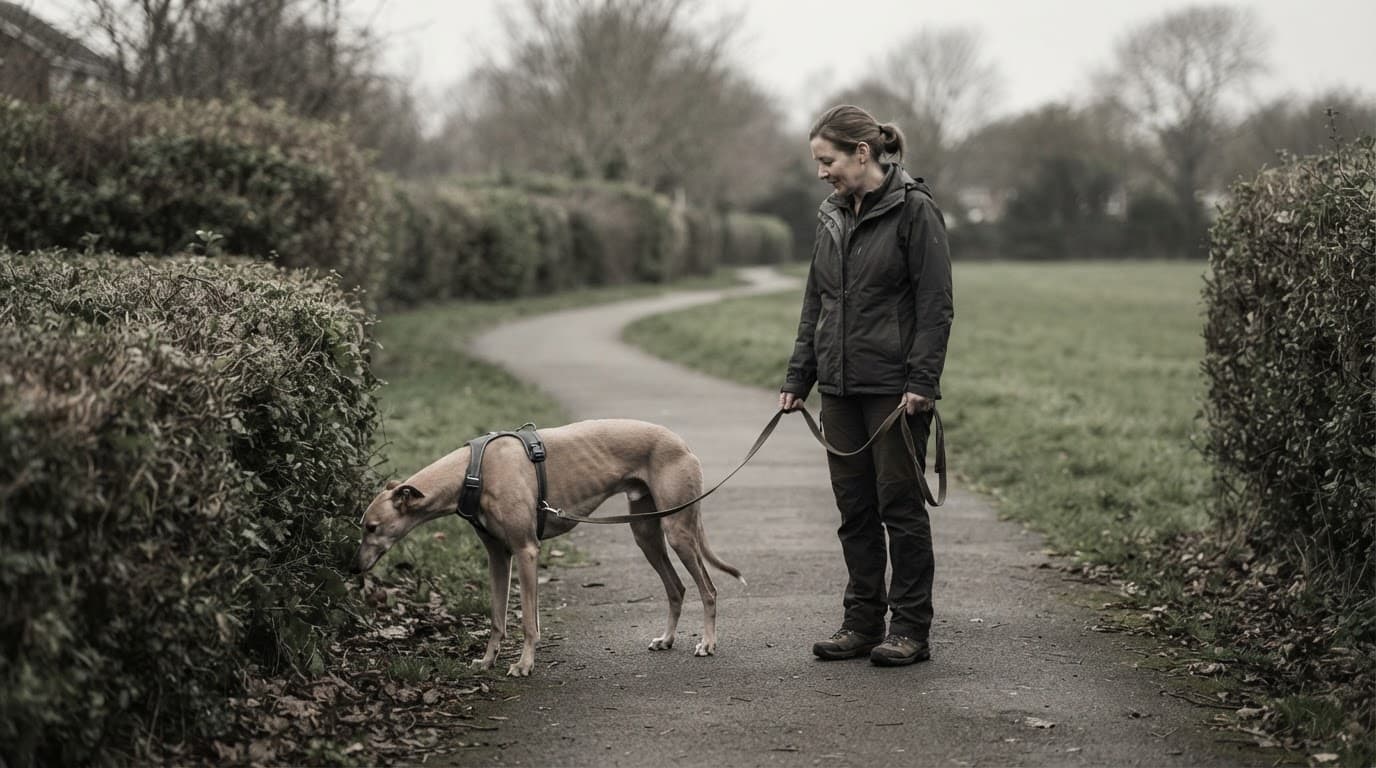
Start with one or two quiet routes and use them at calm times of day. Early mornings or quieter evenings may be easier than busy periods filled with traffic, cyclists, children, and other dogs.
Let your Greyhound sniff and observe the surroundings. Each calm outing becomes a positive walking experience.
These pauses help build emotional resilience by allowing your dog to process the environment without rushing.
A looped route can also help. Some Greyhounds become worried when they turn and walk back through the place that frightened them. A gentle loop avoids that repeated approach while keeping the walk familiar.
End the outing while your dog is still coping. If your Greyhound has taken a few relaxed steps, sniffed calmly, or watched a trigger without freezing, that may be the right time to head home.
You can find more help for anxious dogs on walks when you need extra ideas for building a steady routine.
Use Rewards and Distance Instead of Pressure
Gradual exposure means showing your Greyhound a trigger from a distance where they can still think. This space helps prevent fear and anxiety from becoming overwhelming. The trigger might be a barking dog, a noisy truck, a stranger, or a particular surface.
When your dog notices it, pair the trigger with food rewards, quiet praise, and calm movement away.
This pairing is positive reinforcement because it makes the trigger feel safer over time. Veterinary behavior guidance on desensitization and counterconditioning supports this careful approach.
Never force your Greyhound closer. Pulling them toward something scary can make the fear stronger and damage their trust in you. Progress may look small, such as:
- Looking at a trigger and staying relaxed.
- Taking one step forward without leash pressure.
- Accepting food near a worry.
- Choosing to move away instead of becoming stuck.
Practice calm U-turns at home first, using a cheerful voice and a treat. Then you can use the skill outdoors when you need more space.
For additional training resources, Check out our great guides on Payhip and Check out our ebook guides on Etsy.
When Professional Behavior Support Can Help
Contact a qualified trainer who uses reward based training, or consult a veterinary behavior professional, if freezing is frequent, severe, spreading to new places, or leading to unsafe escape attempts.
A veterinary check is also sensible when the behavior appears suddenly or comes with signs of pain.
Keep a simple walk diary. Record the route, time, weather, trigger, distance, body language, and recovery time.
You can take a short video only when it is safe and your attention remains on your dog.
Reward based training is preferable to punitive training methods for fear-related freezing. Scolding or correcting a frozen Greyhound may increase distress instead of teaching confidence.
A skilled professional can adjust the plan, improve safety, and decide whether veterinary treatment should form part of your dog’s support.
When a Frozen Greyhound Needs a Veterinarian
A new, sudden, worsening, or unexplained freeze deserves attention beyond a simple pause. A sudden change in dog behavior may be a behavioral response to pain, illness, injury, or cold, rather than deliberate refusal.
Sudden or Unexplained Freezing Can Mean Pain
Contact your veterinarian when your Greyhound suddenly stops walking without an obvious trigger. Arrange an appointment sooner if freezing keeps happening, affects familiar routes, or comes with:
- Limping, stiffness, weakness, or reluctance to move.
- Pain when you touch a leg, paw, back, or neck.
- Reluctance to stand, climb stairs, jump, or play.
- Reduced appetite, unusual tiredness, panting, or restlessness.
- A hunched posture, trembling, or a noticeable behavior change.
A Greyhound that lags behind or completely stops during walks may be showing pain, not stubbornness. Check the paws for cuts, cracks, swelling, or something trapped between the toes.
Don’t press sore areas or try to diagnose the problem yourself. Our guide to recognizing canine mobility problems may help you spot warning signs before your appointment.
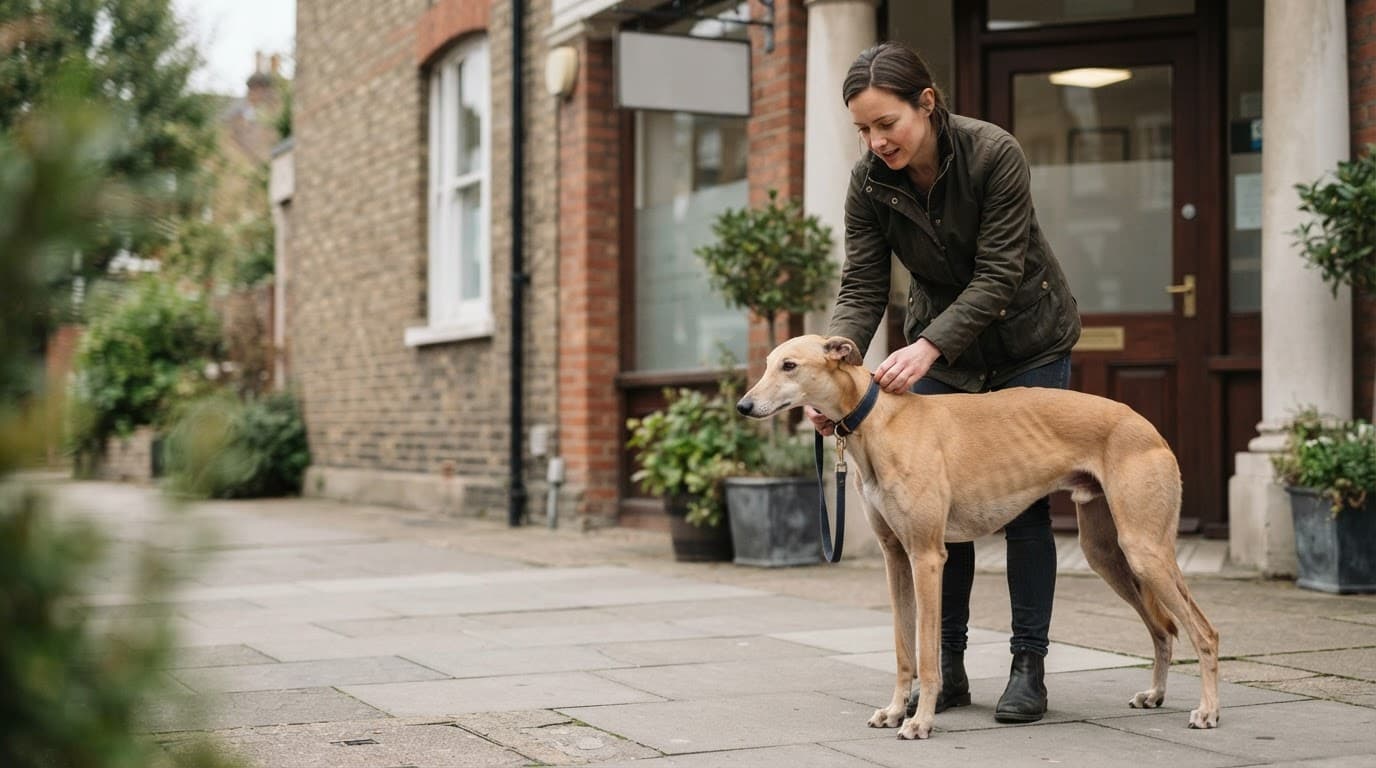
Treat Suspected Hypothermia or Frostbite as an Emergency
Greyhounds can become cold quickly because they have thin coats and little body fat. Move your dog indoors or to a warm, dry place if they show intense shivering, weakness, confusion, exhaustion, or trouble breathing.
Pale, gray, blue, or cold skin, damaged paw pads, blisters, or black-looking tissue can indicate frostbite.
Wrap your dog in warm, dry blankets and rewarm them gradually. Don’t use a heating pad, hair dryer, hot water, or intense direct heat.
Never rub or massage cold, damaged skin. PetMD’s guidance on hypothermia in dogs also recommends gradual warming and immediate veterinary care.
Call a veterinarian or emergency clinic immediately when hypothermia or frostbite is possible. A behavioral response can improve with training, but it should never delay medical care.
Frequently Asked Questions
A Greyhound that freezes on walks can leave you wondering whether you’re handling it correctly. These answers cover a few common questions that may still be on your mind.
Is freezing on walks ever caused by boredom?
Boredom usually leads to pacing, sniffing, pulling, barking, or searching for something to do.
Appropriate mental stimulation, such as a snuffle mat or puzzle feeder, can reduce restlessness, but it won’t resolve fear, pain, or cold. You can compare the signs with these tips for calming activities for dogs.
How long should I wait for my Greyhound to move?
Give your dog a short pause while you check the surroundings and watch their body language.
If they remain tense, refuse treats, or seem unable to settle, create distance or end the walk. Waiting longer won’t make a frightening trigger feel safer.
Should I carry my Greyhound home?
You can carry your Greyhound if they are small enough for you to handle safely and cannot walk without distress.
Otherwise, guide them away slowly or arrange safe transport rather than dragging them along. Keep your dog secure, especially if fear could lead to bolting.
Why does my Greyhound freeze only in certain weather?
Cold, rain, wind, ice, and wet pavement can make a Greyhound uncomfortable. Their thin coat and low body fat offer less protection than many other breeds have.
A coat, shorter route, dry surface, and earlier finish may prevent weather-related freezing.
Can a Greyhound freeze because of a bad past experience?
Yes. A single scare, such as a loud truck or barking dog, can make a place feel unsafe later. Avoid forcing your dog back toward that spot, and rebuild confidence from a greater distance.
Will my Greyhound grow out of freezing?
Some newly adopted Greyhounds improve as their routine becomes familiar, but repeated fear usually needs gentle support.
Keep a walk diary, use positive reinforcement to reward calm choices, and speak with your veterinarian or a qualified reward-based behavior professional if progress stalls.
Conclusion
When a Greyhound freezes on walks, they’re communicating that something feels wrong. Fear and anxiety, cold, equipment discomfort, pain, or environmental stress can turn your dog into a statue.
It isn’t stubbornness, and forcing them forward won’t make the worry disappear. Learning how to recognize canine stress signals can help you respond before a pause becomes a full freeze.
Stop pulling, identify the trigger, and create distance while keeping your voice calm. Use positive reinforcement to reward small, voluntary movements, and protect your Greyhound from cold with shorter walks and suitable warmth.
If freezing is sudden, repeated, worsening, or linked with limping, stiffness, trembling, paw problems, or unusual tiredness, contact your veterinarian.
With patience and steady support, many Greyhounds begin to feel safe again. A calm look, a relaxed sniff, or one willing step may seem tiny, but those small voluntary steps count as progress.