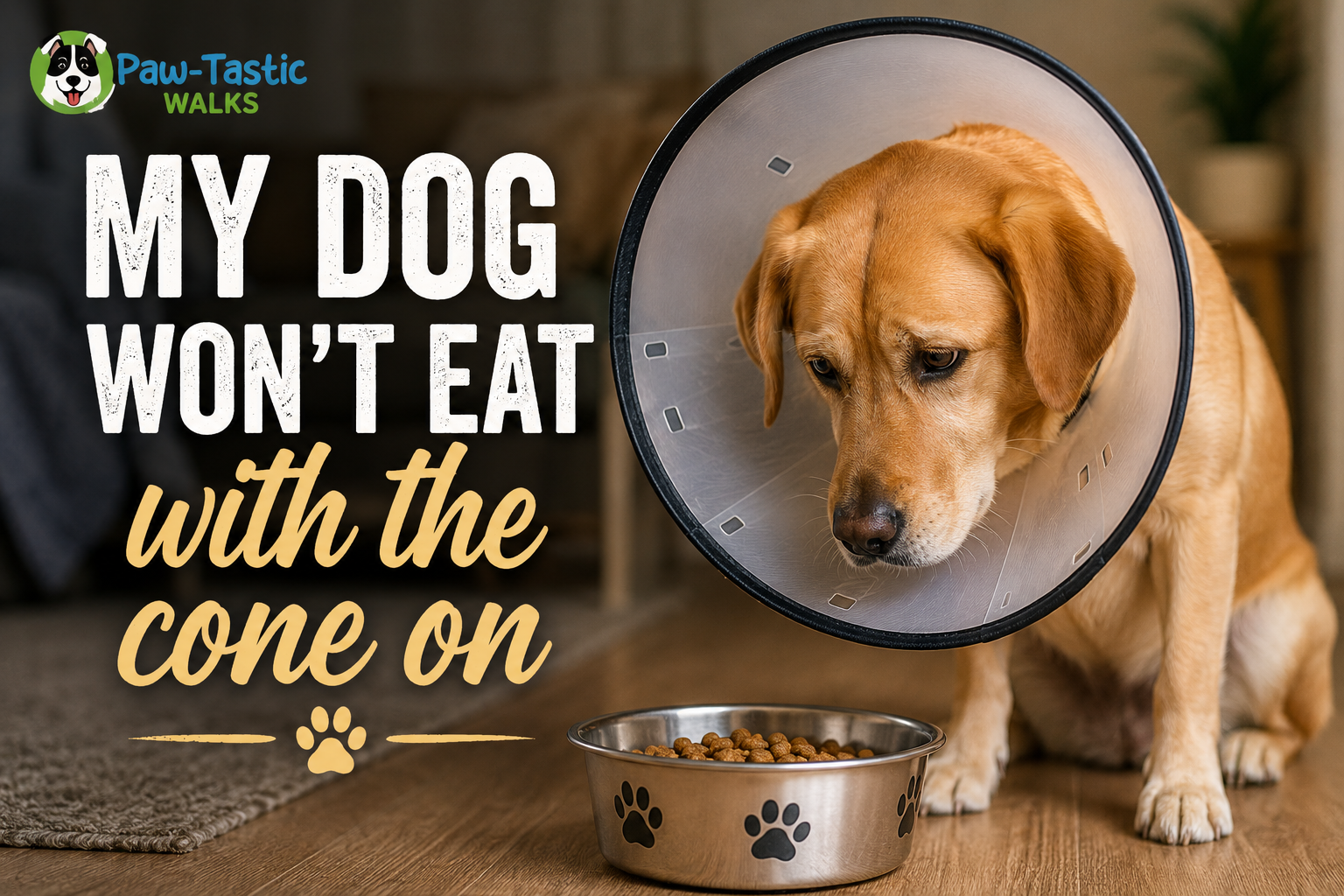
Many dogs can eat and drink with a properly fitted recovery cone, also called a cone of shame.
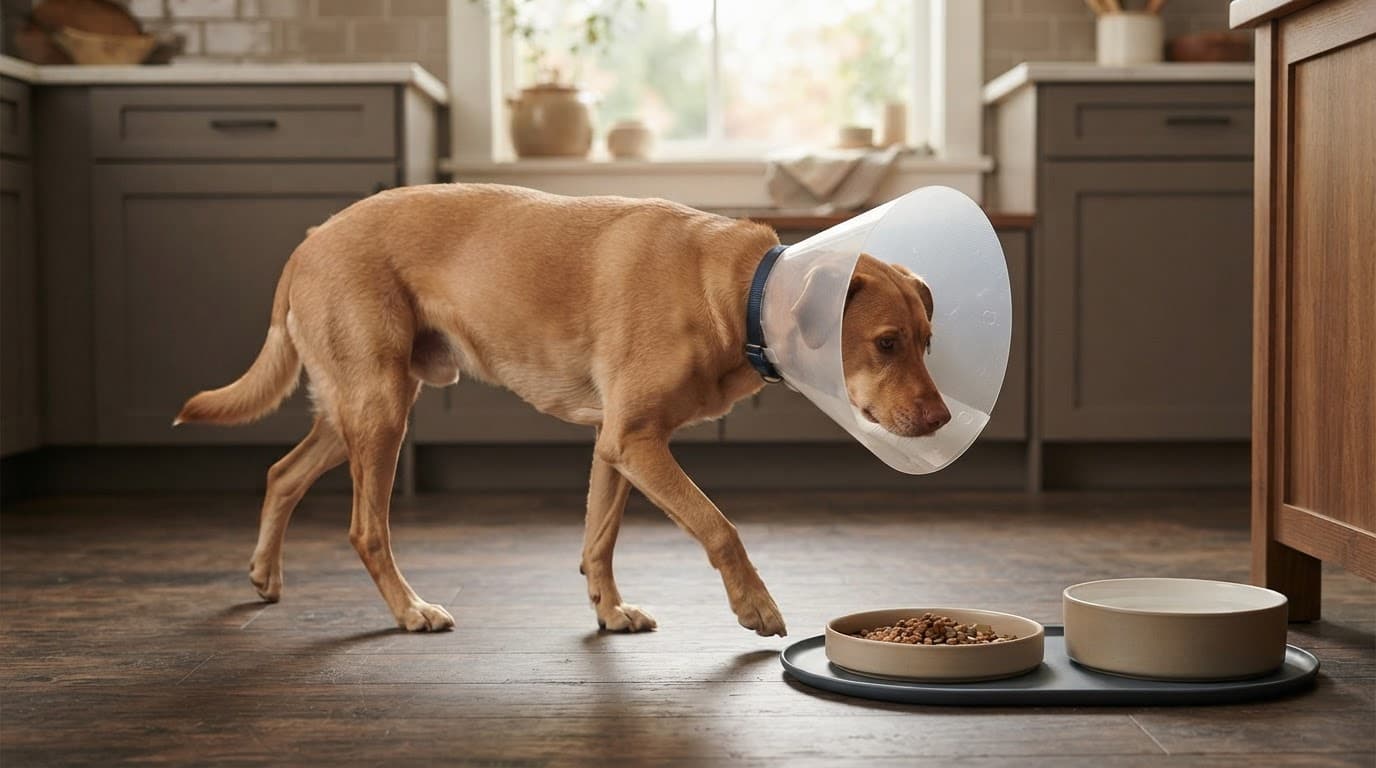
If your dog struggles to eat while wearing the cone, try a raised bowl, shallow plate, or smaller dish that fits inside it.
You may not be able to remove the cone, especially after eye surgery or when your dog has stitches or a wound. If removal is allowed, take it off only during meals and supervise every second. Put it back on straight away.
Don’t ignore poor food or water intake. A dog that refuses both for 24 hours, or shows vomiting, weakness, pain, or signs of dehydration, needs prompt advice from a vet.
Let’s look at the simple feeding changes that can make mealtimes easier.
This post may contain affiliate links. If you make a purchase through these links, I may earn a small commission at no extra cost to you.
Watch this quick cone-feeding tip on YouTube
Key Takeaways
- If your dog struggles to eat while wearing the cone, raise the bowl or offer food on a shallow plate.
- Keep fresh water easy to reach, and try small meals or gently warmed food.
- Keep the e-collar on unless your veterinary team approves a brief meal break. Supervise every second during meals.
- Call your vet promptly if your dog refuses food and water, vomits, seems weak, or shows pain. See this veterinary advice on post-surgery appetite.
- For more practical dog-care resources, Check out our great guides on Payhip and Check out our ebook guides on Etsy.
My dog won’t eat with the cone on: What Should I Try First?
When a dog struggles to eat while wearing a cone, start with simple changes before considering removal. Difficulty reaching a bowl is common during the first day or two, while many dogs are still adjusting to the cone.
Stay calm and give your dog time. Your dog should still be able to manage eating and drinking while the cone protects the surgical site or healing area. Learning to navigate around the new shape may take practice.
Refusing food can also happen because of pain, nausea, stress, medication, or the illness itself.
Check Whether the Cone Fits Correctly
A cone that is too long, loose, tight, or heavy can make eating and drinking much harder.
Veterinary guidance commonly recommends a cone reaching the tip of the nose, or slightly beyond it, while still allowing comfortable breathing and swallowing. You can find more guidance about an Elizabethan collar in this VCA guide to Elizabethan collars.
Check for rubbing around the neck, trapped ears, trouble panting, or signs of pressure. Look for gaps that allow your dog to reach the affected area too. The cone should protect the area without making your dog feel trapped.
A cone must block access to the wound, but it shouldn’t stop your dog from breathing, swallowing, or moving comfortably.
Ask your veterinary team to refit or replace the cone if it doesn’t seem right. Don’t cut it, bend it, or change the fastening without advice, as even a small alteration may reduce its protection.
Keep Meals Calm, Close, and Easy to Reach
Move the bowl close to your dog’s mouth, and try a shallow plate instead of a deep dish. Offer fresh water in a clean dish that the cone can reach without knocking it over.
Choose a quiet room and separate your dog from other pets during meals. Gentle encouragement is helpful, but don’t force food into the cone. Your dog may bump it several times while learning, so supervise closely and prevent panic or injury.
For more everyday care ideas, Check out our great guides on Payhip and Check out our ebook guides on Etsy.
How to Feed a Dog With an E-Collar When the Cone Must Stay On
When your dog must wear an e-collar after surgery or because a wound needs protection, adjust the feeding setup instead of removing it. A plastic cone can catch on deep dishes, making food and water harder to reach.
Try one change at a time, then watch your dog eat and drink. Never force your dog’s head into a bowl, and use a stable surface that won’t tip.
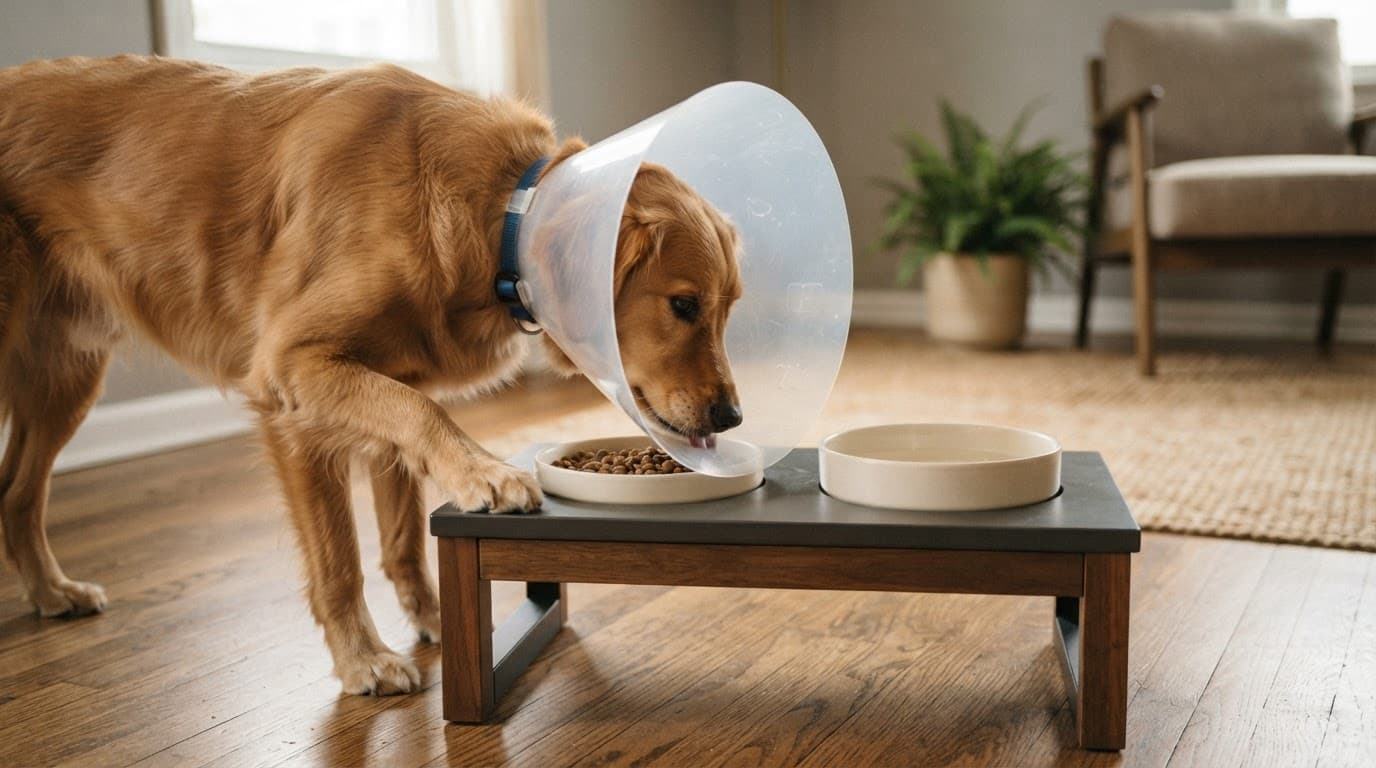
Raise the Food and Water Bowls Safely
A slightly raised bowl can help your dog reach down through the cone without pushing the rim across the floor. Start with a sturdy, non-slip platform, secure box, or purpose-built raised feeder.
Some veterinary handouts suggest 2 to 4 inches as a starting point, but the right height depends on your dog’s size and cone shape.
Use a stable feeding station with a secure food bowl and water bowl. Watch your dog closely during the first meal. Your dog should stand comfortably, lower their head naturally, and reach the food without stretching, wobbling, or tipping the dish. If the neck looks strained, lower the dish and try again.
Avoid loose stacks of books, unstable boxes, or anything that could collapse when the cone bumps it.
A heavy feeder with a non-slip base is often safer. Test the setup with an empty dish first, then add food or water once you know it stays put.
Switch to a Shallow Dish or Smaller Bowl
A deep bowl can catch the cone’s edge and make your dog pull away. Food spread across a shallow dish gives the muzzle a clearer path, so your dog can eat without fighting the rim.
This simple change often helps when a dog won’t eat with the cone on.
A smaller bowl may also work if it fits comfortably inside the cone opening. Choose a dish that’s non-slip, easy to clean, and wide enough for your dog to approach without hitting a wall, chair, or cabinet.
If your dog seems interested but struggles with dry food, try wet food or softened kibble.
Slightly warming the food can make its aroma more appealing. Warm food may help with interest, but it won’t treat pain, nausea, or another cause of appetite loss.
Help With Water Without Creating a Mess
Many owners search for help because their dog can’t drink water with a cone. Try a raised, shallow dish, a smaller bowl inside the cone opening, or a clean plate if your dog can lap from it safely.
A water fountain may help some dogs, especially if they already like moving water. Keep it stable, introduce it calmly, and stop using it if the sound or movement makes your dog nervous. Familiar equipment is usually best during recovery.
Check the area often for spills. A wet cone can become heavy, uncomfortable, and irritating around the neck.
Moistening food can add some fluid, but it doesn’t replace fresh drinking water.
Watch for sticky gums, thick saliva, weakness, unusual panting, sunken-looking eyes, or reduced energy. Contact your veterinarian promptly if your dog drinks very little, refuses water, vomits, or seems dehydrated.
Try Hand Feeding Only With Full Supervision
Holding a dish inside the cone can help a stubborn dog learn where the food is. Stay beside your dog for the entire meal, and hold the dish steadily at a comfortable angle.
Let your dog move toward the food rather than pushing their head into it.
Your dog may need time to navigate the feeding area with the cone. Never balance food or water inside it, and don’t leave your dog alone with a handheld setup, even briefly. The dish could spill, block the airway, or frighten your dog.
If food gets on the cone, wipe it away with a damp cloth and dry the area fully. Avoid strong cleaning products near your dog’s face.
Stop the meal if your dog becomes frightened, coughs, gags, or struggles to breathe, then call your veterinary team for advice.
Should You Remove the Cone for Meals?
Taking the cone off for food is not automatically safe. It depends on where your dog’s surgical site is, how quickly they can reach it, and your veterinary team’s instructions.
Any alternative should match the protection provided by the original e-collar.
Eye surgery needs extra care. A dog can rub or paw at an eye within seconds, causing serious damage.
The same applies to skin surgery, hot spots, and healing areas your dog can easily lick or chew.
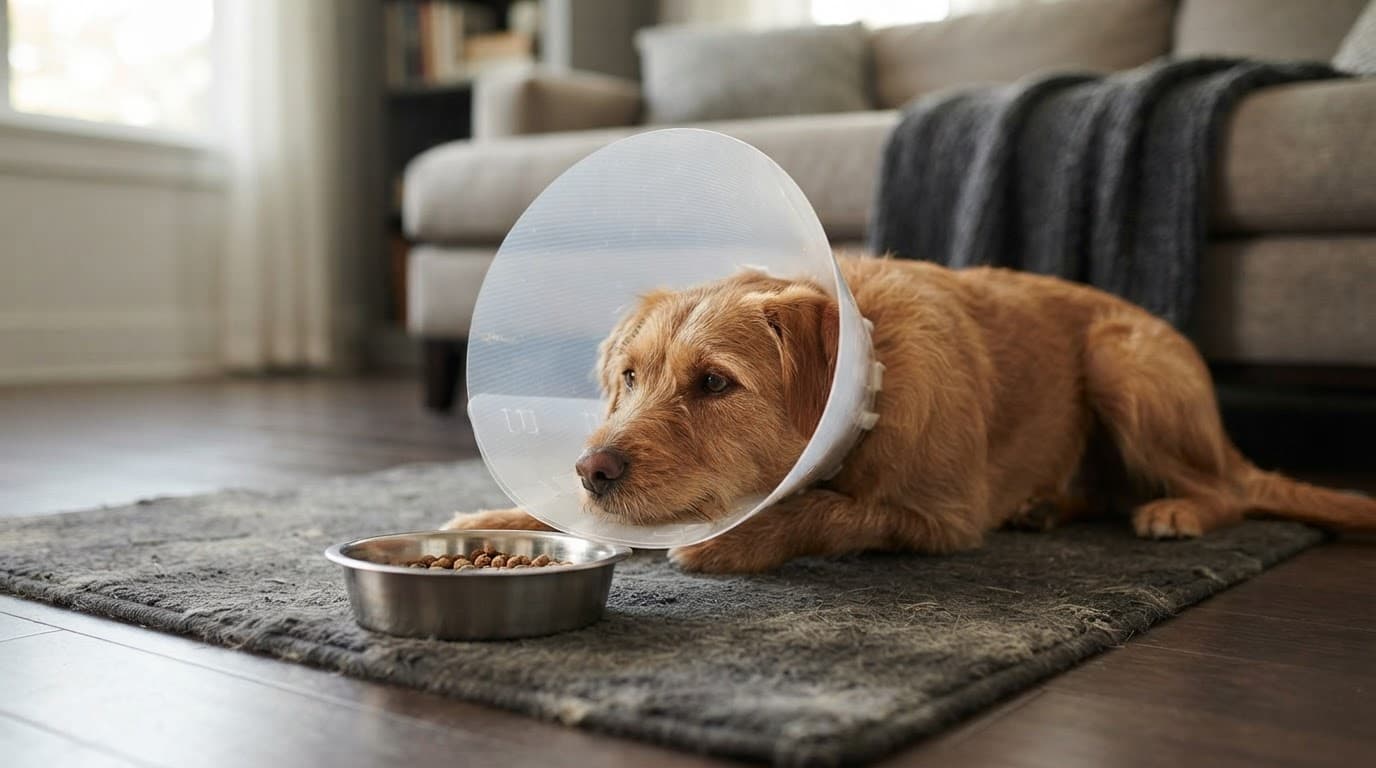
Choosing alternative collars
A soft cone may feel more comfortable than a hard plastic cone. It can also give your dog better access to food and water, but it may not stop them from reaching stitches on the body.
An inflatable collar may still allow rubbing around the face, ears, or eyes. A donut collar can limit neck movement without preventing your dog from scratching nearby areas.
A surgical recovery suit may cover some skin surgery sites, but it won’t protect an eye or stop scratching with a back foot.
Some options may suit certain surgical sites. You can read more about possible vet-recommended cone alternatives, but ask your vet before switching collars. The wrong choice can allow licking, scratching, or rubbing that delays healing.
A feeding solution is only helpful if it still protects the area that needs to heal.
If your dog won’t eat with the cone on, follow the discharge instructions first. For some skin surgeries, your vet may approve a break for one brief meal. Any approved break must be brief and watched continuously, so use supervised breaks only with your dog beside you.
Never treat eye surgery, reachable stitches, or an open wound as a routine cone-removal situation. Your dog may damage the area before you have time to react, reopening the closure.
If removal isn’t approved, return to the raised bowl, shallow plate, or smaller bowl setup instead. A little mealtime inconvenience is far better than reopened stitches or a longer recovery.
When a Cone Problem May Actually Be Pain or Illness
A dog that wants to eat but can’t reach the bowl has a feeding problem. A dog that shows no interest in food may have another issue.
A cone can make eating awkward, but a complete loss of interest may signal pain, nausea, medication side effects, infection, mouth pain, post-surgery appetite changes, or the original illness.
Look at your dog’s whole behavior, not just the untouched bowl. A cone shouldn’t explain every change in appetite.
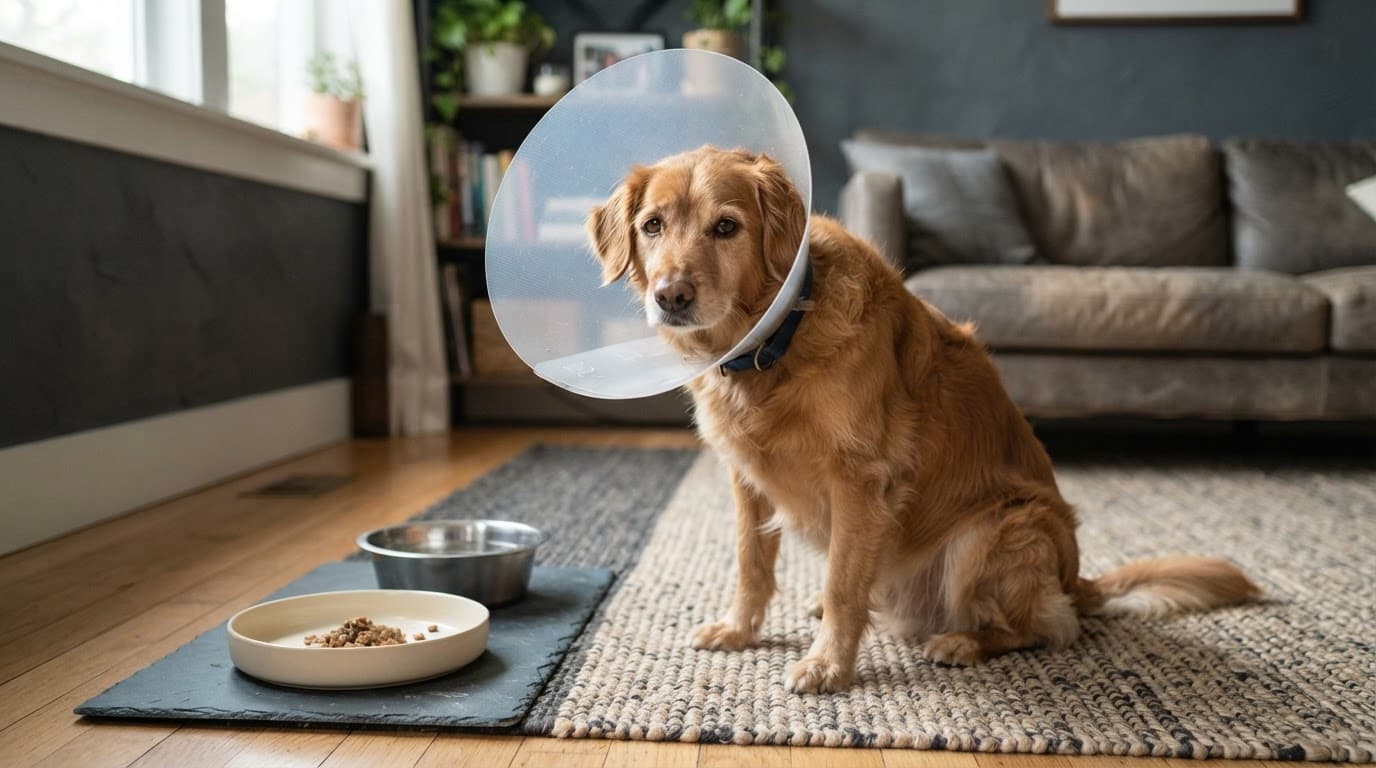
Know When to Call the Vet Right Away
Contact your veterinarian promptly if your dog:
- Refuses both food and water, even after you change the bowls or feeding position.
- Has repeated vomiting or diarrhea, especially alongside poor appetite.
- Appears painful, weak, unusually sleepy, or reluctant to move.
- Drools excessively, struggles to swallow, or seems unable to open or close the mouth comfortably.
- Shows a swollen, bleeding, damaged, or increasingly painful wound.
- Keeps pawing at or rubbing the cone, face, or surgical area.
- May have swallowed medication, a toxic substance, a foreign object, or something unusual.
Vomiting or diarrhea can need faster advice than a simple missed meal. Fluid loss can worsen dehydration, while repeated vomiting may prevent your dog from keeping water down.
A veterinary guide to vomiting and appetite loss can help you recognize concerning combinations of symptoms.
Don’t force-feed your dog. Never give human medicine unless your veterinarian has prescribed it for your dog. Also, don’t delay care while repeatedly changing bowls, raising dishes, or trying new foods.
Many general veterinary guidelines recommend calling if a dog refuses food for 24 hours. Call your vet sooner for a puppy, senior dog, underweight dog, recently neutered dog, or dog with chronic illness.
Dogs taking time-sensitive medication, or dogs that aren’t drinking, also need earlier advice.
Make a Simple Feeding Plan for the Recovery Period
Write down what your dog eats and drinks, along with medication times, vomiting, stool changes, and behavior. Note whether your dog seems interested in food but can’t reach it, or turns away without trying.
These details can help your veterinarian decide what to do next.
Check the cone, bowls, and healing site several times each day, following your discharge instructions.
Record changes instead of relying on memory, especially during a tiring recovery.
For more practical recovery and dog-care ideas, Check out our great guides on Payhip and Check out our ebook guides on Etsy.
A Quick Cone-Friendly Feeding Setup to Try Tonight
If meals are difficult, make the recovery cone part of a simple, temporary recovery station tonight.
Choose a quiet area, move the dishes close, and change only one thing at a time. A calm room can make the cone feel less overwhelming.
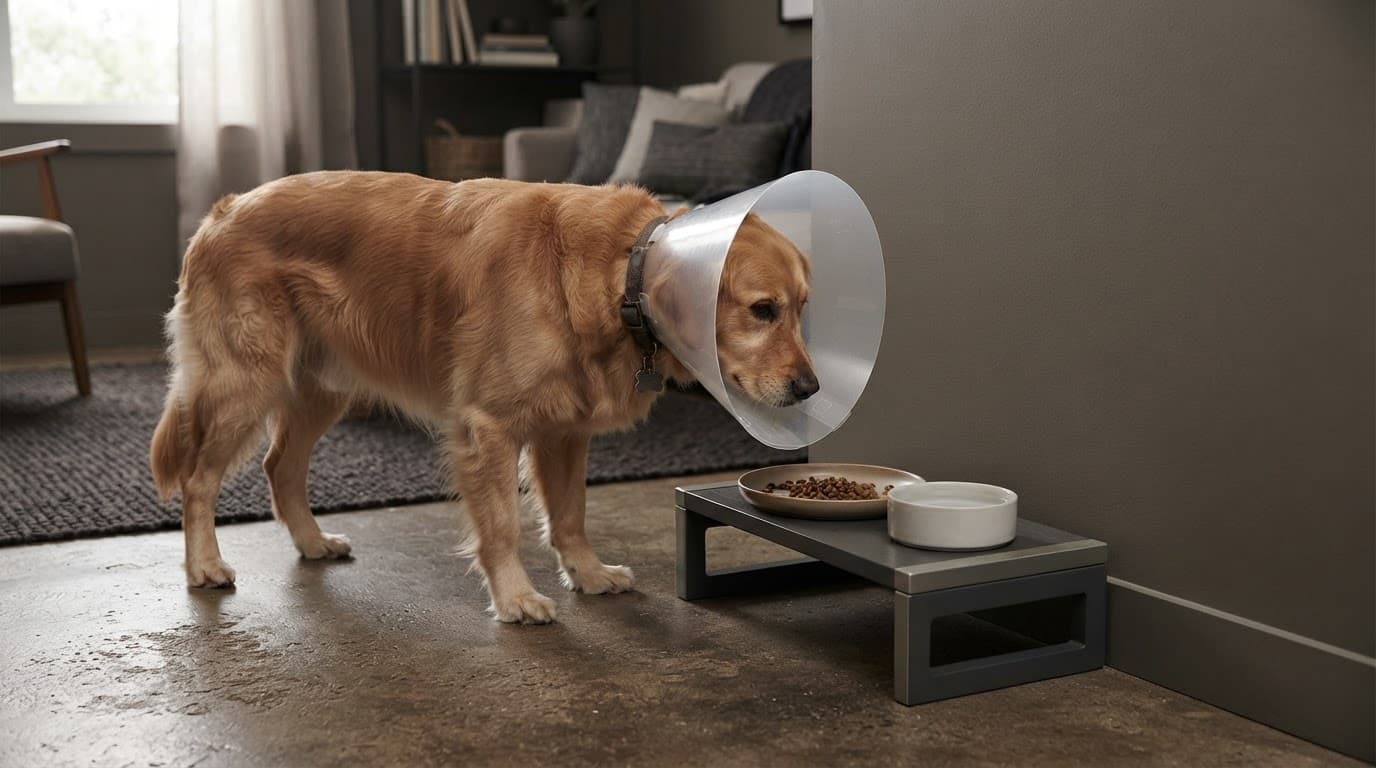
Try This Simple Feeding Checklist
Set up the meal using the following steps:
- Place a shallow plate or food bowl, plus a water bowl, on a stable surface that raises them slightly.
- Offer a small portion first, rather than filling the dish with a full meal.
- Watch whether your dog can reach the food, chew, swallow, and move away safely.
- Stay beside your dog for the entire meal, especially if the cone is removed with veterinary approval.
- Check that the cone reaches just beyond the nose but isn’t tight, loose, or rubbing the neck.
- Follow your veterinarian’s discharge directions about fasting, medication, food type, and cone removal.
A raised surface and shallow plate often help because the cone has less chance of catching on the bowl.
VCA also recommends trying a shallow plate when a dog struggles with a deeper bowl, as explained in this Elizabethan collar feeding guidance.
Don’t force your dog’s head toward the food. Let them approach at their own pace, and stop if they cough, gag, panic, or seem painful. For more practical recovery ideas, Check out our great guides on Payhip or Check out our ebook guides on Etsy.
Frequently Asked Questions
A cone can make recovery feel awkward for both of you. These answers cover common concerns about eating, drinking, resting, and safe cone use.
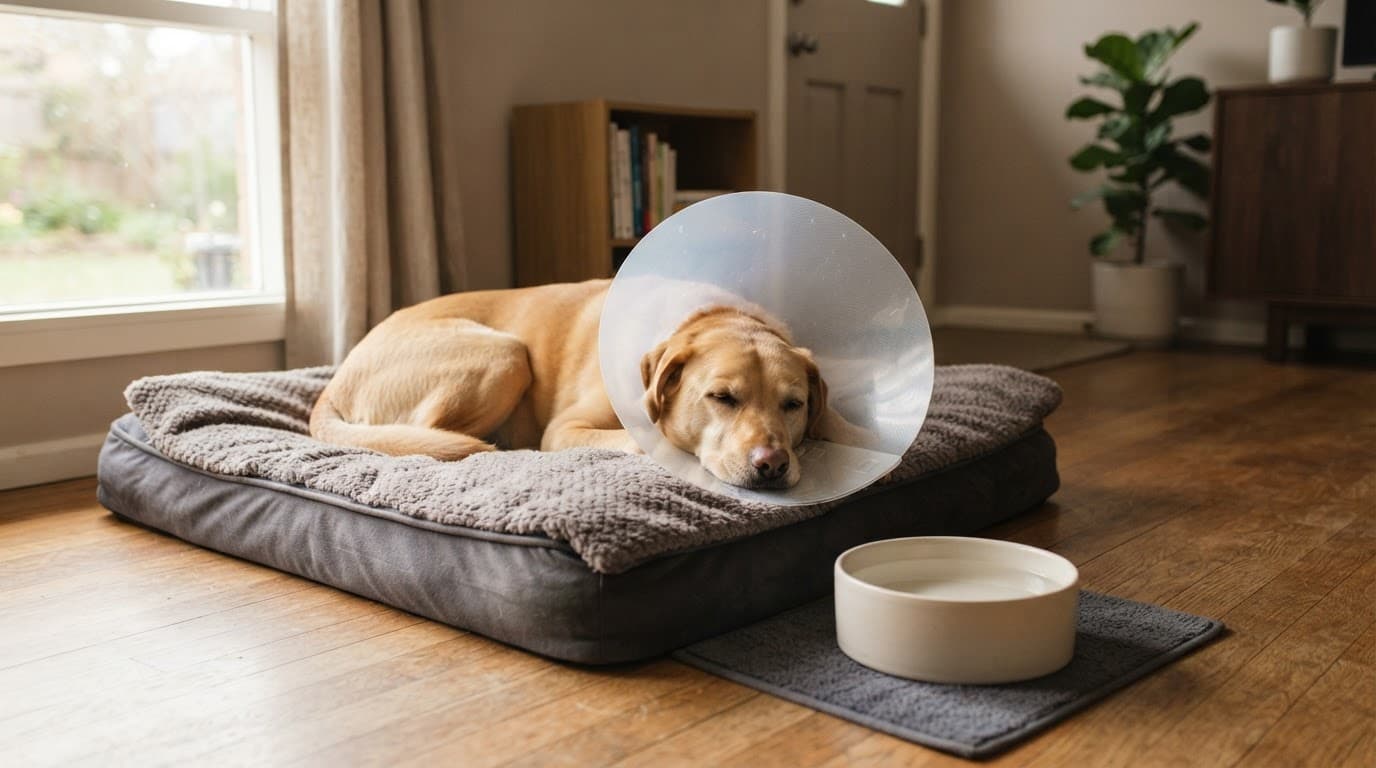
How long does it take a dog to get used to eating with a cone?
Many dogs improve within a day or two after learning how to approach the bowl. The timeline varies with the cone’s size, the type of surgery, your dog’s age, and their temperament.
Keep adjusting the setup with a shallow plate, raised dish, or smaller bowl. Contact your veterinary team if your dog still cannot eat comfortably or makes no progress.
Can my dog sleep with an e-collar on?
Cones often need to stay on day and night until the wound has healed, the closure is secure, or your veterinarian says otherwise. Sleep may be awkward, but removing the cone can let your dog lick, chew, or scratch the healing site.
Create a clear resting space with comfortable bedding. Check that the cone isn’t rubbing the neck or trapping a leg, collar, or bedding inside it.
Can I put food inside my dog’s cone?
Don’t leave food or water inside the cone. Spills can soil the wound, and a loose bowl may create a choking or breathing risk.
You may briefly hold a bowl inside the cone while your dog eats, but stay beside them constantly. Remove the bowl as soon as the meal ends and clean any food from the cone.
What if my dog will not drink with the cone on?
Try a raised, shallow dish, a smaller bowl, or a stable plate. Keep it close enough for your dog to reach without pushing the cone against the floor.
Contact your veterinarian if your dog still won’t drink. Dehydration can become serious, especially after surgery or alongside vomiting and diarrhea. Post-surgery care guidance from PetMD also recommends watching for changes that need veterinary attention.
Can I cut or shorten the cone so my dog can eat?
Don’t cut, reshape, or loosen the cone without veterinary approval. A shorter cone may let your dog reach the wound or rub an eye, while a rough or altered edge can cause injury.
Ask the veterinary team to refit it or recommend a safer size. The cone should make meals awkward, not make breathing, swallowing, or movement difficult.
Is it normal for a dog to skip one meal after surgery?
A dog may skip one meal after anesthesia or because the experience was stressful. Monitor drinking, alertness, pain, vomiting, and other symptoms while following the clinic’s discharge instructions.
Call your veterinarian if the appetite doesn’t return or your dog seems weak, painful, unusually sleepy, or unwell. Puppies, senior dogs, and dogs with medical conditions may need advice sooner.
Conclusion
If your dog won’t eat with the cone on, start by adjusting the feeding setup. Raise the bowl slightly, use a shallow plate, try a smaller bowl, and keep meals calm and quiet. These changes can help your dog reach food and water more comfortably.
The cone protects healing tissue, so it should only come off with your veterinarian’s approval. If removal is allowed, supervise your dog constantly and replace it immediately after the meal.
A little mealtime awkwardness is safer than reopened stitches or damage to a healing area.
Call your veterinarian if your dog cannot eat or drink, shows signs of illness or pain, or doesn’t improve after these adjustments.
With patience and the right setup, most dogs soon get used to eating with their cone.