
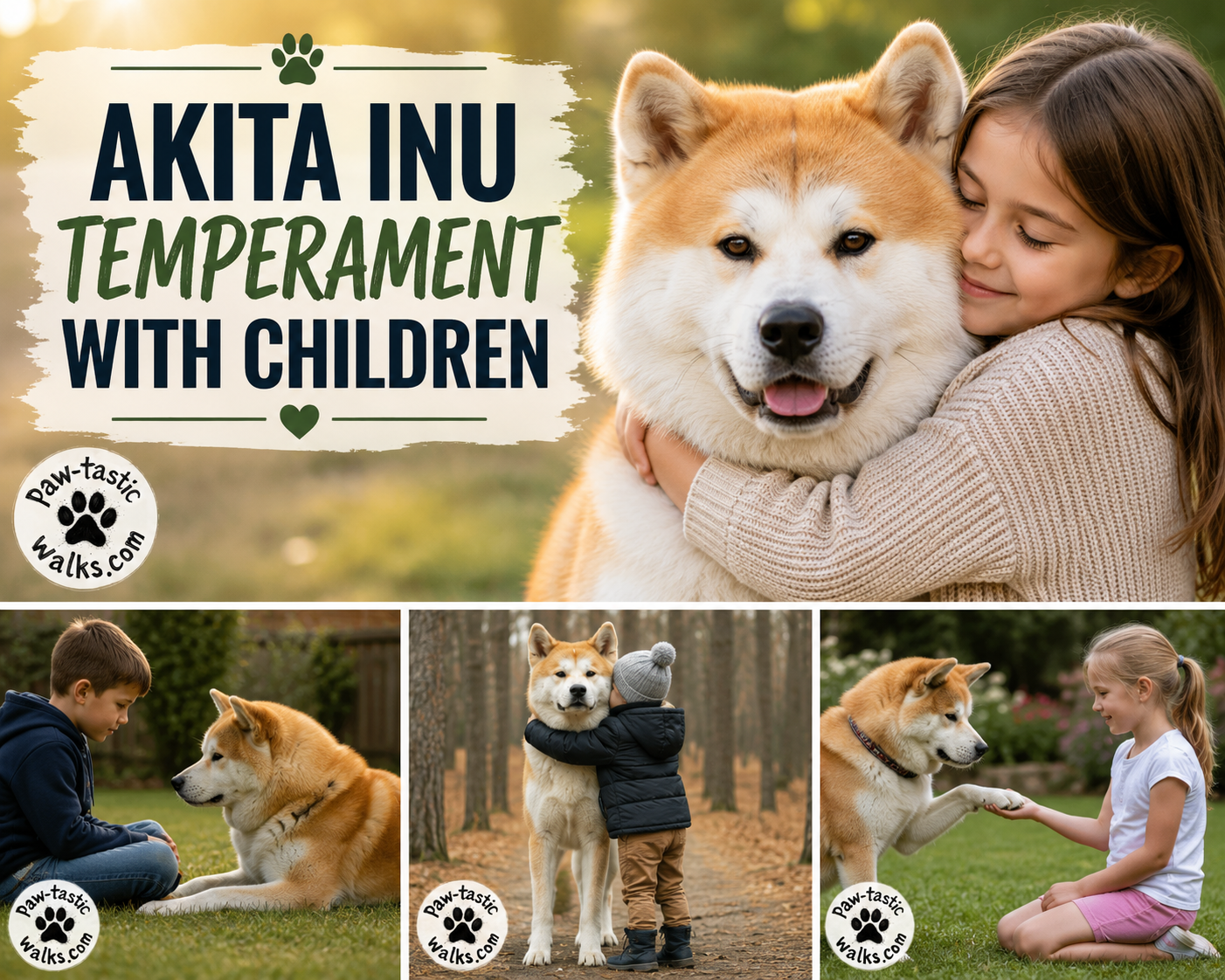
Thinking about getting an Akita Inu for your family? These dogs are known for their loyalty and protective nature.
They can be great family pets if they’re well-trained and socialized. Their strong bond with family members makes them a favorite for families with kids.
It’s important to understand the Akita Inu temperament when introducing them to kids.
With the right training, Akita Inus can be gentle and loving. Training and socialization are key to a happy home.
Key Takeaways
- Akita Inus are loyal and protective, making them great family dogs.
- Proper training and socialization are essential for a harmonious household.
- Akita Inus can be gentle and loving companions when introduced correctly to children.
- Understanding Akita Inu behavior around kids is key for a safe home.
- Raising an Akita Inu with children needs patience and dedication.
Understanding the Akita Inu Breed
To really get the Akita Inu, you need to know its history, looks, and nature. This breed has a deep history and unique traits. These traits come from its original use and cultural importance.
Origin and History of the Akita Inu
The Akita Inu comes from Japan. It was bred to hunt big game like deer and boar. It also guarded homes. This background gave it a strong prey drive and protective nature.
Physical Characteristics and Traits
Akita Inus are big and strong. They have short, dense coats that shed a lot. They look like foxes with erect ears and a curled tail. Their size and strength are impressive, and they need regular grooming.
General Temperament Overview
The Akita Inu is loyal, protective, and dignified. They bond strongly with their family. This shows loyalty and devotion that never fades.
Loyalty and Devotion
Akitas are famous for their loyalty to their families. They protect those they love fiercely. This loyalty is great but can make them wary of strangers.
Independence and Dignity
Akita Inus are also independent. This can seem like stubbornness. They value their dignity and choose when to interact.
| Trait | Description |
|---|---|
| Loyalty | Akitas are known for their unwavering loyalty to their families. |
| Independence | They possess a strong sense of independence, which can manifest as stubbornness. |
| Physical Strength | Akitas are large and powerful, requiring regular exercise and a suitable living environment. |
Akita Inu Temperament with Children
It’s important to know how Akita Inus get along with kids for a happy home. Akitas can be loving and watchful, great for older kids who know how to treat them right.
Natural Protective Instincts
Akita Inus have a strong natural protective instinct. They are loyal to their family, which is good for kids. But, it’s key to teach them to be gentle, not too aggressive.
Patience and Tolerance Levels
Akitas are usually patient and tolerant, which is good for families. They are laid-back but strong-willed. Training and setting clear rules help them behave well around kids.
Playfulness and Energy Compatibility
Akitas are not super energetic but they love to play. Their playfulness is great for families with older kids. It’s important for the energy levels of both your Akita and kids to match.
Differences Between American and Japanese Akitas
American and Japanese Akitas are different. American Akitas are bigger and stronger. Japanese Akitas are more calm. Knowing these differences helps choose the right Akita for your family.
Dog training experts say, “Akitas need lots of family time and early socialization. This helps them grow into well-adjusted dogs.”
“Akitas are loyal and devoted to their families. With the right training and socialization, they become loving family members.”
Key Personality Traits That Impact Child Interactions
Akita Inus have unique personality traits that affect how they get along with kids. Knowing these traits is key for a happy home.
Reserved Nature with Strangers
Akita Inus are shy around people they don’t know, including kids. They need to get used to new faces early on.
Territorial Behavior
Akitas guard their family and home fiercely. They need training to know what’s okay and what’s not.
Intelligence and Problem-Solving Abilities
Akitas are smart and can solve problems. They learn best with consistent training and fun challenges.
Sensitivity to Environment and Handling
Akita Inus are sensitive to their surroundings and how they’re treated. They do best with kindness and respect. Being harsh can upset them.
Understanding and working on these traits helps create a safe and loving space for kids and Akita Inus together.
Socialization: The Foundation for Child-Friendly Akitas
Creating a child-friendly Akita starts with socialization. It’s not just good; it’s essential. It helps your Akita interact safely and lovingly with kids.
Early Socialization Techniques
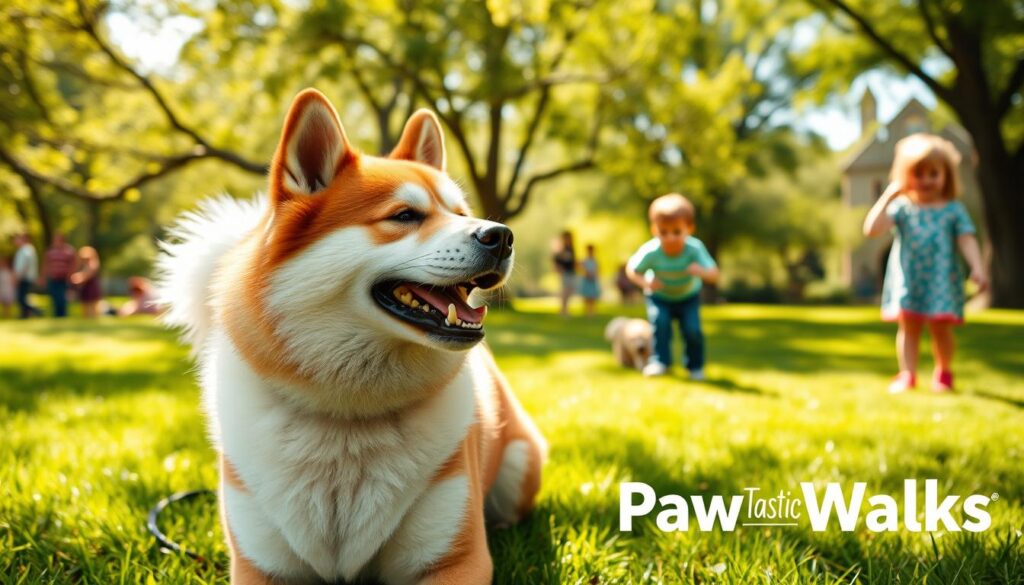
Early socialization is key for Akitas to become well-adjusted dogs. It means exposing them to different places, people, and experiences.
Puppy Classes and Exposure
Putting your Akita in puppy classes is a great start. These classes offer a safe space for your puppy to meet other dogs and people. It prepares them for future interactions with kids.
Controlled Introductions to Children
Introducing your Akita to kids should be done carefully. It’s important to do it gently and in control. This helps avoid any scary or aggressive reactions and starts a positive relationship.
Ongoing Socialization Throughout Development
Socialization isn’t a one-time thing; it’s ongoing. As your Akita grows, they need to keep meeting new people, situations, and kids. This keeps them confident and calm.
“Socialization is key to raising a well-adjusted Akita that is comfortable around children.”
Creating Positive Associations with Different Age Groups
It’s important for your Akita to have good feelings about kids of all ages. Make sure their interactions are positive and rewarding.
This creates a loving and safe space for both your Akita and kids.
With thorough socialization, your Akita can become a loving and safe friend for your children.
Training an Akita Inu for Family Life
To keep your Akita Inu and family members happy together, training is key. It makes sure your dog is well-behaved and strengthens your bond with them.
Essential Commands for Safety
Teaching your Akita Inu essential commands like “stay,” “come,” and “leave it” is vital. These commands keep your dog safe and give you peace of mind.
They help manage situations that could be risky for your dog or others.
Boundary Setting and Consistency
Consistency is essential when training an Akita Inu. Clear boundaries and consistent rules help your dog know what’s expected. This includes rules about furniture, meal times, and how to interact with children.
Involving Children in Training Appropriately
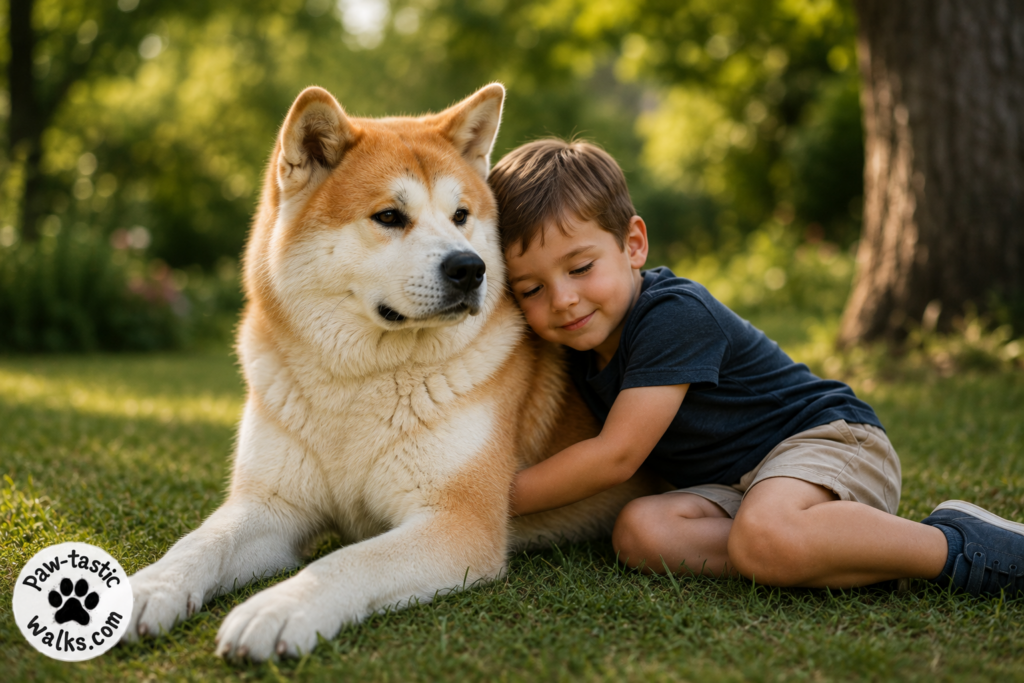
Getting children involved in training is good for both the dog and the kids. It teaches kids about responsibility and helps them bond with your Akita Inu.
Age-Appropriate Training Participation
It’s important to make sure kids are involved in training that’s age-appropriate. Older kids can handle more complex tasks. Younger kids should stick to simple tasks they can do well.
Building Mutual Respect
Training sessions are a great way to build mutual respect between your Akita Inu and kids. By getting kids involved, you teach your dog to respect and listen to them.
This makes your home a happier place for everyone.
By focusing on these training aspects, you can make your home a safe and welcoming place for your Akita Inu and family.
Potential Challenges of Raising Akita Inus with Children
Akita Inus can be great family pets if you know how to handle their unique needs. They can be very loving and loyal. But, their size, strength, and some behaviors need careful attention.
Size and Strength Considerations
Akitas are big and strong. They might accidentally hurt children because of this. It’s important to teach kids how to play nicely with them and watch them closely.
Resource Guarding Tendencies
Some Akitas might guard their food, toys, or other things they value. Early training and socialization can help. This way, your Akita will feel okay sharing and not guarding things.
Sensitivity to Rough Play
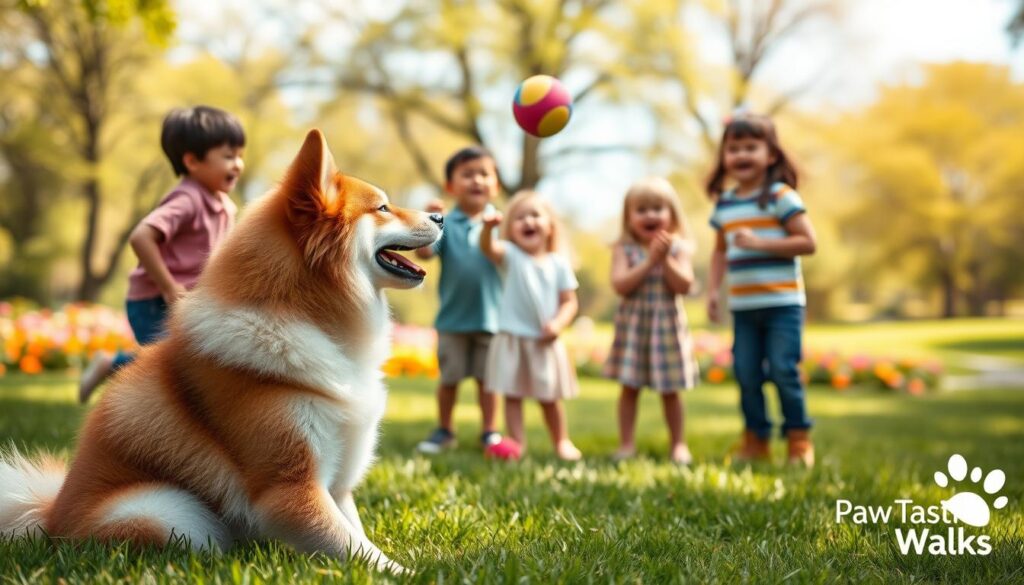
Akitas don’t like rough play because they’re sensitive to it. It’s key to teach kids to play gently with your Akita. This helps avoid any bad reactions.
Same-Sex Aggression in Multi-Dog Households
Same-sex aggression can be a problem in homes with more than one dog. It’s important to socialize, train, and manage how the dogs interact. This keeps peace among them.
Knowing these challenges and taking steps to solve them can make your home a happy place for your Akita and kids.
Safety Guidelines for Children and Akita Inus
Keeping children and Akita Inus safe needs careful planning. As a dog owner, setting rules is key. This ensures a safe place for both kids and your Akita.
Teaching Children Proper Interaction
Teaching kids how to be around your Akita is important. They should learn to respect the dog’s space and know how to pet and play with it right.
Respecting the Dog’s Space
Teach kids to not bother the Akita when it’s sleeping, eating, or stressed. Never disturb a dog that is in a relaxed or defensive position, as this can lead to unexpected reactions.
Appropriate Petting and Play
Teach your kids to pet the Akita gently and right. Teach them to avoid rough play or teasing, as Akita Inus can be sensitive. Always watch over them to make sure both are okay.
Supervision Requirements by Age Group
Watching over kids and Akita Inus is key. The amount of watching needed changes with the child’s age. Young kids need constant watch, while older ones can have more freedom if they follow the rules.
Recognizing Warning Signs in Akita Body Language
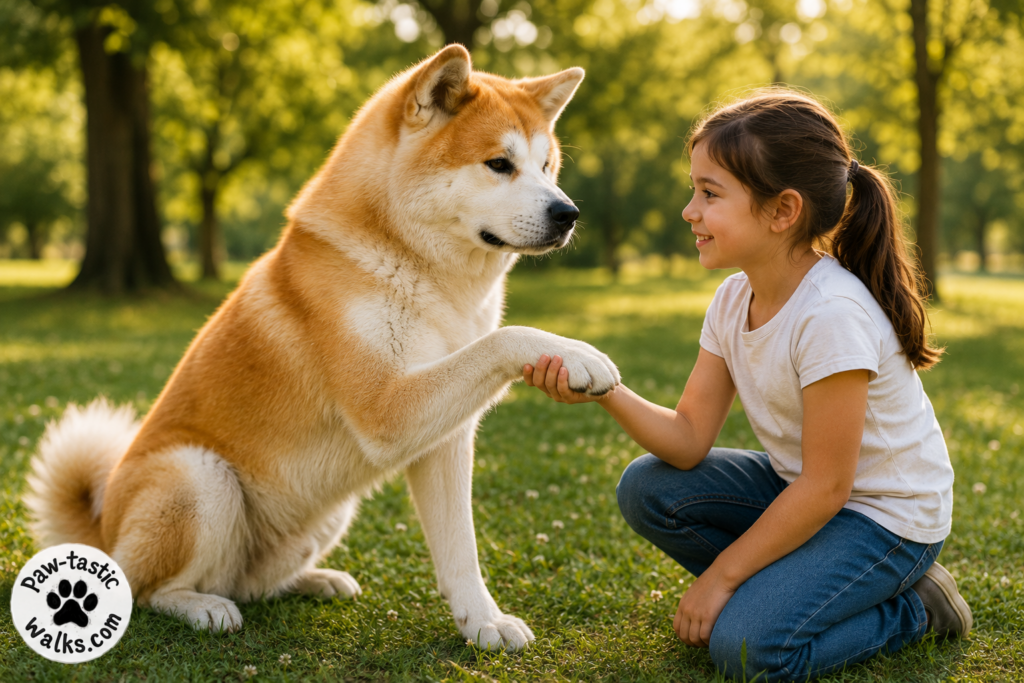
Teach kids to spot signs like growling, stiffening, or avoiding eye contact in an Akita. Understanding these cues can prevent conflicts by giving the dog space when needed.
Creating Safe Spaces for Both Children and Dogs
It’s important to have safe areas for both kids and Akita Inus. Make sure the dog has a place to go if it feels too much. Also, kids should have their own safe spots if they need to get away from the dog.
By following these guidelines, you can make a safe and loving space for everyone. This reduces the chance of problems between kids and your Akita Inu.
Myths and Misconceptions About Akitas and Children
Akitas can be great family pets, even with kids. But, many myths and misconceptions exist about this breed and kids.
Addressing Breed Stereotypes
Akitas are often seen as aggressive or unfriendly. But, they are actually very loyal and loving to their families. Knowing their true nature helps see them as good family pets.
Individual Temperament vs. Breed Generalizations
Every Akita is different, even within the same breed. Some might be shy, while others are very loving. Proper socialization and training are key to an Akita’s good behavior with kids.
The Impact of Responsible Ownership
Being a responsible owner is vital for an Akita in a family with kids. This means training, exercise, and a safe space for everyone.
Success Factors for Family Integration
For a happy home, consider these tips:
- Early socialization of the Akita
- Supervision of interactions between Akita and children
- Teaching children how to interact gently with the Akita
By focusing on these, you can build a loving bond between your Akita and kids.
Conclusion: Is an Akita Inu Right for Your Family?
Thinking about getting an Akita Inu means you need to think hard about a few things. You have to see if you can give them the training, socialization, and care they need. Knowing what an Akita Inu is like can help you decide if they’re a good fit for your family.
If you’re ready to put in the time, Akitas can be great friends. They add something special to family life with their unique traits and loyalty.
Before getting an Akita Inu, make sure they fit your family’s lifestyle and home.
An Akita Inu can be a great choice for the right family. By looking at your situation and what an Akita Inu needs, you can decide if they’re right for you.
This way, you can create a happy and loving home for everyone.
FAQ
Are Akita Inus good with children?
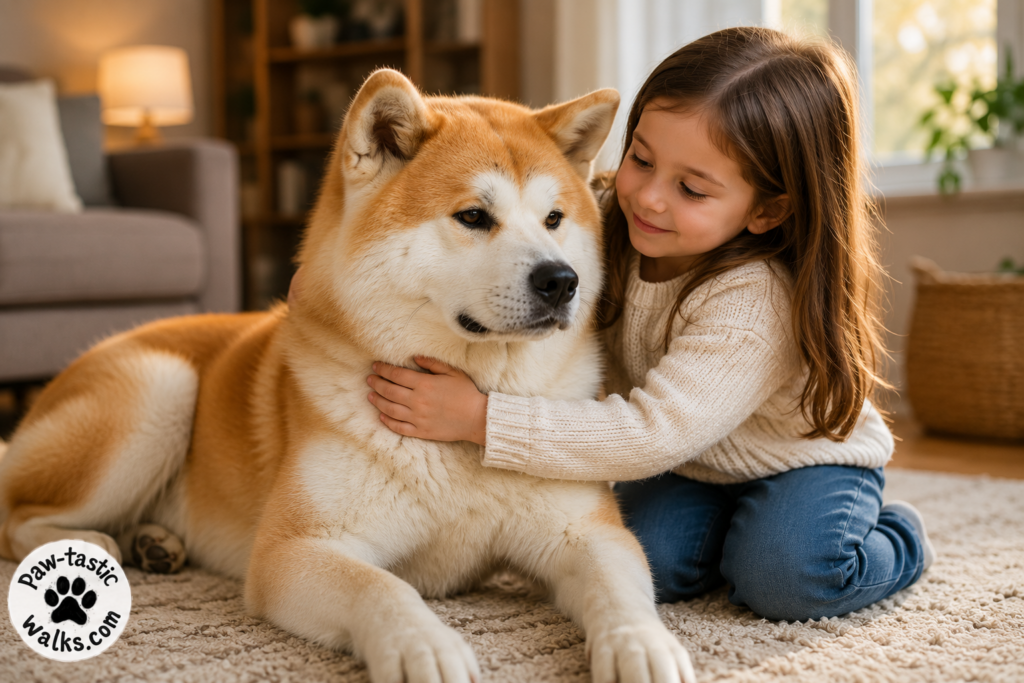
Akita Inus can be loving and protective companions, great for older children who know how to be gentle. But, their protective instincts and size mean watching them with younger kids is key.
Start with early socialization, like puppy classes and exposure to different places and people. This helps your Akita grow up to be confident and calm in new situations.
What kind of training is necessary for an Akita Inu in a family with children?
Teach your Akita basic commands like “stay” and “come” for safety. It’s also important to set boundaries and be consistent to keep your dog well-behaved and respectful.
How can children be involved in training an Akita Inu?
Kids can help train the Akita, teaching them responsibility and strengthening the bond between dog and children. But, make sure kids are old enough and know how to interact with the dog gently.
What are some possible challenges of raising an Akita Inu with children?
Challenges include their size, strength, and tendency to guard resources. They can also be sensitive to rough play and may fight with other dogs of the same sex. Knowing these can help you prepare.
How can I ensure safety around Akitas and children?
Teach kids how to interact with Akitas, like respecting their space and playing gently. Always supervise, with the right amount depending on the child’s age.
What are some common myths about Akitas and children?
Some myths say Akitas are always aggressive or not good for families. But, each dog is different, and how well they fit in depends on the owner’s care and training.
Can Akita Inus be suitable for families with very young children?
Akita Inus can be loving, but their size and protective nature need careful thought. Families with young kids should watch closely and make sure the dog is well-trained and socialized.
How can I create a harmonious household with both children and an Akita Inu?
To have a peaceful home, understand the needs of both kids and your Akita. Provide the right training and socialization, and make sure interactions are safe and respectful.
Check out our breed specific Blueprints