
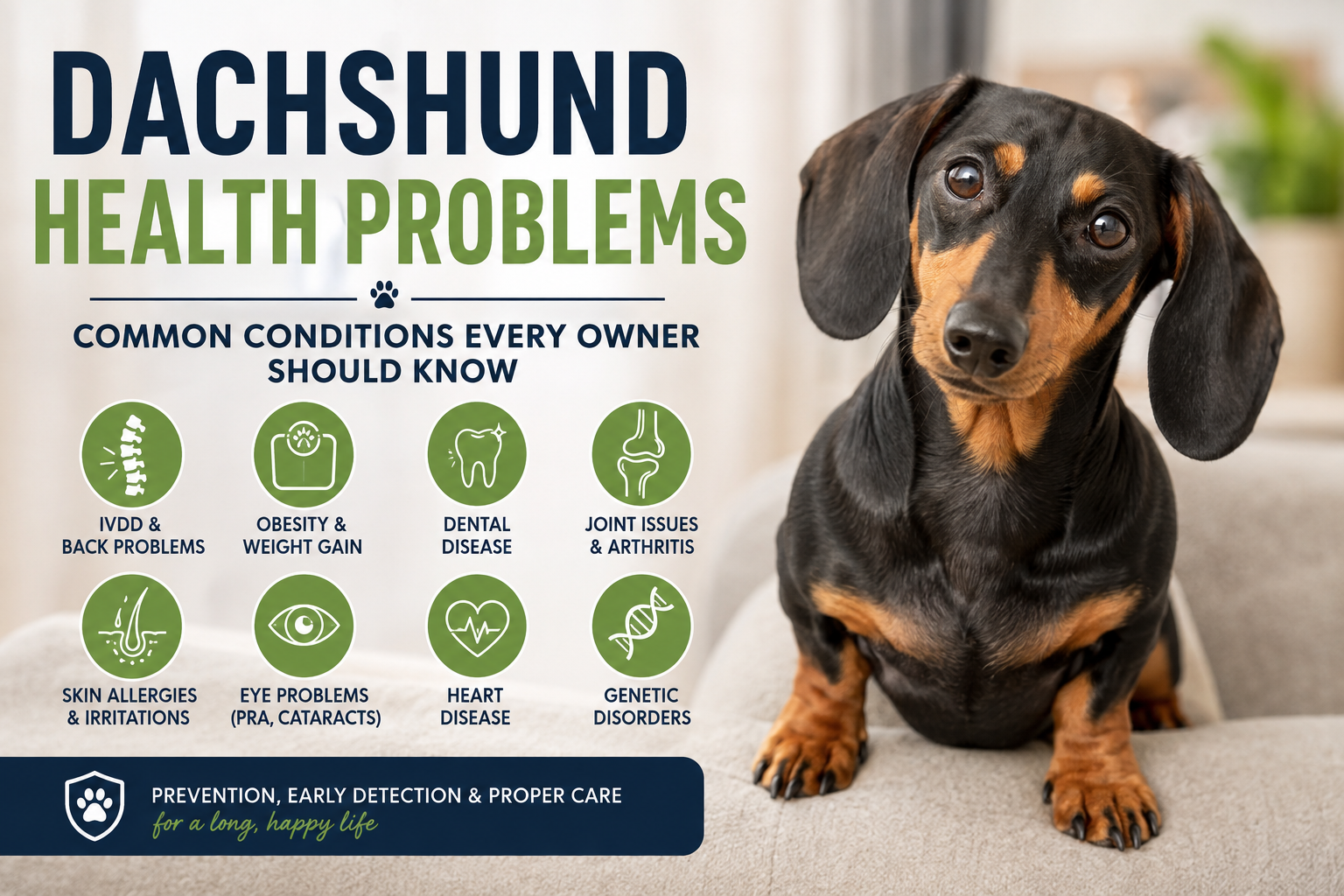
10 Common Conditions to Know
Dachshund Health Problems:
Common Conditions Owners Should Know
Dachshunds are unmistakable. Their short legs, long bodies, enormous personalities and famously determined nature have made them one of Britain’s most recognisable and popular little dogs.
But that distinctive body shape also means Dachshund owners need to be aware of several breed-related health concerns.
The most important is Intervertebral Disc Disease (IVDD), but Dachshunds can also experience dental disease, obesity, skin problems, eye conditions and certain inherited disorders.
That doesn’t mean your Dachshund is destined to become ill.
Understanding the conditions that can affect the breed simply puts you in a better position to recognise problems early, make sensible lifestyle choices and know when something warrants veterinary attention.
This guide looks at the most common Dachshund health problems, the symptoms worth watching for and some practical ways you can support your dog’s long-term health.
Important: This article is intended as general information and isn’t a substitute for veterinary advice. Contact your vet if you’re concerned about your Dachshund’s health. Sudden weakness, paralysis, severe pain or loss of bladder/bowel control should be treated as urgent veterinary problems.
Are Dachshunds Generally Healthy Dogs?
Dachshunds can certainly live long, active and healthy lives.
Their unusual proportions, however, aren’t simply cosmetic.
Dachshunds are a chondrodystrophic breed, meaning their characteristic short-legged build is associated with changes in cartilage and bone development. This is closely connected with their susceptibility to degeneration of the intervertebral discs.
There are also six recognised Dachshund varieties in the UK:
- Standard Smooth Haired
- Standard Long Haired
- Standard Wire Haired
- Miniature Smooth Haired
- Miniature Long Haired
- Miniature Wire Haired
Some inherited health concerns are more relevant to particular varieties than others, so it’s worth looking beyond the generic label of “Dachshund health problems.”
1. Intervertebral Disc Disease (IVDD)
If there is one Dachshund health condition every owner should understand, it is intervertebral disc disease.
IVDD occurs when one or more of the cushioning discs between the vertebrae degenerate and may eventually bulge or rupture.
This can put pressure on the spinal cord, causing anything from pain and reluctance to move to severe neurological problems and paralysis.
Dachshunds are particularly susceptible because degeneration of these discs can occur much earlier than it does in many other breeds.
How Common Is IVDD in Dachshunds?
IVDD isn’t a rare complication in the breed.
UK Dachshund health research has estimated that roughly one in four Dachshunds may experience IVDD during their lifetime.
Risk isn’t necessarily identical across all six varieties, and genetics, conformation, age and lifestyle can all contribute.
Signs of IVDD in a Dachshund
Symptoms vary depending on where the affected disc is located and how much pressure is being placed on the spinal cord.
Watch for:
- Yelping or signs of sudden pain
- A hunched or unusual posture
- Reluctance to walk or move
- Refusing stairs or jumping
- Trembling or appearing unusually tense
- Weakness in the back legs
- Wobbling or uncoordinated movement
- Dragging a paw or limb
- Loss of bladder or bowel control
- Partial or complete paralysis
A Dachshund that suddenly becomes weak, unable to walk or paralysed needs urgent veterinary attention.
Don’t wait to see whether the problem improves overnight.
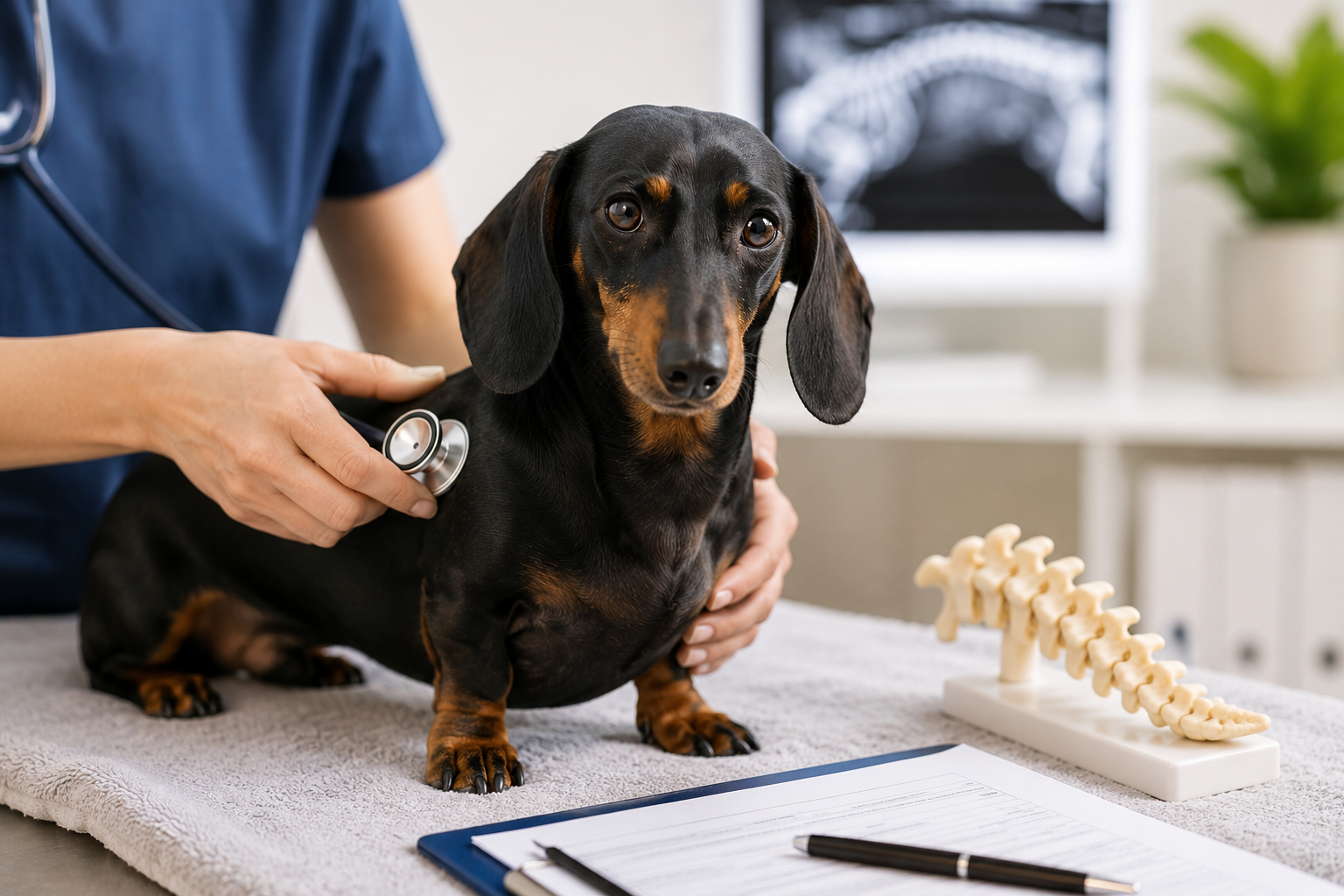
Can IVDD Be Prevented?
There is no way to guarantee that an individual Dachshund will never develop IVDD.
Genetics play an important role, which is why responsible breeding and health screening matter.
Owners can, however, concentrate on maintaining good general fitness and avoiding obesity.
Keeping your Dachshund lean reduces unnecessary load on the spine and joints, while appropriate regular exercise helps maintain muscle strength.
You can also make your home easier for your Dachshund to navigate by limiting unnecessary high-impact jumping and providing safer access to frequently used areas where appropriate.
IVDD Screening
The Kennel Club and Dachshund Health UK operate an official IVDD screening scheme for Dachshunds.
Dogs are X-rayed between 24 and 48 months of age and assessed for calcified discs. The resulting grade helps breeders make more informed breeding decisions.
If you’re buying a Dachshund puppy, asking the breeder about the parents’ health screening is therefore worthwhile.
2. Obesity and Excess Weight
A little extra weight can be particularly problematic on a dog with a Dachshund’s proportions.
Excess body fat places additional stress on joints and the spine and can also contribute to wider health problems.
Unfortunately, Dachshunds can be extremely persuasive when food is involved.
Those eyes have probably negotiated more pieces of toast than some professional hostage negotiators.
How Do I Know If My Dachshund Is Overweight?
Don’t rely exclusively on a number on the scales.
Healthy weight varies according to the dog’s variety, sex, build and individual circumstances.
Body condition is often more useful.
Ideally:
- You should be able to feel the ribs without pressing through a thick layer of fat.
- Your Dachshund should have a visible waist when viewed from above.
- The abdomen should tuck upwards when viewed from the side.
Your vet can assess your dog’s body condition and recommend an appropriate target weight.
Helping a Dachshund Maintain a Healthy Weight
Keep things simple:
Measure meals rather than estimating them.
Include treats when calculating your dog’s overall daily food intake.
Choose a nutritionally complete diet appropriate for your dog’s age and circumstances.
Maintain regular exercise.
Monitor weight and body condition rather than waiting until weight gain becomes obvious.
And remember that treats don’t always have to mean food. Play, attention and a favourite toy can be rewards too.
3. Dental Disease
Dental health deserves far more attention than it often receives.
Small dogs can be particularly vulnerable to plaque accumulation and periodontal disease, and Dachshunds are no exception.
Early signs can include:
- Bad breath
- Red or bleeding gums
- Visible tartar
- Difficulty chewing
- Dropping food
- Pawing at the mouth
- Reluctance to eat harder foods
Advanced dental disease can be painful, so prevention is much better than waiting until your dog stops eating.
Looking After Your Dachshund’s Teeth
Regular tooth brushing with dog-safe toothpaste is one of the most useful habits you can establish.
Never use human toothpaste unless specifically advised by a vet, as some ingredients used in products intended for people aren’t suitable for dogs.
Your veterinarian can also examine your dog’s teeth during routine health checks and advise when professional dental treatment is necessary.
Starting dental handling when your Dachshund is young can make the whole process considerably easier.
4. Patellar Luxation
Patellar luxation occurs when the kneecap moves out of its normal position.
It is particularly associated with smaller dogs and can affect Dachshunds.
Signs can include:
- Intermittent limping
- Suddenly lifting a back leg
- “Skipping” for several steps
- Stiffness
- Reluctance to exercise
- Pain in more severe cases
Some dogs are only mildly affected, whereas others may require veterinary treatment or surgery.
If your Dachshund develops recurring lameness, it’s worth having it investigated rather than assuming they’ve simply pulled a muscle.
5. Arthritis and Age-Related Mobility Problems
As Dachshunds grow older, osteoarthritis and general mobility problems can become increasingly important.
Arthritis causes inflammation and changes within the joints and may gradually make everyday activities uncomfortable.
The signs aren’t always dramatic.
You may notice your older Dachshund:
- Taking longer to get out of bed
- Walking more slowly
- Becoming reluctant to climb
- Sleeping more
- Struggling on slippery floors
- Becoming less enthusiastic about walks
- Appearing stiff after resting
- Becoming irritable when touched
Owners sometimes assume these changes are simply part of getting old.
Pain shouldn’t automatically be considered an inevitable part of ageing.
Veterinary treatment, appropriate exercise, weight management, physiotherapy and changes around the home can make a substantial difference to an older dog’s comfort.
6. Skin Problems and Allergies
Skin problems are another area Dachshund owners may encounter.
Dachshund health surveys have identified skin allergies as an important health concern within the breed.
Possible signs include:
- Persistent scratching
- Licking or chewing the paws
- Red or inflamed skin
- Recurrent ear problems
- Hair loss
- Scabs
- Recurrent skin infections
- An unusual smell from the skin or ears
There are numerous possible causes, including parasites, environmental allergies, food-related reactions and bacterial or fungal infections.
Because several conditions produce very similar symptoms, trying to diagnose an allergy yourself can be frustrating.
Persistent itching deserves a veterinary assessment.
7. Eye Problems in Dachshunds
Several eye conditions can occur in Dachshunds.
One inherited condition of particular importance is progressive retinal atrophy (PRA), which causes gradual deterioration of the retina and can ultimately affect vision severely.
Some Miniature Dachshund varieties have specific health-testing recommendations relating to PRA.
Other eye problems that may occur include cataracts and glaucoma.
Signs that deserve attention include:
- Cloudiness in the eye
- Redness
- Excessive tearing
- Squinting
- Pawing at the eye
- Changes in pupil appearance
- Difficulty navigating in dim light
- Bumping into objects
Sudden eye pain or sudden loss of vision should be treated urgently.
When buying a puppy, ask the breeder which eye and DNA tests are recommended for that particular Dachshund variety and whether the parents have been tested.
8. Lafora Disease in Miniature Wire Haired Dachshunds
This is a good example of why Dachshund health advice shouldn’t treat all six varieties as identical.
Lafora disease is an inherited form of epilepsy particularly associated with Miniature Wire Haired Dachshunds.
Signs generally develop later rather than during puppyhood and may include:
- Jerking or twitching movements
- Seizures
- Confusion
- Panic-like episodes
- Problems with coordination
DNA testing is available and forms part of responsible health screening for Miniature Wire Haired breeding dogs.
Prospective owners of this variety should therefore discuss Lafora testing with the breeder.
9. Heart Disease
Like dogs generally, Dachshunds can develop heart disease, particularly as they become older.
Symptoms that warrant veterinary investigation include:
- Persistent coughing
- Reduced stamina
- Breathing more rapidly than usual at rest
- Difficulty breathing
- Weakness
- Fainting or collapse
- Abdominal swelling
Some heart conditions initially produce very few obvious symptoms, which is another reason routine veterinary examinations become increasingly valuable as dogs age.
Your vet can listen for abnormal heart sounds and recommend further investigation when appropriate.
10. Diabetes and Other Endocrine Conditions
Dachshunds can also develop metabolic and hormonal diseases such as diabetes.
Common warning signs of diabetes in dogs include:
- Drinking much more than usual
- Urinating more frequently
- Weight loss despite eating
- Changes in appetite
- Lethargy
These symptoms aren’t unique to diabetes, so they shouldn’t be used to diagnose your dog at home.
A noticeable change in thirst or urination is a good reason to contact your vet.
How to Keep a Dachshund Healthy
You can’t control every health problem your dog might encounter.
What you can control is much of their everyday care.
Keep Your Dachshund Lean
Weight management is one of the most useful things you can do for a Dachshund.
Monitor body condition, measure food and adjust portions when activity levels change.
Keep Them Active
Dachshunds may have short legs, but they are not designed to spend their lives on the sofa.
Regular appropriate exercise helps maintain cardiovascular fitness, muscle strength and healthy body weight.
Build exercise gradually and adapt it to your dog’s age, fitness and medical history.
A Dachshund with diagnosed IVDD, arthritis or another orthopaedic problem may need an individual exercise plan from their vet or veterinary physiotherapist.
Reduce Unnecessary High-Impact Jumping
Repeated jumping from high furniture can be avoided relatively easily.
Where useful, consider ramps or other arrangements that allow your Dachshund to reach favourite places without repeatedly launching themselves from height.
A non-slip surface can also help on wooden, laminate or tiled flooring.
Learn How to Lift Your Dachshund
When lifting a Dachshund, support both the front and rear of the body rather than allowing the back end to hang unsupported.
Hold your dog securely and keep their body well supported.
Feed a Complete, Balanced Diet
Dachshunds don’t require a fashionable or exotic diet simply because they’re Dachshunds.
A good-quality, nutritionally complete food appropriate for your dog’s age, size and health status is a sensible starting point.
If your Dachshund has a medical condition, ask your veterinarian whether a particular diet would be beneficial.
Don’t Automatically Reach for Supplements
Joint supplements such as glucosamine, chondroitin and omega-3 products are widely marketed to dog owners.
That doesn’t mean every healthy Dachshund needs them.
Evidence and product quality vary, and supplements can interact with medical conditions or medications.
Discuss them with your veterinarian before adding them to your dog’s diet, particularly if your Dachshund already has a health problem.
Maintain Dental Care
Introduce regular tooth brushing and allow your veterinarian to check your Dachshund’s mouth during routine examinations.
Keep Up With Veterinary Care
There isn’t a universal rule saying every Dachshund must see a vet a particular number of times each year.
The appropriate schedule depends on your dog’s age, medical history, medications and individual circumstances.
Puppies, seniors and dogs with existing conditions generally require different levels of monitoring.
Your own vet is best placed to recommend the right schedule.
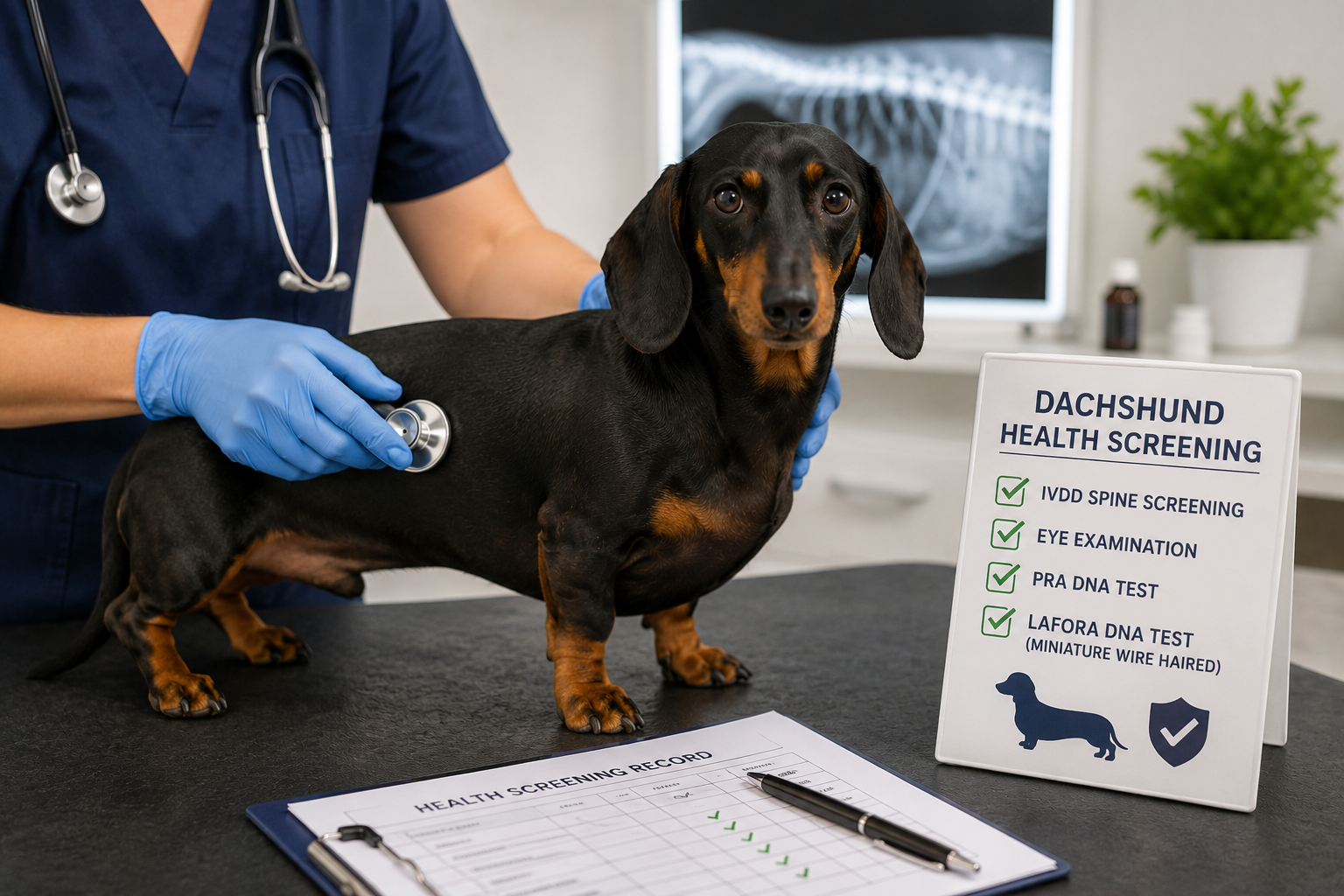
Dachshund Health Screening: What Should Prospective Owners Ask?
If you’re considering buying a Dachshund puppy, health testing is worth discussing with the breeder before you commit.
Don’t simply ask:
“Are the parents healthy?”
Ask which breed-specific health tests and screening schemes have actually been completed and whether you can see the results.
Depending on the Dachshund variety, relevant screening can include:
- IVDD spine screening
- Eye examinations
- DNA testing for PRA
- DNA testing for Lafora disease in Miniature Wire Haired Dachshunds
The recommended tests differ between varieties and can change as research develops, so check the current Kennel Club Health Standard or Dachshund Health UK recommendations.
A responsible breeder should be comfortable discussing health testing with you.
When Should You Take a Dachshund to the Vet?
Contact your vet whenever your Dachshund develops a significant unexplained change in behaviour, appetite, movement or general wellbeing.
Some symptoms warrant particular urgency.
Seek prompt veterinary help for:
- Sudden inability to walk
- Weakness or paralysis
- Severe back or neck pain
- Loss of bladder or bowel control
- Difficulty breathing
- Collapse
- Seizures
- Severe eye pain or sudden vision changes
- Persistent vomiting or diarrhoea
- A swollen or painful abdomen
You know your dog’s normal behaviour better than anyone.
If something suddenly seems very wrong, it’s better to ask your vet than wait for a collection of textbook symptoms to appear.
Frequently Asked Questions About Dachshund Health
What is the most common health problem in Dachshunds?
Intervertebral Disc Disease (IVDD) is the standout breed-specific health concern. Dachshund Health UK estimates that around one in four Dachshunds may experience IVDD at some point in their lives.
Why do Dachshunds have so many back problems?
Their characteristic short-legged body type is associated with early degeneration of the intervertebral discs. Genetics play an important role, although lifestyle and environmental factors can also influence an individual dog’s risk.
What are the first signs of IVDD in a Dachshund?
Possible early signs include back or neck pain, yelping, trembling, a hunched posture, reluctance to move and unusual walking. More serious cases can cause weakness, incoordination, incontinence or paralysis.
Any sudden neurological symptoms require urgent veterinary attention.
Should Dachshunds use stairs?
The issue isn’t quite as simple as declaring every staircase dangerous.
A dog’s individual health, fitness, age, environment and existing spinal problems all matter.
If your Dachshund has IVDD or another mobility condition, follow your veterinarian’s advice. In everyday life, reducing unnecessary jumping from heights and maintaining good strength and body condition are sensible priorities.
How do I know if my Dachshund is overweight?
You should generally be able to feel the ribs without pushing through a thick layer of fat and see a waist when looking down from above.
Because individual Dachshunds vary, ask your vet to assess your dog’s body condition rather than relying on an arbitrary target weight from the internet.
Do Dachshunds need joint supplements?
Not necessarily.
Some supplements may be appropriate for individual dogs, but they shouldn’t automatically be given to every Dachshund. Discuss supplements with your vet, particularly if your dog already takes medication.
What health tests should a Dachshund breeder carry out?
The appropriate tests depend partly on the Dachshund variety.
IVDD screening is an important consideration across the breed, while certain varieties also have recommendations for PRA eye testing and DNA testing. Miniature Wire Haired Dachshunds have additional testing relating to Lafora disease.
Always check the latest breed-specific recommendations.
How long do Dachshunds live?
Many Dachshunds enjoy long lives, and living beyond 12 years isn’t unusual. Individual lifespan depends on genetics, preventative healthcare, body condition, lifestyle and, inevitably, a degree of luck.
Final Thoughts:
Protecting Your Dachshund’s Health
Reading a list of potential Dachshund health problems can make the breed sound rather fragile.
They aren’t.
Dachshunds are active, determined little dogs that can enjoy wonderfully full lives.
The goal isn’t to wrap your Dachshund in cotton wool. It’s to understand where the genuine risks lie and make sensible decisions around them.
For most owners, the big priorities are straightforward:
Keep your Dachshund lean, keep them appropriately active, look after their teeth, understand the warning signs of IVDD and don’t ignore changes in movement or behaviour.
If you’re buying a puppy, take health screening seriously.
If you already share your home with a Dachshund, learn what’s normal for your dog. That familiarity can be invaluable when something changes.
Good Dachshund care isn’t about eliminating every possible risk.
It’s about giving that very long dog the best possible chance of a very long life.