
If your GSP won’t settle, the issue usually isn’t stubbornness. German Shorthaired Pointers are among high-energy working breeds, and their high energy levels can make rest difficult when their physical, mental, and emotional needs aren’t met.
Constant pacing, whining, jumping, destructive behavior, or an inability to rest shouldn’t be ignored. These signs may reflect under-stimulation, limited calm-training skills, stress, anxiety, or a health problem causing discomfort.
Learning more about German Shorthaired Pointer temperament can help you understand what’s typical for the breed and what needs closer attention.
With the right routine, clear guidance, and suitable outlets, most GSPs can learn to calm down and rest. We’ll start by exploring why your dog may struggle to switch off, then cover practical ways to build calmer behavior.
For extra support, you can also Check out our great guides on Payhip or Check out our ebook guides on Etsy.
This post may contain affiliate links. If you make a purchase through these links, I may earn a small commission at no extra cost to you.
Watch this calm down training video for another helpful example.
Key Takeaways
- A GSP won’t settle when physical exercise, mental stimulation, sleep, or emotional security is missing.
- Combine purposeful walks with GSP exercise and mental stimulation, scent games, training, and quiet recovery time.
- Teach settling in small steps, rewarding relaxed behavior before your dog becomes overtired or overstimulated.
- Pacing, panting, whining, sudden restlessness, or behavior changes may signal stress, pain, or illness. Contact your veterinarian if these signs continue.
- A predictable home routine and safe resting place help your dog practice settling down as part of each day.
Why Won’t My German Shorthaired Pointer Settle Down?
A GSP may remain restless when their body and brain still expect a job. As a working breed, this dog was bred to search, point, retrieve, and work closely with people. A short walk alone may leave plenty of energy behind.
How a Working Breed’s Instincts Show Up at Home
The American Kennel Club’s GSP breed information describes this breed as a versatile hunting dog. At home, those instincts can look like pacing, scanning windows, following you from room to room, or carrying objects around.
You may also see whining, jumping, barking, zooming, and household item theft. Socks, towels, and remote controls can become exciting outlets for natural hunting behavior and prey drive.
These behaviors usually reflect unmet needs, not spite or stubbornness.
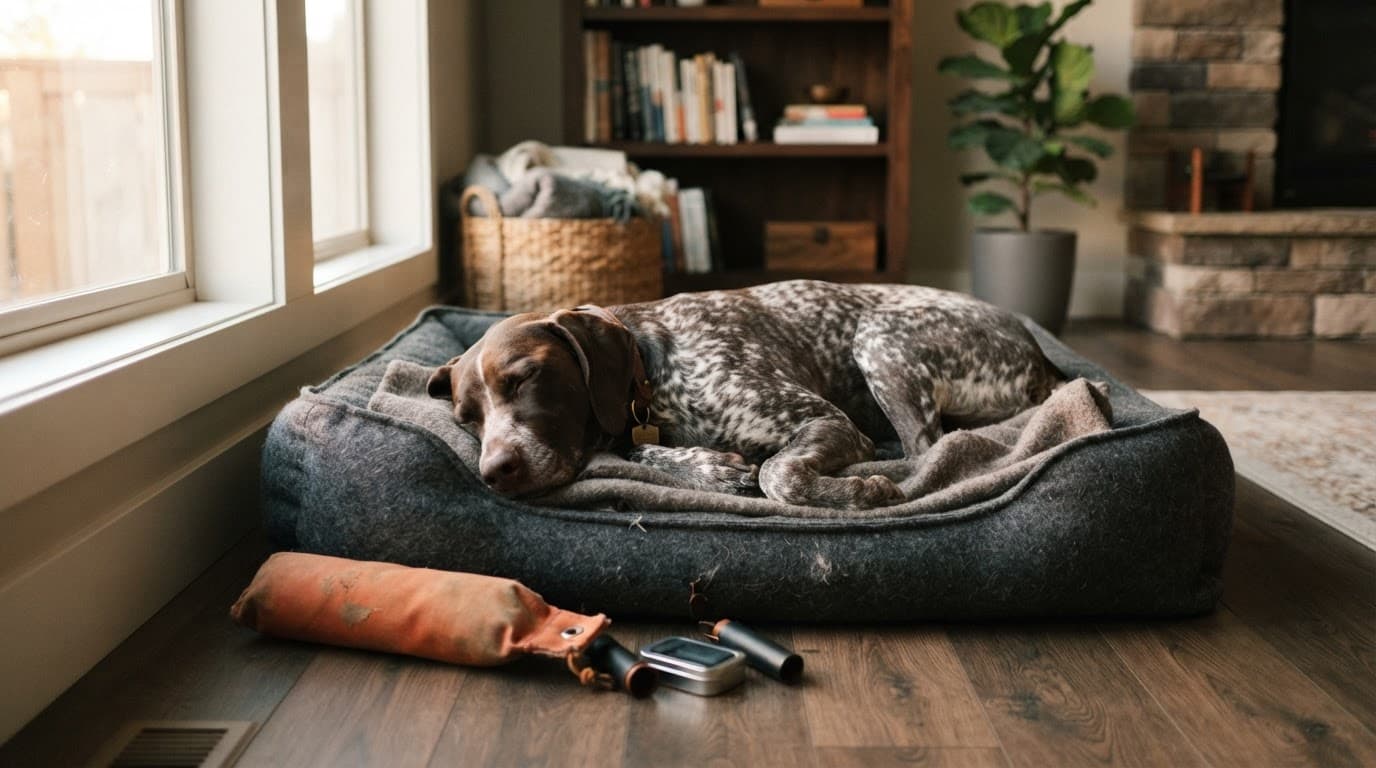
Purposeful activities give that busy brain somewhere useful to go. Try:
- Hiding treats around one room for a simple scent search.
- Practicing short recall training games between two people in a safe area.
- Playing short retrieving games, with calm pauses between throws.
- Teaching your dog to carry one safe item, such as a soft dummy.
- Running two- or three-minute obedience training games throughout the day.
You can find more ideas in these GSP mental stimulation and daily exercise suggestions. If interactive play suits your dog, tug toys can add both movement and thinking.
When High Energy Becomes a Behavior Problem
Excitement is normal after a walk, a visitor, or a lively game. A healthy GSP should gradually relax after suitable activity, food, water, and rest. The goal is to teach your dog how to calm down after an appropriate activity.
Some behavioral challenges need closer attention. If your dog stays frantic, cannot sleep, pants heavily, or repeatedly behaves unsafely, look beyond normal breed enthusiasm.
Exercise alone won’t fix every settling problem. An inconsistent routine, accidentally rewarding demanding behavior, or never teaching calmness can keep the cycle going. Some dogs also become overtired and more frantic, rather than peacefully tired.
Supervised off-leash time in a secure area may help meet your dog’s needs, but it isn’t appropriate for every dog. Sudden restlessness, ongoing distress, pain signs, or a major behavior change deserves a veterinary check.
Start with a calm routine, then speak with your veterinarian if your dog still can’t switch off. For further practical support, see Check out our great guides on Payhip and Check out our ebook guides on Etsy.
Is Your GSP Under-Stimulated, Overtired, Anxious, or Unwell?
When a GSP remains restless, look at the pattern rather than one difficult evening. Restlessness can reflect unused energy, too much excitement, fear, anxiety, or physical discomfort.
These behavioral challenges may have several causes. A checklist can point you in the right direction, but it can’t diagnose your dog.
Signs Your GSP Needs More Than a Longer Walk
Adding miles isn’t always the best answer. Some GSPs return from an intense run or fast-paced game even more wound up. Their body is tired, but their brain is still buzzing.
They may need a quieter activity, such as sniffing for scattered food, searching for a toy, or working with puzzle toys.
Short training sessions can also help. Practice a few recalls, hand targets, or settle exercises, then give your dog a calm place to rest.
These enrichment ideas to help dogs settle can be more useful than another mile of repetitive walking.
Fear and frustration need a different response. A GSP that paces after fireworks, barks at passing dogs, or becomes frantic when blocked from reaching something isn’t simply bored. More exercise won’t remove the emotion behind that behavior.
Reduce the trigger, create distance, and seek reward-based guidance if the problem continues. Pacing when alone can also reflect separation anxiety, not a need for more exercise.
Try keeping a simple seven-day log. Record:
- How much your dog sleeps and when naps happen.
- The type and intensity of exercise.
- Sniffing, training, food searches, and other enrichment.
- Triggers such as visitors, noise, dogs, or time alone.
- Meals, appetite, energy levels, and any unusual changes.
- How long your dog takes to settle afterward.
Patterns often become clearer on paper. You might find that your dog settles after scent work but not after chasing a ball, or becomes restless after busy outings.
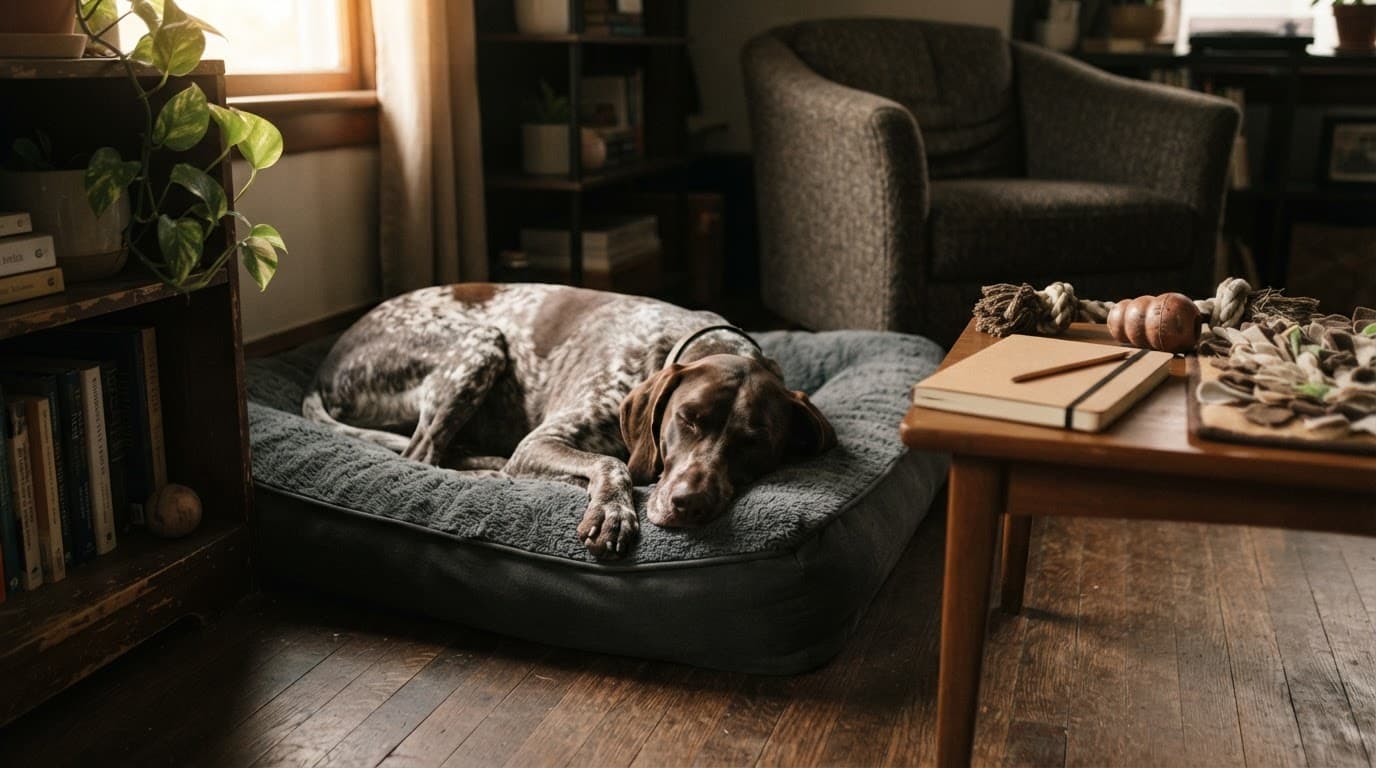
Health and Age Factors That Can Affect Settling
Age changes the answer too. Puppies need plenty of sleep, gentle handling, and gradual activity. An overtired puppy may look wild, mouthy, and unable to switch off. Adolescents often struggle with impulse control, even when they understand what you want.
Adult dogs can still become unsettled through stress, routine changes, or too much stimulation.
Older GSPs may struggle to rest because pain or stiffness makes lying down, getting up, or changing position uncomfortable. Behavior changes in aging pets deserve attention, especially when nighttime restlessness appears.
A medical concern is more likely when restlessness is new, worsening, or paired with:
- Limping, stiffness, reluctance to move, or signs of pain.
- Appetite or weight changes.
- Unusual tiredness or increased thirst.
- Panting, pacing, or changes in normal sleep.
Speak with your veterinarian before sharply changing exercise, particularly if your GSP has joint problems, heat sensitivity, or a sudden behavior change.
If fear, aggression, panic when alone, or ongoing distress continues after medical concerns are checked, contact a certified, reward-based behavior professional or canine behaviorist.
How to Help a German Shorthaired Pointer Learn to Relax
Settling is a trained skill, not something every GSP automatically understands. Meet your dog’s basic needs first with exercise, sniffing, food, water, toilet breaks, and sleep.
Consistent training works best when your dog is comfortable and rested.
A dog that is already barking, jumping, or racing around the room is usually too excited to learn well. Start when your GSP is calm enough to notice you, then build the skill in tiny steps.
Teach a Reliable Go-to-Mat Routine
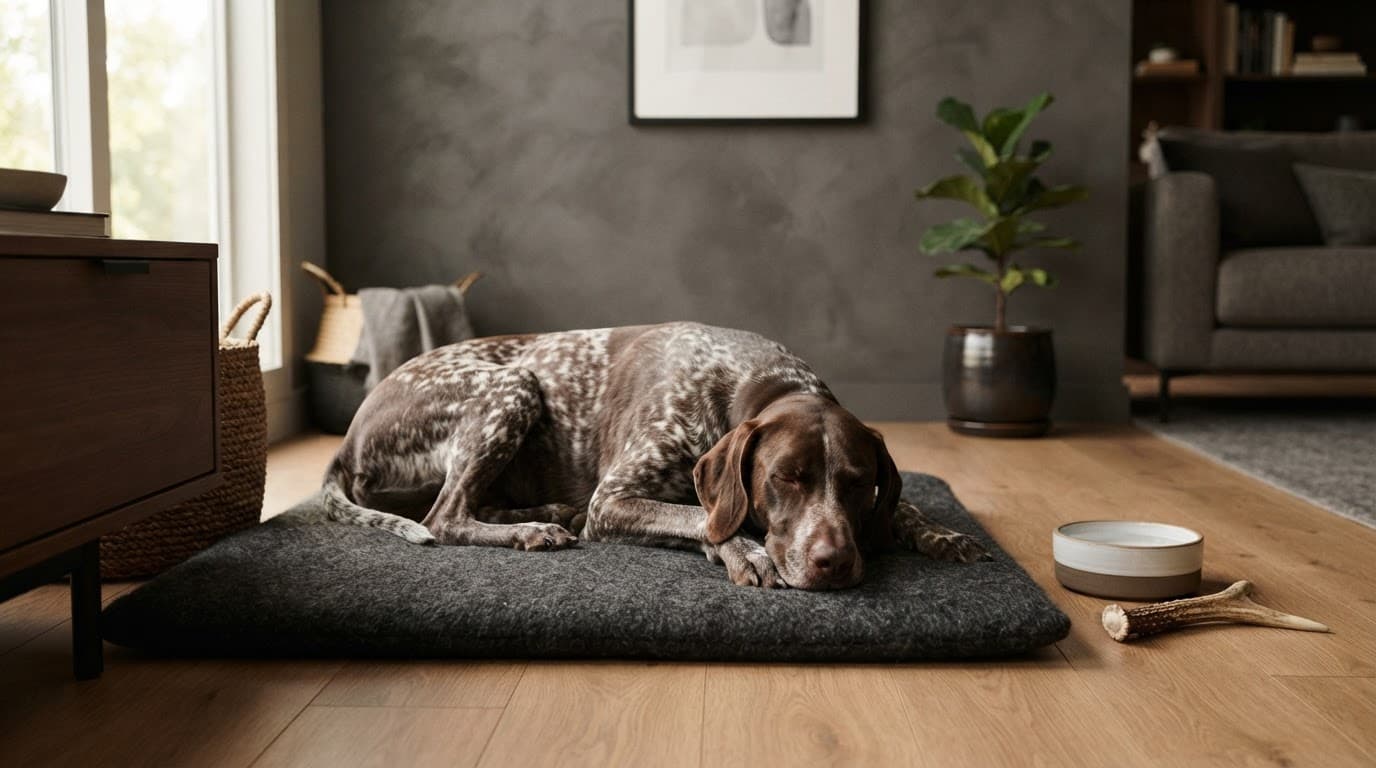
Choose a comfortable mat in a quiet spot, away from busy doorways and household traffic. The mat should be a positive resting place, never a punishment spot. Avoid sending your dog there angrily after unwanted behavior, or they may begin to avoid it.
This positive training approach uses small rewards and low-arousal interactions. Sit near the mat with treats ready. Reward your GSP for looking at it, then for approaching it and stepping onto it.
Continue with one paw, several paws, all four paws, sitting, and lying down. Mark each choice with a calm “yes” and place the treat between your dog’s front paws.
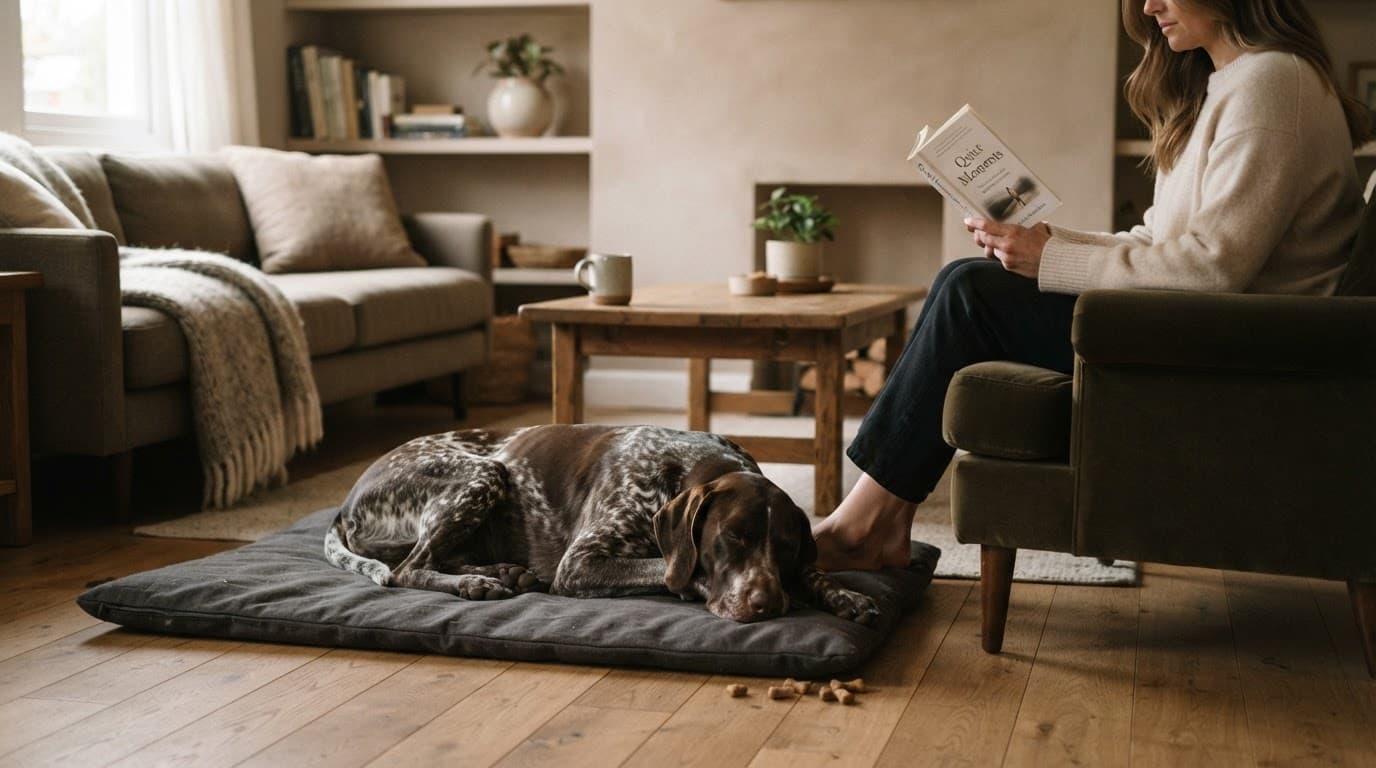
Once your dog lies down, watch for softer eyes, a loose body, a lowered head, or a relaxed sigh. Reward those signs too.
The VCA guide to teaching dogs to settle also recommends calm delivery and small treats, which helps prevent rewards from creating fresh excitement.
Build duration slowly. Reward after one second, then two, then five. If your GSP gets up, the step was too large. Make it easier and finish with a release cue such as “okay” before your dog leaves the mat.
Practice after a sniff walk, during family meals, and while you read or watch television. Short mat work develops focus and impulse control over time.
It also gives your dog a familiar place to calm down after activity.
Reward Calm Before Your Dog Demands Attention
Look for calm behavior your GSP offers without being asked. Lying down, standing with four paws on the floor, choosing a toy, or resting their head are all worth rewarding.
Walk over slowly and place a treat down without turning the moment into a party.
Soft praise or gentle petting may work too, but keep your voice and movements relaxed. Your aim is to reward calm without adding more excitement.
Dogs quickly learn what makes good things happen. If jumping brings petting, barking opens the door, or frantic behavior starts a game, those actions become stronger.
Wait for a brief pause, four paws on the floor, or a quieter body before giving attention.
Use Short Sessions and Predictable Rest
Several short sessions usually work better than one long training session. Practice cues such as “leave it,” “wait,” “find it,” “stay,” and “go to mat” for a few minutes, then stop while your dog can still think clearly.
A predictable rhythm helps your GSP understand when activity ends. Include exercise, meals, enrichment, training, quiet time, and sleep in a pattern your dog can recognize.
Puppies and adolescents may need scheduled naps in a safe, calm area because an overtired dog often looks frantic rather than sleepy.
Don’t repeat commands while your dog ignores them, scold restless behavior, or expect a long stay too soon. Give your GSP a manageable step, reward the right choice, and use the release cue before increasing the challenge.
These exercises build attention and pausing skills, but they rarely produce instant results.
Build a Daily Routine That Meets Your GSP’s Body and Brain Needs
A German Shorthaired Pointer needs a balanced routine, not nonstop entertainment. Combine vigorous exercise with slower sniffing, short training sessions, play, and protected rest.
The goal is to meet your dog’s needs without keeping their arousal switched on all day.
A healthy adult may need around two hours of daily activity, but exercise needs vary with age, fitness, weather, health, and temperament. Adjust physical activity to your individual dog.
A useful routine could include a 45- to 60-minute morning outing, a short midday scent or food puzzle activity, and a 20- to 45-minute evening session.
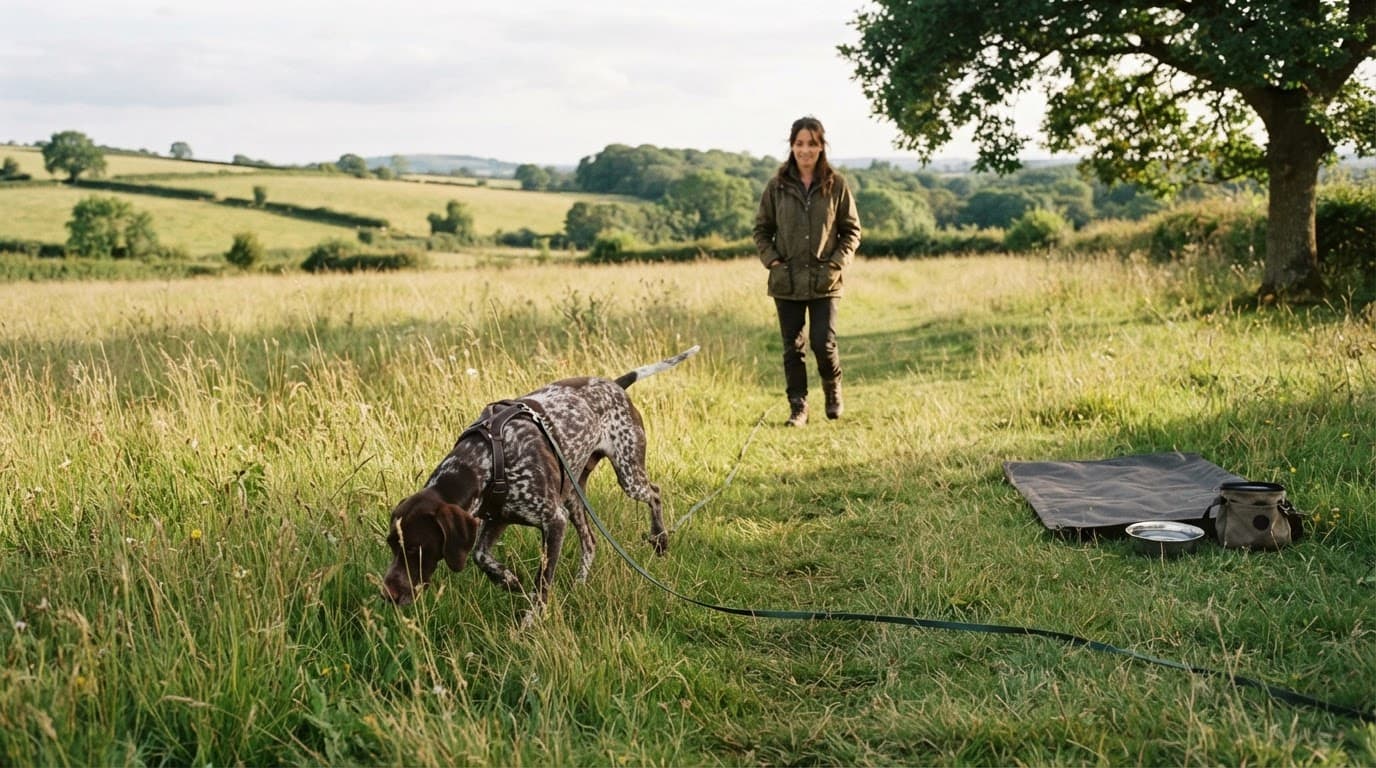
Choose Exercise That Lowers Arousal Instead of Feeding It
A calm sniff walk can do more for a busy brain than endless ball throwing. Let your GSP explore grass, hedgerows, and safe paths at a steady pace.
Structured exploration, recall practice, and short periods of loose-leash walking support leash training without turning the outing into a race.
Fetch still has a place in a good routine. Add pauses, recalls, and a clear end cue such as “all done” between throws. These breaks build impulse control and help your dog shift away from the game.
Otherwise, repeated high-speed chasing can leave your dog scanning for the next throw long after play has finished.
Chaotic dog-park play can have the same effect, especially when your GSP struggles to disengage from other dogs. Warm up with a few minutes of walking before running, retrieving, hiking, or field-style searches.
Bring water, choose safe surfaces, provide shade, and plan around the weather.
On hot days, use these hot-weather dog walking guidelines and move exercise to cooler times. A long-line recall training session can offer off-leash time while keeping your dog safer than unrestricted running.
Use an open, secure area, supervise closely, reward every return, and finish before your GSP becomes tired or frantic.
Add Enrichment That Uses Natural GSP Skills
GSPs were bred to search, follow scent, retrieve, and work with people. Mental stimulation gives those instincts a safe outlet through activities such as:
- Scattering part of your dog’s meal through grass.
- Hiding treats for a simple indoor game of hide-and-seek.
- Laying a short scent trail with food or a favorite toy.
- Offering a cardboard box search, stuffed food toy, or suitable puzzle.
- Practicing tricks, hand targets, recalls, and controlled retrieving.
- Using mental stimulation ideas for reducing barking when outdoor exercise needs to be shorter.
Start each activity easily so your dog can succeed. Then make the trail longer, hide food in a slightly harder place, or ask for one extra behavior before the reward. Variety matters too.
A puzzle that appears every day can soon become as exciting as yesterday’s leftovers.
Interactive games, including tug toys, should have clear start, pause, and finish cues. Put the toy away after the finish cue, then guide your dog toward water and rest.
Play should enrich the day, not keep your GSP highly aroused from breakfast until bedtime.

Protect Sleep and Teach an Off-Switch
Rest isn’t a reward your GSP must earn through exhaustion. It is part of the routine. Provide a comfortable bed or mat away from busy foot traffic, loud household activity, and constant interruptions.
After exercise, offer water, a toilet break, quiet sniffing, and a mat routine to help your dog calm down.
A chew, lick mat, or food puzzle can also help, as long as it suits their diet and chewing style. Supervise new items and remove anything that breaks apart or creates a choking risk.
Keep household changes calm too. Ask visitors to ignore your dog for a moment, avoid starting a wild game when your GSP is already tired, and use the same release cue when quiet time ends. With repetition, your dog learns that activity has an ending and rest is safe.
Common Mistakes That Keep a GSP Restless
When a GSP won’t settle, it’s tempting to keep adding more exercise. However, many owners accidentally teach their dog to expect constant action. Calm behavior needs practice too.
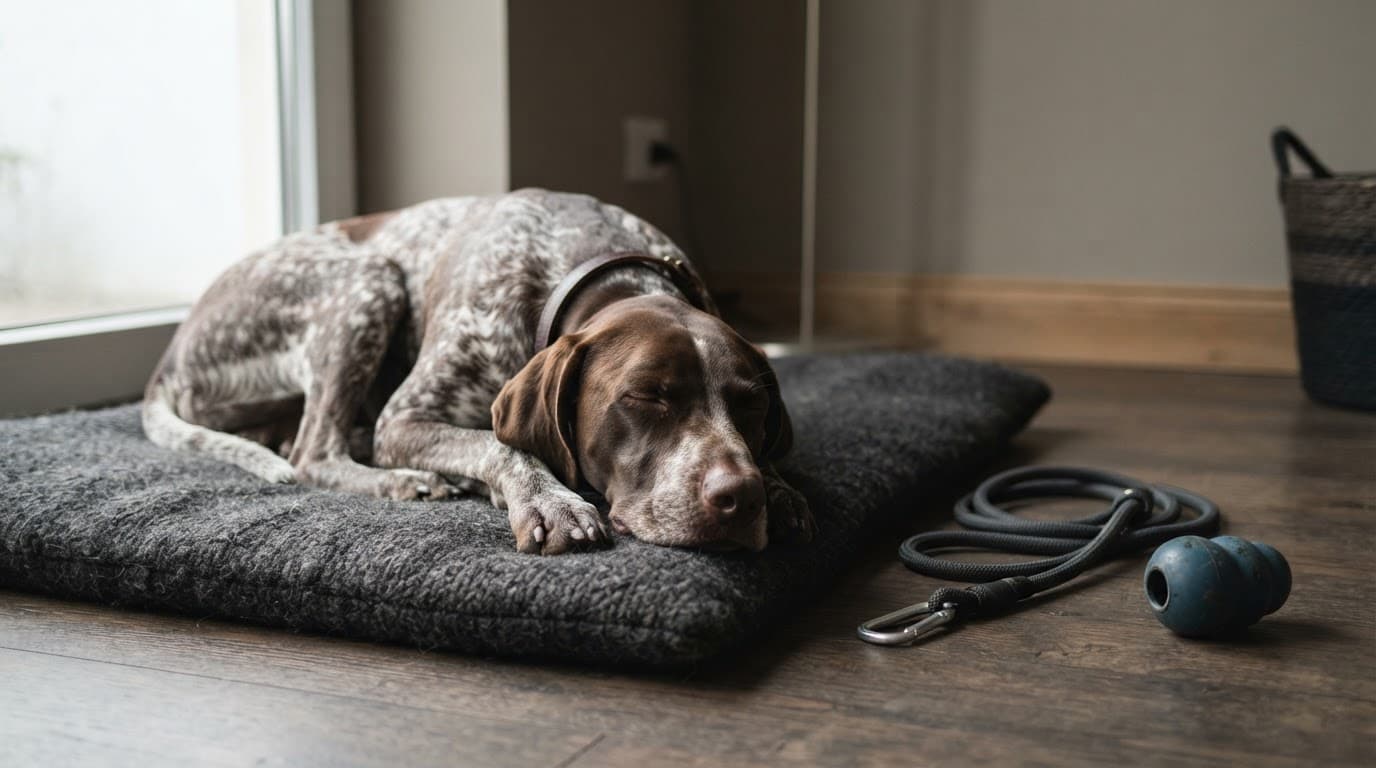
Why More Exercise Is Not Always the Complete Fix
One short walk may not meet your GSP’s physical and mental needs. However, answering every restless moment with harder exercise can create an endurance athlete who needs more activity each week.
Your dog also needs boundaries, decompression, emotional support, and plenty of sleep. If your GSP is frantic after exercise, try lower-arousal activities such as sniffing, food searches, chewing, or a quiet mat routine.
They may need help moving from action to rest, rather than another run around the yard.
Pacing, whining, jumping, and difficulty resting are behavioral challenges that may require training and emotional support. Simply adding more physical exertion won’t always address the underlying problem.
Punishing pacing, whining, or normal hunting-breed behaviors can add fear and frustration. The American Veterinary Society of Animal Behavior’s reward-based guidance recommends reward-based methods for training and behavior problems.
Other common mistakes include:
- Changing the rules between family members.
- Rewarding jumping or whining with attention.
- Allowing long, overstimulating play sessions.
- Expecting fast results after only a few training attempts.
Consistent training matters more than perfection. Every family member should reinforce the same calm behaviors and boundaries.
Choose one or two manageable changes, track your dog’s response, and adjust the plan. The goal isn’t to exhaust your GSP every day.
How to Choose Helpful Training and Care Resources
Choose a qualified, reward-based professional dog trainer who understands hunting and sporting breeds.
A professional dog walker can also provide structured activity, but walking support should complement home training, not replace it.
For breed-specific planning, explore the German Shorthaired Pointer Blueprint and what the breed blueprint includes.
For affordable support with exercise, training, enrichment, and daily routines, you can also Check out our great guides on Payhip or Check out our ebook guides on Etsy.

Frequently Asked Questions
A GSP may struggle to rest for many different reasons, so the right solution depends on the pattern behind the behavior.
These answers can help you decide whether to adjust training, change the routine, or seek support for ongoing behavioral challenges.
How long does it take to teach a GSP to start settling down?
Small improvements may appear within days or weeks when you follow the same routine each day. Reliable rest usually takes longer, especially when your dog has practiced pacing, whining, or constant activity for months.
Your GSP’s age, history, health, training skill, and the cause of the behavior all affect progress. A puppy may need help with naps, while an anxious adult dog needs a slower plan and extra support.
Look for gradual changes, such as shorter pacing periods or choosing the mat without being asked.
Should I ignore my GSP when it is whining or pacing?
Simply ignoring your dog isn’t enough if they are distressed or have an unmet need. Check exercise, toilet needs, food, water, pain, fear, and anxiety before deciding that the behavior is attention-seeking.
When your GSP pauses, lowers their energy, or lies down, reward that calm moment. You can also teach an alternative behavior, such as going to a mat, so your dog has a clear way to ask for help without whining.
Can crate training help a GSP settle?
A crate can support rest when your GSP learns that it is a safe, comfortable place. Introduce it with treats, meals, chews, and short sessions while you remain nearby.
Never use the crate as punishment or shut your dog inside for unsuitable periods.
Don’t use a crate to contain panic. Heavy panting, drooling, frantic escape attempts, persistent barking, or howling are signs that your dog needs a different plan.
The ASPCA’s separation anxiety guidance explains why crate confinement isn’t suitable for every distressed dog.
Why is my GSP calm outside but wild inside?
Outdoor activity provides movement, fresh smells, and useful sensory input. Home may still contain exciting triggers, attention rewards, noisy activity, or no clear routine for resting.
Practice the change from outing to quiet time. Offer water and a toilet break, allow a short decompression period, then guide your GSP to a mat with a suitable chew.
Keep your voice and movements calm, rather than starting another game as soon as you walk through the door.
When should I take my restless GSP to the vet?
Arrange veterinary care for sudden or worsening restlessness, especially when it comes with pain, stiffness, reluctance to move, or unusual tiredness.
Appetite or weight changes, increased thirst, altered sleep, panting, or other physical signs also need attention.
A vet can help rule out pain and medical causes before you continue changing the behavior plan.
Persistent pacing is not always a training problem, particularly when your dog’s behavior has changed without an obvious reason.
What if my GSP still cannot settle after training and enrichment?
Review the routine with a certified, reward-based behavior professional if your GSP still cannot rest. Persistent anxiety, fear, or unsafe behavior may need a tailored plan, not more activity alone.
Your veterinarian can check for health problems and discuss further support when needed.
A qualified professional can then adjust the training steps, environment, absences, and daily activities to suit your individual dog.
Conclusion
When your GSP won’t settle, the answer is rarely more exercise alone. A German Shorthaired Pointer also needs scent work, training, sleep, predictable routines, and emotional support.
A dog that spends every waking hour seeking the next exciting thing may need help recognizing when the day is finished.
Build calmness in small steps. Balance purposeful outings with slower sniffing, short training games, and protected rest.
Reward relaxed choices, offer a comfortable mat, and avoid treating every restless moment as a sign that your dog needs another run.
If your GSP suddenly becomes restless, pants, paces, struggles to sleep, or shows other behavior changes, arrange a veterinary check.
A qualified reward-based behavior professional can help when anxiety, fear, or separation distress continues.
Start today with one structured outing, one short scent game, and one five-minute mat session to help your dog calm down afterward.
Calmness may take time, but with a steady routine, your GSP can learn that resting is part of the job too.