Dogs bark. It’s one of the ways they communicate with us and the world around them. However, excessive barking can quickly become frustrating for owners and neighbours alike.
If you’ve ever found yourself asking:
- Why won’t my dog stop barking?
- How can I reduce my dog’s barking naturally?
- Is my dog bored?
- Do brain games really help barking?
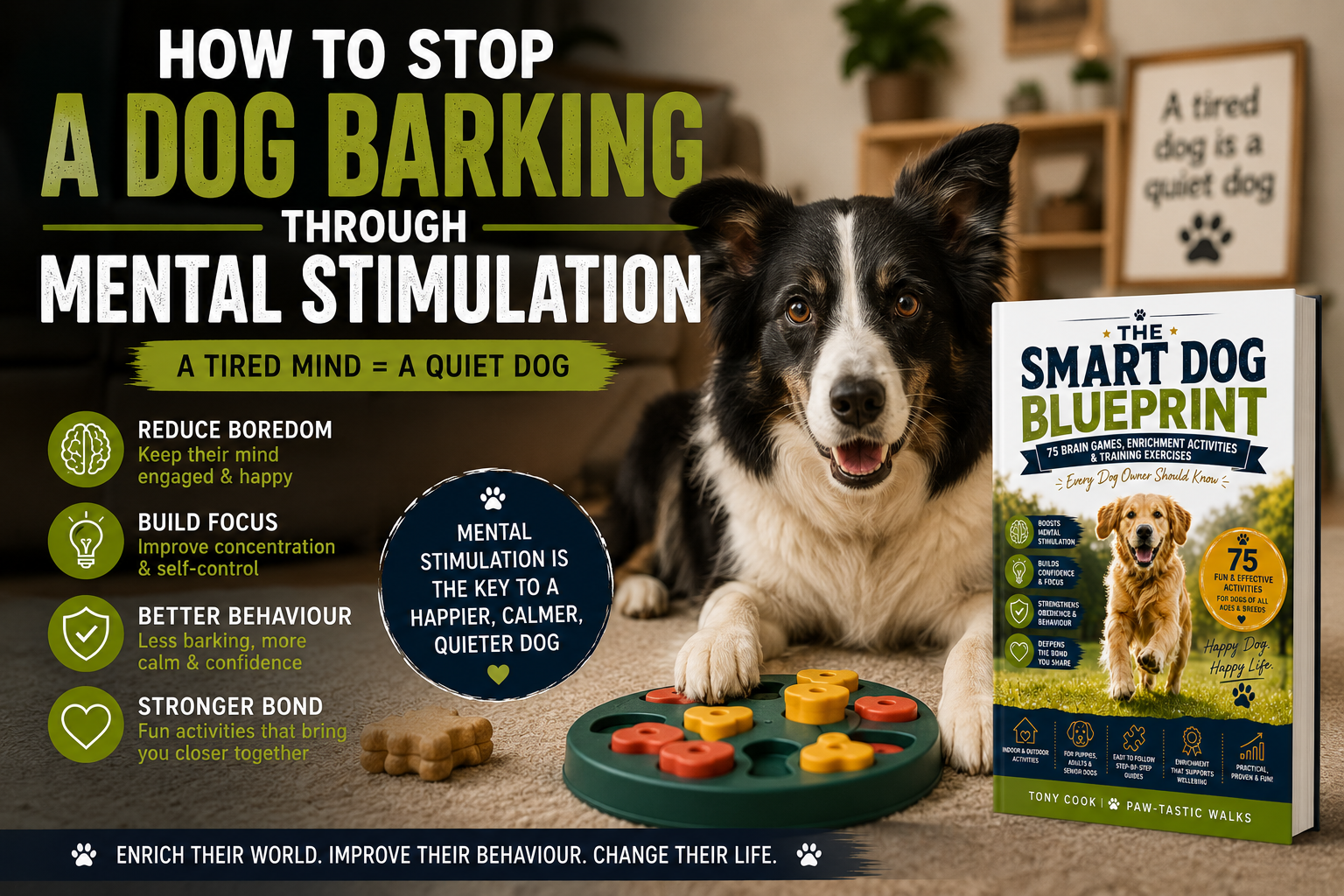
The good news is that many barking problems can be improved through mental stimulation and canine enrichment.
In fact, one of the most overlooked reasons for excessive barking is simple boredom.
Let’s explore why dogs bark, how mental stimulation can help, and what activities you can start using today.

Why Dogs Bark
Before trying to stop barking, it’s important to understand why it happens.
Dogs may bark because they are:
- Bored
- Excited
- Frustrated
- Lonely
- Seeking attention
- Alerting you to something
- Anxious
- Under-stimulated
Not all barking is bad.
A dog barking briefly at a visitor or unusual noise is perfectly normal.
The problem arises when barking becomes excessive, repetitive, or difficult to interrupt.
The Hidden Cause Of Excessive Barking
Many owners assume barking is simply a training issue.
Sometimes it is.
However, many dogs bark because they have too much unused mental energy.
Think about your dog’s instincts.
Dogs were originally bred to:
- Herd livestock
- Retrieve game
- Track scents
- Guard property
- Solve problems
- Work alongside humans
Modern dogs often spend large portions of the day waiting for something interesting to happen.
When the brain isn’t occupied, dogs create their own entertainment.
Unfortunately, that entertainment often includes barking.
Why Mental Stimulation Works
Mental stimulation gives your dog a job to do.
Instead of focusing on every sound, movement, or passing squirrel, your dog learns to focus on meaningful activities.
Brain games help dogs:
✅ Burn mental energy
✅ Improve focus
✅ Build confidence
✅ Reduce boredom
✅ Encourage calm behaviour
✅ Improve problem-solving skills
A mentally tired dog is often a much quieter dog.
Many professional trainers believe that ten minutes of focused brain work can be as valuable as a much longer physical walk.
7 Brain Games That Can Help Reduce Barking
1. Find The Treat
One of the easiest enrichment games you can play.
Hide treats around a room and encourage your dog to search for them using their nose.
This taps into natural scenting instincts and provides excellent mental stimulation.
2. Treasure Hunts
Hide treats or toys throughout your home and encourage your dog to find them.
The search process keeps dogs engaged and focused.
3. Which Hand?
Place a treat in one hand and allow your dog to choose.
This simple game improves concentration and scent discrimination.
4. Scent Trails
Create a trail using small treats and encourage your dog to follow the scent route.
Dogs love using their noses and often find this activity deeply satisfying.
5. Food Puzzles
Food puzzles encourage dogs to think before receiving rewards.
Even simple homemade puzzles can provide significant mental stimulation.
6. Hide And Seek
Hide somewhere in the house and call your dog.
This strengthens recall while encouraging problem-solving.
7. Toy Rotation
Many dogs become bored when the same toys are available every day.
Rotating toys regularly can reignite interest and reduce boredom.

Mental Stimulation Vs Physical Exercise
Many owners respond to barking by increasing physical exercise.
While exercise is important, it doesn’t always solve the problem.
Some highly intelligent dogs can walk for hours and still return home mentally unsatisfied.
Mental stimulation works differently.
It requires:
- Concentration
- Decision making
- Problem solving
- Learning
- Investigation
These activities tire the brain in a healthy way.
The best approach is usually a combination of both physical exercise and mental enrichment.
Signs Your Dog Needs More Mental Stimulation
Your dog may benefit from additional enrichment if they regularly:
- Bark excessively
- Chew furniture
- Dig in the garden
- Pace around the house
- Constantly seek attention
- Struggle to settle
- Become overexcited easily
- Seems restless after walks
These behaviours often improve when dogs are given more opportunities to think and learn.
The Long-Term Benefits Of Brain Training
Regular brain games can help create a dog that is:
- More relaxed
- More focused
- Easier to train
- More confident
- Better behaved
- More fulfilled
Just a few minutes each day can make a noticeable difference.
The key is consistency.
Small daily enrichment sessions often produce better results than occasional long training sessions.
Looking For More Brain Games?
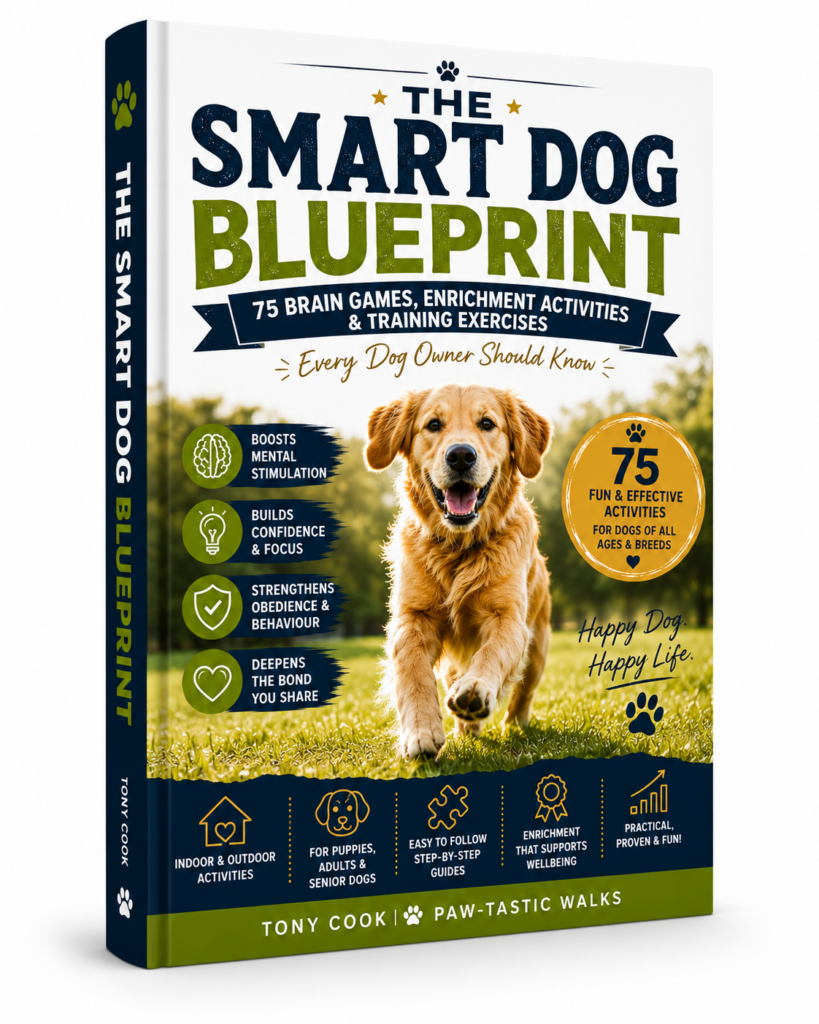
If you’d like a complete step-by-step guide packed with practical enrichment activities, you’ll love The Smart Dog Blueprint: 75 Brain Games, Enrichment Activities & Training Exercises Every Dog Owner Should Know.
Inside you’ll discover:
🐾 75 easy-to-follow brain games
🐾 Indoor and outdoor enrichment activities
🐾 Scent work challenges
🐾 Confidence-building exercises
🐾 Recall and focus training games
🐾 Puppy enrichment ideas
🐾 Senior dog activities
🐾 Weekly enrichment planners
🐾 Progress trackers and achievement certificates
Whether you’re trying to reduce barking, improve focus, build confidence, or simply create a happier and more fulfilled dog, this guide provides everything you need to get started.
Give Your Dog A Job To Do
Many barking problems don’t start with bad behaviour.
They start with boredom.
When dogs are given opportunities to think, learn, explore, and solve problems, they often become calmer, happier companions.
Mental stimulation isn’t just about reducing barking.
It’s about improving your dog’s overall quality of life.
And that’s something every dog deserves.
Ready To Transform Your Dog’s Behaviour?
👉 Discover The Smart Dog Blueprint today and unlock 75 fun, practical brain games that can help reduce boredom, improve focus, strengthen your bond, and create a happier, quieter dog.
Your dog’s next favourite activity could be just one page away.