

A Parent’s Complete Guide
🐾 Raising an American Eskimo Dog and Young Children Together
Bringing an American Eskimo Dog into a home filled with young children can be one of the most rewarding decisions your family ever makes.
These beautiful white dogs are affectionate, highly intelligent and incredibly loyal, often forming deep bonds with every member of the household.
However, creating a happy relationship between children and a dog doesn’t happen by chance.
It happens through patience, good habits and helping both your children and your American Eskimo Dog learn how to understand one another.
Children need to learn how to respect a dog’s personal space, while your Eskie needs positive experiences that build confidence around youngsters.
The wonderful news is that American Eskimo Dogs are eager to please and exceptionally trainable. When introduced correctly, they often become gentle playmates, loyal protectors and lifelong companions for children of all ages.
Whether you’re preparing for a new puppy or introducing an adult American Eskimo Dog into family life, this guide will help you build a safe, loving and trusting relationship from day one.
⭐ Quick Answer
Yes. American Eskimo Dogs can make exceptional family pets for households with young children. Their affectionate personalities, intelligence and playful nature allow them to develop wonderful relationships with respectful children. Success depends on early socialisation, positive training and ensuring that both children and dogs learn how to interact safely together.
👨👩👧👦 Family Compatibility Score
| Category | Rating |
|---|---|
| Young Children | ⭐⭐⭐⭐⭐ |
| Toddlers | ⭐⭐⭐⭐☆ |
| Older Children | ⭐⭐⭐⭐⭐ |
| First-Time Families | ⭐⭐⭐⭐☆ |
| Trainability | ⭐⭐⭐⭐⭐ |
| Intelligence | ⭐⭐⭐⭐⭐ |
| Affection | ⭐⭐⭐⭐⭐ |
| Playfulness | ⭐⭐⭐⭐⭐ |
| Grooming Commitment | ⭐⭐⭐☆☆ |
| Overall Family Rating | ⭐⭐⭐⭐⭐ |
❤️ Why American Eskimo Dogs Are Such Wonderful Family Pets
There’s a reason why so many American Eskimo Dog owners describe their dogs as “part of the family.”
Unlike some breeds that naturally prefer one favourite person, Eskies usually enjoy being involved with everyone. They want to know what’s happening, follow family members from room to room and join in with everyday life.
They thrive on companionship and genuinely enjoy feeling included.
For children, this often means growing up with a loyal friend who loves joining games in the garden, family walks and cosy evenings on the sofa.
Some of the qualities that make the breed particularly suited to family life include:
- ❤️ Deep loyalty towards their family
- 😊 Friendly and affectionate personalities
- 🧠 Outstanding intelligence
- 🎓 Easy to train using positive methods
- 🎾 Playful without being overly rough
- 👀 Naturally alert without being aggressive
- 🚶 Enjoy family adventures and outdoor activities
- 🐾 Adapt well to many different homes
With proper guidance, an American Eskimo Dog quickly learns where they fit within the family and often becomes a calm, dependable companion for children.
👶 Before You Bring Your American Eskimo Dog Home
One of the biggest mistakes families make is spending weeks preparing the puppy…
…but forgetting to prepare the children.
For a puppy, arriving in a completely new home is a huge change. They’re leaving their mother, littermates and everything familiar behind.
The quieter and calmer those first few days are, the easier your puppy will settle.
Before your Eskie arrives, sit down together as a family and explain some simple rules.
Children should understand that the puppy:
- 😴 Needs lots of sleep
- 🍖 Should never be disturbed while eating
- 🧸 Needs quiet time every day
- 🚫 Doesn’t like rough handling
- ❤️ Is still learning about the world
Helping children understand these simple ideas before the puppy arrives often prevents many common problems later.
💡 Expert Tip: Ask younger children to imagine how they would feel spending their very first night away from home. This simple conversation helps build empathy and encourages gentle behaviour from the very beginning.
🏡 Preparing Your Home
Creating the right environment before your puppy arrives makes life much easier for everyone.
Your American Eskimo Dog should have a quiet area where they can retreat whenever they feel tired or overwhelmed.
This space should always remain off-limits to children.
Your puppy’s area should include:
- 🛏️ Comfortable bed
- 💧 Fresh drinking water
- 🧸 Safe chew toys
- 🦴 Age-appropriate puppy toys
- 🍽️ Food bowls
- ❤️ Plenty of peace and quiet
Children should learn that when their dog chooses to rest here, they’re asking for a little time alone.
Respecting this safe space helps build trust that lasts for years.
📋 Family Rules Before Day One
Every family benefits from having a few simple house rules.
Consider displaying these somewhere everyone can see them.
Our Family Dog Rules
✅ We always use gentle hands.
✅ We never pull ears or tails.
✅ We never disturb our dog while sleeping.
✅ We let our dog eat in peace.
✅ We speak quietly around our dog.
✅ We never chase our dog.
✅ We always ask an adult before giving treats.
✅ We always reward good behaviour with kindness.
Having consistent rules helps children understand what’s expected and gives your American Eskimo Dog confidence that every family member behaves in a predictable, respectful way.
🐶 Understanding Your Eskie’s Personality
Every American Eskimo Dog has their own unique character, but most share several common personality traits that make them excellent family companions.
They are naturally curious, highly observant and incredibly people-focused. Many seem happiest when they’re simply close to their owners, whether that’s joining a family walk, watching the children play or relaxing beside the sofa after a busy day.
Because they’re so intelligent, they quickly notice routines and soon learn which behaviours earn praise and rewards.
This makes them one of the easiest breeds to train—but it also means they learn bad habits just as quickly if boundaries aren’t consistent.
The goal isn’t to create a perfectly behaved dog overnight.
It’s to build trust, confidence and positive experiences every single day.
🌟 Why the First Few Weeks Matter Most
The first few weeks after bringing your American Eskimo Dog home lay the foundation for the years ahead.
Every positive interaction between your children and your puppy helps build confidence, trust and affection. Likewise, every calm experience teaches your puppy that children are safe, predictable and fun to be around.
Don’t worry about creating perfection—focus on creating positive moments.
Small, consistent successes every day will shape your Eskie into a well-mannered, family-friendly companion who feels secure, loved and eager to be part of every family adventure.

🏡 The First Week Together
The first week is all about helping your American Eskimo Dog feel safe, secure and confident in their new home.
While it’s natural for children to be excited, too much attention can overwhelm a young puppy.
Instead of encouraging constant cuddles and play, focus on creating calm, positive experiences.
Allow your Eskie to explore the house at their own pace while your children quietly sit nearby and allow the puppy to approach them first.
This teaches your puppy that children are friendly and predictable rather than loud or intimidating.
During those first few days:
- ❤️ Keep introductions calm.
- 💤 Allow plenty of rest.
- 🎾 Keep play sessions short.
- 🦴 Reward calm behaviour.
- 😊 Let your puppy choose when they want interaction.
Remember, confidence grows through positive experiences—not by forcing them.
💡 Parent’s Tip: Explain to your children that they’re making a new best friend. Friendships take time to grow, and giving the puppy space during the first week helps build trust much faster.
🤝 Teaching Children How to Respect Their Dog
Children are naturally affectionate, but dogs don’t always understand hugs, kisses or rough play in the same way people do.
Teaching respectful behaviour from day one protects both your children and your dog.
Children should learn that an American Eskimo Dog is a living companion with feelings—not a toy.
Teach These Simple Rules
✅ Stroke gently rather than patting roughly.
✅ Never pull ears, tails or fur.
✅ Never climb on the dog.
✅ Allow your dog to walk away whenever they choose.
✅ Never disturb your Eskie while eating.
✅ Never wake a sleeping dog.
✅ Speak calmly around your dog.
✅ Respect your dog’s quiet space.
When children understand these simple rules, your dog quickly learns that being around children is enjoyable and safe.
🐶 Teaching Your American Eskimo Dog to Trust Children
Trust works both ways.
Your children are learning about the puppy—but your puppy is also learning about children.
Every positive interaction helps build lifelong confidence.
Start with very short sessions lasting only five or ten minutes.
Encourage your children to:
- Offer treats from an open hand.
- Gently toss a favourite toy.
- Speak softly.
- Reward calm behaviour.
- Allow the puppy to approach voluntarily.
Never force your puppy into interactions.
A puppy that chooses to approach children develops far more confidence than one that’s constantly picked up or passed around.
❤️ Building a Friendship That Lasts
One of the wonderful things about American Eskimo Dogs is how closely they bond with their families.
As trust grows, you’ll probably notice your Eskie:
- Following your children around the house.
- Waiting outside bedroom doors.
- Watching over family activities.
- Bringing toys to your children.
- Looking for opportunities to join in games.
These are wonderful signs that your puppy is beginning to see your children as trusted companions.
🎾 The Best Games for Young Children and American Eskimo Dogs
Because Eskies are both intelligent and energetic, games should exercise both their body and their brain.
Here are some favourites that families love.
🎾 Gentle Fetch
A lightweight soft toy is perfect.
Children can throw short distances while encouraging their dog to return the toy.
This builds confidence while reinforcing recall.

👃 Treasure Hunt
Hide treats around the room.
Let your Eskie sniff them out while your children cheer them on.
This taps into their excellent sense of smell and provides fantastic mental stimulation.
🙈 Hide and Seek
Children hide behind furniture while calling the puppy’s name.
American Eskimo Dogs absolutely love searching for family members.
This game strengthens recall and builds excitement around coming when called.
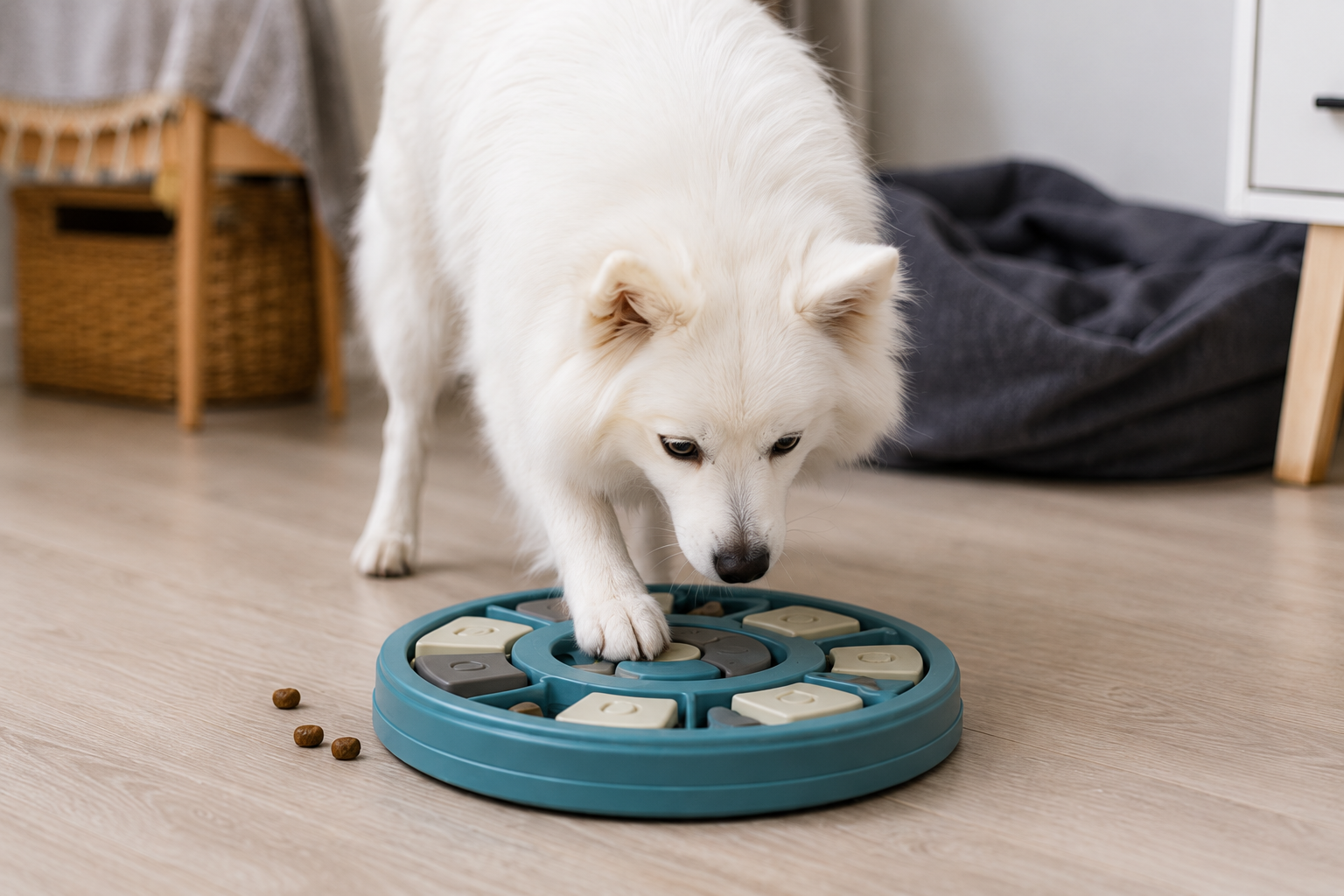
🧩 Puzzle Toy Time
Interactive feeders and puzzle toys encourage problem-solving.
Young children enjoy helping fill the toys before watching their clever Eskie figure everything out.
🎓 Mini Training Sessions
American Eskimo Dogs love learning.
Even children can help teach simple commands like:
- Sit
- Paw
- Spin
- Touch
- Down
- Wait
Keep sessions under ten minutes and always finish while your puppy is still enjoying themselves.
🌳 Outdoor Adventures Together
Once vaccinations are complete, the real adventures begin.
Your American Eskimo Dog will love joining the family outdoors.
Great activities include:
🥾 Woodland walks
🌼 Country parks
🏖️ Dog-friendly beaches
🎾 Secure dog fields
🌳 Local parks
🧺 Family picnics
These outings provide exercise, socialisation and unforgettable memories for children and dogs alike.
📅 A Family Routine That Works
Dogs thrive on routine—and children often do too.
A predictable daily schedule helps everyone know what to expect.
| Time | Family Activity |
|---|---|
| 7:00 am | Morning toilet break and walk |
| 7:30 am | Breakfast |
| 8:00 am | Calm family time before school |
| Afternoon | Toilet break and short play session |
| Early evening | Family walk or garden play |
| After dinner | Five-minute training session |
| Bedtime | Quiet cuddles and bedtime routine |
Having a consistent routine helps your American Eskimo Dog settle into family life much more quickly.
👧 Giving Children Responsibilities
Children love feeling involved.
Age-appropriate responsibilities help strengthen the relationship while teaching valuable life skills.
Younger Children
- Fill the water bowl with help.
- Help brush the coat.
- Choose toys.
- Help hide treats.
Older Children
- Help with training.
- Join family walks.
- Prepare meals with supervision.
- Brush the coat.
- Teach new tricks.
Always supervise younger children and remember that caring for the dog should remain enjoyable rather than feeling like a chore.
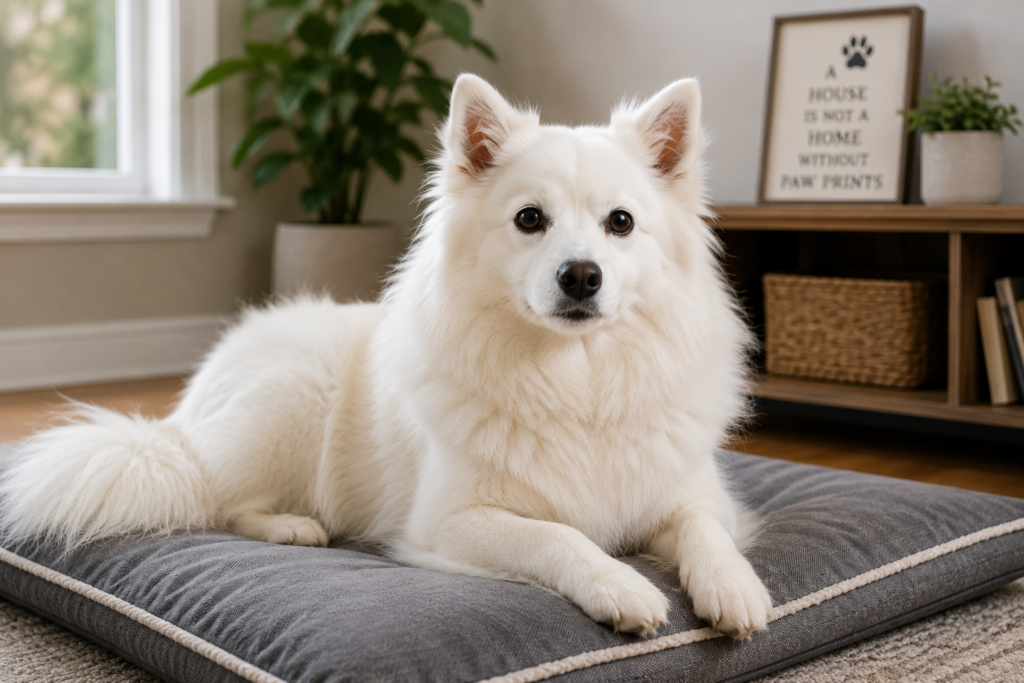
🌟 Building Confidence Every Day
Confidence isn’t created in one afternoon.
It’s built through hundreds of small, positive experiences.
Every gentle stroke.
Every successful training session.
Every family walk.
Every quiet cuddle after a busy day.
These little moments gradually create an unbreakable bond between your children and your American Eskimo Dog.
The stronger that bond becomes, the more your Eskie will see your children not just as people they live with—but as members of their own pack who deserve loyalty, affection and protection.
⚠️ Common Mistakes Parents Make
Even the most loving families can unintentionally create habits that make life more difficult for both children and their American Eskimo Dog.
Fortunately, most of these mistakes are easy to avoid once you’re aware of them.
❌ Allowing Rough Play
Young children often become excited when playing with a puppy, but wrestling, chasing or tugging at your dog’s ears and tail can quickly cause fear or frustration.
Instead, encourage calm games like gentle fetch, hide-and-seek or simple training sessions that everyone enjoys.
❌ Forgetting That Puppies Need Sleep
American Eskimo puppies can sleep for 16–20 hours each day.
A tired puppy is much more likely to become overexcited, mouthy or grumpy.
Teach children that when their puppy is asleep, it’s time to let them rest.
❌ Leaving Young Children Unsupervised
No matter how gentle your dog is, young children and dogs should never be left together without adult supervision.
This protects both your child and your dog from accidental misunderstandings.
❌ Skipping Daily Exercise
An under-exercised American Eskimo Dog will often find ways to entertain themselves.
This can lead to:
- Excessive barking
- Chewing furniture
- Digging
- Jumping up
- Hyperactive behaviour
Daily walks, games and mental enrichment help prevent many common behaviour problems before they start.
❌ Sending Mixed Messages
If one family member allows jumping on the sofa while another doesn’t, your dog quickly becomes confused.
Agree on household rules and make sure everyone follows them consistently.
Dogs learn best when expectations remain the same every day.
🚩 Understanding Your Dog’s Body Language
Dogs communicate constantly.
The problem is that many children don’t recognise the signs.
Teaching your children to understand canine body language is one of the greatest gifts you can give them.
😊 Signs Your Eskie Is Happy
🐾 Relaxed body
😊 Soft eyes
🐕 Loose wagging tail
🎾 Play bow
❤️ Seeking attention
These are all wonderful signs that your dog is feeling safe and content.
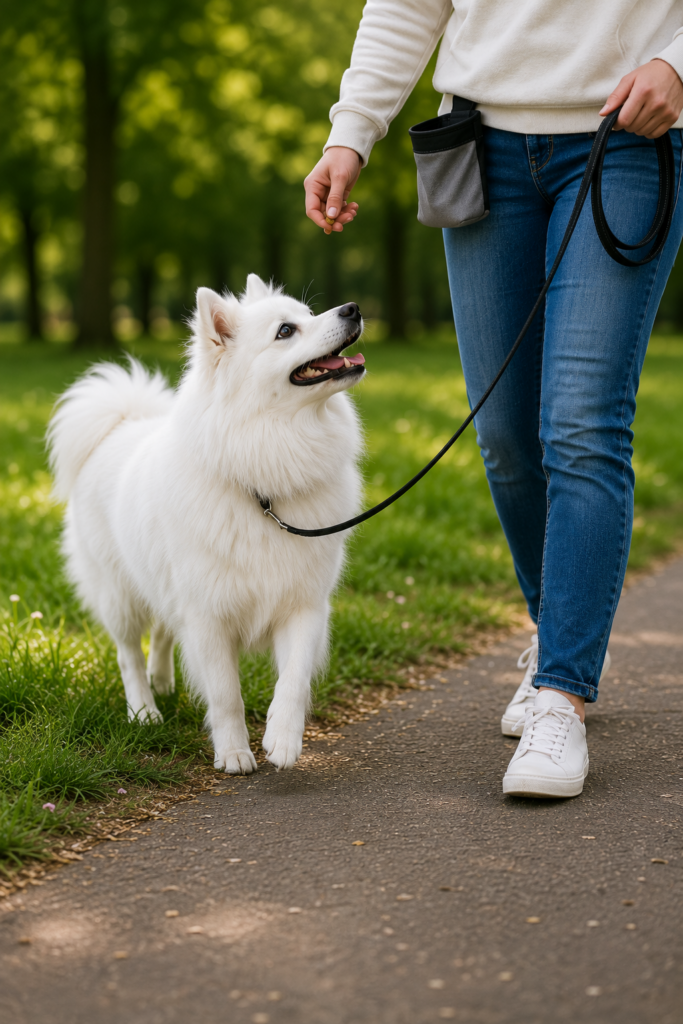
😟 Signs Your Eskie Needs Space
Children should learn to stop interacting if they notice:
😐 Turning the head away
👅 Lip licking
🥱 Yawning
🚶 Walking away
👀 Showing the whites of the eyes (“whale eye”)
🐕 Tail tucked underneath
😟 Flattened ears
⚠️ Low growling
A growl should never be punished.
It’s your dog’s polite way of saying:
“I’m uncomfortable. Please give me some space.”
Listening to these signals helps prevent problems before they happen.
👶 Advice for Different Age Groups
Every stage of childhood brings different opportunities—and different responsibilities.
👶 Babies (0–2 Years)
Babies should never be left alone with any dog.
Allow your American Eskimo Dog to observe from a comfortable distance while rewarding calm behaviour.
As your baby grows, supervise every interaction and ensure your dog always has a quiet place to retreat.
🚼 Toddlers (2–5 Years)
Toddlers are naturally curious but don’t yet understand boundaries.
This is the perfect age to teach:
- Gentle hands
- Quiet voices
- No chasing
- No grabbing
- Respect for the dog’s bed
Keep interactions short, fun and closely supervised.
🧒 Primary School Children (5–10 Years)
Children at this age can become wonderful training partners.
They can help:
- Fill water bowls
- Brush the coat
- Practise basic commands
- Join family walks
- Play enrichment games
- Learn responsibility
Their confidence often grows alongside their dog’s.
👦 Teenagers
Teenagers can take on a much greater role in caring for an American Eskimo Dog.
They can help with:
- Daily walks
- Advanced obedience
- Agility training
- Grooming sessions
- Mental enrichment
- Socialisation outings
For many teenagers, caring for a dog also builds responsibility, empathy and confidence.
📌 The 10 Golden Rules for Raising an American Eskimo Dog with Children
These simple rules can help create a safe, happy home where children and dogs thrive together.
⭐ Golden Rules
- ❤️ Always supervise young children around your dog.
- 🖐️ Teach gentle hands from the very beginning.
- 😴 Never disturb a sleeping or resting dog.
- 🍽️ Allow your Eskie to eat in peace.
- 🧠 Exercise both body and mind every day.
- 🎓 Keep training positive and reward good behaviour.
- 🏡 Give your dog a quiet retreat where children don’t follow.
- 😊 Reward calm interactions between children and your dog.
- 👀 Learn to recognise your dog’s body language.
- ❤️ Remember that trust is built through patience, kindness and consistency.
Consider printing these rules and placing them on the fridge as a daily reminder for the whole family.

Here is a super useful FREE PDF of these rules for you to download, print out, pop on your fridge and share.
🌟 Final Thoughts
Raising an American Eskimo Dog alongside young children is about far more than teaching commands or establishing routines—it’s about nurturing a friendship built on trust, respect and shared experiences.
When children learn to understand their dog’s needs, and your Eskie learns that children are gentle, predictable companions, something truly special begins to grow.
Over time, those first cautious introductions often develop into an unbreakable bond filled with adventures, play, comfort and unconditional love.
There will be muddy paw prints, scattered toys and the occasional challenge along the way, but there will also be joyful walks, laughter in the garden and a loyal companion who becomes woven into the fabric of family life.
With patience, consistency and plenty of positive reinforcement, your American Eskimo Dog can become far more than a pet—they can become a cherished member of the family who grows up alongside your children, creating memories that last a lifetime.

📘 Ready to Become the Best American Eskimo Dog Owner You Can Be?
If you’ve enjoyed this guide, why stop here?
The American Eskimo Dog Blueprint from Paw Tastic Walks is packed with practical, easy-to-follow advice covering every stage of your dog’s life.
Inside, you’ll discover expert guidance on:
- 🐶 Choosing and preparing for your puppy
- 🎓 Training and socialisation
- 🍖 Nutrition and feeding
- 🩺 Health and preventative care
- ✂️ Grooming and coat maintenance
- 🚶 Exercise and mental stimulation
- 🏡 Solving common behaviour problems
- ❤️ Building a lifelong bond with your American Eskimo Dog
Whether you’re a first-time owner or already share your home with an Eskie, the Blueprint is designed to give you the confidence and knowledge to raise a happy, healthy and well-behaved companion.
Visit our Etsy store today to learn more and explore our growing collection of breed-specific guides, expert articles and practical resources for dog lovers.
❓Frequently Asked Questions
Are American Eskimo Dogs naturally good with children?
Yes. Most American Eskimo Dogs are affectionate, playful and loyal family companions when they are well socialised and children are taught to interact with them respectfully.
At what age should children help train an American Eskimo Dog?
Many children can begin helping with simple, reward-based training from around five years old, provided an adult supervises every session.
Can American Eskimo Dogs become protective of children?
They can develop strong bonds with children and may alert the family to unfamiliar visitors, but they should never be encouraged to display guarding or aggressive behaviour.
Are American Eskimo Dogs suitable for busy family homes?
Yes, provided they receive enough daily exercise, mental stimulation and quality time with their family. They thrive when included in everyday activities.
How much exercise does an American Eskimo Dog need?
Most adult American Eskimo Dogs enjoy around 60–90 minutes of exercise each day, combined with training and enrichment games to keep their minds active.
Do American Eskimo Dogs enjoy playing with children?
Absolutely. They often love games such as fetch, hide-and-seek, scent work and trick training, especially when play remains calm and positive.
Should my dog have a child-free space?
Yes. Every dog benefits from having a quiet area where they can rest without being disturbed. Teaching children to respect this space helps build trust and confidence.
What’s the biggest mistake new families make?
The most common mistake is expecting an instant friendship. Strong relationships grow gradually through patience, supervision and positive experiences.
Can American Eskimo Dogs live happily with babies?
Yes, but every interaction should be carefully supervised. As babies become mobile, it’s especially important to teach both child and dog appropriate boundaries.
Is the American Eskimo Dog a good choice for first-time parents who also want a dog?
For active families willing to invest time in training, exercise and socialisation, the American Eskimo Dog can be an excellent choice. Their intelligence, affectionate nature and eagerness to please make them rewarding companions for families prepared to meet their needs.

🐾 At a Glance
| Question | Answer |
|---|---|
| Good with young children? | ⭐⭐⭐⭐⭐ Excellent |
| Good with toddlers? | ⭐⭐⭐⭐☆ With supervision |
| Easy to train? | ⭐⭐⭐⭐⭐ |
| Playful family companion? | ⭐⭐⭐⭐⭐ |
| Protective without aggression? | ⭐⭐⭐⭐☆ |
| Needs daily exercise? | Yes (60–90 minutes) |
| Suitable for first-time families? | Yes, with commitment |
| Overall family suitability | ⭐⭐⭐⭐⭐ Excellent |