Why Does My Puppy Pee Inside After Being Outside? 10 Common Reasons
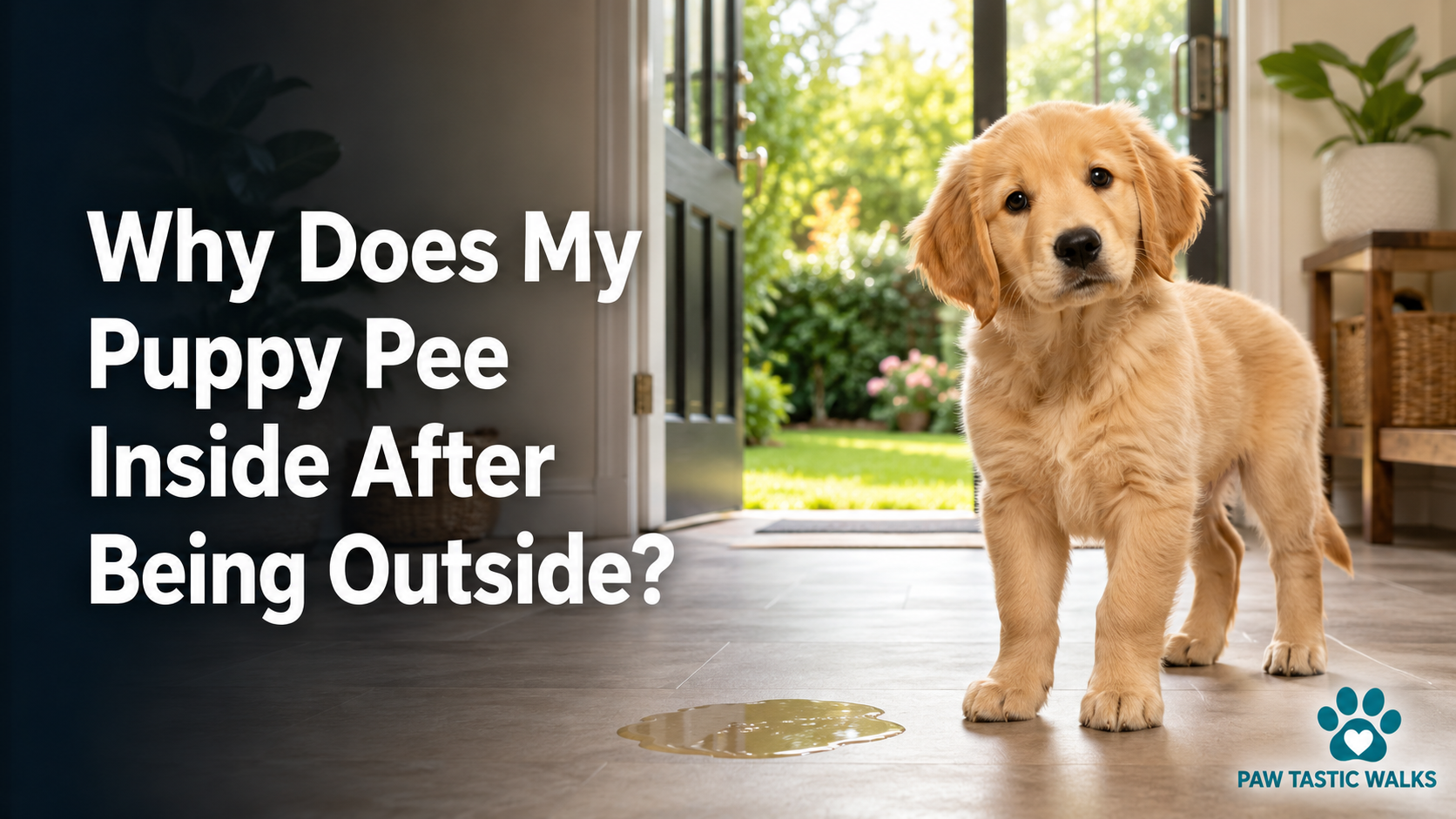
You take your puppy into the garden, wait patiently and eventually return indoors without seeing anything happen.
A minute or two later, your puppy squats on the carpet and pees.
It is one of the most frustrating experiences during puppy house training. You may wonder whether your puppy deliberately waited until coming inside or simply failed to understand what you wanted.
In most cases, your puppy is not being stubborn, spiteful or deliberately difficult.
A puppy may pee inside after being outside because they were distracted, did not completely empty their bladder, felt uncomfortable outdoors or have not yet developed a clear association between the garden and toileting.
Young puppies also have limited bladder control and may need far more frequent toilet opportunities than new owners expect.
Occasional accidents are a normal part of learning. However, frequent urination, straining, discomfort or a sudden change in toilet habits can sometimes indicate a medical problem and should be discussed with a vet.
Let’s examine the 10 most common reasons puppies pee indoors after apparently having an opportunity to go outside—and what you can do about each one.
Quick Answer: Why Does My Puppy Pee as Soon as We Come Inside?
Your puppy may pee indoors after being outside because of the following:
- They became distracted in the garden.
- The outdoor visit was too short.
- They did not completely empty their bladder.
- They associate the garden with play rather than toileting.
- Outdoor toileting has not been rewarded clearly enough.
- They received too much freedom after coming indoors.
- The timing of meals, water, sleep or play was overlooked.
- They dislike the weather, surface or toilet location.
- Excitement, nervousness or greeting behaviour triggered urination.
- A urinary or other medical problem is involved.
Keeping a written record of meals, drinks, toilet breaks and accidents can help reveal which explanation is most likely.
1. Your Puppy Was Too Distracted Outside
The outdoor world is enormously stimulating to a puppy.
There are leaves to chase, birds to watch, unfamiliar smells to investigate and noises coming from neighbouring gardens. Your puppy may become so interested in exploring that they temporarily forget they need to pee.
Once they return to a familiar, quieter environment, the distraction disappears and the need to empty their bladder becomes noticeable again.
What to do
Take your puppy to the same quiet toilet area on a lead.
Stand relatively still and avoid starting a game, throwing toys or allowing unrestricted exploration before they have toileted.
Give your puppy approximately five minutes. If they pee, reward them immediately and then allow a little sniffing or play.
This teaches an extremely useful pattern:
Toilet first—fun afterwards.
Do not expect a young puppy to concentrate for a long time in a busy or exciting garden. Keeping the initial visit calm and predictable will make the purpose much clearer.
2. The Outdoor Toilet Break Was Too Short
Some puppies need time to settle before they can toilet.
If you open the door, wait for 30 seconds and then bring your puppy inside, they may not have had enough opportunity to find a suitable spot and relax.
Puppies are also easily interrupted. A noise, movement or sudden gust of wind may stop them just as they are preparing to pee.
What to do
Allow approximately five quiet minutes in the chosen toilet area.
Watch for signs such as:
- Concentrated ground sniffing
- Circling
- Briefly stopping exploration
- Returning to a familiar patch
- Beginning to squat
If your puppy does not toilet, return inside but do not immediately provide unrestricted access to the home.
Supervise closely for 10–15 minutes and then try again.
The objective is not to remain outside indefinitely. It is to provide a reasonable opportunity and then carefully manage the period before the next attempt.
3. Your Puppy Did Not Completely Empty Their Bladder
A puppy may pee outside and still have another accident indoors shortly afterwards.
This can happen because the puppy released only a small amount before becoming distracted. Some puppies also urinate more than once during an outdoor visit.
Young dogs are still developing physical control and awareness of their bladder. They may not empty it as efficiently or predictably as a healthy adult dog.
What to do
After your puppy pees, give calm praise and an immediate reward—but do not always rush straight back indoors.
Remain outside for another few minutes or continue with a short, gentle walk around the garden. Your puppy may need to pee again.
Recording whether your puppy produces a small or more substantial amount can help you identify a pattern.
If your puppy repeatedly passes tiny amounts, strains, seems uncomfortable or asks to urinate unusually frequently, contact your vet. These signs should not simply be treated as a house-training problem.
4. Your Puppy Thinks the Garden Is for Playing
If every trip outside involves running, chasing toys and exploring, your puppy may understand the garden as a playground rather than a toilet area.
The opposite problem can also occur. If outdoor time ends immediately after your puppy pees, they may begin delaying because toileting appears to make the fun stop.
What to do
Separate the initial toilet opportunity from general garden play.
Take your puppy directly to the chosen area and wait calmly. Introduce play, exploration or a walk after successful toileting.
Whenever practical, allow a brief enjoyable activity after your puppy goes. This prevents them from learning that peeing causes outdoor time to end.
The routine should become:
- Go to the toilet area.
- Wait calmly.
- Puppy toilets.
- Reward immediately.
- Enjoy a little outdoor freedom.
This gives your puppy a clear reason to complete the important part first.
5. The Reward Arrives Too Late
Timing matters enormously in puppy training.
If your puppy pees outside and receives a treat after returning to the kitchen, they may associate the reward with coming through the door rather than toileting.
Praise alone may also be insufficient when the outdoor environment contains more interesting alternatives.
What to do
Carry small, suitable treats every time you take your puppy outside.
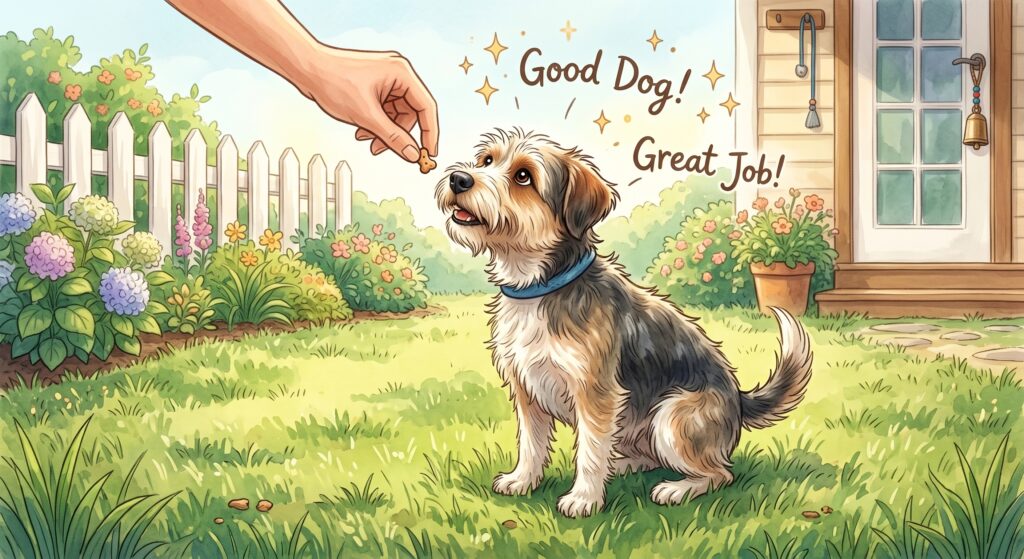
Reward within one or two seconds of your puppy finishing. Calmly mark the moment with a consistent word such as “Yes!” before giving the treat.
The reward should happen while you are still in the toilet area.
You can also use:
- Warm verbal praise
- A brief sniff around the garden
- A little play
- The beginning of a walk
- Carefully supervised indoor freedom
The reward does not need to be enormous. It needs to be immediate, consistent and valuable enough to make the correct behaviour worth repeating.
6. Your Puppy Receives Too Much Freedom Indoors
A puppy that has not toileted outside should not return indoors and immediately disappear into another room.
Unsupervised freedom makes it easy for your puppy to find a quiet carpet, hidden corner or previously soiled area.
Puppies do not automatically understand that the entire house is part of their living space. A room that is rarely used may feel like a perfectly acceptable toilet location.
What to do
If your puppy does not pee outside:
- Keep them in the same room as you.
- Watch for sniffing, circling or restlessness.
- Use a baby gate to limit access.
- Keep your puppy on a lightweight lead while directly supervised.
- Use a suitable crate or pen for a short period if your puppy is comfortable there.
- Try another outdoor visit after 10–15 minutes.
Never use a crate as punishment. It should be a comfortable resting area and must not replace regular toilet opportunities, exercise or interaction.
Household freedom should be earned gradually. Start with one closely supervised area and only open additional rooms when your puppy is becoming more reliable.
7. Meals, Water, Sleep and Play Are Affecting the Timing
Puppies often need to toilet after predictable daily events.
These include:
- Waking from sleep
- Eating
- Drinking
- Energetic play
- Training
- Excitement
- Leaving a crate or pen
- Greeting visitors
- Travelling in the car
An owner may take a puppy outside, return indoors and then offer breakfast or start an energetic game. The puppy understandably needs another toilet break soon afterwards.
What to do
Do not rely on fixed clock times alone. Build toilet opportunities around what your puppy has just done.
Take your puppy outside:
- Immediately after waking
- Shortly after meals
- After a substantial drink
- Before and after energetic play
- After leaving the crate
- Before being left alone
- When you return home
- Before bedtime
- Whenever warning signs appear
Very young puppies may need opportunities every 30–60 minutes while awake, but there is no perfect interval for every puppy.
Age, activity, health, meals and individual bladder control all affect the schedule. Your written records will be more useful than relying on a universal formula.
8. Your Puppy Dislikes the Weather or Toilet Area
Rain, wind, cold ground and unfamiliar surfaces can all discourage a puppy from toileting outside.
Some puppies become reluctant to step onto wet grass. Others feel exposed in an open garden or are frightened by traffic, barking dogs or sudden noises.
A puppy accustomed to toileting on one surface may also hesitate when presented with something different. For example, a puppy raised using indoor pads may not immediately understand that grass is now the preferred toilet area.
What to do
Choose a toilet area that is:
- Safe
- Relatively quiet
- Easy to reach
- Consistent
- Suitable in poor weather
You may be able to provide limited shelter without turning the area into an enclosed indoor toilet.
Accompany your puppy rather than simply opening the door. Stay calm, use a lead if necessary and reward generously when they succeed.
Avoid dragging or frightening a worried puppy. Gradual, positive exposure is more likely to build confidence than forcing them to remain in a situation they find overwhelming.
9. Excitement or Nervousness Triggered the Accident
Some puppies urinate during greetings, play or emotionally intense situations.
This may happen when:
- Someone arrives home
- A visitor bends over the puppy
- The puppy becomes highly excited
- An unfamiliar person approaches
- The puppy feels intimidated
- Play becomes overwhelming
This type of urination is not necessarily the same as forgetting the house-training routine. It can be an involuntary response associated with excitement, uncertainty or social behaviour.
What to do
Keep greetings calm and low-key.
Ask visitors to avoid looming over, grabbing or immediately exciting the puppy. Allow the puppy to approach at their own pace.
Take your puppy outside before predictable exciting events and again shortly afterwards.
Do not punish excitement-related urination. Punishment can increase anxiety and make the problem worse.
Many puppies improve as they mature and gain better emotional and bladder control. However, frequent or persistent episodes should be discussed with your vet so that medical causes can be excluded.
10. Your Puppy May Have a Medical Problem
Not every indoor accident is caused by incomplete training.
Urinary tract infections, bladder inflammation, congenital abnormalities, digestive problems and other medical conditions may affect a puppy’s toilet habits.
Contact your vet if your puppy:
- Suddenly starts having frequent accidents
- Urinates much more often than usual
- Passes only tiny amounts
- Strains or appears uncomfortable
- Cries while urinating
- Has blood in the urine
- Drinks considerably more than usual
- Leaks urine while resting or sleeping
- Repeatedly licks the genital area
- Produces unusually strong-smelling or cloudy urine
- Appears unwell, lethargic or off their food
- Has vomiting or persistent diarrhoea
A medical problem cannot be solved by taking the puppy outside more frequently or increasing training rewards.
If you are uncertain, a veterinary assessment is always the safer choice.
What Should I Do Immediately After My Puppy Pees Indoors?
If you catch your puppy beginning to pee:
- Interrupt gently without shouting.
- Take your puppy directly outside.
- Wait calmly in the usual toilet area.
- Reward them if they finish outdoors.
- Clean the indoor area thoroughly.
- Record when and why the accident may have happened.
- Provide an earlier toilet opportunity next time.
If you discover the accident later, simply clean it.
Your puppy will not connect punishment given several minutes later with the earlier act of urinating. Scolding may only teach them that your presence near a puddle is frightening.
Use an enzymatic pet cleaner designed to break down organic odours. Ordinary household products may leave enough scent behind to encourage your puppy to return to the same location.
Avoid ammonia-based cleaners, as their smell may resemble components of urine.
A Better Routine for the Next Outdoor Toilet Break
Try this simple sequence:
Step 1: Prepare before opening the door
Have your lead, treats and suitable clothing ready. Delays can matter when a young puppy urgently needs to go.
Step 2: Use the same exit and location
Consistency helps your puppy understand the routine.
Step 3: Keep the initial visit boring
Stand quietly and allow your puppy to concentrate.
Step 4: Introduce a toilet cue
As your puppy begins to pee, calmly say a short phrase such as “Go toilet” or “Be quick.”
Avoid repeating the cue continuously before your puppy understands what it means.
Step 5: Reward immediately
Give a treat as soon as your puppy finishes.
Step 6: Allow a little extra time
Your puppy may need to urinate again or pass stool.
Step 7: Supervise after returning indoors
Even after a successful visit, continue watching for signs that your puppy needs another opportunity.
Keep a Puppy Toilet-Training Record
A toilet diary can help turn a confusing problem into a predictable pattern.
Record:
| What to record | Why it helps |
|---|---|
| Meals and drinks | Reveals likely post-meal and post-drinking toilet times |
| Sleep and waking | Puppies often need to go immediately after waking |
| Play and excitement | Identifies accidents associated with activity |
| Outdoor opportunities | Shows whether breaks are frequent enough |
| Outdoor successes | Reveals the most successful times and locations |
| Indoor accidents | Helps identify triggers and scheduling gaps |
| Warning signs | Teaches you how your puppy communicates |
| Rewards | Confirms that successful behaviour is reinforced consistently |
After several days, you may discover that accidents repeatedly happen 15 minutes after breakfast, during evening play or when your puppy is allowed into a particular room.
That information gives you something practical to change.
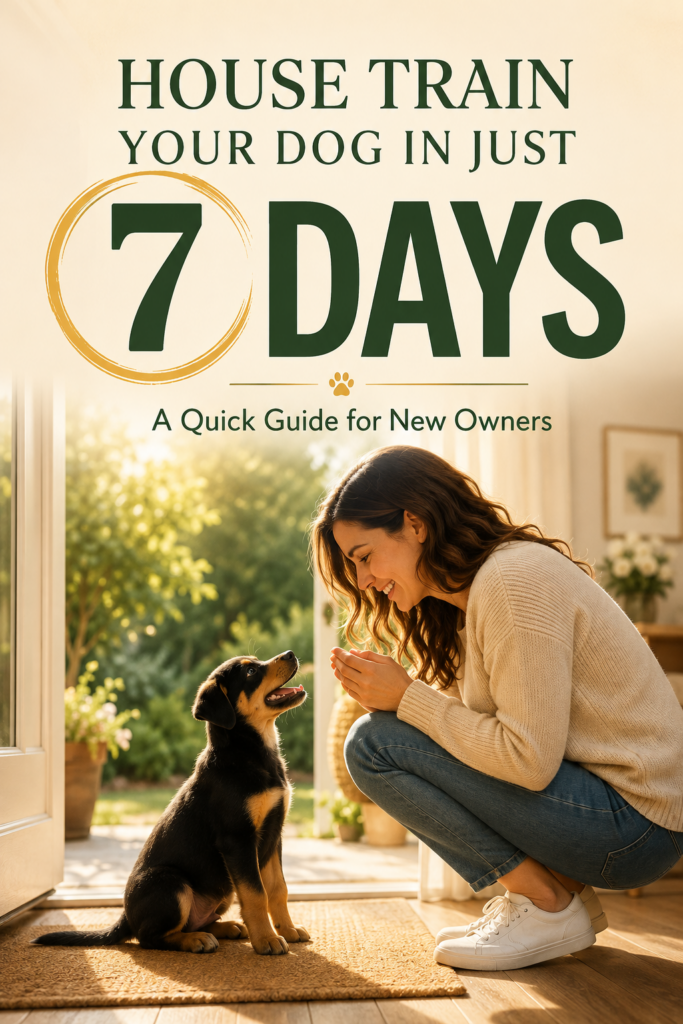
Get the Complete Seven-Day House-Training System
If you would like a clear programme to follow, the Complete 7-Day Dog House-Training Bundle brings the entire process together.
For £9.97, you receive three instant-download PDFs containing 79 pages in total:
- A comprehensive 57-page house-training guide
- A structured 19-page seven-day action plan
- A 3-page printable toilet-break and progress pack
The bundle covers puppies, rescue dogs, adult dogs, small breeds, senior and disabled dogs, behavioural difficulties, positive reinforcement and long-term toilet habits.
The printable tracker can help you identify exactly why your puppy pees inside after being outside.
Discover the Complete 7-Day Dog House-Training Bundle

Frequently Asked Questions
Should I take my puppy outside again after an indoor accident?
Yes. Calmly take your puppy to the usual toilet area, particularly if they may not have completely emptied their bladder.
Reward them if they finish outside. Do not punish the accident.
Why does my puppy pee outside and then pee again indoors?
Your puppy may not have completely emptied their bladder. They could have become distracted, produced only a small amount or needed a second opportunity.
Remain outside for a few minutes after the first pee and continue supervising when you return indoors.
How long should I wait outside for my puppy to pee?
Approximately five quiet minutes is a reasonable starting point.
If nothing happens, return indoors, supervise closely and try again after 10–15 minutes. Avoid leaving your puppy unsupervised during the interval.
How often should a puppy go outside?
It depends on the puppy’s age, health, activity level and individual bladder control.
Very young puppies may need opportunities every 30–60 minutes while awake and after sleeping, eating, drinking, playing or leaving a crate.
Should I leave water down for my puppy?
Puppies require reliable access to fresh drinking water. Do not routinely restrict water simply to reduce accidents unless your vet has provided specific instructions.
Instead, record when your puppy drinks and provide an appropriate toilet opportunity afterwards.
Should I use puppy pads?
Puppy pads can be useful in some circumstances, including apartments, medical situations and periods when immediate outdoor access is genuinely impossible.
However, pads can also create an additional training stage if your long-term goal is outdoor toileting. Consistency about the intended toilet location is important.
Why won’t my puppy pee when I take them outside?
Distraction, fear, cold weather, rain, an unfamiliar surface or an unsuitable location may be involved.
Try using a quiet, consistent area and keep the visit calm. Reward generously when your puppy succeeds.
When should I contact a vet?
Contact your vet if your puppy urinates unusually frequently, strains, appears uncomfortable, passes blood, leaks urine during sleep, drinks excessively or experiences a sudden change in toilet habits.
Final Thoughts
A puppy that pees indoors after being outside is not deliberately trying to frustrate you.
The accident usually indicates that something about the timing, environment, communication or supervision needs adjusting.
Return to the fundamentals:
- Provide frequent toilet opportunities.
- Use one consistent outdoor area.
- Keep the initial visit calm.
- Reward immediately.
- Supervise closely indoors.
- Record meals, drinks, successes and accidents.
- Clean accidents thoroughly.
- Increase freedom gradually.
- Never punish your puppy for a mistake.
- Seek veterinary advice when symptoms suggest more than a training problem.
Progress is rarely perfectly linear. Your puppy may have several dry days followed by an unexpected accident.
That does not mean the training has failed.
Remain consistent, make small adjustments and focus on building a routine your puppy can understand. Seven focused days can establish valuable foundations—but patience and continued practice are what make those habits reliable.