
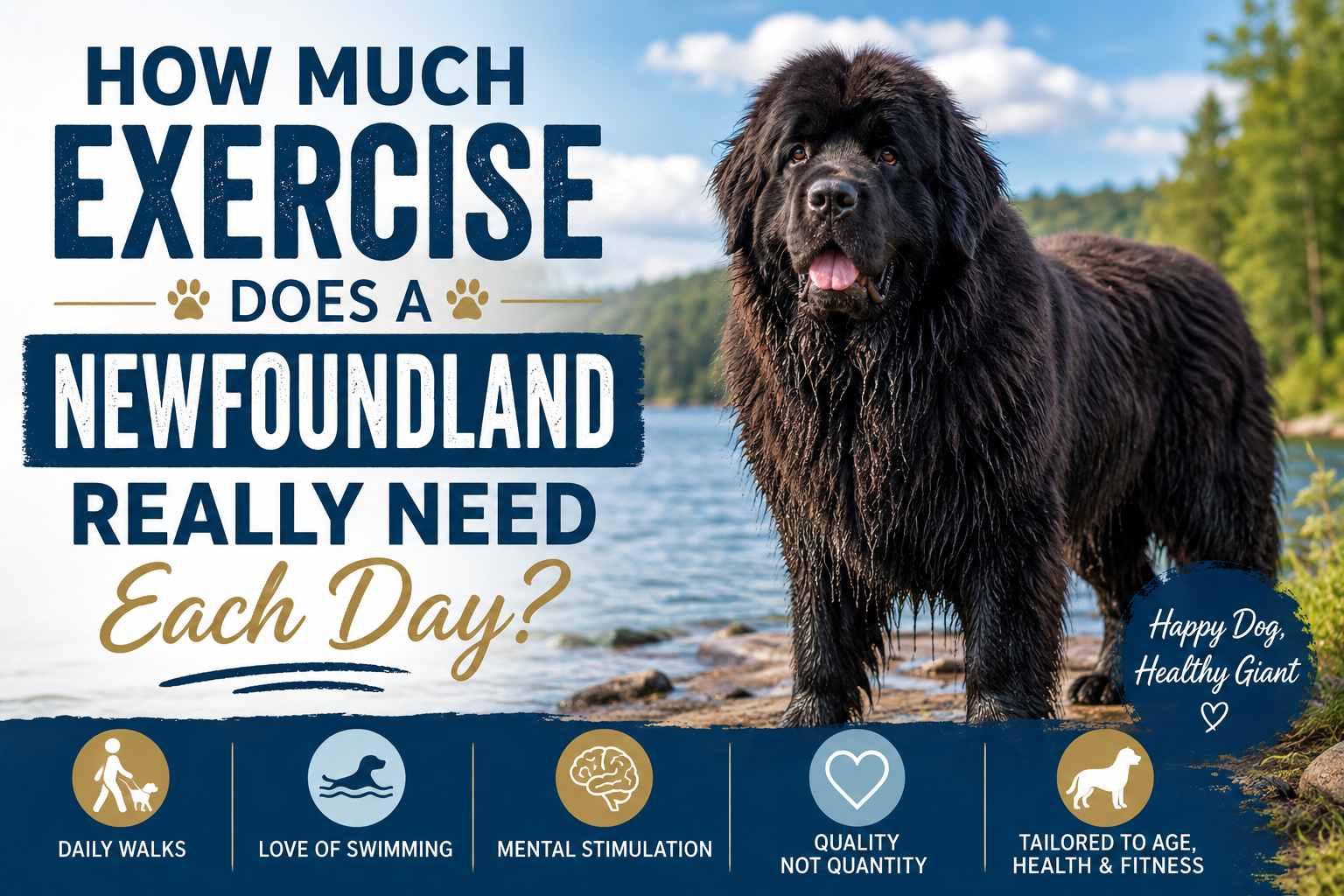
Most healthy adult Newfoundlands need about 30 to 60 minutes of gentle, low-impact daily exercise, often split into two shorter sessions.
Newfoundland exercise needs vary with age, health, fitness, weather, and veterinary advice.
Newfoundland dogs are strong working dogs with moderate energy, but their history doesn’t mean they need nonstop running. Daily walks, gentle swimming, sniffing games, training, and other enrichment can keep your dog happy without putting too much strain on their joints.
Puppies need careful, age-appropriate activity, while senior Newfoundlands may need shorter, slower outings and more rest.
We’ll look at practical exercise needs, including walks, puppy exercise, senior care, hot-weather safety, mental enrichment, and warning signs that your dog has had enough.
For more ideas, see these canine enrichment activities, then explore tug toys, our guides on Payhip, and ebook guides on Etsy.
For a helpful visual guide, watch the Newfoundland exercise video. You can also learn more about the breed through Wikipedia’s Newfoundland dog page.
This post may contain affiliate links. If you make a purchase through these links, I may earn a small commission at no extra cost to you.
Key Takeaways
- Most healthy adult Newfoundlands need 30 to 60 minutes of gentle, moderate exercise daily, often split between two walks.
- Water activity, sniffing, training, and calm play provide enrichment without placing excessive strain on growing or aging joints.
- Puppies need short, controlled activity, while seniors may benefit from slower walks, extra rest, and closer monitoring.
- Watch for panting, lagging, stiffness, or reluctance to continue. Follow these hot-weather dog exercise tips and the AKC’s Newfoundland breed information for safer routines.
- For practical support, Check out our great guides on Payhip and Check out our ebook guides on Etsy.
How Much Exercise Does a Newfoundland Really Need Each Day?
A healthy adult Newfoundland usually needs 30 to 60 minutes of moderate exercise each day. The American Kennel Club recommends at least 30 minutes. Many Newfies enjoy closer to an hour when their health and fitness allow it.
The goal is steady movement, not intense exercise. As a giant breed, a Newfoundland has a large frame that can place extra pressure on its joints. Their Newfoundland exercise needs are best met with walks, sniffing, gentle play, training, and other activities that match their moderate energy. Their history as working dogs doesn’t mean every dog needs demanding workouts.
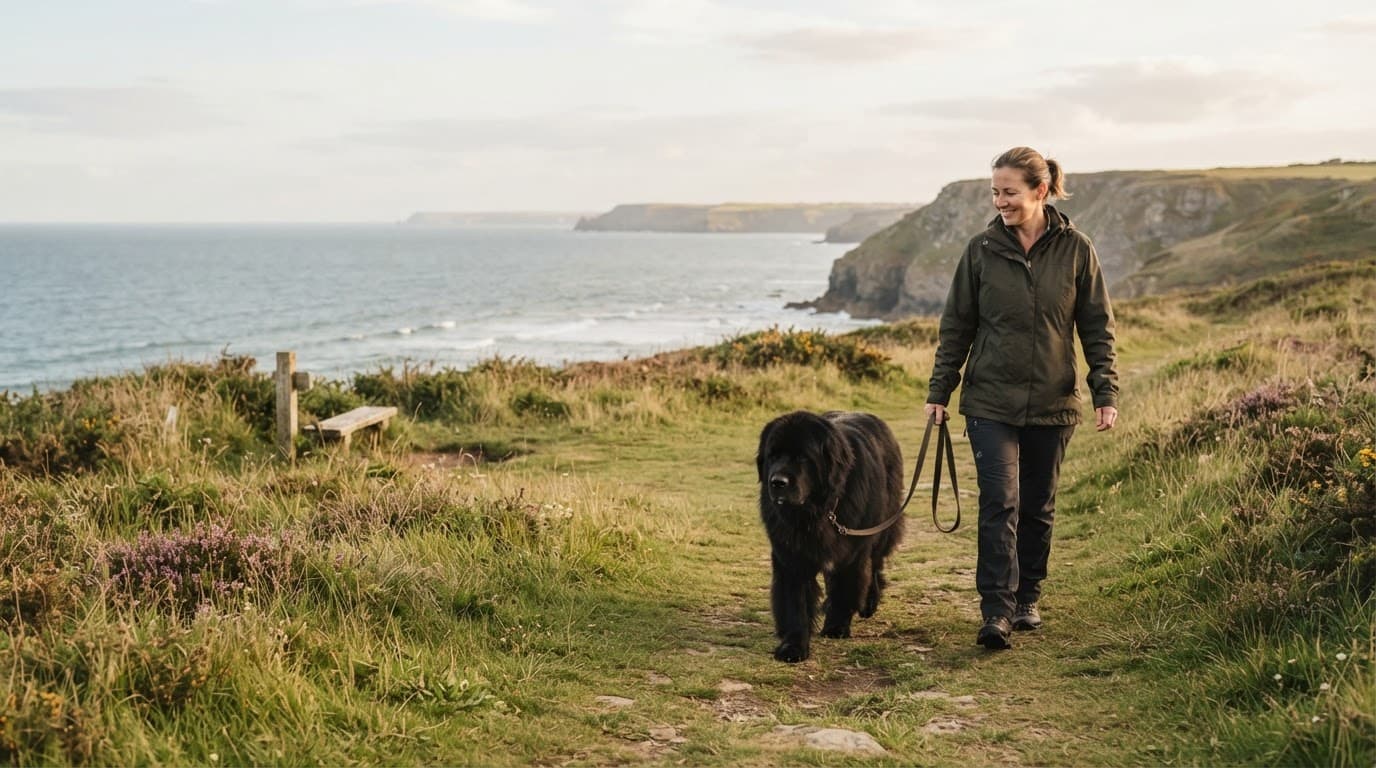
Split exercise into shorter sessions
Two or three shorter outings are often easier for a giant breed than one long walk. For example, you could offer a 20-minute morning walk, a short enrichment activity at lunchtime, and a relaxed evening stroll.
Breaking up exercise can help your dog stay comfortable and interested. It also gives them time to rest, drink water, and settle between activities. Think of the routine as gentle fuel for the day, rather than one huge workout.
A simple daily plan might look like this:
- Start with a calm morning walk that allows plenty of sniffing.
- Offer five to ten minutes of training or food-based enrichment at midday.
- Finish with a slower evening stroll or gentle play in the yard.
The AKC’s Newfoundland breed information also lists activities such as obedience, dock jumping, and flyball. However, high-impact sports aren’t suitable for every Newfoundland, so check your dog’s age, fitness, and joint health first.
Adjust the routine to your dog
Some Newfoundlands are happy with less activity, especially if they have arthritis, excess weight, or another health concern. Consider your dog’s physical condition before increasing exercise. Others may enjoy more time outdoors when they are fit and healthy.
Add extra exercise slowly, and increase only one part of the routine at a time. Give your dog several days of conditioning time before adding more minutes or introducing active exercise.
Swimming can be a useful low-impact option because water supports much of your dog’s weight. Introduce it carefully, use a safe entry point, and never assume every Newfoundland is a confident swimmer. Even this water-loving breed needs supervision.
Watch your dog rather than following the clock alone. Heavy panting, lagging behind, stiffness, reluctance to move, or difficulty settling after exercise means the routine may be too demanding. PetMD’s Newfoundland health guidance also highlights the importance of low-intensity exercise for dogs with joint problems.
Exercise Changes With Age, Health, and Lifestyle
A Newfoundland’s exercise routine should change as their body and daily life change. Age, weight, mobility, temperament, past activity, and veterinary advice matter more than one fixed number.
How much exercise does a Newfoundland puppy need?
Newfoundland puppies need short, gentle play sessions and brief leash walks. Let your puppy move freely on safe, level surfaces, such as grass, while you supervise. Sniffing, exploring, and simple training can tire a puppy without placing too much stress on growing joints.
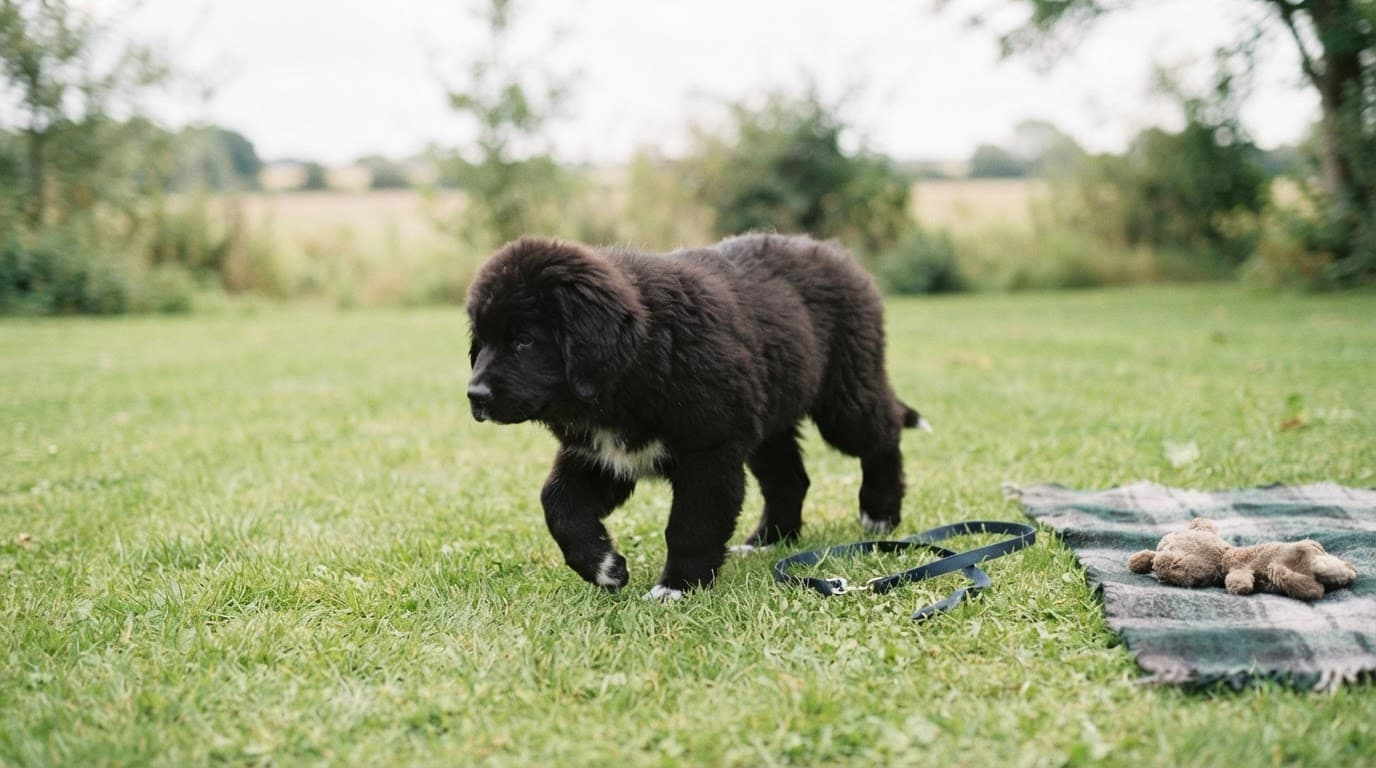
Controlled activity supports healthy puppy development. As a giant breed, a Newfoundland needs extra protection for developing bones and growth plates. Offer plenty of rest breaks throughout the day. Puppies often play enthusiastically, then suddenly fall asleep. That is normal.
Avoid forced running, long hikes, repeated jumping, sharp turns, and excessive stair use. These activities can cause overexertion while bones and growth plates develop. Veterinary Partner’s puppy exercise guidance explains why exercise should not go beyond what a puppy chooses during normal play.
Watch how your puppy behaves during the activity and the following day. Limping, stiffness, reluctance to play, or unusual tiredness can mean the session was too demanding.
Ask your veterinarian about your puppy’s growth rate, weight, and orthopedic needs.
Exercise for adult and senior Newfoundlands
A dog’s needs vary by life stage. Healthy adult Newfoundlands often thrive on regular, low-impact exercise. Two relaxed walks, swimming, gentle sniffing games, and calm play can provide a good daily balance.
Senior Newfies may need short walks with more rest. A regular routine still matters, even when the duration or pace changes.
Slow down if your dog seems stiff, struggles to rise, limps, or tires earlier than usual. Choose supportive surfaces, control the pace, and avoid slippery ground.
When health conditions should change the daily plan
Joint issues, arthritis, heart disease, breathing trouble, obesity, and heat sensitivity can all change the daily plan. Orthopedic concerns such as elbow dysplasia require individualized guidance.
New pain, weakness, or a known diagnosis calls for veterinary advice before you increase activity. These hip dysplasia signs in dogs are also useful to recognize in large breeds.
Weight management and a healthy body condition can reduce strain on the joints. A tailored plan might include several brief walks instead of one long outing. Gentle training, scent games, and food puzzles can add mental exercise when physical activity needs to stay limited.
The Best Daily Activities for a Newfoundland
The best activities for a Newfoundland are calm and steady, not exhausting workouts. Walking, water exercise, sniffing, training, and gentle play keep a giant breed active while allowing time for joint recovery.
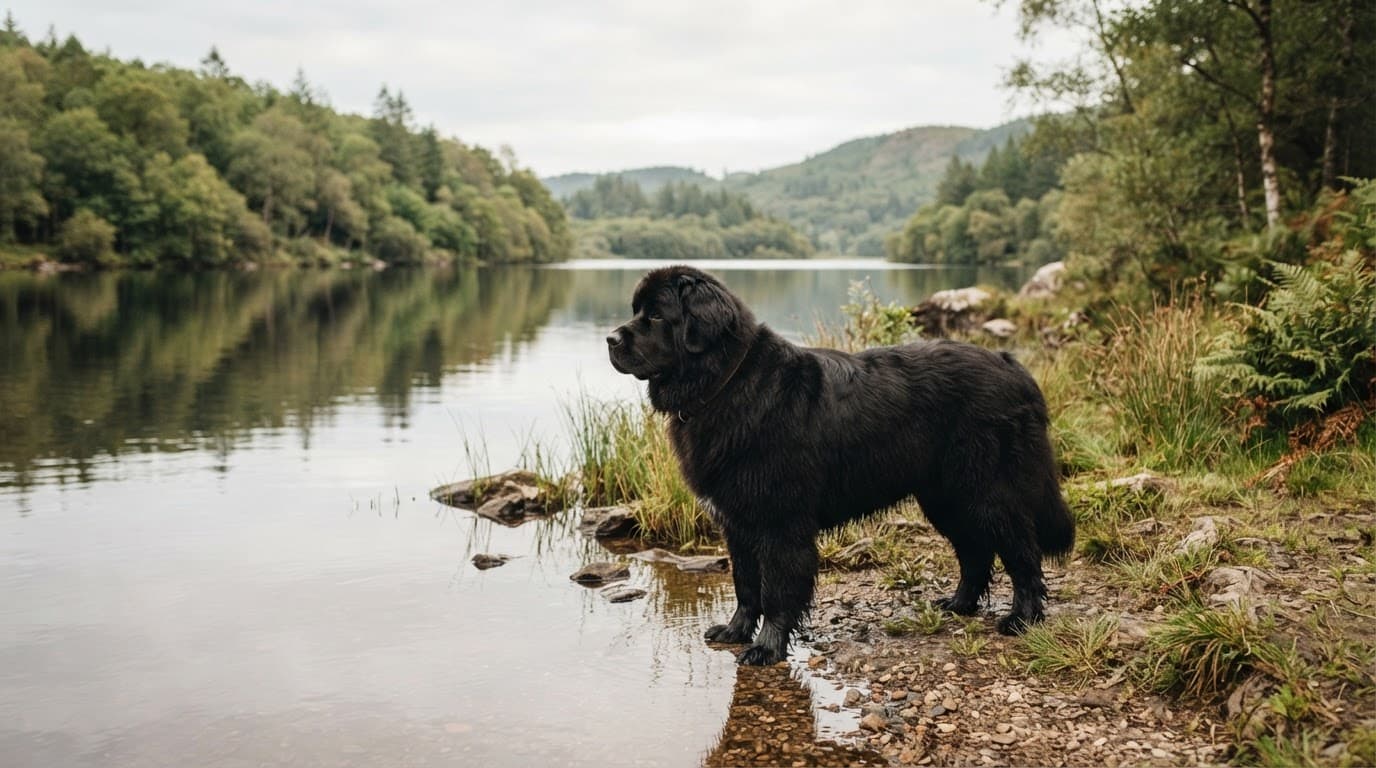
Walking and sniffing provide steady, joint-friendly movement
Calm walks are usually the foundation of a Newfoundland’s exercise plan. A comfortable pace provides regular movement without the pounding and sharp turns of intense running.
Let your Newfie stop and sniff, too. These pauses add mental variety and let your dog explore at their own speed.
Choose routes with forgiving surfaces, such as grass, packed dirt, or smooth woodland paths. Hard pavement can tire a giant breed’s joints, especially during longer outings or warmer weather.
Avoid slippery ground, steep hills, and rough terrain if your dog is young, elderly, overweight, or showing stiffness.
Newfoundlands are powerful dogs, even when they’re friendly and well-trained. Use secure handling equipment that fits comfortably and gives you control without restricting your dog’s shoulders.
This large dog walking harness guide can help you compare suitable options.
You don’t need to march the whole time. A 20-minute walk with sniffing pauses may be more useful than a faster outing that leaves your dog sore.
Watch your dog’s pace, breathing, and movement during the walk and later that day.
A relaxed walk is not a wasted walk. For a Newfoundland, steady movement and plenty of sniffing can provide a well-balanced workout.
Swimming can be excellent exercise, with the right safety steps
Swimming is a useful low-impact activity for many Newfoundlands, especially dogs that enjoy water. Buoyancy supports much of your dog’s weight, while water resistance still creates fatigue.
The Marine Humane guide to teaching dogs to swim also highlights important safety points for introducing dogs to water.
Start in shallow water and let your dog choose whether to move forward. Never push, throw, or drag a nervous dog into a pool, lake, or ocean. Some Newfoundlands swim confidently, while others panic, tire quickly, or dislike getting wet.
Stay close throughout the session. Choose clean water with a safe entry and exit point, and avoid strong currents, steep banks, and areas with harmful algae.
A properly fitted life jacket is sensible when your dog is inexperienced, swimming in open water, or struggling to keep their head up.
Water play still causes fatigue, even when it looks easy. Begin with a few brief water sessions, then offer a rest. Rinse the coat with clean water afterward, check the ears, and dry your Newfoundland thoroughly to reduce skin irritation and discomfort.
Mental enrichment helps prevent boredom without overworking the body
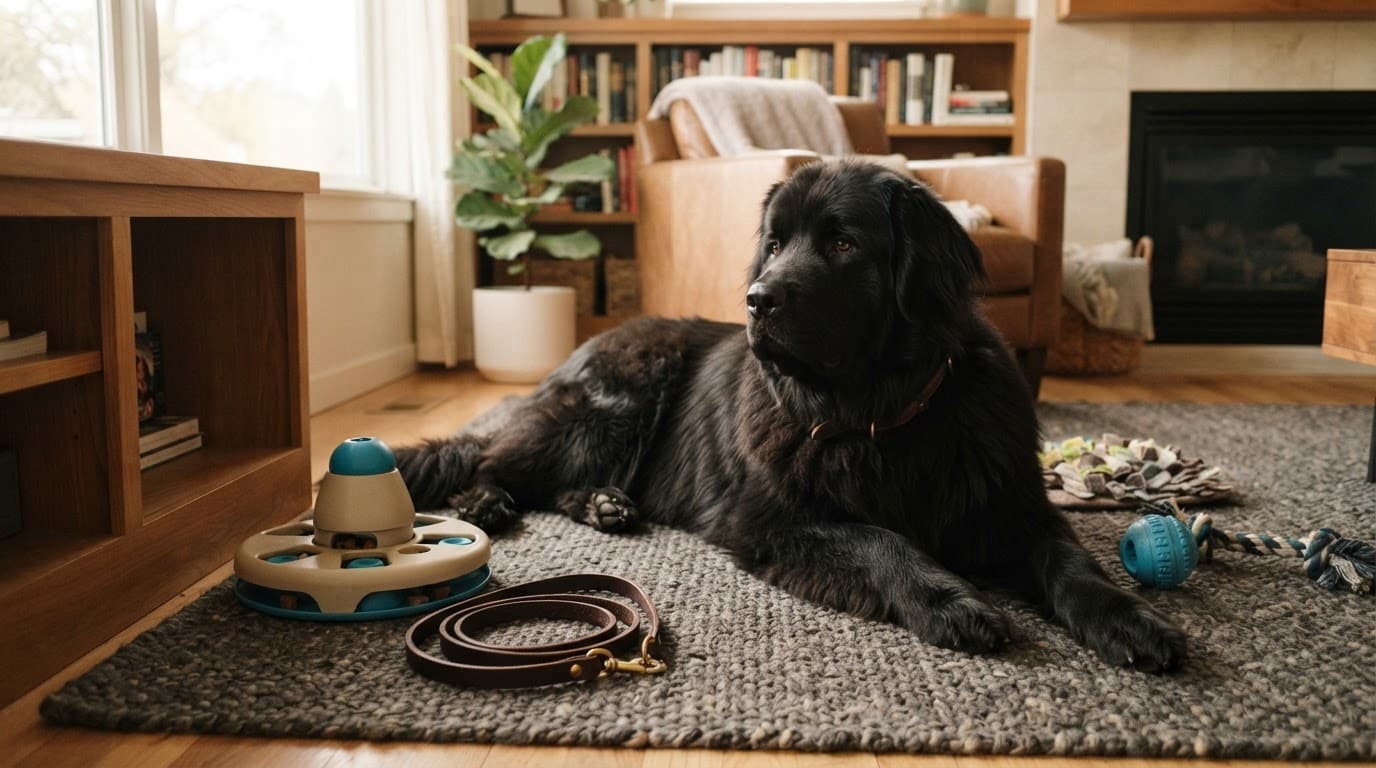
Scent games, basic obedience, food puzzles, and short training sessions can tire a Newfoundland mentally. Hide a few treats around one room, practice gentle cues, or scatter part of your dog’s meal across a snuffle mat.
These activities turn ordinary food and time together into useful mental stimulation.
Calm play can also add variety. Supervised games with tug toys may help build focus and strengthen your bond. Newfoundlands were bred as working dogs, so purposeful tasks can be rewarding without demanding intense physical effort.
Choose equipment that suits your dog’s size, and stop before your dog becomes frantic, jumps heavily, or struggles to settle.
Indoor enrichment is especially helpful during hot, wet, or icy weather. You can find more practical ideas in our Check out our great guides on Payhip and Check out our ebook guides on Etsy. Keep sessions short and positive. A few minutes of thoughtful training can be enough for one tired Newfie.
This post may contain affiliate links. If you make a purchase through these links, I may earn a small commission at no extra cost to you.
How to Build a Safe Daily Exercise Routine
A safe routine gives your Newfoundland regular movement without pushing their large body too hard.
Keep the pace gentle, include rest, and adjust the plan when your dog feels tired or the weather changes.
A simple morning, afternoon, and evening schedule
For a healthy adult Newfoundland, the following is an example of daily exercise, not a fixed prescription:
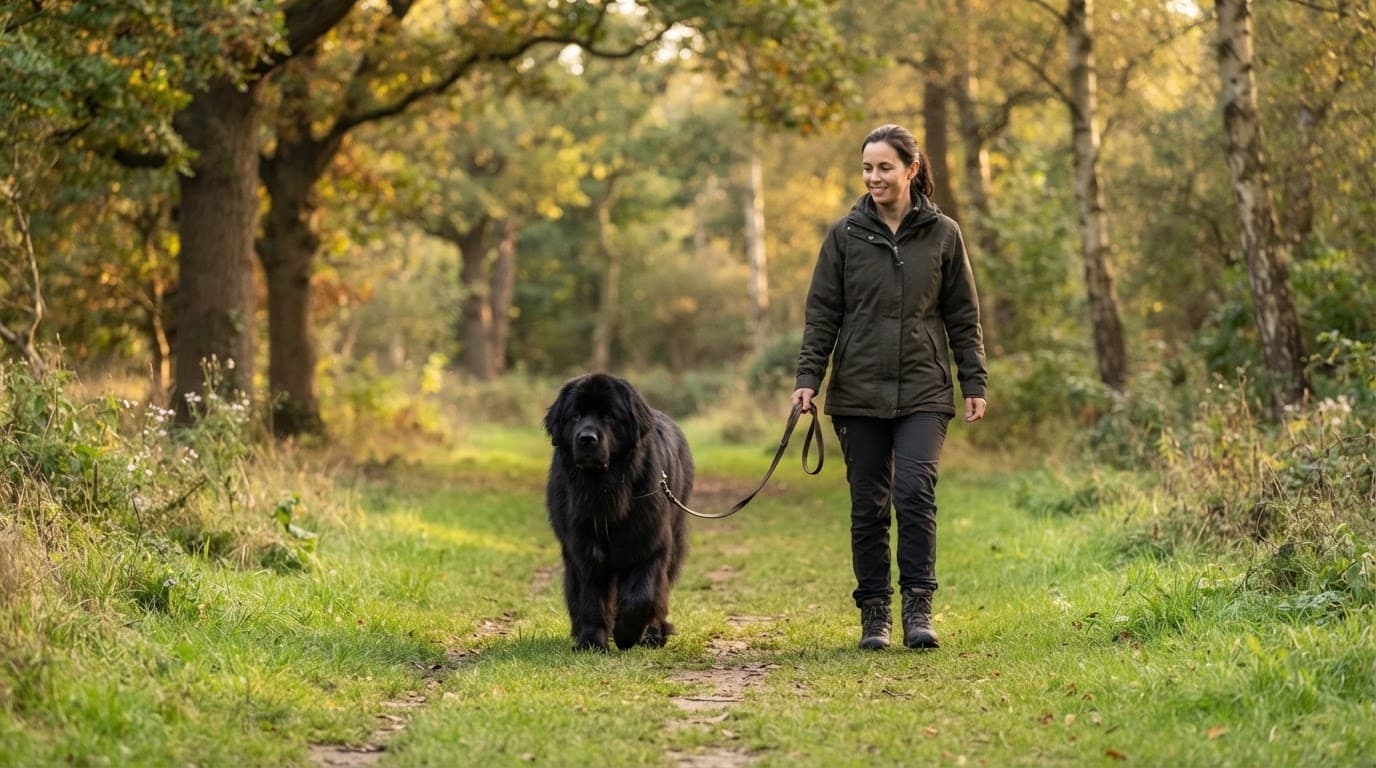
- Begin with a 20-minute morning walk on grass, packed dirt, or another comfortable surface. Start slowly for the first few minutes, then allow plenty of sniffing.
- Offer a five to ten-minute training or scent session in the afternoon. Practice simple cues, hide treats around one room, or use part of your dog’s meal in a food puzzle.
- Finish with a 15 to 20-minute relaxed evening walk. Keep the pace easy and let your Newfoundland cool down with a few calm minutes indoors afterward.
This example daily routine gives an adult dog around 35 to 50 minutes of activity. It includes gentle walking rather than sustained active exercise.
Puppies need shorter walks and more free play on safe ground, while senior dogs may manage only 10-minute outings at a slower pace. Reduce the duration before reducing companionship. A gentle sniff around the yard still counts.
Rest and sleep are part of the plan, not signs that your dog is lazy. Leave plenty of time between activities, and include quieter days after a longer walk or swim.
Increase exercise gradually, giving your dog conditioning time before adding a few minutes. Regular movement, paired with appropriate food portions, also supports weight management.
Avoid vigorous activity immediately before or after meals. Ask your veterinarian about bloat-risk management, including gastric dilation volvulus, for your large dog.
For one or two weeks, track the duration, pace, weather, surface, and next-day recovery. If your dog is stiff the next morning, shorten the routine. This simple record can also help your veterinarian understand changes in your dog’s exercise needs.
How to exercise a Newfoundland safely in hot or wet weather
Newfoundlands can overheat quickly because their double coat and large body retain heat. Walk during the early morning or evening, choose shaded routes, carry water, and shorten sessions when the air feels warm or humid.
Skip midday pavement when possible. On very warm, humid, wet, or otherwise difficult days, shorten outings to prevent overexertion. Replace part of the walk with indoor scent games, calm training, or a food puzzle.
Rainy weather doesn’t have to cancel enrichment. A short toilet walk followed by indoor training can keep your dog occupied without leaving them soaked and uncomfortable.
Watch for heavy panting that doesn’t settle, weakness, vomiting, confusion, unsteady movement, or collapse.
These are emergency signs of possible heatstroke. The Newfoundland Club of America heat warning highlights several symptoms of heat exhaustion and heatstroke. Move your dog to a cool area and seek urgent veterinary help immediately.
Equipment and surfaces that protect a giant breed
Use a well-fitted harness or sturdy collar with a strong leash. Reflective gear helps drivers and other walkers see you during early morning or evening outings.
Carry fresh water, and check your Newfoundland’s paw pads after every walk for cuts, grit, heat damage, or trapped debris.
Slippery floors, hard pavement, repeated stairs, and high jumps can create problems for some Newfoundlands. Choose quiet, secure locations where your dog can walk without sudden lunges or heavy pulling.
Check clips, straps, and leash attachments regularly, because even a calm Newfoundland is a very powerful dog.
How to Tell Whether Your Newfoundland Is Getting Too Much or Too Little Exercise
Your Newfoundland’s behavior and recovery often tell you more than the clock. A well-balanced routine leaves your dog content, comfortable, and ready to rest, not frantic or sore.
Signs your Newfoundland may need more enrichment
Restlessness, destructive behavior, repeated attention-seeking, and difficulty settling can suggest your Newfoundland needs more to do. Pacing, barking, pawing, chewing furniture, or constantly bringing you toys may mean your dog isn’t getting enough mental stimulation.
Weight gain can suggest that your routine needs adjustment for better weight management.
Monitor your dog’s body condition, not just the number on the scale. However, these signs don’t always mean your dog needs longer walks. Anxiety, hunger, poor sleep, joint issues, and other health conditions can look very similar.
Sudden behavior changes deserve extra care, especially if they happen alongside appetite changes, limping, or unusual fear.
Before sharply increasing physical exercise, add small enrichment sessions. Try five minutes of:
- Sniffing for treats scattered across a safe area.
- Gentle training, such as touch, stay, or find it.
- A food puzzle using part of your dog’s normal meal.
These activities give your Newfoundland a job without placing extra pressure on their joints. You can also read these early signs your dog needs more exercise for additional behavior clues.
Signs the routine is too demanding
Stop strenuous activity if your Newfoundland starts limping, slowing down, or refusing to continue. These can be signs of overexertion.
Stiffness after rest, sore paws, excessive panting, unusual tiredness, or sleeping far more than usual later that day or the next morning also suggest the routine may be too much.
Give your dog rest, fresh water, and a cool, comfortable place to settle. Don’t encourage your Newfoundland to push through discomfort. Shorten future sessions and choose gentler surfaces until you understand what is happening.
Contact your veterinarian if pain continues, symptoms keep returning, or your dog shows breathing changes or sudden weakness.
Heavy panting with drooling, vomiting, confusion, collapse, or severe weakness can indicate heatstroke. The Cornell canine health guide to heatstroke describes heatstroke as a medical emergency requiring immediate attention.
Frequently Asked Questions
A Newfoundland’s activity level can change with age, weather, health, and lifestyle. These answers can help you adjust activity without treating one schedule as suitable for every Newfie.
Is one long walk enough for a Newfoundland?
One long walk may suit a fit adult Newfoundland, but it isn’t right for every dog. Two shorter outings can provide regular movement while reducing joint strain, overheating, and fatigue.
Let your dog sniff during each walk, too. A slow sniffing break, a few minutes of training, or a simple scent game adds enrichment without requiring extra distance.
Can Newfoundlands run with their owners?
Some fit adult Newfoundlands may manage brief, gradual jogging on suitable ground. However, steady walking and water-based exercise are usually better choices for this large breed.
Don’t start a running plan without veterinary approval. Young, overweight, senior, or joint-sensitive Newfoundlands may face extra strain from repeated running. The Newfoundland Dog Health Center’s exercise guidance also lists water-based exercise as a low-impact option.
How much exercise does a Newfoundland need in winter?
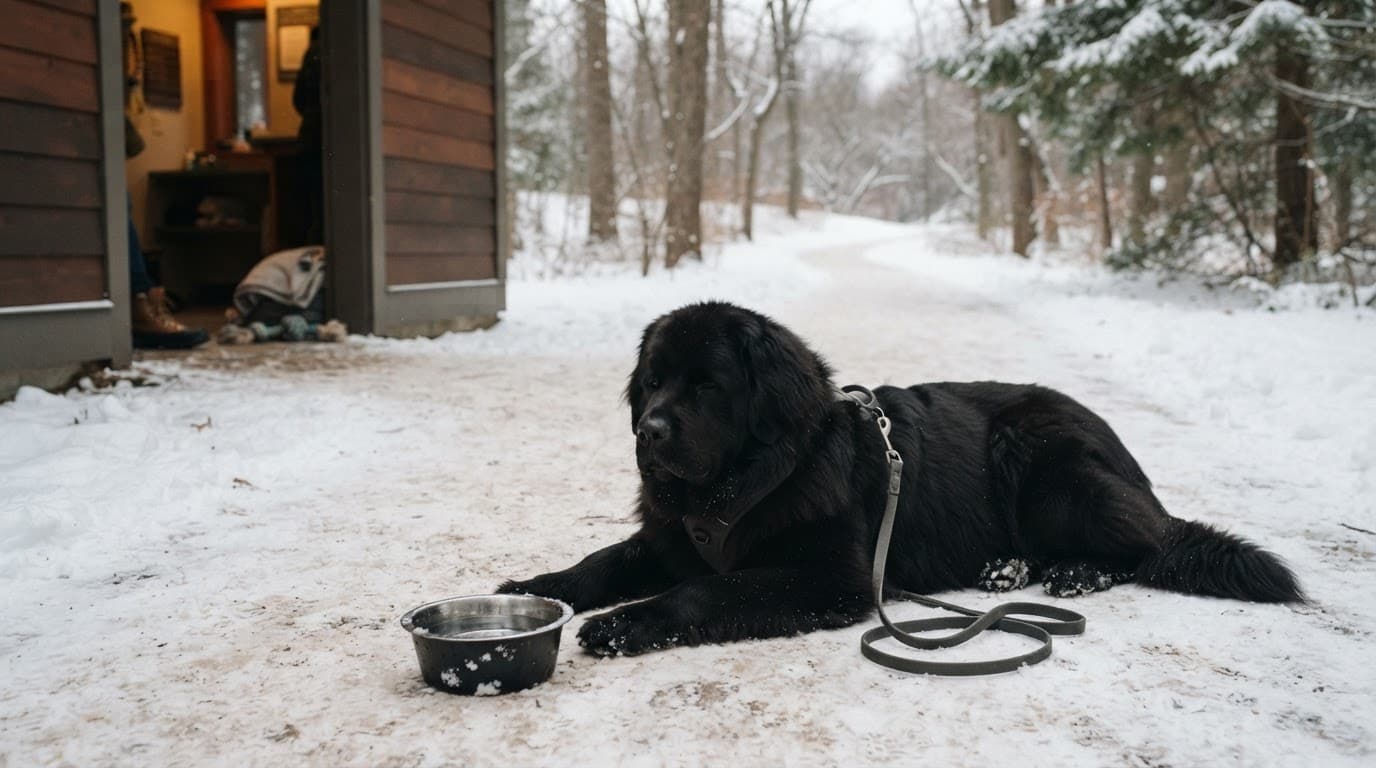
Cold weather suits many Newfoundlands because of their thick coats. Winter still brings risks, including ice, salted surfaces, wet fur, poor visibility, and slippery patches.
Choose short walks when conditions are harsh. Check your dog’s paws afterward, wipe away salt and grit, and dry the coat well after wet outings.
This guide to safe winter walking times for dogs can help you decide when to shorten the outing or stay indoors.
Do Newfoundlands get enough exercise in a fenced yard?
A fenced yard gives your Newfoundland space to stretch, play, and explore. It rarely replaces guided walks because dogs also need new smells, social experiences, training, and time outside the home.
Join your dog for structured play or a slow garden exploration instead of relying only on unsupervised yard time. You could hide treats, practice recall, or walk around together for ten minutes.
These dog enrichment activities can make a yard session more satisfying.
What should I do if my Newfoundland refuses to walk?
First, check for heat, pain, fear, uncomfortable equipment, rough surfaces, or a sudden health change. End the outing calmly, offer water, and don’t drag or pressure your dog to continue.
Contact your veterinarian if the refusal is new, happens repeatedly, or comes with limping, weakness, heavy breathing, or unusual tiredness. A sudden reluctance to walk can show that something hurts.
Where can I find practical Newfoundland care guides?
If you want extra help with planning, training, or enrichment, practical care guides can offer ideas for home. You can Check out our great guides on Payhip or Check out our ebook guides on Etsy for affordable resources that support everyday dog care.
Conclusion
Most healthy adult Newfoundlands need around 30 to 60 minutes of gentle, varied daily exercise. Regular walks, sniffing, safe water activity, and short enrichment sessions can meet their Newfoundland exercise needs without exhausting their large frames.
The right routine depends on your dog’s life stage, health, weight, fitness, and the weather.
Build changes slowly, include plenty of rest, and use these heat-safe dog walking tips when temperatures rise. If your Newfoundland shows pain, illness, unusual fatigue, or weight concerns, speak with your veterinarian before increasing activity.
A calm, consistent daily routine is better than one exhausting workout. Your Newfie doesn’t need to finish every walk worn out.
They need regular movement, time to sniff, and a comfortable balance between activity and rest.
Learn more about this fascinating breed