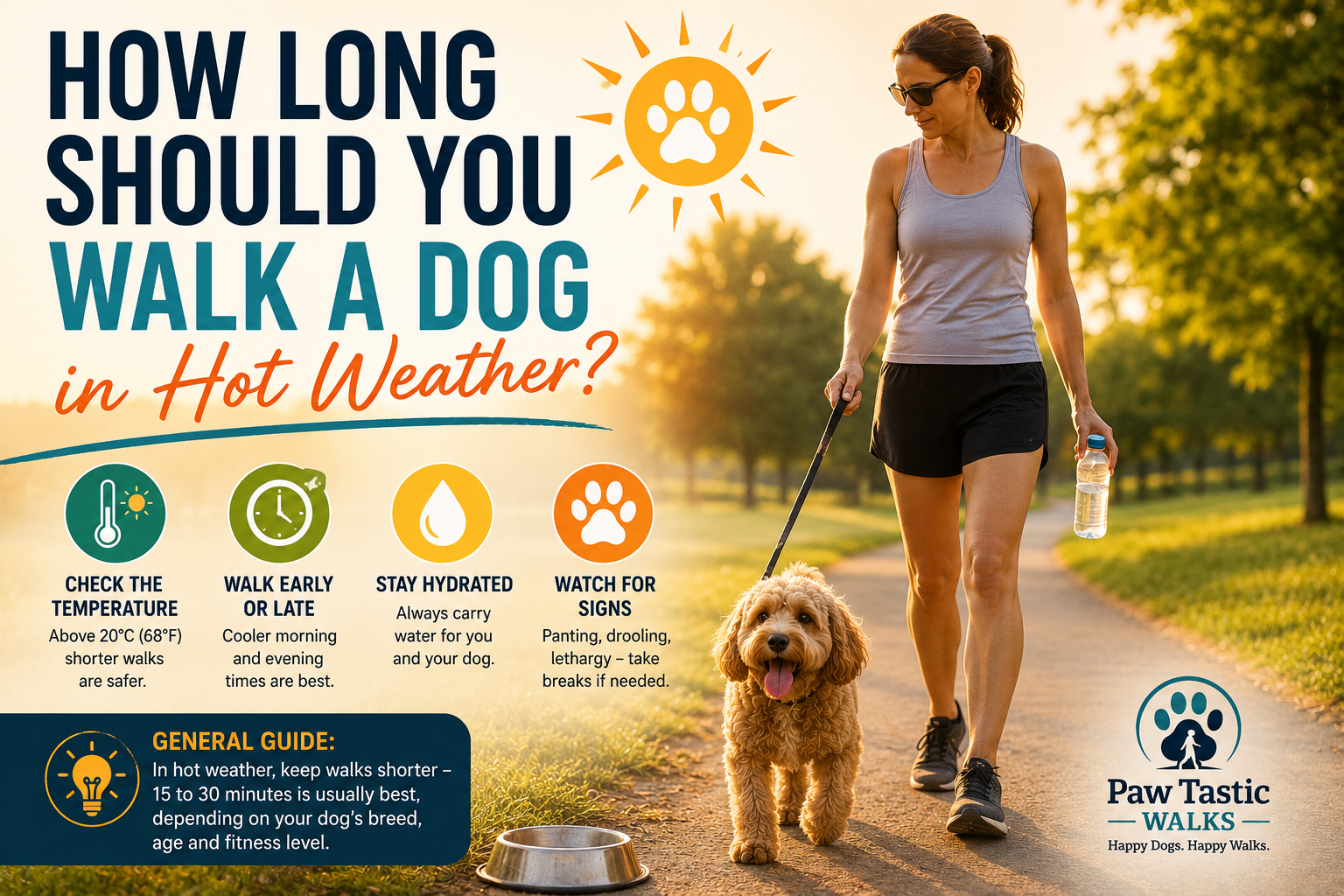
When it comes to walking a dog in hot weather, shorter is safer, and when the temperatures soar, it is best to skip the walk altogether.
If you are wondering how long a walk should be on a hot day, the honest answer depends on the temperature, humidity, and your dog’s specific breed, age, coat, and health.
The goal is simple: keep your dog safe from burning paws, overheating, and heatstroke while still meeting their exercise needs.
Some dogs require only a quick potty break and a cool spot to rest, while others can handle a very short walk if the ground is safe and the air is not muggy.
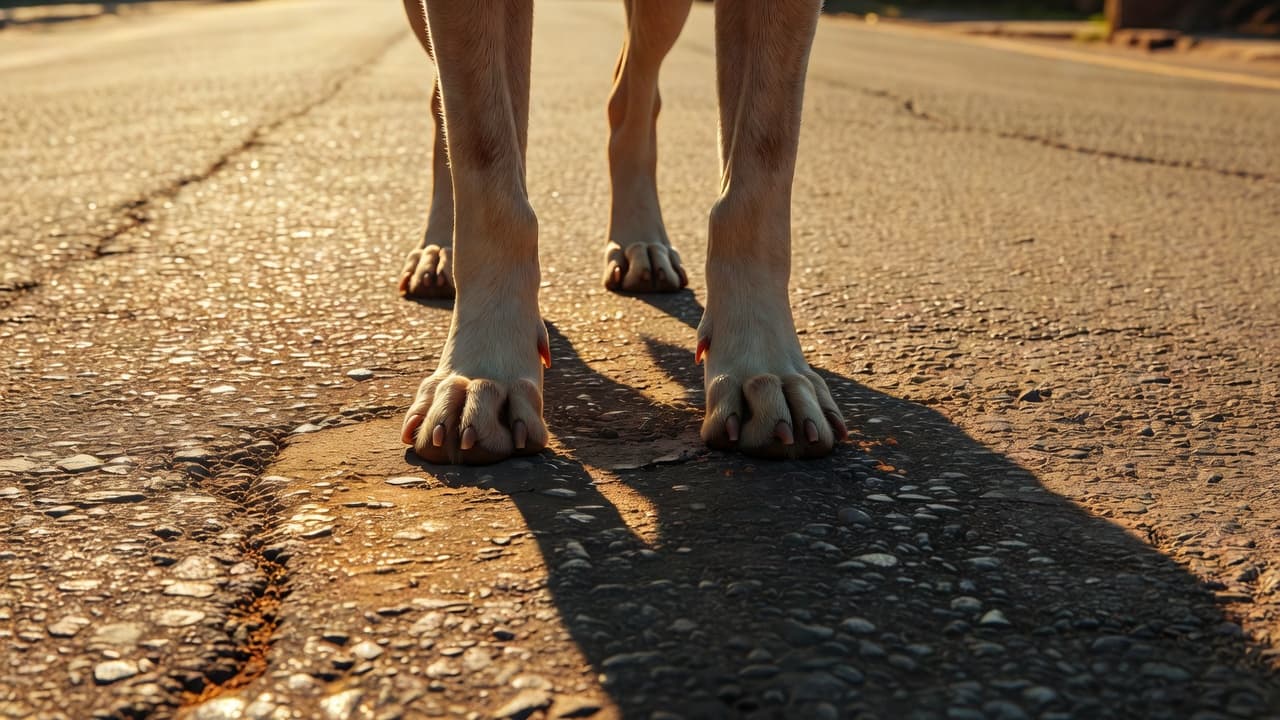
If the pavement is too hot for your hand, it’s too hot for your dog.
If you want more practical dog care advice, you can also check out our great guides on Payhip and check out our ebook guides on Etsy.
For a closer look at the dangers of summer walking, see the risks of dog walking in extreme weather, then let’s talk about when to shorten the walk, change the route, or call it off.
Key Takeaways
- Prioritise safety over duration: On hot days, walks should be kept as short as possible, often limited to quick potty breaks to prevent heatstroke and overheating.
- The touch test: Always test the pavement with the back of your hand for 7 to 10 seconds; if it feels too hot for your skin, it is unsafe for your dog’s sensitive paw pads.
- Know your dog’s limits: Factors like breed, age, weight, and coat density significantly impact heat tolerance, with flat-faced breeds and senior dogs requiring extra caution.
- Switch to indoor enrichment: When the weather makes walking dangerous, replace outdoor exercise with indoor games, scent work, and training to keep your dog mentally and physically stimulated without the heat risks.
- Watch for warning signs: Monitor your dog constantly for signs of heat stress such as excessive panting, drooling, or lethargy, and head home immediately if you notice these red flags.
The Short Answer: How Long Is Safe on a Hot Day?
On a hot day, the safe answer is usually as short as possible. For many dogs, that means opting for short walks consisting of a quick toilet break, a little sniffing in the shade, and then straight back inside or into the relief of air conditioning.
That is not the same as a proper walk. A long walk asks your dog to keep moving, stay alert, and handle heat for longer than their body may like.
If you have ever wondered how long should you walk a dog in hot weather, the safest answer is often, “Not long, and sometimes not at all.”
When a quick potty break is better than a walk
On very hot days, a quick outing just to potty is often enough. Keep it calm, keep it brief, and keep it in the shade if you can.
Think of it like a coffee stop, not a sightseeing trip.
Your dog should move slowly, do their business, and head right back inside. No long sniffing session, no extra loop around the block, and no dawdling on warm pavement. If the air feels heavy, your dog will feel it too.
A few simple rules help:
- Stay on grass or shaded areas when possible.
- Keep the pace slow and steady.
- Skip games, jogging, and training drills.
- Head back into air conditioning or a cool room right away.
That small outing is often enough to meet basic needs without pushing your dog too far. If your dog is brachycephalic, older, overweight, or has a health issue, even a short outing can be too much. On those days, less really is more.
A potty break is not a walk. If the heat is climbing, treat it that way.
If you want extra practical tips for summer dog care, Check out our great guides on Payhip and Check out our ebook guides on Etsy.
Why some days should be walk-free
Some days are bad walking days, plain and simple. Heat, humidity, and direct sun can make a walk unsafe even when the thermometer does not look extreme.
Add poor airflow and a high heat index, and the risk to your dog rises fast.
Pavement is a big part of the problem. Asphalt and concrete hold heat, and they can burn paw pads long before you feel uncomfortable in your shoes.
No shade makes it worse, and a still, muggy day can trap heat around your dog’s body like a blanket they never asked for.
If the weather feels sticky, still, or blazing, skip the walk. A dog can overheat much faster than people expect, and heatstroke is a real emergency.
Warning signs include heavy panting, bright red gums, weakness, confusion, and collapse. The ASPCA hot weather safety tips are a useful reminder that hot ground and hot air are a bad mix.
Sometimes the smartest choice is to stay home and make the day easier instead. A cool room, fresh water, and a little indoor play can do more good than a risky stroll.
If your dog still has energy to burn, use short brain games or a few minutes with tug toys instead of pushing a walk that the weather has already ruled out.
When the day is simply too hot, call it off. Your dog will not miss a bad walk, but they will feel the benefit of avoiding one.
Signs It Is Too Hot to Keep Walking
Hot weather can turn a normal walk into a risky one fast. The trick is to watch your dog, not just the clock.
If your dog starts struggling, that is your cue to head home right away.
Watch for early warning signs of heat stress
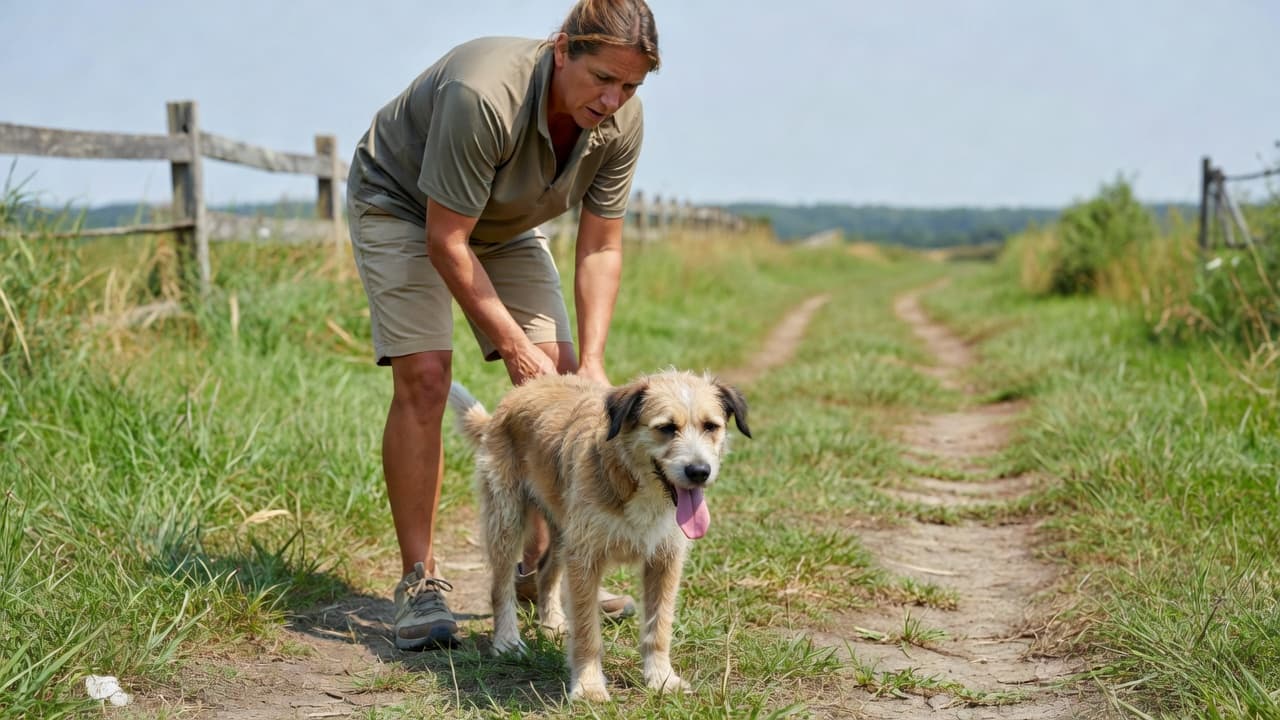
Early signs of overheating can look small at first. Excessive panting, excessive drooling, glazed eyes, weakness, wobbling, or stopping and refusing to go on are all red flags.
Some dogs also look tired, slower, or less interested in sniffing.
Do not wait for things to get dramatic. Heat exhaustion can move into heat stroke quickly, and that is a medical emergency.
If you are seeing more than one of these signs of overheating, the walk is over, and you should consider contacting your veterinarian for advice.
A good rule is to treat any sudden change as a warning. If your dog usually pulls ahead and now wants to sit down, that matters.
If their tongue hangs out longer than normal or their breathing sounds harder, that matters too.
For a clear medical breakdown of heatstroke signs in dogs, keep an eye on the basics, then act fast. Slowing down, finding shade, and heading home can make all the difference.
Check the ground before you leave the house
The air might feel manageable, but the ground can be a different story. Use the hand-on-pavement test before you step out to detect dangerous hot pavement.
Place the back of your hand on the surface for 7 to 10 seconds. If you cannot keep it there comfortably, it is too hot for your dog.
If the pavement feels harsh on your skin, it will feel worse on your dog’s paws.
When in doubt, choose grass or shaded paths instead of asphalt and bare concrete. Shade stays cooler, and grass is usually far kinder to paws.
A quick check takes seconds, and it can save your dog from a painful burn.
If your dog is one of the brachycephalic or flat-faced breeds, like a Bulldog or Frenchie, be extra careful.
Those dogs overheat faster, and even a short walk can be too much on a hot day. Our walking Bulldogs in hot weather guide and keeping French Bulldogs cool on walks guide cover this in more detail.
If you want more practical summer dog care help, Check out our great guides on Payhip and Check out our ebook guides on Etsy.
A dog that wants to stop is giving you a clear message. Listen to it, get off the hot ground, and save the rest of the walk for a cooler day.
What Changes the Right Walk Length in Hot Weather
There is no single safe walk length that fits every dog on every hot day. A 10-minute stroll may be plenty for one dog, while another needs only a quick potty break and shade.
The real question is not just how long you can stay out. It is how much heat your dog can handle before the walk stops being safe.
Breed, age, health, coat, and the weather around you all change the answer, especially when it comes to maintaining a stable body temperature.
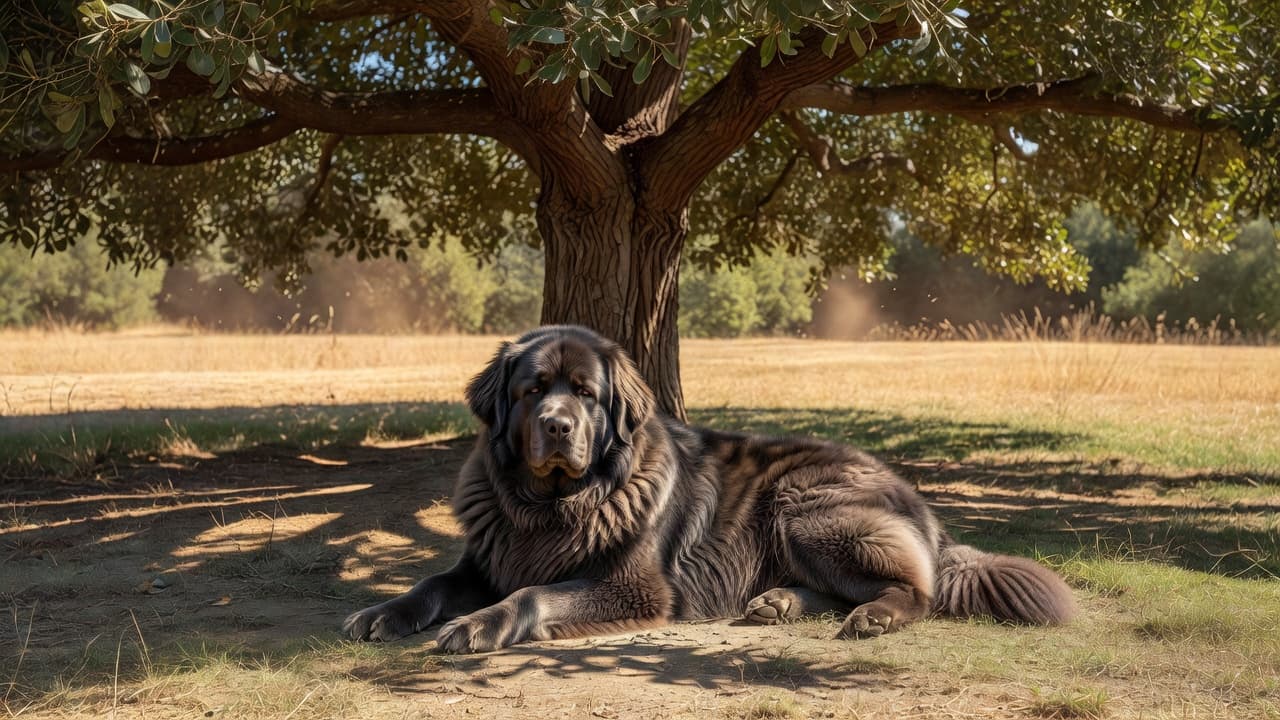
Breed and body shape matter more than most people think
Some dogs are built for endurance, but that does not mean they handle heat well. Flat-faced breeds like Bulldogs, Pugs, and Frenchies struggle to cool themselves because they cannot pant as efficiently.
Thick-coated breeds hold heat longer, and large working dogs may have the stamina to keep going even when their bodies are getting too warm.
That is where people get tripped up. A dog can be fit, strong, and very active, yet still overheat fast in summer.
Breed history matters too, because a dog bred for cold weather or heavy labor may have plenty of exercise drive without having much heat tolerance.
If you want a closer example, tips for walking Australian Shepherds in summer are a good reminder that active breeds still need shorter, smarter outings in heat.
Age, health, and fitness can shorten the safe time outside
Puppies are still learning how to regulate themselves, so they can tire out quickly. Senior dogs often slow down for the same reason, and they may not recover as fast after even a mild walk.
Health plays a big part too. Dogs with heart, lung, or breathing issues need closer attention, because heat puts extra pressure on the body.
Overweight dogs and those that are out of shape also struggle more, since they carry extra heat and work harder with every step.
A dog that usually loves long walks may need a much shorter one when the weather turns hot.
That can be hard to accept, especially if your dog normally has loads of energy. Hot weather changes the rules, and the safest walk length may be far shorter than usual.
Humidity, sun, and pavement can make a short walk feel much longer
The thermometer does not tell the whole story. The heat index matters significantly, because high humidity makes it much harder for dogs to cool off through panting, which is their primary method of evaporative cooling.
A shaded path with a breeze can feel manageable, while direct sun on still air can push your dog into trouble fast.
Pavement adds another layer of danger. High asphalt temperature means the ground soaks up heat, then throws it back at your dog from below.
A walk that looks short on paper can feel like a furnace if the ground is hot and the route has no cover.
The environment can change faster than your plans, so check the air, the shade, and the ground before you leave. For a clearer medical look at why heat and humidity are such a bad mix, heatstroke in dogs breaks down the risk in plain terms.
If the day feels sticky, bright, and heavy, shorten the walk or skip it altogether.
Safer Ways to Exercise Your Dog When It Is Hot
When the heat is up, your dog still needs movement, but not the kind that leaves them panting on the floor afterwards.
The trick is to switch from big, tiring outings to smaller, smarter bursts of activity. Think shade, soft ground, slow sniffing, and plenty of breaks.
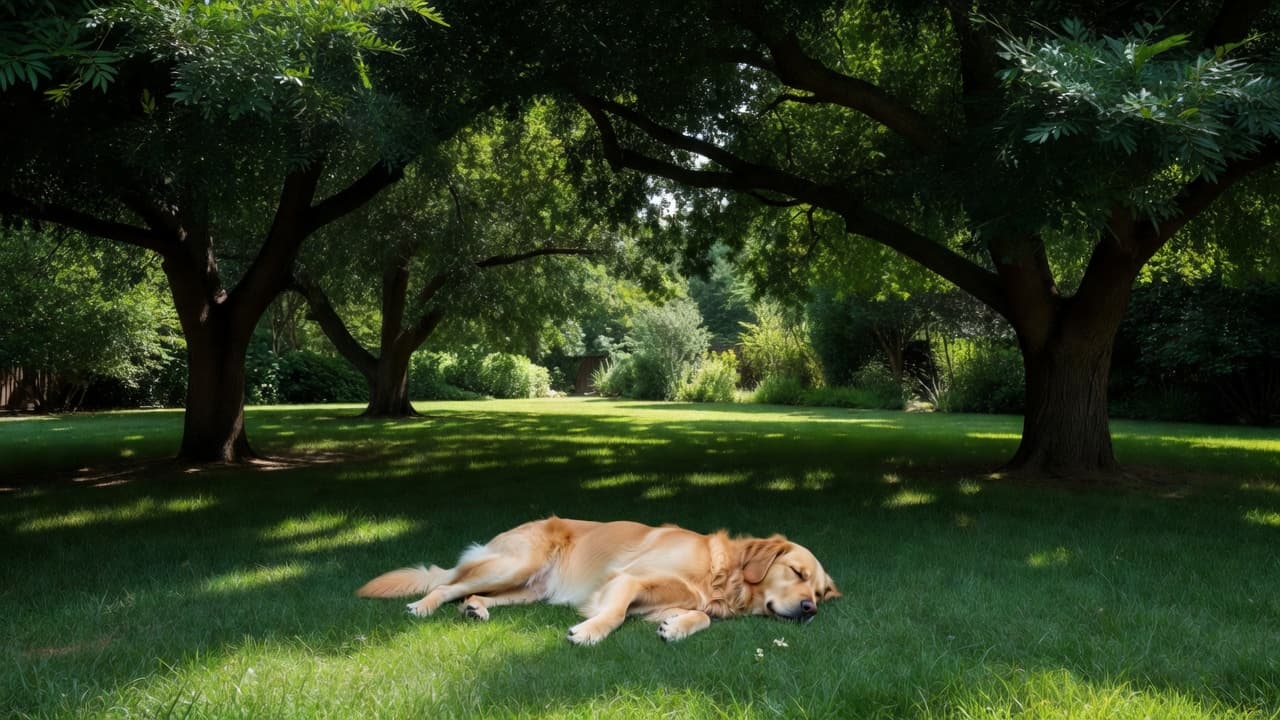
If you have been asking how long you should walk a dog in hot weather, the answer is often “less than you think”. On the hottest days, exercise may need to look more like a reset than a workout.
A few minutes of safe activity can do the job without turning your dog into a heat casualty.
Use short, shaded outings instead of long walks
Skip the long loop and keep the outing low-key. A short walk in shaded areas, on grass if you can find it, is a far better choice than marching down sun-baked pavement.
Let your dog sniff at their own pace, because sniffing is steady, calming work and it keeps the walk from turning into a race.
Walking during the early morning or late evening is usually better than midday. Once the sun is high, the ground heats fast and the air can feel like a wall.
These cooler hours give your dog a better chance to move without working so hard to stay cool. Even for active breeds, short walks during these times help prevent overheating.
A good hot-weather outing might look like this:
- A brief toilet break in a shaded spot
- Slow walking on grass or dirt
- Plenty of sniffing, little or no pulling
- A quick return indoors before your dog gets tired
That is enough for many dogs on a hot day. If you want a wider look at summer walking habits for a breed that loves to go, Labrador retriever walking tips can be helpful too.
On hot days, a quiet outing beats a proud overdo-it walk every time.
Give your dog exercise without the heat
When outside time has to be shortened, bring the activity indoors. Indoor fetch down a hallway, basic training, food puzzles, scent games, and gentle play all help your dog burn energy without baking in the sun.
That matters more than squeezing in extra miles.
Short training sessions work well because they use the brain as much as the body. A few minutes of sit, stay, down, or recall practice can leave your dog pleasantly tired.
Scent games are even better for many dogs, since they get to use their nose without hard physical effort.
For dogs who love a toy game, tug toys can be a great choice, as long as you keep the play controlled and brief.
The goal is not to wind your dog up, then leave them overheating on the carpet. It is to give them a safe outlet when the weather says “not today” to a proper walk.
If you like simple enrichment ideas, Check out our great guides on Payhip and Check out our ebook guides on Etsy. For more background on heat safety, how heat stroke affects dogs is a useful place to start.
Make water and rest part of every plan
Proper hydration is essential for your dog during the summer months. Always carry a collapsable bowl and plenty of cool water to offer your pet frequent drinks throughout your outing.
Stop early and take breaks often.
That is the whole game on a hot day. A dog does not need to be exhausted to be well cared for, and you do not need to squeeze every last ounce of energy out of them.
Watch your dog closely. If they slow down, seem dull, start panting harder, or want to lie down, take that seriously and head in.
Heat does not reward stubbornness, and pushing through discomfort is how small problems become big ones.
A simple rule helps here, too. Plan for less exercise than you think your dog can handle, then finish before they look worn out.
That leaves room for safety, and it keeps tomorrow’s walk from becoming recovery day.
For more practical summer advice, the Texas A&M guide to summer dog exercise is a solid reminder that indoor play and short bursts can do the job when the weather turns rough.
A Simple Hot-Weather Walking Plan You Can Use
Hot weather calls for a simpler plan, not a longer one. Keep the walk short, choose the coolest route you can find, and let your dog set the pace.
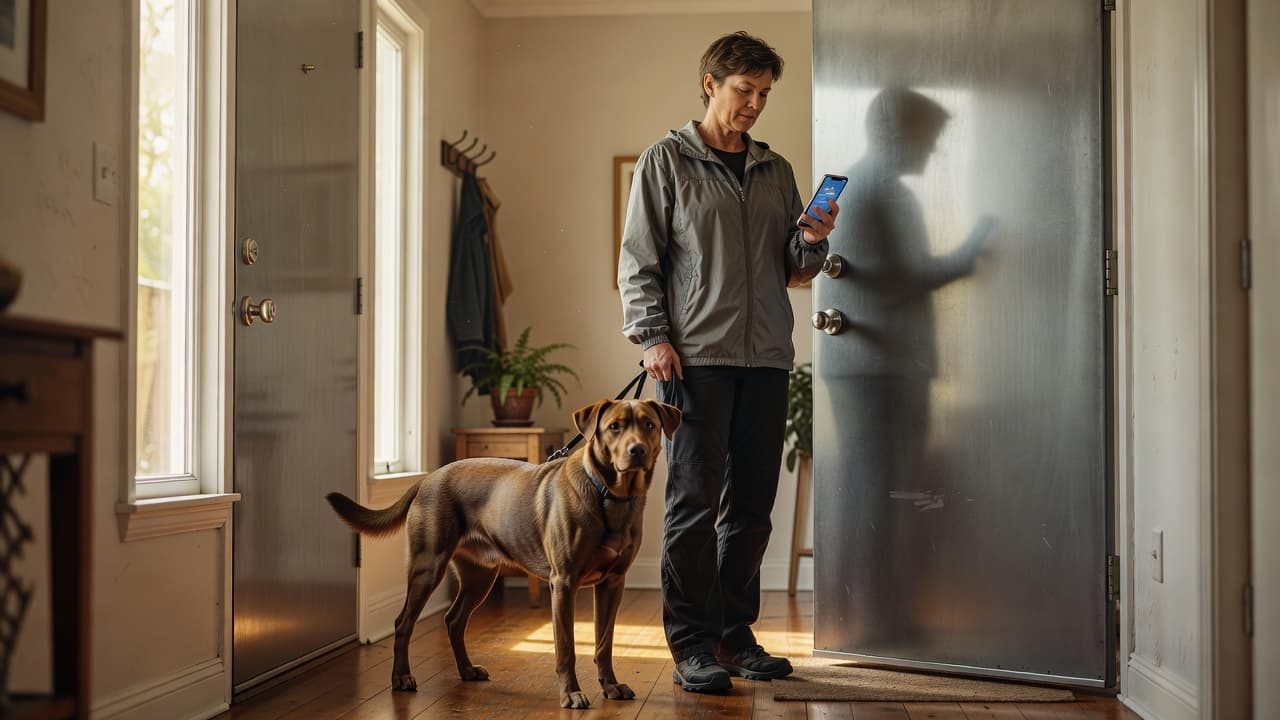
The goal is to get the basics done without pushing your dog into overheating.
If you are still wondering how long should you walk a dog in hot weather, the answer is often, “just long enough for a toilet break and a little fresh air.”
A quick before-you-go checklist
Before you leave, do a fast check. It takes less time than a bad walk, and it can save your dog a lot of discomfort.
Start with the time of day. Early morning and late evening are usually best, while the intense midday sun is the worst time to be outside.
Then check the ground with your hand. If the hot pavement feels painful to you, it will certainly damage your dog’s sensitive paw pads.
A few other things matter just as much:
- Shade: Pick a route with trees, hedges, or covered stretches.
- Water: Carry a bottle of cool water with you, even for a short outing.
- Sun Protection: If your dog has thin or white fur, consider applying a bit of pet-safe sunscreen to exposed areas.
- Breathing: Heavy panting before the walk starts is a red flag.
- Energy level: A tired, sluggish dog may need a shorter outing than usual.
If the weather feels sticky, your dog is already panting, or the ground is radiating heat, skip the walk and keep it to a quick potty break.
The Royal Kennel Club’s hot pavement guidance gives a clear reminder that hot ground is enough to cause pain fast.
A hot day is not the time to push through it.
What to do if your dog still has extra energy
If your dog looks ready to go after a short walk, don’t stretch the outing just to wear them out.
Swap distance for play, training, and enrichment instead.
A few minutes of indoor fetch, scent games, or basic obedience can take the edge off without the heat.
So can tug toys, as long as the game stays brief and controlled. That kind of brain-and-body work often does more than another lap around the block.
If you want more easy, practical ideas, Check out our great guides on Payhip and Check out our ebook guides on Etsy. You can also use a cool room, fresh water, and a chew or puzzle toy to help your dog settle.
That is not cutting corners. That is reading the weather and making a smarter call.
If you want a simple rule to remember, keep this one close: short walk, cool route, then home. Always stay vigilant for symptoms of heatstroke, as the effects of the sun can escalate quickly.
For a broader look at heat risks, the Wikipedia page on heat stroke is a useful background read.
Frequently Asked Questions
How can I tell if the pavement is too hot for my dog?
The best way to check is the “seven-second rule”: place the back of your hand on the ground for seven to ten seconds.
If you find the surface too hot to hold your hand there comfortably, it is dangerous for your dog’s paws and you should avoid walking on that surface.
Can I still walk my dog if it is cloudy or windy?
Yes, but you must still be cautious. Humidity can make a day feel much hotter than the thermometer suggests, and dogs rely on panting to cool down, which becomes less effective in muggy air.
Even on cloudy days, asphalt can remain hot and trap heat, so stay on grass whenever possible.
What should I do if my dog shows signs of overheating?
If you notice symptoms like excessive panting, drooling, weakness, or glazed eyes, stop the walk immediately and move to a shaded or air-conditioned area.
Offer cool water, keep your dog calm, and monitor them closely; if the symptoms do not resolve quickly, contact your veterinarian for advice as heatstroke is a medical emergency.
Should I use boots to protect my dog’s paws in the heat?
Dog boots can provide a protective barrier against hot surfaces like asphalt, but they can also make it harder for a dog to regulate their temperature.
If you use them, choose breathable materials and ensure they fit well, but remember that they do not protect your dog’s body from the ambient heat or humidity.
Conclusion
When the temperatures climb, remember that the best approach to walking dog in hot weather is often to keep things short or skip the stroll entirely.
Sometimes the right call is simply a quick potty break, waiting for a cooler time of day, or opting for an indoor game instead.
Always keep your eyes on your own dog rather than relying on a fixed number you read online. If the ground feels hot, the air is stagnant, or your dog starts to slow down, that is your signal to head home.
Once you are back indoors, provide plenty of cool water to help your pet regulate their body temperature and stay hydrated.
If you want more practical dog care ideas for summer, Check out our great guides on Payhip and Check out our ebook guides on Etsy. Heat safety comes first, always, and your dog will thank you for it.
This post may contain affiliate links. If you make a purchase through these links, I may earn a small commission at no extra cost to you.