

Yes, two female Cane Corsos can sometimes live safely together, but Cane Corso female same-sex aggression can be serious, sudden, and difficult to manage.
The breed isn’t naturally aggressive, and an individual female Cane Corso may respond differently from another dog. Safety depends on temperament, age, health, social history, training, resources, and careful supervision.
Problems may appear as one dog reaches social maturity, often between 18 and 24 months.
Tension can build around food, toys, resting places, people, or doorways before a fight seems to happen “out of nowhere.” If your dogs are already clashing, safety comes before convenience, and recognizing signs of stress in dogs can help you act sooner.
This guide covers warning signs, risk factors, and practical steps for a more peaceful home. It also explains when separate living arrangements or professional behavior support may be safest.
For more dog-care resources, Check out our great guides on Payhip and Check out our ebook guides on Etsy. This Cane Corso temperament video offers additional context about the breed.
This post may contain affiliate links. If you make a purchase through these links, I may earn a small commission at no extra cost to you.
Key Takeaways
- Same sex aggression can develop as dogs mature, even after years of peaceful living.
- Two females may coexist, but success depends on temperament, health, social history, training, and careful supervision.
- Feed the dogs separately, control high-value resources, and provide individual space before female-female conflict grows.
- Household dog aggression, especially between female dogs, is well documented in veterinary research on interdog aggression.
- If fights occur, separate the dogs safely and seek professional behavior help. Learn how to manage aggressive dogs on walks.
Understanding Cane Corso Female Same Sex Aggression
A female Cane Corso may live peacefully with another female, but their relationship can change with maturity. The Cane Corso temperament reflects its history as a guard dog breed with strong protective instincts.
Protective behavior does not automatically mean aggression, and breed labels cannot predict an individual dog’s behavior.
Genetics, guarding behavior, pain, fear, poor introductions, competition, and repeated conflict can all affect how two dogs respond to each other.
You can read more about the breed’s background in this Cane Corso information on Wikipedia, but breed information cannot predict every dog’s behavior.

Why Female-Female Conflict Can Change Over Time
Two puppies may play, sleep, and share space without obvious problems. The puppy stage is important, and early puppy socialization can shape later responses.
However, successful puppy socialization does not guarantee that two adult dogs will remain compatible after maturity.
As they reach hormonal and social maturity, often between 18 and 36 months, tolerance can shift. A younger dog may become more confident, while the older dog’s energy levels and preferences may change.
Some explanations reduce these conflicts to dominant behavior or pack mentality. Evidence-based guidance does not support using pack leadership to justify intimidation, alpha techniques, or punishment.
Focus instead on safety, careful management, and each dog’s individual behavior.
Conflict often starts around everyday resources, including:
- Food bowls, treats, and chews.
- Favorite resting places, sofas, beds, or crates.
- Toys, owners, visitors, and attention.
- Doorways, hallways, stairs, and other narrow spaces.
These pressure points can make a peaceful home feel tense. One dog may show territorial behavior by guarding a room, piece of furniture, doorway, or person.
She may block the other dog, stare when she approaches, or freeze near a valued resting place. The conflict may seem sudden, but warning signs often appeared earlier.
Spaying may reduce some hormone-related behaviors, especially if heat cycles affect tension. However, it isn’t a guaranteed cure for female-female conflict.
Speak with your veterinarian before making decisions about spaying, particularly if pain, illness, anxiety, or another medical issue could be involved.
Warning Signs That Should Never Be Ignored
Watch for changes suggesting that one dog is becoming uncomfortable or controlling the other. Early signs include freezing, hard staring, blocking, stalking, lip lifting, low growling, guarding, and repeated pinning during play.
A sudden drop in tolerance also matters, especially when the dogs previously played well.
A growl is useful communication. Punishing it may remove the warning without removing the discomfort, which can make the next reaction harder to predict.
Separate the dogs calmly when tension rises. Use doors, gates, or other barriers, and avoid shouting or grabbing collars during a conflict.
Never put your hands between fighting dogs. Seek professional behavior help after a bite, repeated attack, or conflict that is difficult to interrupt. Research on household dog aggression also found that most affected pairs included at least one female dog, and many were same-sex pairs (intrahousehold interdog aggression study).
Whether a female Cane Corso can share a home depends on the individual dogs, not sex or breed alone. Age, maturity, temperament, early socialization, past dog relationships, health, energy levels, household space, and your ability to separate them all matter.
Relationships between adult dogs can change as they mature. Family history may provide context about aggressive tendencies, but it cannot predict an individual outcome.
If you’re considering another dog, reputable breeders may provide useful health, temperament, and family-history information.
A home with secure barriers, separate feeding areas, several resting spaces, and reliable adult supervision gives dogs a better chance. A well-planned multi-dog household also needs enough room for each dog to m
ove away and relax. Narrow walkways and limited control create more chances for conflict.
Health Checks Come Before Behavior Conclusions
If aggression appears suddenly or becomes worse, schedule a veterinary examination. Pain, illness, or reduced physical condition can make a normally tolerant dog react defensively.
Orthopedic problems, skin or ear disease, reproductive issues, neurological conditions, and other illnesses may affect behavior. A sore hip, painful ear infection, or irritated skin problem can make handling or another dog’s approach feel threatening.
Before deciding that your Cane Corso has simply become aggressive, rule out medical discomfort. These behavioral issues shouldn’t automatically be treated as a training failure.
The PDSA guidance on dog aggression also recommends contacting your veterinarian when behavior changes, especially when aggression is sudden.

Keep a simple record of every incident. Write down:
- What happened immediately beforehand.
- The location, time, and people present.
- Body language such as freezing, staring, blocking, growling, or snapping.
- Whether food, toys, furniture, doorways, or attention were involved.
- Any injuries and how long the tension lasted.
This record can help your veterinarian and behavior professional spot patterns. Never stage a confrontation to test the dogs or see which one will back down.
A planned challenge can turn manageable tension into a serious fight.
When Rehoming or Permanent Separation Is the Safer Choice
Management isn’t a failure. Sometimes permanent separation, carefully planned rehoming, or living in separate homes is the most responsible choice for both dogs.
The risk may be too high when:
- One dog causes severe puncture wounds or repeated injuries.
- Dog fights happen without clear warning or continue to escalate.
- Fights continue despite careful management.
- You can’t supervise or separate the dogs reliably.
- One dog lives in constant fear, hides, avoids rooms, or stops resting normally.
A dog that has caused serious injury may not be safe to house with another female, even after training.
Contact a qualified veterinary behaviorist or certified force-free behavior professional for an individual safety plan. The right plan may focus on separation rather than forcing a friendship that the dogs cannot safely maintain.
How to Introduce and Manage Two Female Cane Corsos Safely
Successful introductions require more than one calm meeting. They need clear training, careful routines, and a household plan that prevents avoidable competition.
In a multi-dog household, good management works like a sturdy fence. It gives everyone room to relax before problems develop.
Build Calm Habits Before Allowing Close Contact
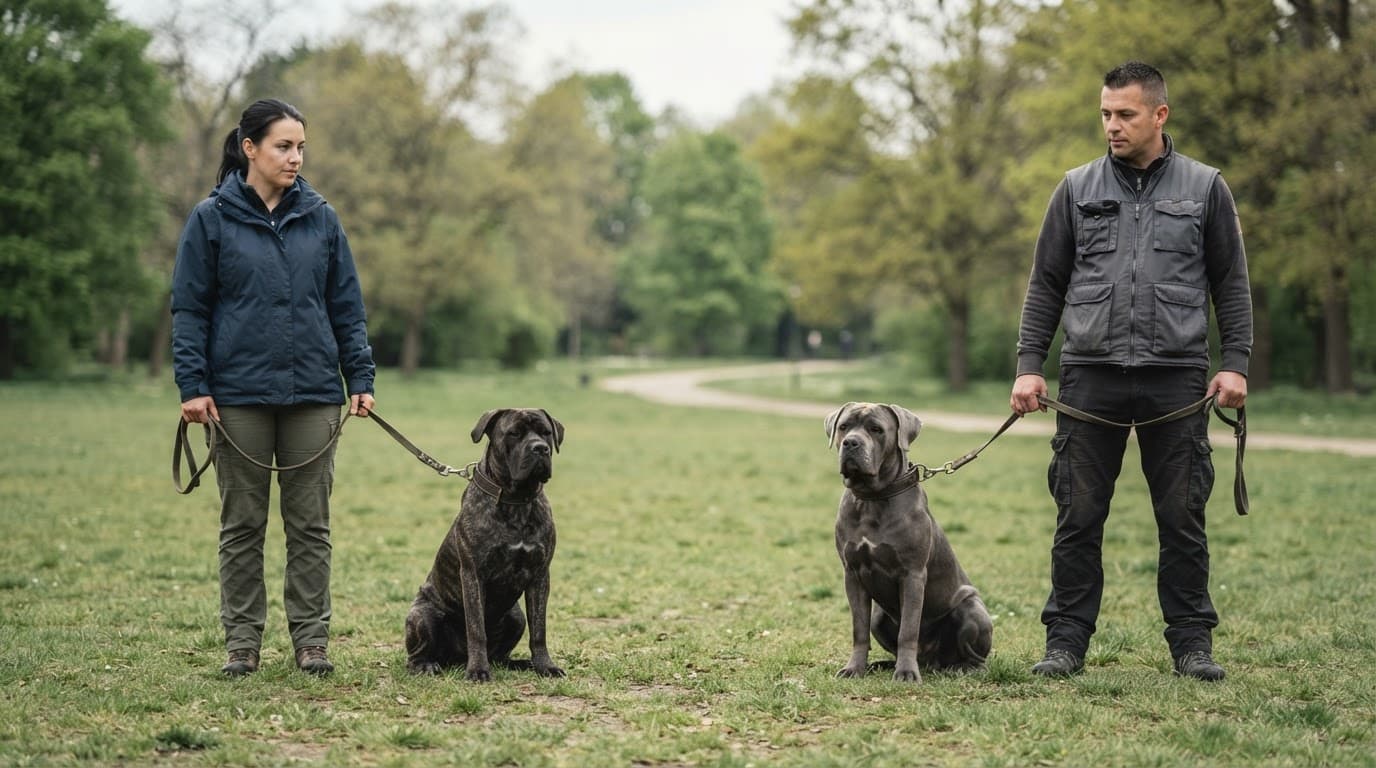
Train each Cane Corso separately before asking them to work around each other. Obedience training should cover name response, recall, place, brief stays, and calm door manners.
A reliable dog recall training guide can help you build these skills gradually and safely.
Practice loose-leash walking with each dog alone. Then walk them with two capable adults in a neutral, open area.
Keep plenty of distance, reward calm behavior, and keep sessions short. If either dog stares, freezes, pulls hard, or stops taking treats, increase the distance.
Use dog training sessions to reward each dog for disengaging from each other. Looking away, turning toward you, sniffing the ground, or calmly following you are all good choices.
Mark that behavior with praise or a treat before moving on.
Once both dogs remain relaxed, slowly reduce the distance. Don’t rush this stage. Move indoors only after several calm sessions.
Use gates, crates, and separate rooms to prevent unsupervised contact.
Doorways need their own routine. Ask each dog to wait, call one through, and reward her for staying calm while the other moves.
This prevents rushing, crowding, and sudden competition in tight spaces.
Avoid shouting, punishment, intimidation, pack leadership techniques, and forced sharing. These approaches can increase fear and tension while suppressing growls or other warning signals.
A quiet dog isn’t always a comfortable dog.
Create a Household Plan for Feeding, Visitors, and Daily Life
Write down your safety rules before the dogs share a home. Everyone should know what happens during meals, visitor arrivals, playtime, and periods when no adult can supervise.
Your plan might include:
- Feeding each dog behind a closed door, then removing both bowls before opening the doors.
- Keeping high-value chews, favorite toys, and food scraps out of shared areas.
- Using two barriers near entrances, such as a closed door behind a baby gate.
- Rotating freedom when no one can supervise, so one dog rests in a separate room while the other has access to the home.
- Giving each dog her own bed, crate, water station, and quiet resting area.
- Greeting visitors with the dogs separated, then introducing them only if both dogs remain calm.
- Keeping a first-aid kit, veterinarian details, emergency clinic information, and a trusted backup caregiver easy to find.
These steps reduce competition around food, resting places, toys, and household access.
They also make the setup safer without relying on constant vigilance. Supervision and physical separation remain necessary whenever tension could rise.
Family members and pet sitters must follow the same rules. One relaxed afternoon can undo careful progress if someone leaves a chew on the floor or opens a barrier without checking both dogs.
For broader breed-care structure, the Cane Corso blueprint can help you plan training, exercise, boundaries, and daily routines. Individual walks and separate training sessions also lower competition while giving each dog valuable one-on-one time.
Account for their different energy levels and physical needs, but don’t use exercise as a substitute for management.
If tension increases, return to separation and contact a qualified behavior professional. Never leave two female Cane Corsos together simply because they have been peaceful for a few days.
What to Do After a Fight and Where to Get Help
After dog fights, safety comes first. Don’t grab collars, reach between the dogs, or try to pull them apart with your hands.
Use a door, sturdy barrier, or another safe method to separate them, then secure each dog in a different room.
Once both dogs are contained, check them carefully. Look for punctures, swelling, bleeding, limping, pain, pale gums, weakness, or unusual breathing.
Small bite wounds can close quickly while hiding deeper damage, so contact your veterinarian promptly after any bite or serious clash.

Don’t reintroduce the dogs later that day, even if both seem calm. Adrenaline and stress may remain high, and another incident could begin without warning.
Record what happened while details are fresh, including the location, triggers, body language, injuries, and recovery time.
Note whether food, toys, furniture, doorways, or attention played a role.
A Simple Decision Checklist for Owners
Use these questions to consider your next step. A qualified behavior professional should help interpret the answers, rather than relying on a checklist alone.
- Did either Cane Corso cause punctures, deep wounds, repeated injuries, or a bite that was difficult to stop?
- Are you seeing hard staring, freezing, blocking, snapping, or attacks with little warning?
- Can every adult in the household supervise the dogs reliably during meals, visitors, doorways, play, and busy periods?
- Do you have secure separation equipment, including sturdy gates, closed doors, crates, and separate rooms?
- Have both dogs received veterinary checks, and can you arrange support from a veterinary behaviorist or qualified reward-based trainer?
- Can a qualified professional adapt dog training and management to prevent another incident?
- Does your home provide enough space for separate beds, feeding areas, resting places, and daily routines?
- Is either dog living in fear, hiding, avoiding rooms, losing sleep, or showing a reduced quality of life?
Your veterinarian can investigate pain or illness. A veterinary behaviorist can assess serious aggression and discuss a full treatment plan.
A qualified reward-based trainer can teach safer routines, but shouldn’t promise that two dogs must become friends.
Research on household dog aggression has found that female dogs are often involved in conflicts with other females, so repeated incidents deserve serious attention (veterinary research on interdog aggression).
For structured breed guidance, the Cane Corso Blueprint may also help with daily training and management.
You can Check out our great guides on Payhip or Check out our ebook guides on Etsy for practical resources, but neither replaces professional behavior support.
Keeping the dogs apart can still be a caring, successful choice. Peaceful separation is safer than forcing a relationship that keeps both dogs on edge.
Frequently Asked Questions
Questions about female-female conflict often come after the dogs have already lived together peacefully.
The answers aren’t always simple, because individual temperament, health, maturity, and household management all affect the outcome.
Is female-female aggression more common in Cane Corsos than male-female conflict?
Female-female conflict can be difficult, and some owners report serious problems between two adult females.
However, there isn’t a universal rule that every female Cane Corso will fight another female, or that male-female pairs are always safer.
Individual history, temperament, age, maturity, energy levels, and social experience matter more than sex alone, especially among adult dogs.
A female Cane Corso who guards food, furniture, or people may struggle with another dog. A male Cane Corso is not automatically easier to house with a female.
A same sex pairing may succeed when both dogs have compatible temperaments and careful household management.
Household research has found that same-sex pairs are common in cases of interdog aggression, but this doesn’t predict what will happen in every Cane Corso home. A veterinary examination can also help rule out pain or illness when behavior changes suddenly.
The Cane Corso pros and cons are worth considering before bringing another powerful dog into your household.

Can spaying stop two female Cane Corsos from fighting?
Spaying may help when tension is linked to heat cycles or other hormone-related changes. It cannot erase learned conflict, fear, resource guarding, pain, or a poor match between two dogs.
If the fighting happens only during a heat cycle, hormones may play a larger part. When arguments continue throughout the year, spaying alone is unlikely to solve the problem.
Speak with your veterinarian about timing, health factors, and the likely benefits for each dog.
A qualified behavior professional can help you decide what should happen alongside surgery. This may include separate feeding, controlled routines, barriers, calm behavior training, and a long-term safety plan.
Should I let my Cane Corsos work it out?
No. Don’t allow serious conflict to continue in the hope that one dog will eventually submit.
A fight can cause major injury, especially when two strong Cane Corsos are involved.
Repeated dog fights also strengthen the pattern. Each confrontation gives the dogs more practice reacting with aggression, and future incidents may begin with less warning.
What starts as tension over a sofa or doorway can become a dangerous household routine.
Separate the dogs with closed doors, sturdy gates, crates, or room rotation. Never put your hands between them or grab collars during a fight.
The veterinary protocol for interdog aggression can provide useful background, but your own veterinarian and behavior professional should guide the safety plan.
Can a muzzle make it safe for two female Cane Corsos to live together?
A properly fitted basket muzzle can reduce the risk of a damaging bite, but it doesn’t make an unsafe situation safe.
A dog can still body-slam another dog, guard space, panic, or suffer ongoing stress while wearing one.
Your Cane Corso must be gradually conditioned to wear the muzzle. Never force it on for the first time during a confrontation.
The muzzle should support a wider plan that includes:
- Physical barriers and separate rooms.
- Close adult supervision during controlled sessions.
- Removal of high-value food, toys, and chews.
- Individual walks, rest areas, and training time.
- Assessment by a qualified behavior professional.
Don’t leave muzzled dogs together unattended. If one dog remains frightened or the fights continue, permanent separation may be safer than relying on equipment.
How long should I keep two female Cane Corsos separated after a fight?
There is no universal timeline. Keep the dogs fully separated until injuries have healed, both dogs can settle, and you understand what may have triggered the fight.
A calm appearance isn’t enough. Stress can remain high after an incident, and a second fight may happen quickly if the dogs are brought together too soon.
Use separate rooms, secure gates, and a rotation system while you arrange professional advice.
Reintroduction should happen only through a controlled plan created for your dogs. It may begin with scent exchanges, distant parallel walks, or calm behavior on opposite sides of a barrier.
Progress should be slow, and you should stop if either dog freezes, stares, growls, blocks, or refuses food.
Is rehoming one dog always the right answer?
No, rehoming isn’t always necessary. Some households can manage two dogs safely with permanent separation, careful routines, and professional support.
Rehoming may be the kindest option when injuries are severe, fights keep happening, management is unreliable, or one dog remains fearful in her own home.
A dog that hides, avoids rooms, loses sleep, or constantly watches the other dog isn’t enjoying a suitable quality of life.
If rehoming is chosen, be honest about the aggression history, triggers, injuries, and management needs. The new home must understand the risks before agreeing to take the dog.
Careful placement with experienced owners, rescue support, or a behavior professional is far safer than passing the problem to someone without the necessary information.

Conclusion
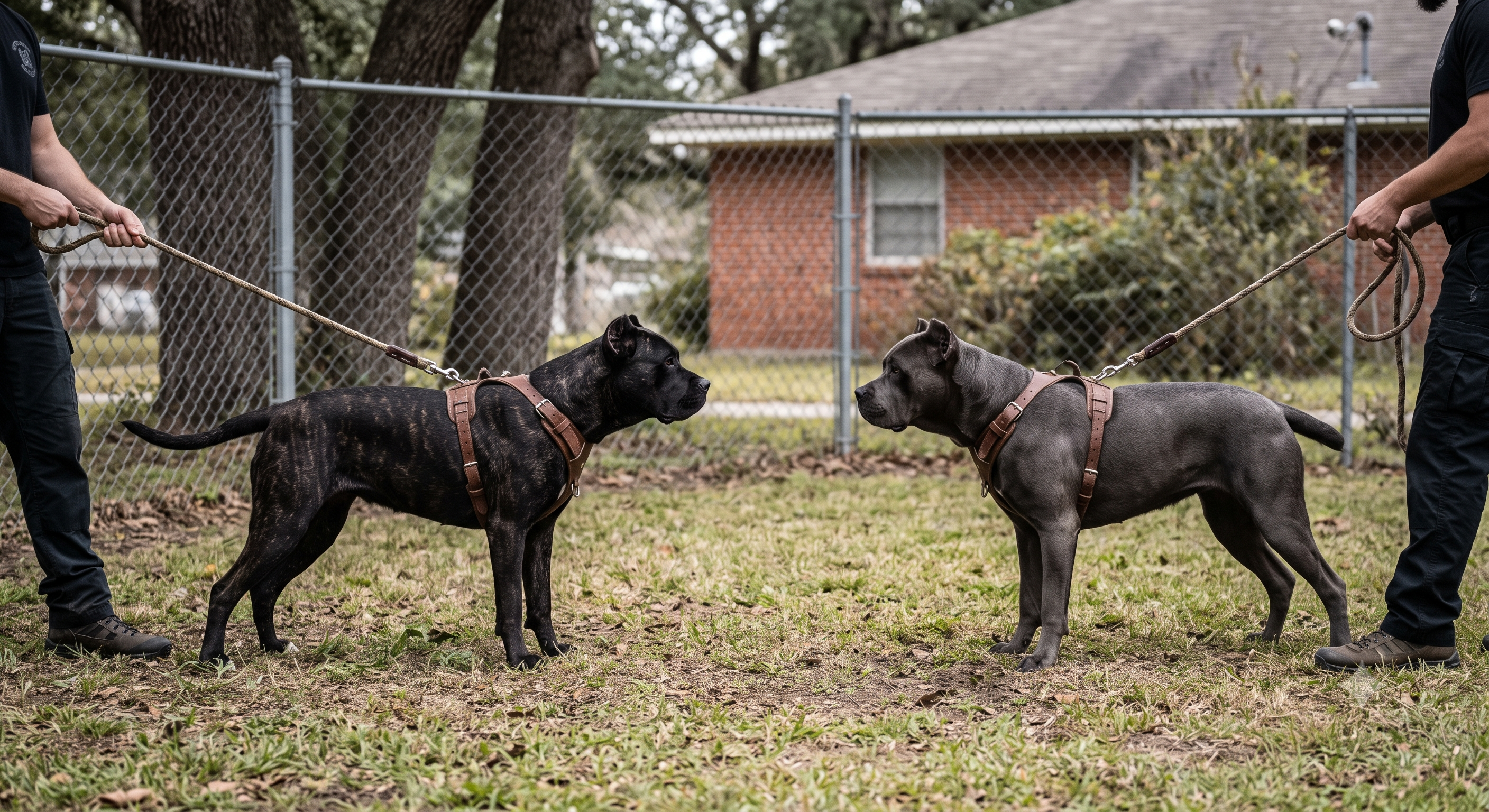
Two female Cane Corsos may live safely together, but early harmony doesn’t guarantee a peaceful future. As dogs mature, changes in health, confidence, hormones, resources, or household routines can bring conflict to the surface.
Cane Corso female same sex aggression deserves serious attention because even a brief fight can cause significant injury.
Health checks, careful management, separate resources, and early support from a qualified behavior professional can reduce risk.
Never allow the dogs to “work it out,” and don’t assume breed, age, or past success makes unsupervised contact safe. Watch each dog’s quality of life, too. If one dog lives in fear, permanent separation or responsible rehoming may be the kindest choice, not a failure.
Review the linked Cane Corso resources, maintain a clear safety plan, and seek qualified help before another incident occurs.
With honest decisions and consistent care, you can protect both dogs, even if living apart is the safest answer.
Check out our Cane Corso Blueprint page and find out more about this fabulous breed of mastiff.