
Yes, a Dalmatian can live in an apartment, but only if you can meet this high-energy breed’s daily needs.
Dalmatian apartment living depends less on square footage and more on a reliable routine, outdoor access, exercise, mental enrichment, training, and companionship. This matters especially in urban living, where space is limited.
Most adult Dalmatians need around two hours of activity each day. This may include walks, running, play, and training.
You’ll also need a plan for bathroom breaks, noise control, safe off-leash exercise, hot-weather walks, costs, and time alone. A small apartment can work when your dog gets suitable outlets outside it, but a busy schedule and long stretches alone may make this setup a poor fit.
This guide will help you judge whether your routine matches the breed, then build a practical plan for happy city life.
For extra help, see these hot-weather dog walking tips.
This post may contain affiliate links. If you make a purchase through these links, I may earn a small commission at no extra cost to you.
Key Takeaways
- Living with a Dalmatian in an apartment is possible, but only with a reliable routine and plenty of outdoor activity.
- Plan for around two hours of exercise each day, including brisk walks, running, play, and training.
- Mental stimulation matters too. Puzzle feeders, training games, and tug toys can help prevent boredom indoors.
- Dalmatians need regular companionship and may struggle with long periods alone, especially in a small apartment.
- Your schedule, access to safe exercise areas, and commitment matter more than the size of your home.
Can a Dalmatian Live in an Apartment? The Honest Answer
A Dalmatian can live in an apartment, but the home itself won’t meet their needs. Think of your apartment as a place to rest, while the real work happens outside through walking, running, training, play, and social time.
These dogs were bred to travel beside horse-drawn carriages, so their stamina is part of their history. Dalmatians are known for their endurance, and a short trip around the block usually won’t be enough for a healthy adult dog.
That history also makes this dog breed a demanding companion for many households, especially among high energy dogs.
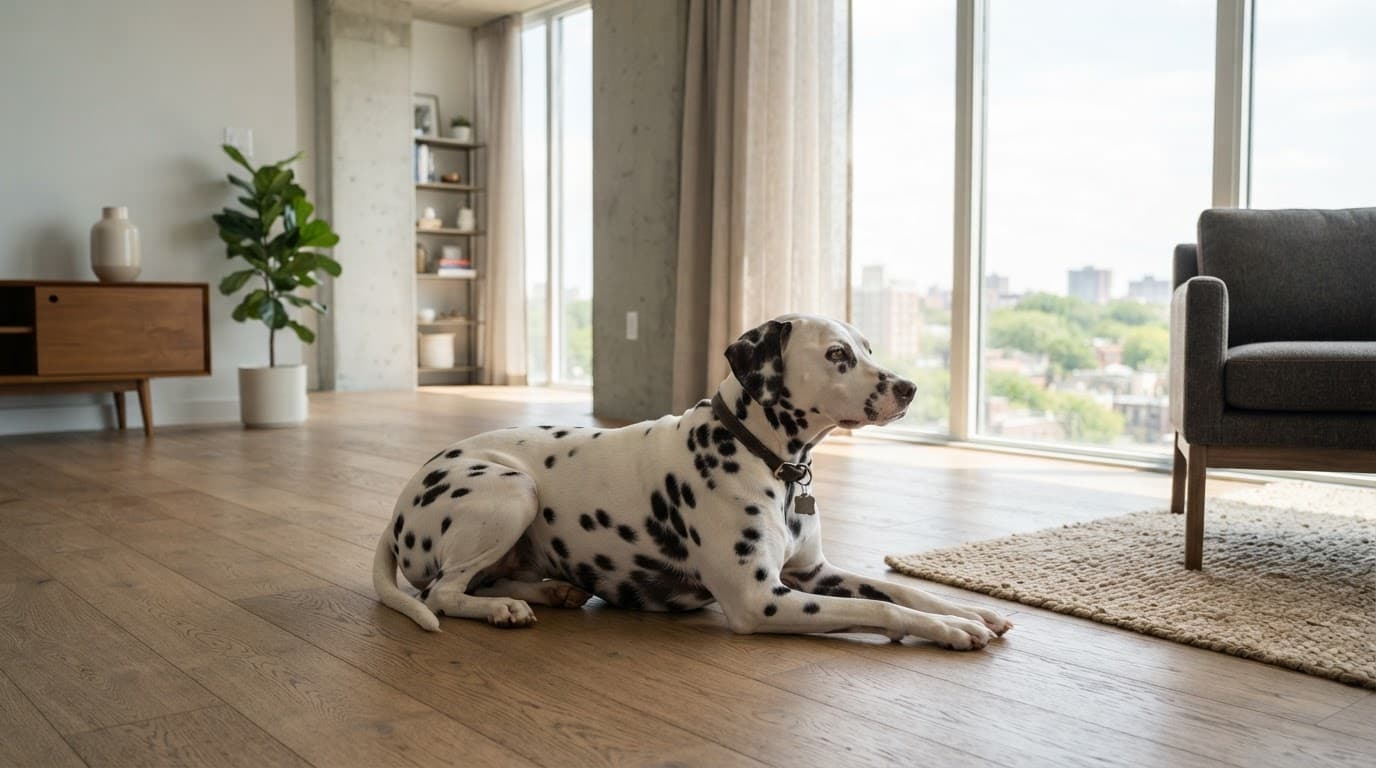
What makes apartment life challenging for a high-energy Dalmatian?
The biggest problem is usually not the size of the home. It’s what happens when a clever, active dog has too little to do.
A bored Dalmatian may pace, chew furniture, empty the laundry basket, or search for their own entertainment. Frustration can also lead to demand barking, especially when your dog learns that noise brings attention.
These are management risks, not guaranteed traits. A well-exercised and trained Dalmatian may settle beautifully indoors.
Hallway sounds can create another challenge. Footsteps, elevators, closing doors, and passing neighbors may trigger barking or a rush to the front door.
Some Dalmatians may also become reactive if they repeatedly meet people or dogs in narrow hallways without enough space to move away.
Under-exercise often makes settling harder. Your dog may look tired for a few minutes after a quick potty walk, then start bouncing off the walls later.
A balcony does not provide enough movement, and it isn’t a safe substitute for outdoor exercise. The same applies to an occasional dog park visit. It can provide an outlet, but it doesn’t replace daily walking, sniffing, training, and controlled exercise.
A complete routine may include:
- A brisk morning walk before work or school.
- Sniffing time, training games, and food puzzles during the day.
- A longer walk, run, secure free-running session, or structured activity later.
- Calm practice at home, so your dog learns that relaxation is part of the routine.
Mental work matters too. Training, scent games, and carefully managed tug toys can help use a Dalmatian’s busy mind.
You can also learn more about signs of a bored dog before unwanted habits become your dog’s daily hobby.
When can an apartment be a good home for a Dalmatian?
An apartment can work well when the owner is active, organized, and consistent. Luxury finishes and extra living space matter less than your schedule and access to suitable outdoor areas.
A good setup includes safe walking routes nearby, reliable outdoor access, and enough room for a quiet rest area. Stairs may be manageable for some dogs, but an elevator can help with puppies, older Dalmatians, or dogs recovering from illness.
Always check the building’s dog rules before bringing one home. Breed restrictions, weight limits, pet fees, and elevator policies can affect your plans.
Your neighbors matter as well. Every dog makes some normal sounds, but a Dalmatian may bark when excited, worried, or under-stimulated.
Choose a home where you can work on noise control and where ordinary dog sounds are unlikely to cause immediate conflict.
A calm apartment Dalmatian is usually a tired, trained, and well-managed dog, not simply a dog with access to more indoor space.
The strongest match is an owner who enjoys active walks, training, and outdoor time every day.
Dalmatians can be rewarding family pets when their needs are met, but someone seeking a low-maintenance companion may find the arrangement difficult.
Their trainability doesn’t guarantee automatic cooperation. Dalmatians are intelligent independent thinkers, so consistent training and meaningful rewards remain important.
Before deciding, meet adult Dalmatians and speak with ethical breeders, rescue organizations, and your veterinarian.
Age, health, breed line, and individual temperament can change how much exercise and support a dog needs.
Plan for these behavioral needs, including barking, frustration, settling, and hallway reactivity. For additional planning ideas, check out our great guides on Payhip or check out our ebook guides on Etsy.
Build a Daily Exercise Plan for Dalmatian Apartment Living
A reliable routine is the key to success. A balanced plan combines physical and mental exercise throughout the day.
Many healthy adult Dalmatians need around two hours of daily exercise, but age, fitness, weather, health, and veterinary advice all matter.
Split activity across the day instead of expecting one exhausting outing to do everything.
Walking, sniffing, dog training, controlled play, and safe off-leash running can all contribute to a balanced plan. For a useful comparison, Dalmatian exercise guidance from PitPat also stresses that mental work matters alongside physical activity.
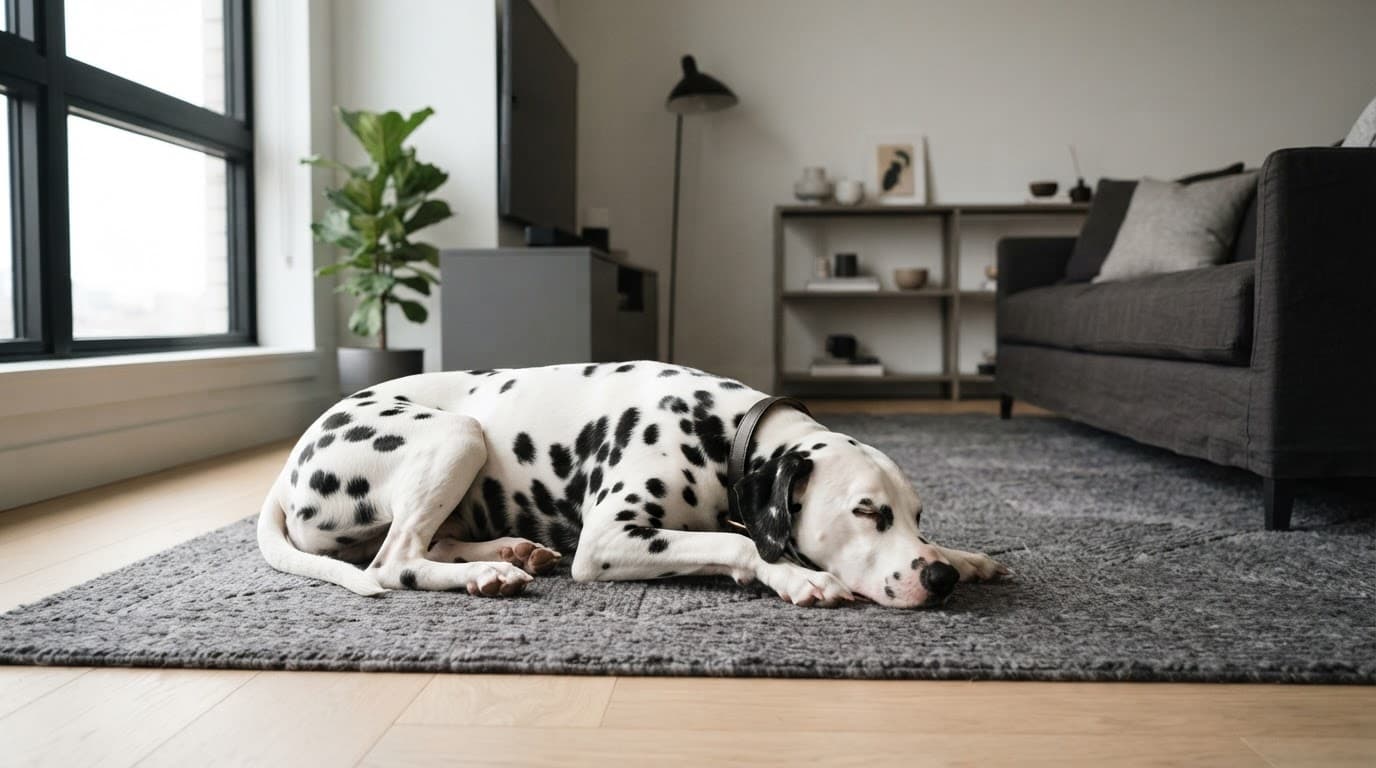
A realistic weekday schedule for a busy owner
Your schedule doesn’t need to look identical every day. It does need to provide regular movement, bathroom opportunities, and time with you.
Here is one practical example for a healthy adult Dalmatian:
- 6:30 a.m.: Take a 45-minute brisk walk. Include sniffing, a few recall exercises, and calm lead walking.
- 10:30 a.m.: Offer a 10-minute bathroom and sniff break. Keep it relaxed rather than turning every outing into a workout.
- 1:00 p.m.: Arrange a 30-minute visit with a trusted dog walker or sitter. This could include a walk, gentle play, and fresh water.
- 6:00 p.m.: Take a 45-minute evening walk. Use a secure, permitted area for running when appropriate and safe.
- 7:00 p.m.: Spend 10 to 15 minutes on obedience or trick training. Finish with a food puzzle or calm chewing activity.
This schedule provides roughly two hours of activity without forcing your dog to run hard in one session.
A dog walker can help fill the midday gap, but a walker alone won’t meet every Dalmatian’s needs. Your dog still needs companionship, training, mental work, and a suitable evening outlet.
Remote workers can replace the midday visit with short training breaks and a sniff walk between meetings. Shift workers may need a sitter, family member, or walker to cover the longest absence.
A trusted in-home sitter can provide company and structure, especially if your Dalmatian struggles when left alone.
Puppies need shorter, age-appropriate activity while their bones and joints develop. Older dogs may need gentler walks, more sniffing, and extra recovery time.
Jogging should wait until physical maturity and veterinary clearance.
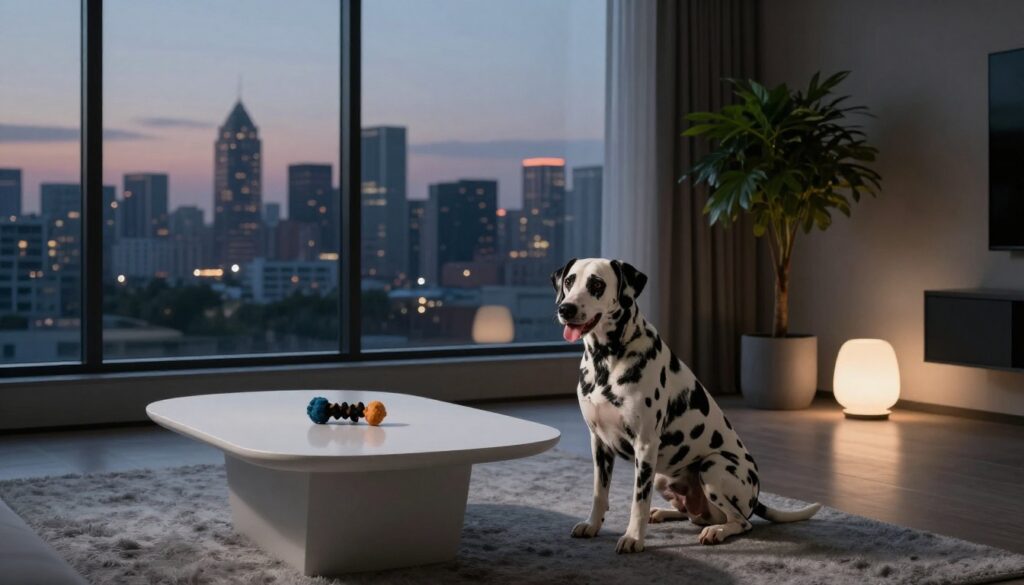
Why walks alone may not be enough
A walk exercises your Dalmatian’s body, but mental stimulation exercises the brain. Both are important.
A dog can return from a long walk and still feel restless if the outing involved little choice, sniffing, or learning.
Try rotating simple indoor activities throughout the week:
- Scatter a portion of your dog’s meal across a snuffle mat or safe room.
- Hide treats behind furniture and encourage your dog to search.
- Practice short sessions of sit, stay, recall, touch, or place.
- Teach tricks such as spin, paw, find it, or putting toys away.
- Use a suitable food puzzle under supervision.
- Play gentle hide-and-seek with one family member at a time.
Calm enrichment is especially useful in an apartment. Choose activities that encourage sniffing, licking, chewing, and problem-solving rather than wild running or repeated jumping.
Keep sessions short, supervise toys and puzzles, and remove anything that becomes damaged.
A weekly plan might include several steady walking days, two or three training walks, controlled fetch in a safe area, and at least one lighter recovery day.
That variety gives your Dalmatian something to think about while helping prevent sore muscles and overtired behavior.
Make Your Apartment Work With Training, Enrichment, and Noise Control
Successful routines when living with a Dalmatian in an apartment depend on teaching calm indoor behavior. Exercise helps, but your Dalmatian also needs practice settling, waiting, greeting politely, and staying calm around everyday building sounds.
Before bringing your dog home, check the lease, pet restrictions, pet deposit, elevator rules, and local leash laws.
Pet-proof the apartment too. Secure doors, windows, and balconies, keep your dog’s identification current, and make sure they are microchipped. Prevent heat buildup in sunny rooms, especially when windows are closed during warmer weather.
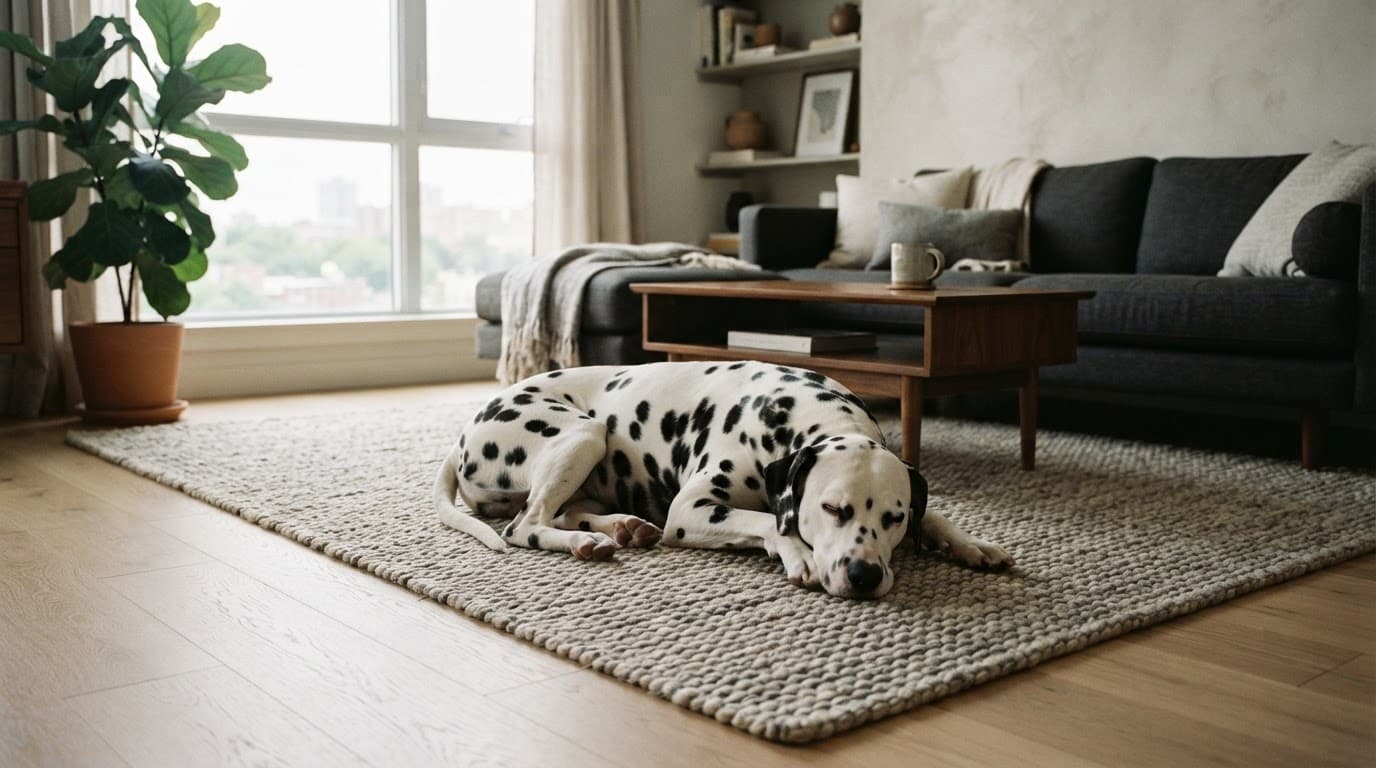
Teach your Dalmatian how to settle after exercise
The end of a walk should not mean racing straight into another activity. Give your Dalmatian a calm transition so their body and brain can slow down.
After arriving home, offer fresh water and a bathroom chance. Then provide a safe chew, stuffed food toy, lick mat, or other quiet enrichment activity. Finish with a rest period on a mat, bed, crate, or pen.
A crate or pen can help when introduced positively. Never use it as punishment or shut your dog inside longer than they can comfortably manage.
Feed treats nearby at first, then reward your Dalmatian for choosing to enter and relax.
Mat training is useful because it gives your dog a clear place to switch off. Positive reinforcement rewards calm choices, mat behavior, quiet responses, and polite greetings.
Reward lying down, resting their head, watching the room quietly, or ignoring a hallway sound.
Short sessions work well. Ask for a few seconds of stillness, reward it, then slowly build the duration.
Practice impulse control during normal routines too. Ask your Dalmatian to wait before going through the apartment door, taking food, greeting visitors, or entering an elevator. Reward four paws on the floor and polite greetings instead of jumping or rushing.
More intense exercise isn’t always the answer. If you repeatedly add running and fast play, you may build fitness without teaching relaxation.
A Dalmatian can become fitter and still struggle to settle. Balance physical activity with sniffing, training, chewing, and canine enrichment ideas.
Keep expectations fair and training consistent. Serious anxiety, reactivity, or aggression needs professional support from your veterinarian and a qualified force-free behavior professional.
Start alone-time training with departures so short your dog remains comfortable. Step outside for a few seconds, return calmly, and gradually increase the duration. Don’t jump from a quick bathroom trip to several hours alone.
Record your Dalmatian when you’re away. A phone, pet camera, or simple audio recording can reveal pacing, whining, scratching, or barking that isn’t obvious when you return.
Separation anxiety should not be treated by leaving your dog alone longer. Repeated panic can make the problem worse.
Reduce triggers before they cause a barking habit. Close blinds if street activity is exciting, move the bed away from the front door, and use white noise near the entryway.
Rugs and runners can reduce the sound of paws on hard floors, while bookshelves or soft furniture can help absorb noise along shared walls.
Teach a quiet response with rewards. When your dog notices a hallway sound but stays silent, mark the behavior and offer a treat.
If barking repeats, respond early by moving your dog away from the door and lowering the trigger, rather than shouting across the apartment.
Keep departures and arrivals boring, predictable, and brief. If distress is severe, contact your veterinarian or a qualified force-free behaviour professional instead of hoping your dog will simply get used to being alone.
Choose the Right Dalmatian Apartment Lifestyle Before You Commit
A successful apartment routine requires an active lifestyle, predictable structure, and some flexibility.
Your apartment is mainly a place to rest. Your Dalmatian will still need regular outdoor activity, training, companionship, and enrichment.
With consistent care, Dalmatians can be affectionate family pets. Before you commit, compare the breed’s needs with your real schedule.
Can you provide the same care on rainy days, during busy work weeks, and when your usual plans change? Guidance from Dalmatian breed experts commonly places adult exercise needs at around two hours daily, alongside training and mental activity.
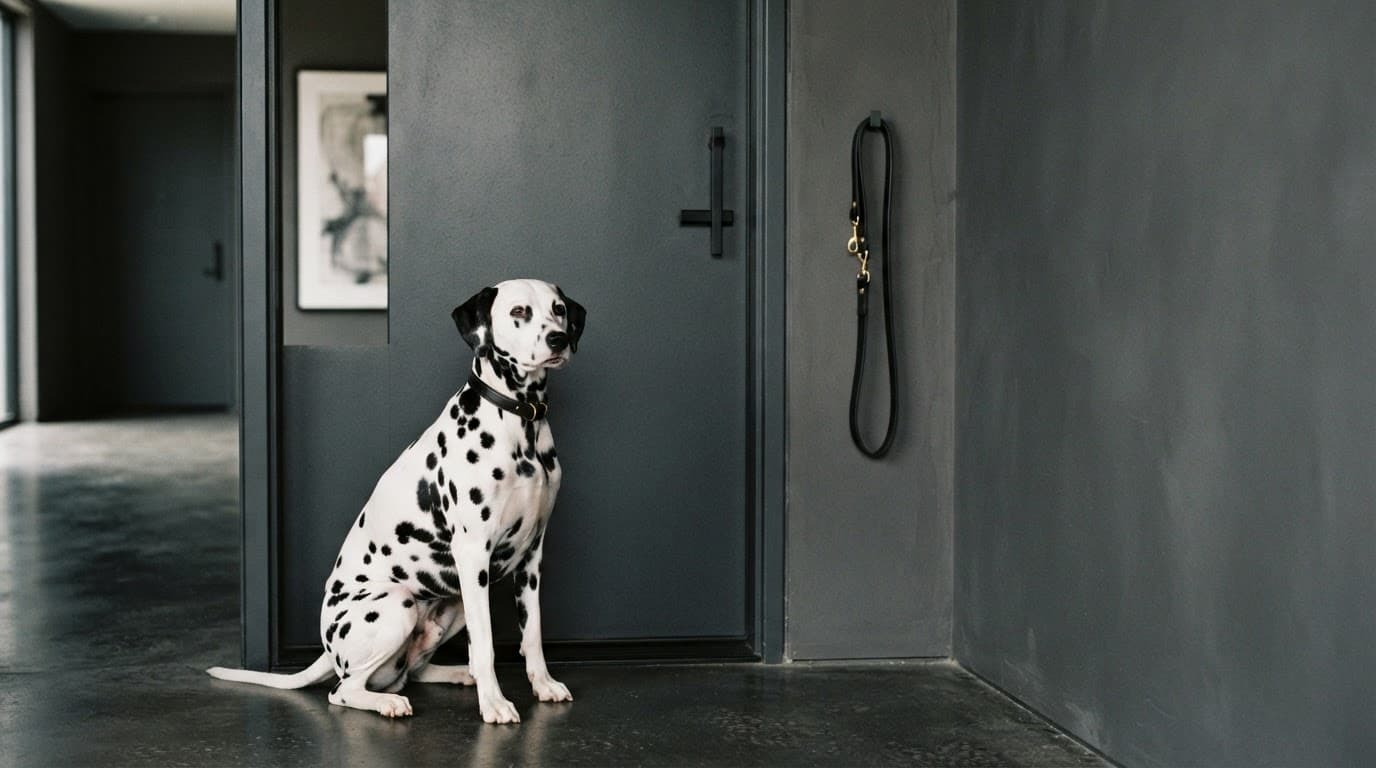
A quick readiness checklist for prospective owners
Ask yourself these questions before bringing a Dalmatian home:
- Can you provide about two hours of suitable activity each day, including walks, play, sniffing, and training?
- Can you arrange a midday dog walker, sitter, or family visit when work or school keeps you away?
- Are you ready to handle training setbacks, barking, chewing, accidents, or difficulty settling?
- Does your lease allow Dalmatians, and have you checked breed rules, pet fees, weight limits, and noise policies?
- Can you provide safe outdoor exercise if you don’t have a private yard?
- Will you keep your dog engaged during storms, extreme heat, illness, or other bad-weather days?
- Can your budget cover quality food, preventive veterinary care, training, secure walking equipment, enrichment, dog walking, pet sitting, and emergency savings? Dalmatians can have breed-related health issues, including a risk of urinary stones. Discuss prevention, hydration, diet, and warning signs with your veterinarian.
- Are you prepared for shedding, muddy paws, white hair on clothing, and regular apartment cleanup? A short smooth coat still leaves noticeable white hair indoors.
- Can you commit to dog ownership and companionship for many years, not just during the exciting puppy stage?
A puppy may need frequent toilet trips, close supervision, puppy socialization, calm exposure to building sounds, and age-appropriate exercise.
An adult rescue may already have known habits, but moving into an apartment can still require careful adjustment.
When researching breeders or rescues, ask about deafness history and request a hearing evaluation when appropriate.
Your veterinarian can also advise you about screening and ongoing care.
Wait or choose another breed if you cannot meet these needs consistently. Wanting a Dalmatian is not enough if your routine leaves them bored, isolated, or under-exercised.
How to set up the first month in a new apartment
Treat the first month like building a road map. Keep the routine simple, then add challenges gradually.
- Establish regular potty, meal, walk, and sleep times during the first week.
- Introduce building sounds slowly, including elevators, footsteps, doors, and nearby voices. Reward your dog for noticing sounds without barking or rushing.
- Reward calm behavior whenever your Dalmatian rests, watches quietly, or settles on their bed.
- Build alone time in small steps. Start with seconds or minutes, then increase the time only when your dog remains comfortable.
- Track sleep, appetite, bathroom habits, barking, energy, and recovery after walks.
- Adjust activity when your dog seems sore, over-tired, restless, or unable to settle.
A useful planning aid is the Dalmatian Blueprint guide, a paid resource that can help you organize breed-specific routines, training goals, and enrichment.
Use it as a planning tool, then tailor the routine to your dog’s age, health, and temperament.
By the end of the month, you should know which parts of apartment life feel easy and which need more support.
That information helps you make sensible changes before small problems become everyday habits.
Frequently Asked Questions
Even after planning your walks, training, and apartment setup, a few practical questions may remain. These answers can help you decide whether this breed fits apartment life.
How many hours of exercise does a Dalmatian need each day?
Many healthy adult Dalmatians need around two hours of activity each day, split into at least two or three sessions.
This may include brisk walks, sniffing, training, play, and safe running in a secure area. PDSA recommends a minimum of two hours of daily exercise for this high-energy breed.
Your dog’s needs may be lower or higher depending on age, fitness, health, temperament, and lifestyle.
A young, athletic adult may need more activity than an older Dalmatian. A dog with joint pain may need shorter, gentler outings.
Increase exercise gradually, especially if your Dalmatian has been inactive.
Adding long runs or intense games too quickly can cause sore muscles, exhaustion, or injuries. Build fitness like a staircase, one steady step at a time.
Can a Dalmatian be left alone while I work?
Long, regular periods alone can be difficult for a Dalmatian. This social, active breed needs companionship, activity, and engagement throughout the day.
A dog that spends most working hours alone may become bored, anxious, noisy, or destructive.
Some dogs struggle with solitude without developing separation anxiety. Panic, persistent distress, escape attempts, or inability to settle can signal a more serious problem.
Teach alone time gradually, starting with short absences your dog can handle comfortably.
Return before your Dalmatian becomes distressed, then increase the time in small steps. A camera can help you spot pacing, whining, scratching, or barking after you leave.
If you work away from home, arrange a midday visit from a trusted dog walker, sitter, friend, or family member.
The visit should offer more than a quick bathroom break when possible. A calm walk, sniffing time, play, or company can make the rest of the day easier for your dog.
Are Dalmatians too loud for apartment buildings?
Dalmatians aren’t automatically noisy, and many live peacefully beside neighbors. Barking becomes more likely when a dog is bored, anxious, frustrated, or reacting to footsteps, elevators, voices, and doors in the hallway.
Prevent problems before they become habits. Give your Dalmatian enough exercise and enrichment, move their bed away from the front door, and use white noise if building sounds trigger them.
Reward calm behavior when your dog notices a sound without barking.
Sound training can also help. Play recordings of doors, footsteps, and elevators at a very low volume.
Offer treats while your dog stays relaxed. Increase the volume slowly over several sessions, but stop if your dog becomes worried or starts barking.
Don’t wait months for serious noise or anxiety to disappear. Contact your veterinarian or a qualified, reward-based behavior professional when barking is frequent, intense, or linked to panic.
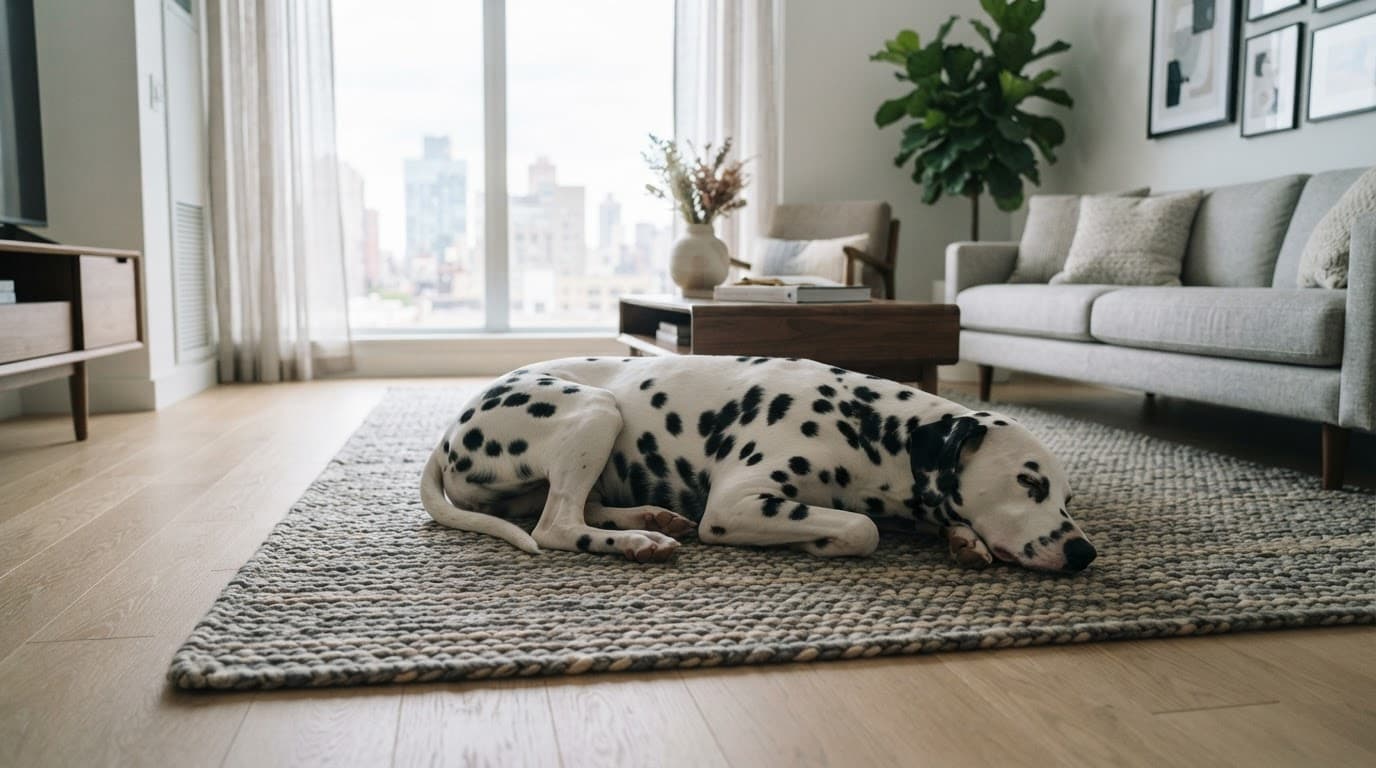
Is an adult Dalmatian easier than a puppy in an apartment?
An adult Dalmatian may be easier to manage because their energy pattern and bathroom habits are often more predictable.
Many adults can wait longer between potty trips and settle for longer after exercise, although every dog is different.
Puppies need frequent bathroom breaks, close supervision, bite training, and plenty of sleep. They also need careful, growth-safe exercise because their bones and joints are still developing.
Long runs, repeated jumping, and strenuous hikes are not suitable substitutes for short walks, free play, and gentle training.
Age is only one part of the decision. A confident adult with a known history may adjust better than a poorly socialized puppy. A calm puppy from a thoughtful breeder may also adapt well with careful support.
Temperament, health, previous training, and history matter more than age alone.
Can a Dalmatian live in a small studio apartment?
Yes, a studio apartment can work if your Dalmatian receives enough outdoor activity, training, rest, and companionship.
The number of rooms matters less than what happens during the day. A large home won’t solve the problem if your dog is bored or isolated.
Create a predictable routine for walks, meals, training, bathroom breaks, and sleep. Use rugs to reduce paw noise, keep supplies organized, and store food, leads, enrichment items, and cleaning products safely.
Give your dog a comfortable rest area away from the busiest part of the room.
Even in a studio, separate sleeping and eating areas when possible. Your Dalmatian should have a peaceful place to rest without being disturbed during meals or naps.
A simple room divider, pen, or carefully placed furniture can create useful boundaries.
What should I do if my Dalmatian is still hyper after a long walk?
Your Dalmatian may need mental work and a taught settle routine, not an even longer walk.
Try a short scent game, food puzzle, basic training session, safe chew, or mat exercise after the outing. These activities help your dog switch from movement to relaxation.
Check the basics if restlessness continues. Is your dog sleeping enough? Could pain, stress, excitement, diet, or inconsistent training be affecting their behavior?
Some Dalmatians become more wound up when they are overtired, much like a child who has missed a nap.
Keep a simple record of exercise, sleep, meals, barking, and behavior for several days. If your dog still cannot settle, or the change appeared suddenly, contact your veterinarian.
A qualified behavior professional can also help you build a calm routine without turning every restless moment into another demanding workout.
Conclusion
A Dalmatian can thrive in an apartment with substantial exercise, enrichment, training, companionship, and thoughtful building management.
Successful apartment living depends less on the apartment itself than on the routine around it.
The best test is simple: can you maintain that routine every day, including busy weeks and rainy days?
Plan honestly before adopting or buying, then use the linked Dalmatian resources to decide whether your lifestyle is a good match.
Check out our page all about the Dalmatian Blueprint ebook