

Why does my Whippet shake when it isn’t cold? The answer may be excitement, fear, anxiety, muscle arousal, pain, illness, low blood sugar, medication, or toxin exposure.
The Whippet and Greyhound are both lean sighthounds with little body fat and a short coat, so small tremors may be easier to notice, and they may chill easily.
Learning to spot common canine stress signals can help you distinguish normal, trigger-related dog trembling from shaking caused by illness. We’ll look at the likely causes first, then explain when shaking means it’s time to call your vet.
You can also Check out our great guides on Payhip or Check out our ebook guides on Etsy for more practical dog-care advice.
This post may contain affiliate links. If you make a purchase through these links, I may earn a small commission at no extra cost to you.
Related video: Why is my dog shaking? | common causes | vet advice
Key Takeaways
- A Whippet may shake from cold, excitement, fear, anxiety, pain, illness, low blood sugar, or toxin exposure.
- Their slim build and short coat make normal trembling easier to notice. Still, new, persistent, or unexplained shaking needs attention.
- Contact your vet today if shaking continues, worsens, returns often, or occurs with vomiting, limping, weakness, or behavior changes.
- Seek emergency care for collapse, breathing trouble, pale gums, seizures, inability to stand, or suspected poisoning. Veterinary shaking guidance can help you understand possible tremor patterns.
Why Does My Whippet Shake Even When It Isn’t Cold?
A Whippet may shake when they feel excited, nervous, stressed, or ready for action. Their lean bodies and short coats can make small muscle tremors look more dramatic than they are. The most useful clues are the situation, your dog’s body language, how long the shaking lasts, and whether they return to normal afterward.
Excitement, anticipation, and normal Whippet arousal
Some Whippets tremble before meals, walks, playtime, greetings, or a chance to sprint.
Their bodies are preparing for action, much like a runner warming up before a race. Excitement can briefly make the muscles tighten and release, creating visible shaking.
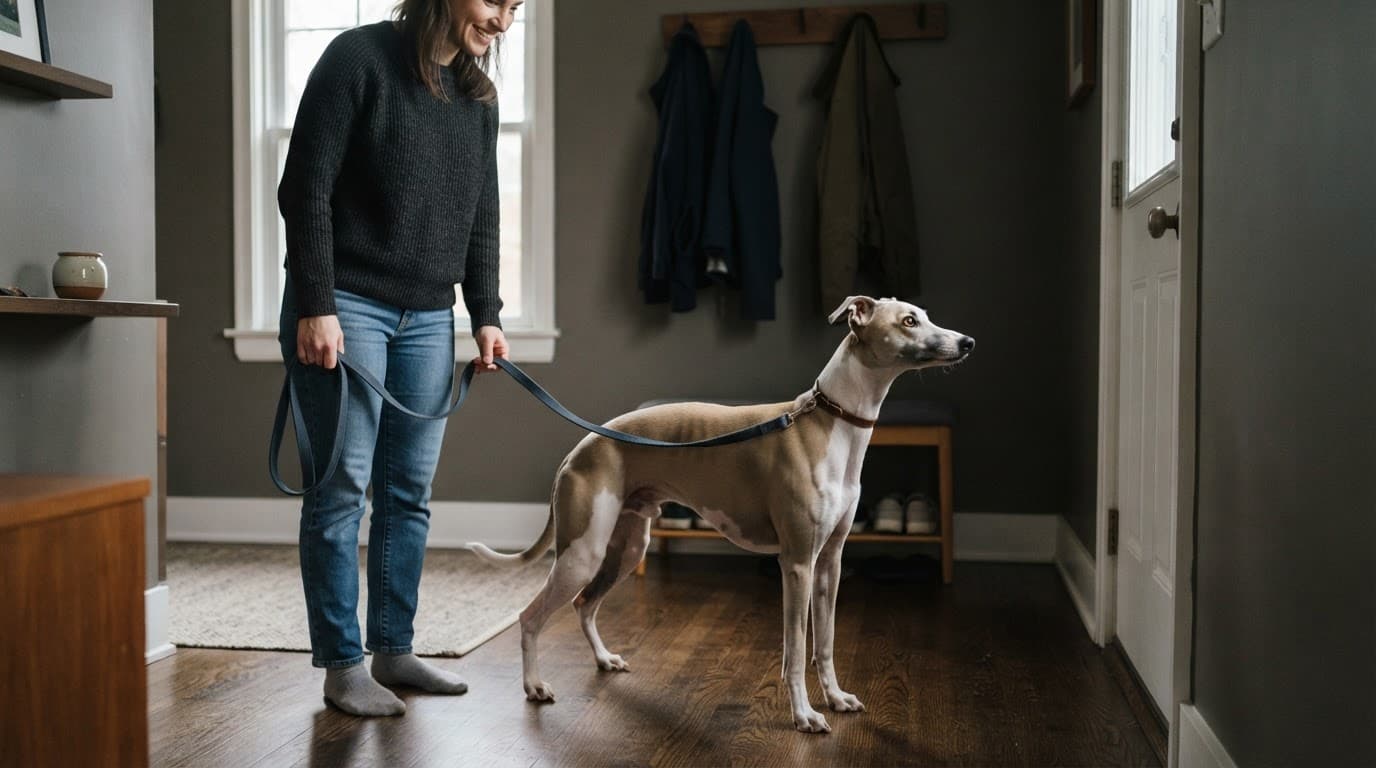
A happy, excited Whippet usually has a bright expression and loose body. You may also notice a wagging tail, normal walking, an eager approach, and relaxed interest in food or people.
The trembling should ease once the meal arrives, the door opens, or the exciting game begins.
You can help your dog stay calmer by keeping greetings low-key. Pause briefly before opening the door, wait for four paws on the floor, and reward settled behavior.
Punishing the shaking may add worry to an already exciting moment, so focus on teaching calm choices instead.
Fear, anxiety, and overstimulation can cause trembling
Anxiety and stress can make a Whippet tremble during thunderstorms, fireworks, loud noises, travel, grooming, separation, or unfamiliar situations. Unfamiliar dogs, visitors, and busy environments can also push a sensitive dog past their comfort level.
Trembling can be a stress response to fear, overstimulation, or emotional tension. These behavioral clues help distinguish emotional trembling from a possible physical problem:
- A tucked tail, pinned ears, or a lowered body posture.
- Lip licking, panting, pacing, or repeated yawning.
- Hiding, avoiding eye contact, backing away, or refusing treats.
- Whining, drooling, clinginess, or trying to escape.
The University of Tufts explains that anxious dogs may tremble, pant, pace, hide, drool, or withdraw from their owners.
You can read its guidance on anxiety in dogs for more detail.
Give your Whippet a quiet safe space and keep daily routines predictable. During mild triggers, offer treats and praise before your dog becomes overwhelmed.
Gradual desensitization, enrichment, and quieter walking times can also help. For practical ideas, see Paw-Tastic Walks’ advice on anxiety treatment for dogs.
Never force your Whippet toward a frightening trigger. If shaking happens often, lasts after the trigger ends, or affects eating, sleep, walks, or daily life, speak with your veterinarian or a qualified behavior professional.
When Whippet Shaking May Point to a Health Problem
If you’re wondering whether shaking could reflect an underlying medical issue, look for other changes in your Whippet’s behavior or health.
Shaking deserves more attention when it is new, persistent, worsening, or unexplained.
Pain, weakness, and illness signs to look for
Common signs of pain include reluctance to walk, limping, stiffness, a hunched posture, yelping, or flinching when touched. These changes may reveal a physical reason for the trembling.
Exercise-related muscle soreness, an injury, abdominal pain, dental pain, and arthritic pain can all affect behavior without causing an obvious wound.
A sore Whippet may tremble because movement hurts.
Head or ear shaking can also suggest ear discomfort. Conditions such as otitis externa may cause irritation, but only a veterinarian can determine the cause.
Other warning signs include:
- Loss of appetite, vomiting, or diarrhea.
- Fever, unusual tiredness, weakness, or dehydration.
- Trouble standing, climbing stairs, or jumping onto furniture.
- Restlessness, hiding, clinginess, or other sudden behavior changes.
- Trembling that continues after rest, warmth, or a stressful event has ended.
A Whippet who shakes after hard exercise may need quiet rest and water, but don’t assume every episode is simple muscle fatigue.
Small or young dogs, senior Whippets, dogs with diabetes, and dogs taking medication may need faster assessment.
Low blood sugar, electrolyte problems, medication side effects, neurological disorders, muscle tremors, and generalized tremor syndrome can also cause shaking.
Generalized tremor syndrome is only one rare possibility, and its appearance alone cannot confirm the condition.
If your dog is limping or refusing to put weight on a leg, learn about urgent dog joint pain signs and contact your veterinarian for advice.
Never give human painkillers, including ibuprofen or acetaminophen, unless a veterinarian has prescribed a safe treatment. These medicines can poison dogs.
Tremors, seizures, and possible toxin exposure
Tremors, seizures and epilepsy are related terms, but they aren’t interchangeable. A tremor is an involuntary shaking movement, and your Whippet may remain awake and responsive.
A seizure can involve staring, collapse, stiffening, paddling movements, loss of awareness, drooling, or confusion afterward. Appearance alone isn’t enough to diagnose the cause.
Chocolate, xylitol, grapes, raisins, antifreeze, human medications, poisonous plants, and other toxic substances may cause tremors or seizures. If poisoning is possible, seek emergency vet care immediately and don’t wait for symptoms.
Keep the packaging or product details available, and never induce vomiting unless a vet tells you to. The Red Cross guide to dog poisoning lists several common toxic foods and substances.
During seizure-like activity, move furniture and other hazards away. Keep your Whippet away from stairs, don’t restrain them, and never put your hands near their mouth. Time the episode and record a safe video for your veterinarian if you can do so without touching your dog.
A seizure lasting more than five minutes, repeated seizures, collapse, breathing trouble, or failure to recover normally requires emergency care and prompt veterinary care.
How to Tell Whether Your Whippet’s Shaking Is Serious
The best way to judge shaking is to look at the whole picture. Ask yourself: Is your Whippet awake and responsive? How long has the episode lasted? Was there an obvious trigger, and are there any other symptoms?
A brief tremble linked to excitement, cold, or stress is often less urgent if your dog acts normally afterward.
Shaking that persists after exposure to cold weather may be more concerning. Hypothermia can cause weakness, confusion, pale gums, and difficulty recovering.
New shaking without a clear trigger, episodes lasting more than about 30 minutes, or repeated episodes deserve veterinary assessment. Shaking in senior dogs also warrants attention rather than being dismissed as normal aging.

Signs that need same-day veterinary advice
Call your regular veterinarian the same day if the shaking keeps returning, lasts a long time, or doesn’t improve with rest and warmth.
The same applies if your Whippet seems painful, weak, unusually tired, or less interested in food. Prompt veterinary care can help identify problems before they become more serious.
Contact your vet promptly if shaking happens with:
- Vomiting or diarrhea.
- Difficulty walking, standing, or climbing.
- Stiffness, limping, or signs of pain.
- Balance problems, stumbling, or unusual behavior.
- A recent medication change or possible medication side effect.
- A first seizure-like episode, even if your dog appears better afterward.
When you call, explain exactly what happened rather than simply saying your dog was shaking.
Note the time, duration, possible trigger, recent food intake, exercise, medication, and how your Whippet recovered. A short video can also help your veterinarian tell a tremor from a seizure, provided you record it safely.
New shaking in senior dogs shouldn’t be dismissed as “just getting older.” Older dogs can develop health problems that need assessment.
Emergency symptoms that should not wait
Some signs mean you need emergency vet care immediately. These include:
- Collapse, unresponsiveness, or sudden loss of consciousness.
- Trouble breathing, severe panting, or pale, white, gray, or blue gums.
- Severe weakness, inability to stand, or loss of coordination.
- A swollen, hard, or painful abdomen, especially with retching.
- Repeated vomiting, severe diarrhea, or signs of heatstroke.
- Suspected toxin exposure, head trauma, or a seizure lasting more than five minutes.
- Repeated seizures without your dog fully recovering between episodes.
Cornell’s guidance on managing seizures also treats a seizure lasting over five minutes as an emergency. Call the clinic while keeping your Whippet away from stairs and hard objects.
Transport your dog safely, but never restrain an active seizure or place your hands near their mouth.
If poisoning is possible, bring the packaging, label, or remaining product with you. You can also review these common causes of dog poisoning, but don’t wait for symptoms before calling for help.
Online information can’t replace a physical examination, especially when shaking is new or paired with other warning signs.
What to Do When Your Whippet Starts Shaking
Start by checking the environment. A brief shaking off after getting wet or a startling moment can be normal, but it doesn’t rule out illness.
Move your Whippet away from loud noises, visitors, other pets, heat, or anything causing stress. Keep them in a quiet, comfortably warm area, but don’t use heavy blankets or allow them to overheat.
Watch whether your dog stays alert and responds to your voice. Check for an obvious injury, but don’t force movement or press sore areas. Offer water only if your Whippet is fully conscious and can swallow normally.
Never give human medication, and don’t assume treats will fix unexplained shaking.
Build calmer routines with exercise and enrichment
Once the shaking has stopped and your Whippet seems well, age-appropriate activity can help reduce boredom and nervous energy.
Short walks, gentle play, sniffing, and brief training sessions often work better than one exhausting outing. Sensitive Whippets may also settle more easily with familiar routes and quieter walking times.
Try adding simple activities throughout the day, such as:
- Letting your Whippet sniff at their own pace during a calm walk.
- Practicing short sessions of sit, touch, recall, or settle.
- Hiding a few treats around one room for a supervised scent hunt.
- Using a food puzzle that matches your dog’s ability.
- Playing gentle, controlled games with clear pauses for rest.
Avoid intense exercise during an active tremor, illness, hot weather, or suspected injury. A dog that is shaking, weak, panting heavily, limping, or acting confused needs rest and veterinary advice, not a run or energetic game.
A consistent routine can make daily life feel more predictable. Feeding, walks, quiet time, and bedtime at similar times may help your Whippet know what comes next. For more ideas, see this Whippet exercise and enrichment guidance.
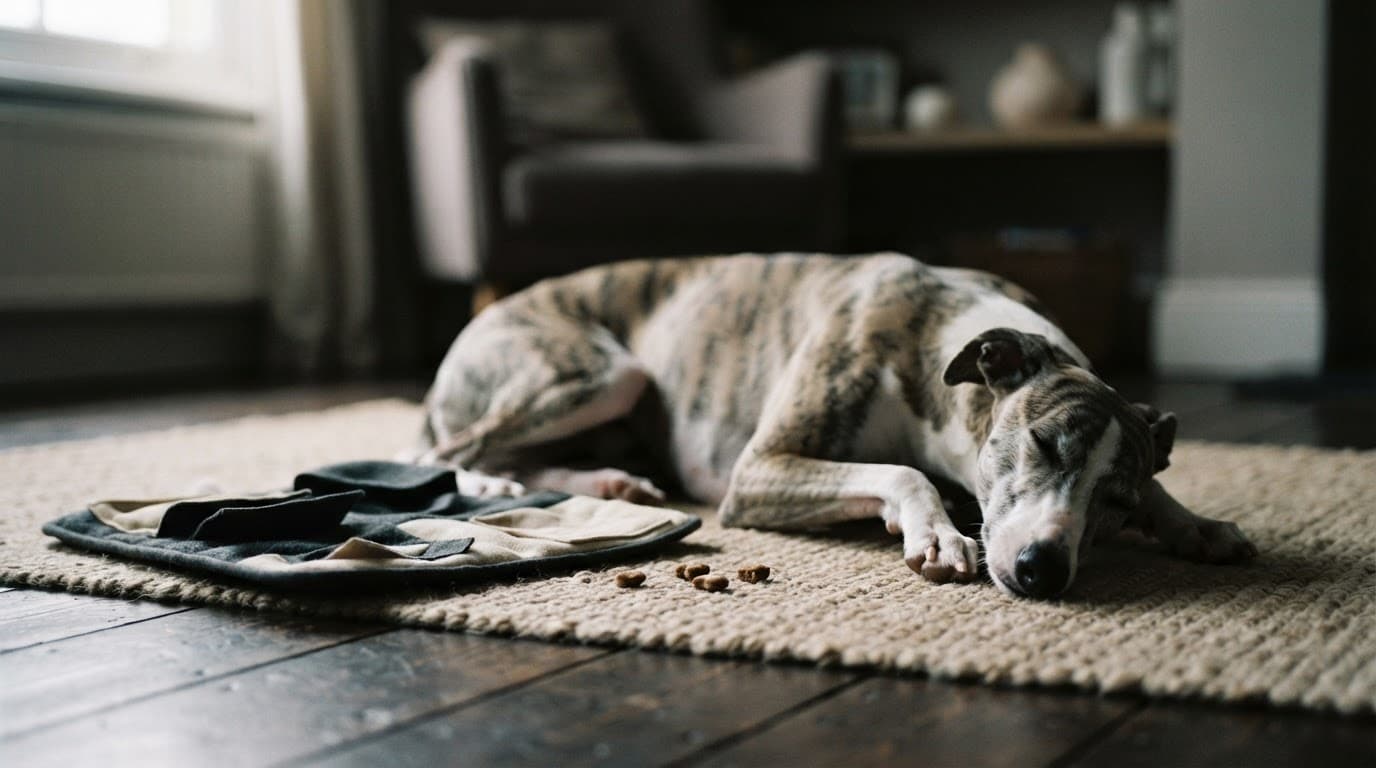
Track patterns so your veterinarian can find the cause
Keep a simple shaking diary. Record the date, time, duration, location, activity, recent food, medication, weather, stressful events, affected body parts, awareness, and recovery.
A short video can be especially useful. Use good lighting, keep a safe distance, and record the whole body if possible.
Note whether your Whippet responds to you, walks normally, drools, vomits, collapses, or seems confused afterward. BluePearl’s seizure guidance also recommends sharing videos with your veterinarian.
Keep medications, chocolate, xylitol, nicotine, caffeine, human food, and household chemicals out of reach. If your Whippet may have eaten something unsafe, contact your veterinarian or an emergency clinic immediately.
Don’t wait for shaking or other symptoms to worsen.
Frequently Asked Questions
Whippet shaking can be harmless when it has a clear trigger and stops quickly. These answers can help you judge what may be normal and when your dog’s trembling needs veterinary advice.
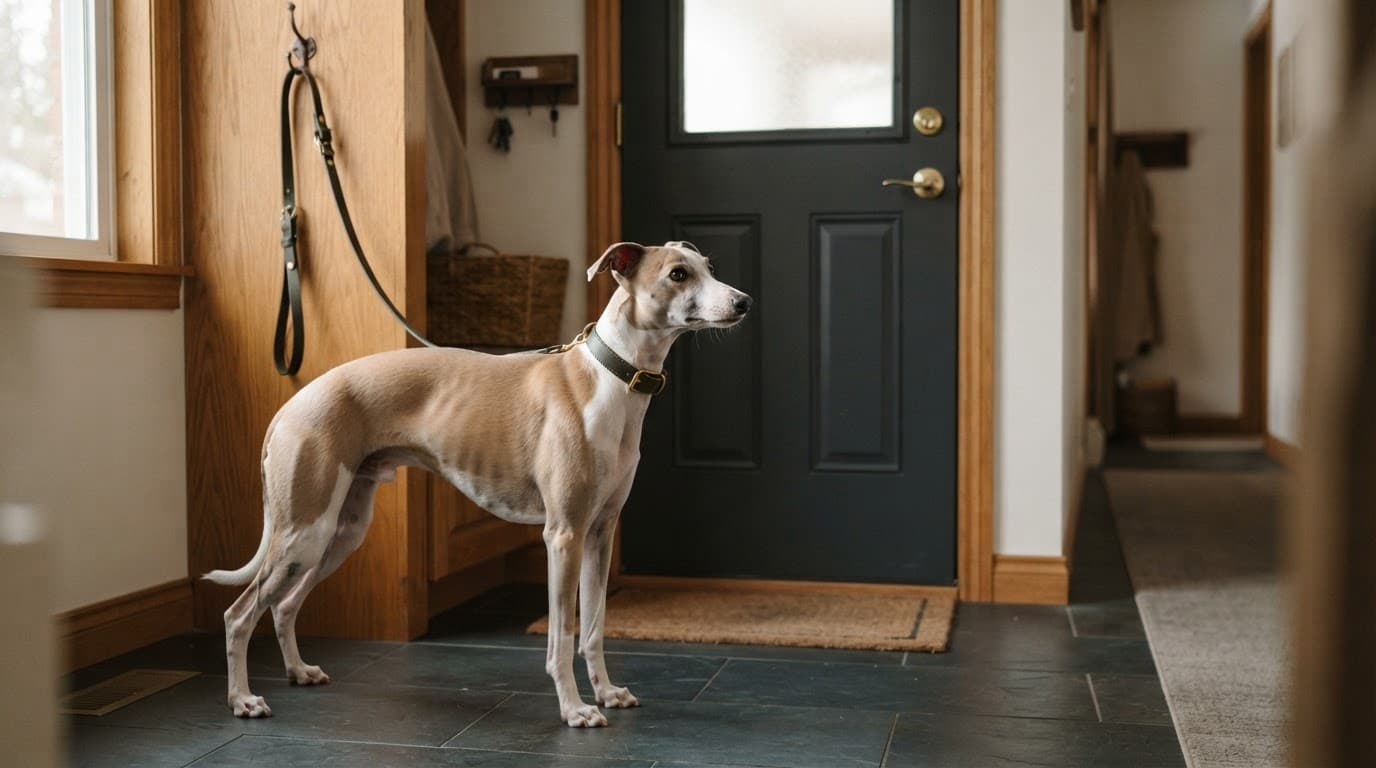
Is it normal for Whippets to shake before a walk?
Yes, excitement and anticipation can cause short-lived trembling. Your Whippet may shake while watching you pick up the leash, waiting by the door, or preparing to sprint outside.
This is usually less concerning when your dog stays alert, happy, coordinated, and eager to walk.
The shaking should settle once the excitement passes. If episodes become frequent, intense, or happen without a clear trigger, ask your veterinarian for advice.
Can anxiety make a Whippet shake at home?
Yes. Anxiety can cause shaking even when your Whippet is in a familiar home. Noise, separation, visitors, pain, thunderstorms, or changes in routine may all trigger stress.
Watch for pacing, panting, hiding, lip licking, tucked ears, clinginess, whining, or refusing treats.
A predictable routine and quiet resting area may help, but ongoing anxiety should be discussed with your veterinarian or a qualified behavior professional. You may also find these tips for calm training for anxious Whippets useful.
Can ear discomfort make a Whippet shake?
Yes, ear discomfort may cause head shaking, ear scratching, sensitivity, odor, or discharge.
Have your veterinarian examine the ears rather than inserting objects or using medication at home.
How long is too long for a Whippet to shake?
There isn’t one time limit that can diagnose the cause. A brief episode linked to excitement, cold, or fear is often less worrying when your Whippet returns to normal afterward.
Contact your veterinarian if shaking lasts around 30 minutes, keeps returning, or has no clear cause. Call sooner if it appears with weakness, vomiting, pain, confusion, trouble walking, or behavior changes.
Collapse, breathing trouble, seizures, pale or blue gums, or suspected poisoning require immediate emergency care.
Could shaking mean my Whippet has low blood sugar?
Low blood sugar can cause trembling, weakness, confusion, staggering, seizures, or collapse. Shaking has many other possible causes, though, so you can’t confirm hypoglycemia by appearance alone.
Seek urgent veterinary advice if your Whippet is weak, disoriented, very young, diabetic, not eating, or recovering from illness.
Cornell’s guidance on diabetes in dogs explains why low blood sugar needs prompt attention. Don’t give food, sugar, or home treatment unless a veterinary professional tells you what to do.
Should I cover my Whippet with a blanket when they shake?
A light blanket may help if your Whippet is genuinely cold or wants comfort. Their short coat and slim build provide less insulation than a dog with a thick winter coat, especially in a cool room.
Keep the blanket loose and watch for panting or signs of overheating. Never force contact if your dog is frightened.
If shaking continues in a warm room or comes with illness signs, contact your veterinarian instead of relying on extra warmth.
Can I buy a guide to help me understand my Whippet better?
A dog-care guide can offer useful ideas for routines, behavior, exercise, and enrichment, but it doesn’t replace veterinary care when shaking is new or unexplained.
If you’d like extra reading for everyday Whippet care, you can Check out our great guides on Payhip or Check out our ebook guides on Etsy. Both are friendly, low-pressure resources for dog owners.
Conclusion
Whippet trembling can result from excitement, fear, anxiety, or their lean, muscular build. A brief episode is often less concerning if your dog remains alert, coordinated, and comfortable afterward.
Still, don’t overlook pain, illness, seizures, low blood sugar, or toxin exposure. Watch your whole dog, not just the shaking.
Record what happened, how long it lasted, possible triggers, and how your Whippet recovered. Keep them away from stairs, hazards, and anything they may have swallowed.
Seek veterinary advice for new, persistent, repeated, or unexplained shaking. Get emergency help if trembling occurs with collapse, weakness, breathing trouble, confusion, seizures, vomiting, or suspected poisoning.
Your Whippet’s slim build may make small tremors easier to see, but prompt assessment offers the best chance of finding the cause. For useful background, you can also read about the Whippet breed.
Find out more about this fabulous breed of dog by getting the Whippet Blueprint!