

The Calm Home Fit Explained
Whippets can be excellent family dogs for the right home. They are gentle, affectionate, and often happiest curled up beside their people as loyal companions, but are whippets good family dogs for every household?
Not quite, because their sweet temperament comes with a few real needs, especially around exercise, training, and time with the family.
If you have kids, a busy routine, or a home that needs a calm, low-bark companion, a whippet might fit beautifully.
If you are still weighing up whether this breed suits your lifestyle, researching various dog breeds goes a long way, and our guide to adopting a dog can help you think it through.
For more practical dog advice, Check out our great guides on Payhip and Check out our ebook guides on Etsy.
A quick breed video is here too:
Key Takeaways
- Gentle Companions: Whippets are affectionate, quiet, and clean, making them excellent housemates for families who value a calm and peaceful home environment.
- Exercise Needs: While they are ‘couch potatoes’ indoors, they still require daily, controlled bursts of speed in a secure, fenced area to stay happy and healthy.
- Sensitive Temperament: The breed thrives on positive reinforcement and clear, gentle communication; they do not handle loud, chaotic, or rough household settings well.
- Safety Considerations: Due to their high prey drive, they should never be left off-lead in unsecured areas and require careful management when living with smaller household pets.
Are whippets good family dogs? Here’s the short answer
Yes, whippets can be a lovely fit for family life, and many prospective owners frequently search to find out if are whippets good family dogs before deciding to bring one home.
They are particularly well-suited for homes that are calm, affectionate, and not full of noise all day. They tend to be sweet, clean, and easy to live with, which is a big reason so many people look into this breed as a potential companion.
They are not usually needy in a loud, clingy way. A whippet often wants a warm spot on the sofa, a short burst of exercise, and a family that treats them gently.
That mix can feel a bit like having a quiet housemate who also happens to have four legs and a very fast engine.
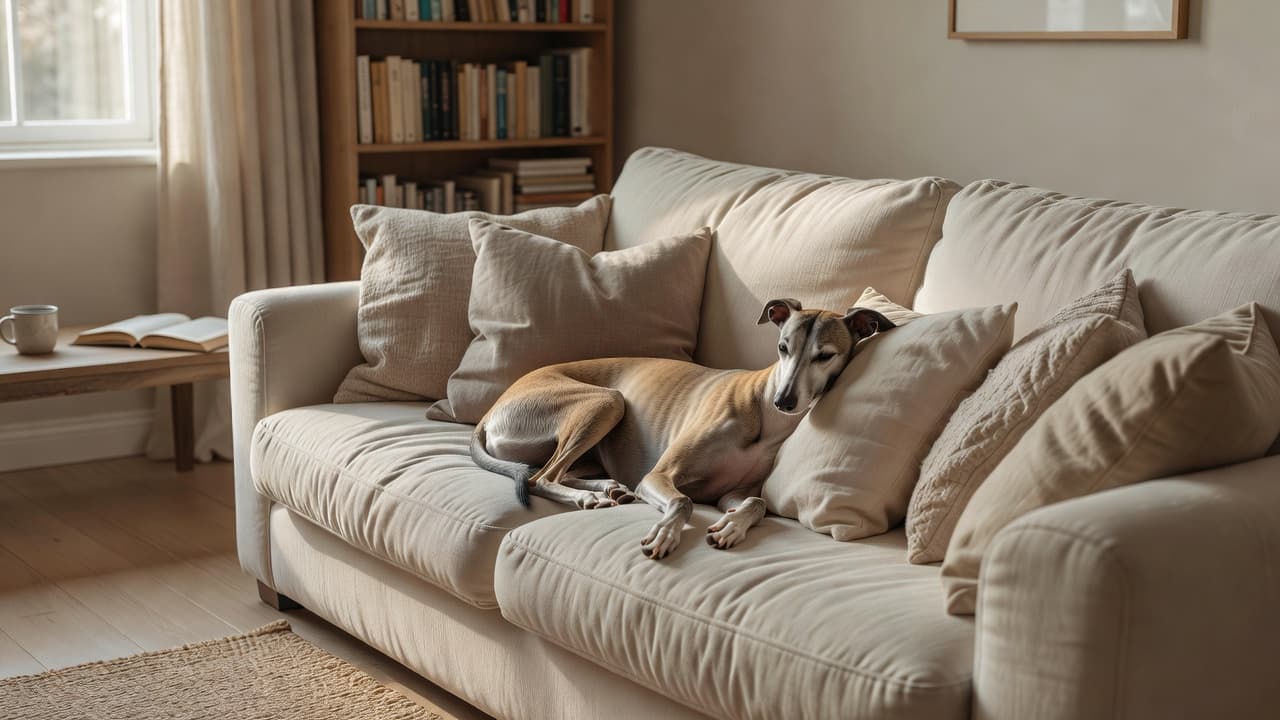
If you want a breed with a softer edge, whippets often tick a lot of boxes. For background on the breed, Whippet temperament gives a useful overview of their gentle nature and athletic side.
What makes a whippet a good fit for family life
Whippets are often loved for their gentle temperament. They usually bond closely with their people, enjoy company, and settle down beautifully indoors once their exercise needs are met.
Families also like their minimal shedding and how easy they are to keep clean. They don’t usually have that strong dog smell, and their short coat makes their grooming needs very manageable.
Add in the fact that they are often not overly barky, and you get a dog that can blend into family life without turning the house upside down.
Many whippets are happiest when life has a steady rhythm. Walk, play, nap, repeat. If your household values quiet time as much as fun time, that can be a perfect match.
A few traits families often appreciate:
- Sweet and affectionate without being pushy
- Quiet indoors, compared with many other breeds
- Happy to relax at home after exercise
- Simple grooming needs for their short coat
- Good companions for older children who are gentle and respectful
For families that want a dog they can train with patience and praise, positive reinforcement training works especially well.
If you enjoy understanding the “why” behind canine behavior, dog training secrets is a strong next read too.
If you want more help with dog care and training, Check out our great guides on Payhip and Check out our ebook guides on Etsy.
When a whippet may not be the right match
While they are excellent family pets, whippets are not a great fit for every household. Very loud, chaotic homes can be hard on them, and the unpredictable nature of young children can sometimes make them nervous.
They are sensitive dogs, so constant commotion is a poor match for their personality.
Their prey drive is another factor to consider. A whippet can take off after a squirrel or rabbit in a flash, so safe exercise space is vital.
A secure, fenced area is highly recommended, and keeping them on a lead in open areas is essential for their safety. Consistent recall practice helps, but you must always rely on common sense management.
If you want a dog that feels more rugged, more protective, or more likely to shrug off noise and chaos, another breed may suit you better.
Whippets are graceful, not hard-edged. That softness is part of the charm, but it also means they do best with calm handling and thoughtful supervision.
For active homes, they can still be a brilliant choice. They just need the right kind of activity.
Short runs, safe off-lead time in a confined space, and a few tug toys for play and bonding can help, but they are not built for rough-and-tumble living.
If your family includes a very young child, or your home is busy from morning to night, think carefully before committing.
A whippet can be wonderful, but only when the match feels balanced on both sides.

Whippet temperament around kids, guests, and daily family routines
Whippets are typically quiet and gentle at home, making them wonderful, affectionate companions for the right household.
However, they still possess a sensitive side that remains important to consider when you have children, visitors, or a house that never really sits still.
They often do best in families that maintain a calm environment, keep a consistent routine, and provide their dog with enough space to settle comfortably.
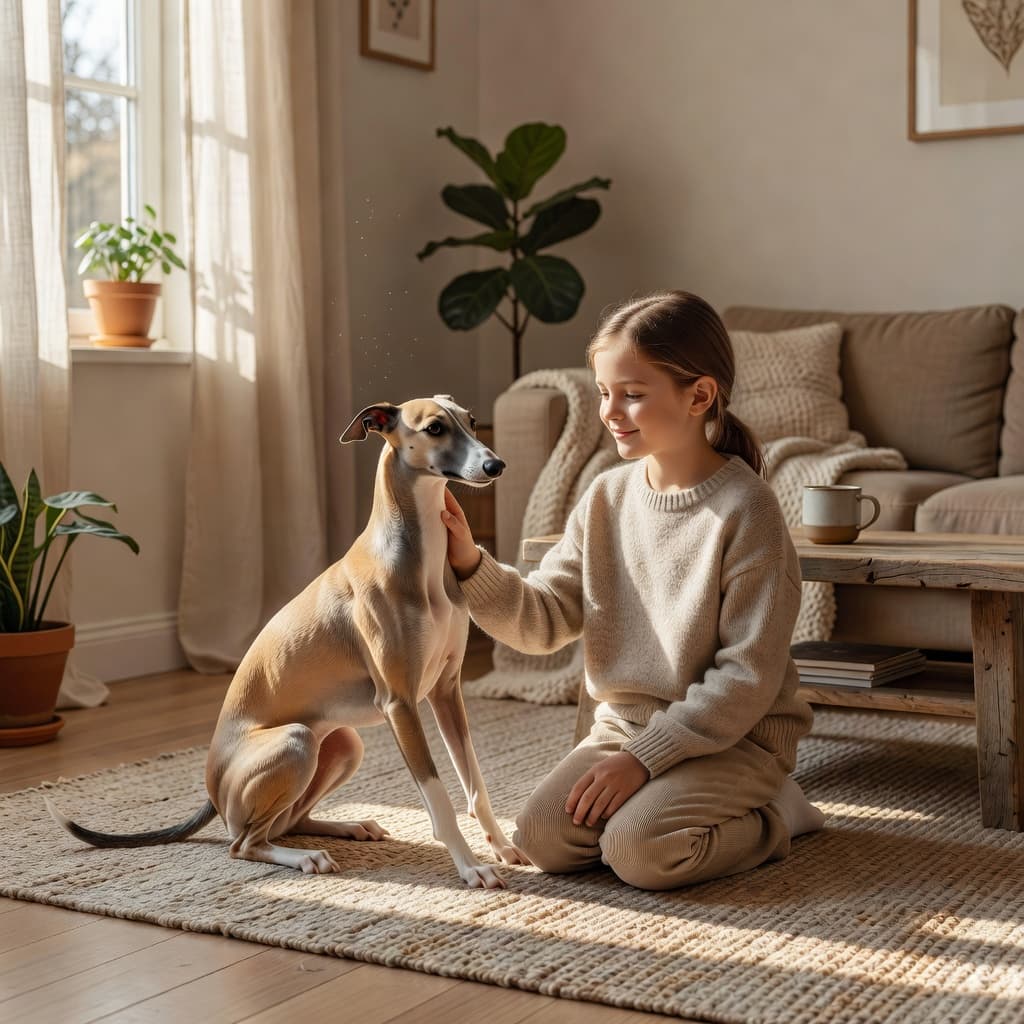
How whippets usually do with children
Whippets can do very well with children, especially older kids who know how to be calm and gentle.
Many of them enjoy family company and like being near the action, as long as that activity remains soft and predictable.
They are not usually the best match for rough play, tail pulling, or constant grabbing. A whippet is more like a glass ornament than a rugged toy, so young children need constant supervision and clear boundaries around touch.
If you have toddlers, the match can still work, but only with careful management and plenty of adult input to ensure everyone stays safe.
A good rule is simple: teach young children to sit quietly, stroke softly, and let the dog choose when to move away.
That keeps things safer for everyone and helps the dog feel relaxed instead of on edge.
If you’re still weighing up whether this breed fits family life, our guide to adopting a dog is a useful place to start. For readers who like practical training help, teach your dog reliable recall is worth a look too.
Why their sensitive nature matters at home
Whippets usually respond best to soft voices, steady routines, and patient handling. They notice tension fast.
Because of the typical whippet temperament, they often back away rather than push through if the household mood turns sharp.
Harsh discipline can make them anxious or cause them to shut down. That means yelling, rough corrections, or sudden handling usually creates more problems than it solves. A whippet learns better when you keep things calm, brief, and clear.
Proper socialisation is also vital; exposing them to new environments and guests in a positive, controlled way ensures they remain confident and friendly rather than nervous.
Daily life tends to go smoothly when you keep expectations predictable:
- Use the same gentle cues each day.
- Give them a quiet resting spot.
- Keep training sessions short and positive.
- Avoid noisy punishment or dramatic reactions.
That approach fits family life anyway. Nobody needs a dog who feels like they are walking on eggshells.
For more practical dog advice, Check out our great guides on Payhip and Check out our ebook guides on Etsy.
What to expect around visitors and busy households
Whippets are often polite and reserved with strangers at first. They may watch from a distance, then warm up once they feel safe.
They are not usually pushy greeters, and that can surprise people who expect every dog to bounce straight into guest mode.
Busy homes need a little more planning. Constant noise, quick movement, and surprise visitors can leave a whippet feeling frazzled.
They usually handle normal family life well, but they do better when greetings are managed and there is somewhere quiet to retreat.
If you have a lively household, think about structure. A crate, bed in a calm corner, or a routine settle time can help. The goal is simple; give the dog a way to step out of the chaos before it becomes too much.
Whippets are friendly dogs, but they usually prefer a calm welcome over a noisy crowd.
For a little extra background on the breed’s personality, the Whippet temperament overview gives a helpful snapshot.
Exercise, play, and the zoomies a whippet needs every day
Whippets may look like sofa experts, but they still need real movement every day. A calm whippet is usually a well-exercised whippet, not a lazy one. Think of them as natural sprinters with a soft landing.
They do not want endless miles, but they do need a proper outlet for that burst of speed, plus time to sniff, play, and reset through daily exercise.
How much exercise a whippet really needs
A healthy adult whippet usually does well with 30 to 60 minutes of daily exercise, split into two or more sessions. That can mean a brisk walk, a short run, and a bit of play in between. The important part is balance.
Couch-friendly does not mean low-energy overall. Whippets are often happiest when they get to stretch their legs hard, then curl up and snooze like nothing happened.
A simple daily routine might look like this:
- One or two brisk walks
- One safe run or zoomie session
- A little playtime or training
- Lots of rest afterward
Puppies need much less, and it should stay gentle. Their bodies are still growing, so short, frequent sessions work better than long outings.
Safe ways to meet their need for speed
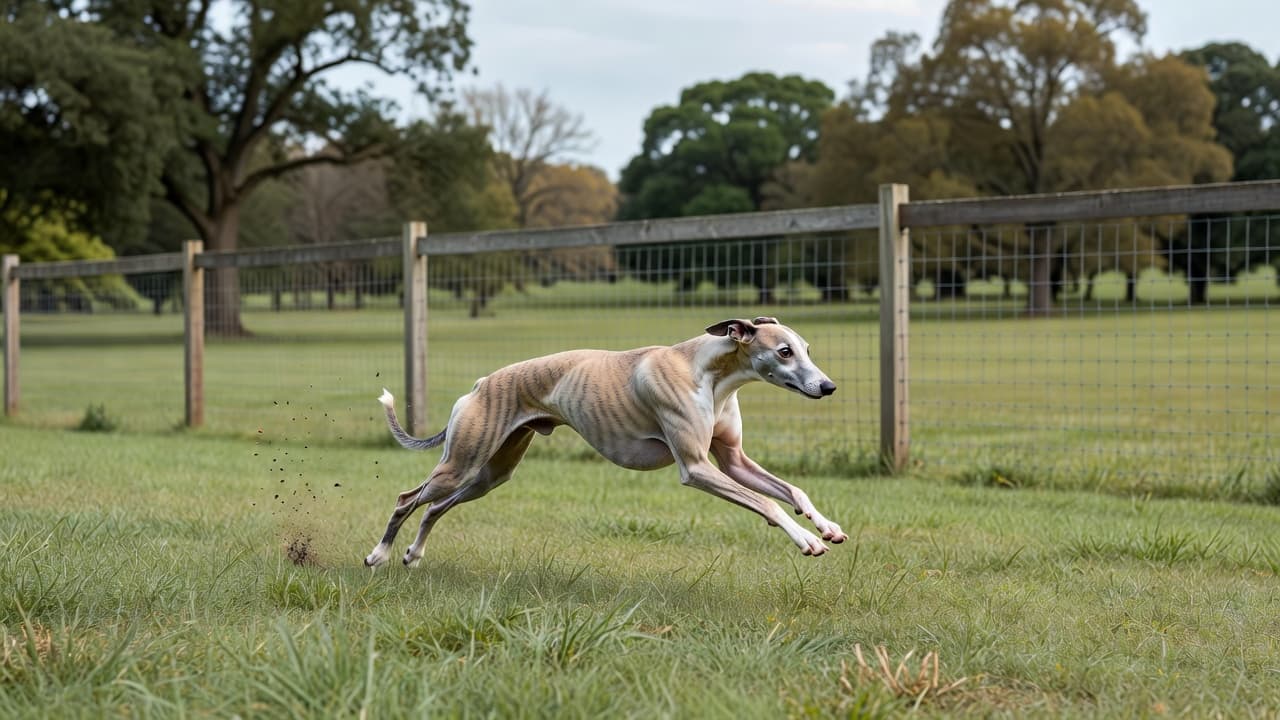
Whippets have a fast, narrow running style that can disappear in seconds once something grabs their attention. That is why a fenced area is essential for their safety. Do not trust a whippet off leash in open areas, as their unreliable recall can be a challenge.
Their prey drive can kick in fast, and a squirrel, rabbit, or even a sudden movement can send them off like an arrow. Neighborhood walks alone usually are not enough for this breed.
A good exercise plan should include safe, controlled running, not just lead walks. If you want a deeper background on the breed’s running style, Whippet is a helpful starting point. Families who plan ahead usually do best.
That means choosing safe places to run, building in play, and not assuming a quick lap around the block will tire them out.
A whippet with no chance to sprint is usually a whippet with extra energy to burn later.
Simple games that keep a whippet happy
Play does more than burn energy. It also gives you a chance to bond, which matters with a breed that loves being near its people.
Lure coursing is a fantastic organized activity that allows them to express their natural athletic ability in a safe, controlled environment.
Short fetch sessions work well, especially if you keep them focused and brief. Scent work is another easy win, because it lets your whippet use their nose and brain without turning the house upside down.
Gentle tug play can be a good option too, as long as the game stays controlled and helps manage their prey drive. A sturdy pair of tug toys can turn a quick indoor game into a nice little outlet for energy.
Try mixing things up with a few simple ideas:
- Toss a toy a short distance and call them back.
- Hide treats around the room for scent games.
- Use a soft tug session to end on a positive note.
- Finish with a calm settle so they learn to switch off.
If you want more practical dog advice, Check out our great guides on Payhip and Check out our ebook guides on Etsy.
Training a whippet the easy, gentle way
Training a whippet works best when it feels calm, clear, and fair. These dogs usually learn fast, but they also notice your tone, your timing, and your mood.
If you keep things upbeat and simple, you will get a much better response than you would from pressure or fuss.
Best training methods for this breed
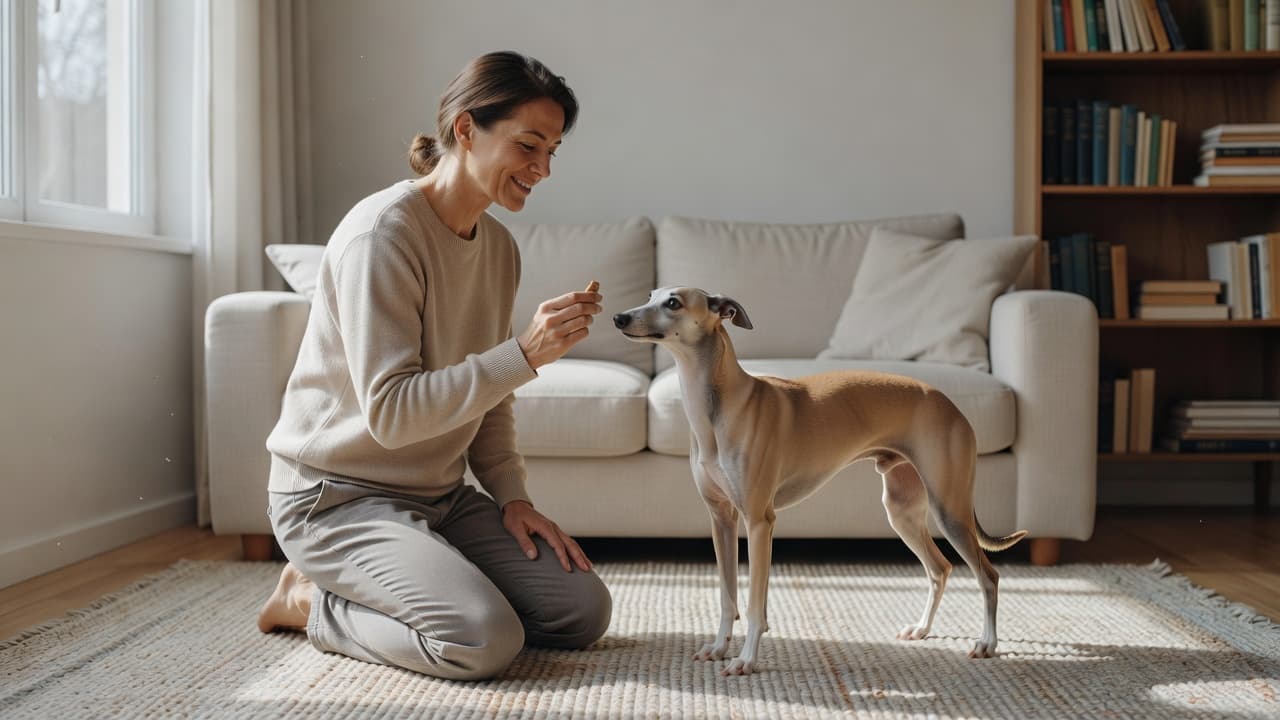
Whippets usually do best with positive reinforcement. That means rewarding the behavior you want with treats, praise, or a quick game, instead of trying to force mistakes out of them.
They are sensitive dogs, so reward-based training tends to build trust much faster.
Keep sessions short. Five minutes can be enough, especially at first. A whippet’s attention is a bit like a candle flame in a breeze, so brief lessons often work better than long ones.
Clear rules matter too. If jumping on the sofa is allowed one day and banned the next, your whippet will get mixed messages.
Pick the rule, stick to it, and make sure everyone in the house does the same.
A few habits for basic obedience help a lot:
- Use one cue for each behavior.
- Reward quickly, so your whippet connects the action with the treat.
- End on something easy and successful.
- Keep your voice light and calm.
Harsh corrections usually backfire. Whippets often learn best when the whole process feels safe and upbeat, not tense. For a broader look at breed-specific advice, The Training of Whippets offers a useful overview.
House rules that help whippets settle in
Predictable house rules make life easier for everyone. Whippets relax more when they know when meals happen, when walks happen, and where they are meant to rest.
That steady rhythm gives them a sense of security.
Crate training can help if it is introduced gently. Used the right way, a crate is a calm den, not a punishment box. It gives your whippet a place to switch off, especially when the house gets busy or noisy.
Routine is your best friend here. Feed at the same times each day, take potty breaks on a regular schedule, and guide your whippet to a quiet spot when they start to get twitchy. Little patterns add up fast.
Household calm also matters. If you want a dog that settles well, teach a few basic behaviors early:
- Go to bed.
- Wait at the door.
- Settle on cue.
- Leave it.
- Reliable recall.
Those simple rules make daily life smoother, and they help a whippet feel like they know the job. That is half the battle with this breed.
A whippet usually settles best in a home that runs on rhythm, not chaos.
Helpful resources for new dog owners
If you want extra help with training, dog care, or day-to-day routines, there are some practical guides that can make life easier.
Check out our great guides on Payhip for affordable ebooks with useful dog advice, and Check out our ebook guides on Etsy if you prefer to browse there instead.
One guide that may be especially handy is this Payhip guide, which is a simple fit for owners who want more practical support without a lot of fluff. It is the kind of extra backup that can save you time when you are trying to build better habits at home.
For more breed background, Whippet gives a straightforward look at the breed’s temperament and history.
That can be useful if you want to understand why calm, reward-based training works so well with them.
Living with a whippet in a real family home
A whippet can fit into family life far better than its sleek build suggests. They do not need a mansion, but they do need comfort, routine, and a home that respects their mix of speed and softness.
That is the real answer behind are whippets good family dogs. In the right setup, they are easy to live with, calm indoors, and happy to make themselves part of the furniture.
Can whippets handle apartment living or smaller homes
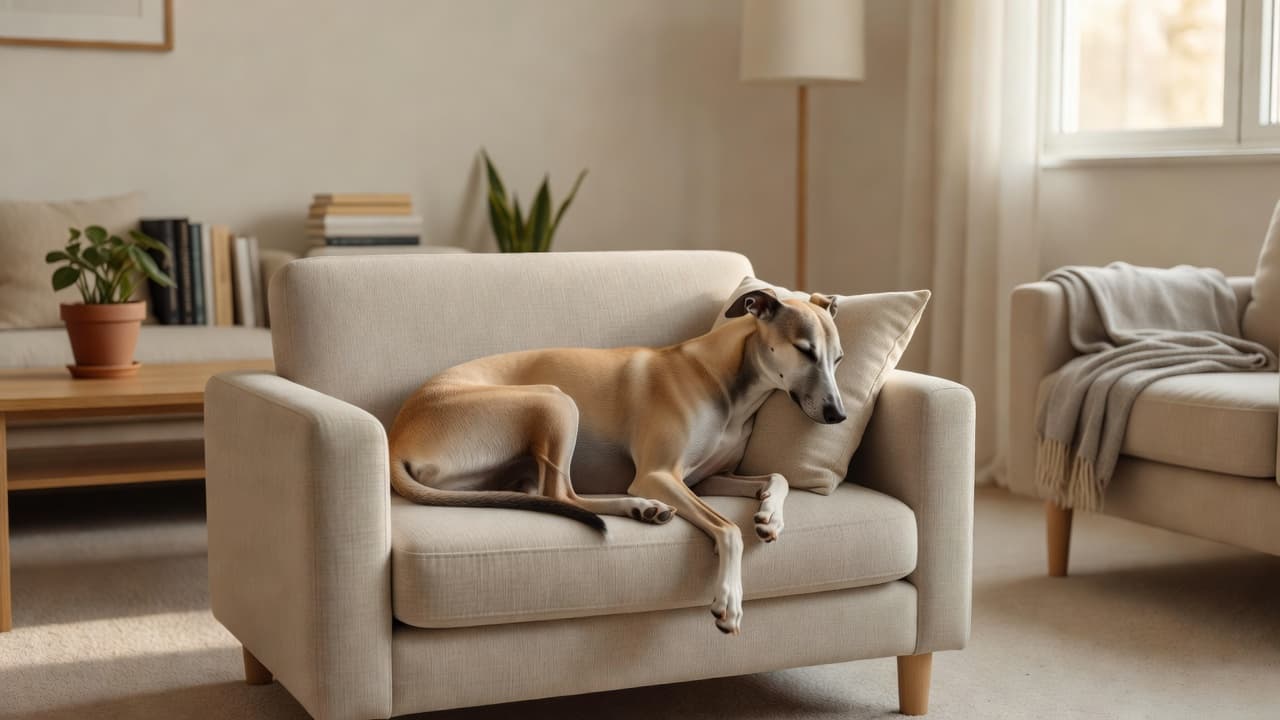
Yes, often they can. Size alone is not the deciding factor. A whippet may be slim and athletic, but it usually cares more about daily exercise, a warm bed, and a predictable routine than about square footage.
Apartment living can work well if your dog gets proper walks and a chance to run safely. A secure outdoor space matters far more than having extra rooms you never use.
Think of it like this, a whippet does not need a big house, it needs a sensible one.
If you live in a flat or compact house, focus on the basics:
- Daily walks that are steady and unhurried
- Secure outdoor access for safe bursts of speed
- A cozy resting spot where your whippet can fully switch off
- Routine so they know what comes next
A whippet with enough exercise is often happiest curled up on the sofa. If you want a small-space comparison with another sighthound, the Spanish Galgo has a lot in common with this kind of home fit.
How they usually get along with other family pets
Whippets often live well with other dogs, especially when they grow up together or meet calmly. Many are social, polite, and happy to share space as long as nobody crowds them.
Small pets are different. Cats, rabbits, and similar animals can trigger a whippet’s chase instincts, even in a well-mannered dog. That does not mean it always goes badly, but it does mean you need to stay realistic and careful.
Proper socialisation is essential when introducing a whippet to other family pets. Keep early meetings short, supervised, and calm, and never assume they will sort it out themselves.
With small pets, that approach can backfire fast.
A practical home setup helps a lot:
- Introduce pets gradually and on lead if needed.
- Give each animal its own safe space.
- Watch body language, especially stiffness and staring.
- Reward calm behavior around other pets.
- Never leave a whippet unsupervised with small animals unless you know the match is solid.
With cats, rabbits, or guinea pigs, management is not optional. It is the whole plan.
If you’re still building a safe routine at home, Check out our great guides on Payhip and Check out our ebook guides on Etsy for more practical dog advice that fits real life.
Why alone time can be a challenge
Some whippets really do struggle when left alone for too long. They can be prone to separation anxiety, especially if they are very attached to one person or used to a lot of company.
The best fix is not to wait until the problem gets big. Start with gradual alone-time training, keep departures low-key, and make sure your whippet has had exercise before you leave.
A tired dog is not a cure, but it usually helps the day go smoother.
A calm routine can make a big difference:
- Leave without a fuss
- Come back without a big celebration
- Build up alone time in tiny steps
- Use a safe bed, mat, or quiet room
- Keep meals, walks, and rest times predictable
For serious cases of separation anxiety, a vet or qualified behavior trainer is the right next step.
According to VCA Hospitals on separation anxiety, dogs do best when training stays gradual and stress stays low.
A whippet that feels secure at home is a very easy dog to live with. Get the movement, the routine, and the reassurance right, and you usually get a dog who settles like they were born for the family couch.
Signs a whippet is the right family dog for you
Whippets can be a brilliant fit when your home feels calm, steady, and full of gentle affection. Among the many dog breeds available today, they stand out as exceptionally loyal companions for the right household.
While they are not the best match for every family, they settle in beautifully when the environment is supportive. If you want a dog that loves routine, soft handling, and time close to their people, a whippet may tick more boxes than you expect.
The family types that usually do best with whippets
Whippets usually shine in homes that stay calm, active in a steady way, and consistent. They do well with families who can offer daily walks, a safe place to run, and a bit of patience with training.
That does not mean marathon outings or endless activity. It means regular, thoughtful care, the kind that gives a dog structure without turning life into a boot camp.
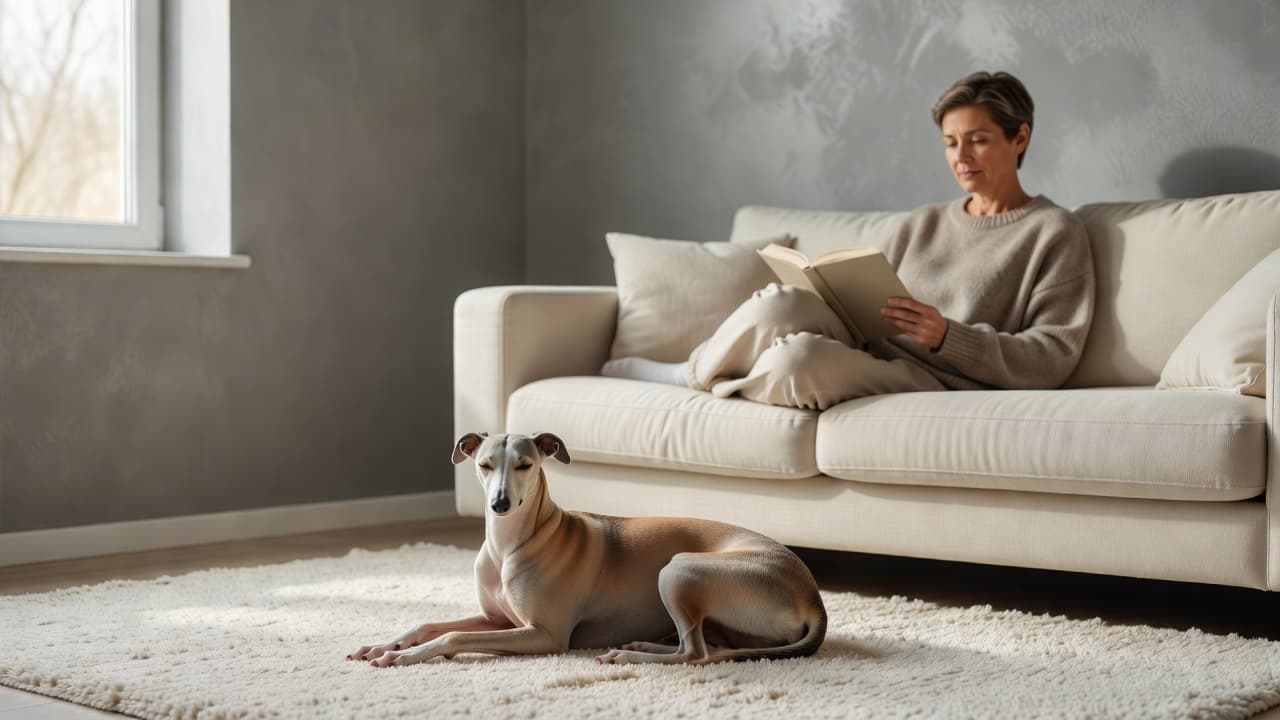
They often suit families who enjoy a dog that is affectionate but not in your face. A whippet wants company, a warm spot, and a quiet rhythm. In many homes, that makes them feel more like a soft shadow than a noisy bundle of chaos.
Families who want a loving companion rather than a watchdog often find whippets especially appealing. They are usually polite, gentle, and happy to relax once they have had their exercise.
For a broad breed snapshot, Purina’s whippet breed guide gives a good overview of that easygoing side.
Understanding health and longevity
Prospective owners should also consider the physical well-being of the breed. While they are generally sturdy, it is wise to be aware of potential health issues.
Whippets are less prone to hip dysplasia than many other large breeds, and they typically enjoy a long, active lifespan of 12 to 15 years.
Being prepared for regular vet checkups and maintaining a healthy weight will help keep your dog thriving for many years.
A good whippet home usually includes:
- Time for daily exercise
- Gentle, patient training
- Adults or older children who respect a dog’s space
- A routine that stays fairly predictable
- A safe place for short bursts of speed
If you want support with practical dog care, Check out our great guides on Payhip and Check out our ebook guides on Etsy for affordable, useful resources you can keep coming back to.
Questions to ask before bringing one home
Before you say yes to a whippet, be honest about the day to day reality. Are you ready to give them enough exercise?
Can you offer a secure garden, enclosed field, or another safe spot to run? Will someone be around to supervise kids and help the dog settle into family life?
It also helps to ask how patient your household is with a sensitive dog. Whippets usually respond best to calm voices and clear rules, not pressure or rough handling.
If your home is loud, hectic, or full of constant interruptions, that can be hard on them.
A quick self-check can help you decide:
- Can we give this dog enough daily exercise without cutting corners?
- Do we have a secure place for safe running?
- Are the children old enough to be gentle and consistent?
- Can we manage alone time in small, steady steps?
- Are we happy with a dog that needs kindness more than firmness?
If you still want more practical help before committing, what to know when adopting a dog is a useful place to think it through.
For more background on breed temperament, the Whippet temperament overview is a handy reference too.
A whippet is usually the right family dog when your home feels more like a warm routine than a whirlwind. If that sounds like your house, you are probably asking the right question already.
Frequently Asked Questions
Are whippets good with small children?
Whippets generally do well with children who are old enough to be calm and respectful of the dog’s personal space.
Because they are delicate and sensitive, they are not ideal for homes with very young children prone to rough play or grabbing.
Can whippets live in apartments?
Yes, whippets are excellent apartment dogs because they are naturally quiet and low-energy while indoors.
As long as you provide a daily opportunity for them to run in a safe, secure space, they are very happy to spend the rest of their time lounging on the sofa.
Do whippets bark a lot?
No, whippets are not typically known as a vocal breed and are generally very quiet indoors.
They are much less likely to bark at passersby or household noises compared to many other popular dog breeds.
How much exercise does a whippet really need?
An adult whippet typically needs about 30 to 60 minutes of daily exercise, which should ideally include a mix of brisk walks and opportunities for safe, off-leash sprinting.
Once their physical needs are met, they are content to rest and relax for the remainder of the day.
Conclusion
Whippets can be wonderful family dogs when their home life matches their gentle nature. Often affectionately referred to as a miniature greyhound, these sighthounds are loving, quiet, and happiest in a calm house with clear routines, daily exercise, and kind handling.
If your family is looking for a devoted companion and you can offer a safe space for them to run alongside steady, positive training, a whippet is an excellent choice.
However, if your home environment is consistently noisy, chaotic, or contains small pets that require constant supervision, it may not be the ideal setup for this breed.
Ultimately, when people ask if whippets are good family dogs, the answer is a resounding yes for the right household.
The best choice is always the one that fosters a perfect, lifelong balance between the needs of the dog and the people bringing them home.
This post may contain affiliate links. If you purchase through these links, I may earn a small commission at no extra cost to you.