
How to Reduce Nighttime Barking in an Anatolian Shepherd
Anatolian Shepherds are exceptional livestock guardian dogs. They are loyal, observant, territorial and capable of making decisions without waiting for human direction.
These same qualities can also produce one of the breed’s most challenging household behaviours: persistent nighttime barking.
An Anatolian Shepherd may bark at distant voices, wildlife, neighbouring dogs, vehicle doors or movements that you cannot even detect. This is rarely meaningless noise. Your dog believes something has entered, approached or disturbed the territory and is sounding an alarm.
The answer is not to punish your Anatolian Shepherd or attempt to remove the guarding instinct completely.
Instead, you need to identify the triggers, improve the dog’s nighttime environment and teach them when their warning has been acknowledged.
With patience and consistent management, nighttime barking can often be reduced considerably without undermining the qualities that make this breed such an effective guardian.
Why Do Anatolian Shepherds Bark at Night?
The Anatolian Shepherd was developed to protect livestock from predators and intruders, frequently while working without close human supervision.
The breed remains naturally:
- Alert to unfamiliar sounds and movement
- Protective of its family, animals and territory
- Suspicious of unexpected activity
- More active and watchful after dark
- Prepared to make independent decisions
- Sensitive to changes in its surroundings
The American Kennel Club describes the breed as extremely independent. Anatolians were expected to protect themselves and their flock without continually waiting for instructions.
At night, when the surrounding environment becomes quieter, small sounds can appear much more significant. A fox crossing the garden, a neighbour closing a gate or a distant dog barking may be enough to trigger a powerful guardian response.
Barking is part of their protective strategy
Anatolian Shepherds generally prefer to warn a potential threat away before physical confrontation becomes necessary. Their size, posture and deep bark all communicate that the territory is being guarded.
This means that barking is not simply an annoying habit. It is part of the breed’s inherited working behaviour.
The realistic goal is therefore not complete silence. It is helping your dog distinguish between an event that deserves a brief alert and one that does not require prolonged barking.
First Identify What Is Triggering the Barking
Before changing your dog’s routine, spend several nights observing when and where the barking begins.
Keep a simple barking diary containing:
- The time barking started
- How long it continued
- Where your dog was positioned
- What the dog appeared to be watching
- Any sounds, animals or people nearby
- Whether the barking stopped when you appeared
- What happened immediately before bedtime
- Whether the dog had been exercised that day
A motion-sensitive camera can be particularly helpful. It may reveal visiting wildlife, passing cats, pedestrians or vehicles that you would otherwise miss.
Common nighttime triggers
An Anatolian Shepherd might be responding to:
- Foxes, deer, badgers or other wildlife
- Cats entering the garden
- Neighbouring dogs
- People walking past the property
- Car doors and delivery vehicles
- Security lights switching on
- Wind moving gates, bins or garden furniture
- Livestock becoming unsettled
- A lack of exercise or mental stimulation
- Anxiety when separated from the family
- Pain, discomfort or cognitive changes in an older dog
Once you understand the cause, you can select a more appropriate solution.
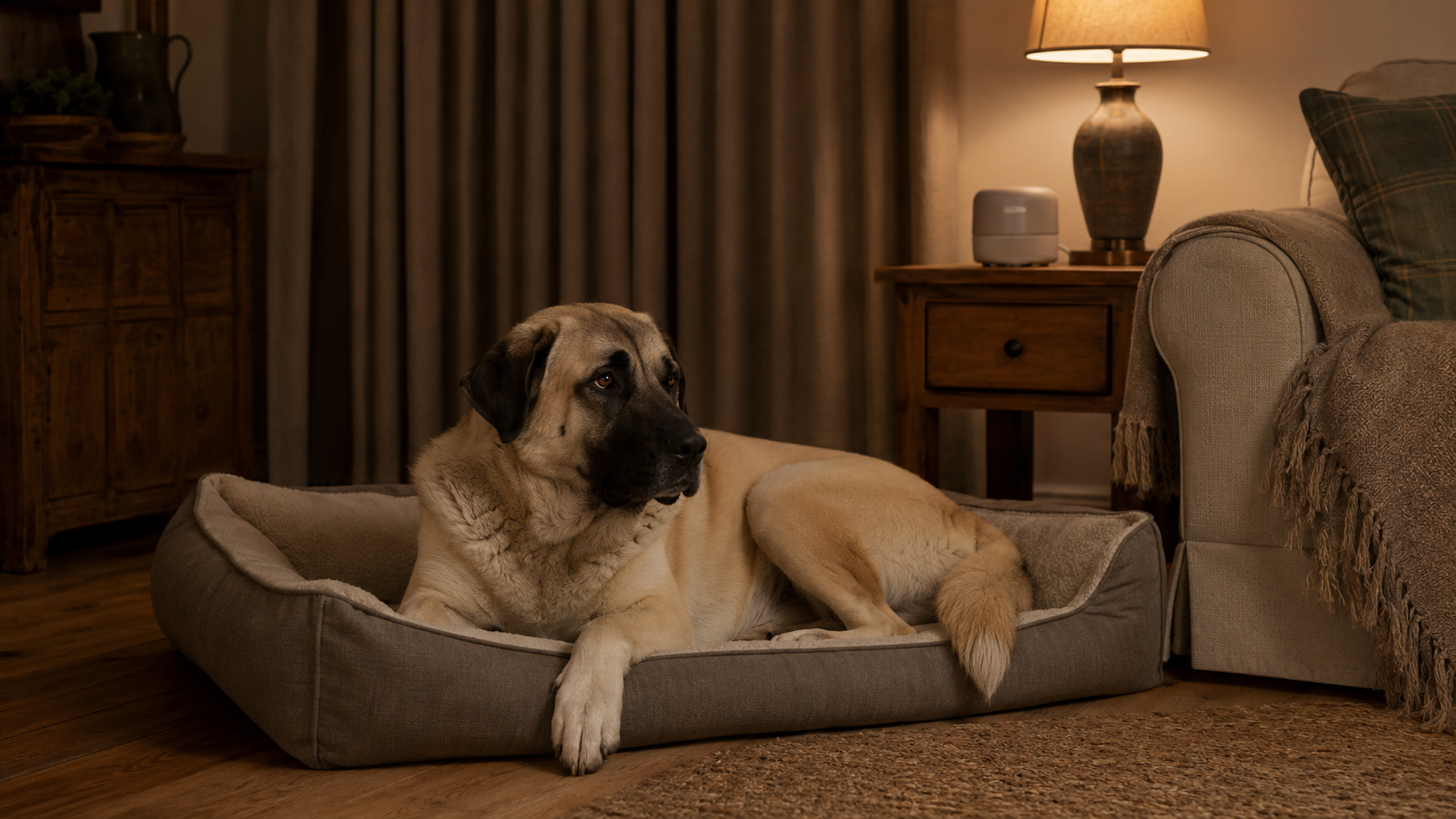
1. Bring a Companion Anatolian Shepherd Indoors at Night
If your Anatolian Shepherd is primarily a family companion rather than a working livestock guardian, allowing them to patrol an outdoor boundary throughout the night may encourage continuous vigilance.
The dog sees every sound beyond the fence as part of their responsibility.
Bringing the dog indoors can dramatically reduce the area they believe they must guard. It also increases their sense that you are sharing responsibility for the household.
Choose a sleeping area that is:
- Comfortable and familiar
- Away from the front door
- Not directly beside street-facing windows
- Protected from outside movement
- Close enough to the family to prevent isolation
- Large enough for the dog to stretch out properly
Close curtains or blinds to block visual triggers. Quiet background sound, such as a fan, radio or white-noise machine, may help mask distant noises.
However, avoid suddenly confining an outdoor dog in a small room. Introduce the sleeping area gradually and make it a positive, comfortable place.
2. Reduce the Dog’s View of the Boundary
An Anatolian Shepherd that can see the pavement, neighbouring garden or road is likely to consider these areas part of its nighttime watch.
Visual barriers can prevent the dog from repeatedly rehearsing barking at passing activity.
Consider:
- Closing curtains and blinds
- Applying privacy film to lower windows
- Moving the dog’s bed away from windows
- Installing solid fencing or screening
- Blocking access to elevated observation points
- Turning off unnecessary motion-sensitive lights
- Securing gates that move or rattle in the wind
A solid fence is often more useful than an open wire fence because it reduces both visual stimulation and direct confrontations with passing dogs.
Never rely on fencing alone to control a determined Anatolian Shepherd. Gates, weak panels and potential digging points should be checked regularly.
3. Create a Calm and Predictable Bedtime Routine
A consistent evening routine helps your dog understand that the active part of the day has ended.
A useful routine might include:
- A suitable late-afternoon or early-evening walk
- A calm sniffing or enrichment activity
- The final meal with sufficient time to digest
- A quiet toilet break
- A brief check of the garden
- Entering the sleeping area
- A chew or calming activity
- Lights dimmed and household activity reduced
Avoid highly exciting games immediately before bedtime. Intense chasing, wrestling or repetitive ball throwing may leave the dog physically tired but mentally aroused.
The objective is to move gradually from activity into calmness.
4. Provide Purposeful Daytime Exercise
Anatolian Shepherds need regular exercise, but simply trying to exhaust one is rarely the solution.
This is a large, intelligent working breed designed for steady movement, observation and purposeful activity. Excessive high-impact exercise can also place unnecessary pressure on a growing dog’s joints.
More suitable activities include:
- Controlled walks with plenty of sniffing
- Exploring safe, varied environments
- Searching for hidden food
- Following scent trails
- Calm obedience sessions
- Boundary walks with the owner
- Appropriate livestock-guardian work
- Supervised problem-solving activities
A mentally satisfied Anatolian is more likely to settle than one that has spent the day with nothing meaningful to do.
However, enrichment should complement good nighttime management. It will not prevent barking if the dog still has unrestricted access to an active boundary.
5. Teach an “I’ve Got It” Response
Many owners repeatedly shout “quiet” from another room. This can increase excitement because the dog may interpret the owner’s raised voice as joining the alarm.
Instead, teach a calm acknowledgement routine.
When your Anatolian Shepherd gives an alert:
- Approach calmly.
- Look briefly towards the supposed trigger.
- Use a consistent phrase such as “Thank you, I’ve got it.”
- Encourage the dog to move away from the window, door or fence.
- Reward them when they disengage and become quiet.
- Direct them towards their bed or another calm activity.
The reward should follow the moment of quietness, not an extended burst of barking.
Initially, you may only get one or two seconds of silence. That is enough to begin. Gradually reward longer periods of calm.
This method acknowledges the dog’s concern while teaching that you will decide whether further action is needed.
6. Desensitise Your Dog to Predictable Sounds
Some triggers occur regularly. These might include a neighbour’s gate, delivery vehicles, the doorbell or another dog barking.
Careful desensitisation can reduce the intensity of the response.
The Blue Cross recommends playing recordings of triggering sounds very quietly and rewarding the dog for remaining calm. The volume can then be increased gradually.
The sound must begin at a level that does not provoke barking. If your dog reacts strongly, the session has progressed too quickly.
Keep training sessions short and stop while the dog is still relaxed.
For unpredictable wildlife or genuine territorial events, environmental management will normally be more effective than recorded-sound training alone.
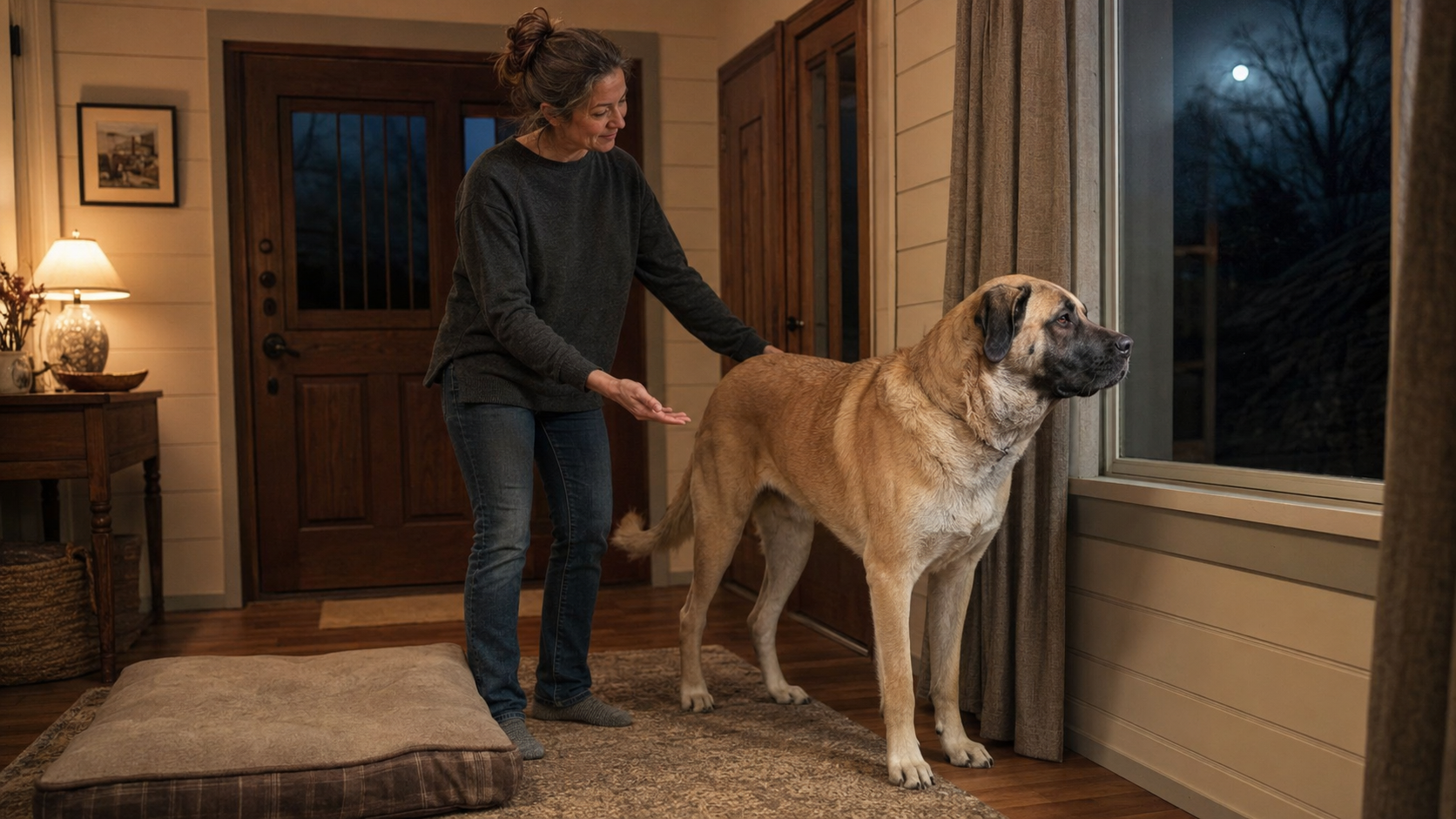
7. Avoid Accidentally Rewarding Repeated Barking
Owners can unintentionally teach a dog that prolonged barking produces attention, garden access or human activity.
For example, if you immediately open the door whenever your dog barks, they may learn that barking starts a nighttime patrol.
This does not mean you should ignore every alert. Instead:
- Check genuine concerns calmly.
- Keep your response brief and predictable.
- Avoid excited conversation or play.
- Do not release the dog into the garden without assessing the situation.
- Reward disengagement and quiet behaviour.
- Return the dog to their sleeping area.
Consistency matters. If barking occasionally produces an exciting garden chase, the dog may keep trying because the behaviour is sometimes successful.
8. Do Not Use Shouting or Punishment
Punishing an Anatolian Shepherd for alerting can create confusion, frustration or greater suspicion around the original trigger.
Avoid:
- Shouting across the house or garden
- Hitting or physically intimidating the dog
- Spraying the dog with water
- Deliberately frightening the dog
- Punishing them after the barking has finished
- Using devices that cause pain, fear or distress
Punishment may temporarily interrupt the sound without addressing the reason behind it. It can also damage trust and make a powerful guardian dog more difficult to manage.
Calm interruption, environmental changes and reward-based training offer a much safer foundation.
9. Check for Separation-Related Distress
Although Anatolian Shepherds are independent thinkers, independence should not be confused with being comfortable in isolation.
Nighttime barking may be connected to distress if it is accompanied by:
- Pacing
- Panting
- Scratching at doors
- Destructive behaviour
- Toileting indoors
- Persistent howling
- Attempts to reach family members
- Inability to settle when left alone
The RSPCA notes that separation-related behaviour is not always obvious. Some dogs may struggle without displaying the signs owners usually expect.
If the barking stops whenever your dog sleeps closer to the family, isolation may be contributing to the problem.
A qualified reward-based behaviourist can create a gradual plan that helps the dog feel safer when separated.
10. Rule Out Pain or Medical Problems
A sudden change in nighttime behaviour should never be dismissed as stubbornness.
Pain, digestive discomfort, urinary problems, declining vision or hearing, and age-related cognitive changes can all disturb a dog’s sleep.
Arrange a veterinary examination if:
- The barking began suddenly.
- Your dog appears restless or uncomfortable.
- Their appetite or thirst has changed.
- They are frequently asking to go outside.
- They seem confused or disorientated.
- An older dog has developed new nighttime behaviour.
- Barking is accompanied by panting, trembling or physical distress.
Training cannot resolve barking caused by discomfort. The underlying medical issue must be identified first.
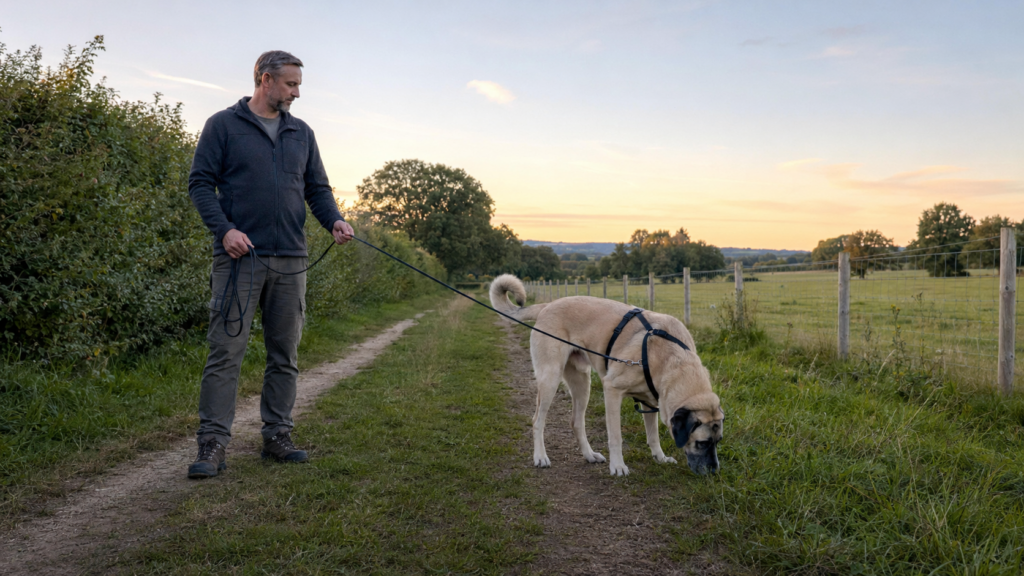
A Seven-Night Barking Reduction Plan
Nights 1 and 2: Observe
Record each barking episode and identify likely visual, auditory or environmental triggers.
Night 3: Change the environment
Close blinds, move the sleeping area, block access to boundary-facing windows and introduce quiet background noise.
Night 4: Improve the evening routine
Add a calm sniffing walk, final toilet break and predictable settling routine.
Night 5: Introduce the acknowledgement cue
Use your chosen phrase, such as “Thank you, I’ve got it,” and reward disengagement.
Night 6: Practise settling
Reward your dog for remaining on their bed while normal household sounds occur.
Night 7: Review the evidence
Compare the number, duration and intensity of barking episodes with the beginning of the week.
One week may reveal improvement, but changing an established guardian behaviour usually takes longer. Continue the plan consistently and adjust the environment where necessary.
When Should You Contact a Behaviourist?
Professional help is advisable when:
- The dog cannot be redirected from the trigger.
- Barking is accompanied by lunging or aggressive behaviour.
- The dog guards doors, gates or family members.
- Neighbours have made formal complaints.
- The dog is repeatedly escaping to investigate sounds.
- The behaviour is becoming more frequent or intense.
- You feel unable to manage the dog safely.
Choose a properly qualified professional who uses reward-based methods and understands livestock guardian breeds. Generic obedience training may not adequately address the Anatolian Shepherd’s territorial and independent nature.
In the UK, prolonged barking can potentially be treated as a statutory nuisance, making early action particularly important. The Blue Cross overview of UK dog laws explains the possible involvement of local environmental health authorities.

Frequently Asked Questions
Is it normal for an Anatolian Shepherd to bark throughout the night?
Nighttime alerting is deeply connected to the breed’s guardian background. However, continuous or highly distressed barking should not simply be accepted. Look for triggers, improve management and rule out anxiety or medical problems.
Can I train an Anatolian Shepherd never to bark?
Complete silence is neither a realistic nor particularly appropriate goal for this breed. A better objective is teaching the dog to alert briefly and then settle when you acknowledge the situation.
Should I ignore my Anatolian Shepherd when it barks at night?
Ignoring every bark may allow the behaviour to continue and could overlook a genuine problem. Check calmly, acknowledge the alert and reward the dog for disengaging.
Will more exercise stop nighttime barking?
Appropriate exercise and mental enrichment can help, especially when boredom contributes to restlessness. However, exercise alone will not override territorial triggers outside the home.
Should an Anatolian Shepherd sleep outside?
A properly equipped working livestock guardian may need to remain with the animals it protects. A family companion may settle more successfully indoors, where external sights and sounds can be managed.
Why has my older Anatolian Shepherd suddenly started barking at night?
Pain, sensory decline, urinary problems or cognitive changes may be responsible. A sudden or unexplained behavioural change warrants a veterinary assessment.
How long will it take to reduce the barking?
Some environmental changes can help immediately, while learned barking patterns may take several weeks or longer to improve. Consistency is more important than trying to rush the process.
Check out our great Anatolian Shepherd Blueprint TODAY
Final Thoughts
Nighttime barking in an Anatolian Shepherd is usually an expression of vigilance rather than deliberate disobedience.
These dogs were developed to notice danger, patrol territory and act independently. Successful management begins when owners respect that background while setting clear, practical household boundaries.
Reduce unnecessary triggers, provide suitable daytime activity, create a predictable bedtime routine and teach your dog that one alert is enough. Most importantly, remain calm and consistent.
You may never turn an Anatolian Shepherd into a completely silent dog—and that should not be the objective. The real success is a guardian who can raise the alarm, accept your judgement and return to a relaxed state.
🐾 Learn More With The Anatolian Shepherd Blueprint
Understanding an Anatolian Shepherd requires much more than ordinary dog-training advice.
The Anatolian Shepherd Blueprint: The Ultimate Guide to Training, Health and Happiness explores this intelligent, independent and naturally protective breed in much greater depth.
Inside, owners can discover practical guidance covering:
- Training and behaviour
- Exercise and enrichment
- Socialisation
- Health and nutrition
- Grooming and everyday care
- Family life
- Guardian instincts
- Raising a happy, healthy and confident companion
👉 [Discover The Anatolian Shepherd Blueprint

This article provides general educational information and is not a substitute for veterinary or professional behavioural advice. Consult a veterinarian if barking begins suddenly or is accompanied by pain, distress or other behavioural changes.