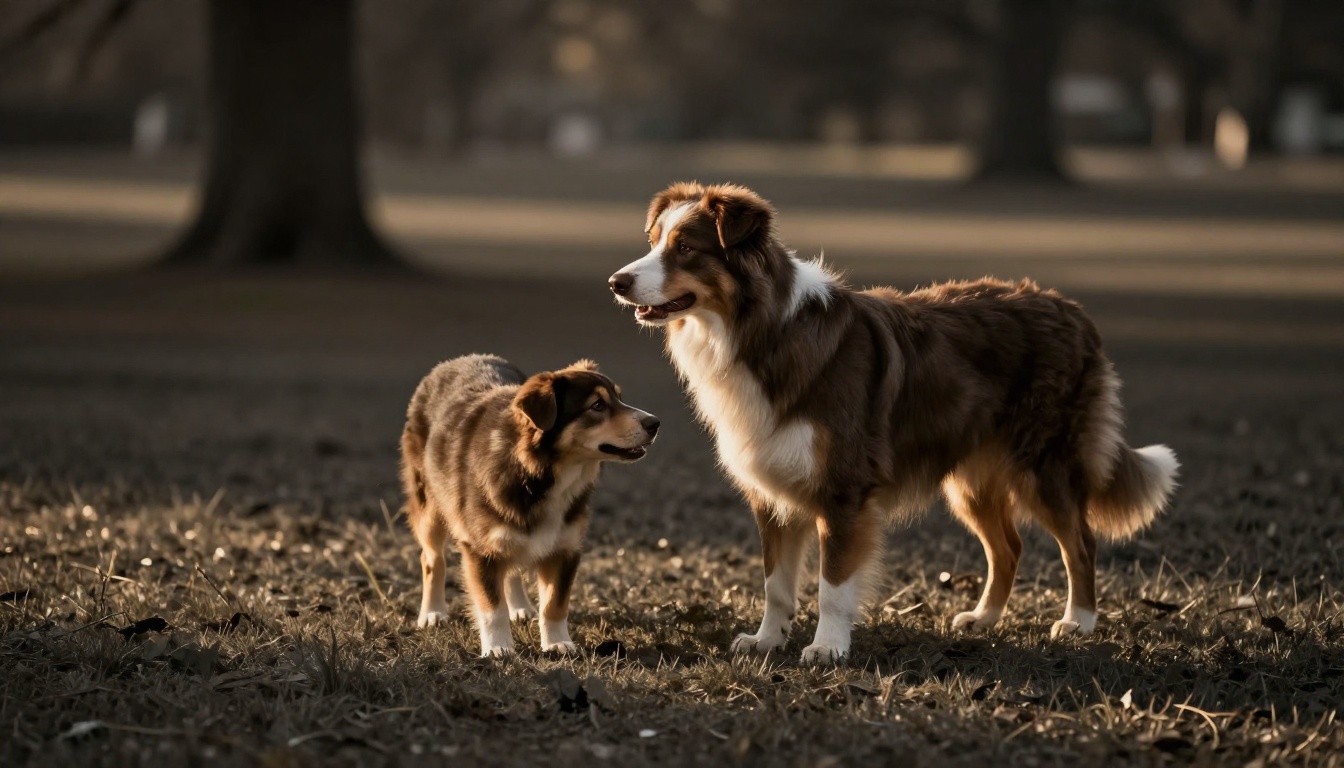
Understanding Australian Shepherd Social Behaviour Around Other Dogs
Generally speaking, yes, these loyal companions often thrive in multi-dog households.
Many Australian Shepherds are social, friendly, and genuinely enjoy the company of their canine peers. However, successful interactions between Australian Shepherds with other dogs are not always guaranteed.
Much of this depends on consistent early socialization, ongoing obedience training, high levels of daily physical activity, and the unique personality of your specific dog.
Aussies are intelligent, energetic, and naturally reactive. These breed traits can make them excellent playmates, though they can sometimes be a bit overwhelming for more passive or shy dogs.
If you are curious about what life is like with this breed, it is important to understand what behaviors are normal, which ones may signal potential issues, and how you can manage your dog’s interactions effectively.
In short, think of the breed as having great potential but also very strong opinions. Now, let us dive into what this means for your daily life.
If you are trying to differentiate between healthy, rowdy play and rising tension, this video adds useful context.
Key Takeaways
- Breed Instincts: Australian Shepherds are natural herders, which often translates into energetic, intense play styles like chasing, circling, or nipping that may overwhelm more passive dogs.
- Early Socialization: Consistent, positive exposure to other dogs during puppyhood is crucial for developing a balanced, calm, and socially confident adult dog.
- Proactive Management: Because Aussies are highly reactive and intelligent, owners must provide structure, consistent training, and ample mental/physical exercise to prevent them from becoming “hall monitors” of their environment.
- Reading Body Language: Understanding the difference between healthy, reciprocal play and tense, rigid posturing allows owners to step in and facilitate breaks before interactions escalate into reactivity.
- Individual Temperament: While the breed is generally social, every dog is an individual; always prioritize your specific dog’s comfort level over forced social settings like crowded dog parks.
Understanding Australian Shepherds with other dogs through breed behavior
The Australian Shepherd is bright, athletic, and always a little too aware of what everyone else is doing.
As a quintessential working dog, that awareness is a defining trait. In a multi-dog home or on walks, many Aussies notice movement fast, react quickly, and want to get involved.
That can be great. Plenty of Aussies are playful, friendly, and eager to make new dog friends. However, the high energy associated with the breed can also make for a messy situation. Their herding instinct may show up as chasing, body blocking, barking, or attempting to control the movement of other pets.
Some Aussies are naturally outgoing, while others are more watchful and cautious, especially with strange dogs.
Energy level is a vital piece of the puzzle. A well-exercised Aussie often makes better choices, whereas a bored one can quickly turn into the self-appointed hall monitor of the dog park.
How herding instincts can look like rough play
Because Aussies were bred to move livestock, their instincts often spill into their interactions with other dogs. You might see circling, stalking, quick bursts of chasing, barky excitement, and the occasional nip at heels or legs.
This behavior can be particularly problematic around small animals or smaller dog breeds, as the Aussie may view their quick movements as something that needs to be controlled or herded.
This does not always mean the dog is acting out of aggression. Sometimes, it is simply plain, over-the-top enthusiasm. Still, the other dog may hate it. A polite Labrador might shrug it off, but a sensitive or smaller dog may snap back quickly.
Think of it like a friend who talks too close to your face; they may mean well, but they are still being annoying.
Early puppy socialization shapes how an Aussie reads the world. Puppies who have calm, positive exposure to different dogs often grow into more balanced, friendly adults.
Conversely, puppies who miss that practice may become fearful, reactive, or wildly overexcited around other dogs.
Good socialization does not mean greeting every dog on the sidewalk. It means learning to stay calm, curious, and safe around them.
That point is explained well in this guide on socializing your puppy, which reminds owners that distance and observation are key components of effective socialization for any growing dog.
Signs your Aussie is comfortable, neutral, or stressed around other dogs
Body language reveals the truth about your dog’s feelings long before a bark does.
Because every Australian Shepherd has a unique temperament, it is helpful to look for specific physical indicators to gauge how they are handling social interactions.
If your Aussie is comfortable, you will notice these signs:
- A loose, wiggly body and relaxed posture.
- Soft eyes and a neutral, relaxed mouth.
- Curved movement rather than direct, stiff approaches.
- Frequent play bows and easy pauses during interaction.
- Quick recovery after a surprise or an unexpected movement.
A neutral Australian Shepherd may look interested but not eager. They might sniff, glance away, or simply keep walking, which is perfectly acceptable.
Not every dog wants to be the life of the party.
When assessing if your dog is feeling overwhelmed, watch for these stress signals:
- Stiff, rigid posture or a tucked tail.
- Hard staring or intense focus.
- Raised hackles along the back.
- A closed, tense mouth.
- Hiding behind your legs.
- Growling, snapping, or frantic lunging.
- Constant, repetitive barking.
Some dogs are social but selective, while others simply prefer more personal space. If you read through this Aussie owner discussion, you will see that a range in temperament shows up again and again.
Loose, wiggly bodies usually mean the dogs are coping well. Stiffness means slow the whole thing down.
When friendly play starts to go too far
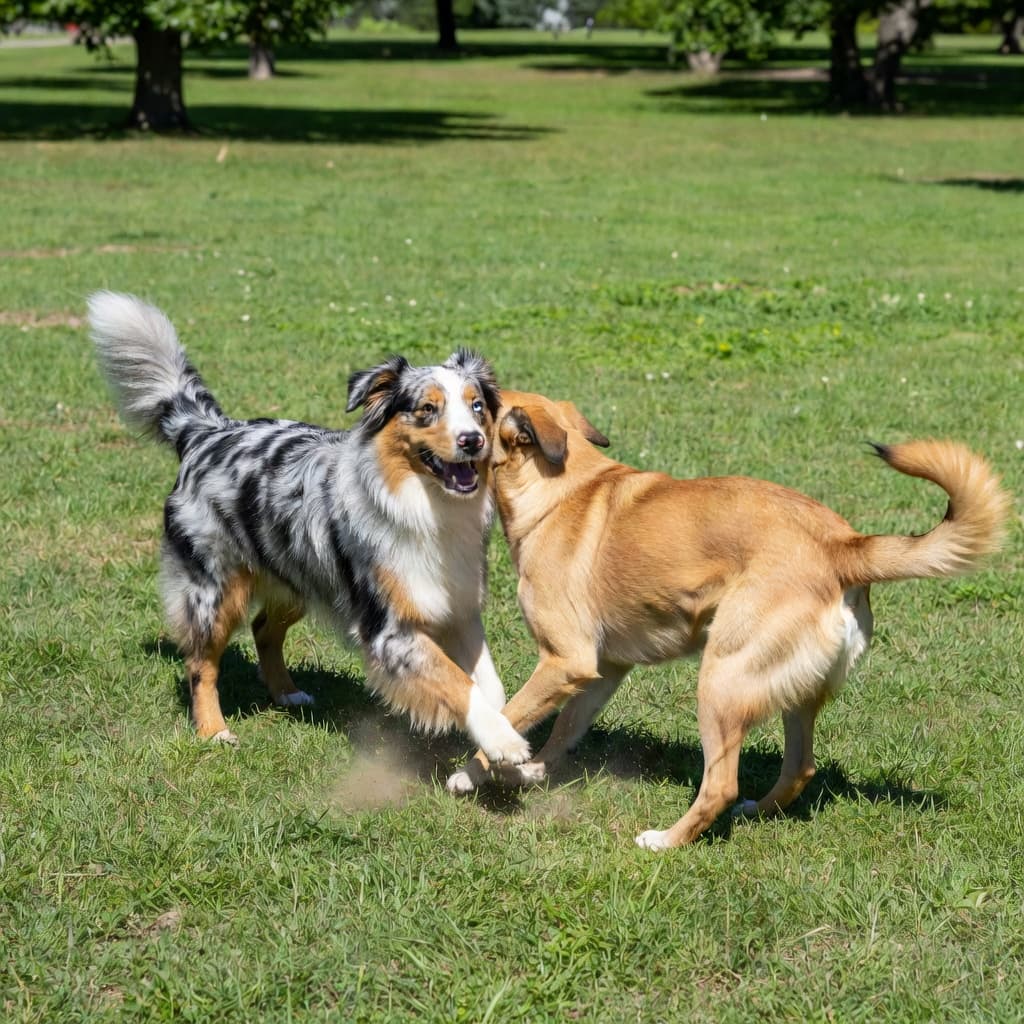
Healthy, friendly play has a natural rhythm. The dogs take turns, they pause, and they switch roles. In a balanced interaction, nobody looks trapped, and nobody keeps asking for space while being ignored.
Trouble starts when one dog keeps chasing, pinning, body-slamming, or pestering after the other dog has had enough.
Maybe your Aussie keeps barking in the other dog’s face. If the other dog tucks its tail, turns away, or tries to hide, and the Aussie keeps coming, that is not a situation where they will just work it out. That is your cue to step in and facilitate a break.
When caution turns into reactivity
Barking and lunging do not always come from a bad attitude. Many dogs react because they feel worried, frustrated, trapped on a leash, or simply too wound up to think clearly.
Aussies can tip into that state fast. They see another dog, lock on, pull hard, then explode. The goal is not to punish the noise.
The goal is to lower the stress and teach a better response to their environment.
Create distance immediately. Ask for a simple cue to redirect their focus. Reward calm attention back to you.
If your dog cannot eat, cannot listen, or cannot recover, the setup is too hard, and you should move further away to help them regain their composure.
How to help an Australian Shepherd do better with other dogs
Most Aussies improve when life is well-structured. As a classic working dog, an Australian Shepherd thrives on clear routines, calm leash skills, and consistent training. They also require a balance of both physical exercise and mental stimulation to stay balanced.
A bored Aussie is often a bouncy, pushy dog that may struggle to regulate its energy around others.
Rather than chaotic environments like a traditional dog park, focus on productive outlets. Try these activities to help your dog thrive:
- Obedience training sessions to keep their mind engaged.
- Decompression sniff walks to lower stress.
- Food puzzles that provide a satisfying challenge.
- Interactive play, such as short games with tug toys.
If you want extra support at home, Check out our great guides on Payhip. They are handy when you want a simple plan rather than guesswork.
### Start with short, calm introductions
First meetings go better when nobody feels cornered. Use neutral ground whenever possible. Keep leashes loose, maintain a relaxed posture, and keep the first session short.
Parallel walking often works better than a face-to-face greeting. Let the dogs move in the same direction with space between them.
If both stay loose and interested, you can allow a brief sniff before moving on. That pattern keeps arousal levels manageable and prevents the awkward nose-to-nose stare-down. If your Australian Shepherd begins to fixate on the other dog, use a cue like “look at me” to redirect behavior toward you.
If either dog stiffens, stares, freezes, or starts pestering, give them space and reset.
Use training and exercise to lower dog tension
Basic cues make a huge difference. Sit, leave it, touch, and recall give your dog something useful to do when another dog appears. Reward-based work fits this breed well because they love a job and appreciate feedback.
If you want a refresher on positive reinforcement dog training techniques, that guide is a solid place to start.
Recall is particularly important if play gets too rough or your dog becomes too focused. Practice teaching your dog to come when called before you need it in a busy moment.
Exercise is part of training, not separate from it. A brisk walk, fetch, or a few brain games can significantly lower pressure in social situations.
If you like printable help, Check out our ebook guides on Etsy for more simple training support.
When breed traits are not enough, and what to do next
Sometimes an Australian Shepherd struggles with other dogs even when you are putting in the effort. Poor early socialization, excess energy, fear, past trauma, or a strong herding instinct can all complicate social settings.
While breed tendencies explain certain behaviors, they never excuse them. As a canine leader, you must step in when you notice your dog focusing too intensely on other pets or small animals.
If your Aussie displays an overactive prey drive, management is your primary tool. Avoid forced greetings, choose quieter walking routes, and prioritize distance.
Always pick setups where your Australian Shepherd can succeed, even if that means avoiding dog interactions for a while to keep everyone safe.
The best playmates for an Aussie
The best match is usually a steady dog with decent manners and enough confidence to set boundaries without drama.
Tolerant, medium to large dogs often interact better than tiny or fragile dogs that might trigger a prey drive.
Play style matters as much as size. A dog that enjoys wrestling or chasing may suit your pet better than one that prefers gentle sniffing.
Choosing a compatible partner helps your dog practice self-control rather than rehearsing bad habits.
When to get help from a trainer
If your dog continues to lunge, growl, snap, or cannot settle near others, seek professional training sooner rather than later. This is especially vital if your dog seems fearful, shut down, or impossible to redirect during encounters.
Look for a professional trainer who uses positive reinforcement and excels at reading canine body language. An expert can determine if the behavior stems from fear, frustration, rude play, or general over-arousal.
Proper training takes the mystery out of the situation and provides you with a clear, actionable plan to keep your dog and other pets safe.
Master Your Australian Shepherd with Our Complete Owner’s Guide – Download Instantly!

Frequently Asked Questions
Are Australian Shepherds naturally aggressive toward other dogs?
No, they are generally not an aggressive breed, but they are highly energetic and possess strong herding instincts.
What looks like aggression is often just over-the-top enthusiasm or an attempt to control the movement of other dogs, which can sometimes be misinterpreted.
Can Australian Shepherds live peacefully in a multi-dog household?
Yes, they often thrive in multi-dog homes when they are well-socialized and have their physical and mental energy needs met.
A structured environment where the Aussie has a job to do and clear boundaries generally leads to harmonious relationships with other pets.
Why does my Australian Shepherd stare or lunge at other dogs on walks?
This is often caused by a mix of high arousal, frustration, or a desire to herd or control the other dog’s movement.
They may feel trapped on a leash or simply too wound up to manage their impulses, making it essential to create more distance and redirect their focus toward you.
Should I take my Australian Shepherd to the dog park?
Not every Aussie enjoys a chaotic dog park environment, and many do better with one-on-one playdates with familiar, tolerant dogs.
If your Aussie tends to get “bossy” or fixates on other dogs, you are likely better off skipping the park and focusing on structured, lower-pressure activities.
Final thoughts
Many Australian Shepherds are good with other dogs, but they are not effortless companions. These dogs require consistent guidance, physical outlets, and fair training to thrive.
When provided with these essentials, many Aussies become incredibly loyal and friendly pets.
Their inherent intelligence makes them excellent family dogs when their needs are met through proper socialization and consistent leadership.
If your Aussie is a bit too intense right now, that does not mean you are stuck with this behavior forever. Better introductions, dedicated exercise, and precise timing can make a world of difference.
For this breed, the goal is never punishment. Instead, focus on helping a bright, busy dog learn how to share the world with other dogs without trying to run the whole show.
This post may contain affiliate links. If you make a purchase through these links, I may earn a small commission at no extra cost to you.
70+ Pages of Expert Australian Shepherd Tips, Advice, and Proven Strategies.