A Feeding Guide
Quick answer
A typical adult Affenpinscher weighing around 3.2–4.5 kg (7–10 lb) may require approximately 240–350 calories per day, divided between two meals.
That could equal roughly 70–100g of dry food daily if the food contains 350 calories per 100g. However, calorie density varies considerably, so owners should follow the feeding guide printed on their chosen food and adjust the amount according to the dog’s weight, age, activity level and body condition.
Puppies normally need three or four smaller meals, while most healthy adults do well with two.
Check Out The Affenpinscher Blueprint
Affenpinscher feeding at a glance
| Life stage | Meals per day | General approach |
|---|---|---|
| 8–12 weeks | 4 | Small, regular meals of complete puppy food |
| 3–6 months | 3 | Divide the daily puppy allowance evenly |
| 6–12 months | 2–3 | Gradually move towards two meals |
| Adult | 2 | Measure the daily allowance and divide equally |
| Senior | 2 | Adjust calories according to activity and weight |
⚠️ Important: These are general guidelines, not veterinary prescriptions. Growing puppies, pregnant dogs and Affenpinschers with medical conditions may have very different nutritional requirements.
Why portion control matters
Affenpinschers are tiny dogs, so even a small amount of extra food can represent a surprisingly large calorie increase.
For example, an extra piece of cheese may appear insignificant to a person, but it can form a substantial part of a toy dog’s daily calorie allowance. Regular overfeeding can gradually lead to weight gain without the owner noticing.
Maintaining an appropriate weight may help protect the dog’s:
- ✅ Joints and mobility
- ✅ Heart and respiratory health
- ✅ Energy and stamina
- ✅ Comfort during exercise
- ✅ General health and quality of life
The WSAVA Global Nutrition Guidelines recommend an individualised nutritional plan based on factors including body condition, lifestyle and health—not breed alone.
How to calculate the correct amount
The clearest method is to work with calories rather than cups.
Step 1: Find the food’s calorie content
Look for wording such as:
- “Metabolisable energy”
- “Calories per kilogram”
- “Kcal per 100g”
- “Kcal per tin or pouch”
Step 2: Estimate the daily calorie requirement
A small adult Affenpinscher may need approximately 240–350 calories per day. Less-active, neutered or older dogs may need the lower end, while active dogs may require more.
Step 3: Convert calories into grams
Use this calculation:
Daily calories needed ÷ calories per gram = grams per day
If a dry food provides 350 calories per 100g, it contains 3.5 calories per gram.
An Affenpinscher requiring 280 calories would therefore receive:
280 ÷ 3.5 = 80g per day
Divided between two meals, that would be approximately 40g per meal.
Example daily amounts
| Food energy density | 250 calories | 300 calories | 350 calories |
|---|---|---|---|
| 320 kcal per 100g | 78g | 94g | 109g |
| 350 kcal per 100g | 71g | 86g | 100g |
| 400 kcal per 100g | 63g | 75g | 88g |
These figures are examples only. The correct amount depends upon the particular dog and food.
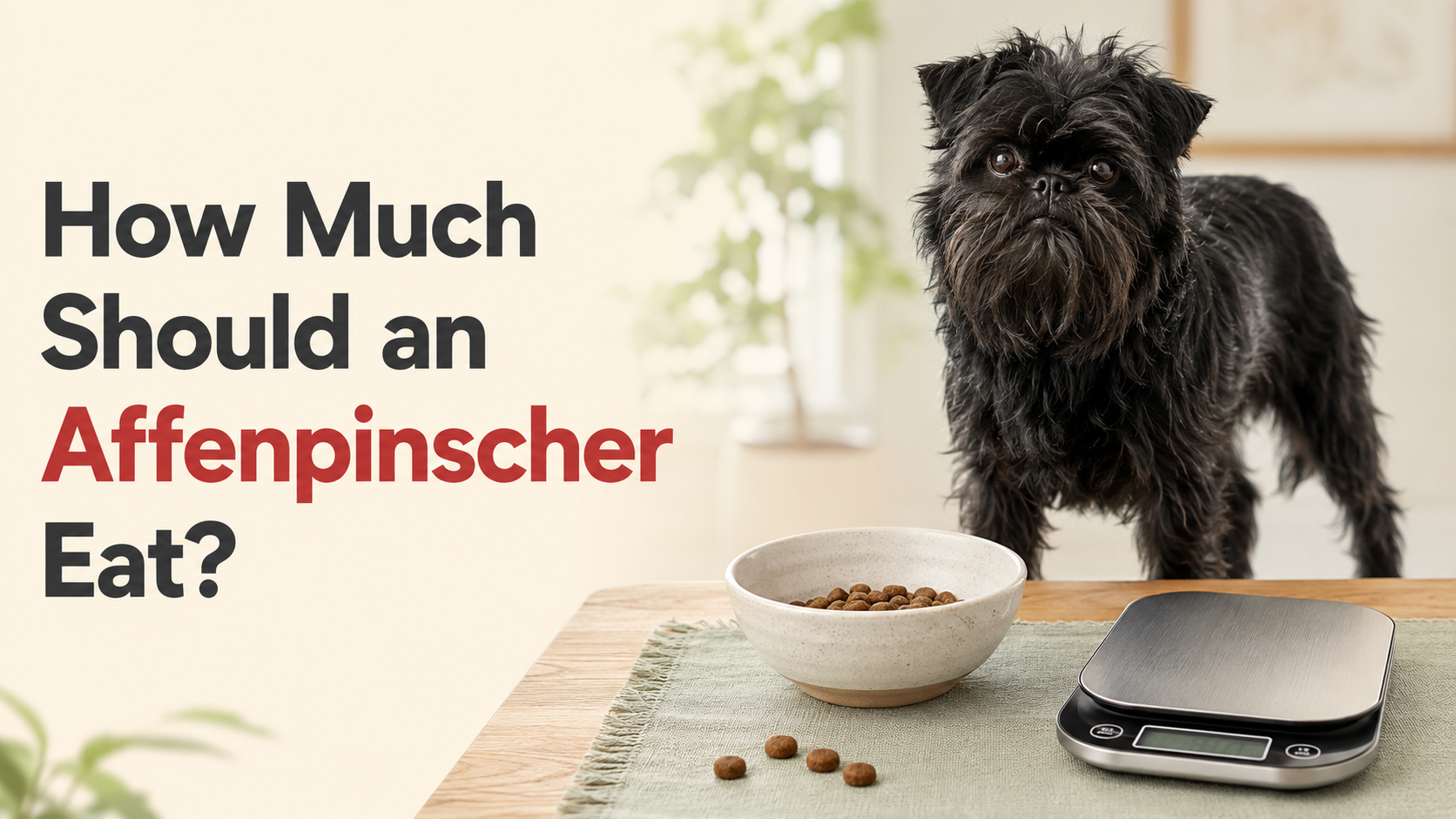
💡 Scout’s Top Tip: Weigh food with a digital kitchen scale. Cups and scoops can produce inconsistent portions, which matters greatly when feeding such a small breed.
Discover The Affenpinscher Blueprint
Give your Affenpinscher the best possible start with a complete guide to feeding, training, grooming, exercise, behaviour and lifelong care.
Explore The Affenpinscher Blueprint from Paw Tastic Walks.
How much should an Affenpinscher puppy eat?
Puppies require food formulated specifically for growth. A complete puppy food designed for small or toy breeds is generally the easiest way to provide the necessary balance of protein, fat, vitamins and minerals.
The actual quantity should come from the manufacturer’s puppy feeding chart, which may calculate portions using the puppy’s age, current weight and expected adult weight.
Suggested puppy routine
| Puppy’s age | Suggested frequency |
|---|---|
| 8–12 weeks | Four meals daily |
| 3–6 months | Three meals daily |
| 6–12 months | Two or three meals daily |
| Around 10–12 months | Begin transitioning to adult food if advised |
Do not add calcium, vitamins or other nutritional supplements to a complete puppy food unless a vet specifically recommends them. Unnecessary supplementation can unbalance an otherwise complete diet.
When changing foods, make the transition gradually over approximately five to seven days unless your vet advises otherwise.
Feeding an adult Affenpinscher
Most healthy adult Affenpinschers do well with two measured meals each day.
Dividing the food into breakfast and an evening meal can:
- Prevent the dog from eating its entire allowance at once
- Create a predictable household routine
- Make hunger easier to manage
- Allow owners to notice appetite changes
- Provide opportunities to use part of the allowance for training
Avoid leaving a full bowl available throughout the day. Free feeding makes it difficult to know how much the dog has eaten and can encourage grazing or weight gain.
Feeding a senior Affenpinscher
Affenpinschers may become less active as they grow older, meaning they may no longer require the same number of calories.
However, older dogs still need high-quality nutrition. Some seniors benefit from food that is easier to chew or formulated to support healthy ageing, but a change should be based on the individual dog rather than age alone.
Speak to a vet if an older Affenpinscher develops:
- Unexplained weight loss or gain
- Difficulty chewing
- Reduced appetite
- Increased thirst
- Vomiting or diarrhoea
- Changes in toileting
- Reduced energy
Unexpected weight loss can have numerous medical causes and warrants veterinary investigation, as explained in this PDSA guide to weight loss in dogs.
Dry food, wet food or mixed feeding?
All three approaches can work, provided the main diet is labelled complete for the dog’s life stage.
Dry food
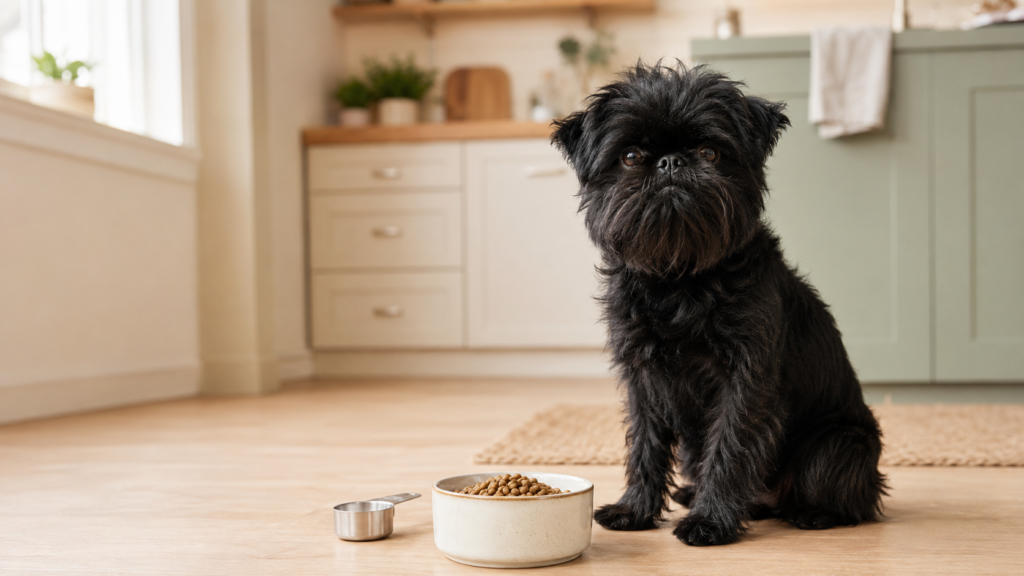
Dry food is convenient, easy to measure and suitable for food-dispensing toys. Because it is calorie-dense, portions can look surprisingly small.
Wet food
Wet food contains more moisture and may appeal to fussy eaters. The dog may need a larger volume than it would receive with dry food because wet food is generally less calorie-dense.
Mixed feeding
Owners can combine wet and dry food, but the calories from both must be included in the daily total. Giving the full recommended amount of each would result in overfeeding.
✅ Owner tip: “Complete” means the food is designed to provide all essential nutrients in the correct proportions. “Complementary” food must normally be fed alongside another complete diet.
How many treats can an Affenpinscher have?
Treats should generally provide no more than 10% of the dog’s daily calories. The remaining 90% should come from a complete and balanced diet. This principle is supported by the PDSA’s guidance on dog nutrition and treats.
For an Affenpinscher eating 280 calories daily, the treat allowance would be no more than approximately 28 calories.
Useful alternatives include:
- Pieces taken from the measured daily kibble allowance
- Tiny pieces of a suitable low-calorie dog treat
- Praise, play or access to a favourite toy
- Part of the dog’s regular meal used during training
Remember to count dental chews, food-filled toys, table scraps and training rewards.
Is your Affenpinscher receiving the right amount?
The number on the packet is a starting point. Your dog’s body condition provides better long-term guidance.
At an ideal weight:
- The ribs should be easy to feel beneath a light covering of fat.
- A waist should be visible when viewed from above.
- The abdomen should rise slightly behind the ribcage when viewed from the side.
- The spine, ribs and hip bones should not appear sharply prominent.
The WSAVA Body Condition Score chart provides a helpful visual reference.
Weigh your Affenpinscher regularly and adjust portions gradually. If the dog is gaining or losing weight despite measured feeding, ask your veterinary practice for help.
Common Affenpinscher feeding mistakes
❌ Measuring by eye
Small daily inaccuracies can cause significant weight changes over time.
❌ Following the packet without monitoring the dog
Feeding charts provide estimates. Individual requirements may be higher or lower.
❌ Forgetting about treats
Training rewards, chews and scraps all contain calories.
❌ Using a large measuring cup
A small error in a large scoop can represent a substantial percentage of an Affenpinscher’s meal.
❌ Changing foods suddenly
An abrupt change may cause digestive upset. Transition gradually where possible.
❌ Feeding from the table
This encourages begging and may expose the dog to unsuitable, fatty or toxic foods.
Signs that an Affenpinscher may be overfed
Watch for:
- Gradual weight gain
- Loss of a visible waist
- Difficulty feeling the ribs
- Reduced enthusiasm for exercise
- Heavy breathing during normal activity
- Reluctance to jump or climb stairs
Do not place an overweight Affenpinscher on a severe diet without professional guidance. A vet can check for medical problems and recommend an appropriate rate of weight loss.
Signs that an Affenpinscher may need more food—or a veterinary check
Possible warning signs include:
- Visible ribs, spine or hips
- Ongoing weight loss
- Persistent hunger
- Low energy
- Poor coat condition
- Reduced muscle mass
- Repeated digestive problems
Increasing the portion is not always the answer. Weight loss despite a normal or increased appetite can indicate illness and should be investigated.
Everything an Affenpinscher owner needs in one guide
From choosing the right food and managing treats to training, grooming and understanding this wonderfully confident little breed, The Affenpinscher Blueprint puts practical guidance at your fingertips.
Available from Paw Tastic Walks as a convenient digital guide.
Frequently asked questions
How many grams of food should an Affenpinscher eat?
Depending on the food’s calorie density, many adults may receive approximately 70–100g of dry food daily. Always calculate the portion using the food label and the dog’s individual calorie requirement.
How many cups of food does an Affenpinscher need?
There is no reliable universal figure because cup sizes, kibble shapes and calorie densities vary. Weighing the food in grams is more accurate.
Should an Affenpinscher eat once or twice a day?
Most healthy adults are better served by two measured meals. Puppies usually need three or four meals depending on their age.
When should an Affenpinscher change to adult food?
Many toy-breed puppies transition at around 10–12 months, but the food manufacturer or vet should provide guidance for the individual puppy.
Can Affenpinschers eat wet food?
Yes, provided it is a complete food suitable for their life stage. The portion should be based on its calorie content.
Why does the recommended portion look so small?
Dry food is concentrated and calorie-dense. A suitable portion for a toy dog may look very small in a human-sized bowl.
Can I give my Affenpinscher human food?
Occasional dog-safe foods may be acceptable, but they still count towards the daily calorie allowance. Avoid relying on table scraps as part of the regular diet.
What if my Affenpinscher is always hungry?
Check portion accuracy, treat intake and body condition. Persistent or suddenly increased hunger should be discussed with a vet.
Does a neutered Affenpinscher need less food?
Some neutered dogs require fewer calories, particularly if their activity decreases. Monitor weight and adjust portions gradually.
How often should I weigh my Affenpinscher?
Monthly weighing is useful for a healthy adult. Puppies, dogs on weight-management plans and those with health concerns may require more frequent monitoring.
Final thoughts
A healthy adult Affenpinscher may require roughly 240–350 calories per day, but that range should only be treated as a starting point.
The most reliable approach is to:
- Choose an appropriate complete food.
- Check its calorie content.
- Weigh each portion accurately.
- Include treats in the daily total.
- Monitor weight and body condition.
- Adjust the amount gradually when needed.
Because an Affenpinscher is so small, precision matters.
A kitchen scale, sensible treat allowance and regular weight checks can make feeding considerably easier—and help keep this spirited little companion healthy.
This article provides general information and does not replace individual veterinary advice. Consult your vet before making major dietary changes or if your dog has a medical condition, unusual appetite or unexplained weight change.