(But Really Should Every Day)
Most dogs in East Cornwall get food, walks, and a comfy bed. Still, many miss out on the small daily moments that grow a deep, secure bond.
These tiny habits take only a few seconds, but they can lower stress, sharpen the brain, and make everyday life easier for both of you.
This guide walks through nine simple daily rituals that support your dog’s mind and body. They fit around work, kids, and busy schedules, and they also pair nicely with good dog walking services, group dog walks, and puppy walking routines.
If you already use a professional dog walker or search for “pet walking near me,” these ideas will help you get even more value from the time you do have with your dog.
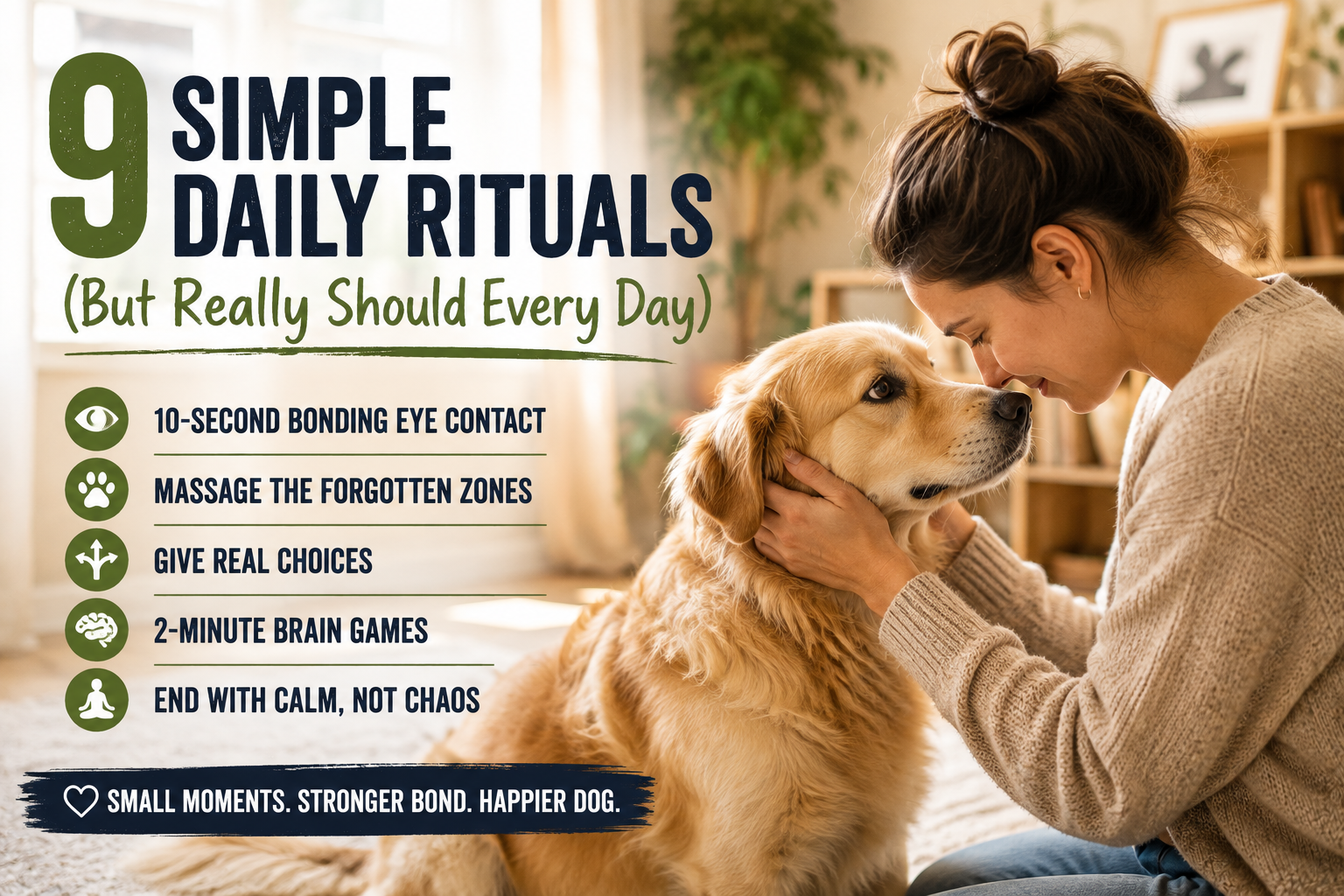
#9: The 10-Second Ritual That Rewires Your Bond
Most dog parents talk to their dogs all day. We give commands, praise them, and slip into silly baby talk without thinking. All of that has its place, but dogs also need something quieter.
Researchers who looked at military dog handlers noticed something striking. Some handlers had dogs with much lower cortisol, the stress hormone, during tough deployments.
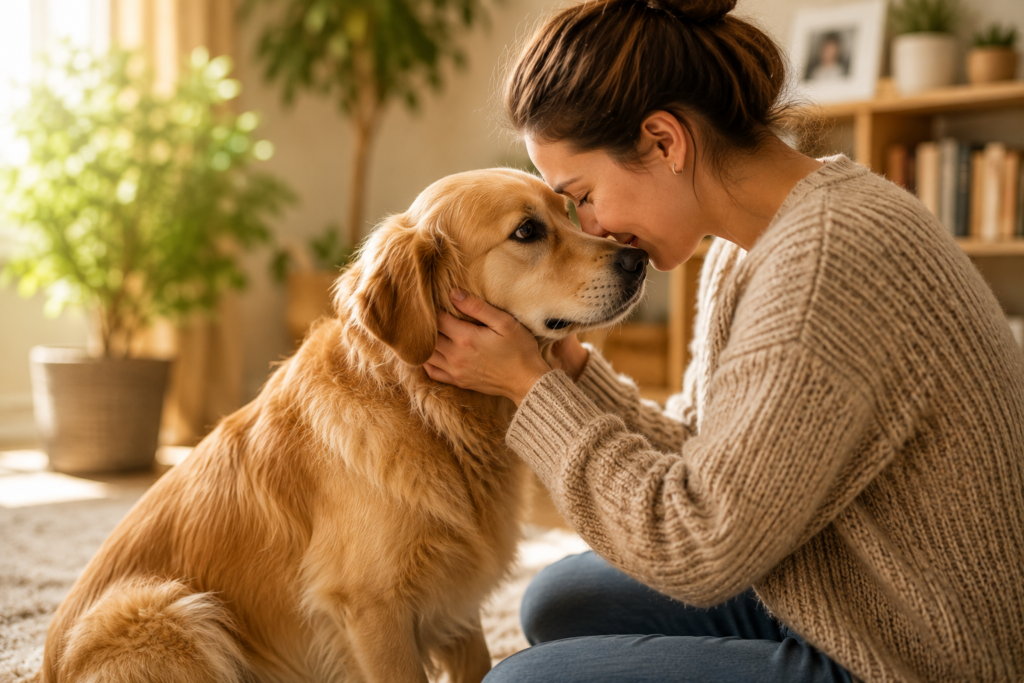
These handlers were not using special training methods or extra exercise. What they did more often was simple, silent eye contact with their dogs.
For 10 to 15 seconds, they gave soft attention with no words at all. No “sit,” no “who’s a good boy,” just a calm, kind gaze. Strong staring can feel threatening to dogs, but this gentle look has a very different effect.
It helps calm the amygdala, the fear center in the brain, and it can boost oxytocin, the bonding hormone, in both of you. You can read more about oxytocin and bonding if you enjoy the science side.
Try this a few times a day. Pause, soften your face, look at your dog’s eyes, and breathe.
No commands, no pressure. Just “I see you, and you’re safe with me.” It is a lovely way to end a walk or settle before bed.
#8: The Forgotten Zones Holding Chronic Tension
Most of us pet the same three spots. Head. Back. Belly. Dogs enjoy that, but K9 massage therapists often find tight areas that people never touch.
One big area is between the toes. Many dogs tense and spread their toes when worried or excited.
Over time, this can create tiny strains in the tissue. A slow, gentle massage between each toe for around 30 seconds can help release some of that daily build up.
There is another powerful spot where the front legs meet the chest. Dogs simply cannot reach that place on their own.
The video mentions work from UC Davis that tracked dogs getting daily chest massages for weeks. Those dogs began to move with more ease and confidence in public spaces.
You do not need special skills. Use gentle pressure, watch your dog’s face, and stop if they pull away.
Combine this with other calming routines, like the ideas in these gentle anxiety treatment methods for dogs, and you give your dog a strong body-and-mind reset each day.
#7: The Power Move Of Giving Real Choices
Pet dogs make almost no real choices. We control when they eat, where they sleep, and when they get their daily dog walks. That level of control can quietly chip away at confidence.
European researchers studying working dogs noticed something by accident. A few handlers were relaxed about obedience. If a dog ignored a command now and then, they sometimes just let it go. Surprisingly, those “imperfectly obedient” dogs did better in problem-solving tasks and had stronger bonds with their handlers.
The lesson is not to ignore safety cues, of course. It is to add safe, real choices. Once a day, offer something optional. For example, hold out the lead. If your dog does not come over at once, shrug, smile, and put it away for five minutes. No sighing, no “oh come on,” just neutrality.
Your dog may test this a few times to see if the choice is genuine. When they realise their decision matters, their brain builds new pathways linked to agency and confidence. A dog who feels they have a say often copes better in group dog walks and busy public spaces.
If you want more support around loose lead skills and recall, these simple strategies for successful dog training pair well with the choice-based approach.
#6: The Brain Game Hiding In Plain Sight
Your dog’s brain does not switch off when you answer emails or cook tea. It just idles, a bit like a screen saver. A tiny two-minute game can light up more brain areas than a long, flat walk on the same route.
Here is the key rule. Use one piece of their normal kibble, not a high value treat. Regular food engages the brain’s “seeking system” in a more steady way than rich snacks.
Try this simple search game:
- Take a single piece of kibble.
- Hide it behind a chair leg, under a cushion, or just out of sight.
- Release your dog to go and find it.
Start easy, so success comes fast. Over days, hide it in trickier places. This makes your dog think, sniff, and remember where they have already checked. Researchers in Budapest (The Family Dog Project) found that dogs who played daily food search games kept better cognitive function as they aged.
This kind of enrichment is a lovely add-on to why dog enrichment matters for wellbeing. It also helps older dogs who may not manage long dog exercise services or steep coastal paths near Looe.
#5: The Matching Technique For Energy Sync
You walk in from work, exhausted. Your dog rockets around the hallway like a furry firework. Most people try to calm their dog at once, but there is a smarter way.
Ethologists who study free roaming dogs noticed a pattern. Before one dog tries to change another’s energy, they first match it. So, when your dog is wild with joy, you briefly meet that energy.
Clap, greet, move with them for 15 to 20 seconds. Then slowly soften your tone and body language, and guide them into calm.
This moment of synchronising seems to support the part of the brain linked to emotional flexibility, called the anterior cingulate cortex. Dogs whose humans “match then guide” show less overreaction to sudden changes in the environment.
It also works in reverse. If your dog is resting and you want to start play, do not swoop in with loud, high energy.
Sit near them, speak softly, and build up together. This method is especially helpful for dogs already showing common stress behaviors.
#4: The Controlled Chaos Method For Adaptability
Dogs thrive on routine, and many need it to feel secure. Their wild ancestors, though, lived with a mix of pattern and surprise. Food showed up in different places, weather shifted, and social groups changed.
Many modern dogs live on such tight schedules that their “adaptability muscle” gets weak. Veterinary behaviorists now speak about structured variation. That means keeping most of a routine the same but changing one tiny detail.
You might:
- Feed dinner three minutes early or late.
- Take a new route for the last 30 seconds of your walk.
- Use a different bowl once or twice a week.
Research using MRI scans suggests that small, safe changes can light up brain regions linked to enrichment in zoo animals.
Dogs who are used to micro changes often handle big life shifts, like moving house or a change in dog walking services, with less distress.
If you often worry about safety on walks, pairing this with advice on dealing with loose aggressive dogs on walks can make both of you feel more prepared when things change suddenly.
#3: Solving The Purpose Problem
Search and rescue dogs face hard, stressful work. Yet many show lower baseline cortisol than pet dogs. It is not just the exercise. It is the sense of purpose.
Most pet dogs do not have a “job” that feels important. They nap, eat, and enjoy daily dog walks, but nothing really depends on them.
Giving your dog one simple task that belongs only to them can change their outlook.
Ideas include:
- Carrying the post from the door to the kitchen.
- “Checking” each room with you before bed.
- Guarding a toy by the door while you put your shoes on.
The video mentions a border collie who learned to place shoes by the door every morning, and woke with obvious eagerness. When the job is real and you value it, your dog’s sense of self can grow.
Scientists have even looked at how human emotions shape pet behavior. This UC Davis piece on emotions and pets gives a nice overview. Your belief that your dog’s job matters is part of what makes the job meaningful.
#2: The Consent Game For True Trust
Many people assume dogs always want affection. Shelter studies tell a more subtle story. Even very cuddly dogs only wanted touch around 60 percent of the times humans offered it. The rest of the time, they simply tolerated it.
You can turn touch into a clear, respectful conversation. Try this simple “consent test”:
- Stroke your dog for three seconds.
- Then stop and remove your hand completely.
- Wait two seconds.
If your dog leans in, paws you, or nudges for more, keep going. If they do nothing, that was enough for now.
Over time, dogs who are only petted when they actively ask for it show lower anxiety and clearer communication in other areas.
This approach is beautiful for shy dogs or rescues. It can also support those using proven steps to reduce dog anxiety or building trust with a new professional dog walker.
#1: The Chemical Message Before Bed
Late evening is often the quietest time of day. Your dog curls up nearby, breathing softly. It looks like simple peace, but something rich happens during these moments.
Try this short ritual. Sit close enough to see your dog’s small details. Notice the way they tilt their head when you speak, how their ears flick at distant sounds, and the rhythm of their breathing when they feel safe.
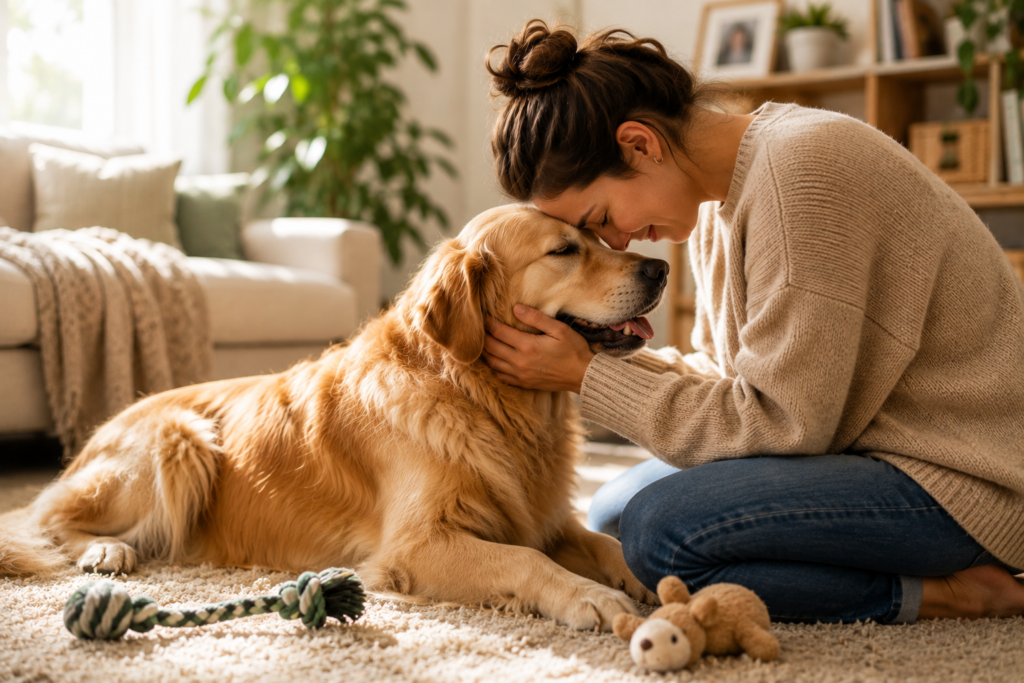
Let yourself feel genuine gratitude for this one dog and their life with you.
When you do that, your body releases a mix of chemicals, including oxytocin, dopamine, and serotonin. Studies suggest dogs can detect tiny emotional shifts through scent, using special receptors in their noses.
When they “smell” your warm feelings, it activates deep networks in their brain linked to memory and identity.
Over time, these bedtime moments help shape who your dog feels safe with and how they view their own place in the family. It pairs beautifully with calm end-of-day routines after walking your dog in the rain or on blustery Cornish evenings.
Bringing It All Together In Daily Life (And On Walks)
Every day, your dog quietly waits for these tiny signals. A real choice. A soft gaze. A small job. A chance to think, sniff, and feel useful.
You do not need to change your whole routine. Pick one or two of these ideas and fold them into things you already do, like daily dog walks or evening cuddles. For dogs that need more structured activity, why dog enrichment matters for wellbeing is a great next read.
Good equipment and safety make a big difference on walks too. If you have a large breed, this guide to the best dog harness for large dogs can help you stay in control without discomfort.
Worried about losing your dog on the coast path or moorland? A Tractive GPS dog tracker review is well worth a look.
Many local owners in East Cornwall balance busy jobs, kids, and care duties.
If you often search for “local dog walking” or “dog walking rates,” or you feel your dog needs more than you can give alone, using a reliable dog walker is a kind choice.
Group dog walks, daily dog walks, and puppy walking services offer fun, safe social time, and leave you free to focus on these deep bonding moments at home.
Whether you try the 10-second eye ritual, the consent game, or the bedtime gratitude habit, each small act sends the same message: you matter to me, and I see you. That is what every dog is waiting for.