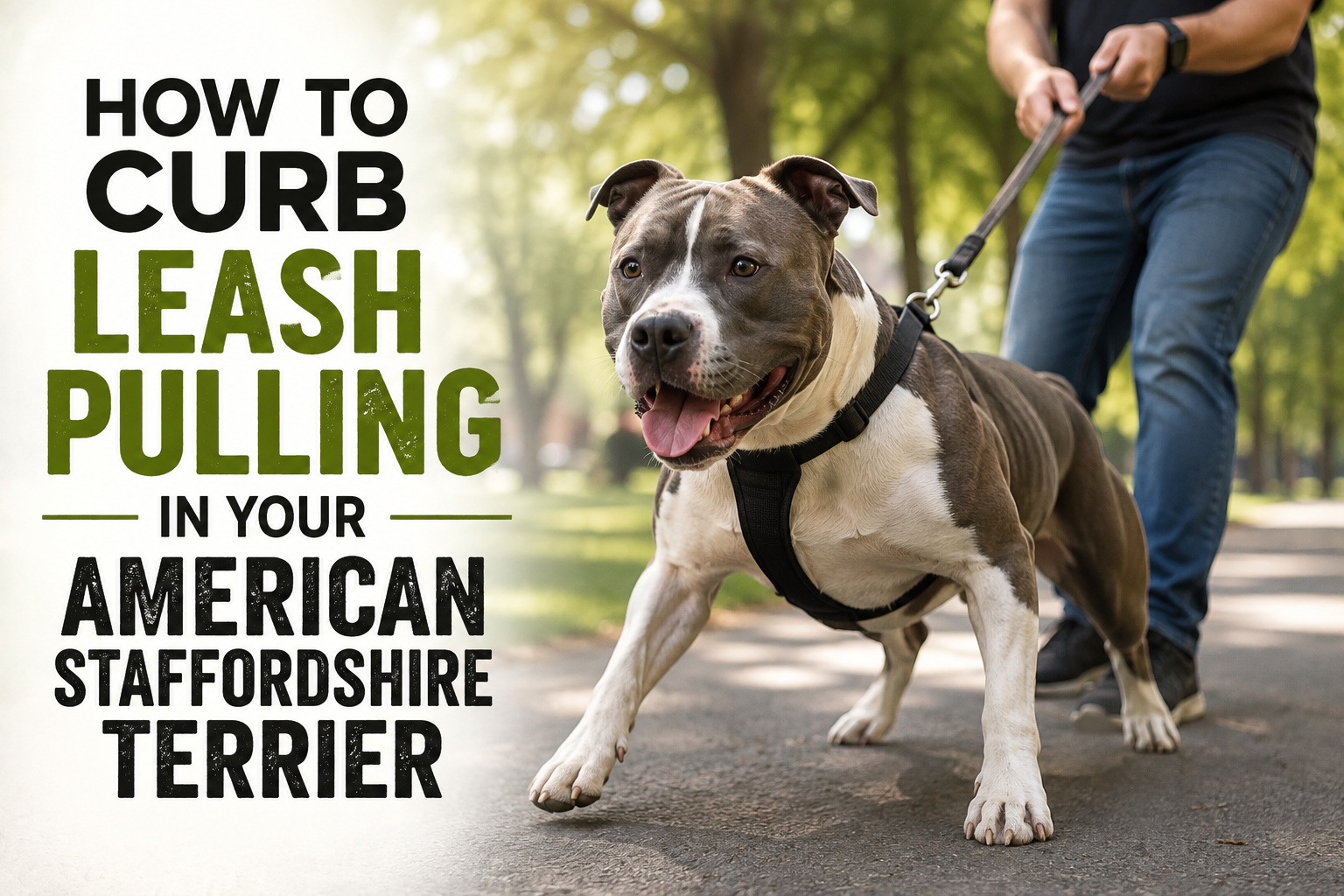
Walking your American Staffordshire Terrier can be fun. But it can turn into a challenge when they pull on the leash. If you’re tired of being pulled, it’s time to fix this issue.
Getting a smooth walk takes effort and patience, as John “Ask the Dog Guy” Wade says. With the right training, your dog can learn to walk beside you.
By figuring out why your dog pulls on the leash and using good training, walks can be stress-free. You and your dog will enjoy them more.
Key Takeaways
- Understand why your American Staffordshire Terrier pulls on the leash.
- Learn effective training techniques to curb leash pulling.
- Discover how to make walks more enjoyable for both you and your dog.
- Develop a stronger bond with your pet through consistent training.
- Improve your dog’s behavior with patience and positive reinforcement.
Why American Staffordshire Terriers Pull on Leashes
Understanding why your American Staffordshire Terrier pulls on the leash is the first step to correcting this behavior. It’s not just about being stubborn; there are underlying reasons related to their breed-specific traits and motivations.
Breed-Specific Strength and Energy Levels
American Staffordshire Terriers are known for their strength and high energy levels. These traits were bred into them for historical roles like guarding and fighting. This means they can be quite powerful and exuberant on walks, making leash pulling a significant challenge for many owners.
To manage this, it’s important to provide adequate physical exercise and mental stimulation. Regular, vigorous exercise can help burn off some of their excess energy. This might reduce the inclination to pull on the leash.
Excitement vs. Dominance: Understanding Your Amstaff’s Motivation
It’s essential to differentiate between why your American Staffordshire Terrier is pulling on the leash. Are they excited to explore their environment, or are they trying to assert dominance? Understanding their motivation is key to applying the correct training tips for leash pulling in Amstaffs.
If your dog is pulling due to excitement, training techniques that focus on calm behavior and rewarding loose-leash walking can be effective. On the other hand, if the pulling is rooted in dominance or a desire to lead, you’ll need to establish clear leadership and boundaries.
The Physical and Behavioral Consequences of Leash Pulling
When your American Staffordshire Terrier pulls on the leash, it can cause many problems. These issues affect both you and your dog’s health. The American Kennel Club’s GoodDog Helpline stresses the need for walking politely on a leash. This is for the safety of both the dog and the owner.
Health Risks for Both Owner and Dog
Leash pulling can lead to health problems for you and your dog. Owners might face:
- Strained muscles and joints from being pulled
- Potential injuries from being dragged or tripped
For American Staffordshire Terriers, pulling can cause:
- Neck strain and possible damage to the trachea
- Increased risk of choking or gagging
How Pulling Reinforces Unwanted Leadership Dynamics
When your American Staffordshire Terrier pulls on the leash, it can create an unhealthy dynamic. This dynamic makes the dog lead and you follow. It can:
- Reinforce dominant behaviors in your dog
- Undermine your authority and training efforts
- Make walks stressful and less enjoyable
By addressing leash pulling, you can restore a balanced relationship. This ensures more pleasant walks.
Selecting the Right Equipment for Effective Control
The right equipment is key to controlling leash pulling in American Staffordshire Terriers. The gear you pick can either help or hinder your training progress.
Choosing the right equipment is more than just about comfort. It’s about control and safety for you and your dog. Let’s look at the different leash training options.
Leash Types and Materials for Strong Pullers
For Amstaffs, durable leashes made from nylon or leather are best. Stay away from retractable leashes as they can make pulling worse. A fixed-length leash, 4 to 6 feet long, is better for control.
Leash Material Comparison:
| Material | Durability | Comfort |
|---|---|---|
| Nylon | High | Moderate |
| Leather | High | High |
| Cotton | Low | High |
Front-Clip vs. Back-Clip Harnesses for Amstaffs
John “Ask the Dog Guy” Wade suggests thinking twice about harnesses for training. But if you do use a harness, the choice between front-clip and back-clip matters. Front-clip harnesses steer your dog back to you when they pull.
Front-clip harnesses are great for dogs that pull a lot. They discourage pulling by steering the dog. Back-clip harnesses are more comfy for dogs that don’t pull much.
When to Consider Training Collars and Head Halters
For some dogs, training collars or head halters might be needed. Use training collars carefully and only with professional advice. Head halters are good for strong pullers, as they guide the dog’s head and body.
Introduce new equipment slowly and positively to avoid negative effects on training.
American Staffordshire Terrier Leash Pulling Help: Foundational Training Methods
Leash pulling is a common issue for Amstaff owners. But, with the right techniques, you can teach your dog to walk calmly beside you. Foundational training methods are key to addressing this behavior and building a strong bond with your pet.
The “Be a Tree” Technique for Immediate Pulling Response
The “Be a Tree” technique means standing firm and not moving when your Amstaff pulls. It teaches your dog that pulling won’t get them there faster. Instead, it encourages them to stay by your side. Being consistent helps reduce leash pulling quickly.
Direction Reversal Training to Reset Attention
Direction reversal training is another effective method. It involves suddenly changing direction to refocus your dog’s attention on you. This technique not only manages pulling but also improves your dog’s ability to follow you. It’s a simple yet powerful way to keep control during walks.
Teaching the “Heel” Command Specific to Amstaffs
Teaching the “Heel” command is essential for leash training. For Amstaffs, start with your dog on your left side and reward them for staying close. Consistency and positive reinforcement are vital. As your dog becomes more reliable, you can increase training duration and distractions.
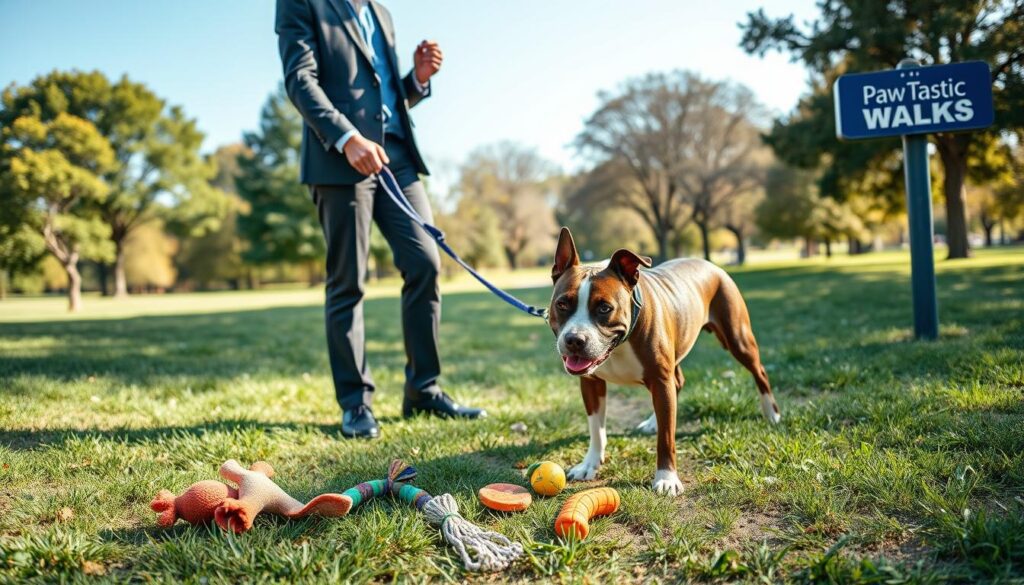
To further illustrate the effectiveness of these methods, consider the following comparison:
| Training Method | Immediate Effect | Long-Term Benefit |
|---|---|---|
| “Be a Tree” Technique | Stops pulling immediately | Teaches patience and self-control |
| Direction Reversal Training | Refocuses dog’s attention | Enhances obedience and responsiveness |
| Teaching the “Heel” Command | Encourages walking beside owner | Promotes a strong bond and reliable behavior |
By using these foundational training methods in your daily walks, you can greatly reduce leash pulling. This makes walks more enjoyable for both you and your American Staffordshire Terrier.
Positive Reinforcement Strategies That Work for Stubborn Pullers
Positive reinforcement is a kind and effective way to stop leash pulling in American Staffordshire Terriers.
It focuses on rewarding good behavior instead of punishing bad ones. This makes walks better for both you and your dog.
Creating a Reward Zone Near Your Side
One good method is to make a “reward zone” near you. Give treats and praise when your Amstaff walks beside you, not ahead. Start by having your dog on your left side if you hold the leash in your right.
As you walk, give treats and praise when they’re in the right spot.
Tips for Creating a Reward Zone:
- Use high-value treats that your dog loves.
- Be consistent with the reward location.
- Gradually phase out treats as your dog becomes more reliable.
Clicker Training for Precise Leash Behavior Marking
Clicker training is great for teaching your Amstaff to walk well on a leash. It uses a clicker to mark good behavior (walking beside you without pulling). This makes teaching leash manners easier.
“Clicker training allows for precise communication with your dog, making it easier to teach complex behaviors like loose-leash walking.” – AKC GoodDog Helpline
To start, link the clicker sound with treats. Then, click and treat when your dog walks beside you without pulling.
The Power of Intermittent Reinforcement for Lasting Results
Intermittent reinforcement is key for lasting leash training. It means not rewarding your dog every time they walk beside you. This makes the behavior last even without constant rewards.
To implement intermittent reinforcement:
- Start with continuous reinforcement (rewarding every correct behavior).
- Gradually introduce variability in the reward schedule.
- Monitor your dog’s response and adjust the reinforcement schedule as needed.
By using these positive reinforcement strategies, you can stop leash pulling in your American Staffordshire Terrier. Enjoy stress-free walks together.
Overcoming Breed-Specific Challenges on Walks
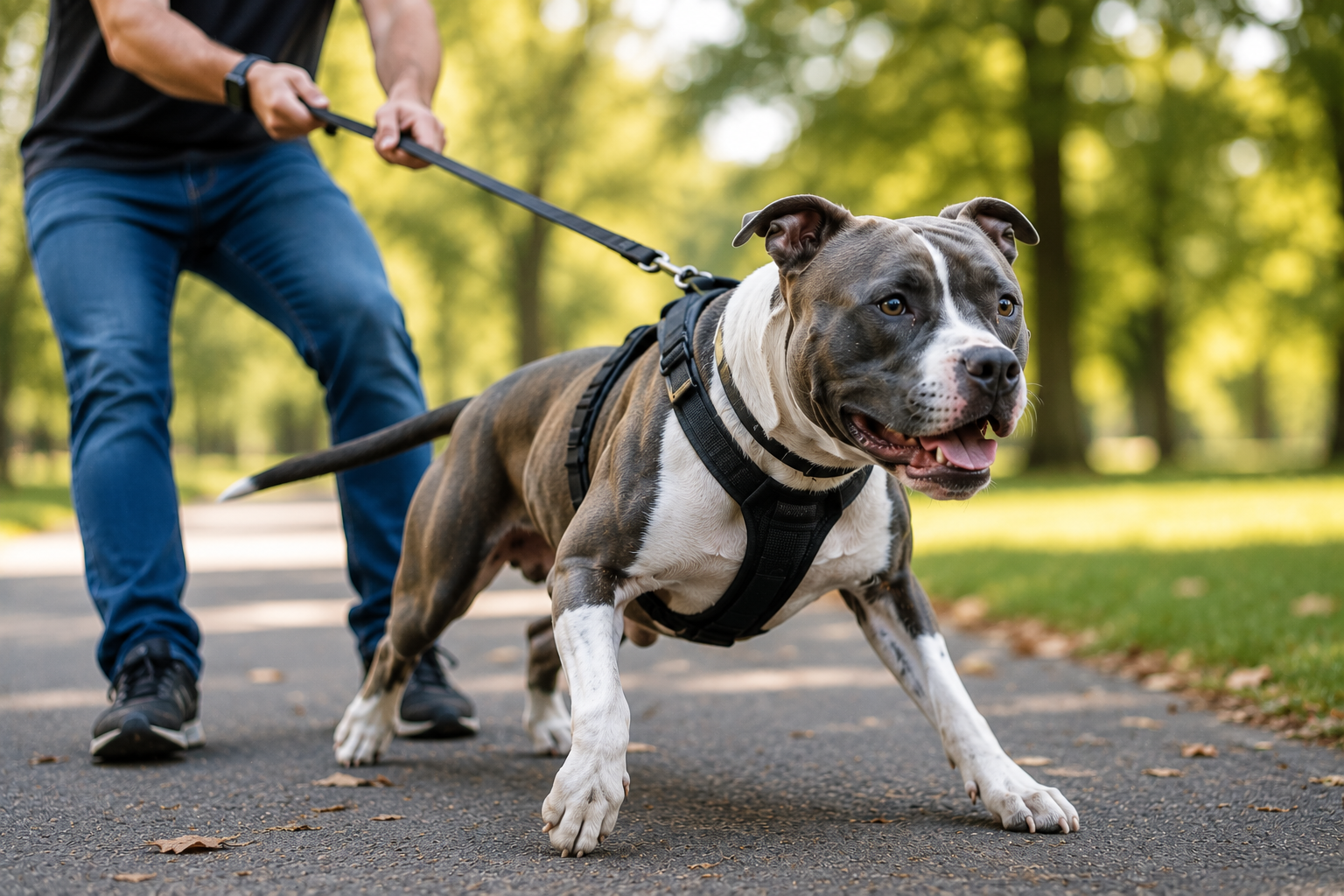
As an Amstaff owner, you know the unique challenges of walking this breed. American Staffordshire Terriers are strong, energetic, and have strong instincts. This can make leash walking tough. John “Ask the Dog Guy” Wade says managing distractions is key for a stress-free walk.
Managing Your Amstaff’s High Prey Drive
Amstaffs often pull on the leash when they see small animals due to their high prey drive. Desensitization techniques can help.
Start by exposing your dog to the stimuli that trigger pulling at a safe distance. Then, reward them for calm behavior. Consistency is key in this training.
Techniques for Dog-Reactive Amstaffs
Some Amstaffs can be reactive towards other dogs, leading to barking, lunging, or pulling. Counterconditioning techniques can help. This involves associating other dogs with positive outcomes. Gradual exposure and positive reinforcement are key.
Handling Territorial Behavior in Public Spaces
Amstaffs may show territorial behavior in public, like guarding or becoming aggressive. It’s vital to socialize your dog extensively and teach them to focus on you in distracting environments.
Use positive reinforcement training to encourage calm behavior in public.
| Challenge | Technique | Benefit |
|---|---|---|
| High Prey Drive | Desensitization | Reduced pulling on leash |
| Dog Reactivity | Counterconditioning | Improved calm behavior around other dogs |
| Territorial Behavior | Socialization and Positive Reinforcement | Enhanced calmness in public spaces |
Understanding and addressing these breed-specific challenges can make walks with your American Staffordshire Terrier more enjoyable. Be patient and consistent in your training efforts.
Progressive Training Protocol: Building Reliable Leash Manners
To get your Amstaff to walk nicely on a leash, you need a good training plan. The Happy Staffy Co. suggests a detailed plan. It helps stop pulling and makes your bond stronger.
Structured 4-Week Training Plan for Beginners
For newbies, a clear training plan is vital. Here’s a 4-week guide to start:
| Week | Training Focus | Daily Practice |
|---|---|---|
| 1 | Introduction to Leash Training | 10 minutes, twice a day |
| 2 | Basic Compliance Training | 15 minutes, twice a day |
| 3 | Introducing Distractions | 20 minutes, twice a day |
| 4 | Distraction Proofing | 25 minutes, twice a day |
Advancing from Basic Compliance to Distraction Proofing
Once your Amstaff learns the basics, it’s time for distractions. This step is key to keeping your dog focused on you, even with things around.
Tips for Advancing Training:
- Gradually increase the level of distractions.
- Use positive reinforcement to reward good behavior.
- Practice in various environments to generalize the training.
Maintenance Training for Long-Term Success
Keeping up with training is important for lasting results. Regular practice and positive feedback will keep your Amstaff’s leash manners sharp.
By sticking to this training plan, walks with your American Staffordshire Terrier will be stress-free. Remember, being consistent and patient is essential for good leash manners.
Troubleshooting Common Setbacks in Amstaff Leash Training
Leash training is a journey, and for many Amstaff owners, it’s not without its hurdles. As you work on training your American Staffordshire Terrier, you may encounter several challenges.
These challenges can hinder your progress. Understanding these common setbacks is key to overcoming them and achieving a stress-free walk.
Breaking the “Sometimes It Works” Cycle
One common issue is the inconsistency in training results. Some days, your Amstaff might walk perfectly on a leash, while on others, they revert to pulling.
This inconsistency can be frustrating. To break this cycle, it’s essential to maintain a consistent training schedule and reinforce good behavior every time you walk your dog. Consistency is key to developing reliable leash manners.
Addressing Regression After Initial Success
It’s not uncommon for dogs to regress after showing initial improvement in leash training. This can be due to various factors, including changes in environment or routine.
When you notice regression, revisit your training fundamentals and adjust your strategy as needed. The AKC GoodDog Helpline suggests that refreshing your dog’s training with familiar commands can help get them back on track.
Managing Leash Behavior During Adolescence
Amstaffs, like many breeds, go through an adolescent phase that can impact their leash behavior. During this period, they might test boundaries and forget previously learned behaviors.
To manage this, continue reinforcing good leash manners and be patient. It’s a challenging phase, but with consistent training, your dog will mature out of it. As one trainer notes, “The key is to remain calm and consistent, even when your dog seems to forget everything.”
By understanding and addressing these common setbacks, you can improve your Amstaff’s leash behavior. This will make walks more pleasant for both you and your dog. Remember, the goal is to stop leash pulling in American Staffies and create a harmonious walking experience for both you and your dog.
When and How to Seek Professional Training Support
Professional training can offer personalized help for stubborn leash pulling in American Staffordshire Terriers. Many owners train their dogs on their own and succeed. But some may need expert advice to overcome challenges.
Identifying When DIY Methods Aren’t Sufficient
If you’ve tried many leash training methods but see no progress, it’s time to get professional help. Signs you might need a pro include:
- Consistent pulling on the leash despite training efforts
- Increased frustration or stress during walks
- Difficulty managing your Amstaff’s behavior in distracting environments
John “Ask the Dog Guy” Wade advises getting professional help when needed. He says knowing when to stop trying on your own is key.
Finding Trainers Experienced with Power Breeds
When searching for a professional dog trainer, look for someone familiar with powerful breeds like the American Staffordshire Terrier. Here’s what to consider:
- Look for trainers certified by reputable organizations
- Check for experience with breeds similar to your Amstaff
- Ask for references or reviews from other clients with similar needs
Finding the right trainer can help you create an Amstaff leash manners training plan that fits your dog’s needs.
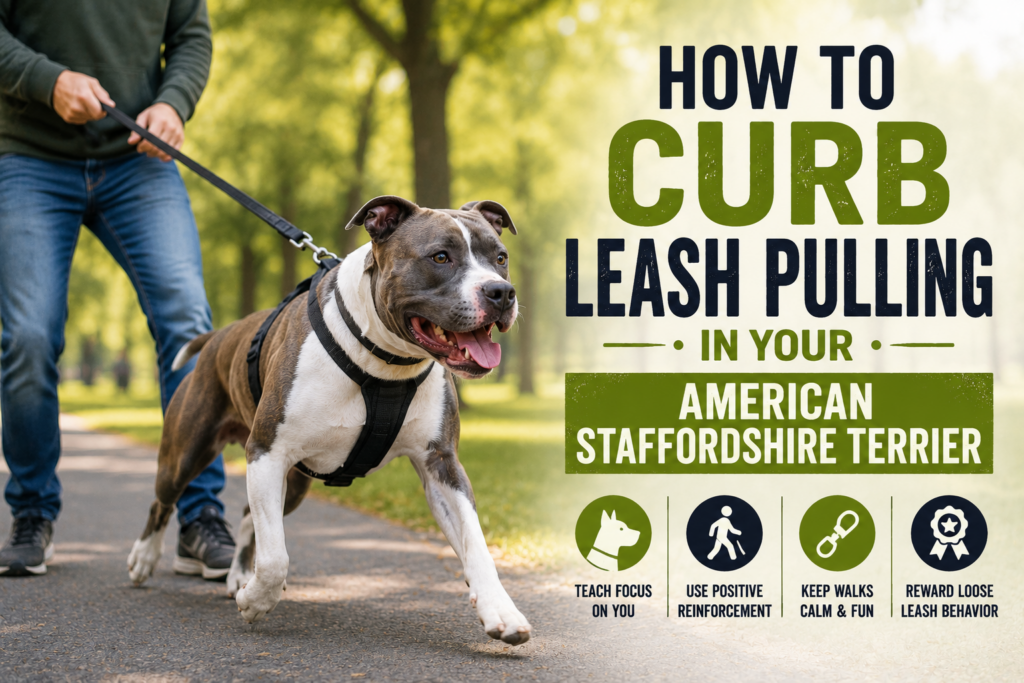
Conclusion: Enjoying Stress-Free Walks with Your American Staffordshire Terrier
With patience and consistency, you can enjoy stress-free walks with your American Staffordshire Terrier. The Happy Staffy Co. says that getting your dog to walk well on a leash takes more than just a few tricks. It needs the right tools, basic training, and positive rewards.
Understanding why your Amstaff pulls on the leash is key. This lets you create a good training plan. Methods like “Be a Tree” and reversing direction can help stop pulling. Soon, your Amstaff will learn to walk nicely, even when there’s a lot going on.
Getting your American Staffordshire Terrier to stop pulling on the leash is possible. Mix the right methods with patience and consistency. Over time, you and your Amstaff will handle tough situations with ease.
FAQ
Why does my American Staffordshire Terrier pull on the leash?
Your American Staffordshire Terrier might pull because of their high energy and strength. They could also be excited or curious about their surroundings.
What are the consequences of leash pulling for my dog and me?
Leash pulling can hurt your shoulders and back. It can also upset the balance in your relationship with your dog.
What equipment is best for leash training my American Staffordshire Terrier?
For leash training, use strong leashes and harnesses. You might also need training collars or head halters, depending on your dog’s needs.
How can I teach my American Staffordshire Terrier to walk on a loose leash?
Teach your dog to walk nicely by using the “Be a Tree” method and the “Heel” command. Positive reinforcement helps a lot.
What is positive reinforcement training, and how can it help with leash pulling?
Positive reinforcement training rewards your dog for good behavior, like walking by your side. It helps with leash manners. Use a reward zone and clicker training.
How can I manage my American Staffordshire Terrier’s high prey drive on walks?
Manage high prey drive by training your dog to focus on you. Use desensitization and counterconditioning. Head halters can also help.
What if my American Staffordshire Terrier is dog-reactive?
For dog-reactive dogs, start with slow exposure to other dogs. Use counterconditioning to make them associate other dogs with good things. Professional help might be needed.
How long does it take to train my American Staffordshire Terrier to walk on a leash?
Training time varies based on your dog’s age, past training, and your effort. A 4-week plan is a good start.
What should I do if I encounter setbacks during leash training?
If you hit a snag, go back to basics. Stay consistent. Professional help is a good idea if problems last.
When should I seek professional training support for my American Staffordshire Terrier’s leash pulling?
Get professional help if you’ve tried many methods and nothing works. Or if your dog’s pulling is part of bigger behavioral issues.
How can I find a qualified trainer experienced with American Staffordshire Terriers?
Look for trainers who know power breeds and positive training. They should understand your dog’s specific traits and challenges.