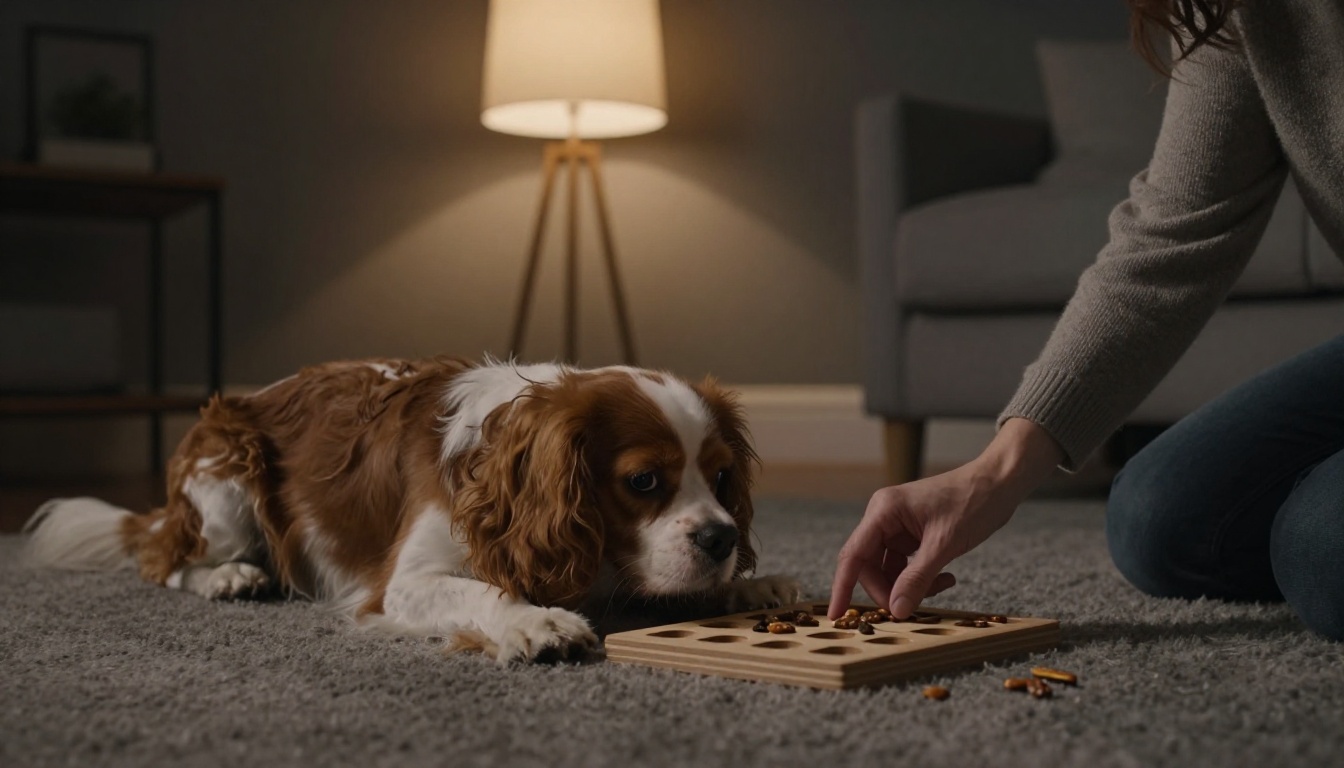
Senior or exercise-restricted Cavaliers can stay happy and engaged through short, gentle mental games that don’t strain sore joints or tired bodies.
Natural enrichment options include sniffing for treats, licking a mat, solving simple food puzzles, and practicing calm training cues indoors. These activities provide mental stimulation while supporting emotional wellbeing.
Cavaliers often enjoy close interaction with their people, so these activities can strengthen your bond.
If your dog is dealing with pain, illness, surgery recovery, or changing mobility, ask your veterinarian to guide their activity limits. Enrichment should complement, not replace, approved physical exercise.
Start with easy wins, then build from there with this Cavalier temperament guide and the gentle enrichment ideas below. You can also Check out our great guides on Payhip or Check out our ebook guides on Etsy for more practical dog-care support.
This post may contain affiliate links. If you make a purchase through these links, I may earn a small commission at no extra cost to you.
Watch a gentle enrichment game for a senior Cavalier
Key Takeaways
- Choose gentle activities that provide mental stimulation through sniffing, licking, and simple problem-solving.
- Keep sessions short, simple, and rewarding, using small dog treats from your Cavalier’s daily food allowance.
- Try a snuffle mat, easy puzzle toys, or a lick mat for calm indoor enrichment.
- Use positive reinforcement to reward calm participation, and provide non-slip mats and comfortable bedding for safety.
- Stop if your dog shows pain, fatigue, heavy panting, or frustration, and ask your veterinarian for guidance.
Why Gentle Enrichment Matters for Senior and Exercise-Restricted Cavaliers
Reduced walks don’t have to mean a reduced quality of life. A senior or exercise-restricted Cavalier can still sniff, think, learn, and enjoy time with you. Mental stimulation meets those interests without asking tired joints to do too much.
Cavaliers are social dogs with curious minds. They often want to be involved in whatever their family is doing, even if they can no longer manage long walks or energetic games.
A few minutes of gentle attention can feel like a little adventure when the activity suits their body.
Enrichment should match your dog’s individual behavioral needs and physical limitations.
The right activity keeps your Cavalier engaged without creating fatigue or discomfort.
For more breed-specific guidance, see the Cavalier King Charles Spaniel blueprint, or explore the Cavalier blueprint ebook.
Mental work is different from tiring exercise
Exercise uses the body. Brain games for dogs provide something interesting to investigate, solve, or enjoy indoors. The goal is focused engagement, not mental exhaustion or physical fatigue.
Scent games are a good example. Hiding a few pieces of kibble in a folded towel or placing treats around one room encourages natural sniffing.
Your dog can work at a comfortable pace without repeated running, sharp turns, or jumping.
Food puzzles, lick mats, and safe chewing activities can also help fill the day. Licking and quiet interaction are calming activities for many Cavaliers. Choose soft, simple options if your dog has dental concerns, and avoid foods containing xylitol.
A non-slip mat underneath the activity can make the game safer for dogs with weak legs or poor balance.
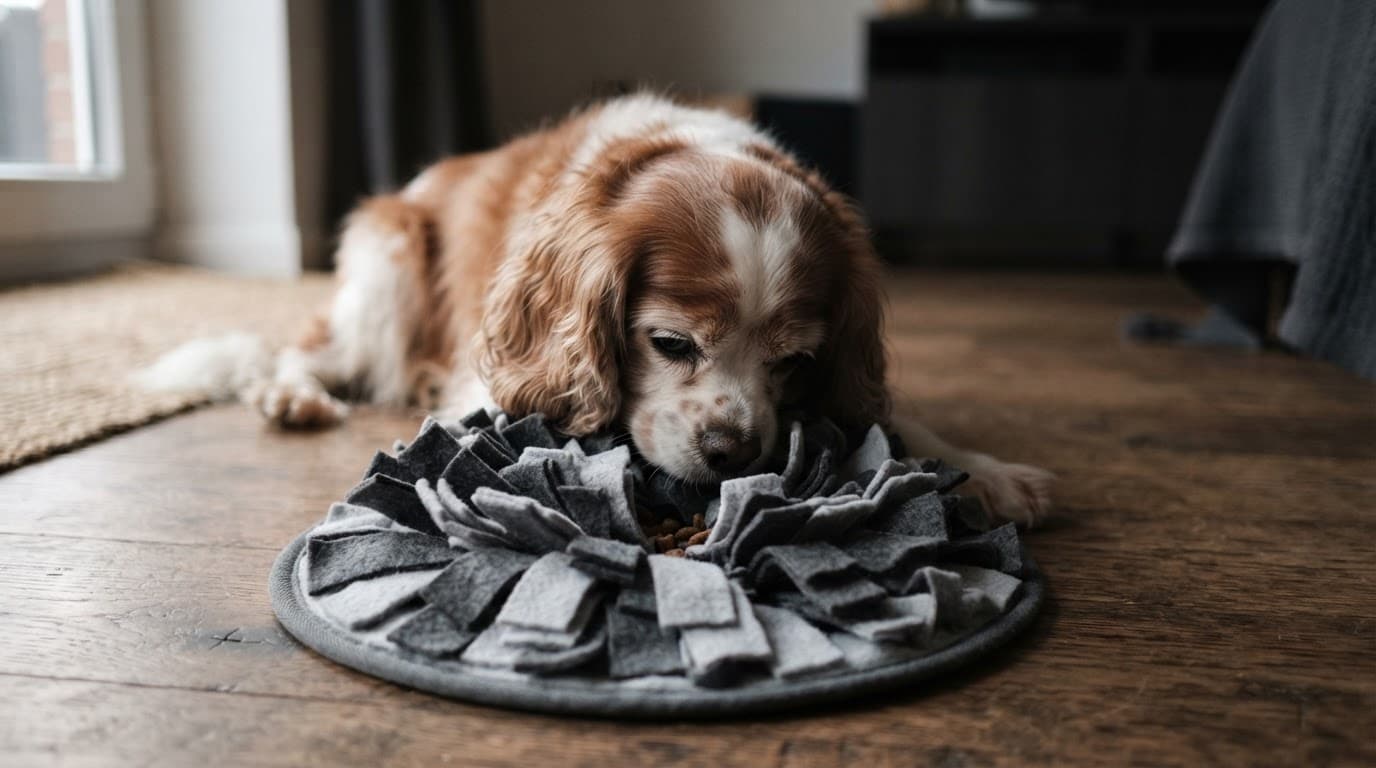
Calm training counts, too. Asking for a nose touch, eye contact, or a gentle “wait” builds impulse control while keeping movement small. Why not reward your Cavalier for settling on a comfortable bed?
That teaches relaxation as well as obedience.
Slow, predictable enrichment may suit over-aroused dogs better than exciting play. It gives them a clear activity without adding unnecessary stimulation.
Keep each session short and comfortable
Start with 2 to 10 minutes, once or twice daily. Some dogs prefer several tiny sessions, while others enjoy one slightly longer activity. Stop while your Cavalier is still interested, rather than waiting for tiredness or frustration.
Watch for signs that the game is too difficult, including:
- Panting that doesn’t match the room temperature.
- Stiffness, limping, or difficulty getting comfortable.
- Avoiding the activity or walking away.
- Repeated whining, pawing, or signs of frustration.
- Losing interest suddenly.
If you notice these signs, make the puzzle easier or end the session. Your Cavalier doesn’t need to conquer a complicated toy. A simple sniffing game that leaves them content is a far better choice.
Rescue guidance for older Cavaliers also emphasizes adjusting care to the individual dog’s changing abilities, as explained in this advice on caring for an older Cavalier.
Low Energy Brain Games for Cavalier Spaniels That Are Easy on the Body
The best options use your Cavalier’s nose, tongue, and thinking skills instead of fast movement. Set each activity on a non-slip surface, keep rewards small, and let your dog work at a comfortable pace.
Scent Searches That Let Your Cavalier Use Their Nose
Scent games are simple to set up and easy to adjust. Start with a small hide and seek game in one room, using three or four dog treats hidden in plain sight.
Place one beside a table leg, near the edge of your dog’s bed, or next to a safe toy. Say “find it” and let your Cavalier sniff without rushing.
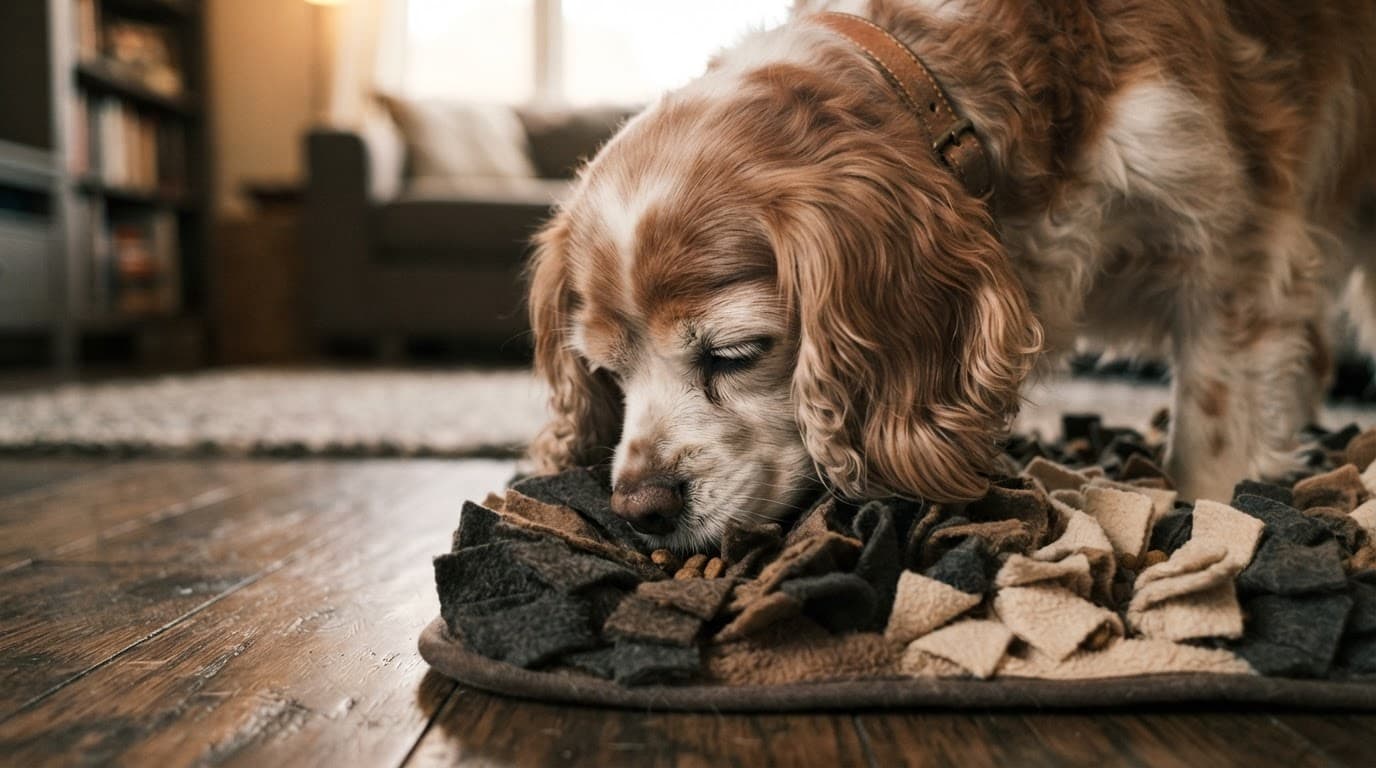
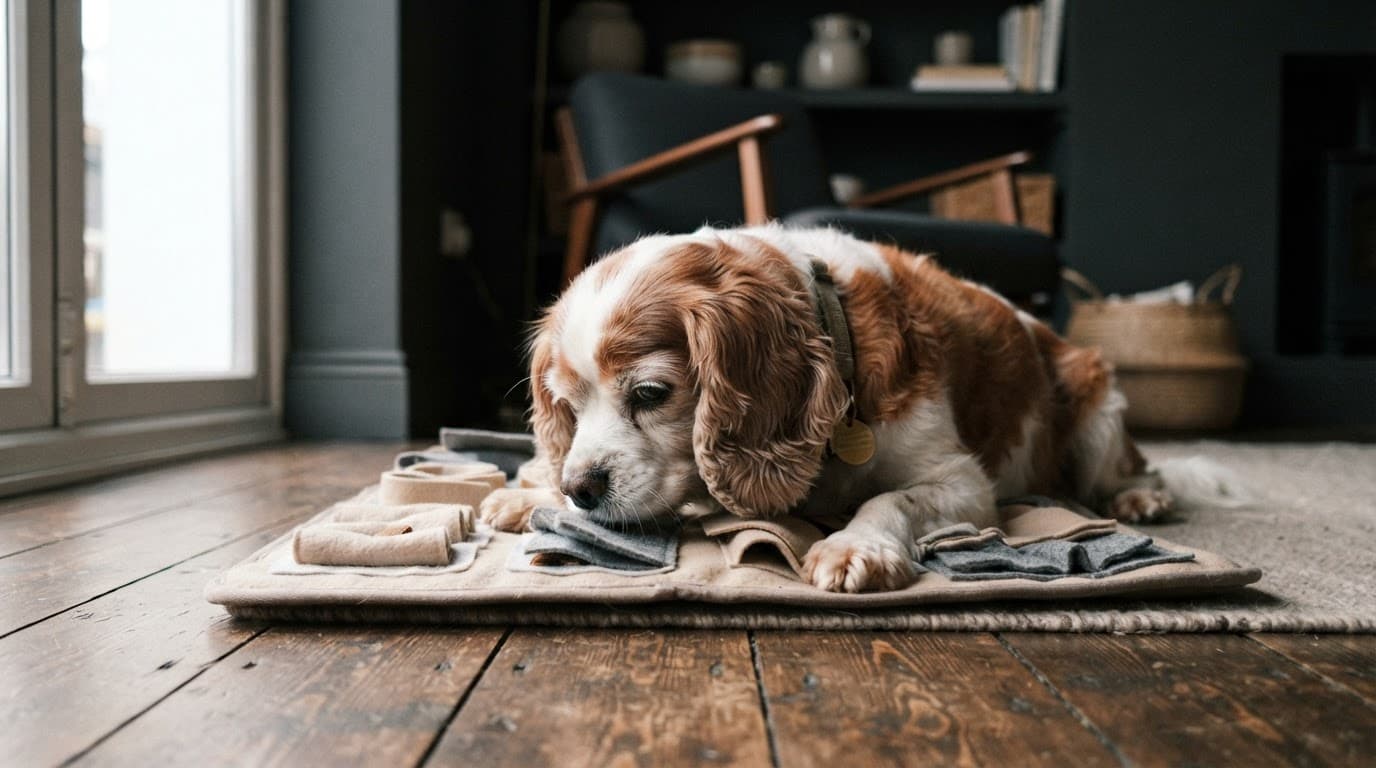
A loosely folded towel makes the game slightly harder. Drop a few pieces of kibble between the folds, then leave the towel flat on the floor. You can also use a snuffle mat or place treats inside open cardboard boxes.
These supervised DIY puzzles should stay stable, with large, obvious hiding spots at first.
Once your Cavalier understands the game, add a little distance. Hide treats in another safe area of the same room, or use two rooms if walking between them is comfortable.
You can turn familiar toys or open boxes into a stationary hide-and-seek variation. Introduce safe scent variety with a different food reward, but change only one thing at a time.
Sniffing takes concentration. Your dog sorts through smells, chooses where to search, and remembers where food may be hiding. These activities exercise natural foraging skills without jumping, chasing, or repeated turns.
Cornell’s guidance on senior dog enrichment also includes food puzzles that exercise a senior dog’s mind and nose.
Always supervise towels, mats, paper, and cardboard. Remove the game if your dog starts chewing or swallowing the materials. A few successful searches are enough for one session.
Lick Mat, Stuffed Toys, and Slow Feeders for Calm Focus
A lick mat, food-stuffed rubber toy, or slow-feeder bowl can turn part of your Cavalier’s meal into quiet enrichment. These options work well when standing and walking are limited because your dog can enjoy them from a comfortable bed or floor-level position.
Spread regular wet food over the mat, or add a small amount of xylitol-free peanut butter if your dog can have it.
You can also fill a sturdy rubber toy with wet food or part of your dog’s normal dinner. These food dispensing toys can help dogs who need a calmer way to enjoy meals.
Keep the portion small enough to fit your dog’s daily calorie needs. Check for allergies, dental concerns, chewing habits, and veterinary dietary advice before adding new foods.
If your dog handles the food well, freeze a stuffed toy briefly to make it last longer. Skip freezing if cold food causes discomfort or your dog struggles to reach the food.
Treat dispensing should stay calm and easy to access. If your Cavalier is biting the mat or chewing the toy, choose a simpler option.
Stay nearby while your dog licks. Remove any toy that is cracked, torn, or missing pieces.
Gentle play with tug toys may suit some Cavaliers, but tugging should be slow and soft. Skip it if your dog has neck, mouth, shoulder, or joint problems.
Name Games, Hand Targets, and Tiny Training Refreshers
Short dog training exercises give your Cavalier a job without asking for much movement.
You can practice while your dog sits, stands, or rests on a comfortable bed. Use praise, a tiny treat, or access to a favorite activity after one correct response.
Begin with name recognition. Say your dog’s name once, then reward them for looking toward you.
Next, offer your open hand a few inches away and reward a gentle nose touch. Keep your hand still, so your Cavalier doesn’t need to stretch or lunge.
Other useful cues include “touch,” “look,” “go to mat,” “chin rest,” and “settle.” For a chin rest, place your hand or a soft cushion close to your dog’s chin. Reward any calm contact, then release them.
Never push their head into position.
You can also place a mat beside your chair and reward your dog for choosing it. Add the cue “go to mat” once they move there comfortably. For “settle,” reward relaxed breathing, a soft body, or resting their head.
Two or three familiar toys can support simple recognition games if your dog knows them without rushing.
Ask for one toy at a time, then reward a correct choice. This stationary hide and seek variation keeps the focus on choosing, not chasing. Avoid tossing toys across the room or making your Cavalier retrieve them.
Keep each practice round positive and brief, with no pressure to perform.
Cup Games, Muffin Tins, and Simple Indoor Puzzles
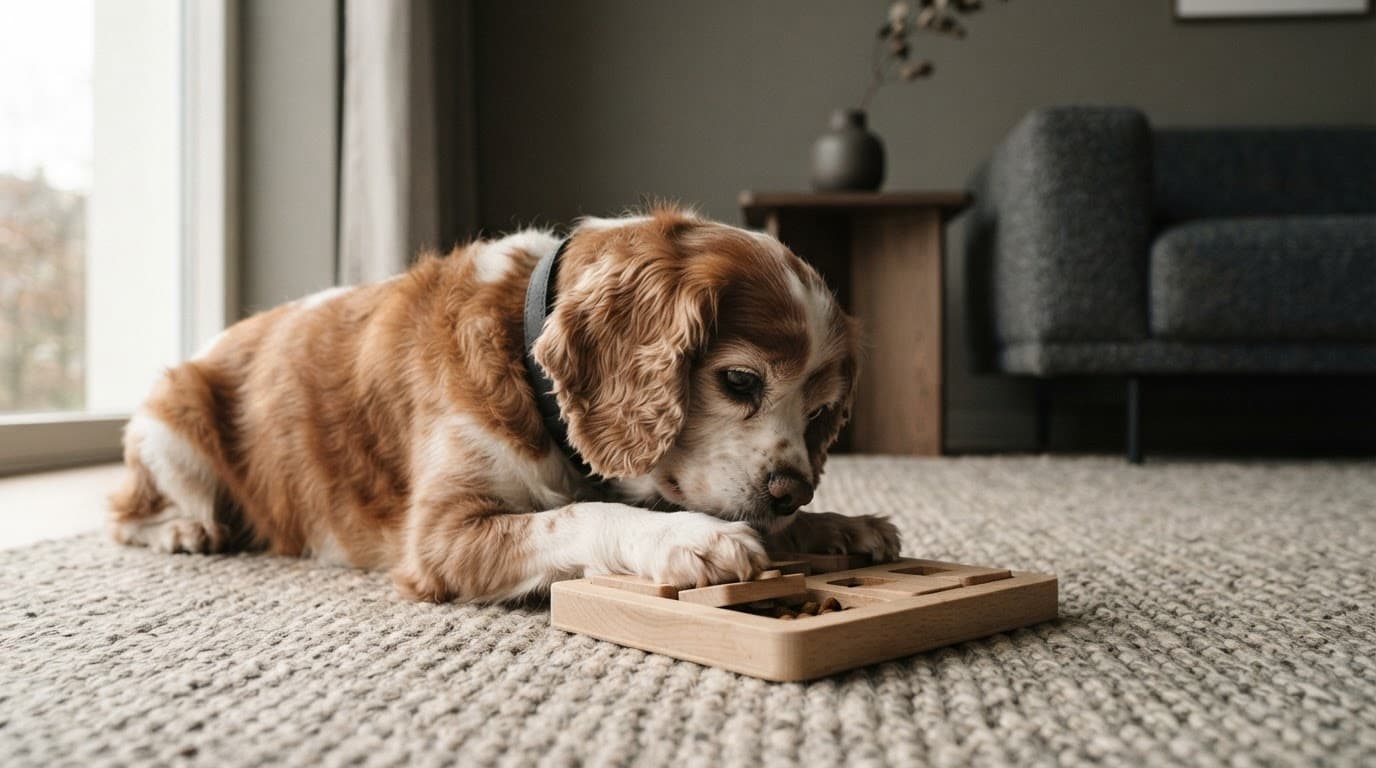
An interactive puzzle toy can encourage thinking without asking your Cavalier to paw hard or push furniture. Set everything on a non-slip mat at floor level, and stay close throughout the game.
Beginner products can provide cognitive toys with large parts and simple actions.
Try the cup game like this:
- Place three lightweight plastic cups upside down on the mat.
- Let your dog watch as you hide one treat beneath a cup.
- Encourage them to find the treat without sliding the cups around.
- Lift the cup when they choose correctly and let them eat the reward.
- Repeat with the treat under a different cup.
If your Cavalier paws hard, use only two cups or leave the treat partly visible. You can also lift the cup as soon as your dog investigates it, so the puzzle stays easy and rewarding.
For a muffin tin game, place a few treats in the spaces and cover some of them with loose tennis balls.
Use large, undamaged balls that your dog can’t swallow. A beginner puzzle board is another option, but choose one with large parts and simple sliding or lifting actions.
Make the puzzle easier if your dog becomes frustrated, pushes the furniture, or can’t reach the food comfortably. Remove the covers, use softer treats, or place the reward in an open section.
Stop if your Cavalier shows pain, slips, pants heavily, or loses interest. The goal is a calm little brain workout, not a wrestling match with a muffin tin.
How to Choose Safe Mental Games for a Cavalier With Limited Mobility
Safe enrichment starts with your Cavalier’s comfort, not the difficulty of the activity. Choose games that allow sniffing, licking, or thinking without bending, twisting, jumping, or standing too long.
If your dog is recovering from surgery or managing pain, ask your veterinarian for clearance before starting anything new.
Set Up a Comfortable, Non-Slip Enrichment Space
Choose a quiet area where your Cavalier can focus without feeling rushed. Supportive bedding, stable flooring, and good lighting can help dogs with stiff joints, poor balance, or changing vision.
Place a yoga mat, runner, or secure area rug over slippery wood or tile. The covering should lie flat, with no loose edges that could catch a paw.
Leave enough room for your dog to turn around without sliding or bumping into furniture.
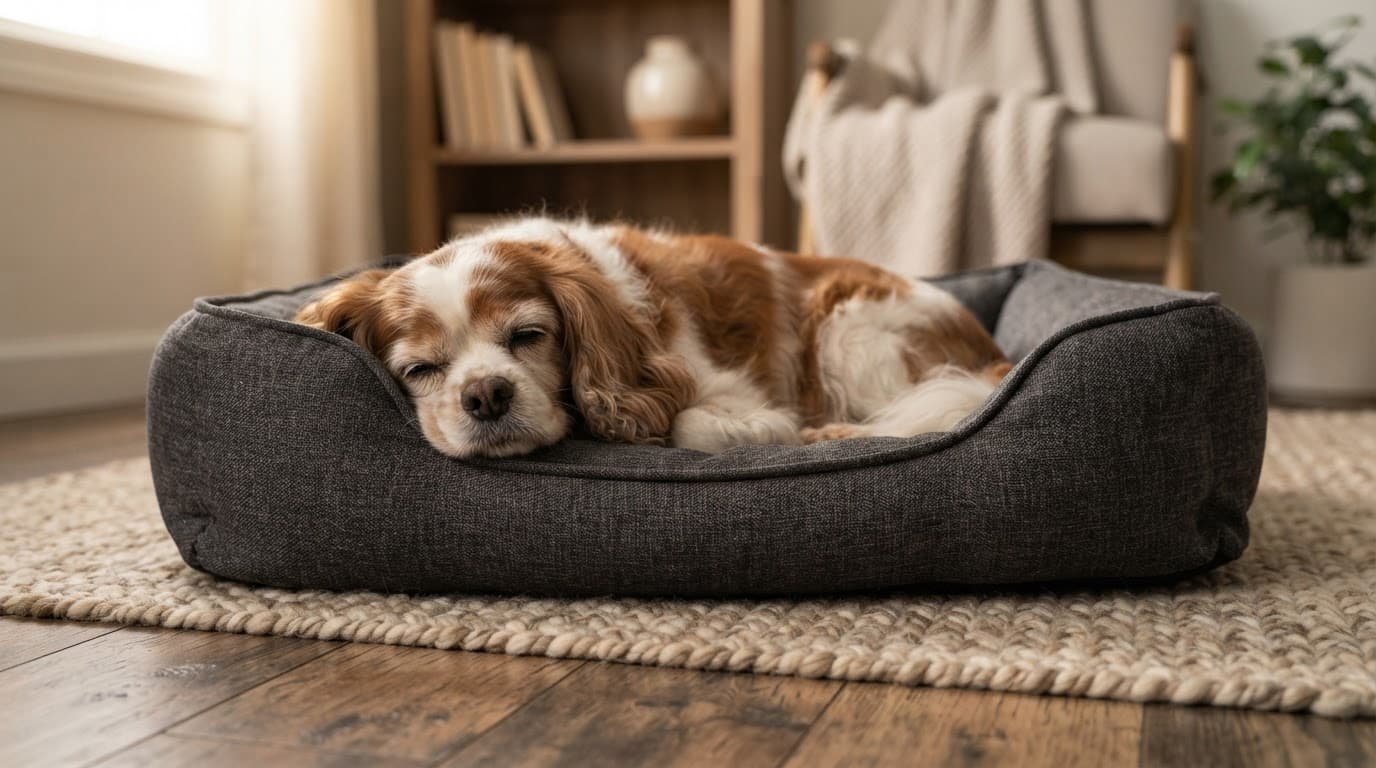
Choose puzzle toys that stay stable and offer simple rewards. Your dog shouldn’t need to paw hard, stand for long, or stretch awkwardly to use them.
A traditional obstacle course isn’t appropriate for a dog with limited mobility, and difficulty shouldn’t be increased through physical challenges.
Keep fresh water nearby, especially when your dog enjoys licking activities. Use small food portions and count them as part of the day’s meals.
Don’t place treats where your Cavalier must climb, stretch too far, or repeatedly get up.
Some dogs find a raised bowl easier to reach, while others feel more comfortable eating from floor level.
Feeding height may matter if your dog has neck pain, swallowing trouble, or another health condition. Ask your veterinarian before changing the setup. For more ideas, explore dog enrichment activities that can be adjusted to your dog’s abilities.
Know When to Stop and Ask Your Veterinarian for Help
Stop the activity if your Cavalier shows any sign of discomfort. Warning signs include:
- Sudden weakness, limping, trembling, or guarding part of the body.
- Repeated coughing, heavy panting, vomiting, or unusual fatigue.
- Confusion, pain, distress, or difficulty settling afterward.
- A sudden refusal to move, eat, or join a familiar activity.
A bad day may call for rest, gentle company, or a simpler option. Never force your dog to finish a puzzle.
New behavior changes, reduced appetite, altered sleep, or worsening mobility deserve a veterinary conversation, not an assumption that your dog is bored.
Refusing a puzzle can point to discomfort, poor vision, hearing loss, or cognitive change. Your veterinarian can help identify the cause and suggest safer enrichment.
Zoetis also describes gentle senior exercises, but physical activities should match your dog’s diagnosis and comfort level, as outlined in its guide to senior dog mobility exercises.
Build a Low-Stress Daily Enrichment Routine That Still Feels Special
A predictable daily routine helps your Cavalier know what to expect, while small changes keep the day interesting. Keep each activity between 2 and 10 minutes, depending on your dog’s comfort and attention.
Here is a flexible example for a senior or exercise-restricted Cavalier:
| Time of day | Gentle activity | What success looks like |
|---|---|---|
| Morning | Scent search with kibble | Finds the food within 30 to 60 seconds |
| Midday | Lick mat or slow feeder | Licks calmly without chewing the mat |
| Evening | Short training session with a name, hand target, or “settle” | Responds once or twice, then relaxes |
This isn’t medical advice or a fixed schedule. Your dog may need more rest, shorter sessions, or completely different activities on a difficult day.
Calm enrichment may help some dogs settle during evening zoomies, but it isn’t a guaranteed treatment for them. Rotate activities every few days instead of repeating the same puzzle daily.
Predictable timing, frequent success, and small novelty changes can make these activities feel special without adding physical strain.
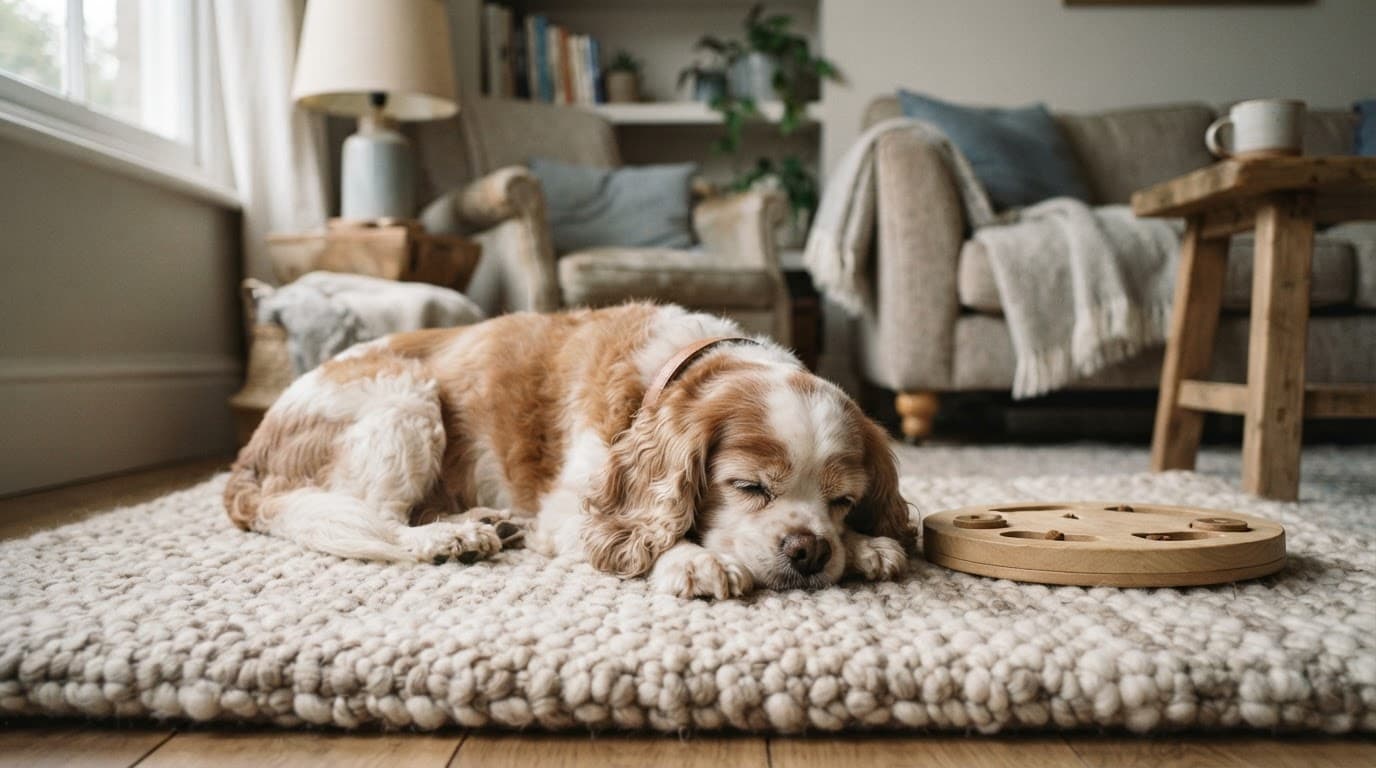
Make Easy Games Harder Without Adding More Physical Effort
Begin with an obvious reward. Let your Cavalier see you place a treat beside a cup, inside an open box, or on a flat towel. Once they understand the game, make the reward slightly less visible by covering part of it or folding the towel once.
You can then add one extra cup or box. Move the search to another safe room only when walking there is comfortable. Asking for a familiar behavior, such as “look,” “touch,” or “settle,” before revealing the reward adds another thinking step without requiring more movement.
Change only one factor at a time. Don’t increase speed, height, distance, or jumping to make a puzzle harder. Those changes can put pressure on sore joints and reduce your dog’s confidence.
If your Cavalier loses interest, return to the last version they solved easily. A bigger reward, fewer cups, or a partly visible treat may help. Frustrated dogs may paw repeatedly, whine, stare at you, or walk away.
Make the game simpler and reward small attempts. If your dog solves everything immediately, add one gentle layer, such as a second empty box, rather than creating a complicated challenge.
Gentle senior enrichment guidance also recommends keeping games low-impact and suited to the dog’s current ability, not their younger self. Learn more about gentle senior brain games.
Use Meals, Household Items, and Bonding Time as Enrichment
Everyday routines can become useful mental stimulation. Hand-feed part of your Cavalier’s meal while practicing their name, a nose touch, or calm eye contact.
You can also use scatter feeding over a small, secure area instead of a slippery floor, so your dog searches at their own pace without needing to run.
Account for treat calories when adding food-based activities.
A clean cardboard box can provide a supervised search. Leave it open, place a few treats inside, and remove it if your dog starts tearing or swallowing the cardboard.
Household items must be clean, large enough not to swallow, and watched closely throughout the game.
A comfortable window station can offer enrichment without any effort. Let your Cavalier watch birds, people, or passing activity from a secure bed, as long as the view doesn’t cause frantic barking or lunging.
You could also practice a gentle toy tidy-up by rewarding your dog for nudging one familiar toy toward a basket. Keep the basket low and skip the game if your dog has to bend awkwardly.
On difficult days, choose calming activities such as quiet grooming, relaxed companionship, or settling beside you. Family members can take turns offering these options.
One person might handle the morning scent search, while another provides quiet grooming or an evening training game.
Keep voices calm and movements slow, so social contact stays enjoyable rather than overexciting. This kind of rotation fits well with the wider mix of food, sensory, social, and training activities described in these senior dog enrichment ideas.
Common Mistakes That Can Make Gentle Enrichment Too Difficult
Even well-meaning owners can make gentle enrichment harder than necessary. The goal is calm engagement and confidence, not speed, force, or perfect performance. Use positive reinforcement to build confidence rather than pressure your dog to perform.
Avoid making the game too demanding
Too many dog treats can upset your dog’s daily diet and may lead to weight gain. Measure rewards from regular meals when possible, then keep each piece small.
Advanced puzzles are another common mistake. If your Cavalier doesn’t understand the game, they may paw, whine, or walk away. Start with an open box, visible treats, or one easy cup before adding difficulty.
Avoid puzzles that require force, hard pushing, sharp turning, or repeated standing. Rough play and fast tug games can also strain sore joints, shoulders, necks, or mouths.
If you use tug toys, keep the movement slow and gentle. Skip them when your dog shows physical discomfort.
A non-slip mat matters, too. Slippery floors can make a simple game feel unsafe and increase the risk of a fall.
Choose a stable surface, keep the reward close, and remove anything your dog could chew or swallow.
Veterinary Partner’s guidance on enrichment for senior dogs supports choosing activities that match an older dog’s physical and mental abilities.
Use this quick troubleshooting guide
| Problem | Likely cause | Safer adjustment |
|---|---|---|
| Frantic pawing | The puzzle is too difficult | Remove covers or show the treat |
| Walking away | Pain, fatigue, or sensory loss | Stop, offer rest, and ask your vet if it continues |
| Slipping | The floor lacks grip | Move the game onto a secure mat |
| Heavy panting | The session is too long or exciting | End the game and shorten future sessions |
| Chewing the puzzle | The material is unsafe or frustrating | Choose a simpler, sturdier option |
If your Cavalier’s abilities are changing, the Cavalier King Charles Spaniel ebook guide offers more breed-specific support.
A successful activity should leave your dog relaxed and pleased, without mental exhaustion or physical fatigue.
Helpful Guides for Planning Your Cavalier’s Enrichment at Home
Planning enrichment is easier when you treat it like a flexible menu, not a strict timetable. Your Cavalier may enjoy a scent game one day and need a quiet lick mat the next. Gentle enrichment choices should fit your dog’s comfort, appetite, mood, and mobility that day.
Create a simple enrichment plan
Start by writing down a few activities your Cavalier already enjoys. Include one scent game, one food-based activity, and one calm training exercise. This gives you options without asking your dog to repeat the same puzzle every day.
A weekly plan could look like this:
- Offer a towel search or scent mat on Monday.
- Use a lick mat or stuffed food toy on Tuesday.
- Practice name recognition, “touch,” and a calm wait cue on Wednesday.
- Try scatter feeding with part of a regular meal on Thursday.
- Hide a familiar toy or treat in an open box on Friday.
- Keep the weekend flexible for rest, grooming, or quiet companionship.
You don’t need a new toy for every activity. A towel, cardboard box, muffin tin, or your dog’s regular bowl can provide plenty of variety. Rotate items when interest drops, but change only one part of a game at a time.
Keep a note of what works. Record the activity, food used, session length, and how your Cavalier moved afterward. Did they settle happily, or seem stiff and tired? These small details can show patterns that are easy to miss during a busy day.
Match games to your Cavalier’s changing abilities
A game that suited your dog last year may now need a few adjustments. Older Cavaliers can experience changes in vision, hearing, balance, strength, appetite, or interest. Their plan should also reflect changing behavioral needs. A puzzle should change with your dog, not test what they could do in the past.
If standing is uncomfortable, move the activity onto a supportive bed or thick mat. If reaching down causes strain, raise the food slightly with a stable feeder, but ask your veterinarian before changing meal height for a dog with neck or swallowing concerns.
Dogs with poor traction may need carpet runners or secure rubber-backed mats between their bed and the enrichment area. Keep treats close, avoid sharp turns, and remove any object your Cavalier must push forcefully.
A useful plan leaves room for bad days. Rest, gentle affection, and watching the world from a safe window can also count as enrichment.
For breed-specific care ideas, revisit the Cavalier King Charles Spaniel blueprint. A broader background on the breed is also available through the Cavalier King Charles Spaniel overview.
Track food, rest, and behavior together
Treats used in brain games still count toward your dog’s daily food intake. Set aside part of your Cavalier’s normal meal before training or scent work. This keeps rewards manageable and helps prevent accidental overfeeding.
Your notes can be very simple:
| What to record | Why it helps |
|---|---|
| Game and duration | Shows which activities hold your dog’s interest |
| Food and portion | Helps you manage daily calories |
| Movement afterward | Highlights games that require too much effort |
| Behavior afterward | Shows whether your dog feels relaxed or tired |
| Pain or mobility changes | Gives your veterinarian useful information |
Review your notes once a week. If your Cavalier repeatedly avoids one activity, don’t keep pushing it.
Try a visible reward, a shorter session, or a different type of enrichment. A senior dog enrichment plan should feel more like offering choices than assigning homework.
Printable plans can make this daily routine easier to manage, especially when several family members share care.
You can track games, meals, rest, and changing abilities in one place instead of relying on memory.
For affordable dog-care ebook guides, Check out our great guides on Payhip. You can also find additional printable resources through Check out our ebook guides on Etsy.
The Cavalier-focused breed blueprint ebook may also help you keep daily care organized around your dog’s individual needs. A simple record can turn small observations into a calmer, safer enrichment routine.
Frequently Asked Questions
Every senior Cavalier is different. Use these answers as a starting point, then adjust each activity to your dog’s comfort, health, and interest.
How long should brain games for dogs last for a senior Cavalier?
Many senior dogs do well with about 2 to 10 minutes at a time, once or twice daily. The right length depends on your Cavalier’s health, attention span, interest, and recovery afterward.
End the game while your dog is still relaxed and successful. A few easy searches or calm training responses are enough if your Cavalier slows down, becomes stiff, or loses focus.
Can mental games replace walks for an exercise-restricted Cavalier?
Mental enrichment supports your dog’s wellbeing, but it doesn’t automatically replace veterinary-approved physical exercise, toileting, outdoor smells, or social contact.
Even a short, gentle outing may provide sights and scents that indoor activities cannot fully copy.
Follow your veterinarian’s activity restrictions carefully. Ask which movements remain suitable, such as a brief sniff outside, assisted walking, or gentle position changes.
When walks aren’t appropriate, safe window watching and calm family time can still provide social and sensory enrichment.
What are the best low-energy brain games for Cavalier Spaniels with arthritis?
Good choices include floor-level scent searches, food-licking options, slow feeders, name games, and short calm training.
Your Cavalier should participate without jumping, twisting, rushing, or standing for long periods.
Place each activity on secure, non-slip flooring. Keep treats close and use easy access points, so your dog doesn’t need to stretch or push hard.
Guidance on brain games for senior pets with mobility issues also favors scent games, simple puzzles, and interactive feeding without running or jumping.
Stop immediately if you notice limping, trembling, guarding, sudden stiffness, heavy panting, or reluctance to continue. Pain can make an enjoyable activity feel like hard work.
Are beginner puzzle toys safe for older Cavaliers?
They can be safe when they are simple, stable, large enough, and free from sharp edges or loose parts.
Choose a design your Cavalier can use with gentle nose movements instead of hard pawing, forceful pushing, or repeated standing.
Supervise every session, especially the first few times. Remove the toy if it cracks, breaks, sheds pieces, or causes frustration.
A simple activity your dog solves calmly is safer and more useful than a difficult one that becomes a wrestling match.
How can I tell if my Cavalier is enjoying enrichment?
A comfortable dog usually shows relaxed body language, gentle sniffing, normal treat-taking, and a choice to participate.
Your Cavalier may investigate slowly, look toward you for encouragement, and settle comfortably when the activity ends.
Avoidance, lip licking, repeated yawning, stiffness, confusion, whining, or frantic pawing suggest the activity needs simplifying. Fatigue matters, too. If your dog seems tired afterward instead of content, shorten the next session or choose something quieter.
What should I do if my senior dog suddenly stops playing games?
A sudden change deserves attention, especially if your Cavalier stops enjoying a familiar activity.
Ask your veterinarian to check for pain, vision or hearing changes, dental problems, nausea, medication effects, or cognitive changes.
While arranging professional advice, offer an easier familiar activity, such as a few visible treats on a non-slip mat.
Don’t push your dog to finish a puzzle or assume they are being stubborn. A sudden refusal may be your dog’s way of saying something feels different.
Conclusion
A senior or exercise-restricted Cavalier can still enjoy a rich, interesting life. Gentle scent work, licking, easy food puzzles, calm training, and one-on-one attention provide mental stimulation without straining tired joints or sore bodies.
The best gentle brain games leave your dog relaxed and pleased.
Keep each session short, make success easy, and use safe, non-slip flooring.
Watch your Cavalier’s body language closely, and follow your veterinarian’s guidance when health or mobility changes are involved.
Start with one simple activity today, such as hiding a few treats in a towel. Then rotate options based on your dog’s comfort and interests.
Small moments of enrichment can still make an ordinary day feel special.