
What Home Life Really Looks Like
You might be asking, are rottweilers good family dogs? They certainly can be if your home is the right fit and you are prepared to invest the necessary time and effort.
A well-socialized Rottweiler is often loyal, calm, and deeply attached to their people. Achieving this level of behavior relies heavily on consistent, early socialization to help them feel confident in diverse environments.
When you prioritize proper socialization from a young age, you set the foundation for a balanced and reliable companion.
That said, this is not a low-effort breed. Their inherent temperament requires guidance, and they can be a truly rewarding family pet when you commit to the right training and daily structure.
Exercise, consistent discipline, and respectful handling all matter, especially around children and busy households.
If you are wondering whether a Rottweiler suits your specific family life, this guide will help you sort that out with clear, honest advice on their temperament, daily care requirements, and what to expect at home.

Key Takeaways
- Consistency is Essential: Rottweilers thrive on predictable routines, clear house rules, and steady leadership; inconsistency can lead to boundary-testing and behavioral issues.
- Early Socialization Matters: Exposing your puppy to diverse environments, sounds, and calm strangers early in life is the foundation for a confident, well-adjusted companion.
- Mental and Physical Outlets: As a working breed, they require daily exercise and mental stimulation—such as training games or puzzle feeders—to prevent boredom-driven destructive habits.
- Prioritize Supervision: Due to their size and strength, they should always be supervised around young children, and interactions should be managed with clear, respectful boundaries.
Are Rottweilers Good Family Dogs? Their Unique Strengths
A Rottweiler can be a solid family dog when the home environment provides what the breed needs most: structure, consistent training, and steady attention.
These dogs are not flimsy lapdogs that thrive on chaos, but they are often calm, loyal, and incredibly tuned in to their people. While their muscular build and imposing presence command respect, their gentle nature often surprises those who get to know them.
This mix of traits makes them a strong choice for adults and older children who want a dog with a true presence in the home.
Rottweilers are famous for the strong bond they form with their owners. They often act as a loyal companion, picking their family members and choosing to stick close by to monitor the household activity.
For many, this feels comforting, like having a quiet, devoted shadow with a big heart. While this closeness is a hallmark of the breed, they generally do not enjoy long stretches of isolation.
If left with nothing to do for too long, they can become restless or clingy. Clear routines help bridge this gap, as does regular exercise and the establishment of simple, consistent rules.
A well-raised Rottweiler is often steady rather than frantic. They are less likely to act nervous or jumpy when they have been properly socialized from an early age.
This calm confidence makes day to day life feel smoother, as they can observe household activity without becoming overwhelmed.
Their protective nature is an inherent part of their character, which makes them a vigilant family pet when guided by calm leadership. However, it is vital to remember that confidence must be nurtured.
If these dogs are pushed into stressful or overly noisy environments too quickly, their behavior may not reflect their true potential as gentle giants.
Because they are highly intelligent, Rottweilers usually catch on to commands and house rules quite quickly. This trainability is a massive asset for any household, especially when training begins early and remains consistent.
They often enjoy having a job to do, even if that job is as simple as sitting politely or waiting for their turn during dinner. Their high intelligence requires an outlet, and without regular mental work, they can become bored and exhibit stubborn tendencies.
For families who prioritize daily exercise and structured walks, the effort put into training pays off in a dog that is well-behaved and reliable.
Consistent expectations across the whole family ensure these well-socialized dogs understand their role, making them a balanced and rewarding addition to the home.
When a Rottweiler Is Not the Right Fit for a Family
A Rottweiler can be a lovely family dog, but the match has to make sense in real life. Size, strength, routine, and handling all matter.
If your home is busy, rushed, or very hands-off, this large dog breed can feel like more than you bargained for.
That does not mean Rottweilers are difficult for the sake of it. It means they need a family that can provide clear direction, physical control, and consistent follow-through.
When those pieces are missing, everyday moments like walks, greetings, and play can turn messy fast.
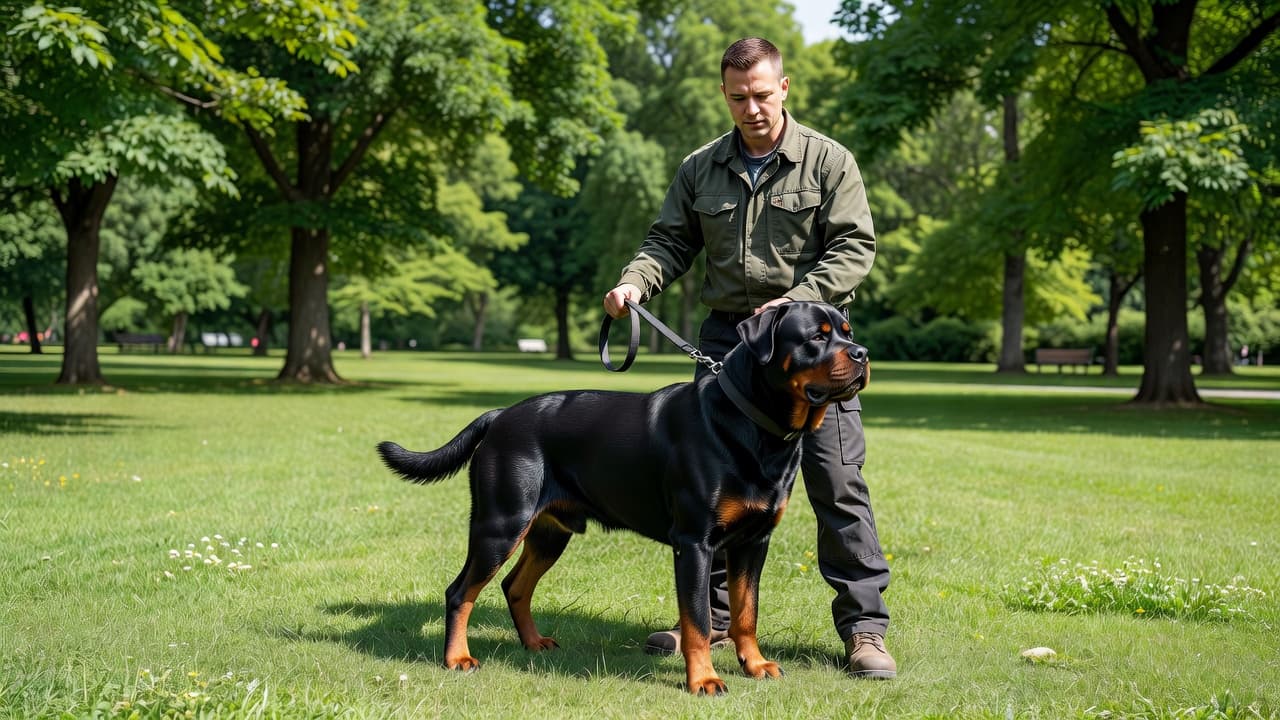
Even a friendly Rottweiler can bowl over a small child without trying. They can also pull with enough power to catch an adult off guard, especially if they spot another dog, a squirrel, or a new person.
Because of their size, physical control is vital. A solid leash grip, good timing, and the right walking setup help keep everyone safe during daily life. If you are still working on walk skills, fixing common dog walking mistakes can make outings smoother right away.
Furthermore, greetings are a major consideration; a dog that jumps up to say hello may seem cheerful, but on such a sturdy frame, that behavior can easily knock over a child or an older visitor.
Beyond physical management, these dogs require more than basic puppy lessons. They need consistent obedience training, house rules, and calm leadership that stays the same from one day to the next.
If one person allows jumping and another corrects it, the dog gets mixed messages. That kind of inconsistency often leads to pushy behavior and the testing of boundaries.
Rottweilers do best when the rules are simple and steady, as a dog without structure can turn into a powerful blur of good intentions and poor manners.
For first-time owners, the decision should be made with caution. While some beginners thrive, many need guidance from a professional trainer.
Because these dogs can be strong-willed, they respond best to a confident owner who is patient and willing to learn. A beginner who wants a low-maintenance pet may feel overwhelmed quickly, as these dogs notice hesitation and perform best when the human end of the lead is steady.
Ultimately, a Rottweiler is a great fit for homes that can offer:
- Regular, ongoing obedience training
- Clear and consistent house rules
- Daily physical exercise and mental stimulation
- Calm, controlled introductions to new people and dogs
- Constant adult supervision when around small children
If that sounds like your household, a Rottweiler may fit your life well. If those requirements feel like a stretch, that honesty matters.
For a breed with this much power, a patient and realistic assessment of your capabilities is much better than wishful thinking.
How to Raise a Rottweiler Safely Around Kids
Raising a Rottweiler around young children works best when the rules are clear from day one.
Because Rottweilers are large, powerful dogs, early socialization is a vital step in ensuring they understand how to interact gently with smaller family members. The dog needs structure, and the kids need simple boundaries they can remember.
That mix keeps things calm and prevents small mistakes from escalating into a bite risk or other safety concerns.
A Rottweiler does not need kids to tiptoe around it, but it does need respect, steady supervision, and a home that does not treat rough play like a joke.
If you want a safer family setup, start with the basics and keep them consistent.
Creating Safe Boundaries and Supervision
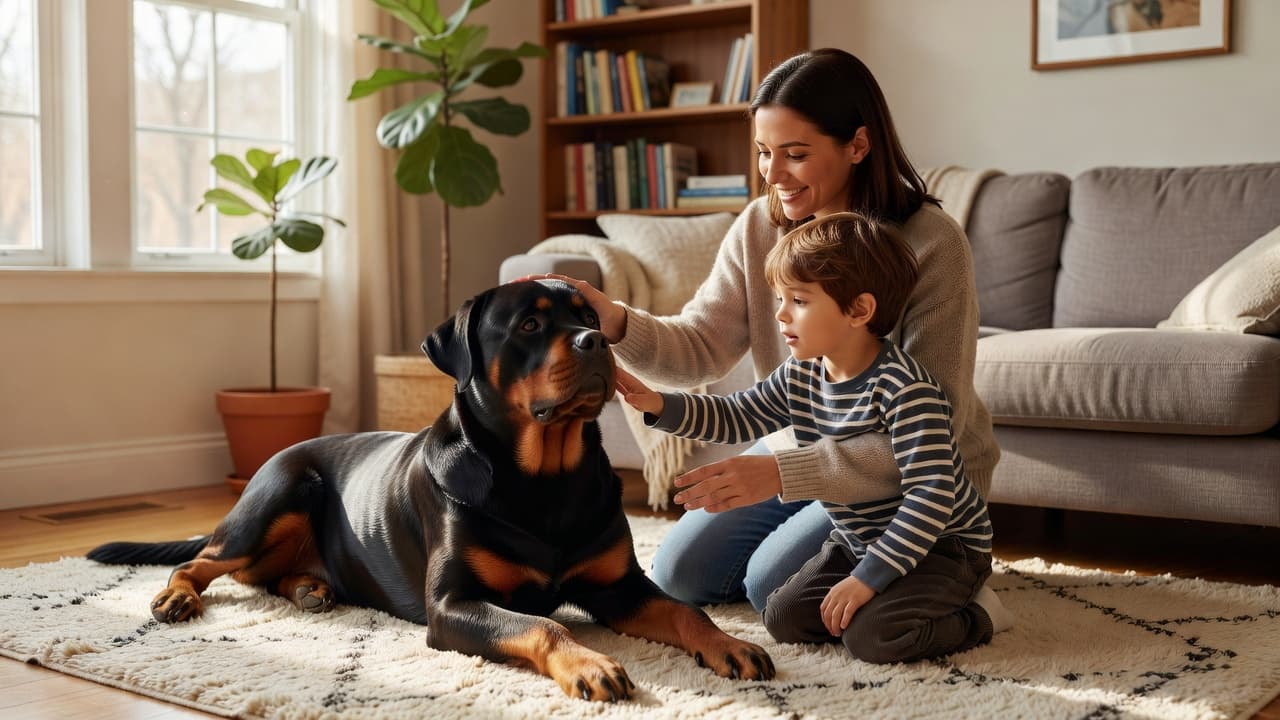
Children do best with short, simple rules. Tell them not to hug the dog tightly, as that can feel trapping instead of loving.
Show them how to stroke a shoulder or back gently, then stop when the dog walks away. Food and toys need their own boundaries; kids should never take a bone, tug toy, or bowl from a Rottweiler, and they should not bother the dog while it is sleeping or eating.
That kind of respect keeps stress low and prevents potential issues.
A few easy house rules help a lot:
- Let the dog come to you first.
- Use a soft voice.
- Keep hands away from the face, ears, and tail.
- Leave the dog alone during meals and naps.
- Ask an adult before offering treats or toys.
Even a sweet Rottweiler can react if it gets startled, tired, or overwhelmed. Big dogs move fast when they feel crowded, and children are not always great at reading warning signs.
That is why adults need to stay close to supervise interactions directly. If the energy gets too rough, step in early, before the dog starts to mouth, jump, or stiffen up. It also helps to learn basic dog body language.
A dog that turns away, licks its lips, freezes, or walks off may be asking for space. If the dog and kids are together often, give the dog a place to retreat. A crate, bed, or quiet room lets it rest without being followed.
For families who walk bigger dogs often, dealing with loose aggressive dogs on walks is also worth a look, since outside stress can carry back home.
Building Good Habits for Your Family Pet
A Rottweiler settles faster when life has a clear shape. Crate training helps with rest, house training, and calm downtime.
It gives the dog a safe spot, and it gives the family a break when the day gets busy. House rules should be simple and fixed, such as no jumping on people, no rushing doors, and no grabbing food off tables.
When everyone follows the same rules, the dog learns faster and gets less confused.
Leash manners matter just as much. A strong dog that pulls on walks can turn a normal outing into a wrestling match. A well-fitted harness can help with control, especially for bigger dogs, and the right harness for large dogs makes a real difference.
Reward-based training works best for this breed. Praise, treats, and repeat practice teach the dog what earns good things.
That is the same idea behind operant conditioning, which simply means the dog learns through consequences. In plain English, good choices should pay off.
Keep training short and regular. Use it for sit, stay, leave it, and calm waiting at doors. Add safe play too, like fetch or tug toys, but only when the dog can stop on cue. By maintaining these habits, you ensure your family pet remains a well-adjusted and joyful companion.
If your routine needs more structure, our dog walking services can help keep that rhythm in place.
Training and Socialization Make the Biggest Difference
A Rottweiler’s home life is shaped less by breed labels and more by early habits. The dogs that feel easy to live with usually had calm, steady guidance and plenty of good exposure when they were young.
Because these dogs were originally bred as a working dog, they possess a natural drive to learn and thrive when they are given a clear purpose.
That means the answer to the question of are rottweilers good family dogs often comes down to the commitment the family makes to long-term structure.
A thoughtful start—centered on proper socialization and consistent obedience training—can turn a strong, serious puppy into a polite, settled companion.
Establishing the foundations of behavior
Good socialization looks like normal life, not a big event. It means a puppy meets calm strangers, sees children at a comfortable distance, hears traffic, and learns that new places are not a threat.
Keep those first experiences short and positive. A walk past a bus stop, a quiet visit to a friend, or a stop near a playground can teach a puppy that the world is full of ordinary sights, not scary ones.
The goal is simple. You want the dog to learn that new people, noises, and places are part of life.
This helps reduce fear and overprotectiveness later, which matters a lot in a breed with natural guarding instincts. A structured start to Rottweiler training can help you plan those early weeks with more confidence.
Beyond exposure, obedience training is essential. You want to focus on positive reinforcement, which is the most effective way to teach a Rottweiler how to settle in the home.
Reward polite behavior like lying on a mat, greeting guests without jumping, or waiting patiently while the door opens. When you consistently praise calm choices, you are teaching your dog how to switch gears from active play to relaxation.
If you build these habits now, you get a much more reliable adult dog later.
Routine and consistency for long-term success
You do not need long lessons to get real results. Five to ten minutes a day is enough for most busy families, and it works better than one big session once a week.
Keep the practice simple: ask for one cue at a time, reward the right answer fast, and end while the dog is still focused.
That rhythm fits family life much better. A quick morning sit, a polite wait before dinner, or a short recall drill after school all add up.
Repeated practice creates muscle memory, and these habits are what make daily life smoother.
If walks are part of your routine, strong basics matter there too. A well-fitted harness for large dogs can make training safer and easier, especially with a powerful breed.
If you also want extra help with routine and exercise, Paw-Tastic Walks dog walking services can support the kind of steady structure that these intelligent dogs need to remain balanced.
For broader training advice, the Wikipedia overview of operant conditioning is a useful background read.
In plain terms, your dog repeats what pays off, so make the good stuff easy to win.
Short, regular practice beats rare, dramatic lessons every time.
That is the real difference maker. A Rottweiler with clear rules, calm exposure, and daily practice is usually far easier to live with than one left to guess.
When you treat their training as a lifestyle rather than a chore, you provide the clarity they crave, ensuring a harmonious home for everyone.
Exercise, Mental Stimulation, and Daily Life Needs
A Rottweiler can be a fantastic family companion, but only if your home environment provides the specific outlets this breed requires.
As a powerful and intelligent large dog breed, they are built for more than just a quick toilet break or a lazy afternoon on the porch.
If you want a steady, pleasant dog at home, you must prioritize their daily exercise and mental stimulation.
These dogs are working animals at heart; if you leave out consistent activity and brain-engaging tasks, the cracks in their behavior will show quickly.
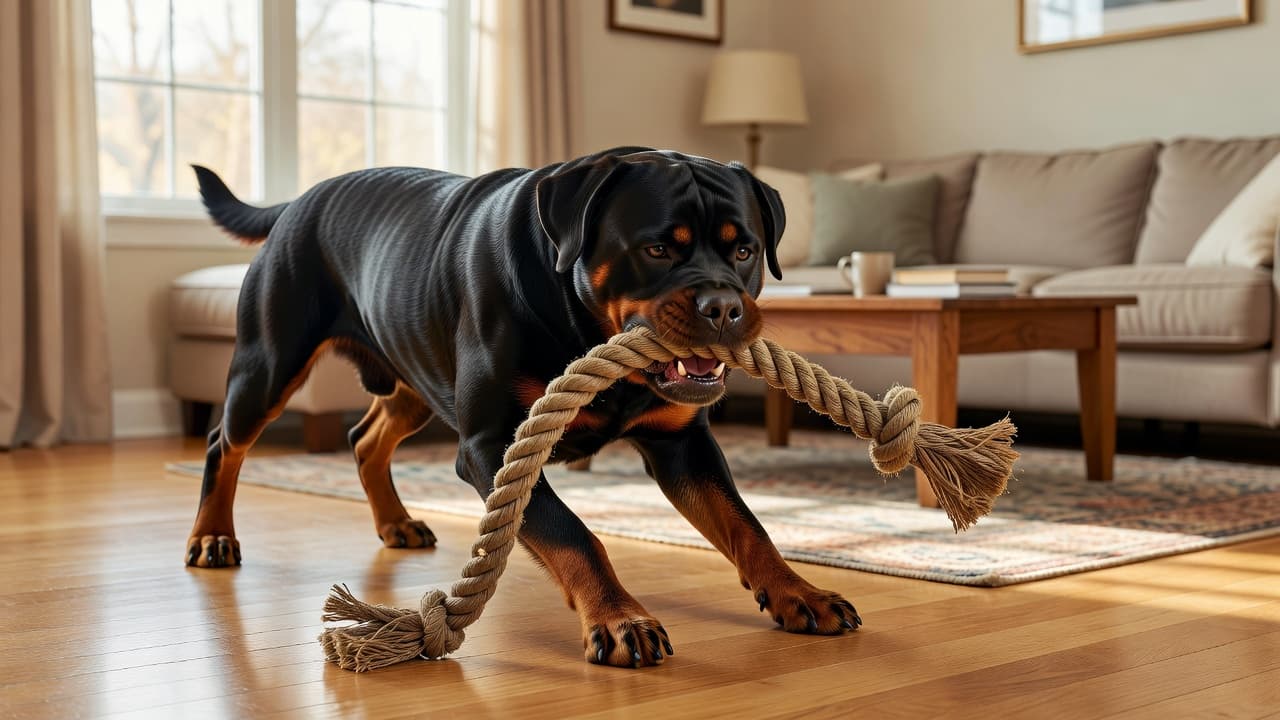
When wondering if Rottweilers are good family dogs, remember that a bored Rottweiler rarely sits quietly to wait for your attention.
Instead, the breed tends to make its own entertainment, which often manifests as chewing shoes, excessive barking, pacing, or stubbornness when asked for basic manners. This is why a consistent routine is essential.
A dog with unused energy will look for an outlet, and your furniture or carpet often becomes the victim. Even small gaps in the daily schedule can lead to significant behavior issues like mouthing or testing limits.
This is not the dog being bad for no reason. It is simply a strong, intelligent animal looking for a job to do.
As the saying goes, a tired mind is often just as important as a tired body. For many families, the solution is to increase structure, provide movement, and offer more frequent opportunities for the dog to think.
PetMD’s Rottweiler breed guide confirms that this breed needs regular activity to remain balanced.
A successful day for a Rottweiler involves several types of engagement. Sniff walks allow them to use their natural curiosity, fetch games provide a safe way to burn off energy, and puzzle feeders force them to work for their meals rather than inhaling them in seconds.
Training is equally vital.
Short obedience sessions, recall games, and practice with commands like sit, wait, or leave it keep the dog sharp. These do not need to be long, but they should be frequent enough to become part of your lifestyle.
Consider incorporating these habits:
- Sniff walks for slow, sensory-based exercise
- Fetch for high-intensity bursts of movement
- Puzzle feeders for essential meal-time brain work
- Regular obedience practice to reinforce manners
- Short training games to improve recall and focus
When used with proper supervision, tug toys serve as an excellent outlet. They provide a way to bond and keep your dog mentally switched on without turning playtime into chaos.
A Rottweiler that receives both physical exertion and cognitive challenges is easier to live with, settles faster, and brings far less drama into the home.
To facilitate these activities, choose safe gear suited for a large dog breed.
A well-fitted harness distributes pressure more effectively than a collar, and a sturdy leash provides the control you need when your dog encounters distractions like bikes, squirrels, or other pets. Good equipment ensures you stay in command during your daily exercise sessions without the walk turning into a tug-of-war.
For those still mastering leash manners, our guide to the best dog harness for large dogs explains how to select the right setup.
Remember that good control is about safety, not harsh handling. If you ever feel that managing your dog’s energy is too much to handle alone, consider reaching out to our team.
You can contact our dog walking team to help establish a consistent routine that keeps your Rottweiler healthy, happy, and well-adjusted to your family life.
What Family Life With a Rottweiler Really Looks Like
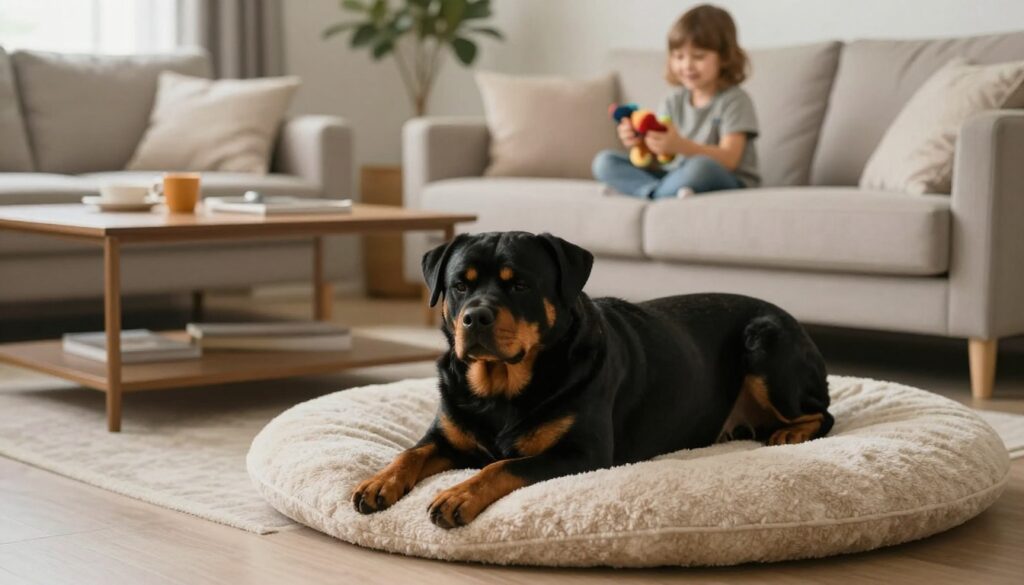
Living with a Rottweiler is often calmer than people expect, but it is not casual. These dogs usually want structure, clear rules, and a family that shows up every day.
As a powerful working dog, a Rottweiler relies on consistent leadership to feel secure. If your home runs on routine, this breed can slot in well, but if your environment is loud, inconsistent, and full of mixed messages, the cracks will show quickly.
The importance of routine for your family dog
Rottweilers settle best when the day has a reliable pattern. Meals, walks, training, play, and rest should happen in a steady rhythm.
This predictability helps your family dog feel safe, and a safe dog is almost always a better-behaved one.
Because they have a natural background as a working dog, they appreciate having a job or a set of expectations to follow.
A good routine might look like this:
- Morning walk, then breakfast
- A short training session after the walk
- Quiet rest time during the day
- Another walk or play session later on
- Calm downtime before bed
Attention matters just as much as schedule. This is not a breed that likes to be left out of family life for long stretches.
They want to know where their people are, what is happening, and when the next activity is coming.
A little daily attention goes a long way, especially when it is paired with calm, boring consistency.
Predictable days help a Rottweiler relax. Unpredictable days make them work harder than they should.
Planning for guests, young children, and other pets
New people and new animals should never be rushed with a Rottweiler. A calm introduction is better than a big, cheerful pile-on at the front door. Let the dog watch first, then approach when it is ready.
Some Rottweilers are naturally reserved with strangers, which means manners are vital. Visitors, especially when young children are involved, should avoid crowding, loud voices, and sudden movements.
When introducing your dog to guests, young children, or other pets, follow these steps:
- Keep the dog on a leash or behind a barrier at first.
- Let the guest or other pet ignore the dog until it settles.
- Reward calm behavior with praise or treats.
- Keep the first meeting short and quiet.
- End on a good note before the dog gets tired.
Slow, controlled introductions work better than hoping everyone will just figure it out.
Whether you are managing social interactions or looking for help with daily movement, our dog walking services can help keep the day steady.
If you are concerned about how your pet reacts to outside stimuli, dealing with loose aggressive dogs on walks is a useful read to keep everyone safe.
Furthermore, if you are wondering if you can walk your dog in the rain during those wet months, check out our guide on can you walk your dog in the rain.
A well-matched home makes life easier
Rottweilers often do best in active homes where people enjoy training and spending time with the dog.
They like having something to do, and they perform better when they are part of the daily rhythm instead of sitting on the edge of it.
Busy is fine; chaotic is not. A home with a clear schedule, regular exercise, and adults who follow through will usually suit this breed far better than a household where rules change every hour.
They tend to fit families who can offer:
- Daily exercise
- Regular training
- Calm leadership
- Supervision around young children and visitors
- Time for bonding and rest
That does not mean the home has to be perfect. It does mean the family should be committed.
A Rottweiler is a serious dog with a big frame and a sharp mind. When life is structured, that strength becomes much easier to live with. A good family match is not about being fancy; it is about being consistent, patient, and willing to train.
That is when a Rottweiler stops feeling like a lot of dog and starts feeling like a cherished member of the household.
Pros and Cons of Rottweilers as Family Dogs
Rottweilers can be fantastic family dogs, but they are not a soft, sit-back-and-see-what-happens kind of breed.
They bring loyalty, brains, and a strong protective nature, yet they also bring size, power, and a real need for training.
That mix is why some homes love them and others struggle. If you want an honest picture, you need both sides of the story.
Why families love the Rottweiler temperament
Rottweilers tend to bond hard with their people. Once they trust you, they are often affectionate, steady, and very tuned in to the household.
That kind of loyalty can feel like having a solid guardrail at home, not just a pet.
They are also smart. A Rottweiler usually learns routines quickly, and many enjoy having a job to do.
That makes them a good fit for families who like training, structure, and a dog that feels present without being needy every second.
Their protective nature is another draw. In the right home, that can mean a dog that watches the front door, notices strangers, and settles in with confidence.
For many owners, the balanced Rottweiler temperament is the primary appeal. While they are often considered a natural guard dog, they are also capable of being gentle, devoted companions.
If you want a broader breed overview, the American Kennel Club’s Rottweiler profile gives a clear look at the breed’s temperament and family-friendly traits.
Challenges, health, and management
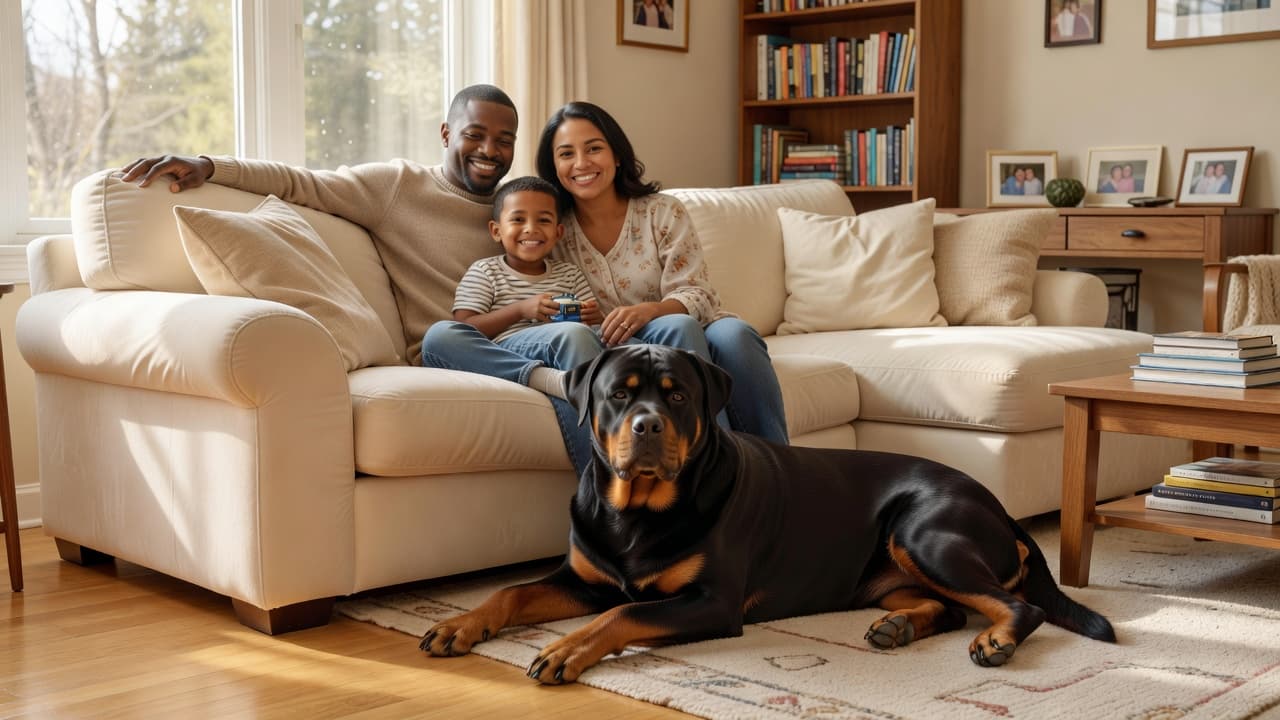
The same traits that make these dogs appealing can also make them a lot to handle. Because they are large, strong dogs, their physical health directly impacts their ability to lead an active lifestyle.
Potential owners should be aware of health risks like hip dysplasia, which can affect mobility and limit how much exercise the dog can comfortably handle. Regular vet checkups and maintaining a healthy weight are essential to managing these concerns.
Beyond health, these dogs require more than basic obedience. Early socialization, regular practice, and clear house rules matter if you want a dog that behaves well around kids, visitors, and other animals.
Without that structure, a Rottweiler can get pushy, stubborn, or overly intense.
A few common pressure points are:
- Size and strength that need careful handling.
- Training needs that do not stop after puppyhood.
- Supervision around children, especially small ones.
- Regular exercise to maintain fitness and prevent boredom.
- Proactive health monitoring for issues like hip dysplasia.
- Consistency from everyone, not one person doing all the work.
If your walks feel hard to manage, the right harness for large dogs can help with control. And if you ever wonder how much extra support a big breed needs on the lead, our guide to dealing with loose aggressive dogs on walks is worth a read too.
A quick way to tell if this breed fits you
Ask yourself one simple question: do you want a large, trainable, loyal dog, and are you ready to put in the work?
If the answer is yes, a Rottweiler may be a strong match. If you like clear routines, daily exercise, and steady training, this breed can fit family life well.
If you want an easygoing, low-maintenance dog, keep looking. Rottweilers are not usually the breed for a hands-off home, a very busy schedule, or a family that wants a dog to just know the rules.
A Rottweiler is a better fit for a family that trains with intention, not one that hopes for the best.
If your household already has a good rhythm, the breed can be rewarding. If the day is already chaotic, the dog will feel that too.

Frequently Asked Questions
Are Rottweilers naturally aggressive toward family members?
No, well-socialized and properly trained Rottweilers are typically loyal, calm, and deeply attached to their families.
Aggression is not a breed standard trait, but because they are powerful and protective, they require consistent guidance and positive reinforcement to ensure they behave predictably.
Can a Rottweiler live safely with young children?
Yes, they can be excellent family dogs if raised around children with clear rules and constant supervision.
It is vital to teach children how to interact respectfully with the dog, such as avoiding rough play, never disturbing them while they eat or sleep, and giving the dog space when needed.
How much exercise does a Rottweiler actually need?
They are working dogs that require more than just a quick walk; they need a mix of physical exercise, like brisk walks or fetch, and mental work, such as obedience training or scent games.
Providing these outlets helps prevent the restlessness and destructive behavior that often stem from a bored, under-stimulated dog.
Is a Rottweiler a good choice for a first-time dog owner?
While it is possible for a beginner to succeed, it requires a significant commitment to professional training, consistent structure, and a willingness to learn how to handle a large, strong-willed animal.
If you are looking for a low-maintenance pet, this breed is likely not the right match for your household.
Conclusion
Rottweilers can be excellent family pets, but only in the right home. They thrive when provided with consistent training, early socialization, regular exercise, and close supervision, especially when living with children and interacting with visitors.
If your family values routine, clear rules, and a loyal companion with a strong presence, a Rottweiler can fit in beautifully.
If your home life is more casual or you are searching for a low-effort pet, this breed will likely feel like too much work.
The simple takeaway is that the best dog for your household is the one that matches your specific lifestyle, energy, and experience level.
With the right match, a Rottweiler is not just a powerful guardian, but a steady and devoted member of the family.
🐾 Ready to Become a Confident Rottweiler Owner?
Whether you’re thinking about getting a Rottweiler or already share your home with one, The Rottweiler Blueprint is packed with practical advice to help you raise a happy, healthy, and well-behaved companion.
✅ Training tips
✅ Health and care advice
✅ Nutrition guidance
✅ Behaviour insights
✅ Real-world ownership advice
Give your Rottweiler the very best start—download The Rottweiler Blueprint today and enjoy over 35 pages of expert guidance designed for every owner.
🐶 Click here to get your copy now!