
Most owners want to understand Staffordshire Bull Terrier exercise needs, which typically involve about 1 to 2 hours of activity every day.
While that is the simple answer, the specific requirements for your dog will depend on their age, current health, and individual personality.
A good routine is not only about walking farther. It should mix movement, play, training, sniffing, and proper rest to keep this naturally active breed happy and healthy.
If you are in East Cornwall and comparing dog walking services, or searching for pet walking near me, it helps to know what a Staffy actually needs. Here is a clear, practical guide.
Key Takeaways
- Daily Requirements: Most adult Staffordshire Bull Terriers require between 60 and 120 minutes of daily activity, ideally spread across multiple shorter sessions rather than one long trek.
- Mental Stimulation is Essential: Exercise isn’t just about physical movement; incorporating training, scent games, and puzzle toys is vital to satisfy a Staffy’s intelligent, busy mind.
- Individualized Pacing: Age, health status, and personality significantly impact exercise needs, with puppies requiring short, gentle bursts of activity and seniors needing lower-impact movement.
- Balanced Routine: A successful routine combines physical exercise, mental enrichment, and quality rest, which prevents destructive behaviors and promotes a calm, happy temperament at home.
What a Staffordshire Bull Terrier needs each day
A healthy adult Staffy usually thrives when their daily exercise is split across the day. Think of one walk in the morning, a bit of training or play later on, and another walk or game in the evening.
This consistent routine is far better for their well-being than a single quick potty break.
Some Staffies are little rockets, while others prefer a steadier pace and a longer nap after lunch.
If your schedule is packed, see our dog exercise options for help with regular daily dog walks around Looe and Polperro.
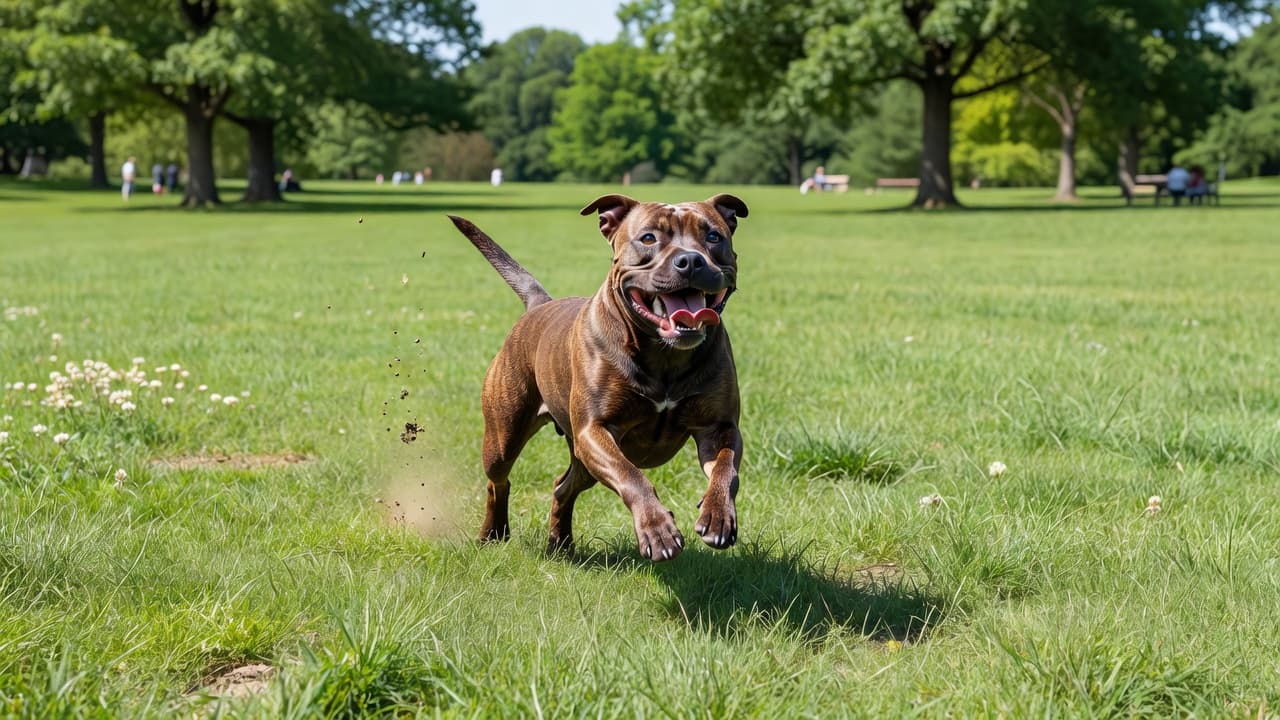
A good daily exercise range for most adult Staffies
Most adult Staffies do well on 60 to 120 minutes of physical stimulation a day, split into two or three sessions. Brisk walks, scent work, and short play sessions all contribute to this total.
More isn’t always better. Too little activity can leave a dog buzzing with excess energy, while too much can leave them sore, flat, and reluctant to move the next day.
Why mental exercise matters as much as running
A Staffy does not need to sprint for an hour to feel satisfied. Five or ten minutes of dedicated mental stimulation can make a significant dent in that energy.
Training, scent games, puzzle toys, and calm enrichment all play a vital role in keeping your dog happy.
Try simple additions to your routine. Ask for a sit before meals, practice basic obedience training, or use puzzle toys to make them work for their food.
If you are working with a younger dog, these sessions are also an excellent time to focus on early socialisation in a controlled way.
Toss a few treats into the grass and let your dog sniff them out; this kind of work tires a busy mind in a healthy, productive way.
How age, health, and personality change exercise needs
No two Staffies read from the same script. One dog may need a lot of structure to stay settled, while another may be happy with steady walks and a short game at home.
It is important to adjust your approach based on specific health conditions, such as hip dysplasia, which may require a more tailored routine to ensure your dog stays comfortable.
If you want a second opinion on the daily range, PitPat’s Staffy exercise guide lands in a similar place for many healthy adults.
That said, the dog in front of you matters more than any general number.
Puppies need short bursts, not long walks
Puppy exercise should consist of little bursts of activity rather than forced marches.
Think of short play, gentle lead practice, a brief walk, and a nap that appears out of nowhere. That is normal for a Staffie puppy.
Too much activity can put extra strain on growing bones. If you are looking at puppy walking services, ask how long the outings are.
A young Staffie puppy often does better with two short, gentle visits than one long trek.
Senior dogs and dogs with injuries need a slower pace
Senior dogs still need daily movement, but they usually do better with shorter walks and softer ground to support their joint health.
The goal is to keep them moving without wiping them out or causing discomfort.
Watch for stiffness after rest, limping, heavy panting, or a dog that starts hanging back on walks. If that happens, scale things down and ask your vet what is safe for your senior dogs.
High-energy Staffies need more than one walk
Some Staffies need more structure, not more miles. Two walks, a short training session, and safe play can work better than one long haul. Busy dogs often relax more when the day has shape.
This is where a professional dog walker can help. Some dogs enjoy group dog walks, which can provide essential socialisation for a balanced dog.
Others are calmer with solo local dog walking and a quieter, more predictable routine.
Signs your Staffordshire Bull Terrier is getting the right amount of exercise
You can usually tell at home whether your dog is meeting their activity requirements. A well-exercised Staffy is not wiped out or dull.
Instead, they are settled, cheerful, and able to relax without turning the living room into a boxing ring.
Breed background provides helpful context, and the Staffordshire Bull Terrier overview gives a good perspective on their sturdy build and temperament.
Still, your own dog’s habits are the most reliable guide.
Get This Great Guide Today!
What a happy, well-exercised Staffy looks like
Look for calm behavior indoors, better focus, and solid sleep. When their physical needs are met, these dogs make excellent family pets because they are satisfied and ready to settle at home.
Walks often feel smoother as well, with less frantic pulling, less bouncing at passing birds, and less pacing later in the evening.
The keyword is satisfied. A good routine does not create an exhausted dog; it creates a balanced companion who knows how to switch off.
Warning signs of too little or too much exercise
Not enough activity often manifests as destructive behaviors like excessive chewing, barking, or persistent zoomies.
If your dog is struggling with restlessness or constantly dragging you down the street, their energy level likely needs a more consistent outlet to prevent these issues.
A Staffy with a full tank of energy rarely hides it.
On the other hand, too much exercise can look quite different. You may notice stiffness the next morning, sore paws, a sudden reluctance to walk, or panting that lasts too long after activity.
If your dog’s behavior changes rapidly, it is wise to pull back on the intensity of their workouts and reassess your approach.
Best ways to exercise a Staffy without overdoing it
The best plan is the one you can repeat. A perfect routine on paper won’t help much if real life keeps knocking it over.
Mix walks with sniff time and training games
Slow sniff walks are real exercise. Let your Staffy read the smells, then add tiny training moments along the way, such as a sit at the curb, a short stay, or a cheerful recall.
Using positive reinforcement during these moments on the lead encourages good behavior and keeps your dog engaged.
For owners seeking a more structured approach, agility training can be a fantastic way to burn energy and build focus without overdoing it.
This mix works well for many dog exercise services because it uses body and brain together.
It is also a smart option for owners who want steady progress while prioritizing the human companionship that is essential during your daily exercise routines.
Use safe play to burn energy at home
Fetch in the yard, indoor hide-and-seek, and short sessions of tug of war with tug toys are all great forms of interactive playtime.
Keep it upbeat, keep it brief, and stop before your dog gets too wound up.
If you are comparing dog walking rates, ask what a visit includes. The best dog walking services do not only rack up distance.
They blend physical movement, calm handling, and the right kind of play to ensure your pet stays happy and healthy.
Build up exercise slowly in hot, wet, or windy weather
The weather changes the plan, especially in East Cornwall. On warm days, walk earlier or later. In strong wind or rain, shorten the route, slow the pace, and use more indoor games if needed.
Some owners want a reliable dog walker for rough weather days, and that makes sense. The right routine is the one your dog can do safely, not the one that looks toughest on paper.
Providing consistent, thoughtful movement ensures your Staffy stays fit while keeping the bond you share with your dog strong.
Frequently Asked Questions
Is it better to do one long walk or several shorter ones for my Staffy?
It is generally much better to split your dog’s exercise into two or three sessions throughout the day.
This consistent approach keeps them balanced and avoids the exhaustion or soreness that can come from a single, overly strenuous workout.
Can my Staffy puppy go for long runs with me?
No, puppies should never be forced into long, strenuous marches as this can place unnecessary stress on their growing bones and joints.
Opt for short, gentle bursts of play and brief walks followed by plenty of rest to support their healthy development.
How can I tell if my Staffy is getting too much or too little exercise?
A well-exercised Staffy will be settled and calm at home, whereas one lacking activity may exhibit destructive behaviors like excessive chewing or constant restlessness.
Conversely, if your dog shows stiffness the next morning or refuses to move, they may be doing too much and require a reduced intensity.
Conclusion
Most Staffies need daily exercise, but there is no single magic number that fits every dog. For many adults, 60 to 120 minutes is a sensible range when split across the day.
Effectively meeting your Staffordshire Bull Terrier exercise needs involves a healthy mix of physical stimulation and mental stimulation to keep them engaged.
The best routine balances movement, training, scent work, play, and rest. If your Staffy comes home content, sleeps well, and wakes up ready to go again, you have likely found the right balance.
Remember that daily activity should always be paired with a balanced diet to keep these loyal family pets in peak physical condition.
Ultimately, while keeping them active is vital, human companionship remains the most rewarding part of the routine for this affectionate breed.

🐾 Created by Paw-Tastic-Walks
🌐 https://paw-tastic-walks.com